How To Grow Fishbone Cactus Successfully In California Homes
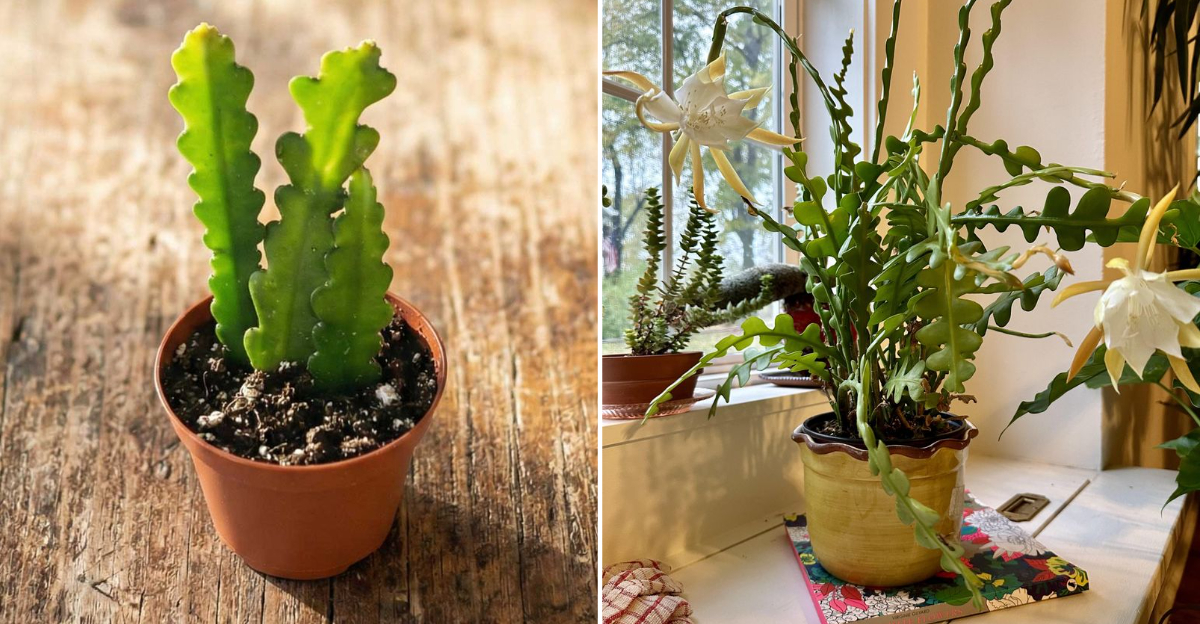
Fishbone cactus is one of those plants that instantly grabs attention. With its zigzag, jungle style stems and wild, trailing shape, it looks more like something from a tropical rainforest than a typical cactus.
The surprise is how well it can thrive inside California homes when you give it the right setup.
Unlike desert cacti, fishbone cactus loves bright but gentle light, a bit of humidity, and a steady routine.
Get the balance right and it rewards you with fast growth, lush cascading stems, and even dramatic night blooming flowers that feel almost magical when they appear. It is a plant that brings personality into any room.
The best part is that success is not complicated once you understand what it prefers. A few simple adjustments can turn a struggling plant into a thriving, eye catching centerpiece that keeps growing more impressive every season.
1. Give It Bright, Indirect Light
California sunshine can be intense, especially during those long summer afternoons when the light seems to pour through every window. Your fishbone cactus loves bright conditions but needs protection from direct rays that can scorch its delicate stems.
Think of how forest plants grow beneath taller trees, catching dappled light rather than full sun exposure.
Place your plant near an east-facing window where it catches gentle morning light, or a few feet back from a south or west window where brightness fills the room without direct contact. Sheer curtains work beautifully for filtering that strong California sun.
Many growers make the mistake of treating this like a desert cactus, putting it in blazing direct light, which leads to pale, stressed stems that lose their deep green color.
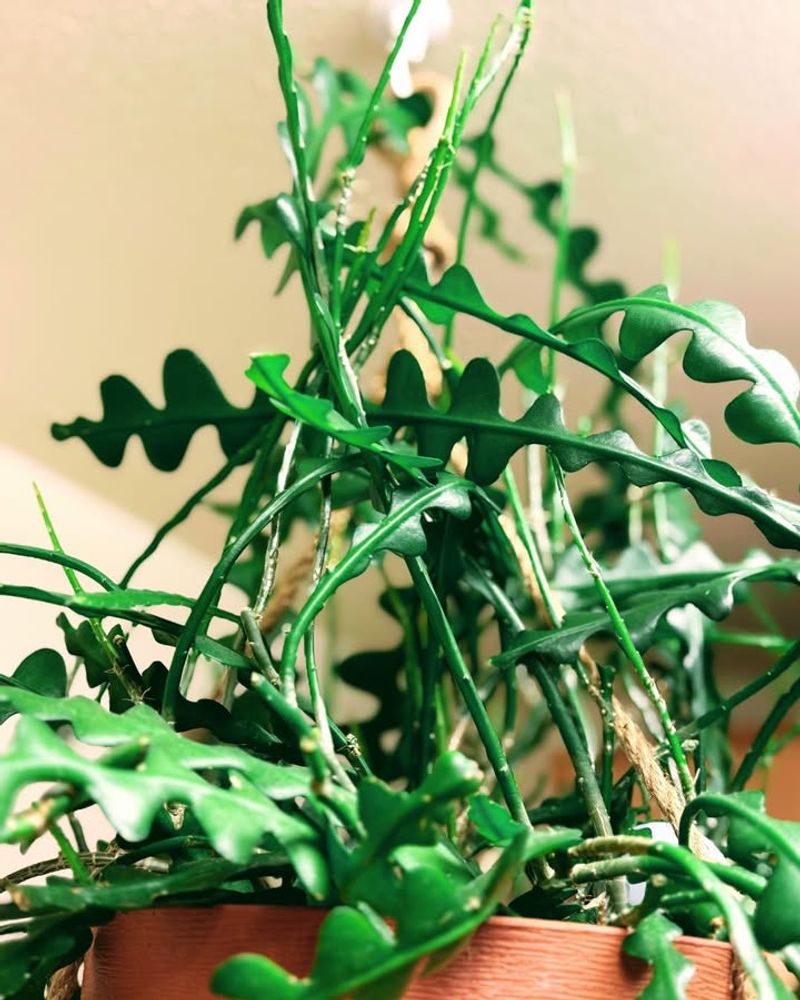
Watch for signs your plant is telling you about its light situation. Stems that stretch thin and lose their compact zigzag pattern mean it needs more brightness.
Reddish or yellowish discoloration suggests too much direct sun. The goal is finding that sweet spot where growth stays compact, color remains rich, and those distinctive fishbone shapes develop properly throughout the growing season.
2. Use Fast-Draining Soil
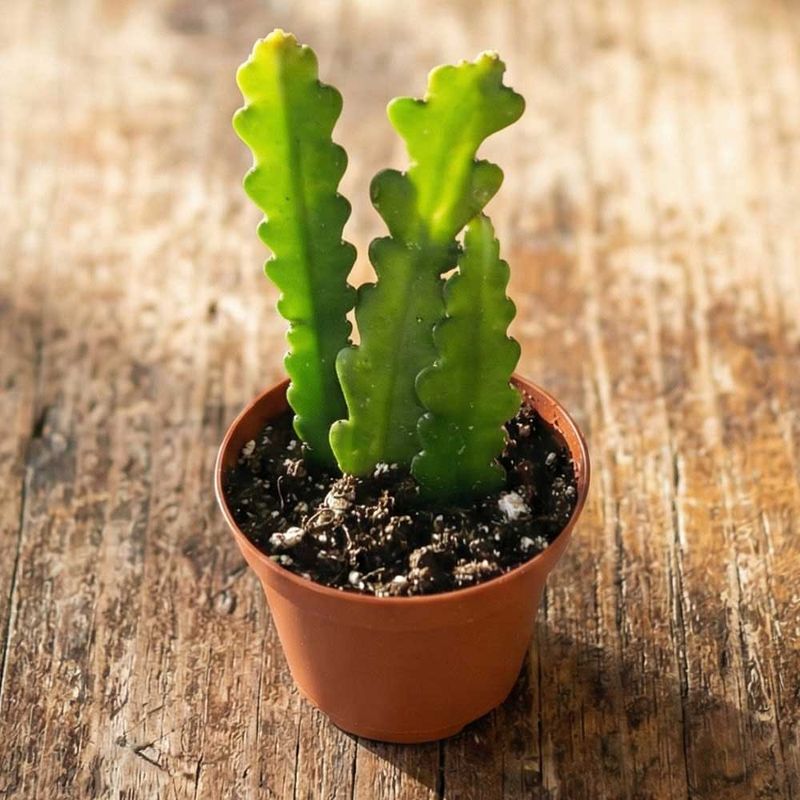
Soil might seem like a simple detail, but it makes all the difference between a thriving fishbone cactus and one that struggles. This epiphytic plant grows on trees in its native habitat, where roots cling to bark and organic matter rather than sitting in dense ground soil.
Regular potting mix holds too much moisture for too long, creating conditions that lead to root rot faster than you’d expect.
Mix your own blend using equal parts potting soil, orchid bark, and perlite or pumice. The chunky texture allows air to reach roots while water drains through quickly.
You can also use a commercial cactus mix and add extra perlite to increase drainage even more. Many California gardeners add a bit of coconut coir for moisture retention without sogginess, which works well in our dry indoor environments.
The container matters too. Terracotta pots breathe better than plastic, allowing excess moisture to evaporate through the sides.
Make sure any pot has drainage holes at the bottom. Some growers place a layer of lava rock or broken pottery pieces at the base before adding soil, though this isn’t necessary if your mix drains well.
Test drainage by watering thoroughly and watching how quickly water flows through.
3. Water Only When Dry
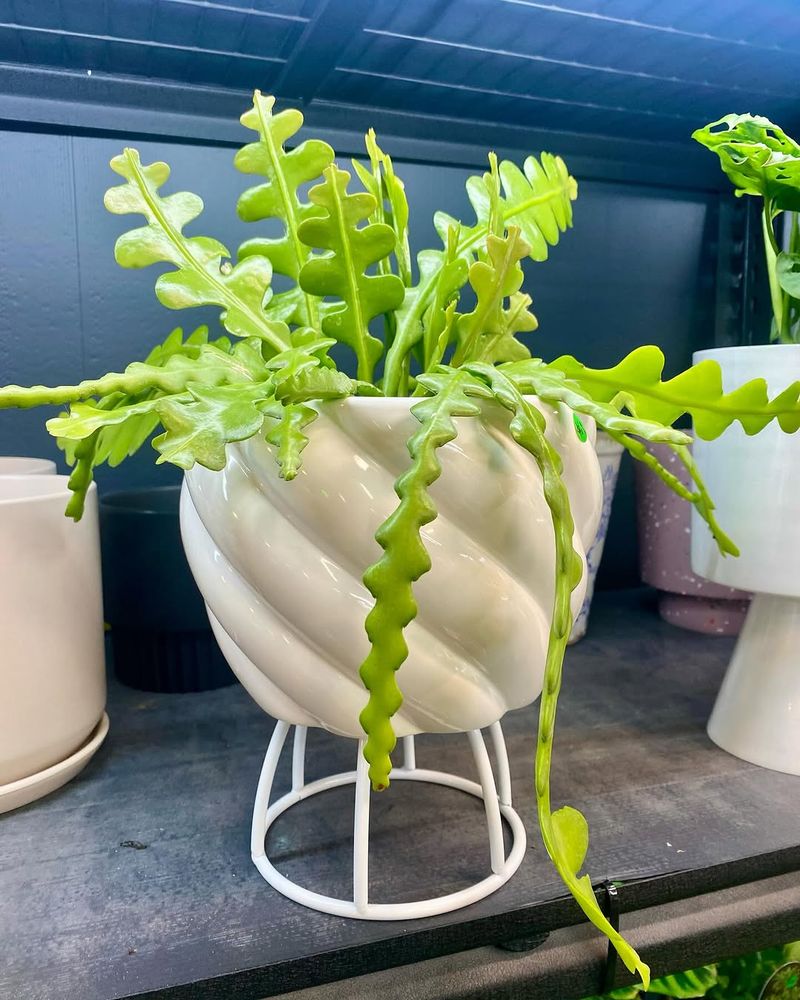
Watering routines trip up more fishbone cactus growers than any other care aspect. California’s dry climate makes us think we need to water frequently, but this jungle cactus stores moisture in its thick stems and prefers periods of dryness between drinks.
Overwatering causes roots to suffocate and rot, leading to mushy stems and eventual plant collapse.
Let the top two inches of soil dry completely before watering again. Stick your finger into the soil to check moisture levels rather than following a rigid schedule.
During summer growth periods, this might mean watering every week or ten days. In winter when growth slows, you might water only once or twice a month.
When you do water, do it thoroughly. Pour water until it runs from drainage holes, ensuring the entire root system gets moisture.
Empty any water that collects in saucers beneath pots, as sitting water leads to problems. Stems that wrinkle or feel soft indicate underwatering, while yellowing and mushiness signal too much moisture.
California’s low humidity means water evaporates faster than in more humid regions, but indoor heating and air conditioning also affect how quickly soil dries.
Adjust your watering based on what you observe rather than what a calendar tells you.
4. Keep Humidity Moderate
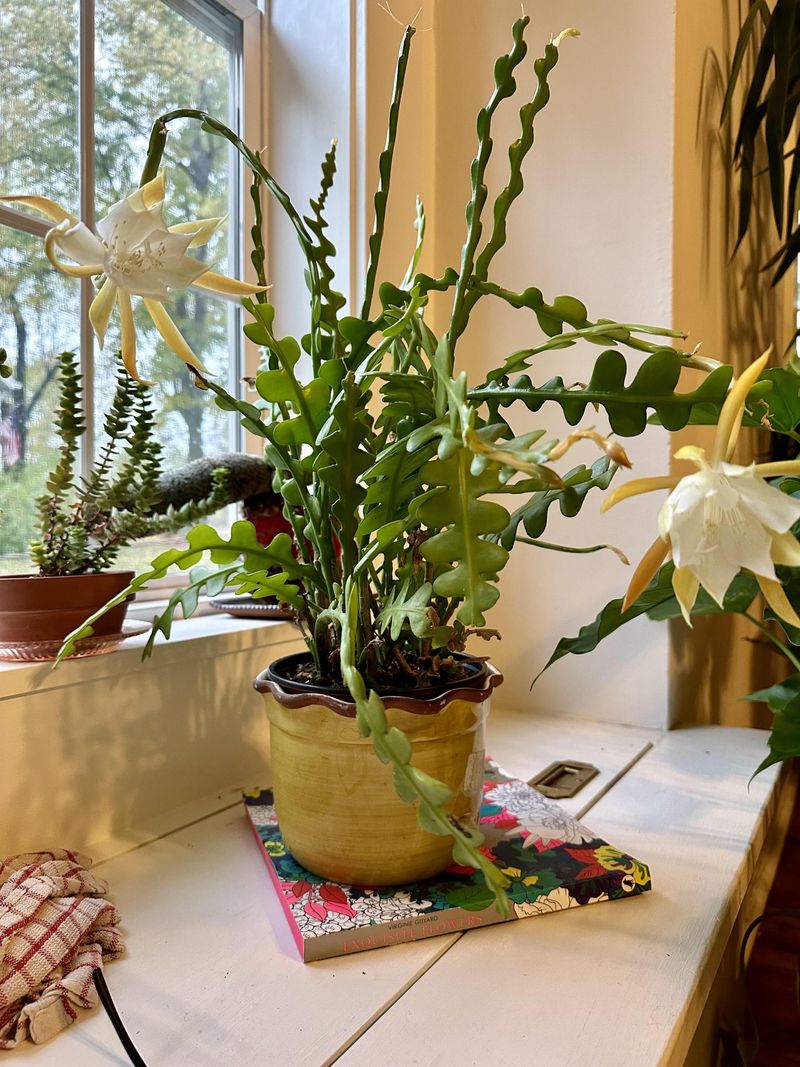
Most California homes sit at relatively low humidity levels, especially during summer when outdoor air dries out and winter when heating systems run constantly. Your fishbone cactus appreciates moderate humidity around 40-60 percent, higher than what many homes naturally provide but not as extreme as tropical plants demand.
Finding the right balance keeps stems plump and healthy without creating conditions for fungal problems.
Bathrooms with windows make excellent spots for these plants, as shower steam raises humidity naturally without keeping things constantly damp. Grouping plants together creates a microclimate where transpiration from leaves raises moisture levels for all plants nearby.
Some growers place pots on trays filled with pebbles and a small amount of water, ensuring the pot bottom sits above water level rather than in it.
Avoid misting, which many people try but doesn’t actually help much. Water droplets evaporate quickly in dry air, and wet foliage can encourage fungal issues without providing lasting humidity benefits.
If your home runs very dry, a small humidifier in the plant area works better than constant misting. Watch for brown, crispy stem tips, which indicate air that’s too dry for comfort.
5. Feed Lightly During Growth
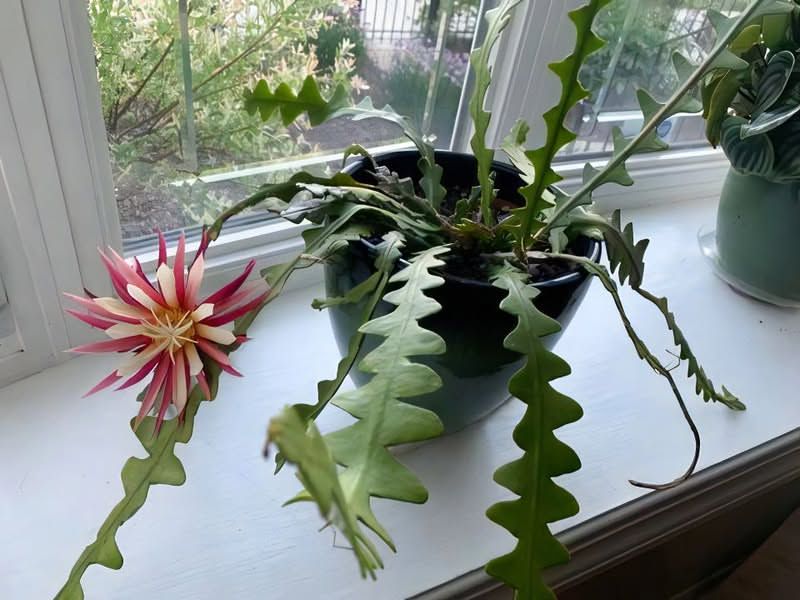
Spring arrives in California with longer days and warmer temperatures that trigger growth in your fishbone cactus. Those zigzag stems start extending, and new segments emerge at the tips.
This active growth period is when your plant benefits from supplemental nutrients, though it needs far less fertilizer than many other houseplants. Heavy feeding leads to weak, floppy growth and salt buildup in soil.
Use a balanced liquid fertilizer diluted to half the recommended strength, applying it once monthly from spring through early fall. A formula designed for cacti and succulents works well, or use a general houseplant fertilizer at quarter strength.
Always apply fertilizer to damp soil rather than dry, as nutrients in dry soil can burn roots.
Stop feeding completely during winter when growth naturally slows. The plant enters a rest period and doesn’t need extra nutrients during these months.
Some growers never fertilize and still have healthy plants, as fishbone cacti aren’t heavy feeders. If you notice stems growing long and thin despite good light, you might need slightly more nutrients, but resist the urge to overfeed.
Flush soil with plain water every few months to prevent salt accumulation from fertilizer and tap water minerals, which is especially important in California where water can be quite hard.
6. Repot When Rootbound
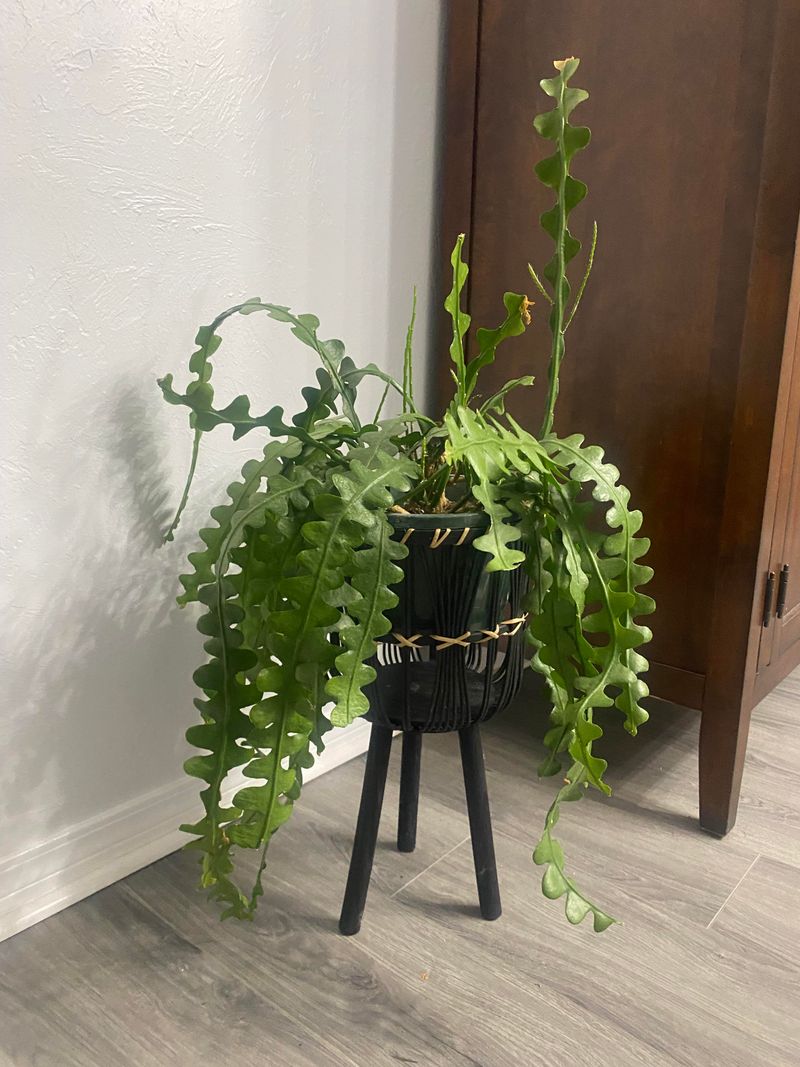
Your fishbone cactus actually enjoys being slightly rootbound, which encourages blooming and keeps growth compact. But eventually, roots fill every available space, circling the pot bottom and pushing through drainage holes.
When this happens, the plant struggles to absorb water and nutrients efficiently, and growth slows noticeably despite proper care in other areas.
Check root status every couple of years by gently sliding the plant from its pot. If roots form a dense mat around the soil ball, it’s time to repot.
Choose a container only one or two inches larger in diameter than the current pot. Going too large means excess soil that stays wet too long, creating rot risk.
Spring makes the best repotting time, giving plants the entire growing season to establish in fresh soil.
Handle stems carefully during repotting, as they can break at the joints. Gently loosen circling roots with your fingers before placing the plant in its new container with fresh, fast-draining mix.
Don’t water immediately after repotting. Wait three or four days to allow any damaged roots to callus over, then resume normal watering.
Many California growers repot less frequently than gardeners in other regions because our long growing season and mild climate keep plants actively growing most of the year.
7. Encourage Those Night Blooms
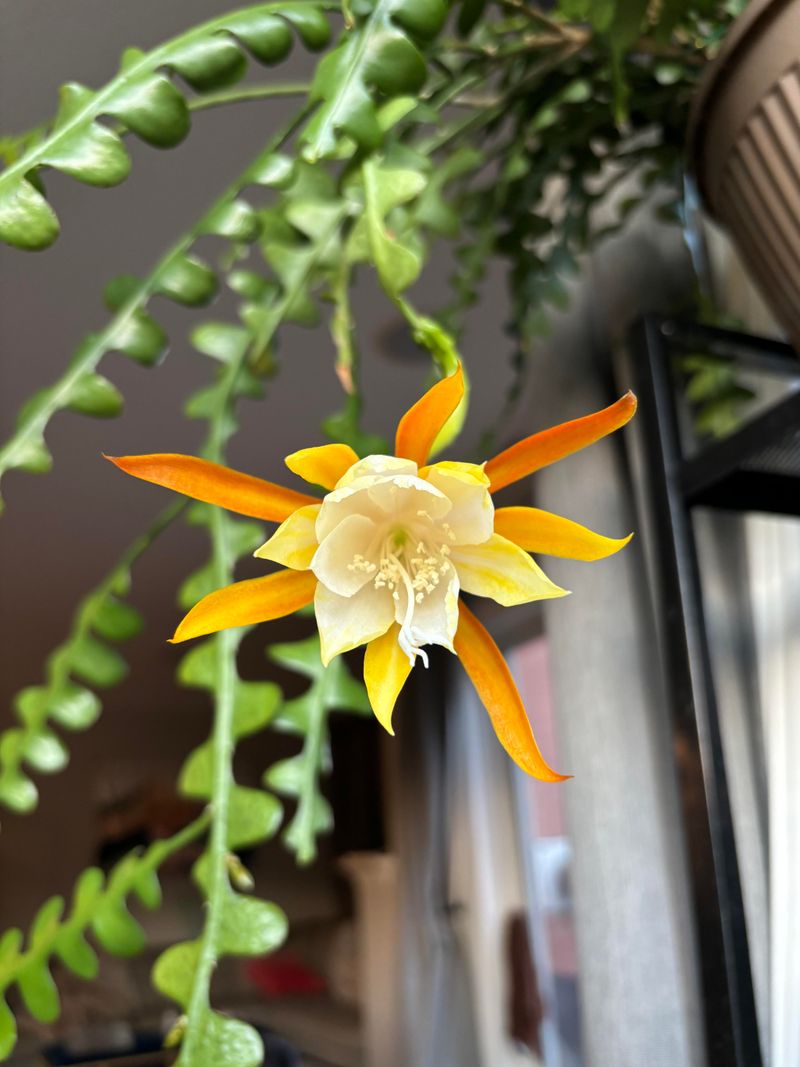
One of the most magical moments in growing fishbone cactus comes when those spectacular white flowers appear, usually at night, filling the room with sweet fragrance. These blooms can span nearly a foot across with delicate petals radiating from the center.
Getting your plant to flower requires meeting specific conditions that signal it’s time to put energy into reproduction rather than just growing more stems.
Mature plants bloom most reliably, typically after reaching three or four years old. Cooler fall and winter temperatures help trigger flowering, so avoid placing your plant near heating vents that keep temperatures constantly warm.
A rest period with reduced watering and no fertilizer during winter months also encourages blooming. Some growers move plants to slightly cooler rooms during winter, though California’s mild climate often provides natural temperature drops that work perfectly.
Blooms typically appear in late winter or spring, emerging from the edges of stems. Each flower lasts only one or two nights, but plants often produce multiple blooms over several weeks.
Don’t be discouraged if your plant doesn’t flower the first year or two. Focus on keeping it healthy with proper light, water, and soil, and eventually those stunning blooms will reward your patience with a show worth waiting for.