How To Grow Perfect Rhubarb Plants In Wisconsin
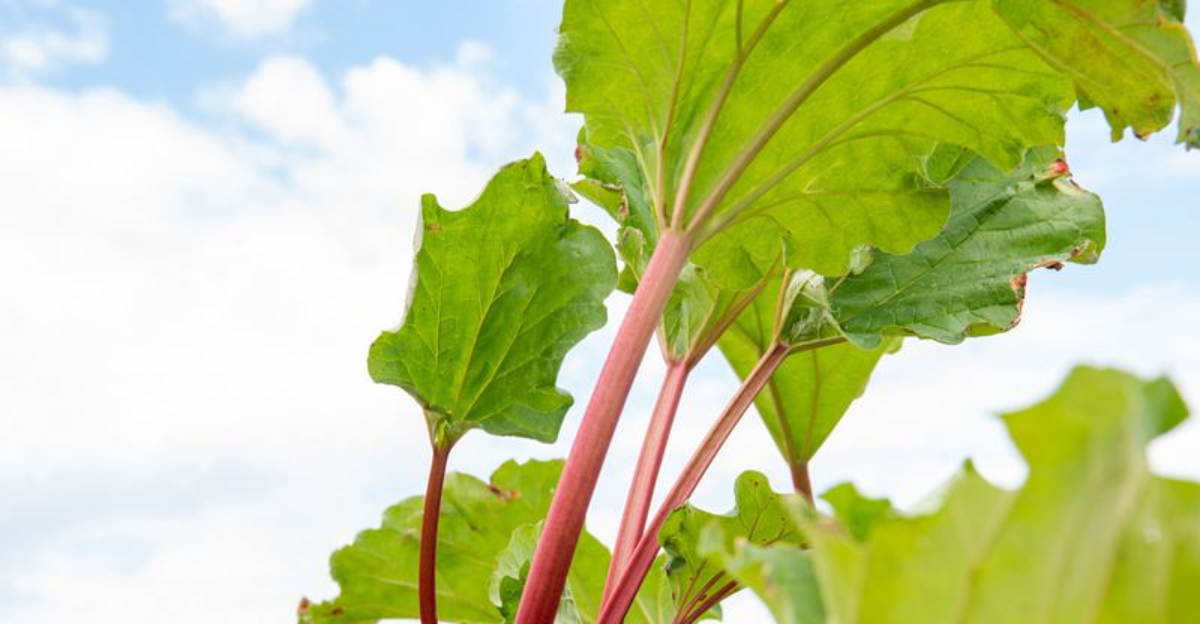
Rhubarb is one of the first plants to wake up in a Wisconsin garden, often pushing through cold soil while other crops still sleep. That early arrival makes it a favorite, but growing perfect rhubarb takes more than luck.
Soil preparation, spacing, and patience all matter if you want thick, flavorful stalks year after year. How you care for rhubarb early on shapes everything that comes later.
Perfect rhubarb starts with understanding Wisconsin’s climate. Cold winters help rhubarb thrive, not harm it.
A healthy rhubarb plant can reward you for decades when it’s planted correctly. Rhubarb is proof that simple care often works best.
Many gardeners are surprised by how low maintenance rhubarb can be once established. With the right location and a few smart habits, rhubarb almost grows itself.
Learning how to grow perfect rhubarb plants in Wisconsin can turn a classic crop into one of the most reliable and satisfying parts of your garden.
1. Choose The Right Planting Location For Wisconsin Conditions
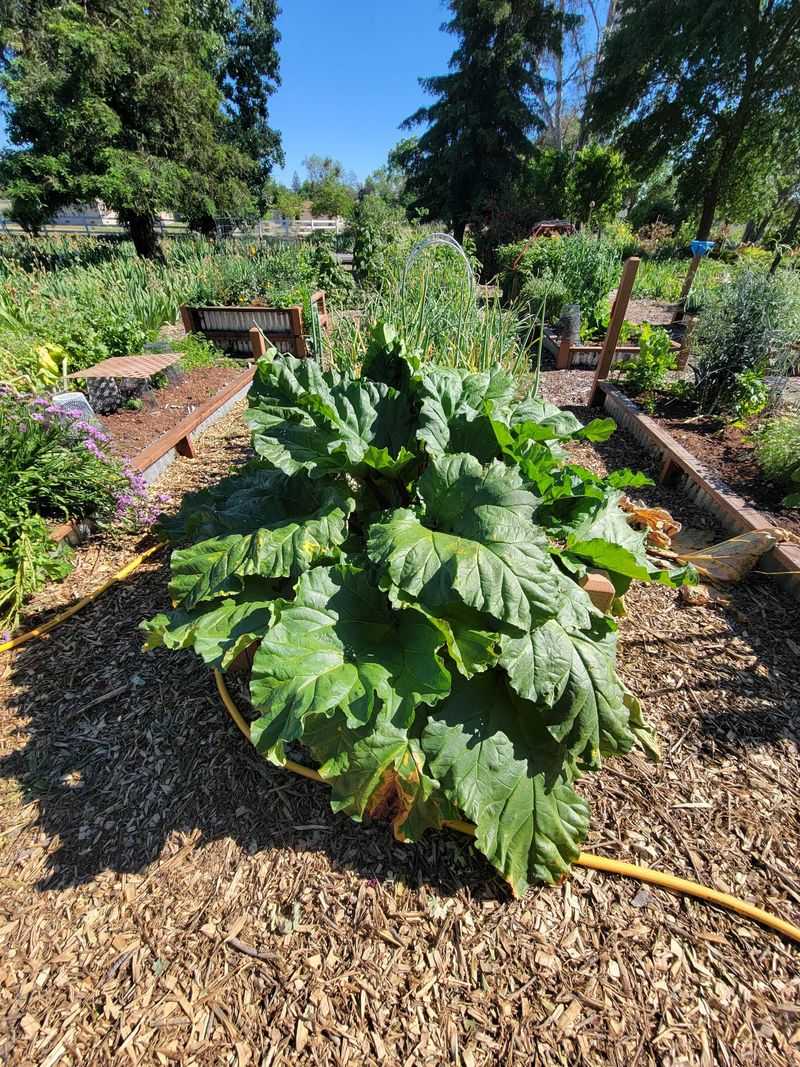
Location matters tremendously when establishing rhubarb plants in your Wisconsin garden. Full sun exposure is ideal for rhubarb, though these plants can tolerate partial shade, especially during the hottest part of summer afternoons.
Select a spot that receives at least six hours of direct sunlight daily for the most vigorous growth and best stalk production.
Good drainage is absolutely critical for rhubarb success in Wisconsin. These plants despise standing water, which can cause crown rot and other problems that weaken or destroy your plants.
If your garden has heavy clay soil common in many Wisconsin areas, consider building raised beds to improve drainage and give your rhubarb the conditions it craves.
Think about permanence when choosing your planting site. Rhubarb plants can live and produce for 15 to 20 years in the same location, so pick a spot where they won’t need to be moved. Avoid areas where you’ll need to disturb the soil frequently or where annual garden rotation happens.
Keep rhubarb away from trees and large shrubs that compete for nutrients and water. These perennials need space to spread their large leaves and develop extensive root systems.
A dedicated perennial bed or the edge of your vegetable garden works wonderfully for Wisconsin rhubarb plantings.
Consider accessibility when planning your rhubarb patch. You’ll be harvesting stalks regularly during the growing season, so place plants where you can easily reach them.
A spot near your kitchen door makes grabbing fresh rhubarb for recipes convenient and encourages regular harvesting, which actually promotes better plant health and continued production throughout the season.
2. Prepare Rich, Well-Amended Soil Before Planting
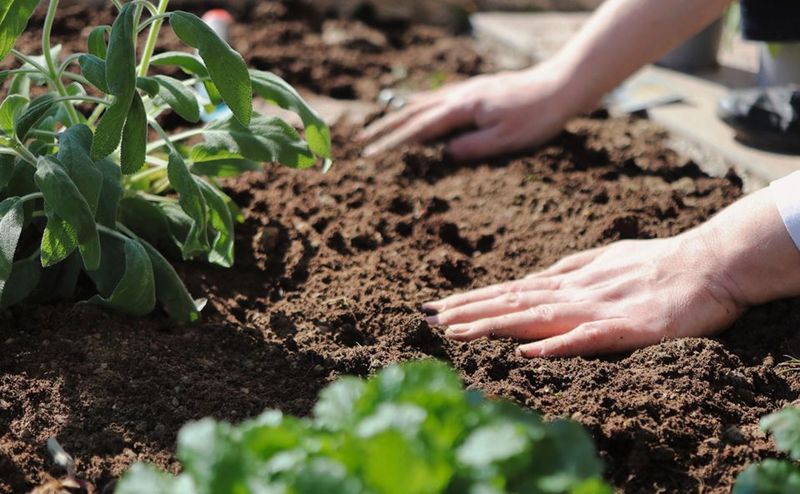
Soil preparation is where successful rhubarb growing truly begins. These heavy feeders demand nutrient-rich soil to support their large leaves and thick stalks.
Start by testing your Wisconsin soil’s pH level, aiming for a range between 5.5 and 6.5, which rhubarb prefers for optimal nutrient uptake.
Work generous amounts of compost or well-rotted manure into your planting area. Mix at least 3 to 4 inches of organic matter into the top 12 inches of soil.
This improves soil structure, adds essential nutrients, and enhances moisture retention without creating waterlogged conditions that rhubarb hates.
Many Wisconsin soils benefit from additional amendments. If your soil test reveals low phosphorus levels, add bone meal or rock phosphate to support strong root development. Potassium is also important for rhubarb, so consider adding greensand or wood ash if levels are low.
Timing your soil preparation matters in Wisconsin’s climate. Prepare beds in fall for spring planting, allowing amendments to break down over winter.
This gives you ready-to-plant beds as soon as the ground thaws in April or early May, which is the ideal planting window for Wisconsin rhubarb gardeners.
Create individual planting holes that are generous in size, about 2 feet wide and 1 foot deep for each crown. Fill these holes with your amended soil mixture, creating a nutrient-rich environment that will support your rhubarb plants for years to come.
Remember that investing time in proper soil preparation now pays dividends in healthier plants and bigger harvests throughout your rhubarb patch’s lifetime in your Wisconsin garden.
3. Plant Crowns At The Correct Depth And Spacing
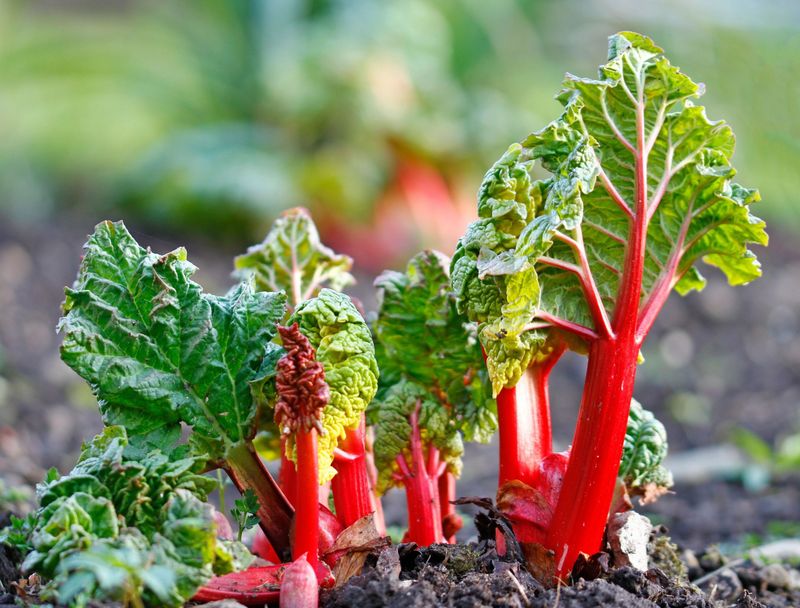
Proper planting depth makes the difference between thriving rhubarb and struggling plants in Wisconsin gardens. Position rhubarb crowns so the buds sit 1 to 2 inches below the soil surface.
Planting too deep can smother the buds and delay emergence, while planting too shallow exposes crowns to drying conditions and temperature fluctuations.
Spacing is equally important for long-term success. Place rhubarb crowns 3 to 4 feet apart in all directions.
This seems excessive when you’re planting small crowns, but mature rhubarb plants in Wisconsin develop massive leaf canopies that need this room to grow without crowding neighbors.
Spring planting works best in Wisconsin, typically from mid-April through May once the soil can be worked. Fall planting is possible but gives plants less time to establish before winter arrives.
Choose healthy crowns with at least one or two visible buds, avoiding any that show soft spots or damage.
Handle crowns gently during planting to avoid breaking the buds. Firm the soil around each crown after planting, eliminating air pockets that can dry out roots. Water thoroughly after planting to settle soil and provide moisture for initial root growth.
Mark your planting locations clearly, especially if planting in early spring before buds emerge. New gardeners in Wisconsin sometimes forget where they planted rhubarb and accidentally disturb the area before shoots appear.
Simple plant markers or small stakes help you remember where your rhubarb crowns are located. Mulch lightly around newly planted crowns with straw or shredded leaves, keeping mulch away from the crown itself to prevent rot while conserving soil moisture during establishment.
4. Water Consistently During The Growing Season
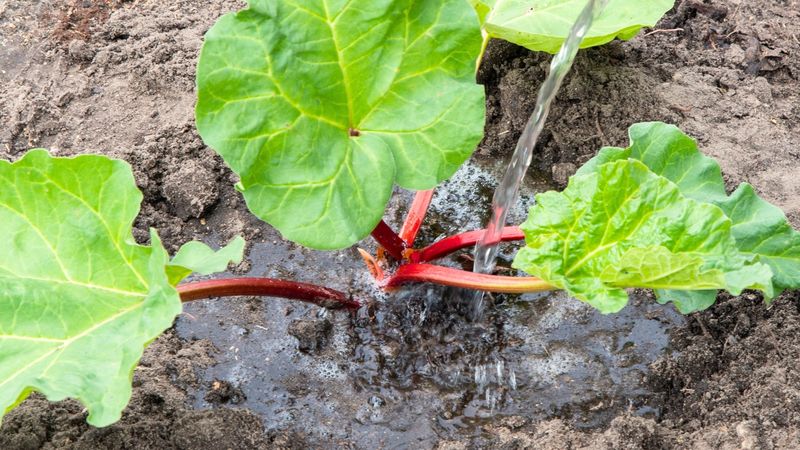
Consistent moisture is essential for producing tender, juicy rhubarb stalks in Wisconsin. These plants need about 1 to 2 inches of water weekly during the growing season, either from rainfall or supplemental irrigation.
Deep, infrequent watering encourages strong root development better than frequent shallow watering.
Monitor soil moisture regularly, especially during Wisconsin’s sometimes dry spring and early summer periods. Stick your finger into the soil near your rhubarb plants; if the top 2 to 3 inches feel dry, it’s time to water. Consistent moisture prevents stress that can cause stalks to become tough and stringy.
Drip irrigation or soaker hoses work wonderfully for rhubarb in Wisconsin gardens. These methods deliver water directly to the root zone without wetting leaves, reducing disease problems. If you water by hand, direct water at the soil rather than overhead to keep foliage dry.
Mulching helps maintain consistent soil moisture throughout the growing season. Apply 2 to 3 inches of organic mulch like straw, shredded leaves, or compost around plants, keeping it a few inches away from the crown.
Mulch reduces evaporation, moderates soil temperature, and suppresses weeds that compete for water.
Adjust watering as the season progresses in Wisconsin. Plants need more water during active growth in spring and early summer when producing stalks.
Reduce watering after harvest season ends in late June or July, allowing plants to naturally slow down. However, don’t let soil become bone dry during summer and fall, as rhubarb still needs some moisture to maintain healthy roots and prepare for the next growing season.
5. Fertilize Regularly To Support Vigorous Growth
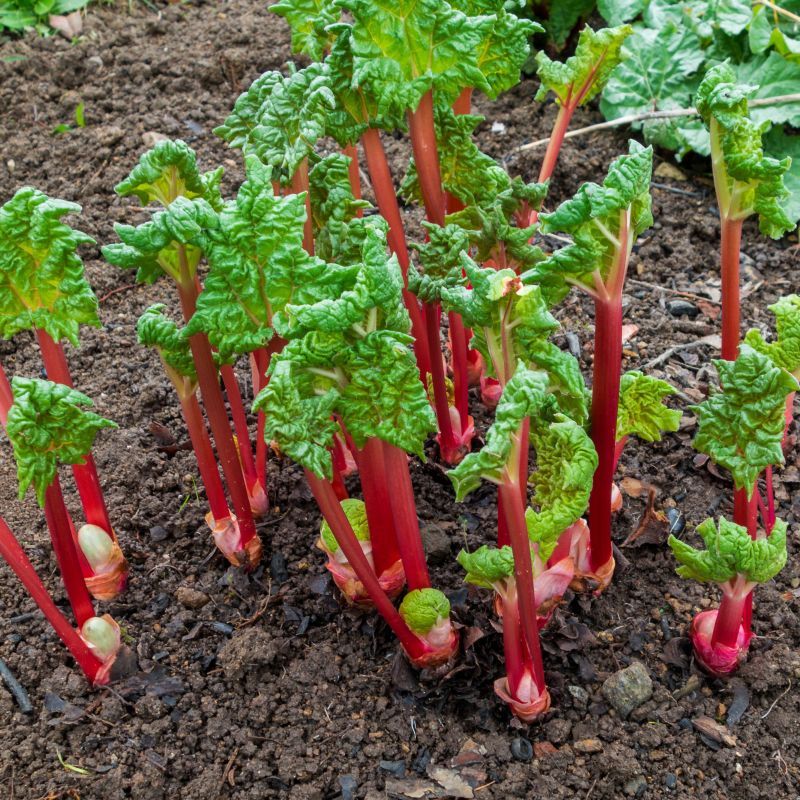
Rhubarb’s reputation as a heavy feeder means regular fertilization is necessary for Wisconsin gardeners wanting abundant harvests.
Apply fertilizer in early spring just as plants begin emerging from dormancy, typically in April across most of Wisconsin. This early feeding supports the vigorous spring growth that produces the best stalks.
Balanced fertilizers work well for rhubarb, though slightly higher nitrogen formulations support leaf and stalk production.
Apply about 1/2 cup of 10-10-10 fertilizer per plant in a circle around each crown, keeping fertilizer 4 to 6 inches away from the center to avoid burning tender shoots.
A second feeding in late June or early July, after harvest season ends, helps plants recover and build energy reserves for next year.
This post-harvest fertilization is often overlooked but makes a real difference in long-term plant health and productivity in Wisconsin rhubarb patches.
Organic options work beautifully for rhubarb if you prefer natural fertilizers. Compost, well-rotted manure, or organic vegetable fertilizers provide nutrients while improving soil structure. Side-dress plants with an inch or two of compost in spring and again after harvest for excellent results.
Avoid over-fertilizing, which can cause excessive leaf growth at the expense of stalk quality. More isn’t always better with rhubarb fertilization.
Watch your plants for signs of nutrient deficiency like yellowing leaves or weak growth, which indicate a need for additional feeding. Conversely, if plants produce enormous leaves but thin stalks, you might be providing too much nitrogen.
Finding the right balance for your specific Wisconsin soil conditions may take a season or two of observation and adjustment.
6. Remove Flower Stalks Promptly When They Appear
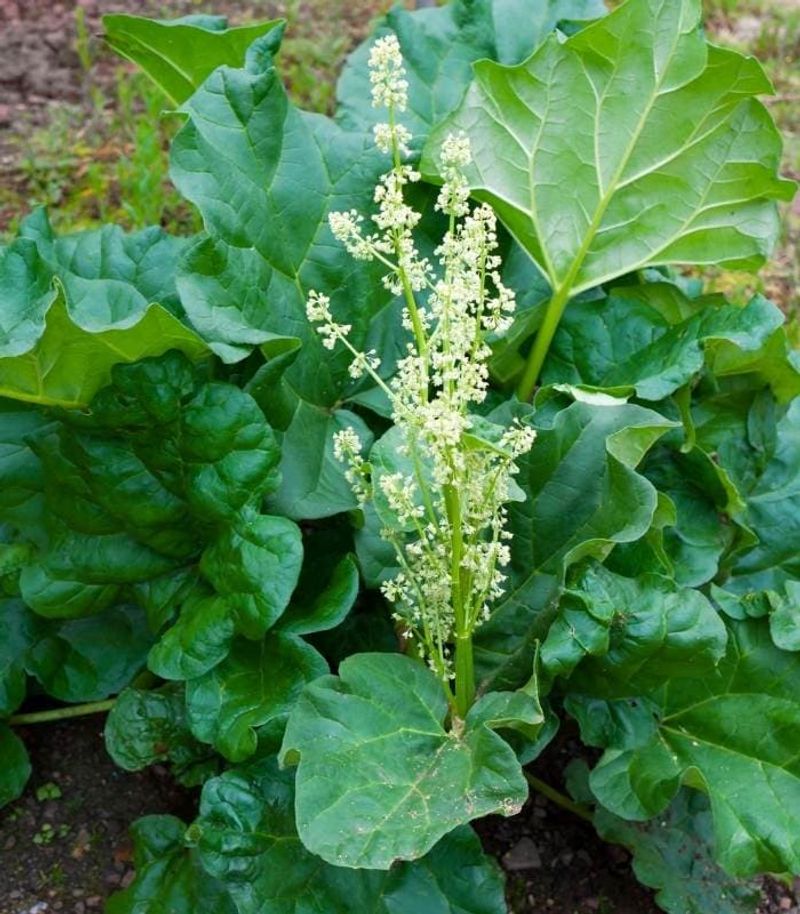
Flowering is natural for rhubarb plants, but it diverts energy away from producing the edible stalks Wisconsin gardeners want.
Seed stalks typically appear in late spring or early summer, rising from the plant’s center with small greenish-white flowers. Remove these flower stalks as soon as you notice them developing.
Cut or break off flower stalks at the base where they emerge from the crown. Don’t wait until flowers fully develop and bloom, as by then the plant has already invested significant energy into reproduction rather than stalk production. Early removal redirects that energy back into producing harvestable stalks.
Some rhubarb varieties flower more than others, and older plants tend to flower more frequently than younger ones. If your Wisconsin rhubarb flowers excessively year after year, it might indicate stress from poor growing conditions, overcrowding, or the need for division.
Flowering doesn’t make rhubarb stalks inedible, but it does reduce their quality. Plants that have flowered often produce thinner, tougher stalks with less desirable flavor compared to plants that haven’t bolted. Consistent flower removal throughout the season maintains better stalk quality.
Check your rhubarb plants regularly during late spring and early summer in Wisconsin, the peak flowering period. Some vigorous plants may send up multiple flower stalks throughout the season.
Remove each one promptly to keep plants focused on stalk production. Think of flower removal as redirecting your plant’s energy toward the harvest you want rather than the seeds it wants to make.
This simple maintenance task takes just minutes but significantly improves your rhubarb harvest quality and quantity throughout the growing season in Wisconsin.
7. Harvest Properly And Know When To Stop Picking
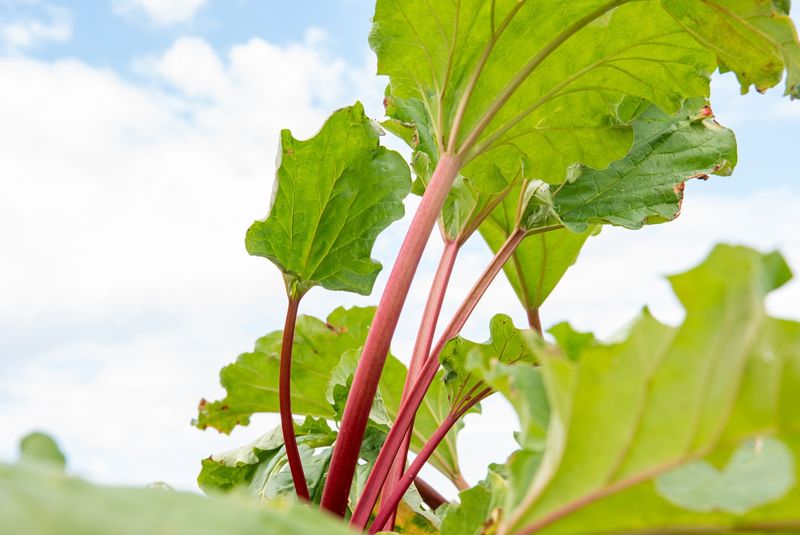
Patience pays off with rhubarb harvesting in Wisconsin gardens. Don’t harvest any stalks during the first year after planting, allowing plants to establish strong root systems.
During the second year, harvest lightly for just 2 to 3 weeks. From the third year onward, you can harvest for a full 8 to 10 week period.
Harvest rhubarb stalks when they’re 10 to 15 inches long and at least 3/4 inch in diameter. Grasp stalks near the base and pull with a slight twisting motion rather than cutting.
This pulling method removes the entire stalk cleanly and reduces the chance of leaving stub ends that can rot.
Never remove all stalks from a Wisconsin rhubarb plant. Always leave at least one-third to one-half of the stalks on each plant so it can continue photosynthesizing and building energy for future growth. Taking too many stalks weakens plants and reduces productivity in following years.
Stop harvesting by late June or early July in Wisconsin, even if plants still look vigorous. Rhubarb needs the remainder of the growing season to rebuild energy reserves for winter dormancy and next spring’s growth. Harvesting too late into summer stresses plants and can reduce next year’s harvest.
Remove and discard the leaf blades after harvesting stalks, as these contain oxalic acid at levels that make them unsuitable for eating. Only the stalks are edible.
Compost the leaves if you like, or leave them in the garden as mulch. Fresh rhubarb stalks store well in the refrigerator for up to two weeks or can be frozen for longer storage, giving Wisconsin gardeners access to homegrown rhubarb long after harvest season ends.