How To Keep Your Adenium Flowering Beautifully In Georgia
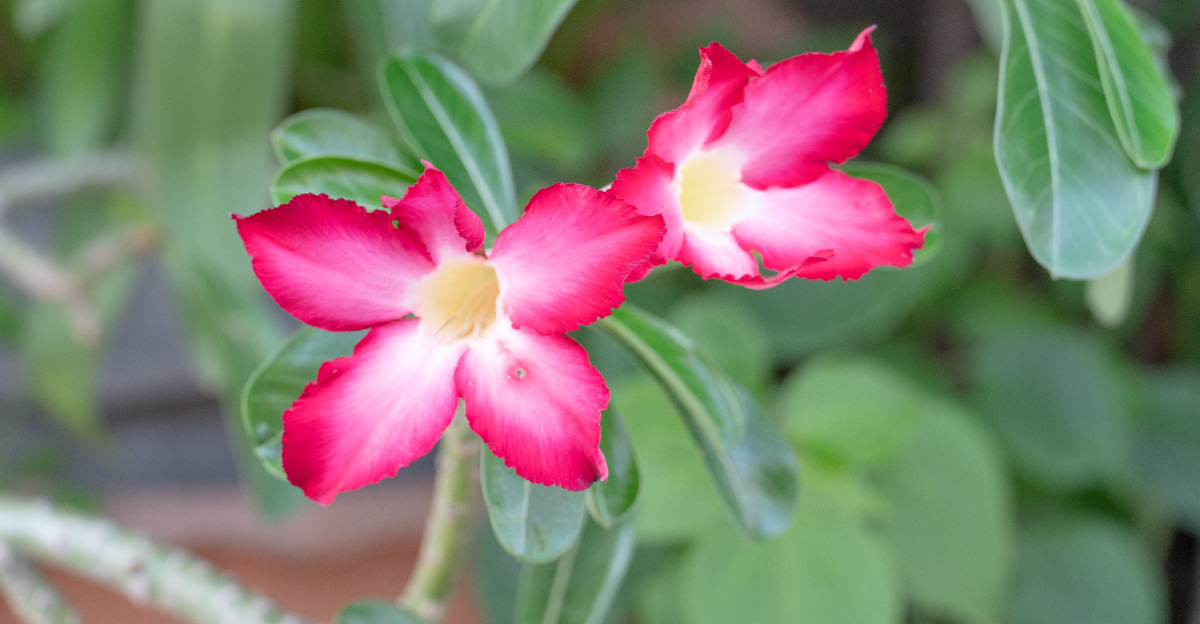
Adenium can thrive in Georgia, yet flowering is where many gardeners get stuck. The plant grows, the leaves look strong, and still the blooms hesitate or fade too soon.
That moment usually raises the same question about what is missing.
Georgia’s mix of warmth and humidity shapes how adenium behaves in ways that are easy to overlook.
The plant responds to subtle shifts in light, moisture, and seasonal timing, and those signals decide whether buds keep forming or quietly stop.
When conditions drift out of balance, flowering is often the first thing to suffer.
If your adenium looks healthy but never quite delivers the blooms you expect, there is a reason rooted in how it reacts to Georgia’s climate. Understanding that response changes everything and turns flowering from unpredictable to reliable.
1. Keep Indoor Temperatures Warm And Stable Year-Round
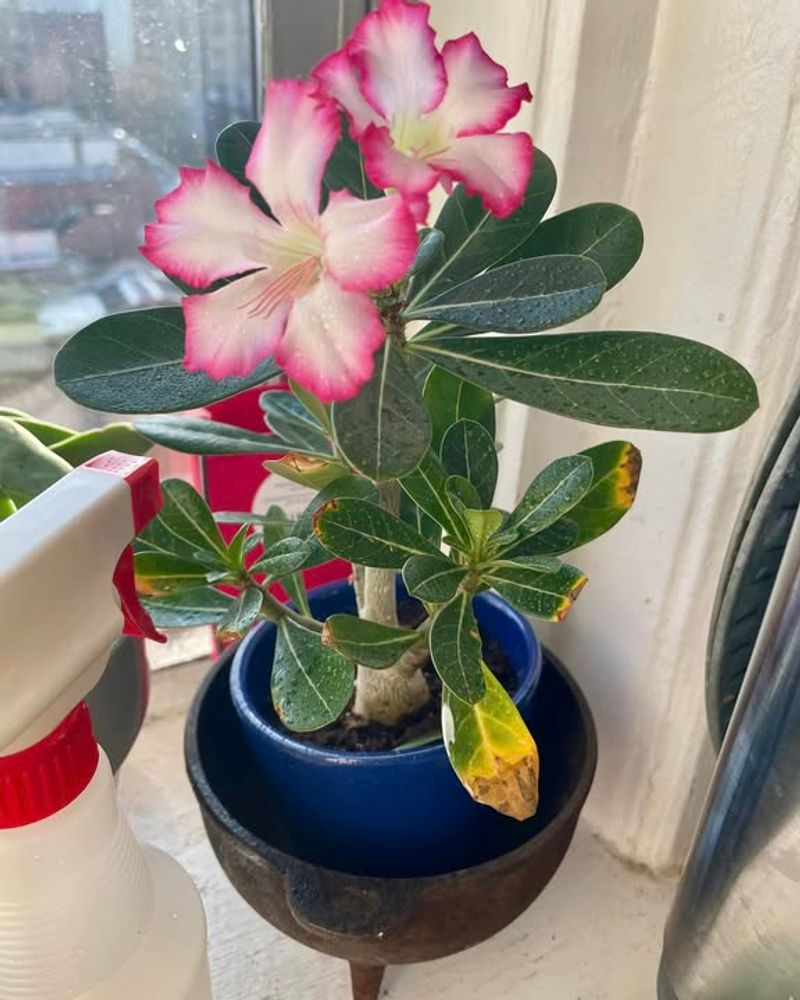
Adeniums absolutely need warmth to produce flowers, and cold temperatures will stop blooming faster than anything else. Your plant thrives when indoor temperatures stay between 65 and 90 degrees Fahrenheit consistently throughout the day and night.
Georgia winters can get surprisingly chilly, especially in northern parts of the state, so keeping your adenium away from cold windows and drafty areas becomes essential during November through March.
Many Georgia homes use central heating that creates temperature swings when the system cycles on and off. These fluctuations stress adeniums and signal them to go dormant instead of flowering.
Place your plant in a room that maintains steady warmth, avoiding spots near air conditioning vents in summer or heating registers in winter that blast hot or cold air directly onto the foliage.
Nighttime temperatures matter just as much as daytime warmth for flower production. Adeniums need that consistent heat even after the sun goes down to keep their metabolism active and blooms forming.
If your Georgia home gets cold at night during winter months, consider using a small space heater in the room where you keep your adenium, but make sure it does not create dry air that drops humidity too low.
Temperature stress shows up quickly in adeniums through leaf drop, stunted growth, and complete absence of flower buds.
Monitor your indoor environment with a simple thermometer placed near your plant to catch any temperature problems before they affect blooming.
Consistent warmth throughout the entire year gives your adenium the stable conditions it needs to produce those spectacular flowers Georgia gardeners love to show off.
2. Give Maximum Direct Light Near A Sunny Window
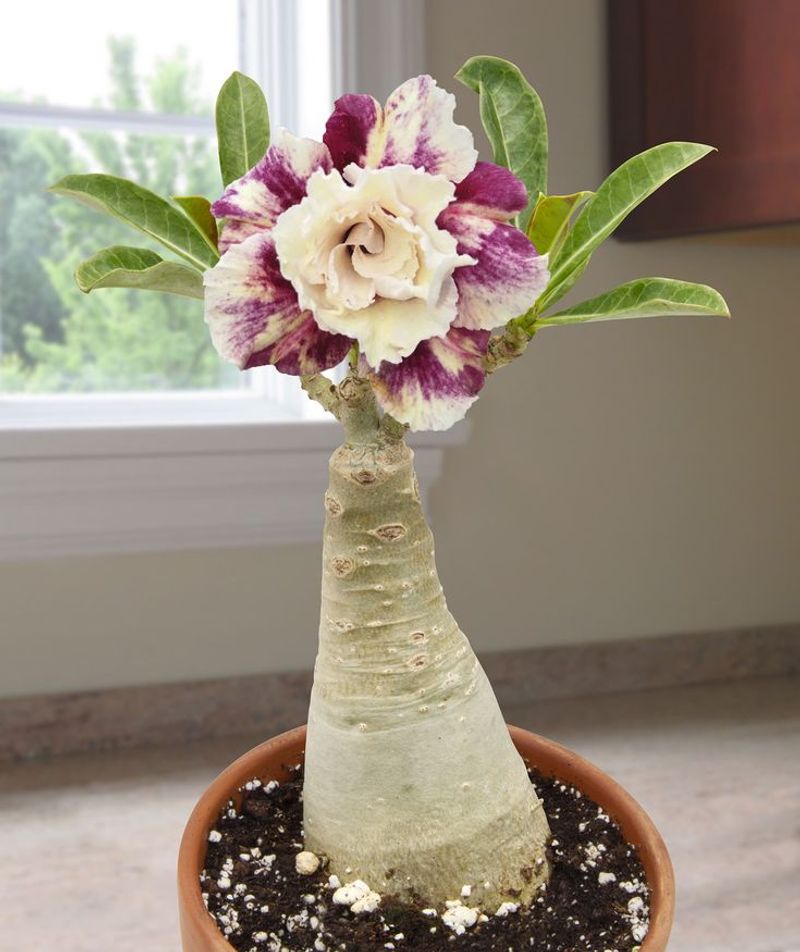
Bright, intense light makes the difference between an adenium that blooms constantly and one that just sits there looking green. These desert plants evolved under blazing sunshine, so they need at least six to eight hours of direct sun daily to trigger flower production.
South-facing windows work best in Georgia homes because they receive the strongest light throughout the day, though east or west windows can work if they get several hours of unobstructed sun.
Without enough light, your adenium will grow tall and leggy as it stretches toward any available brightness, and you will see very few if any flowers developing.
The stems become weak, leaves spread far apart, and the plant loses that compact, attractive shape adeniums are known for.
Georgia gardeners sometimes make the mistake of placing these plants in bright indirect light, which sounds good but simply does not provide the intensity adeniums require for blooming.
Window glass filters some sunlight, so placing your adenium as close to the glass as possible maximizes the light it receives.
During Georgia summers when the sun is strongest, you might see some leaf scorching if your plant is not acclimated, but adeniums generally handle intense light better than most houseplants.
Rotate your plant every few days so all sides receive equal exposure and growth stays balanced rather than leaning heavily toward the light source.
If your Georgia home lacks sunny windows, consider supplementing with a strong grow light positioned close to the plant.
LED grow lights designed for flowering plants work well and can extend your adenium’s blooming season even during our shorter winter days when natural light becomes limited across the state.
3. Use Fast-Draining Potting Mix To Prevent Root Stress
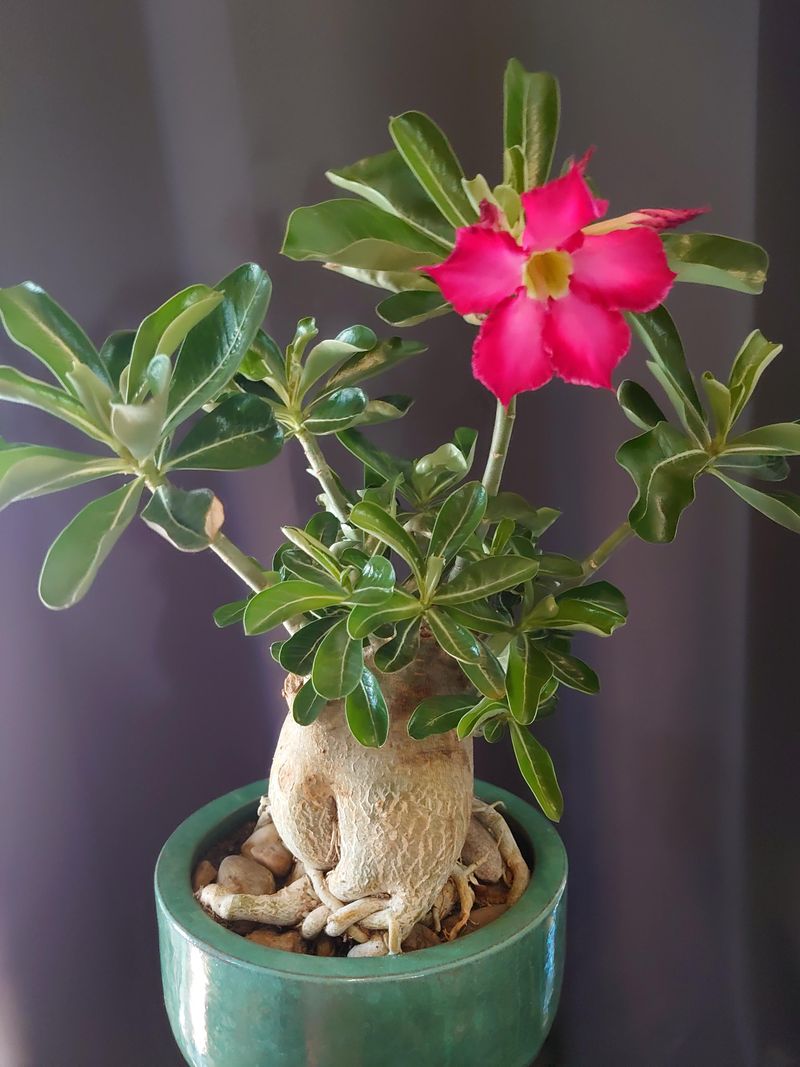
Root health determines whether your adenium will bloom, and that starts with the right growing medium.
Regular potting soil holds too much moisture for these desert plants, leading to root problems that shut down flowering and eventually threaten the entire plant.
A specialized cactus and succulent mix provides the quick drainage adeniums need, or you can create your own blend using equal parts potting soil, coarse sand, and perlite or pumice.
Georgia’s humidity adds another challenge because even fast-draining soil can stay damp longer than it would in drier climates.
Your adenium’s thick, swollen stem stores water like a camel’s hump, so the roots need to dry out completely between waterings rather than sitting in consistently moist conditions.
When soil stays wet too long, roots cannot breathe properly and flowering stops as the plant focuses energy on survival instead of reproduction.
The container you choose matters almost as much as the soil mixture itself. Terracotta pots work beautifully for adeniums because the porous clay allows excess moisture to evaporate through the pot walls, helping soil dry faster.
Plastic pots retain more moisture and require extra attention to avoid overwatering, though they work fine if you adjust your watering schedule accordingly and ensure the pot has multiple drainage holes in the bottom.
Check your soil mix by watering thoroughly and watching how quickly water runs through and out the drainage holes. If water pools on the surface or drains slowly, your mix is too heavy and needs more sand or perlite added.
Adeniums growing in properly draining soil in Georgia homes will reward you with vigorous growth and abundant flowers throughout the growing season.
4. Water Only After Soil Fully Dries Between Waterings
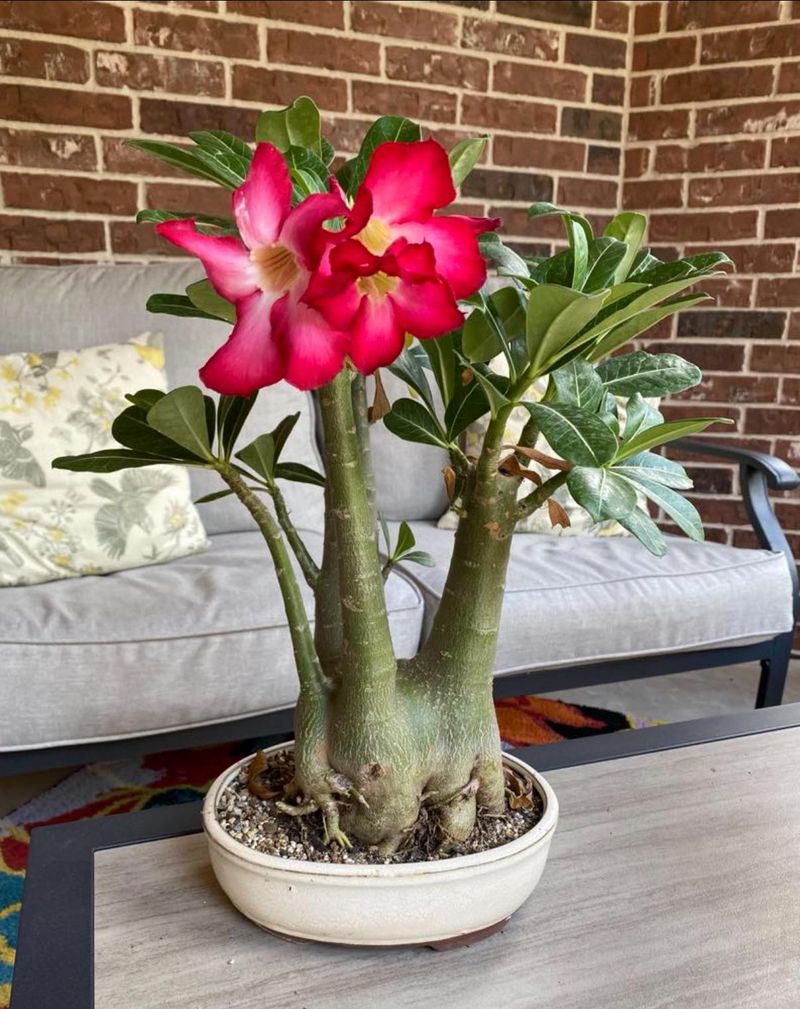
Overwatering destroys more adeniums than any other care mistake, and it happens easily in Georgia where we are used to keeping most houseplants consistently moist.
Your adenium needs a completely different approach because its succulent nature means it stores water in that thick stem and can go surprisingly long periods without a drink.
Wait until the soil dries out completely all the way to the bottom of the pot before watering again, which might mean watering only once every week or two depending on your home conditions.
The finger test works perfectly for checking soil moisture in adeniums. Stick your finger down into the soil at least two inches deep, and if you feel any dampness at all, wait a few more days before watering.
Many Georgia gardeners worry their adenium looks thirsty when the soil surface appears dry, but remember that the roots grow much deeper where moisture lingers longer.
That swollen stem acts as a built-in reservoir, so your plant can handle dry soil much better than wet roots.
When you do water, do it thoroughly until water runs freely from the drainage holes, then empty any excess from the saucer so the pot never sits in standing water.
This deep watering encourages roots to grow downward and develop a strong system that supports heavy flowering. Shallow, frequent watering creates weak surface roots and promotes problems rather than blooms.
Seasonal adjustments become important in Georgia homes where heating and cooling systems affect how quickly soil dries. Summer heat and air conditioning can dry soil faster, while winter warmth with less light slows water use considerably.
Always let the soil guide your watering schedule rather than following a rigid calendar, and your adenium will respond with healthy growth and consistent flowering.
5. Feed Lightly During Active Indoor Growth Periods
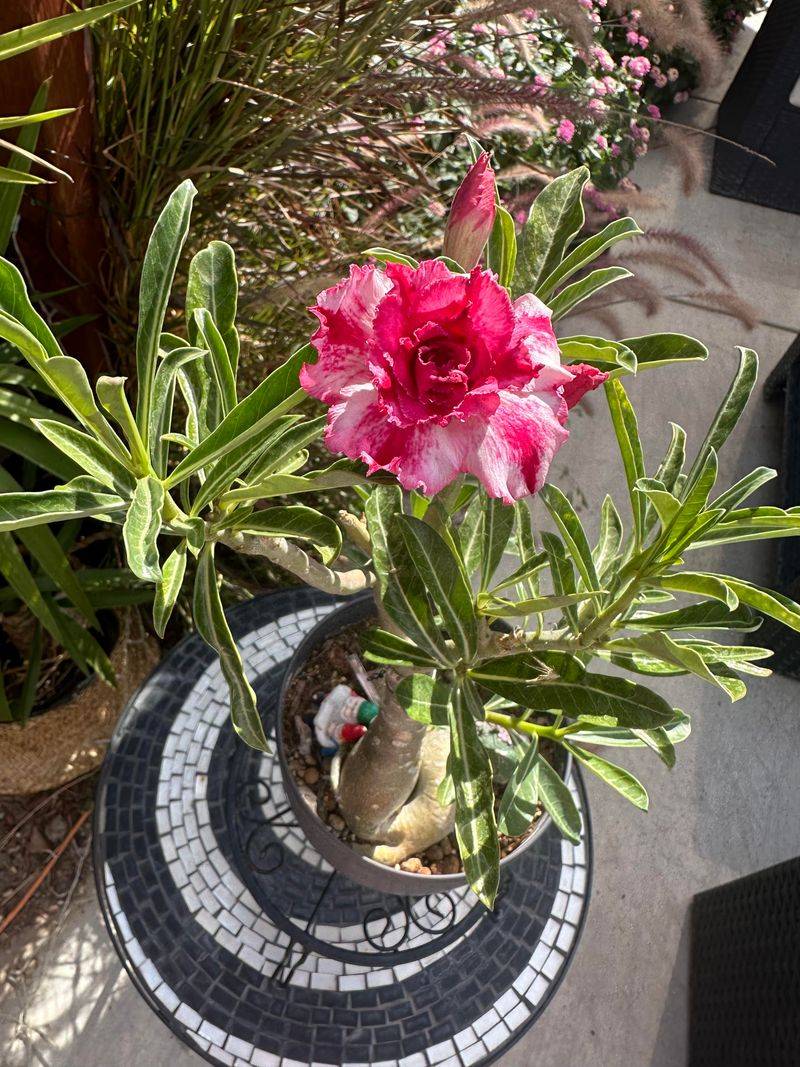
Fertilizer provides the nutrients your adenium needs to produce those spectacular flowers, but less is definitely more with these plants.
Too much feeding creates lush green growth at the expense of blooms, while the right amount encourages both healthy foliage and abundant flowers.
Use a balanced liquid fertilizer diluted to half the recommended strength every two to three weeks during spring and summer when your adenium is actively growing in your Georgia home.
Look for fertilizers with equal or nearly equal numbers in the N-P-K ratio, such as 10-10-10 or 20-20-20, which provide balanced nutrition without pushing excessive leaf growth.
Some gardeners prefer bloom-boosting formulas with higher phosphorus (the middle number) once flower buds start forming, which can enhance flower size and color intensity.
Whatever fertilizer you choose, always apply it to moist soil rather than dry to prevent root burn that can damage your plant.
Georgia’s indoor growing season often extends longer than outdoor gardens because we keep our homes warm year-round. However, adeniums still experience slower growth during winter months when natural light decreases and day length shortens.
Reduce or stop fertilizing completely from November through February unless your plant continues producing new growth and flowers under supplemental lighting.
Feeding during dormancy wastes nutrients and can actually harm your adenium by forcing growth when the plant needs rest.
Watch your plant for signs of nutrient deficiency, which shows up as pale leaves, weak stems, or reduced flowering despite good light and watering practices. These symptoms tell you to increase feeding frequency slightly.
Conversely, if you see very dark green leaves, elongated stems, or lots of foliage but no flowers, you are probably overfeeding and should cut back to allow your adenium to redirect energy toward blooming.
6. Avoid Cool Drafts That Disrupt Flower Production
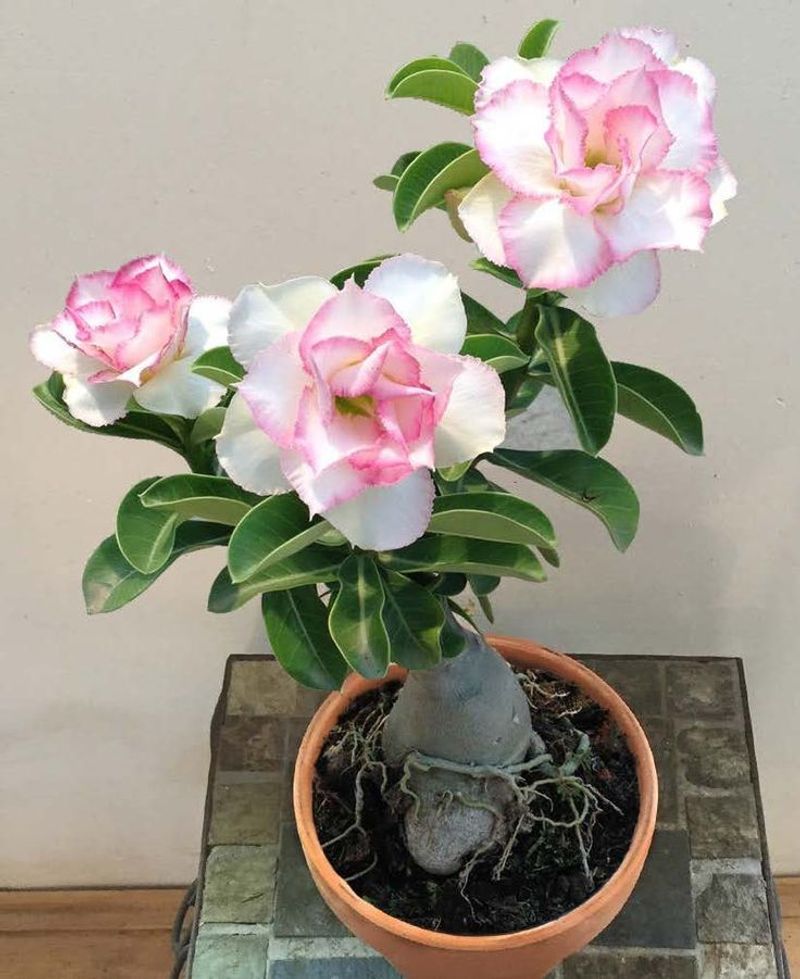
Drafts might seem like a minor concern, but they create major problems for adeniums trying to bloom in Georgia homes.
Cold air moving across your plant triggers stress responses that shut down flower production almost immediately as the adenium tries to protect itself from what it perceives as harsh conditions.
Air conditioning vents, frequently opened doors, and drafty windows all create temperature fluctuations that confuse your plant and prevent consistent blooming no matter how well you handle other care requirements.
Summer air conditioning in Georgia runs constantly during our hot, humid months, and those cold air blasts can drop temperatures around your adenium by 10 or 15 degrees in seconds.
This rapid cooling mimics the temperature drops adeniums experience in their native habitats when seasons change, signaling the plant to stop flowering and prepare for dormancy.
Position your adenium away from direct airflow from AC vents, even if that means sacrificing some light temporarily until you find a better permanent location.
Winter heating creates similar problems when warm air blows directly onto your plant, then shuts off and allows temperatures to plunge. The constant cycling stresses adeniums and leads to bud drop, where flower buds form but fall off before opening.
Front door areas in Georgia homes are particularly problematic because outdoor air rushes in each time someone enters, creating cold drafts that hit nearby plants repeatedly throughout the day.
Find a stable spot in your home where temperature stays consistent and air movement is minimal but not stagnant. Good air circulation prevents fungal problems, but steady, gentle movement works better than strong drafts.
Many Georgia adenium growers find success placing their plants in interior rooms away from exterior walls and doors where temperature control is easiest to maintain year-round.
7. Adjust Care Seasonally As Indoor Light Levels Change
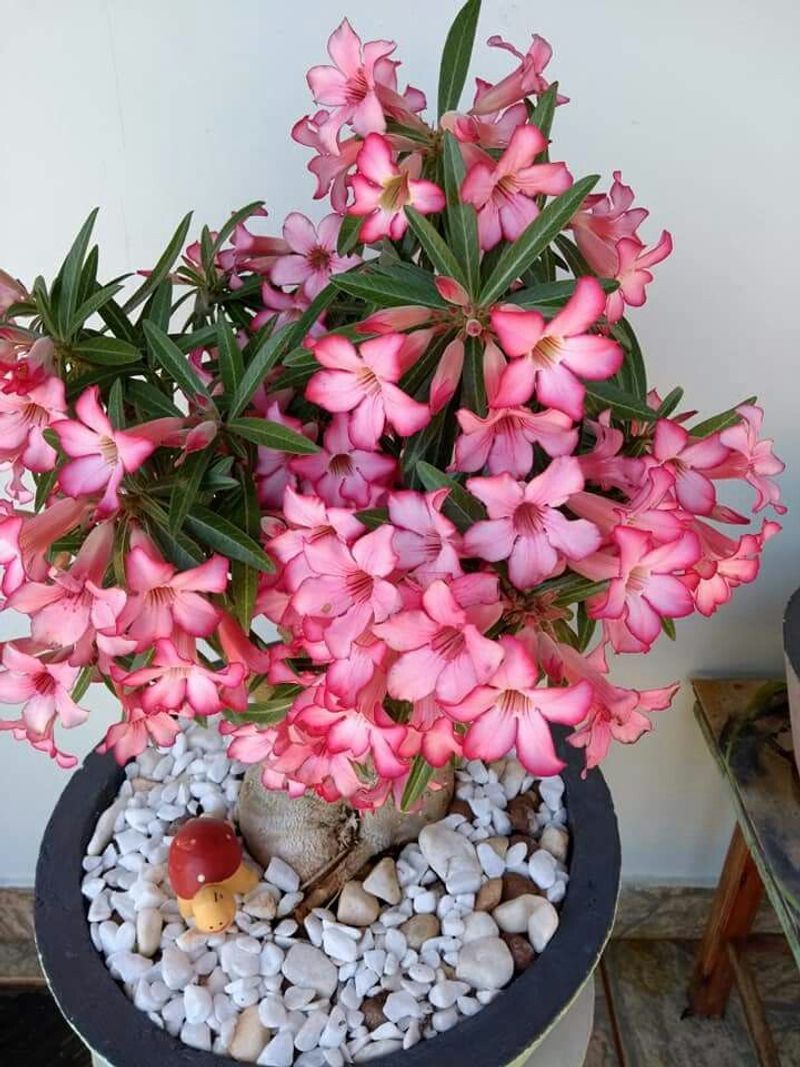
Seasonal changes affect indoor adeniums more than many Georgia gardeners realize, even though we keep our homes climate-controlled year-round.
Day length and light intensity shift dramatically between summer and winter, and your adenium responds to these changes just as it would in nature.
Summer brings long, bright days that promote vigorous growth and heavy flowering, while winter’s shorter days and weaker sun often trigger a semi-dormant period where blooming slows or stops completely regardless of temperature.
Recognizing these natural cycles helps you adjust care appropriately rather than fighting against your plant’s biological programming.
During Georgia’s winter months from December through February, your adenium may drop some leaves and stop producing new flowers even though it is sitting in a warm room.
This is completely normal and not a sign of problems. Reduce watering frequency to match the slower growth, cut back or eliminate fertilizer, and simply maintain your plant until spring light returns and growth resumes.
Spring transition in March and April brings rapidly increasing light levels that wake adeniums from winter rest. You will notice new leaf growth appearing on stems and flower buds forming as your plant responds to longer, brighter days.
This is the perfect time to resume regular fertilizing and gradually increase watering as your adenium ramps up its growth cycle. Many Georgia adenium owners see their heaviest flowering period from April through October when light conditions are optimal.
Consider supplementing natural light with grow lights during winter if you want to maintain year-round blooming.
Quality LED grow lights can extend your adenium’s growing season and encourage continued flowering during Georgia’s darkest months.
Allowing the plant a natural rest period, however, often leads to stronger growth and more impressive blooms once spring arrives.