How To Tell If Your Hydrangeas In Michigan Are Really Wilted Or Just Late To Leaf Out In April
Ever look at your hydrangeas in April and wonder if they missed the memo that spring has arrived? It’s a common moment in Michigan gardens.
While other plants start greening up, hydrangeas can sit there looking bare and lifeless, which can make anyone second-guess what’s going on.
Before assuming the worst, it helps to know that some types simply take their time after a cold winter. Those quiet stems may just be waiting for the right conditions.
Knowing what signs to watch for can help you avoid unnecessary pruning and give your plants the time they need to catch up.
1. Some Hydrangea Types Leaf Out Later In Michigan Spring
Walking outside in April to find your hydrangeas still bare while everything else seems to be waking up is enough to make any Michigan gardener nervous.
The truth is, not all hydrangea varieties follow the same spring schedule, and knowing which type you have can completely change how you interpret what you see.
Bigleaf hydrangeas, also called Hydrangea macrophylla, tend to be among the slower types to show new leaves in Michigan.
They often hold off until nighttime temperatures consistently stay above freezing, which in many parts of Michigan does not happen reliably until late April or even early May.
Smooth hydrangeas, like the popular Annabelle variety, usually push out new growth from the base of the plant and may look completely bare on old stems while fresh green shoots quietly emerge from the soil below.
Oakleaf hydrangeas can be even more patient, sometimes waiting until late May or early June before showing meaningful leaf growth.
If you planted one of these last fall and are now staring at what looks like a bundle of sticks, that behavior is completely normal.
Michigan’s unpredictable spring temperatures, with warm days followed by sudden cold snaps, can cause hydrangeas to pause their growth cycle as a protective response.
Checking which variety you have is always the smartest first step before assuming anything is wrong with your plant.
2. Bare Stems Can Still Be Alive Even Without Leaves
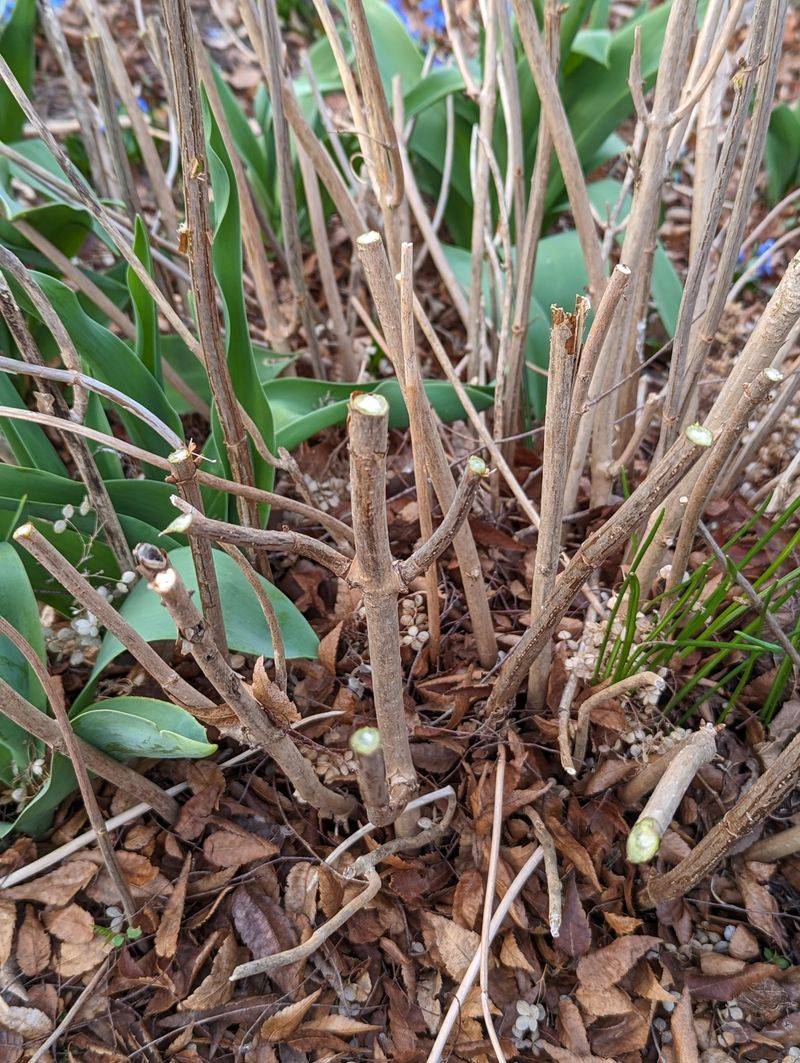
April in Michigan has a way of making perfectly healthy hydrangea stems look completely hopeless. Brown, dry-looking canes with zero leaf buds visible can send even experienced gardeners into full worry mode.
But appearances in early spring are often misleading, and a simple scratch test can tell you a lot more than just looking at the outside of the stem.
Take your fingernail or a small pocketknife and gently scratch the surface of a stem near the middle or upper section.
If the tissue just beneath the bark is green or white and slightly moist, the stem is still viable and capable of producing leaves.
If the tissue is tan, brown, and dry all the way through, that section of stem has likely not survived the winter.
Work your way down from the tip toward the base, because the lower portions of a stem often remain alive even when the upper sections did not make it through a harsh Michigan winter.
Your Michigan Garden Changes Every Week. Your Plan Should Too.
Gardening in Michigan changes quickly throughout the season. Every Friday you’ll receive a simple weekly plan showing exactly what to plant, prune, fertilize, harvest, and protect so you never miss the right timing.
Michigan winters with fluctuating freeze-thaw cycles can cause sections of a stem to experience damage while the rest of the plant remains perfectly fine. Finding even a few green sections is a genuinely encouraging sign.
Most hydrangeas that experience some upper stem damage will still push out new growth from lower on the plant or from the root zone as temperatures rise.
Patience combined with this simple scratch test gives you real information rather than just guessing based on how the plant looks from a distance.
3. Bud Swelling Is One Of The First Signs Of Growth
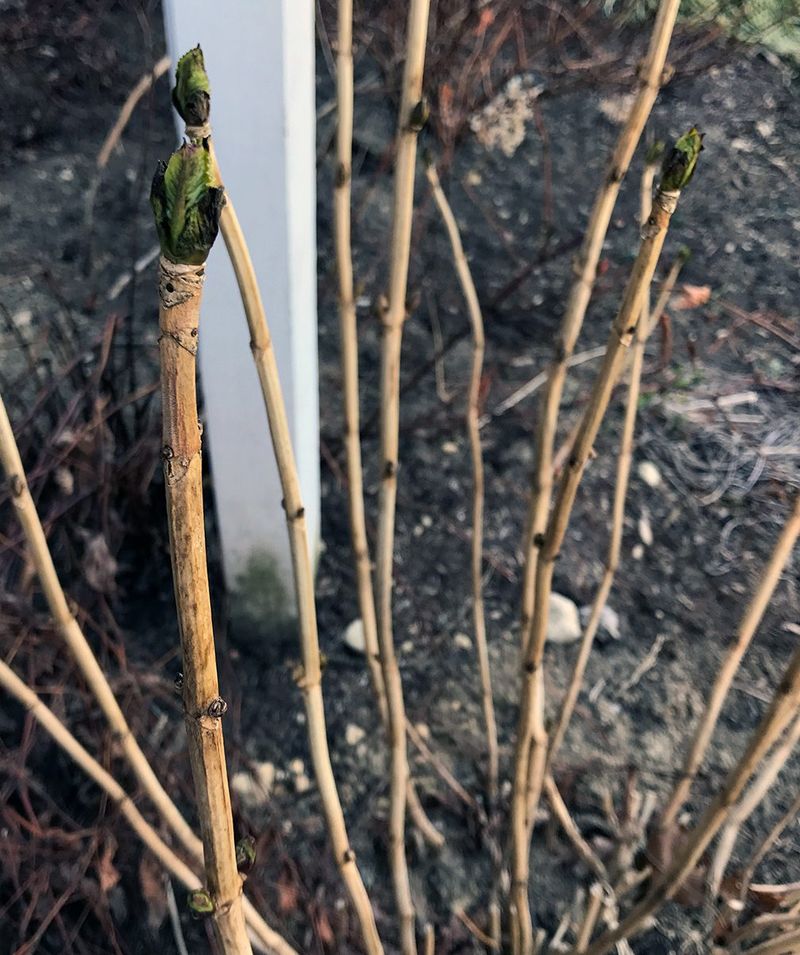
Before a single leaf unfurls, hydrangeas send out a quiet signal that spring growth is beginning – and that signal is bud swelling.
Spotting it requires getting close to your plants and looking carefully at the nodes along each stem, but once you know what you are looking for, it becomes one of the most reassuring sights in an April Michigan garden.
Buds that are beginning to swell will look slightly plump and rounded compared to the tight, flat buds that stayed dormant all winter.
In some varieties, you may also notice a faint blush of color, ranging from pale green to reddish-purple depending on the type of hydrangea.
Bigleaf hydrangeas often show reddish or burgundy bud coloring as they begin to break dormancy, which can be easy to spot even on an overcast Michigan spring day.
The timing of bud swell in Michigan is closely tied to soil temperature and air temperature patterns rather than the calendar date alone.
A stretch of mild days in late March can trigger early bud movement, only for a cold snap to slow things down again.
This stop-and-start pattern is completely normal and does not indicate that anything is wrong with the plant.
Checking your hydrangeas every few days during April rather than once a week gives you a much clearer picture of how the plant is progressing.
Small changes in bud size are easy to miss if too much time passes between observations.
4. Winter Dieback Can Delay Spring Leafing
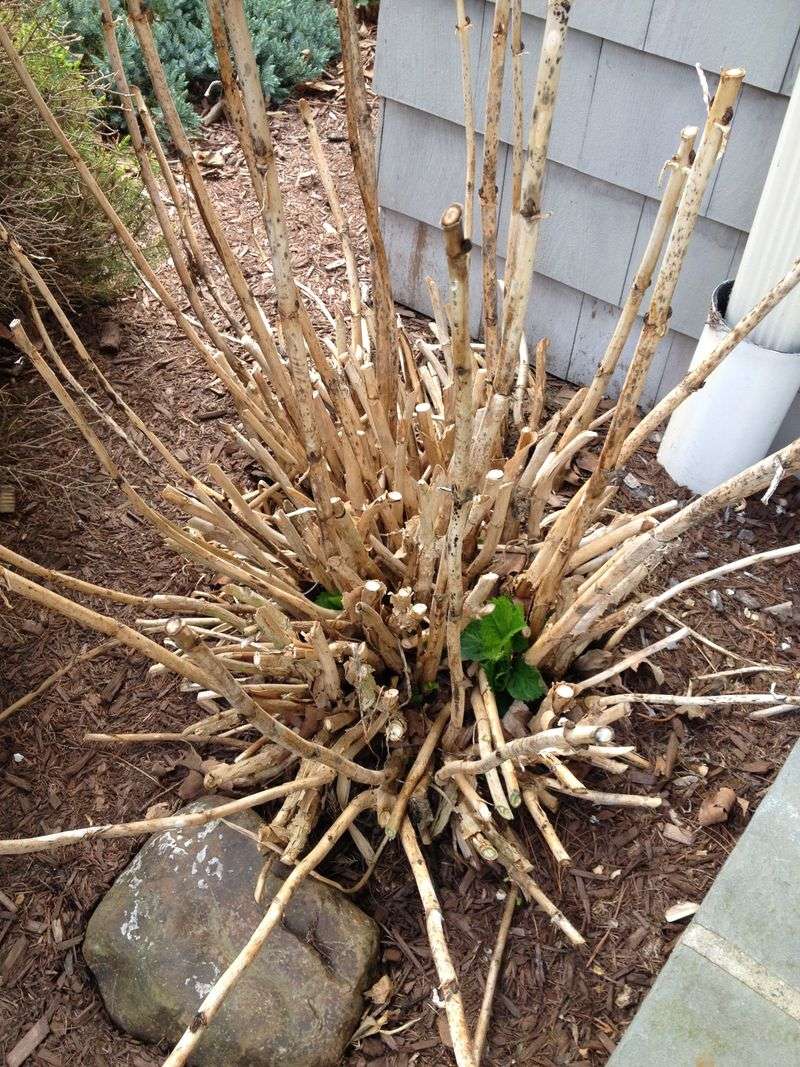
Some Michigan winters are harder on hydrangeas than others, and the aftermath often shows up as what gardeners call dieback – sections of the plant where stems did not survive the cold season.
Dieback does not mean the entire plant is gone. It simply means that some portions experienced more stress than they could handle, and those sections will need to be removed before the plant can focus its energy on new growth.
When dieback is significant, it can make a hydrangea look far worse in April than it actually is.
A plant that lost most of its upper stems to a cold Michigan winter may appear completely lifeless while actually preparing to push fresh shoots from lower on the canes or directly from the root crown.
This kind of recovery growth tends to emerge a bit later than normal because the plant is working harder to redirect its resources after losing sections above.
The amount of dieback a hydrangea experiences in Michigan often depends on how much snow cover it received, whether it was planted in a sheltered spot, and how gradually temperatures dropped in the fall.
Plants in exposed locations with little wind protection tend to experience more dieback than those nestled near a fence or building.
Removing the sections that did not survive, once you have confirmed they are no longer viable using the scratch test, actually helps the plant recover faster by eliminating unnecessary competition for water and nutrients moving up from the roots.
5. Soil Temperature Plays A Big Role In Timing
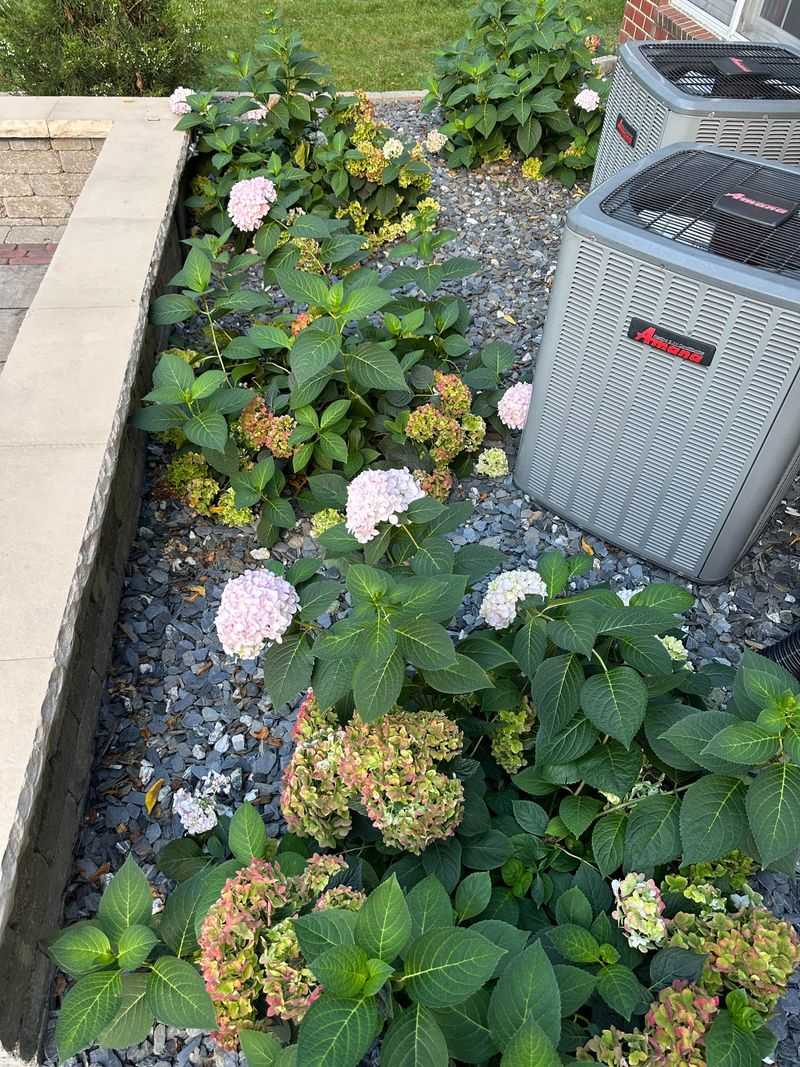
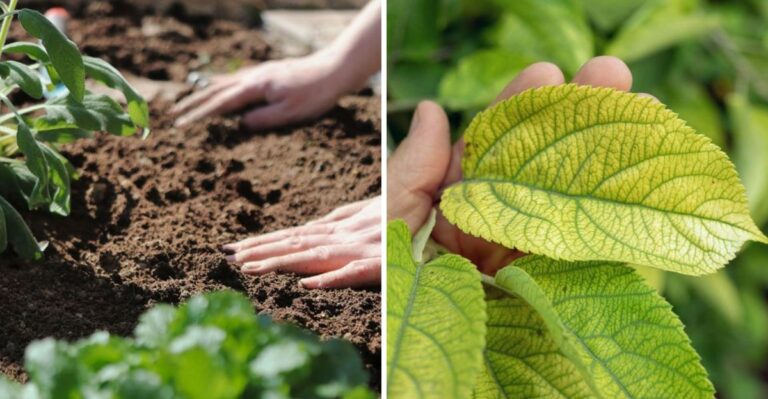
Air temperature gets most of the attention in spring weather conversations, but for hydrangeas in Michigan, soil temperature is often the more important factor in determining when growth actually begins.
Even on warm April days, the ground in Michigan can remain quite cold below the surface, especially after a winter with deep frost penetration.
Most hydrangeas begin actively pushing new root growth when soil temperatures reach around 45 to 50 degrees Fahrenheit.
Leaf and shoot growth above the soil surface tends to follow once root activity is well established.
This means that a hydrangea sitting in cold Michigan soil may not show any visible signs of life even during a stretch of warm spring weather, because the underground process has not yet reached the stage where above-ground growth is triggered.
Soil temperature in Michigan varies considerably depending on location, sun exposure, and soil composition.
Raised beds and south-facing slopes tend to warm up faster, which is why hydrangeas planted in those spots may leaf out noticeably earlier than plants in low-lying areas or spots that receive heavy shade in the morning hours.
If you are genuinely unsure whether your plant is progressing, an inexpensive soil thermometer can take out the guesswork entirely.
Checking the soil temperature every few days gives you a concrete data point to work with rather than relying solely on what the plant looks like from the outside.
Michigan soil typically reaches ideal hydrangea growth temperatures sometime between late April and mid-May in most regions.
6. Pruning Too Early Can Remove Viable Growth
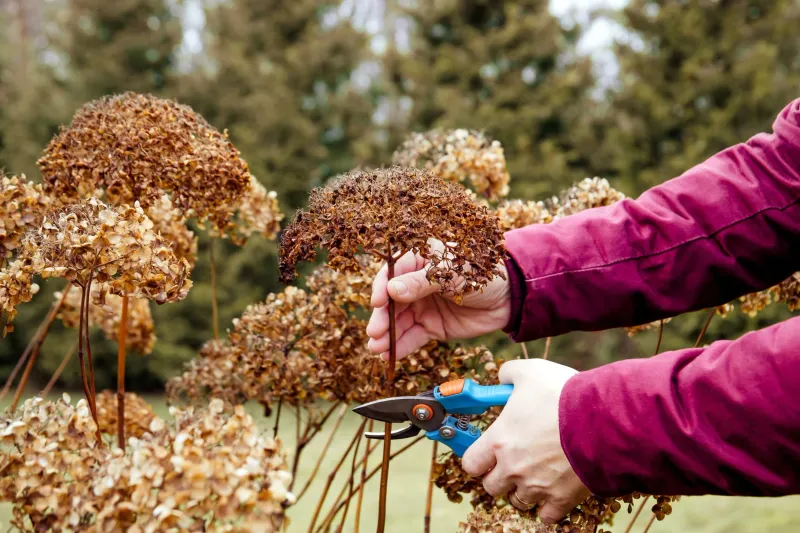
Reaching for the pruning shears the moment hydrangeas look bare and brown in April is one of the most common mistakes Michigan gardeners make.
The urge to tidy up or cut back what appears to be a struggling plant is completely understandable, but acting too quickly can remove stems that were on the verge of producing leaves and, in some cases, flower buds for the season.
Bigleaf and oakleaf hydrangeas bloom on old wood, meaning their flower buds formed on stems grown during the previous season.
If those stems get cut in early April before you have confirmed they are no longer viable, you may remove perfectly healthy bud-bearing wood and lose your blooms for the entire year.
Waiting until you can clearly see which stems are producing growth and which are not gives you the information you need to prune accurately rather than guessing.
A good general guideline for Michigan gardeners is to hold off on any significant pruning until late April at the earliest, and ideally until new growth is clearly visible on the plant.
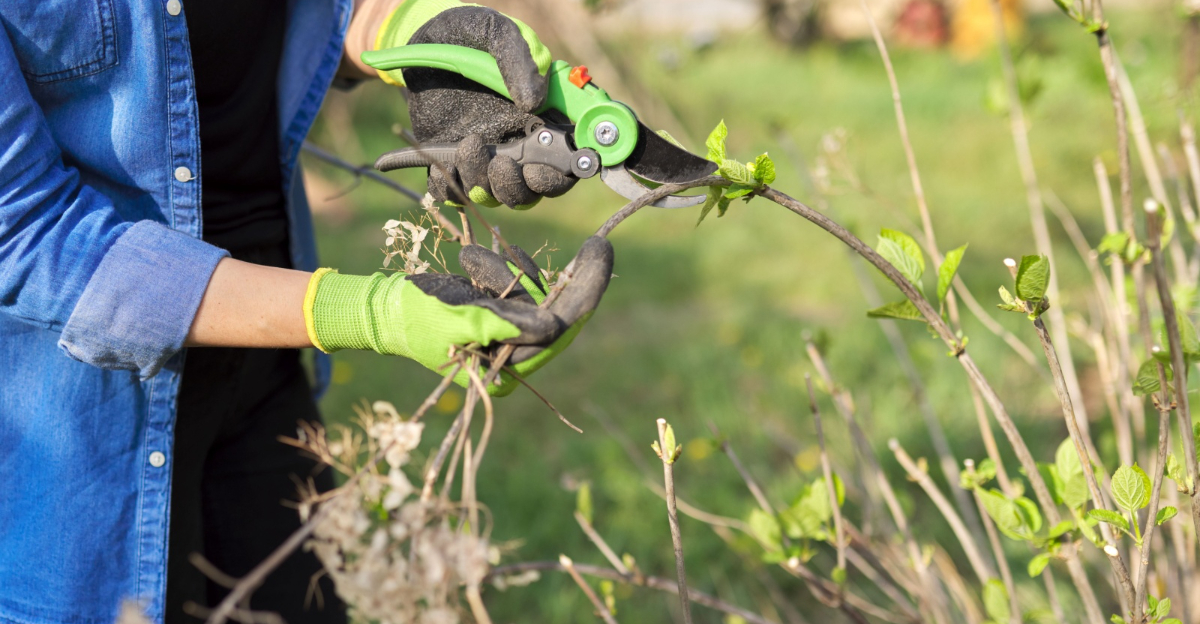
At that point, you can identify exactly where the plant is actively growing and remove only the sections that have shown no signs of life after the scratch test confirms they are no longer viable.
Light cleanup of clearly unresponsive stem tips can happen earlier, but major cuts are worth delaying.
Patience in April almost always leads to better outcomes for hydrangeas in Michigan than acting on appearances alone.