How To Thin Peach Tree Fruit Early In Georgia To Improve Growth And Yield
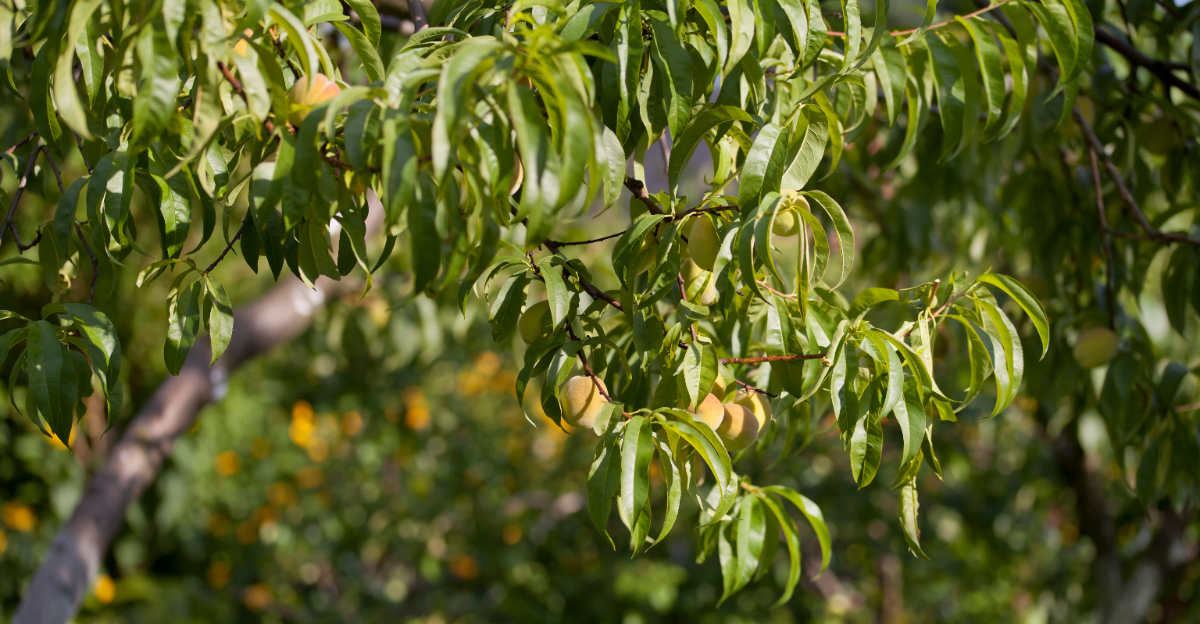
Peach trees in Georgia can set more fruit than they can realistically support, and at first, that heavy load might seem like a good sign. Branches fill quickly, and it looks like a strong harvest is already on the way.
But too much fruit early on often leads to smaller peaches and added stress on the tree as the season moves forward.
That early stage, when fruit is still small and easy to overlook, is where the real difference begins. The way the tree is managed now shapes how well it can grow, size its fruit, and stay balanced through the rest of the season.
In Georgia, where spring conditions push trees into fast growth, timing becomes especially important.
It is not always obvious when to step in or how much to adjust, which is why many trees end up carrying more than they should. Once that happens, the results tend to show up later, when it is harder to fix.
1. Start Thinning After Natural Fruit Drop
Patience pays off here. Before you reach up and start pulling fruit off the branches, wait for the tree to do its own work first.
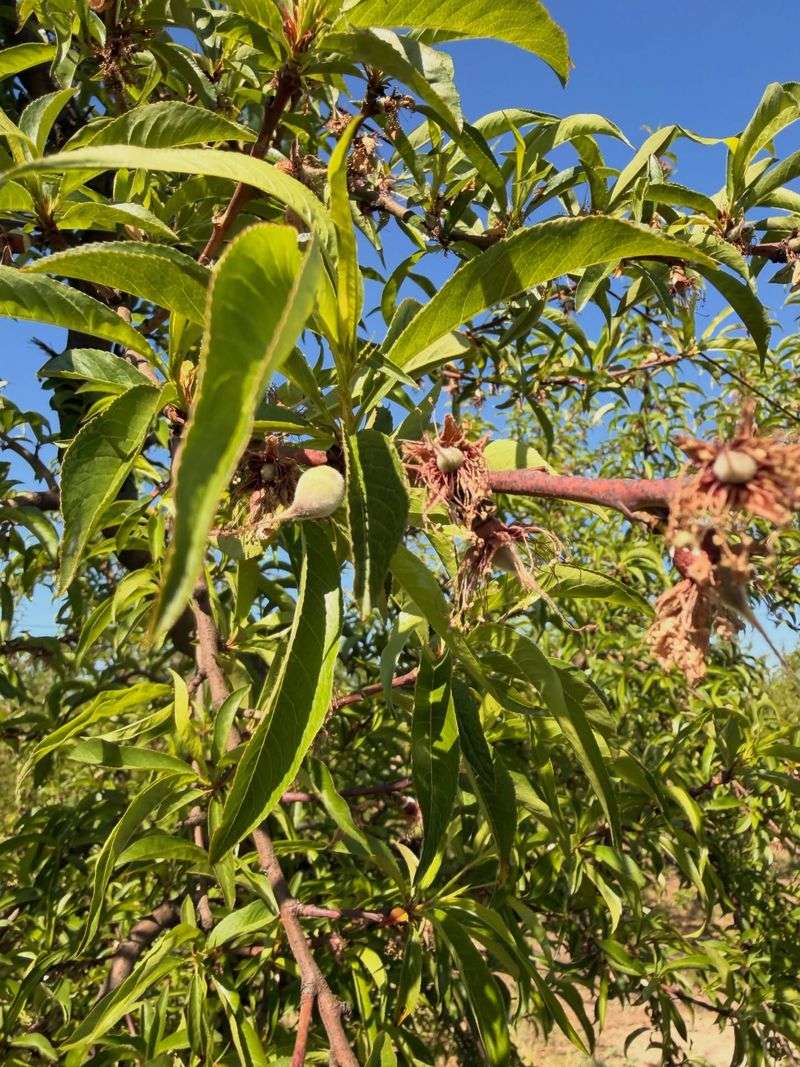
Georgia peach trees naturally shed a portion of their young fruit in early spring, a process most growers call “June drop,” though in Georgia it often happens closer to April or May depending on the variety.
Jumping in too early can mean you end up thinning fruit the tree would have dropped on its own anyway. Give the tree at least two to three weeks after full bloom before you make any decisions.
By then, fruitlets that are going to survive will be holding on firmly, and the ones the tree rejected will have already fallen.
Around 30 days after full bloom is the sweet spot most University of Georgia extension specialists recommend. At that stage, healthy fruitlets are roughly the size of a dime or a nickel.
You can actually see which ones look strong and which ones are already lagging behind in size or color.
Starting too late is also a problem. If you wait until the peaches are already marble-sized or bigger, the tree has already spent a lot of energy feeding fruit you are going to remove.
Early action in Georgia, typically mid-April to early May, gives the remaining fruit the longest possible window to develop into something worth picking. Timing is everything with this job, and getting it right sets up everything else.
2. Remove Smaller Or Damaged Fruits First
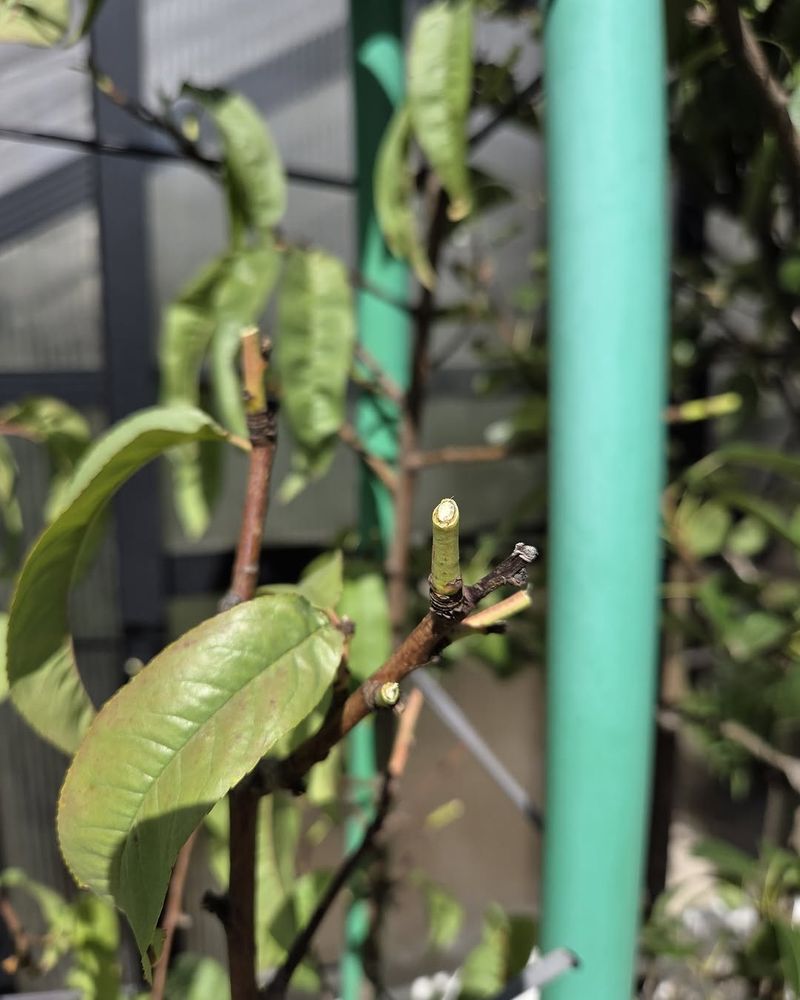
Not all peaches are worth keeping, and knowing which ones to pull first makes the whole job faster and smarter. Smaller fruitlets are usually the easiest call.
When two peaches are growing close together, the smaller one is almost always getting less nutrition and will likely stay small no matter what you do.
Damaged fruit is another obvious target. Look for fruitlets that show signs of insect feeding, weird discoloration, or misshapen growth.
In Georgia, peach tree borer activity and late frost events can both cause early damage that shows up on young fruit. Removing those right away keeps disease pressure lower and stops the tree from wasting energy on fruit that will never develop properly.
A lot of experienced Georgia growers work through each branch systematically, starting at the tip and working inward. That method helps you spot problem fruit you might miss if you just grab randomly.
It also helps you see the overall load on each branch so you can make better decisions about what stays.
Deformed fruitlets, ones that are flattened, pinched, or growing at odd angles, should also come off early. They rarely round out into normal peaches and tend to crack or split later in the season.
Removing them is not complicated. A gentle twist or pinch is usually enough to detach a fruitlet cleanly without damaging the spur or the branch.
Work slowly and check each section of the tree carefully before moving on.
3. Space Fruits Several Inches Apart
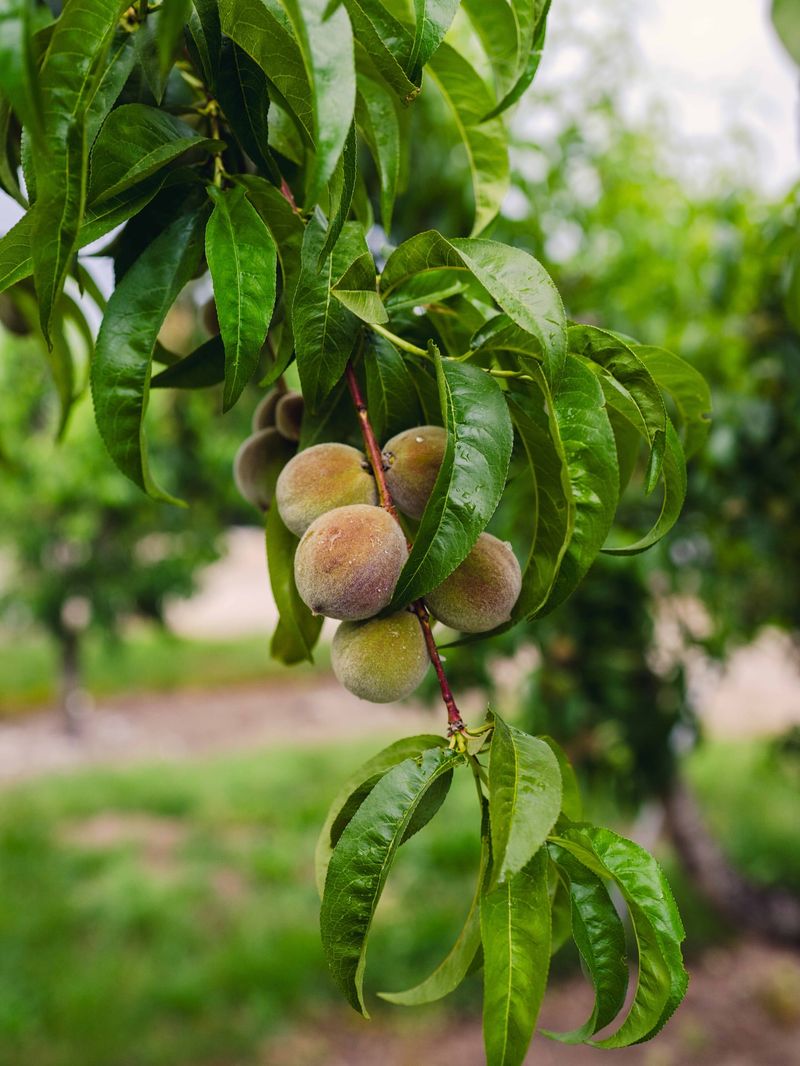
Spacing is the part of thinning that actually determines how big your peaches will grow. Fruit that is packed too close together competes hard for water, nutrients, and light.
Even if both peaches look healthy right now, they will both end up smaller than if only one had been left in that spot.
A good rule of thumb used by many Georgia peach growers is to leave one fruit every six to eight inches along each branch. That might feel like you are removing way too many, but the results at harvest time will prove the math right.
Fewer peaches on the tree almost always means bigger, better individual fruit.
On heavily loaded branches, you may need to remove a lot more than you expect. Some branches in a productive year can have fruitlets every inch or two, and thinning those down to proper spacing takes patience.
Work through each branch from base to tip, deciding which fruitlet is best positioned and healthiest, then clearing out everything else around it.
Clusters of two or three fruitlets growing from the same spur are common on Georgia peach trees. In most cases, you want to reduce each cluster down to a single fruit, keeping the one that looks strongest and is positioned most naturally on the branch.
Crowded clusters also trap moisture and create spots where fungal issues can start. Proper spacing solves more than one problem at once, and it is one of the most straightforward ways to improve your final harvest without much guesswork.
4. Focus On Strong And Healthy Fruits
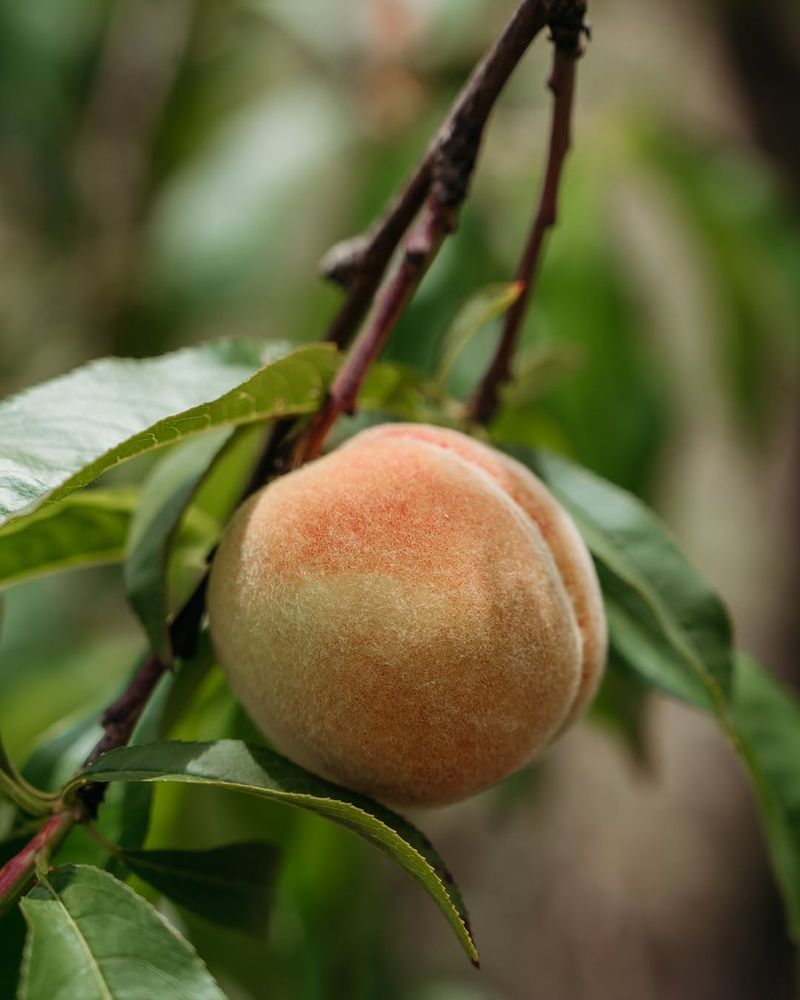
Choosing which fruit to keep is just as important as knowing which ones to pull. Strong fruitlets have a few things in common: they sit firmly on the branch, they have a good round shape, and they are noticeably larger than the others around them.
When you spot one like that, it is worth keeping even if it means removing more of its neighbors to give it room.
Color can also be a clue. Fruitlets with a clean, uniform green color at this stage tend to develop more evenly than ones that already look pale, yellowish, or slightly off.
In Georgia, where heat builds fast after April, fruit that starts strong tends to finish strong. A weak fruitlet rarely catches up once the season gets rolling.
Position on the branch matters too. Fruit that hangs naturally downward or sits at an angle that allows good light exposure tends to size up better than fruit jammed against the branch or hidden under dense foliage.
A little extra thought at this stage saves a lot of disappointment at harvest.
Some growers in Georgia like to mark the keepers mentally by working in sections, so they do not accidentally remove good fruit while clearing out the bad. Once you get the rhythm going, it becomes easier to spot the standouts quickly.
Healthy fruit chosen at the right time and given enough space will reward you with peaches that are noticeably larger, sweeter, and more consistent than anything left to grow in an overcrowded tree.
5. Thin Early To Support Better Size
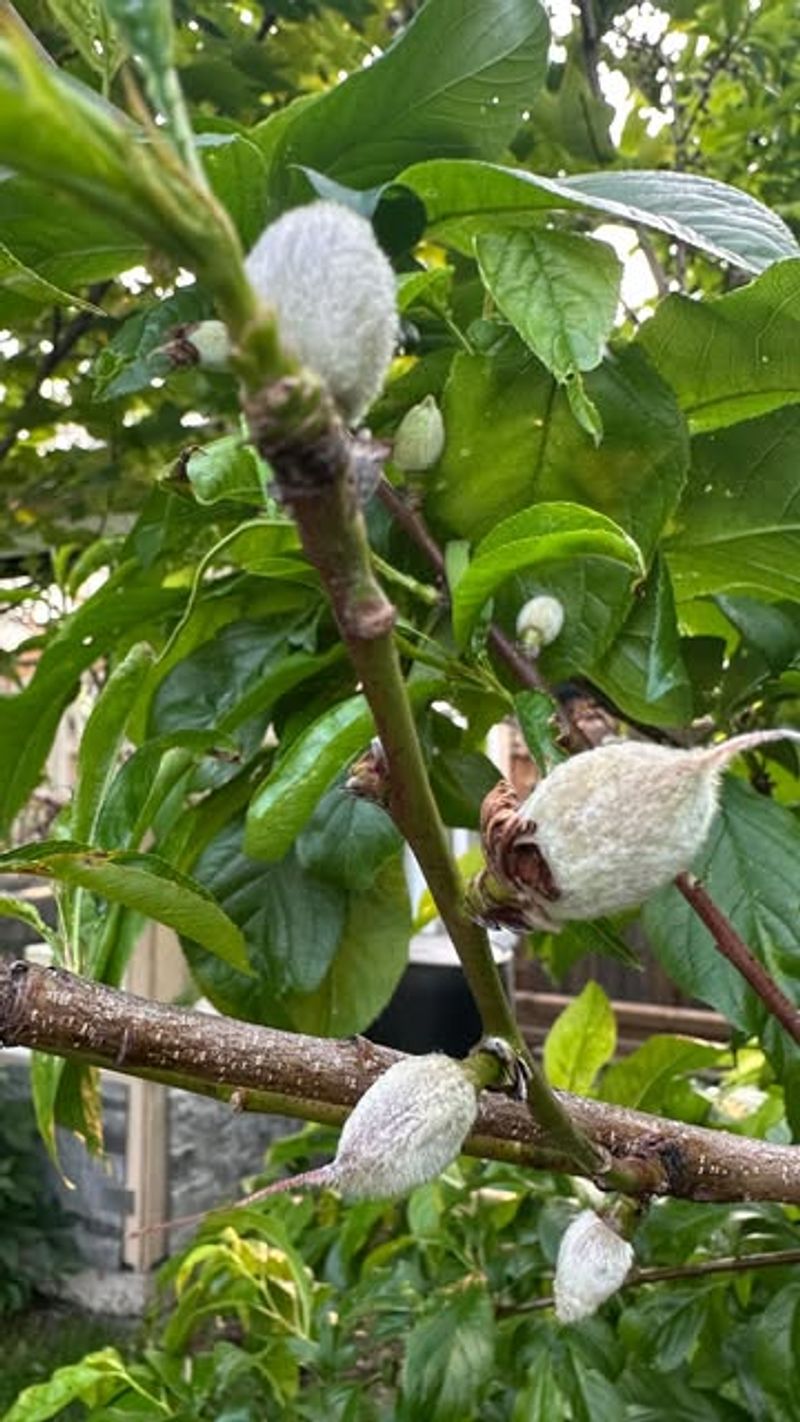
Early thinning is one of those jobs where the sooner you do it, the bigger the payoff. When fruit is removed while it is still tiny, the tree almost immediately redirects that energy into the fruit that remains.
Wait too long, and you are basically taking away resources the tree already spent, which means the remaining peaches have less time to benefit.
In Georgia, where summer heat arrives fast and the growing window between spring bloom and summer harvest is not as long as growers in cooler states enjoy, timing the thinning right makes a real size difference.
Peaches thinned early in the fruitlet stage can end up significantly larger than those left on an overcrowded tree, sometimes by an inch or more in diameter by harvest time.
Cell division in young peaches happens rapidly in the first several weeks after bloom. During that window, each fruit is essentially building the framework that determines its final size.
More cells formed early on means more potential for a bigger peach later. Removing competing fruit during this critical phase directly supports that process.
Growers who skip early thinning and try to make up for it later often find that even aggressive late thinning does not produce the same size improvement. By late May in Georgia, the rapid cell division phase is mostly done, and the remaining growth is mostly about cell expansion.
Thinning early, even if it feels drastic, is the move that separates a good peach harvest from a great one.
6. Reduce Branch Stress Before Growth Increases
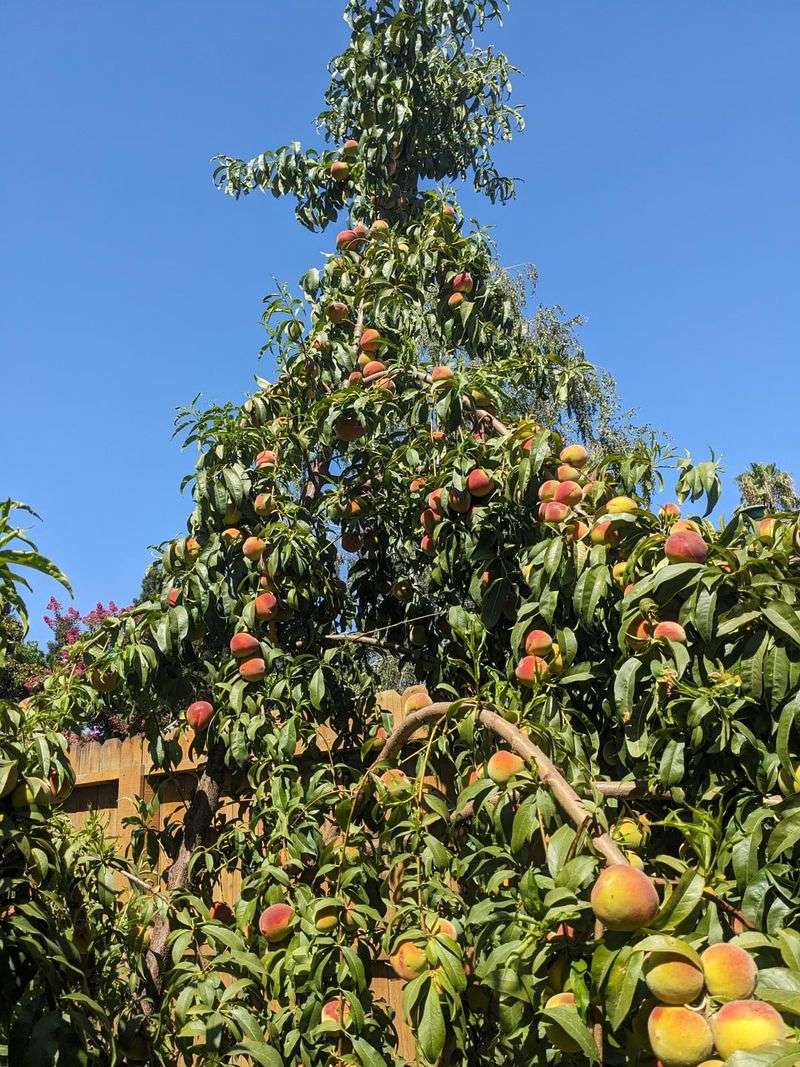
Branches have limits. A peach tree branch loaded with too many developing fruits is under real physical stress, and that stress only gets worse as the season progresses and each fruit gains weight.
In Georgia, where peaches can swell quickly once summer temperatures settle in, an overloaded branch can snap before harvest ever arrives.
Thinning early takes weight off the branches before that growth surge hits. Young fruitlets weigh almost nothing individually, but in large numbers across a long branch, the cumulative load adds up fast.
Getting ahead of it in April or early May means the tree can put its energy into strengthening the wood it has rather than just trying to support an impossible fruit load.
Branch breakage is more common than most people realize in Georgia peach orchards. A broken limb does not just mean lost fruit for this season.
It creates a wound on the tree that takes time to recover from, and in humid Georgia summers, those wounds can become entry points for disease and pests. Prevention through early thinning is far less painful than dealing with the aftermath.
Young trees especially need this protection. A tree that is only two or three years into production should carry a much lighter fruit load than a mature tree.
Letting a young Georgia peach tree hold too much fruit too early can slow its overall development and affect how well it produces in future seasons. Reducing branch stress now is an investment in the tree’s long-term health and productivity.
7. Improve Airflow And Light Through The Canopy
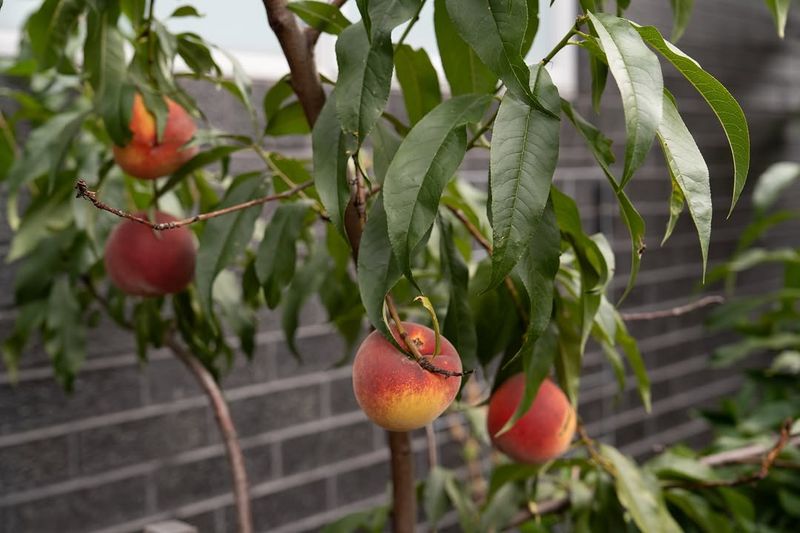
Crowded canopies cause problems that go beyond just fruit size. When peach trees are loaded with too much fruit and dense foliage, air stops moving through the branches freely.
Stagnant, humid air is exactly what fungal diseases like brown rot and peach scab love, and Georgia summers give those pathogens plenty of warm, wet conditions to work with.
Thinning fruit opens up the canopy in a subtle but meaningful way. Fewer fruits mean fewer leaves clustered tightly around developing peaches, and that small improvement in airflow can reduce disease pressure noticeably over the course of a season.
Growers in Georgia who thin consistently often find they spray for disease less frequently than those who skip the step.
Sunlight matters just as much as air. Peaches that receive direct or near-direct sunlight during development color up better, develop higher sugar content, and ripen more evenly than fruit shaded under a dense canopy.
A properly thinned tree lets light reach not just the outer fruit but also the ones tucked deeper into the branch structure.
Combining good thinning with annual dormant pruning gives Georgia peach trees the best possible canopy structure. Pruning shapes the architecture, and thinning manages the seasonal fruit load within that structure.
Together, they create conditions where light and air reach almost every part of the tree. Better airflow and light exposure do not just improve this year’s crop.
They set the tree up to perform consistently well year after year in Georgia’s warm, humid growing environment.