How To Transform A Shady Oregon Woodland Edge With Hostas
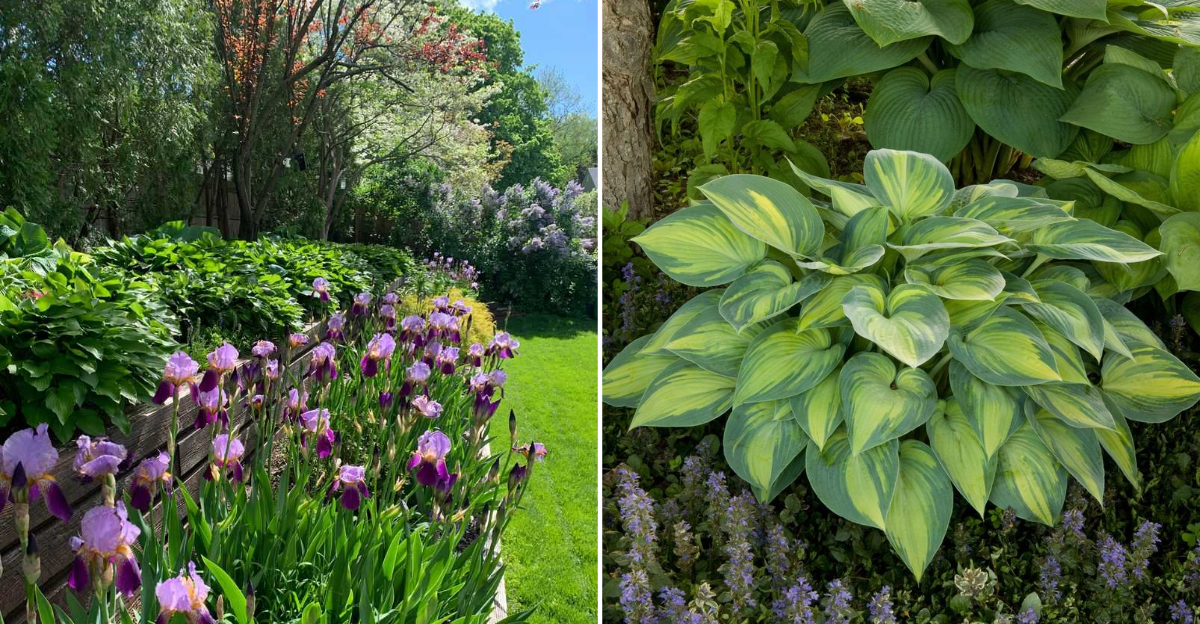
That shady strip along your Oregon woodland edge? The one that feels a little moody, a little mysterious, and not exactly thriving? It is not a problem area. It is a blank canvas waiting for a glow up.
Enter hostas. These leafy showstoppers do not just tolerate shade, they own it. Big, dramatic leaves. Cool blues. Electric chartreuse.
Crisp variegation that practically lights up dim corners. When they unfurl in spring, it feels like the forest floor just decided to level up.
The best part is how quickly things shift. What once looked flat and forgotten starts to feel layered, lush, and intentional. The whole edge softens and comes alive without fighting the trees overhead.
And once you see how a few well placed hostas can transform that shadowy stretch, you will start eyeing every quiet corner of your yard with fresh ambition.
1. Read The Shade First
Before you buy a single plant, spend time watching how light moves through your Oregon woodland edge. Shade is not all the same.
Some spots get bright, dappled light for several hours a day. Others stay dark and cool from morning to night.
Knowing exactly what kind of shade you have will help you choose the right hostas and avoid frustration later.
Walk your space at different times of the day. Check it in the morning, at noon, and in the late afternoon.
Note which areas catch broken sunlight through the tree canopy and which stay in deep shadow. In Oregon, the angle of the sun changes a lot between seasons, so what feels shady in July might get more light in April.
Deep shade suits hostas with darker green leaves. Bright, indirect light works well for hostas with gold or variegated foliage.
If you plant a sun-sensitive hosta in a bright spot, the leaves can scorch. If you put a light-loving variety in deep shade, it may grow slowly and lose its color.
Reading the shade first saves you time, money, and effort. It is the single most important step in planning your Oregon woodland edge garden.
2. Pick The Right Hostas
Choosing hostas for an Oregon woodland edge is actually a lot of fun once you understand a few basics. There are thousands of hosta varieties, and they come in an amazing range of sizes, colors, and leaf textures.
The Pacific Northwest climate is ideal for hostas because of the cool temperatures, natural rainfall, and rich forest soil.
For deep shade areas under Oregon’s big conifers, try blue-leaved varieties like ‘Halcyon’ or ‘Elegans.’ These hostas love low light and their blue-gray color looks stunning against dark bark and green ferns.
For spots with a bit more brightness, gold hostas like ‘Sum and Substance’ or ‘August Moon’ bring warm color and grow to impressive sizes.
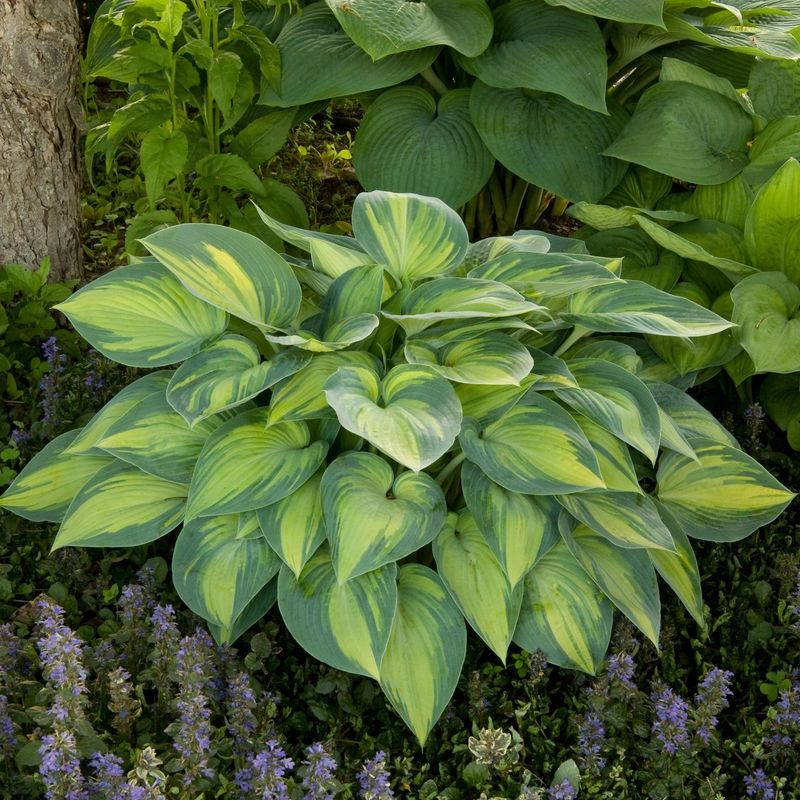
Variegated hostas with white or cream edges, such as ‘Patriot’ or ‘Frances Williams,’ add contrast and light up shady corners beautifully. Think about size too.
Large hostas create bold focal points. Medium and small hostas fill in gaps and edges naturally.
Mixing sizes makes the planting look more like a natural woodland rather than a formal garden bed. Oregon garden centers usually carry a great selection in spring, so visit early for the best choices.
3. Enrich Woodland Soil
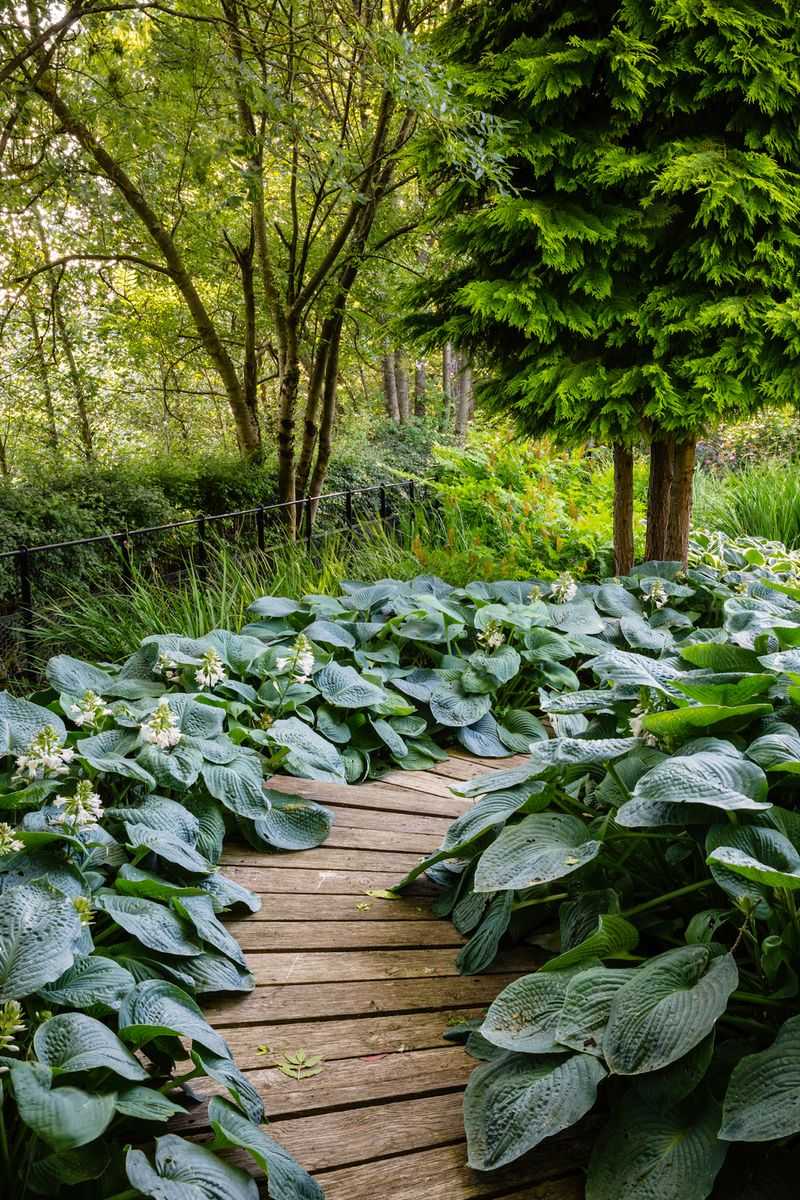
Oregon woodland soil can be tricky. Under big trees like Douglas fir and red alder, the roots compete hard for nutrients and moisture.
The soil is often acidic, compacted near the surface, and low in the organic matter that hostas need to thrive. Improving it before planting makes a huge difference in how well your hostas grow.
Start by loosening the soil with a fork or spade, working carefully around existing tree roots. Add a generous layer of compost, at least two to three inches, and work it into the top six to eight inches of soil.
Aged leaf mold is especially good in woodland settings because it mimics the natural forest floor and feeds the soil slowly over time.
Hostas prefer slightly acidic soil with a pH between 6.0 and 7.0. Oregon’s native soils are often already in this range, but it is worth testing just to be sure.
If the soil is too acidic, a small amount of garden lime will help. Good drainage is also important.
Hostas love moisture but do not like sitting in waterlogged ground. Raised planting areas or gently mounded beds can help prevent soggy roots in Oregon’s rainy winters.
4. Layer For Natural Flow
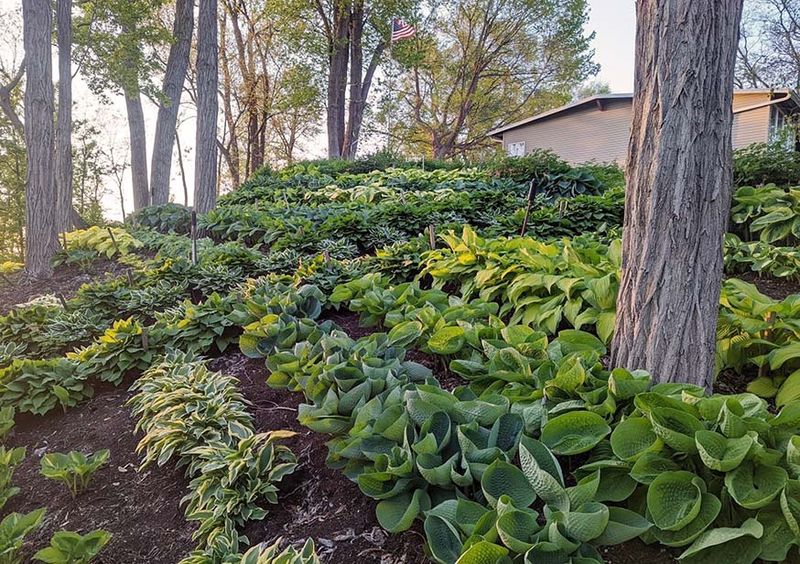
One of the secrets to a truly stunning woodland edge garden is layering. Nature never plants things in straight lines, and neither should you.
Layering means arranging plants at different heights so the garden flows from tall at the back to low at the front, just like the edge of a real Oregon forest.
Start with tall shrubs or small trees at the back of the border. Oregon natives like vine maple or red-flowering currant work beautifully here.
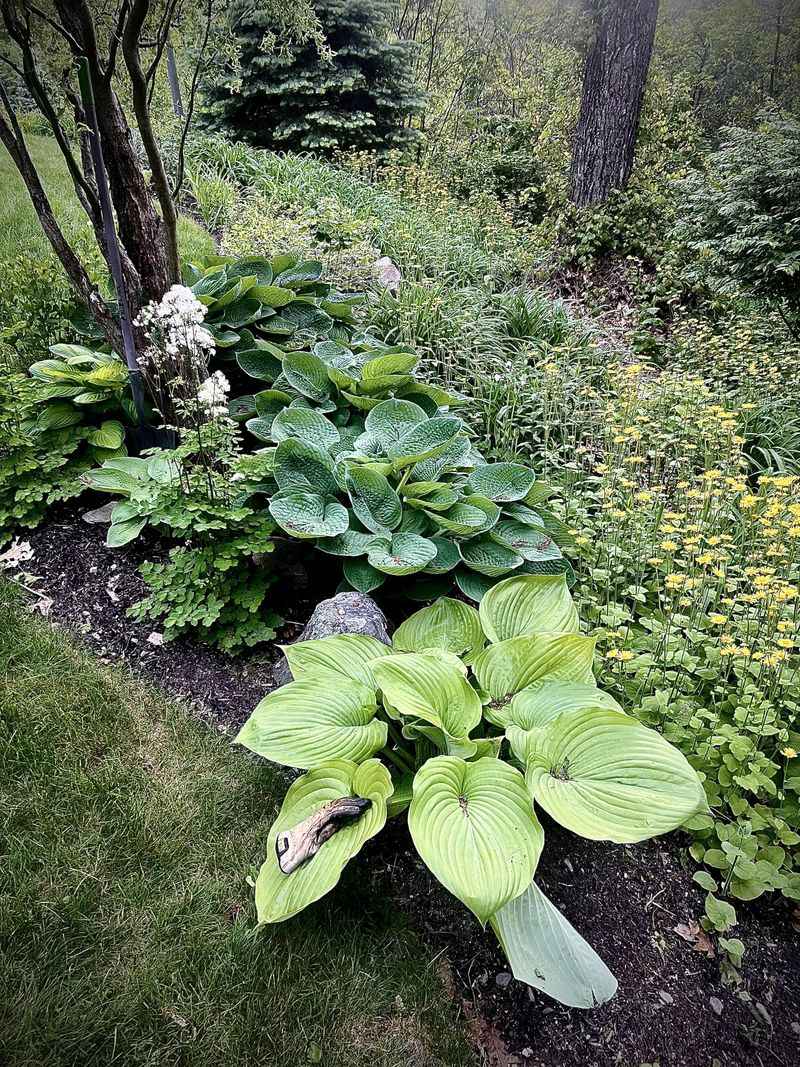
In front of those, place your largest hostas. Their big, bold leaves create a strong middle layer that draws the eye.
Then use medium hostas and companion plants to fill in the next layer. Smaller hostas and ground covers finish the front edge.
This layered approach creates depth and makes the garden look much bigger than it really is. It also helps each plant get the right amount of light and air circulation.
When you layer well, the planting looks effortless and natural, like it has always been there. Oregon woodland edges naturally have this kind of tiered structure, so you are simply copying what nature already does.
Walk around the space and look at it from different angles as you plan to get the layering just right.
5. Play With Leaf Size
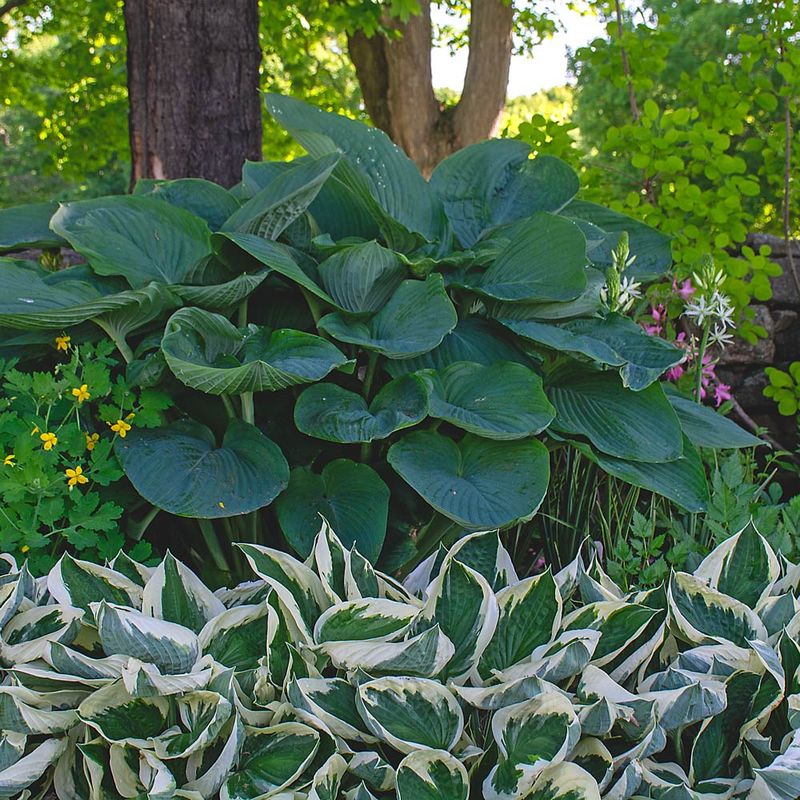
Here is something many gardeners overlook: leaf size is one of the most powerful design tools you have. Hostas come in everything from giant varieties with leaves the size of dinner plates to tiny miniatures that fit in the palm of your hand.
Playing with that range creates visual drama that makes your Oregon woodland edge feel alive and interesting.
Giant hostas like ‘Empress Wu’ or ‘Sagae’ make bold, eye-catching focal points. Place them where you want people to stop and look.
Their huge leaves also help suppress weeds by blocking light from reaching the ground. Medium hostas bridge the gap and help the planting feel cohesive.
Small and mini hostas are perfect for tucking into rock crevices or planting along path edges.
Contrasting leaf size also makes each plant stand out more clearly. When a tiny hosta sits next to a giant one, both look more interesting than they would alone.
Think about texture too. Smooth, shiny leaves reflect light differently than heavily ribbed or puckered ones.
Mixing textures along with sizes gives your Oregon woodland planting a richness and complexity that looks professional but is actually very easy to achieve with thoughtful plant selection.
6. Add Fern Contrast
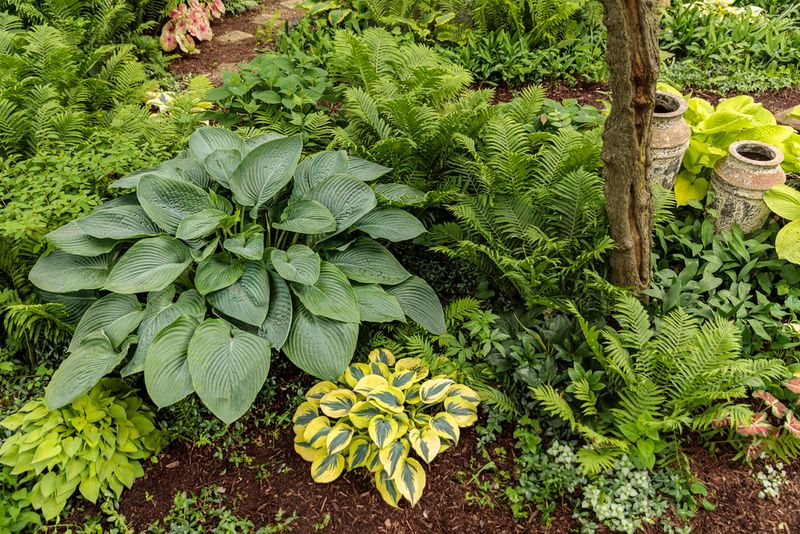
Ferns and hostas were practically made for each other. Walk through any natural Oregon woodland and you will see ferns growing in abundance under the trees.
That is exactly why they look so right alongside hostas in a woodland edge garden. The feathery, delicate fronds of a fern create a beautiful contrast against the bold, broad leaves of a hosta.
Oregon has several native ferns that work brilliantly in this setting. Sword fern is incredibly tough and stays green all winter, which is a big bonus in the Pacific Northwest.
Western maidenhair fern has an airy, lacy look that pairs beautifully with large blue hostas. Lady fern and deer fern are also excellent choices that thrive in the cool, moist conditions of an Oregon woodland edge.
When planting ferns alongside hostas, think about color as well as texture. Dark green ferns make gold and chartreuse hostas pop.
Lighter green ferns soften the look and blend naturally with blue-green hosta varieties. Ferns also fill space nicely during spring while hostas are still emerging from the ground.
Together, these two plants create a layered, naturalistic look that feels genuinely connected to the Oregon landscape, not like something planted from a catalog.
7. Slip In Spring Bulbs
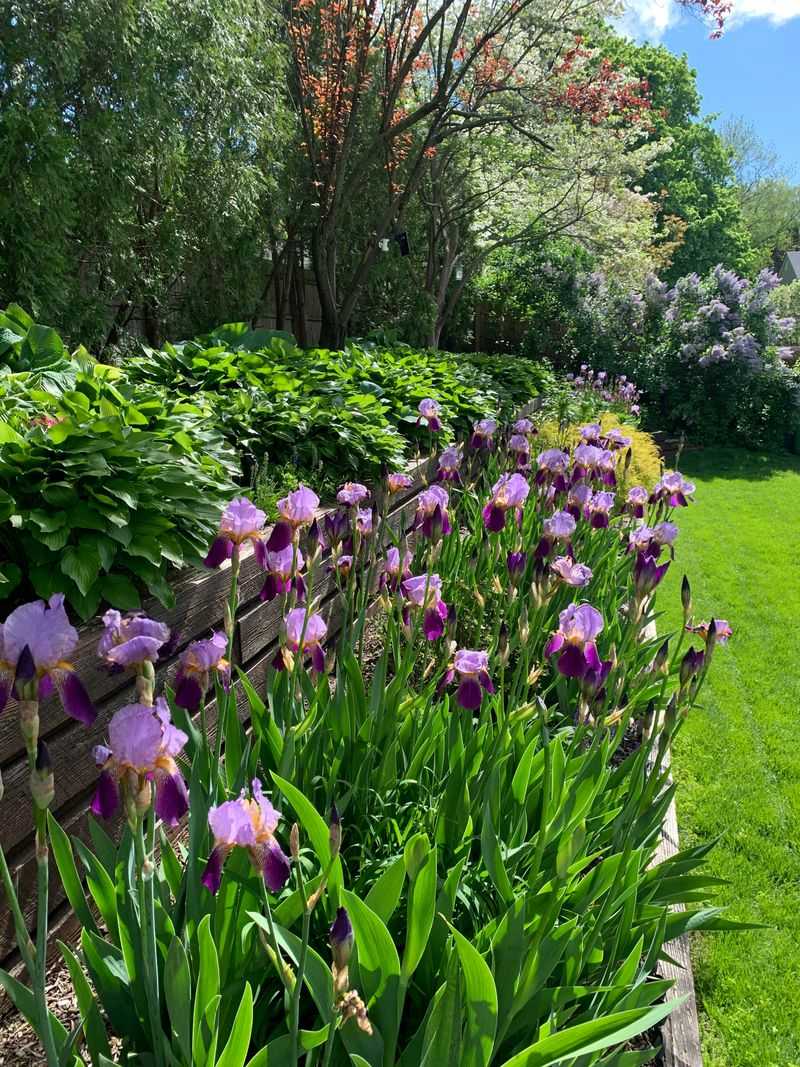
Early spring in Oregon can feel a little bare in the woodland garden. Hostas are slow to emerge from the ground, and that gap between winter and full spring growth leaves a lot of empty-looking soil.
Tucking spring bulbs into your hosta bed is a simple and clever way to fill that gap with color and life.
Small bulbs work best under trees where soil can be dry in summer. Try snowdrops, which bloom very early and naturalize beautifully in Oregon’s mild winters.
Grape hyacinths add deep blue-purple color in April and look charming poking up between emerging hosta shoots. Species tulips are tougher than hybrid types and come back reliably year after year, even in the tricky conditions under tree canopies.
Plant bulbs in autumn, tucking them between your hosta crowns. As spring arrives, the bulbs bloom first and create a cheerful show.
Then, as the bulbs fade, the hostas grow up and their leaves hide the dying bulb foliage naturally. It is a perfect partnership that solves two problems at once.
Oregon’s cool, wet springs are ideal for most spring bulbs, so they thrive with very little extra care once planted in a well-prepared woodland edge bed.
8. Stop Slug Damage
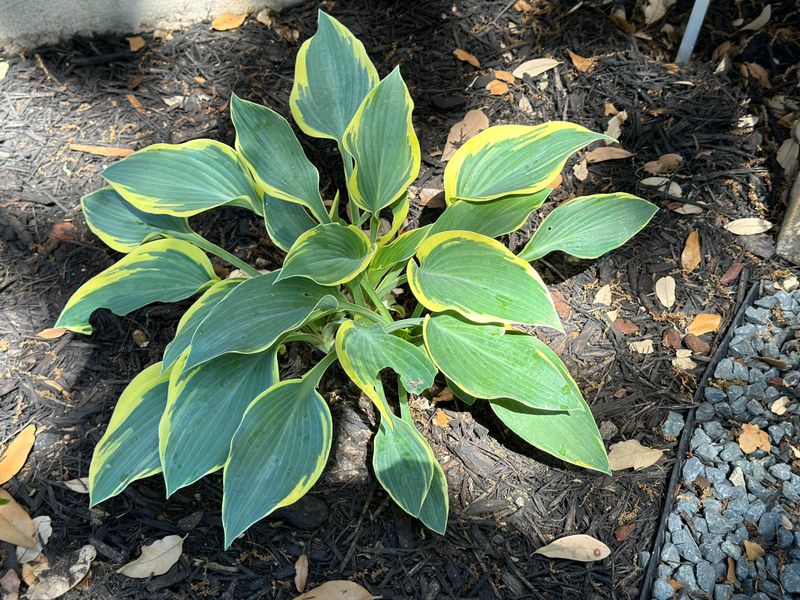
Slugs are the number one enemy of hostas in Oregon. The wet, mild climate of the Pacific Northwest creates absolutely perfect conditions for slugs, and they love hosta leaves with a passion that every Oregon gardener knows too well.
Those ragged holes and chewed leaf edges are a familiar frustration, but there are effective ways to fight back without using harsh chemicals.
Iron phosphate slug bait is one of the safest and most effective options available. It is harmless to pets, wildlife, and children but works quickly on slugs.
Scatter it around your hosta plants in early spring before slugs become active. Reapply after heavy rain.
Copper tape around raised beds or pots creates a barrier that slugs dislike crossing because copper gives them a mild electric sensation.
Encouraging natural predators also helps a lot in an Oregon woodland setting. Ground beetles, birds, and hedgehogs all feed on slugs.
Avoid using thick layers of straw mulch right against hosta crowns, as slugs love to hide in it during the day. Instead, use bark mulch and keep it a few inches away from each plant’s base.
Checking the garden at night with a flashlight and hand-picking slugs is old-fashioned but surprisingly effective, especially in spring when populations are building fast.
9. Mulch For A Forest Finish
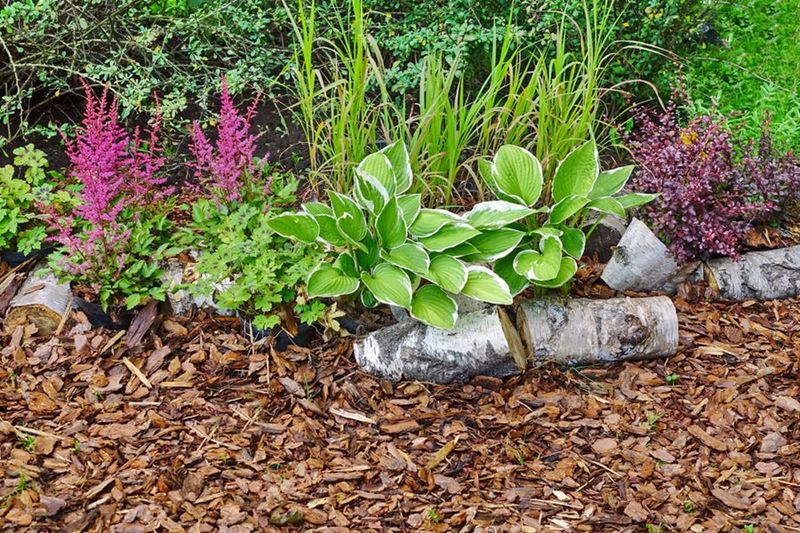
The finishing touch that pulls your Oregon woodland edge planting together is a good layer of mulch. Mulch does so much more than make the garden look tidy.
It keeps moisture in the soil, moderates soil temperature, suppresses weeds, and slowly breaks down to feed your plants over time. In Oregon’s rainy climate, it also helps prevent soil from splashing up onto hosta leaves during heavy downpours.
Bark mulch is the most natural-looking choice for a woodland setting and fits perfectly with the Pacific Northwest aesthetic. Shredded leaves are even better if you have them, because they mimic the forest floor exactly and break down into rich humus.
Apply mulch about two to three inches deep, spreading it evenly between your hostas and companion plants. Keep it a few inches away from the crown of each hosta to prevent rot.
Refresh your mulch layer each spring before hostas fully emerge. This is also a great time to pull any weeds that snuck through over winter.
Over the years, as mulch breaks down into the soil, your Oregon woodland edge will develop the kind of deep, rich, spongy soil that hostas absolutely love.
A well-mulched garden also just looks finished and intentional, like a space that has been genuinely cared for with thought and pride.