4 Indoor Plants Toxic To Dogs In Pennsylvania (Plus 3 Safe Alternatives)
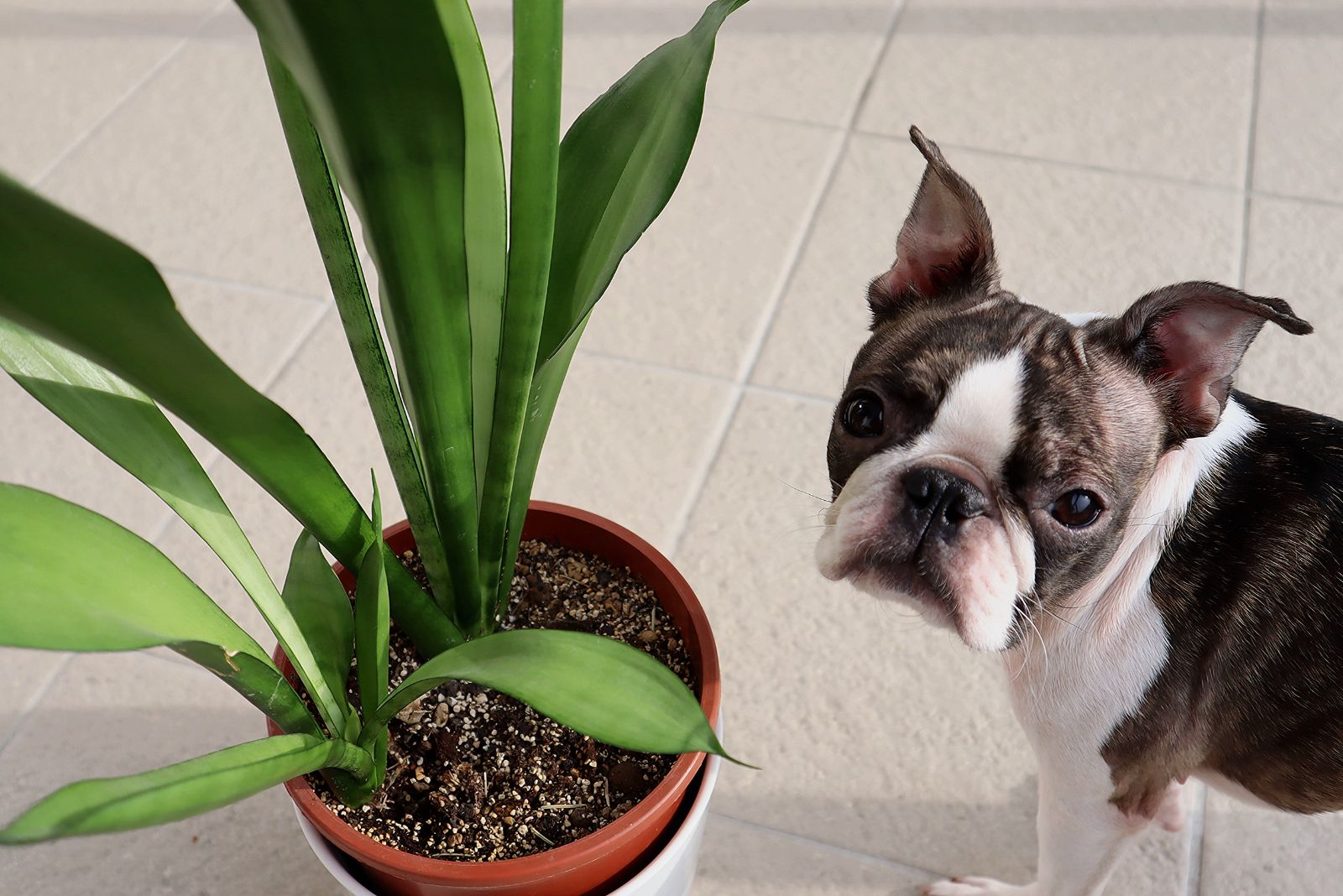
Indoor plants can bring life, color, and a fresh feel to your Pennsylvania home, but some of the most popular options can be dangerous for dogs. Curious pups often sniff, chew, or even nibble on leaves, which can lead to illness if the plant is toxic.
Knowing which plants pose a risk helps keep your furry friends safe while still enjoying a green indoor space.
Common indoor plants like lilies, philodendrons, and pothos are beautiful but can cause serious reactions in dogs. From digestive upset to more severe health issues, it’s important to be aware of potential hazards.
The good news is that there are plenty of safe alternatives that look just as stunning without putting pets at risk.
Plants like spider plants, Boston ferns, and certain palms thrive indoors and can handle Pennsylvania’s climate, letting you decorate freely while keeping your dogs happy and healthy.
With careful choices, you can have a vibrant home and a safe environment for your pets.
1. Peace Lily
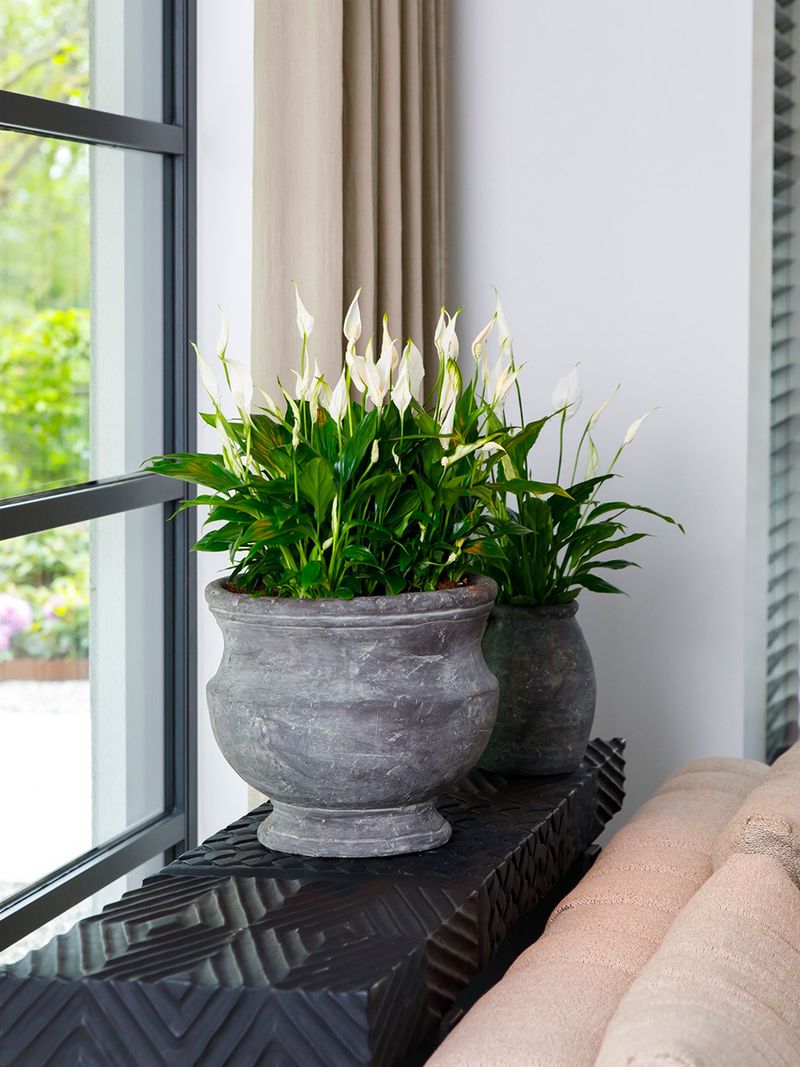
One of the most popular houseplants in Pennsylvania homes, the Peace Lily looks elegant and serene with its glossy green leaves and white blooms. But behind that calm appearance hides a real risk for dogs.
Peace Lilies contain calcium oxalate crystals, which are tiny, sharp particles found throughout the plant.
When a dog chews on the leaves or stems, those crystals get released into the mouth and throat. This causes intense burning and irritation right away.
Your dog may start drooling heavily, pawing at their mouth, or refusing to eat because swallowing becomes painful and uncomfortable.
Vomiting is also very common after a dog eats part of a Peace Lily. Some dogs may show signs of swelling around the lips, tongue, or throat, which can make breathing harder. If you notice any of these signs, contact your vet immediately.
Many Pennsylvania pet owners do not realize how toxic this plant actually is because it looks so gentle and decorative. It is often sold in grocery stores and garden centers across the state, making it easy to bring home without thinking twice.
Keeping it on a high shelf is not always enough since curious dogs can jump or knock things over.
The safest choice is to remove Peace Lilies from your home entirely if you have a dog. There are plenty of beautiful, pet-safe alternatives that can give your space the same lush, green look without putting your pup at risk.
2. Pothos
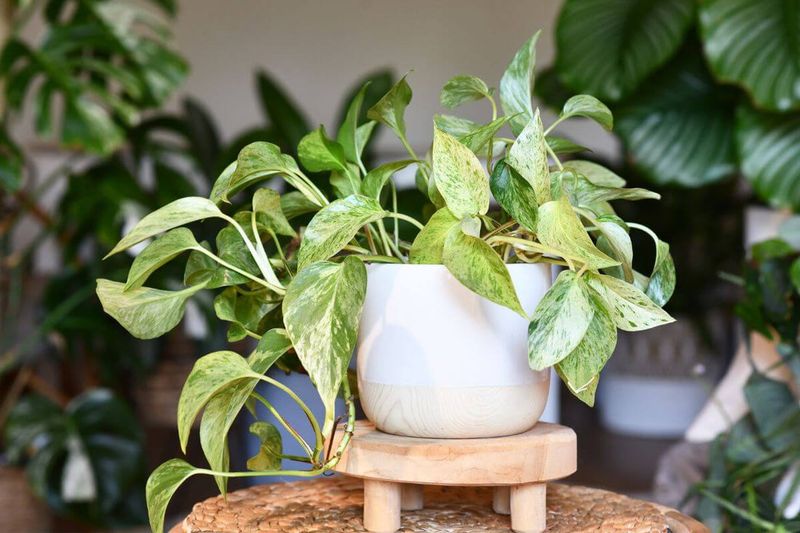
Walk into almost any home in Pennsylvania and there is a good chance you will spot a Pothos plant.
It is one of the most popular and widely sold houseplants in the country, and it is easy to see why. Pothos grows fast, looks great, and thrives even in low-light rooms with minimal care.
The problem is that Pothos is toxic to dogs. Like the Peace Lily, it contains calcium oxalate crystals that cause immediate irritation when chewed.
A dog does not have to swallow a large amount for symptoms to appear. Even a small bite can trigger a reaction.
Common signs include drooling, vomiting, and swelling of the mouth and throat. Some dogs will shake their heads repeatedly or rub their face on the floor trying to relieve the burning sensation. In more serious cases, swallowing may become difficult and breathing can be affected.
Pothos is especially tricky because it tends to trail and hang low, putting it within easy reach of a curious dog.
Many Pennsylvania pet owners keep Pothos on counters or in hanging baskets, thinking their dog cannot reach it. But dogs are resourceful, and a dangling vine can be very tempting to sniff or chew.
If you love the trailing vine look, consider swapping your Pothos for a pet-safe option like a Spider Plant or a Boston Fern. You get the same cascading style without the worry every time your dog wanders near the plant shelf.
3. ZZ Plant
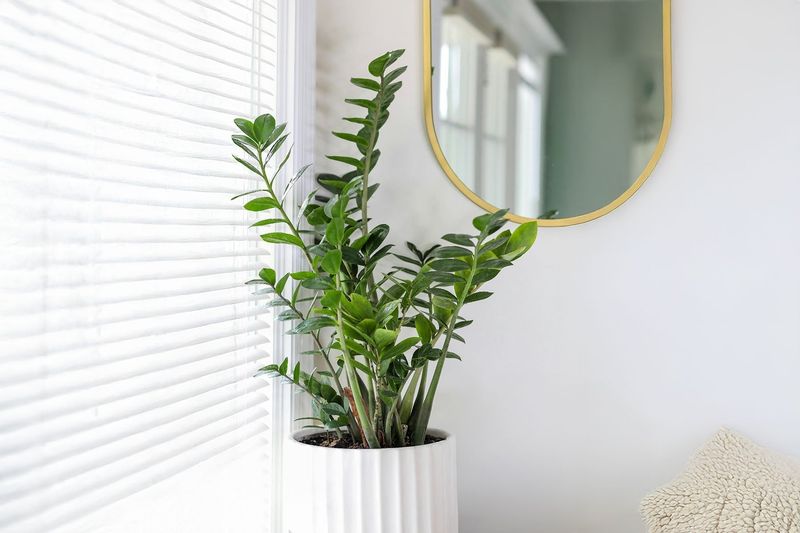
Sleek, shiny, and nearly indestructible, the ZZ Plant has become a trendy favorite in Pennsylvania homes and offices over the past decade.
It handles low light, irregular watering, and neglect better than almost any other houseplant. For busy people, it feels like the perfect green addition.
But here is the catch: every single part of the ZZ Plant is toxic to dogs. The leaves, stems, and roots all contain calcium oxalate crystals. If your dog chews on any part of it, the reaction can be quick and uncomfortable.
Symptoms typically include mouth irritation, excessive drooling, and vomiting. Your dog may also show signs of stomach upset, including diarrhea or a loss of appetite.
Some dogs become lethargic after ingesting ZZ Plant material, which is a sign that something is off internally.
What makes the ZZ Plant particularly risky is its size and placement. Many Pennsylvania homeowners keep it on the floor because of how tall and dramatic it looks in a corner.
That ground-level placement puts it right at nose and mouth level for most dogs, making accidental chewing much more likely.
Skin contact with the plant’s sap can also cause mild irritation in both humans and animals, so handling it with care is always a good idea. If you have a dog who loves to explore and chew things, the ZZ Plant is simply not worth the risk.
Replacing it with a Parlor Palm gives you a similar bold, green look that is completely pet-safe.
4. Aloe Vera
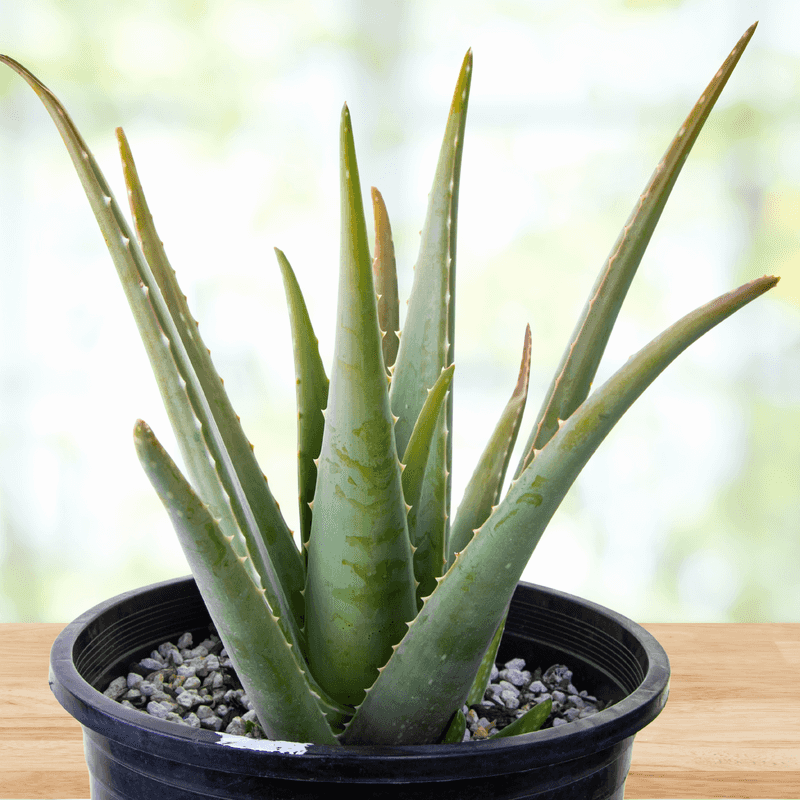
Aloe Vera is one of the most beloved plants in American households, and Pennsylvania is no exception.
People keep it for its soothing gel, which works wonders on sunburns and skin irritation. It is easy to grow, hard to overwater, and looks great on a windowsill or bathroom shelf. For humans, Aloe Vera is incredibly useful. For dogs, it is a different story.
The latex layer found just beneath the outer skin of the Aloe leaf contains compounds called anthraquinones. These substances are harmful to dogs when ingested and can cause a range of unpleasant symptoms.
If your dog eats part of an Aloe Vera plant, you may notice vomiting, diarrhea, and a general lack of energy.
Some dogs become visibly uncomfortable and may tremble or seem unusually weak. The reaction can vary depending on how much the dog ate and how big the dog is.
Many Pennsylvania pet owners are surprised to learn that Aloe Vera is harmful to dogs because it is so widely promoted as a natural, gentle remedy for people.
The assumption that something safe for humans must be safe for pets is a common and dangerous misconception.
Keep Aloe Vera out of reach or out of your home entirely if you have a dog who likes to nibble on plants.
Placing it on a high bathroom shelf may reduce the risk, but removing it is the safest option. Your dog’s comfort and wellbeing are worth more than any windowsill decoration.
5. Spider Plant
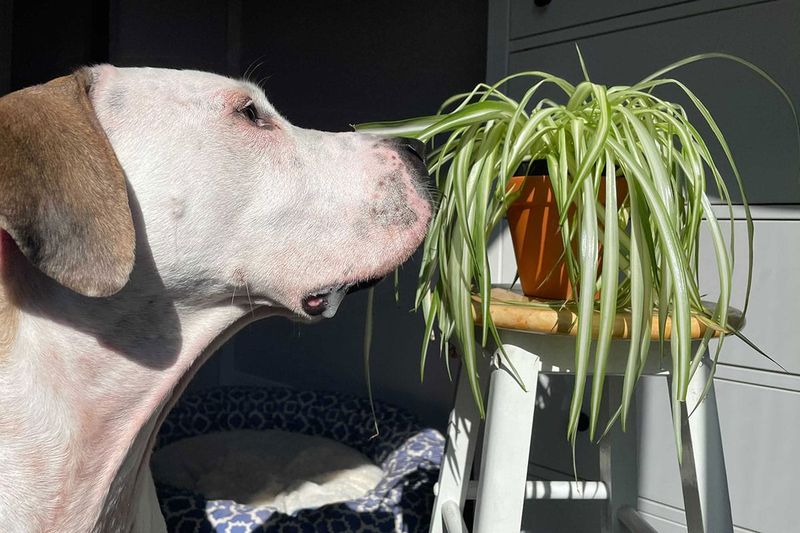
Good news for Pennsylvania dog owners who love plants but worry about their pups: the Spider Plant is completely non-toxic to dogs.
You can breathe easy knowing that even if your dog takes a curious nibble, they will not get sick from it. That alone makes it one of the most popular pet-safe plants out there.
Spider Plants are wonderfully forgiving and beginner-friendly. They grow quickly, produce long arching leaves with green and white stripes, and send out little offshoots called spiderettes that hang down like tiny babies on long stems.
It is a fun, lively plant that adds movement and texture to any room.
They thrive in a wide range of indoor conditions, which makes them ideal for Pennsylvania homes where light levels change dramatically between summer and winter.
They do well in indirect light and do not need much water to stay healthy. Overwatering is actually one of the few ways to harm them.
Spider Plants also have a bonus feature: they help clean the air indoors. Studies have shown they can absorb certain airborne pollutants, making your home healthier for everyone inside, including your dog.
That is a win-win situation for any Pennsylvania household. If you have been holding off on adding plants to your home because of your dog, the Spider Plant is a wonderful place to start.
It is low-maintenance, visually interesting, and completely safe. Place it in a hanging basket or on a shelf and enjoy the greenery without a second thought.
6. Parlor Palm
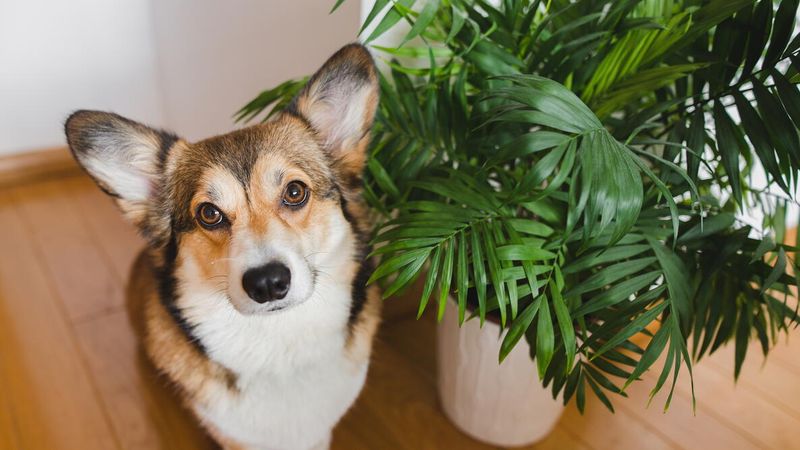
There is something quietly sophisticated about a Parlor Palm. With its slender stems and graceful arching fronds, it brings a tropical elegance to any Pennsylvania home without demanding much attention in return.
And unlike so many eye-catching houseplants, it is completely safe for dogs. The Parlor Palm is a fantastic choice for pet owners because you never have to worry about your dog sniffing around it or accidentally chewing a leaf.
It is listed as non-toxic to both dogs and cats by the American Society for the Prevention of Cruelty to Animals, making it one of the most trusted pet-safe plants available.
One of its greatest strengths is how well it handles low-light environments. Pennsylvania winters can be long and dark, with many homes receiving very little natural sunlight for months at a time.
The Parlor Palm handles those dim conditions without complaint, staying green and healthy even when the sun barely shows up.
It is also compact enough to fit comfortably in apartments and smaller homes, which is great for city dwellers in places like Philadelphia or Pittsburgh. It grows slowly, so you do not have to worry about it taking over a corner of your room anytime soon.
Watering needs are minimal, and it rarely needs repotting. For Pennsylvania homeowners who want a low-fuss, stylish plant that is completely safe around their pets, the Parlor Palm checks every box.
It is the kind of plant that makes a room feel put-together without adding stress to your daily routine.
7. Areca Palm
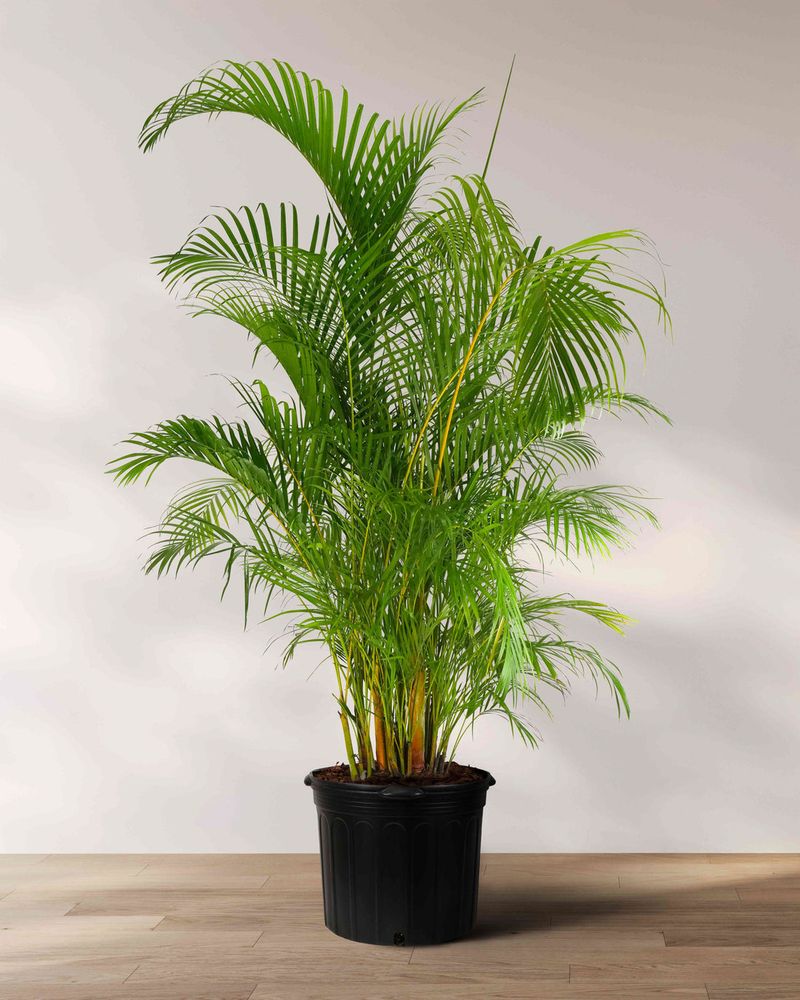
If you want a plant that makes a bold statement and keeps your dog safe, the Areca Palm is exactly what you are looking for.
With its feathery, golden-green fronds and tall, tropical presence, it can transform an ordinary Pennsylvania living room into something that feels lively and refreshed.
Beyond its good looks, the Areca Palm is completely pet-safe. Dogs can sniff it, brush against it, and even take a nibble without any harmful effects.
That peace of mind is genuinely priceless for dog owners who love having greenery throughout their home.
The Areca Palm is also one of the top air-purifying houseplants recognized by NASA. It releases moisture into the air, acting as a natural humidifier, which can be especially helpful during Pennsylvania’s dry winter months when indoor heating pulls all the humidity out of the air.
Your dog will benefit from that added moisture too. Caring for an Areca Palm is straightforward. It prefers bright, indirect light and regular watering, but it is forgiving if you miss a day or two.
It grows best near a window that gets plenty of light, making it a great fit for sunrooms or living rooms with large windows.
Pennsylvania homeowners who want a pet-friendly plant that also doubles as a natural air purifier and a striking decorative piece will find the Areca Palm hard to beat.
It grows steadily, stays beautiful year-round, and gives your home that warm, tropical energy that makes every day feel a little brighter.