11 Indoor Plants You Can Grow In Bottles And Jars In Your Arizona Home
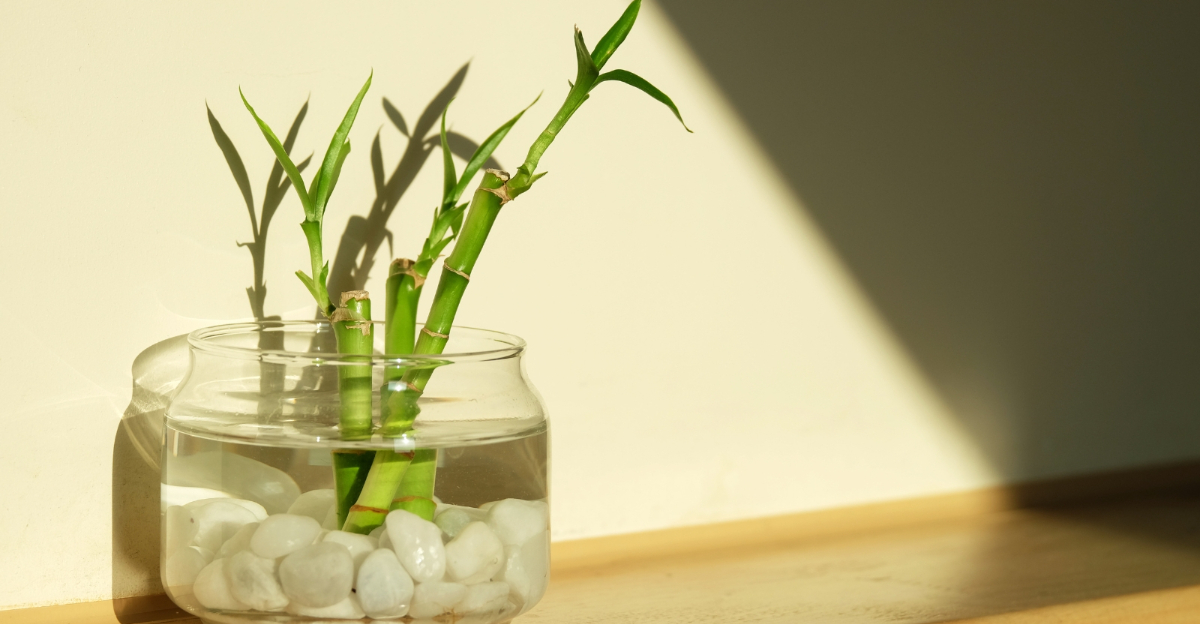
Ever glance at an empty bottle or jar in your Arizona home and think it could be doing something more interesting than collecting dust?
In Arizona homes, indoor plants often need setups that work with dry air, bright light, and limited surface space.
That’s why smaller, enclosed containers are quietly becoming a favorite way to bring greenery indoors without adding clutter.
Bottles and jars turn plants into focused accents instead of background decor. They feel intentional rather than temporary.
This approach isn’t about complicated styling or special equipment, but about rethinking how everyday items can support plant growth.
Some plants naturally adapt to tighter spaces and slower moisture loss, which makes glass containers surprisingly effective.
The appeal comes from how contained and manageable everything feels, especially in homes where space and humidity are always a consideration.
With the right match between plant and container, even the simplest glass piece can start to feel like a living feature in your Arizona home.
1. Pothos
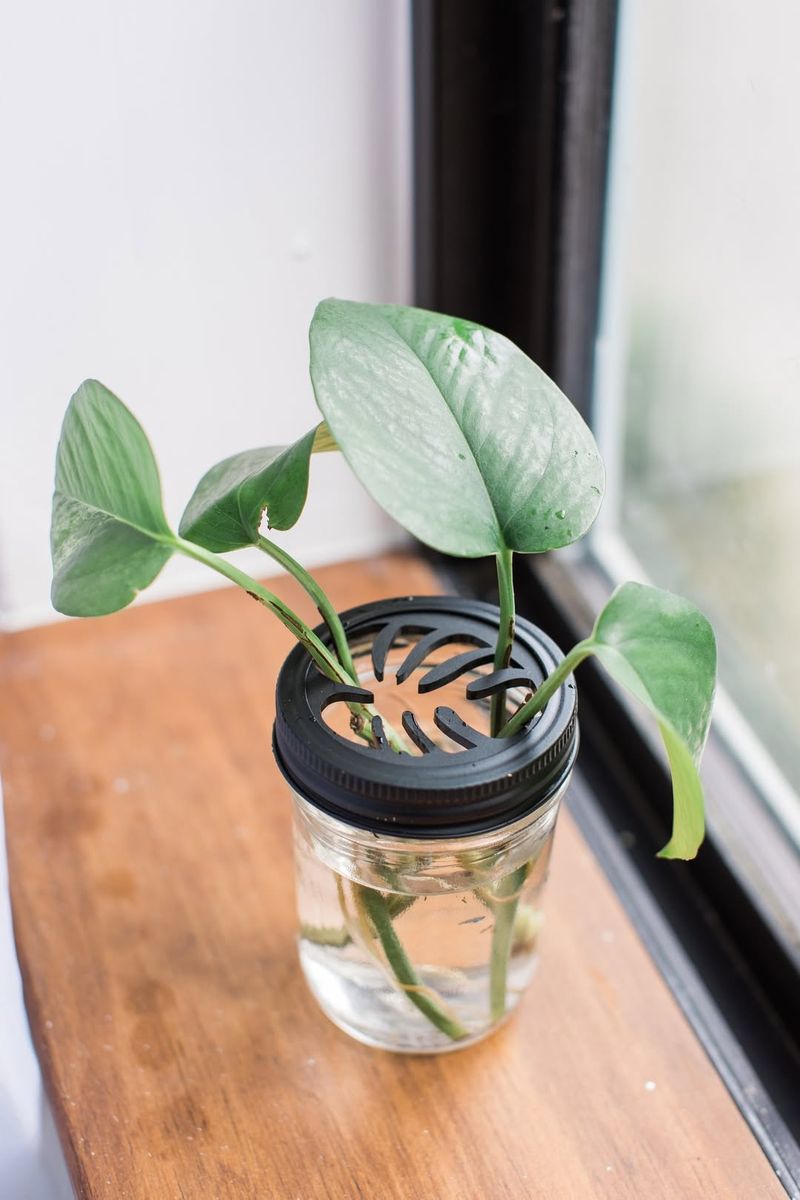
One of the easiest plants to grow in water, pothos adapts beautifully to life in a glass jar or bottle. Its trailing vines can reach impressive lengths, creating a cascading effect that looks stunning on high shelves.
Arizona residents love how forgiving this plant is, even when they forget to change the water for weeks.
Pothos roots grow quickly in water, forming a network of white strands that are fascinating to watch. The heart-shaped leaves come in various shades of green, some with yellow or white variegation.
This variety makes each plant unique and adds visual interest to your home.
Placing your pothos near bright, indirect light will encourage faster growth and more vibrant coloring. However, this plant tolerates low light conditions better than most others.
In Arizona homes, a spot away from direct sun prevents leaf burn while still providing enough light.
Changing the water every two weeks keeps the roots healthy and prevents algae buildup. You can use tap water, but letting it sit overnight allows chlorine to evaporate.
This simple step makes a noticeable difference in plant health.
Pothos purifies the air by removing toxins like formaldehyde and benzene. This makes it both decorative and functional in your living space.
Many Arizona homeowners keep several jars of pothos throughout their houses for this reason.
The plant grows year-round indoors, making it perfect for Arizona’s climate. You won’t need to worry about seasonal changes affecting its growth.
Consistency is one of its best features.
Propagating pothos is incredibly simple—just snip a stem below a node and place it in water. Within days, new roots will appear.
This means you can create an endless supply of plants for your home or to share with friends.
2. Lucky Bamboo
Despite its name, lucky bamboo isn’t actually bamboo at all—it’s a type of tropical water lily. This plant has been a symbol of good fortune in Asian culture for centuries.
Arizona homeowners appreciate how well it adapts to indoor container growing.
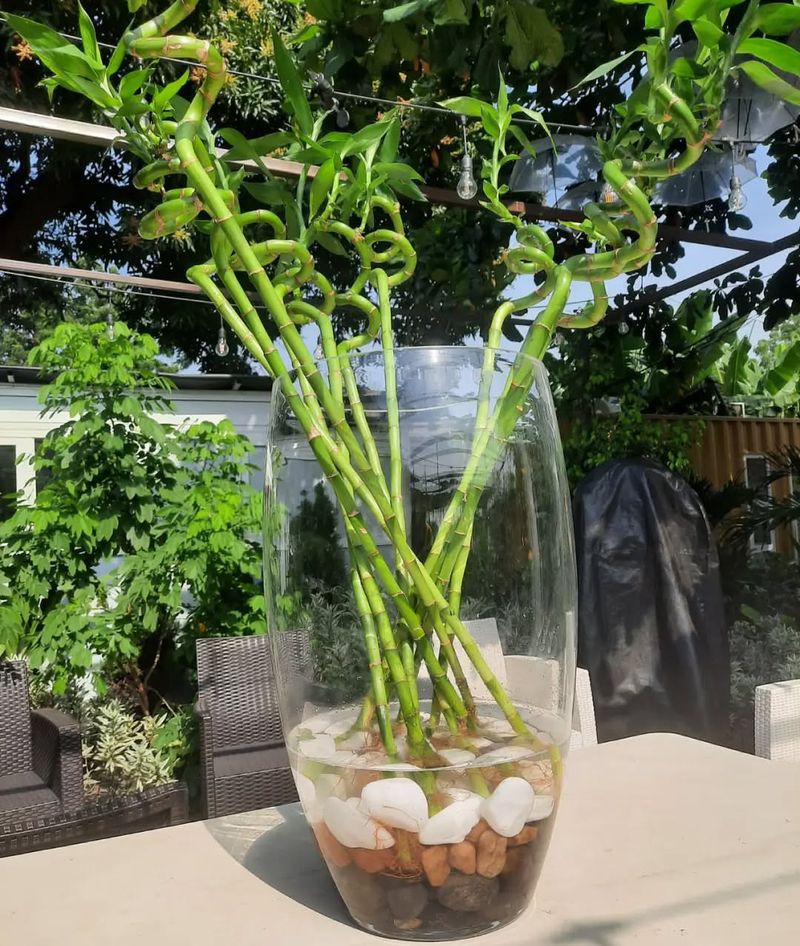
Lucky bamboo stalks can be arranged in artistic patterns, from simple straight shoots to elaborate spirals and braids. These arrangements add an elegant, sculptural element to any room.
The green stalks contrast beautifully against clear glass containers.
Water requirements are minimal—just keep the roots submerged in a few inches of fresh water. Using distilled or filtered water works best, especially in Arizona where tap water can be hard.
Minerals in hard water sometimes cause leaf tips to brown.
This plant thrives in moderate to low light conditions, making it perfect for offices or rooms without many windows. Too much direct sunlight can actually harm the stalks, causing them to turn yellow.
Finding the right balance is easy in most Arizona homes.
Lucky bamboo grows slowly but steadily, adding new leaves from the top of each stalk. You can control its height by trimming the top, which encourages bushier growth.
This makes it easy to maintain the size you want.
The roots develop a thick, white appearance when healthy. Checking them regularly through the glass ensures everything is going well.
Brown or mushy roots indicate water needs changing more frequently.
Adding small pebbles or marbles to the bottom of your jar helps anchor the stalks and adds decorative interest. These also provide stability for taller arrangements.
Many Arizona residents enjoy personalizing their containers this way.
3. Heartleaf Philodendron
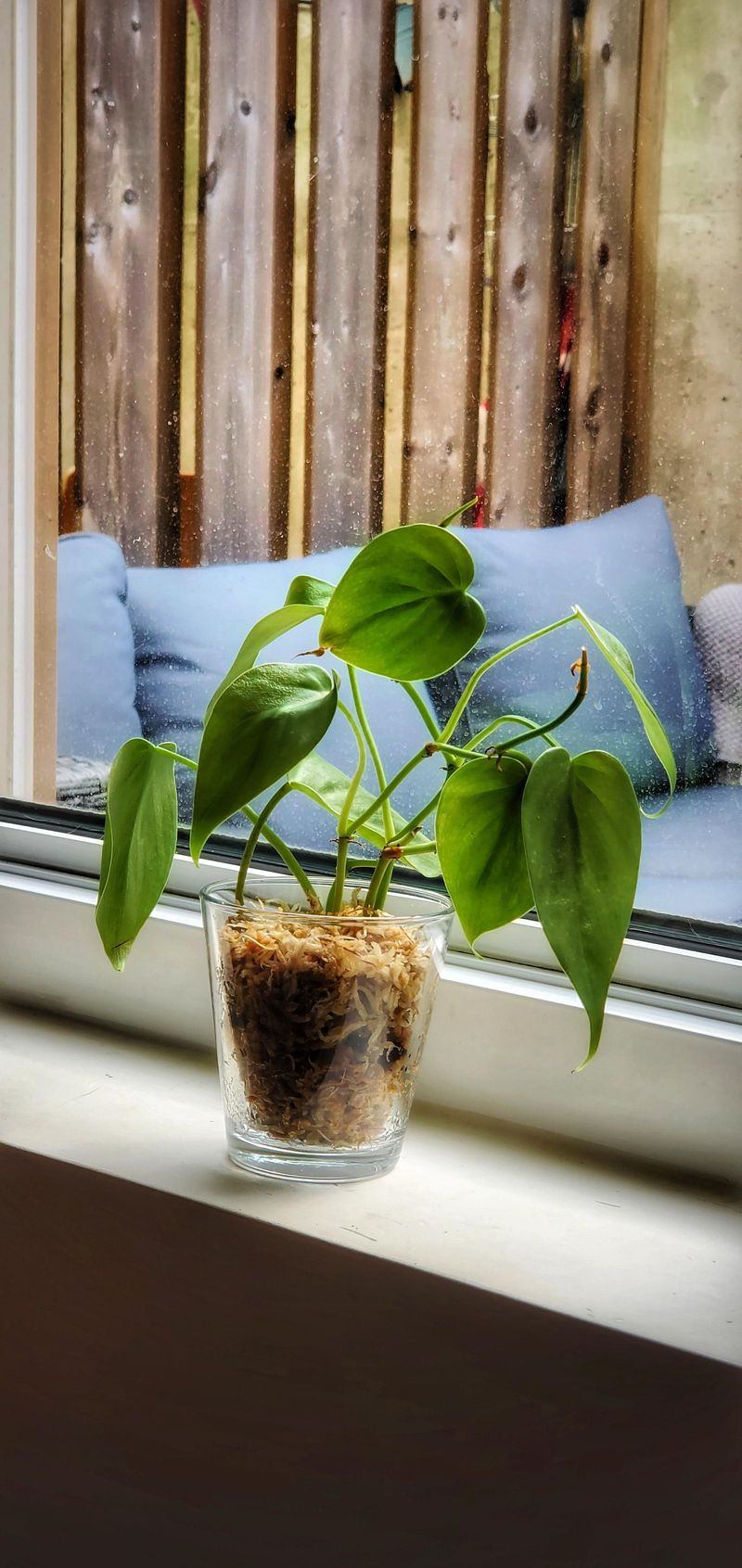
With glossy, heart-shaped leaves that seem to glow in the light, this philodendron variety is a favorite among plant lovers. Its vines grow quickly in water, sometimes adding several inches in just a week.
Arizona gardeners find this rapid growth rewarding and exciting to observe.
The leaves emerge bronze or reddish before maturing to deep green. This color transformation adds dynamic visual interest to your bottle garden.
Each new leaf unfurls slowly, creating anticipation as you watch it develop.
Heartleaf philodendron roots are thicker than pothos roots, creating a substantial appearance in glass containers. The root system becomes quite impressive over time.
This makes the plant interesting from every angle.
Bright, filtered light produces the most vigorous growth and largest leaves. However, this plant tolerates shade better than many others.
In Arizona homes, placing it a few feet from a window usually provides ideal conditions.
Water changes every week or two keep the plant thriving. Using room-temperature water prevents shock to the roots.
This small consideration makes a big difference in overall plant health.
The vines can be trained to climb or allowed to trail downward. Using a small trellis in a larger jar creates an upright growth habit.
Trailing vines look beautiful cascading from shelves or hanging containers.
Heartleaf philodendron purifies indoor air, removing harmful chemicals from your environment. This benefit is especially valuable in newer Arizona homes where building materials may off-gas.
Having several plants amplifies this air-cleaning effect.
4. Spider Plant
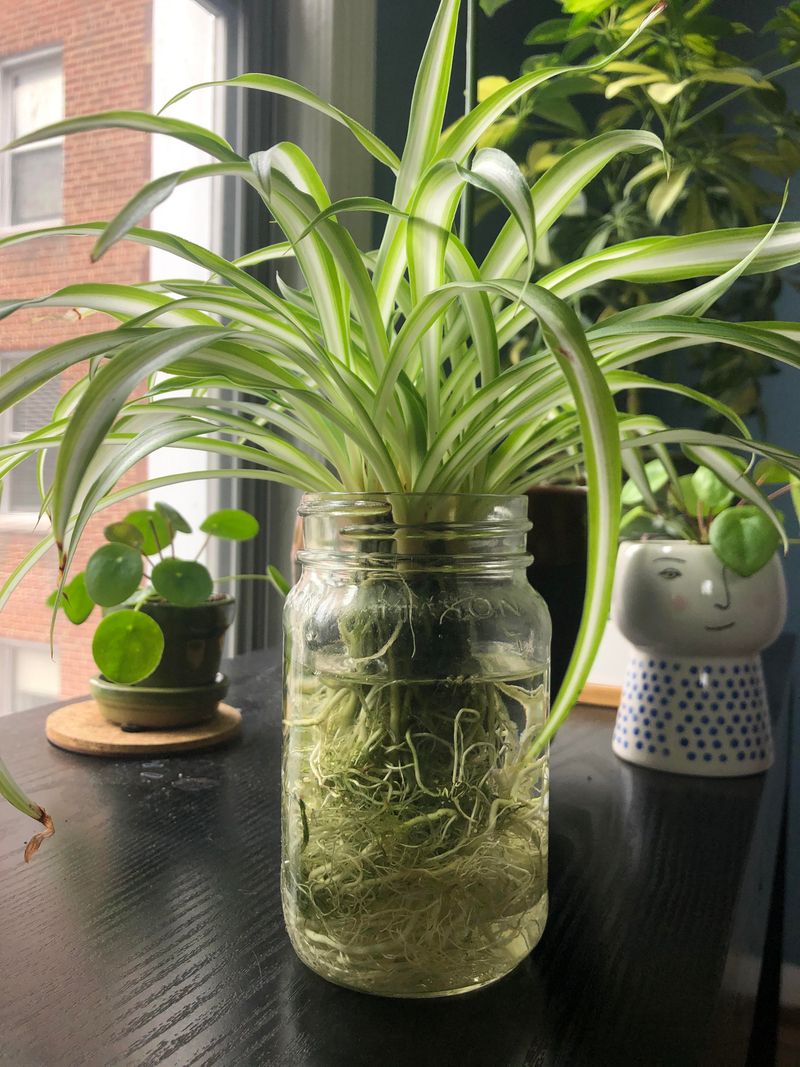
Known for producing miniature plantlets that dangle from long stems, spider plants create a fountain-like appearance. These baby plants can be rooted in water, making propagation incredibly easy.
Arizona plant enthusiasts love sharing these offshoots with friends and family.
The arching leaves feature green and white stripes that add brightness to any space. Some varieties have more white variegation than others.
This natural patterning makes each plant visually striking without needing flowers.
Spider plants adapt well to water culture, though they’re more commonly grown in soil. Transitioning a spider plant to water takes patience as the roots adjust.
Once established, they grow contentedly in jars for extended periods.
These plants prefer moderate light but tolerate a range of conditions. Too much direct sun can fade the white stripes, while too little causes slower growth.
Finding the sweet spot is simple in most Arizona homes.
The plantlets form on long stems called runners after the plant matures. Each plantlet develops tiny roots even before being separated from the parent.
This makes them ready to grow in water immediately.
Placing several plantlets in a single jar creates a lush, full appearance quickly. They grow harmoniously together without competing.
This approach works especially well in larger containers.
Spider plants are excellent air purifiers, removing carbon monoxide and other pollutants. Research has shown them to be among the most effective plants for this purpose.
In Arizona’s desert environment, this air-cleaning ability is particularly valuable.
5. English Ivy
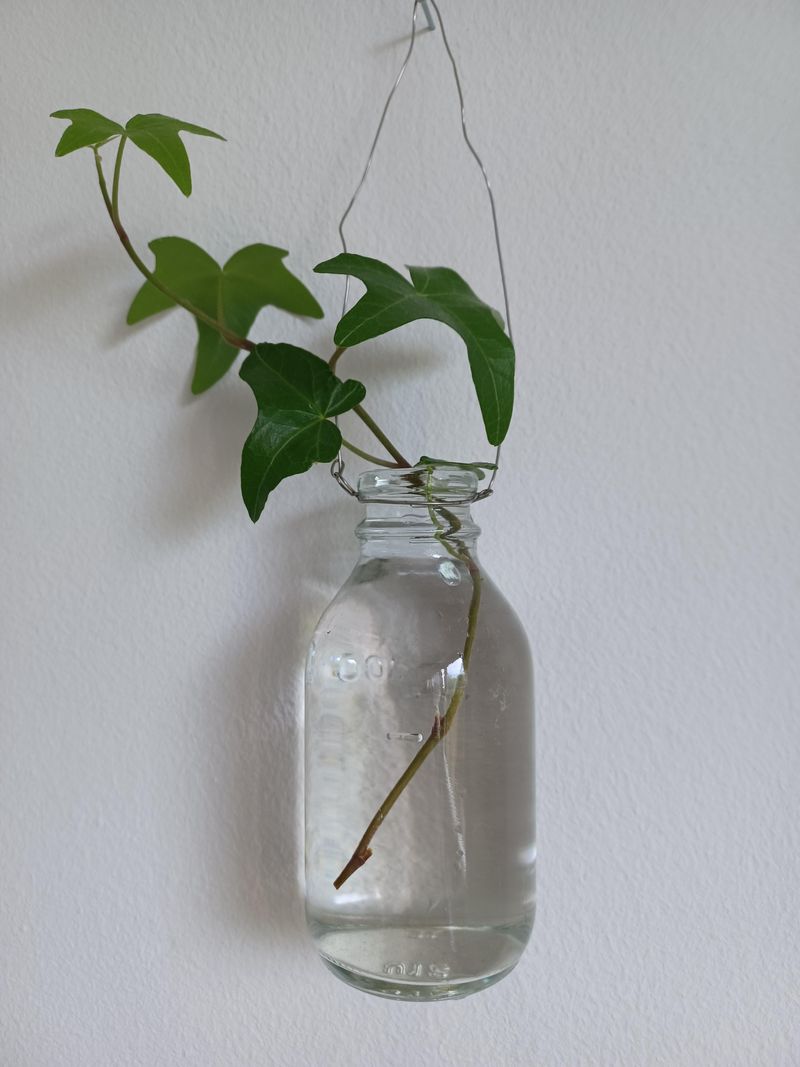
Classic and elegant, English ivy brings a touch of old-world charm to modern Arizona homes. Its small, lobed leaves create intricate patterns as the vines wind through and around their container.
This plant has been cultivated for centuries, valued for both beauty and symbolism.
Ivy roots readily in water, making it perfect for jar cultivation. The roots develop quickly once a cutting is placed in water.
Within a few weeks, you’ll have a well-established plant.
Different varieties offer varying leaf shapes and colors, from deep green to variegated patterns. Some have white or yellow edges that brighten darker corners.
Choosing different varieties lets you create diverse displays throughout your home.
Moderate to bright indirect light keeps ivy growing steadily. Too much shade causes the vines to become leggy and sparse.
Arizona’s abundant sunshine makes it easy to provide adequate light without risking sunburn.
Cooler temperatures are ideal for English ivy, which thrives in the 60-75°F range. Arizona homes with air conditioning provide perfect conditions during hot months.
The plant appreciates the consistent temperature control.
Regular water changes prevent algae and keep the roots healthy. Adding a small piece of activated charcoal to the jar helps keep water fresh longer.
This trick is popular among experienced Arizona plant growers.
Ivy vines can be trained to grow in specific directions by gently guiding them. Creating patterns or shapes adds artistic flair to your display.
6. Chinese Evergreen
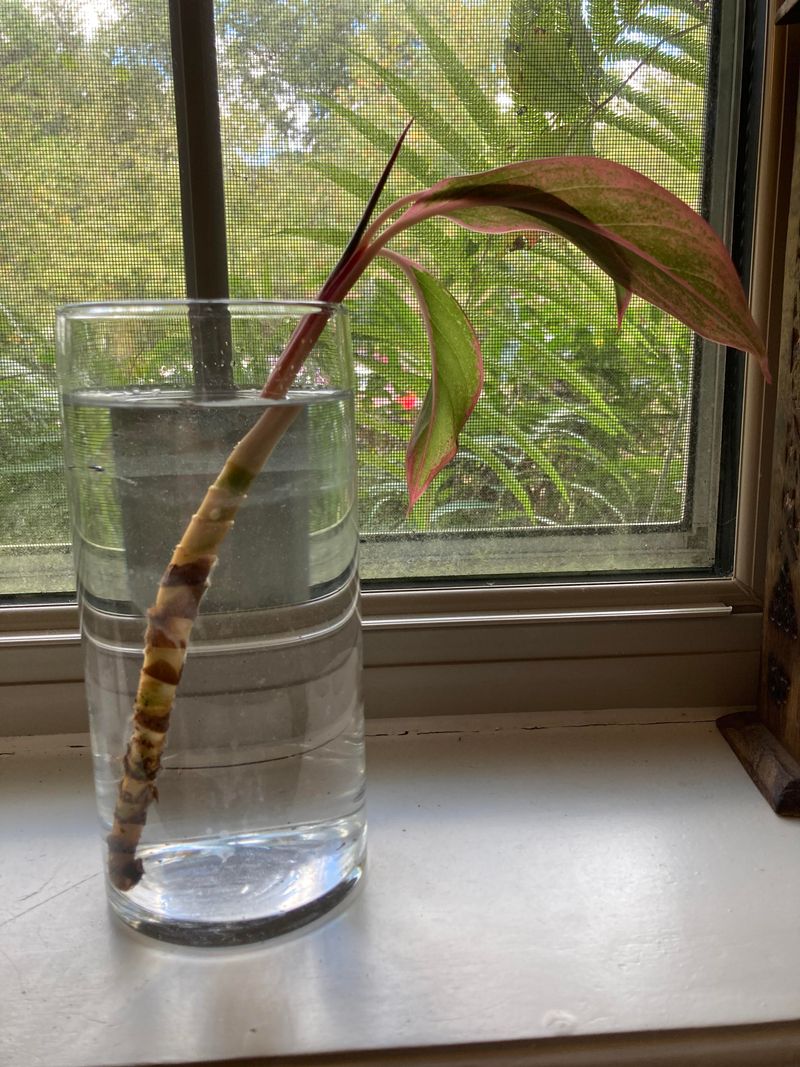
Bold patterns and striking colors make Chinese evergreen a standout choice for bottle gardens. The leaves feature silver, pink, or red markings on green backgrounds.
This natural artwork requires no maintenance beyond basic care.
While typically grown in soil, Chinese evergreen adapts to water culture with proper transition. Start with a healthy stem cutting that includes several leaves.
Place it in water and wait patiently for roots to develop.
The root development process takes longer than with some other plants, sometimes requiring three to four weeks. Don’t give up if you don’t see immediate results.
Once roots appear, they grow steadily and robustly.
Chinese evergreen tolerates low light better than almost any other houseplant. This makes it perfect for Arizona rooms that don’t receive much natural light.
Offices, bathrooms, and hallways become suitable growing locations.
The colorful leaf patterns remain vibrant even in dim conditions. However, brighter light intensifies the colors, making them even more dramatic.
Experimenting with placement helps you find the perfect spot.
Larger leaves mean you’ll need a wider-mouthed jar or bottle for this plant. Mason jars work exceptionally well for Chinese evergreen.
The opening needs to accommodate the leaf width comfortably.
Water changes every two weeks maintain plant health. The thick roots don’t mind sitting in water as long as it stays fresh.
Cloudy water is a sign that changing is overdue.
This plant grows slowly compared to vining varieties, adding new leaves gradually. Each new leaf takes time to unfurl completely.
The slow pace makes it easy to maintain without frequent trimming.
7. Peace Lily
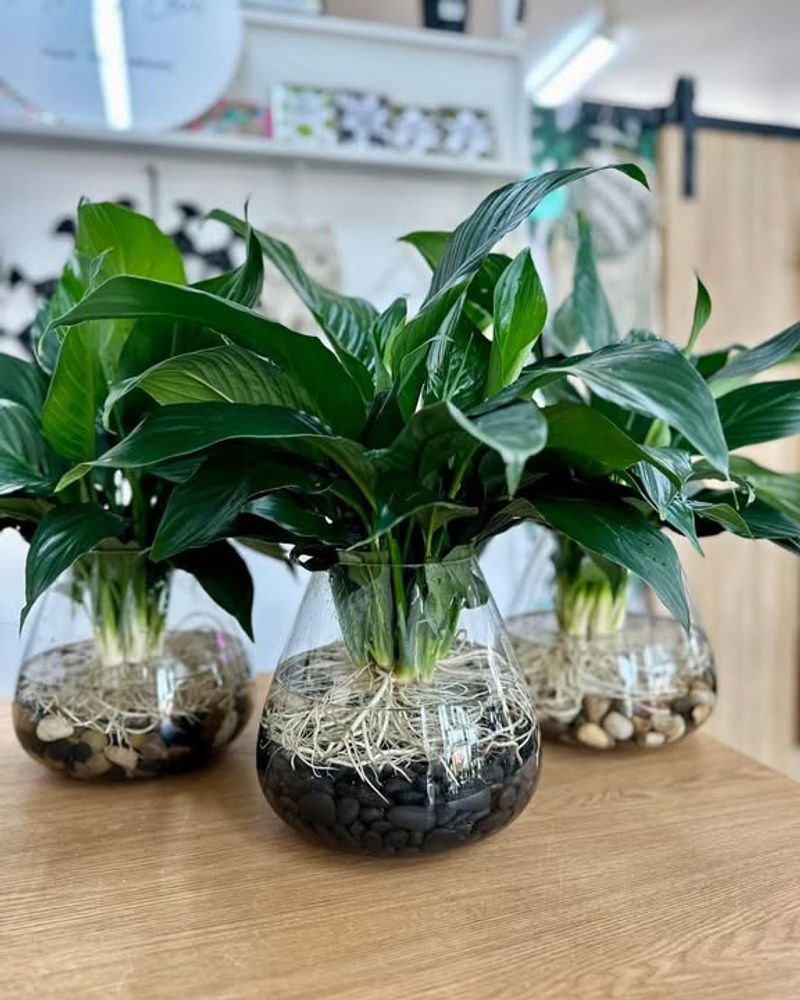
Graceful white blooms emerge from dark green foliage, creating elegant contrast. Peace lilies are beloved for their sophisticated appearance and air-purifying abilities.
Arizona residents appreciate how these plants thrive indoors despite the harsh desert climate outside.
Transitioning peace lily from soil to water requires careful root cleaning. Rinse away all soil gently under lukewarm water.
This prevents bacterial growth and helps roots adapt to their new environment.
The roots may look stressed initially but typically recover within a week or two. New white roots adapted to water culture will begin growing.
These water roots are different from soil roots in structure and function.
Peace lilies prefer indirect light and actually bloom more reliably with less intense illumination. Too much direct sun causes leaf scorching.
Finding a bright spot without direct rays is easy in most Arizona homes.
The distinctive white flowers aren’t actually petals but modified leaves called spathes. They last for weeks before gradually turning green.
This long-lasting display provides extended enjoyment from each bloom.
Water level should cover the roots but not touch the base of the plant. Keeping the crown dry prevents rot.
Clear jars make monitoring water levels simple.
Peace lilies communicate their needs clearly—drooping leaves signal thirst. In water culture, this usually means the water level has dropped too low.
Adding water quickly revives the plant.
8. Tradescantia
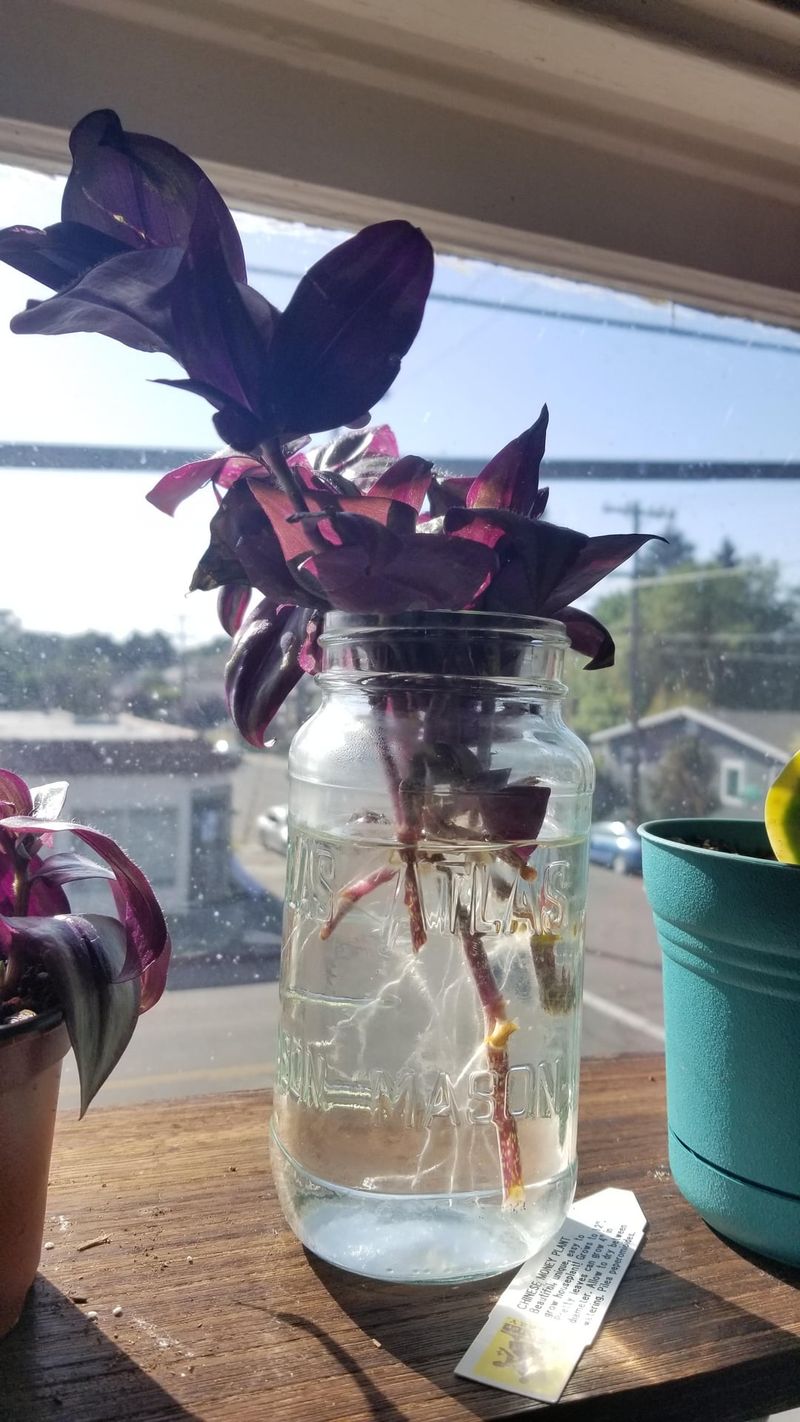
Vibrant purple leaves with silver stripes make tradescantia impossible to ignore. This colorful plant adds drama to any bottle garden.
Arizona plant lovers appreciate how the colors intensify with proper light exposure.
Also called wandering jew or inch plant, tradescantia grows rapidly in water. Stem cuttings root within days, making propagation effortless.
This quick growth provides instant gratification for impatient gardeners.
The trailing stems cascade beautifully from bottles and jars, creating living curtains of color. Multiple cuttings in one container create a full, lush appearance quickly.
This fast fill-in makes tradescantia ideal for instant displays.
Bright light brings out the deepest purple coloring in the leaves. Insufficient light causes the colors to fade toward green.
Placing your jar near a sunny Arizona window maximizes color intensity.
Different tradescantia varieties offer varying color combinations—purple and silver, green and white, or pink and green. Mixing varieties in one jar creates a rainbow effect.
This versatility allows for creative expression.
The stems are somewhat succulent, storing water in their tissue. This makes them resilient if water levels drop temporarily.
However, keeping water consistently available promotes the best growth.
Pinching back stem tips encourages branching and prevents legginess. The pinched portions can be rooted to create new plants.
This maintenance practice keeps your tradescantia looking full and attractive.
Water changes weekly prevent algae growth, which can be more problematic with tradescantia than other plants. The fast growth rate means more nutrients are consumed from the water.
Fresh water keeps the plant thriving.
9. Mint
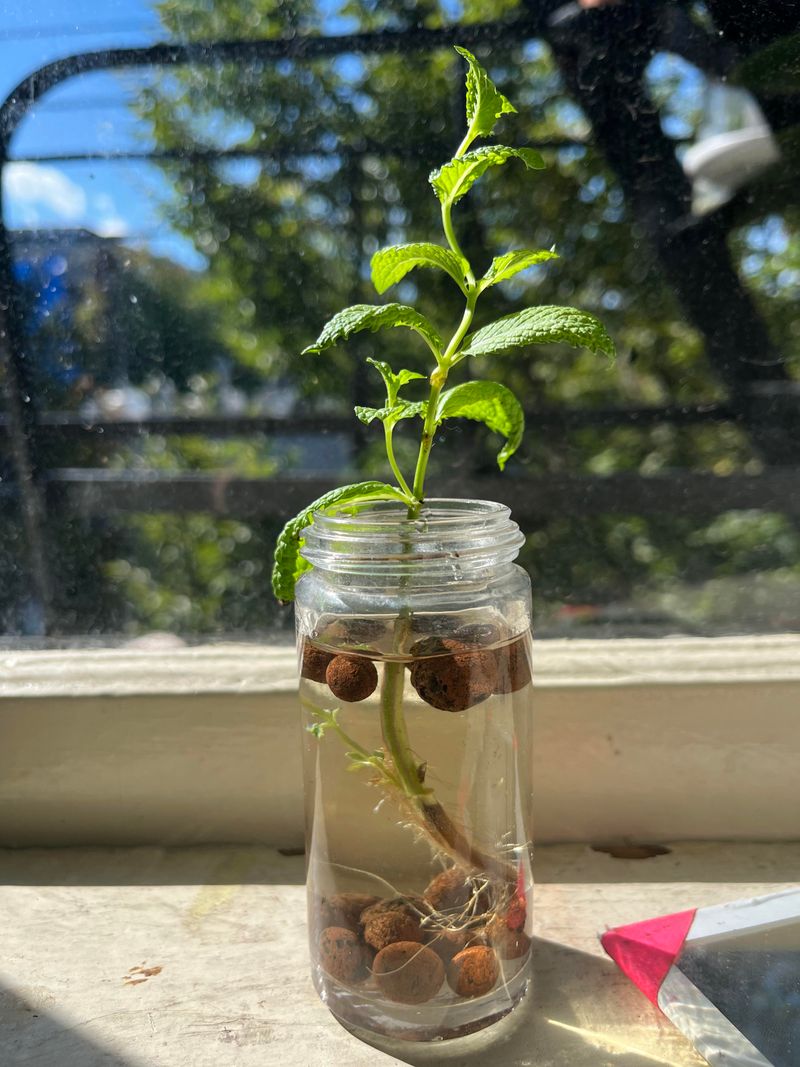
Fresh mint growing in your kitchen provides both beauty and culinary utility. The aromatic leaves release their scent when brushed, filling Arizona homes with refreshing fragrance.
This dual-purpose plant serves as both decoration and herb garden.
Mint roots vigorously in water, often faster than in soil. A stem cutting placed in water develops roots within a week.
This makes starting your mint collection incredibly simple.
Multiple mint varieties exist, including peppermint, spearmint, chocolate mint, and more. Each offers distinct flavors and subtle appearance differences.
Growing several varieties in separate jars creates a complete mint collection.
Harvesting leaves for cooking or tea doesn’t harm the plant—it actually encourages bushier growth. Pinch leaves from the top, and the plant will branch below the cut.
This means you can enjoy fresh mint regularly.
Mint prefers bright light and grows leggy in shade. Placing your jar on a sunny Arizona windowsill produces the most robust plants.
The leaves will be fuller and more flavorful with adequate light.
The roots grow densely, sometimes filling the entire jar with white tangles. This extensive root system supports vigorous top growth.
Watching the roots develop is fascinating for children learning about plants.
Changing water weekly keeps mint healthy and prevents the water from developing an unpleasant smell. Mint roots release compounds that can make water cloudy.
Fresh water maintains both plant health and kitchen aesthetics.
10. Coleus
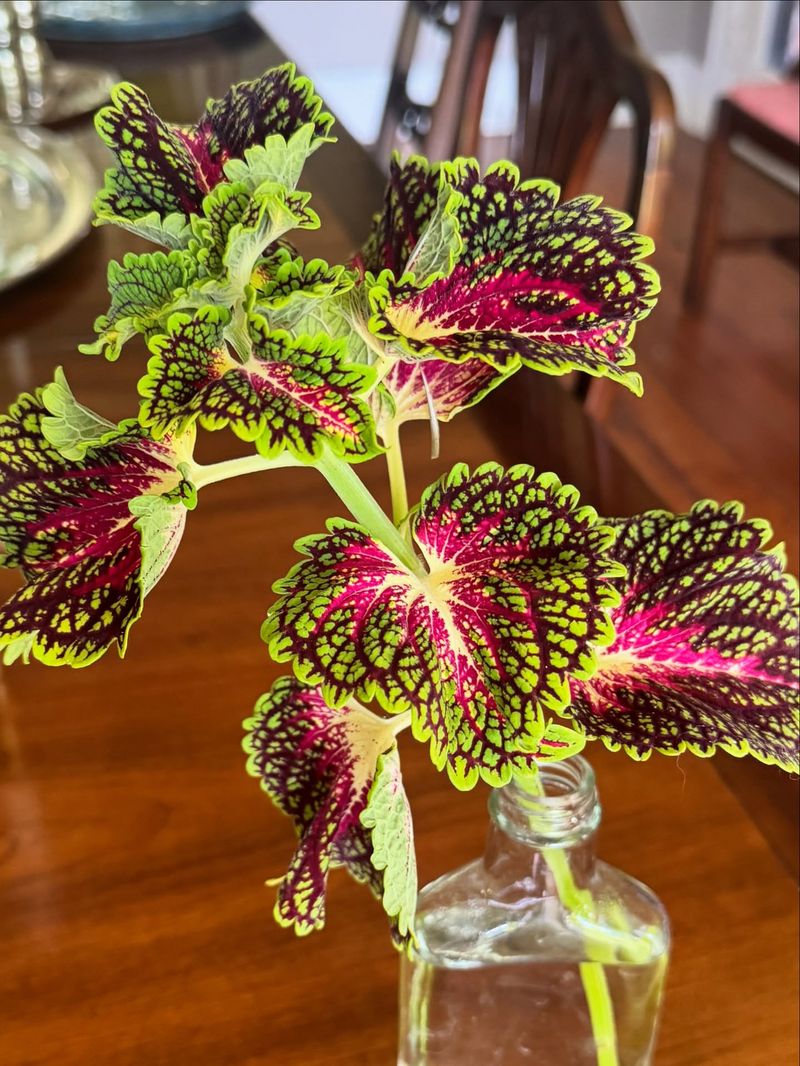
Stunning leaf patterns in reds, yellows, purples, and greens make coleus the showstopper of bottle gardens. No two plants look exactly alike due to the incredible variety available.
Arizona plant collectors often become obsessed with finding new coleus varieties.
Coleus roots easily in water, making propagation simple and successful. Stem cuttings develop roots within five to seven days.
This reliability makes coleus perfect for beginners trying water propagation for the first time.
The colorful leaves need bright light to maintain their vivid patterns. Insufficient light causes colors to fade and the plant to stretch.
Fortunately, Arizona homes typically have plenty of natural light for optimal coleus growth.
Pinching back the growing tips regularly keeps coleus bushy and compact. Unpinched plants become tall and sparse.
The pinched stems root easily, giving you more plants to enjoy or share.
Flower spikes occasionally develop, but most growers remove them to keep energy focused on foliage. The flowers are small and not particularly showy.
Leaf color and pattern are this plant’s main attractions.
Coleus grows quickly in water, sometimes visibly larger from one day to the next. This rapid growth is exciting to observe.
Children especially enjoy watching coleus stems elongate and add new leaves.
Water should be changed weekly due to the plant’s fast growth rate. The roots consume nutrients quickly, depleting the water.
Fresh water maintains vigorous growth and prevents problems.
11. Arrowhead Plant
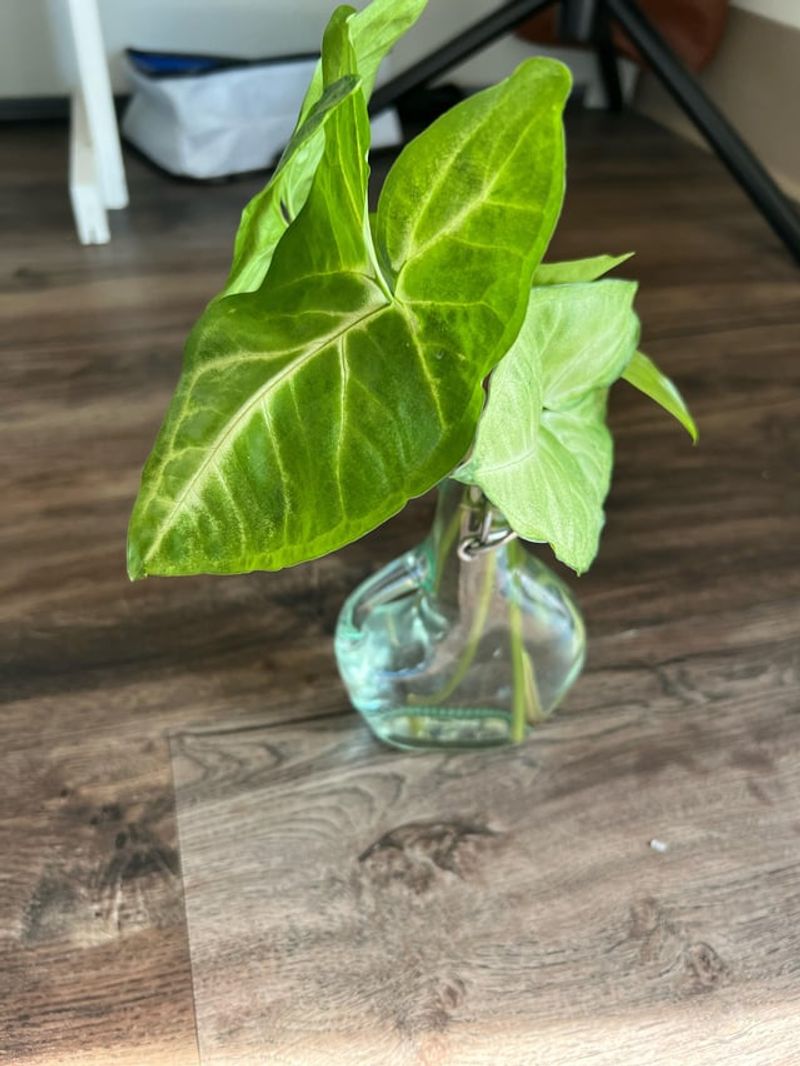
Arrow-shaped leaves give this plant its common name and distinctive appearance. Young leaves are compact and pointed, while mature leaves develop lobes.
This changing leaf shape adds interest as the plant grows in your Arizona home.
Arrowhead plant adapts beautifully to water culture, rooting quickly from stem cuttings. The roots grow white and healthy in clean water.
Within a month, you’ll have a well-established plant ready for long-term jar living.
Variegated varieties feature white, pink, or cream markings on green leaves. These colorful patterns brighten any space.
Solid green varieties are equally attractive with their clean, simple appearance.
The plant climbs or trails depending on how you position it. Providing a small support in the jar encourages upward growth.
Letting it trail creates a cascading effect perfect for high shelves.
Moderate light suits arrowhead plant well, though it tolerates lower light than many others. Too much direct sun can scorch the variegated leaves.
Finding a spot with bright, filtered light is ideal in Arizona homes.
Water changes every two weeks keep the plant thriving. The roots don’t mind sitting in water as long as it stays fresh.
Cloudy water indicates bacteria growth and signals time for a change.
Arrowhead plant grows steadily but not aggressively, making it easy to maintain. You won’t need to trim it constantly like faster-growing plants.
This moderate pace suits people who want low-maintenance greenery.
The leaves naturally repel dust, staying cleaner than many houseplants. Occasionally wiping them with a damp cloth keeps them looking their best.
This easy care routine takes just minutes.
Younger plants have the most attractive compact form in bottles. As plants mature, they develop larger, more deeply lobed leaves.
Some Arizona growers prefer starting fresh cuttings regularly to maintain the juvenile leaf shape.