9 Invasive Plants Tennessee Gardeners Regret Planting

What starts as a small garden upgrade can turn into a long running headache in Tennessee.
Many invasive plants arrive with big promises of fast growth, colorful blooms, or low maintenance care.
Before long, they spread like wildfire, creeping into lawns, flower beds, and even neighboring properties.
In Tennessee’s warm seasons and rich soil, these plants often grow without any brakes.
Once they take hold, invasive plants can be tough to shake.
They crowd out other plants, steal nutrients, and change how the soil behaves.
Some spread through seeds, others through roots that seem to multiply overnight.
What once looked like a smart pick can quickly become a constant battle.
The trouble does not stop at the garden fence. Invasive plants push out native species that local wildlife depend on for food and shelter.
Birds, insects, and pollinators all feel the ripple effects.
Like opening Pandora’s box, planting the wrong species can create problems that linger for years.
Knowing which plants Tennessee gardeners regret most helps others steer clear of the same mistakes.
With better choices, gardens stay healthier, easier to manage, and better suited to the natural balance of the region.
1. English Ivy
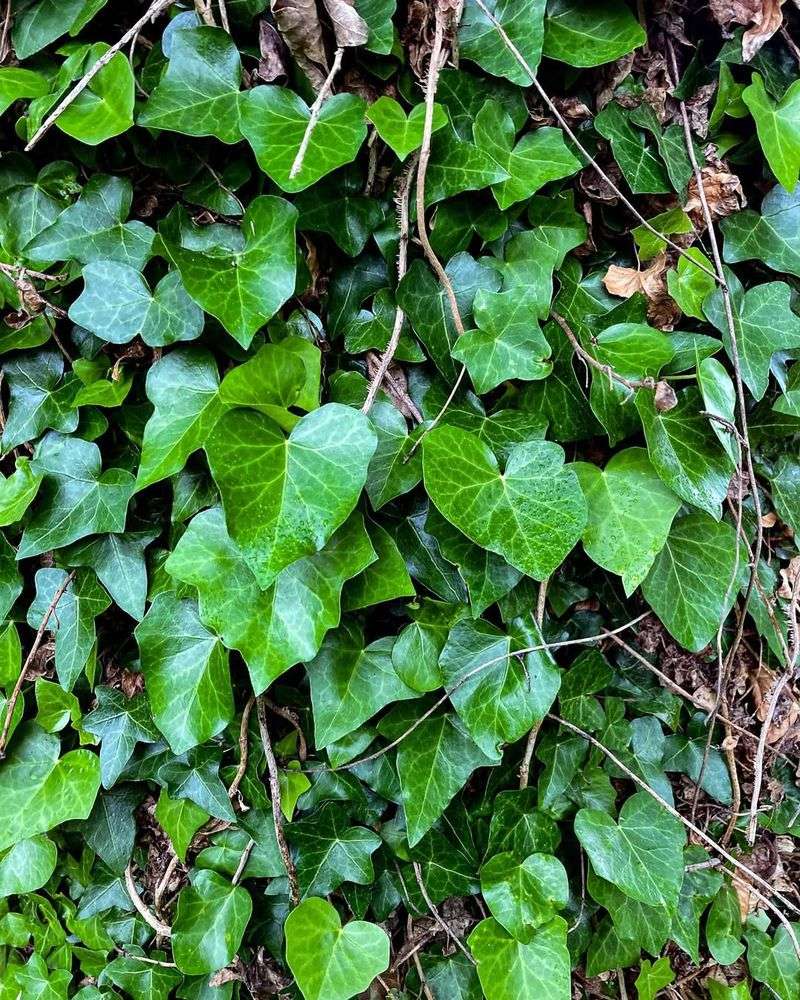
Gardeners across Tennessee initially plant English ivy for its attractive evergreen foliage and ability to cover unsightly areas quickly.
The glossy leaves look elegant climbing walls or spreading across bare ground as a groundcover.
Unfortunately, this European import becomes a relentless invader that smothers everything in its path.
Once established, English ivy sends out runners that root wherever they touch soil, creating dense mats that prevent native plants from growing.
The vines climb trees with aerial rootlets, eventually covering trunks and branches completely.
This heavy blanket blocks sunlight from reaching the tree’s leaves and adds dangerous weight that can cause branches to break during storms.
Tennessee forests suffer significantly when English ivy escapes from residential plantings into natural areas.
The vine forms impenetrable carpets on forest floors that eliminate wildflowers and tree seedlings.
Removing established ivy requires persistent effort over several years, including cutting vines at ground level and digging out extensive root systems.
Many Tennessee homeowners spend countless weekends battling ivy that has spread from a small decorative planting into neighboring yards and wooded areas.
The plant’s aggressive nature makes it one of the most regretted landscape choices in the state.
2. Chinese Privet
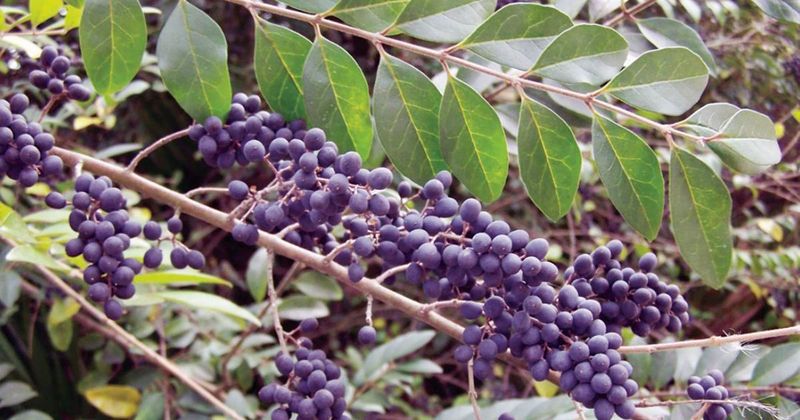
Property owners throughout Tennessee once valued Chinese privet as an inexpensive hedge plant that grows quickly and tolerates various soil conditions.
Nurseries sold thousands of these shrubs for privacy screens and property borders.
However, this seemingly useful plant has become one of the state’s worst invasive nightmares.
Chinese privet produces millions of small berries that birds eagerly consume and spread everywhere through their droppings.
Each berry contains seeds that germinate readily, creating dense thickets that crowd out native Tennessee vegetation.
The shrubs grow so thickly that they block sunlight and change forest understory conditions completely.
Landowners discover that privet spreads from original plantings into pastures, forests, and stream banks with alarming speed.
The shrubs form nearly impenetrable walls that are difficult to walk through and impossible to mow.
Controlling established privet requires cutting stems and treating stumps with herbicide, then repeating the process for several years as new seedlings emerge.
Tennessee wildlife agencies and conservation groups consider Chinese privet a major threat to native ecosystems.
Many gardeners who planted privet decades ago now spend significant time and money trying to eliminate it from their properties and surrounding natural areas.
3. Japanese Honeysuckle
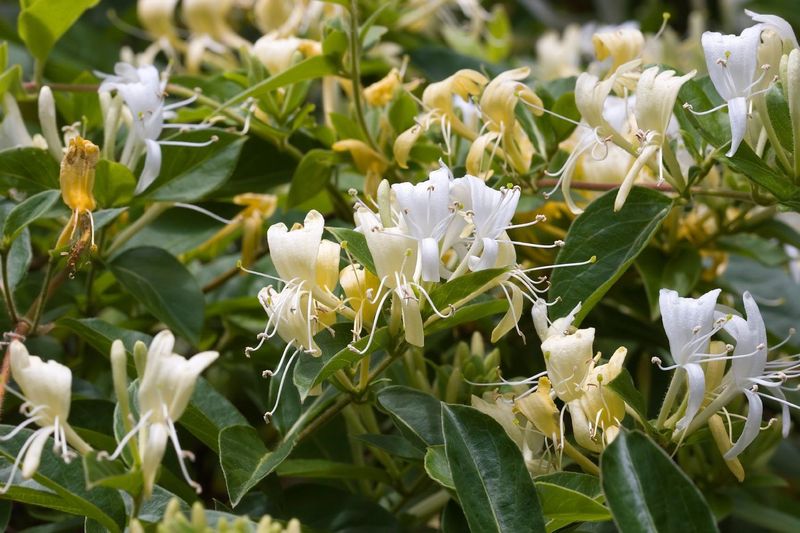
Sweet fragrance and beautiful flowers make Japanese honeysuckle seem like a perfect addition to Tennessee gardens.
Children love pulling the flowers apart to taste the tiny drops of nectar, and the plant creates lovely cascades over fences and arbors.
This nostalgic vine, however, ranks among the most aggressive invaders in the southeastern United States.
Japanese honeysuckle grows at an astonishing rate, sending out stems that can extend fifteen feet or more in a single growing season.
The vines twist around trees, shrubs, and anything else they encounter, creating heavy blankets that pull down branches and block light.
Native plants struggle to survive beneath these suffocating tangles.
Tennessee forests show severe damage from Japanese honeysuckle invasions, with entire understory areas transformed into honeysuckle thickets.
The vine climbs into tree canopies and forms dense mats that prevent tree regeneration.
Birds spread the small black berries widely, establishing new infestations far from the original planting.
Homeowners who initially appreciated the sweet-smelling flowers soon find themselves overwhelmed by unstoppable growth.
Removing Japanese honeysuckle requires diligent cutting and herbicide application, often continuing for many years as the extensive root systems send up new shoots each season.
4. Bradford Pear
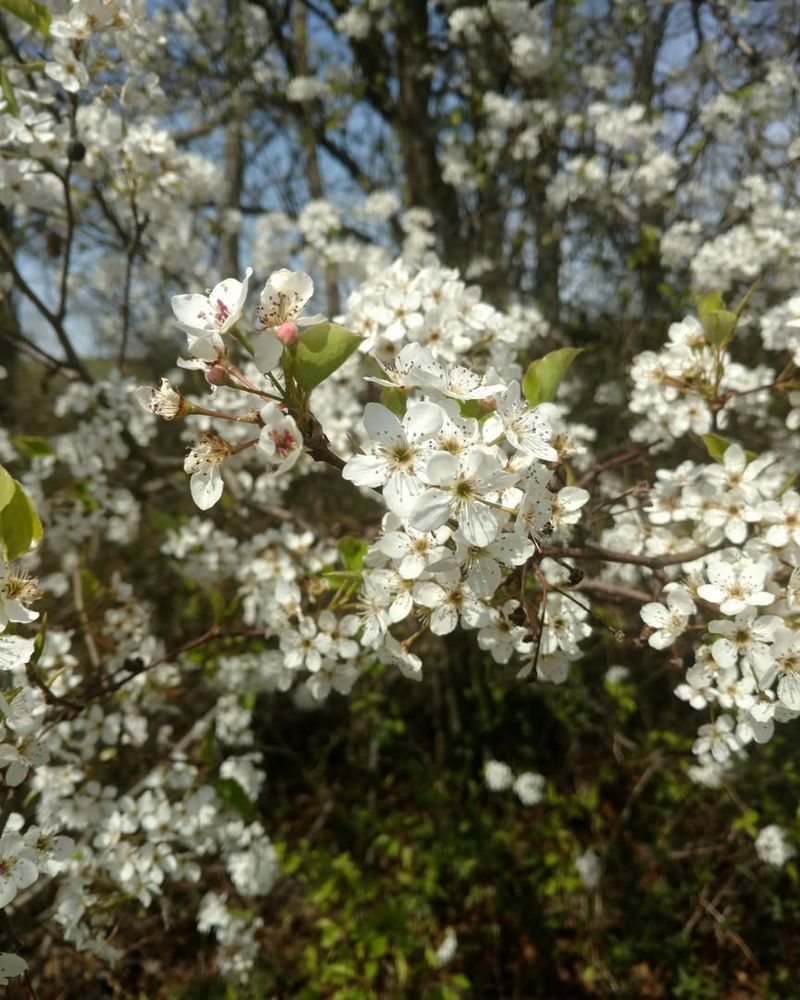
Landscape designers and homeowners throughout Tennessee embraced Bradford pear trees for their spectacular spring flower displays and attractive pyramidal shape.
Developers planted thousands of these trees in new subdivisions because they grow quickly and provide instant curb appeal.
Unfortunately, Bradford pears have proven to be terrible choices for multiple reasons.
The trees develop weak branch structures that split apart during storms, leaving dangerous broken limbs and ruined landscapes.
More problematically, Bradford pears produce abundant fruits that birds spread everywhere, creating thorny thickets of wild pear seedlings throughout Tennessee fields and forests.
These seedlings revert to the aggressive wild form with sharp thorns and dense growth.
Tennessee natural areas now contain extensive infestations of callery pear thickets that crowd out native vegetation and create impenetrable barriers.
The trees leaf out early in spring, shading native wildflowers before they can bloom.
Their dense growth patterns change forest structure and reduce habitat quality for wildlife.
Many Tennessee communities now discourage or prohibit planting Bradford pears because of their invasive offspring.
Homeowners regret choosing these trees as they watch them break apart and spread uncontrollably across their properties and neighboring lands.
5. Burning Bush
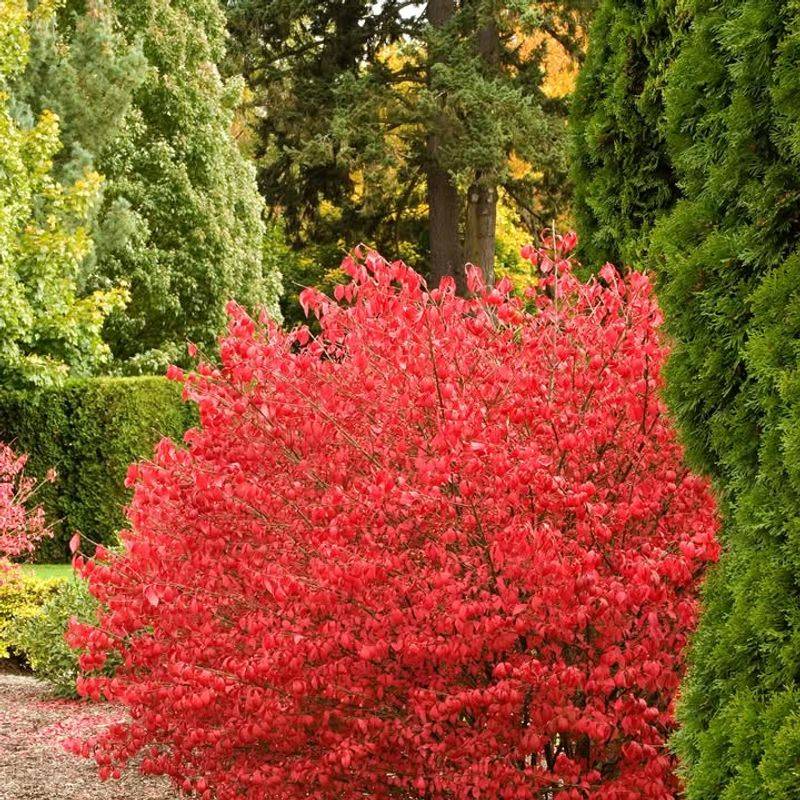
Brilliant red fall color makes burning bush a popular choice for Tennessee landscaping projects.
Garden centers prominently display these attractive shrubs, and many homeowners plant them for stunning autumn displays.
The compact growth habit and easy maintenance seem to make burning bush an ideal landscape plant.
Birds feast on the small fruits that burning bush produces and spread seeds throughout natural areas.
Seedlings establish easily in Tennessee forests, where they grow into dense shrubs that outcompete native vegetation.
The plants tolerate shade well, allowing them to invade undisturbed woodland areas where few other invasive shrubs can survive.
Conservation areas throughout Tennessee report increasing problems with burning bush invasions.
The shrubs form thick stands that eliminate native wildflowers and prevent tree regeneration.
Their dense foliage changes light conditions on forest floors and alters plant community composition.
Tennessee gardeners who planted burning bush for its colorful foliage often discover seedlings appearing throughout their properties years later.
Removing established plants requires digging out the entire root system, as cut stems readily resprout.
Many homeowners now replace burning bush with native alternatives that provide similar fall color without invasive tendencies, such as Virginia sweetspire or oakleaf hydrangea.
6. Kudzu
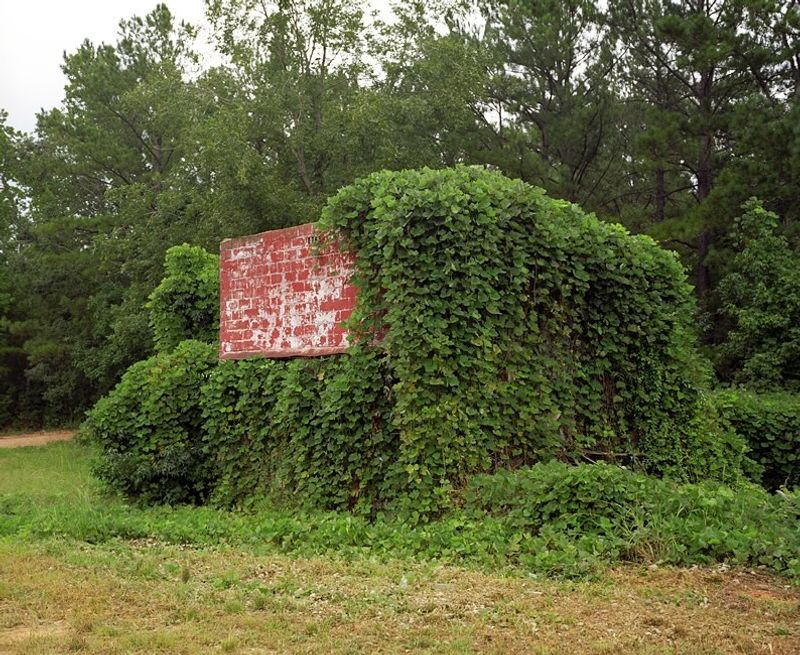
No plant inspires more regret among Tennessee landowners than kudzu, the legendary vine that swallows entire landscapes.
Originally promoted for erosion control and livestock forage, kudzu was intentionally planted throughout the southeastern United States during the early twentieth century.
This decision has created one of the most notorious invasive plant problems in American history.
Kudzu grows with terrifying speed, extending up to a foot per day during peak summer conditions.
The vines blanket everything they encounter, including trees, buildings, utility poles, and abandoned vehicles.
Entire forests disappear beneath purple-flowered kudzu canopies that block all sunlight and eventually smother the vegetation underneath.
Tennessee roadsides and abandoned properties show dramatic examples of kudzu’s destructive power.
The vine’s massive tuberous roots store enormous amounts of energy, making eradication extremely difficult.
Cutting vines provides only temporary relief, as new growth emerges quickly from the underground tubers.
Property values decrease significantly when kudzu infestations take hold, and controlling the vine requires persistent effort over many years.
Tennessee landowners battle kudzu with repeated cutting, herbicide applications, and even grazing animals.
Most people who inherit properties with kudzu infestations wish previous owners had never allowed this aggressive vine to gain a foothold.
7. Purple Loosestrife
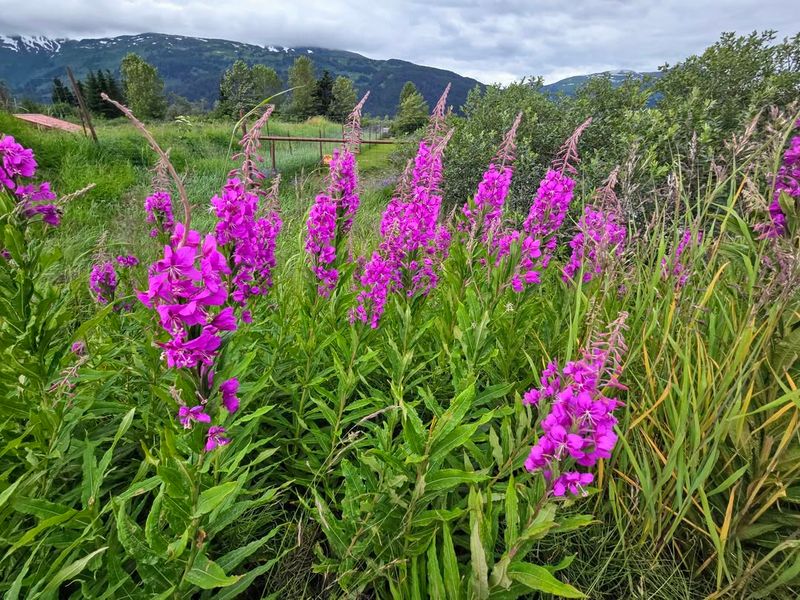
Stunning purple flower spikes attract Tennessee gardeners to purple loosestrife, especially those with wet areas or pond edges to landscape.
The tall plants create impressive displays that bloom throughout summer, and their ability to thrive in soggy soil seems perfect for difficult wet spots.
However, this European wetland plant causes severe ecological damage.
Purple loosestrife produces up to two million seeds per plant annually, and these tiny seeds spread easily through water, mud, and wildlife.
The plants establish quickly in Tennessee wetlands, stream banks, and pond edges, forming dense stands that exclude native vegetation.
Their aggressive growth changes wetland structure and reduces habitat quality for wildlife that depends on native plants.
Tennessee wetlands invaded by purple loosestrife lose plant diversity rapidly as the invader outcompetes native species.
Waterfowl find less food in loosestrife-dominated areas, and fish lose important spawning habitat.
The dense root systems change water flow patterns and sediment deposition.
Homeowners with ponds or stream frontage discover that purple loosestrife spreads far beyond the original planting area.
Controlling established populations requires digging out plants before they set seed and monitoring sites for many years.
Tennessee conservationists work hard to prevent purple loosestrife from invading high-quality wetlands that still support diverse native plant communities.
8. Japanese Barberry
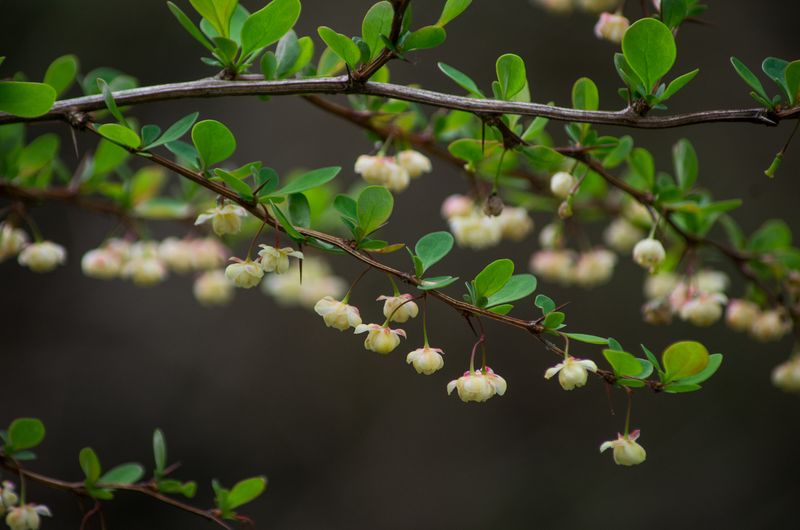
Landscape architects throughout Tennessee specify Japanese barberry for its attractive foliage, low maintenance requirements, and deer resistance.
The compact shrubs come in various colors from green to deep purple, and their thorny branches deter browsing animals.
These qualities made Japanese barberry one of the most commonly planted landscape shrubs across the state.
Birds distribute the small red berries widely, establishing barberry seedlings throughout Tennessee forests and natural areas.
The shrubs tolerate shade and various soil conditions, allowing them to invade high-quality habitats.
Their dense growth and thorny branches create impenetrable thickets that exclude native plants and change forest understory conditions.
Recent research reveals that Japanese barberry creates favorable conditions for tick populations, including those carrying Lyme disease.
The dense shrubs provide ideal humid microclimates where ticks thrive in much higher numbers than in areas with native vegetation.
This health concern adds to the ecological problems caused by barberry invasions.
Tennessee gardeners increasingly regret planting Japanese barberry as they learn about its invasive nature and tick associations.
Removing established shrubs requires digging out the entire root system, and the thorny branches make this work unpleasant.
Many homeowners now replace barberry with native alternatives like Virginia sweetspire that provide similar landscape functions without negative impacts.
9. Mimosa Tree
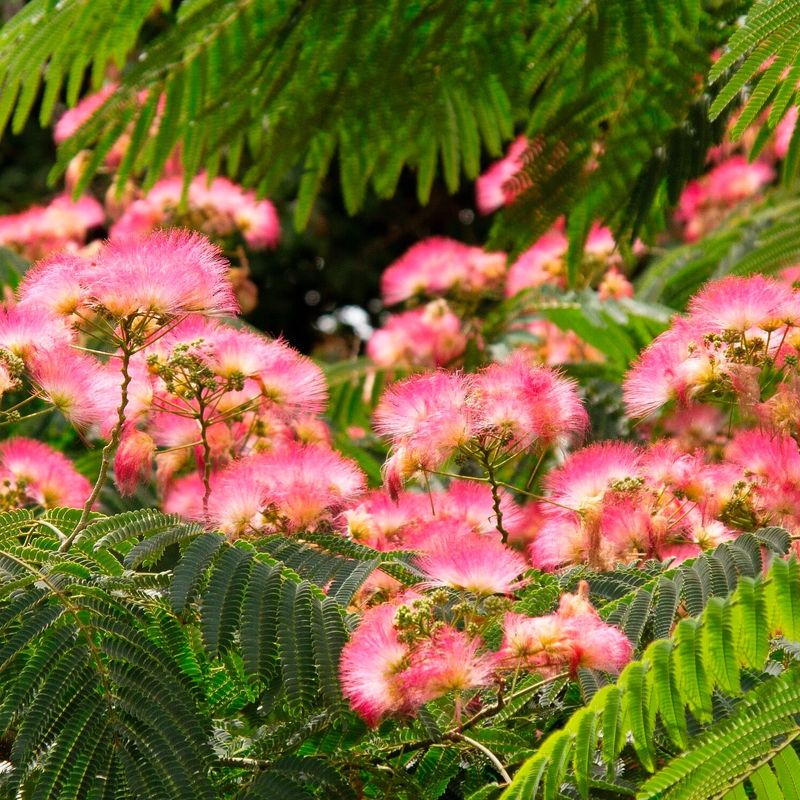
Delicate pink flowers and ferny foliage give mimosa trees an exotic tropical appearance that appeals to Tennessee gardeners.
The fast-growing trees provide quick shade and produce fragrant blooms that attract hummingbirds throughout summer.
Many people remember mimosa trees fondly from childhood and want to recreate those memories in their own landscapes.
Mimosa trees produce flat seed pods containing numerous seeds that remain viable for many years in soil.
The trees spread rapidly through Tennessee landscapes, establishing in disturbed areas, roadsides, and forest edges.
Their fast growth allows them to outcompete native vegetation and form dense stands that exclude other plants.
Tennessee forests and natural areas suffer when mimosa trees invade, as they change soil conditions and light availability.
The trees leaf out early and drop leaves late, shading native plants for extended periods.
Their shallow root systems make them prone to falling during storms, and broken trees readily resprout from stumps.
Homeowners discover that mimosa trees spread throughout their properties and neighboring lands, creating maintenance headaches and reducing property values.
The trees also attract webworms that create unsightly webs in branches.
Many Tennessee gardeners who planted mimosas for their beauty now spend considerable effort removing seedlings and trying to control their spread across the landscape.