6 Invasive Shrubs North Carolina Gardeners Should Never Plant And What To Grow Instead
A shrub might seem like an easy way to fill space and add structure to your yard, but not every choice is a good one. In North Carolina, some shrubs that look attractive at first can quickly spread beyond control and create problems over time.
What starts as a simple planting can turn into something much harder to manage than expected. These invasive shrubs can crowd out other plants, reduce variety in your garden, and take over areas you never planned for.
In a state with such diverse landscapes, they can also affect the natural balance beyond your yard. Many gardeners do not realize the impact until it becomes difficult to deal with.
The good news is there are better options that offer the same beauty without the extra work.
Once you learn which shrubs to avoid and what to grow instead, you can create a space that stays healthy, balanced, and easier to enjoy year after year.
1. Chinese Privet
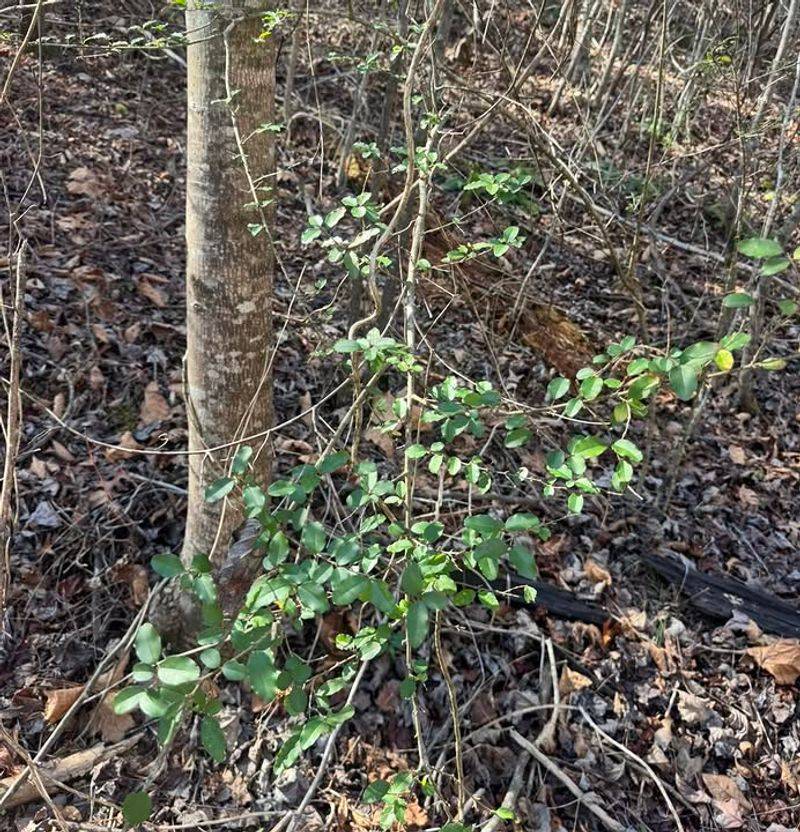
Walk through almost any woodland edge in North Carolina’s Piedmont or Coastal Plain and you will likely spot Chinese Privet growing thick and tall, practically everywhere you look.
Ligustrum sinense is one of the most aggressively spreading shrubs in the entire state, and it got that reputation for good reason.
Birds love eating its small dark berries, then scatter the seeds far and wide, sending new plants sprouting in places nobody ever intended.
Once Chinese Privet gets established, it forms dense, shadowy thickets that block sunlight and squeeze out native plants that local wildlife actually depends on.
Whole forest understories can get taken over before most gardeners even realize what happened.
It grows fast, tolerates shade, and bounces back stubbornly even after repeated cutting. The good news is that a fantastic native swap exists: Yaupon Holly, known scientifically as Ilex vomitoria.
It gives you that same handsome evergreen structure and provides excellent food and shelter for birds and other wildlife.
Yaupon Holly is naturally adapted to North Carolina soils and climate, so it thrives without any fuss.
It handles drought, clay soil, and coastal conditions with ease, making it a reliable, beautiful, and ecologically responsible choice for any North Carolina yard or landscape project.
2. Japanese Barberry
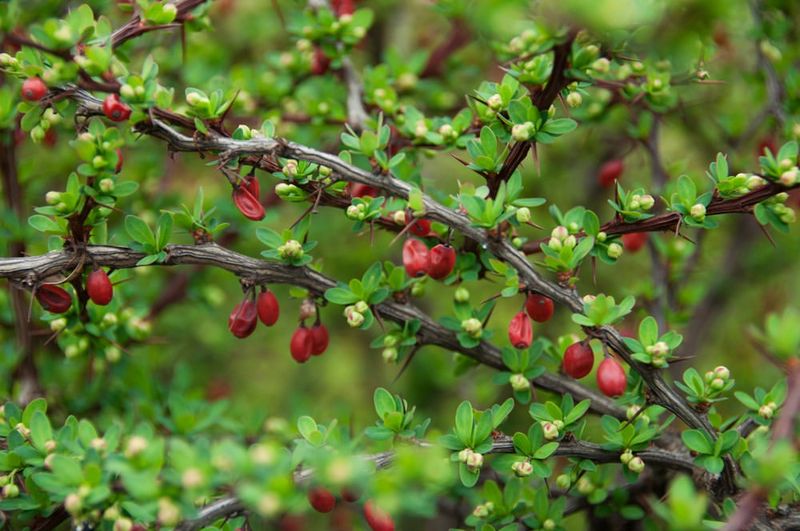
Few shrubs look as tidy and colorful in a garden center as Japanese Barberry, with its neat shape, reddish leaves, and bright little berries catching every shopper’s eye.
But Berberis thunbergii has a serious dark side that North Carolina gardeners need to know about before bringing it home.
Once planted, it spreads steadily into surrounding forests and natural areas, creating dense, thorny tangles that are genuinely difficult to manage.
Beyond crowding out native plants, Japanese Barberry creates another sneaky problem: its thick, low growth provides the perfect humid microclimate that black-legged ticks love.
Studies have shown that areas with heavy Barberry infestations tend to have significantly higher tick populations, which is a real concern for anyone spending time outdoors in North Carolina’s cooler mountain and Piedmont regions.
Virginia Sweetspire, or Itea virginica, is a wonderful native alternative that delivers gorgeous seasonal color without any of those headaches.
In fall, its arching branches turn brilliant shades of red, orange, and purple, creating a showstopper display in any garden.
Virginia Sweetspire handles clay soil, occasional flooding, and North Carolina’s humid summers without complaint.
It supports pollinators during its fragrant early-summer bloom and stays completely well-behaved, never sneaking into nearby wild areas.
Swapping Barberry for Sweetspire is one of the easiest and most rewarding decisions a North Carolina gardener can make.
3. Autumn Olive
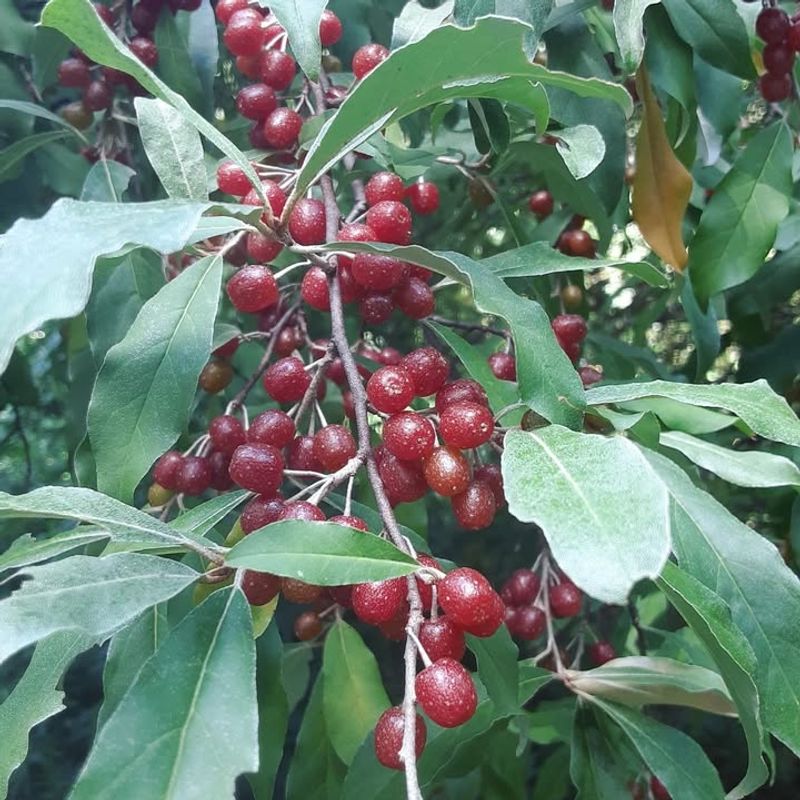
Autumn Olive sounds almost poetic, and once upon a time it was actually promoted by conservationists as a great plant for restoring poor soils. That recommendation turned out to be a major mistake.
Elaeagnus umbellata has a rare and powerful trick up its sleeve: it fixes nitrogen directly from the air into the soil, which sounds helpful but actually lets it thrive and spread in low-quality soils where most plants struggle to survive.
Across North Carolina, Autumn Olive has become a serious problem in old fields, roadsides, and disturbed natural areas.
It grows fast, produces enormous quantities of berries, and outcompetes native shrubs and wildflowers that local birds, insects, and mammals depend on for food and shelter. Once it takes hold in an area, pushing it back becomes a long, exhausting battle.
Wax Myrtle, scientifically called Morella cerifera, makes a superb native replacement with genuine ecological value.
It handles poor, sandy, and coastal soils just as well as Autumn Olive does, but it plays by the rules of North Carolina’s native ecosystem.
Wax Myrtle produces waxy gray berries that songbirds absolutely love, especially during fall migration.
It grows quickly into a handsome multi-stemmed shrub or small tree, offering year-round greenery and a lovely, subtle fragrance when its leaves are brushed.
For North Carolina gardeners looking for toughness and wildlife value, Wax Myrtle consistently delivers.
4. Burning Bush
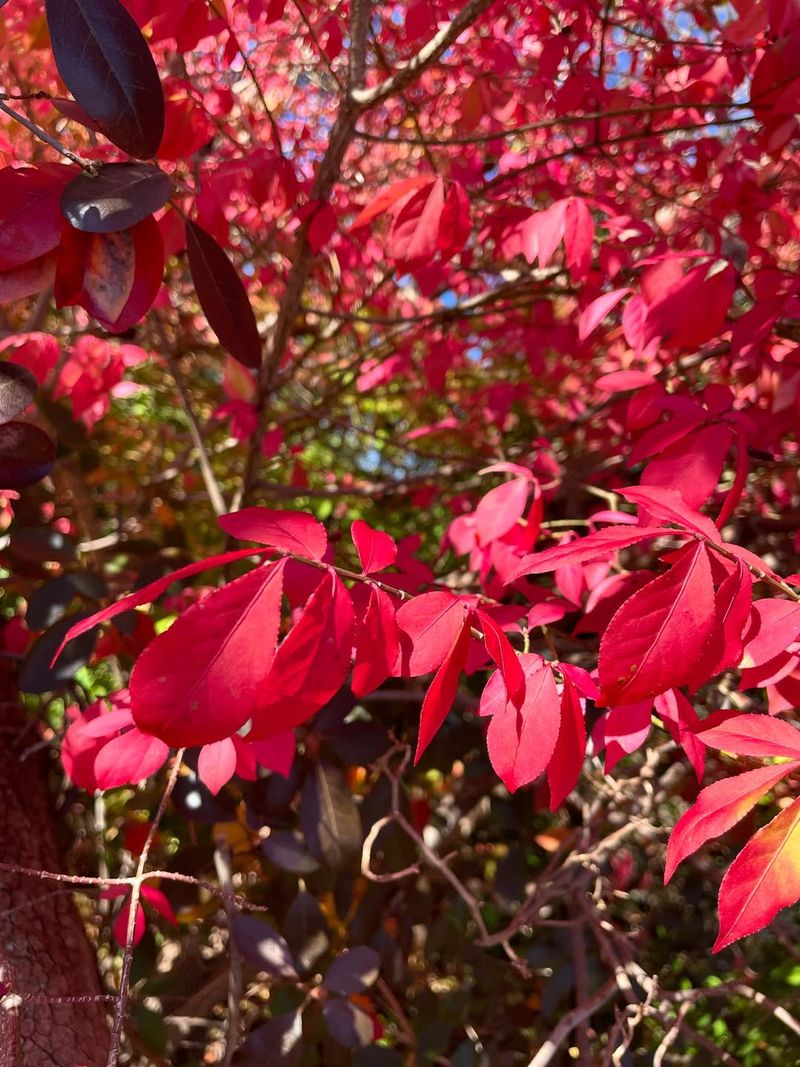
Every autumn, Burning Bush turns heads with its blazing, fire-red foliage that practically glows along roadsides and in front yards across North Carolina. It is easy to see why so many gardeners reach for it at the nursery.
The problem is that all those brilliant berries get eaten by birds, and the seeds end up sprouting in woodlands, forest edges, and natural areas far from where anyone planted them.
Euonymus alatus spreads into shaded understory environments and forms dense patches that crowd out native wildflowers, ferns, and young native trees.
North Carolina’s forests lose important plant diversity whenever Burning Bush gets a foothold, and that ripple effect touches every creature that depends on those native plants for survival.
Several states have already banned its sale entirely, and North Carolina gardeners are wise to get ahead of the issue.
Highbush Blueberry, or Vaccinium corymbosum, offers a genuinely exciting native alternative with benefits that Burning Bush simply cannot match. Fall foliage turns rich shades of red and orange, rivaling Burning Bush for pure visual drama.
Spring brings clusters of delicate white flowers that pollinators swarm eagerly, and summer delivers sweet, edible blueberries that people and wildlife both enjoy.
Highbush Blueberry thrives naturally in North Carolina’s acidic soils and handles the state’s humid climate without issue.
Choosing it means getting spectacular seasonal beauty plus food production and real ecological value all in one outstanding plant.
5. Multiflora Rose
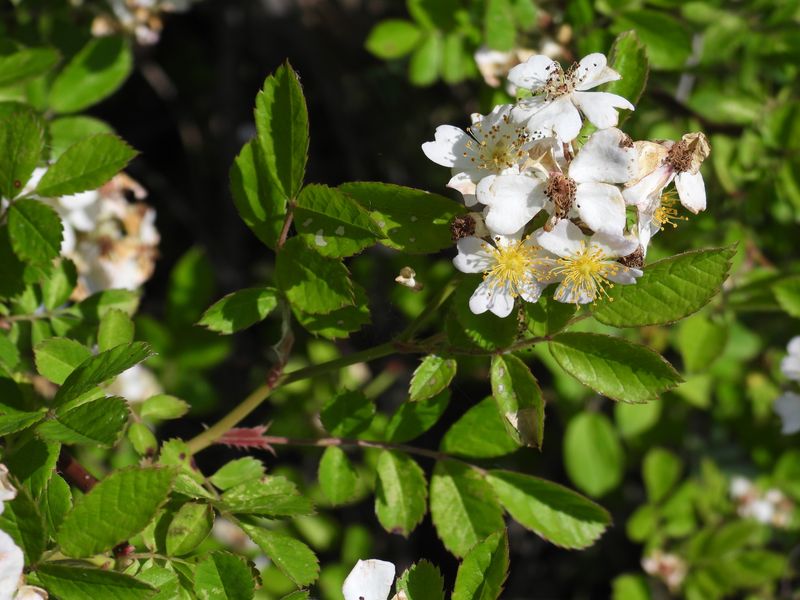
Multiflora Rose was once widely planted across North Carolina for erosion control, wildlife habitat, and even as living fences along farm fields.
Decades later, that well-intentioned planting program created one of the state’s most stubborn invasive plant problems.
Rosa multiflora spreads through both seed and long, arching canes that root wherever they touch the ground, creating nearly impenetrable thorny thickets across pastures, roadsides, and natural areas.
A single Multiflora Rose plant can produce over a million seeds per year, and those seeds stay viable in the soil for up to twenty years.
Birds spread them enthusiastically across the landscape, meaning new plants pop up constantly in places far from the original source.
Native plants, young trees, and open meadow habitats all suffer when Multiflora Rose moves in and takes over.
Carolina Rose, Rosa carolina, is a native alternative that offers genuine beauty without any of that aggressive behavior.
It produces cheerful pink flowers in late spring that pollinators visit eagerly, followed by small red rose hips that birds and small mammals enjoy through winter.
Carolina Rose spreads slowly and politely through rhizomes, forming a manageable, naturalistic thicket that fits perfectly into North Carolina’s native plant communities.
It tolerates dry, poor soils and full sun with ease, asking very little from the gardener while giving back plenty in terms of wildlife support and seasonal charm throughout the year.
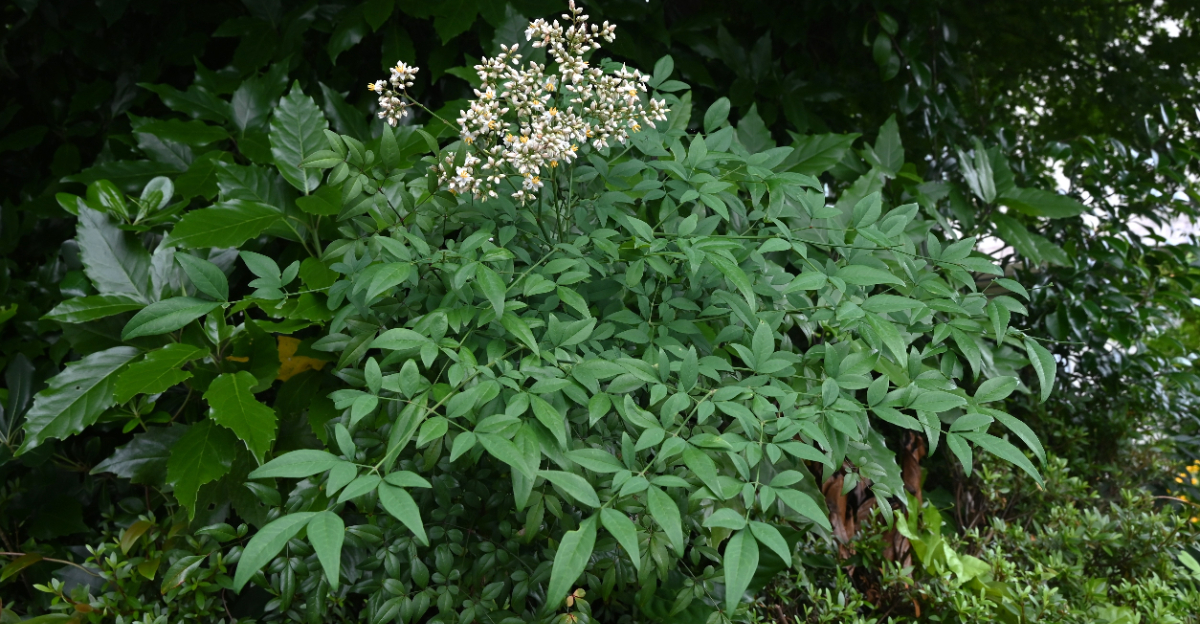
6. Nandina
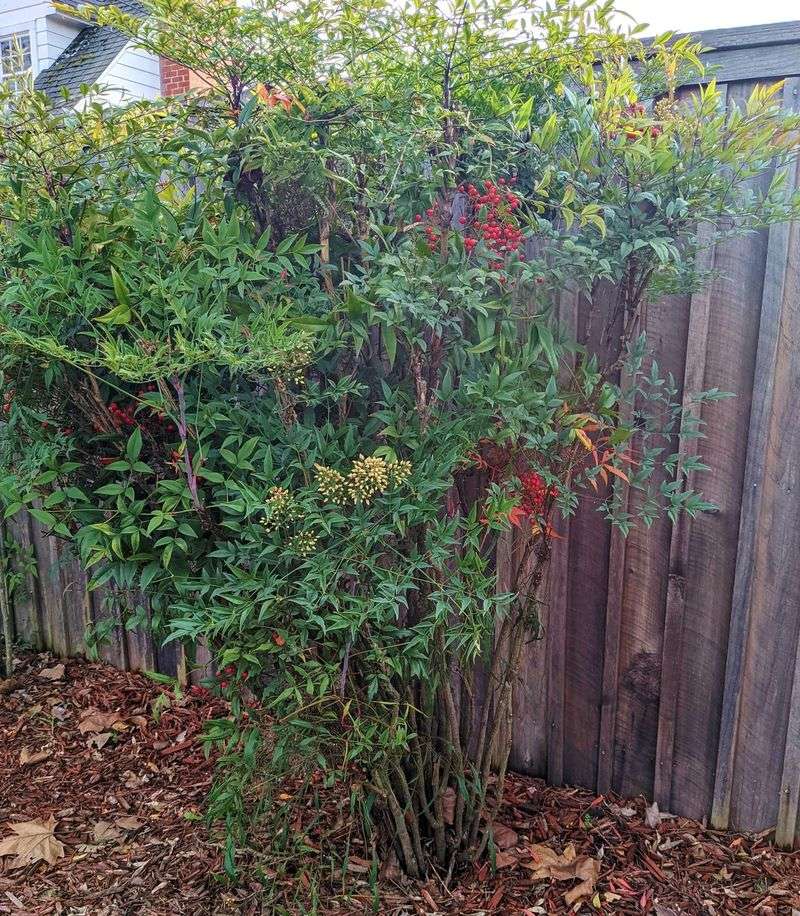
Nandina shows up in front yards, parking lot islands, and foundation plantings all across North Carolina, and it is not hard to understand the appeal.
The upright, bamboo-like stems, delicate feathery foliage, and bold clusters of red winter berries make it look like a polished, low-maintenance landscaping dream.
The trouble is that Nandina domestica has been escaping cultivation and spreading into natural areas throughout the state for years. Those eye-catching red berries are the main problem.
Birds eat them and spread Nandina seeds into forests, stream banks, and disturbed areas where the plant gradually pushes out native vegetation.
On top of that, the berries contain compounds that, when consumed in large quantities, can be harmful to birds, particularly smaller species like Cedar Waxwings that tend to eat large amounts at once.
That makes Nandina a double concern for anyone who cares about North Carolina’s wildlife.
American Beautyberry, Callicarpa americana, is a spectacular native swap that turns heads every single fall without any of those worries.
Its vivid magenta-purple berry clusters are unlike anything else in the native plant world, wrapping around the stems in dense, jewel-bright rings that seem almost unreal.
Wildlife loves the berries, and the plant grows vigorously in North Carolina’s heat, humidity, and varied soil types without ever becoming a problem.
American Beautyberry brings bold ornamental impact and real ecological benefit to any North Carolina garden, making it a genuinely perfect replacement.