7 ‘It’ Plants Theat Are Taking Over Low-Maintenance California Yards In 2026
California yards are changing fast. With hotter summers, ongoing drought concerns, and busy lifestyles, many homeowners are rethinking traditional lawns and high-maintenance landscaping.
The trend in 2026 is clear: plants that can handle heat, thrive with minimal watering, and still make the yard look incredible.
Across the state, gardeners are swapping fussy flowers and thirsty turf for hardy shrubs, drought-tolerant perennials, and architectural succulents.
These plants are built for California’s Mediterranean-style climate, where long dry summers and mild winters reward species that can thrive with little extra care.
The best part? Many of these low-maintenance favorites bring bold color, texture, and even wildlife benefits to the landscape.
Some attract pollinators, others provide year-round greenery, and a few practically take care of themselves once established.
If you are looking for plants that make your yard easier to manage while still turning heads, these seven options are quickly becoming staples in low-maintenance California landscapes.
1. Russian Sage (Perovskia atriplicifolia)
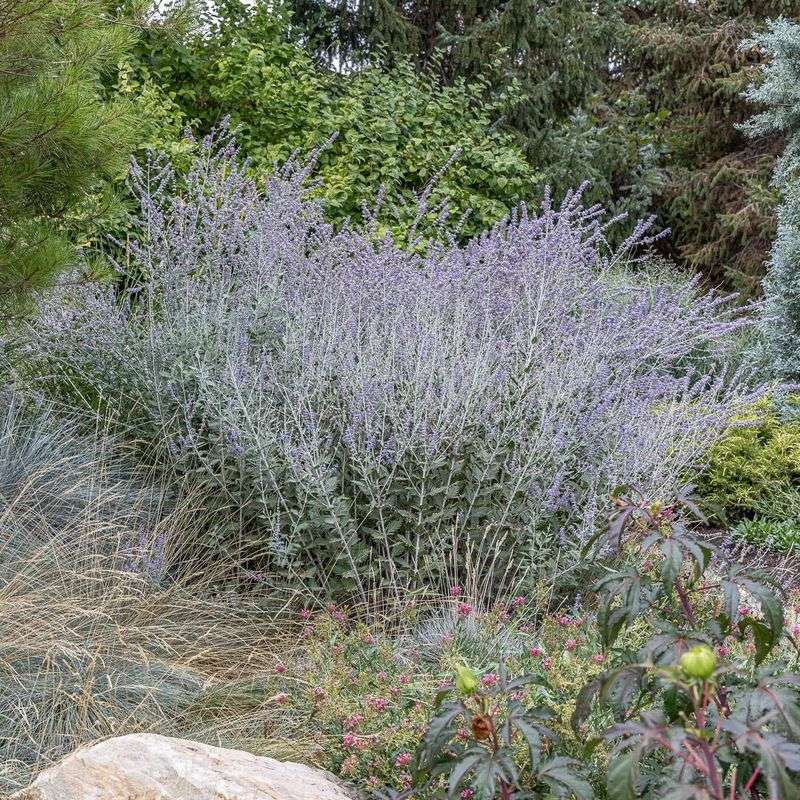
Few plants can pull off looking both wild and polished at the same time, but Russian Sage does it effortlessly. Its tall, wispy stems are covered in tiny lavender-blue flowers that seem to shimmer in the California sun.
From a distance, a patch of Russian Sage looks like a purple haze floating above the garden. It is one of the most eye-catching plants you can grow with almost zero effort.
What makes it such a hit in California yards is its incredible toughness. Once it gets established, it needs very little water and can handle the dry summers that are common across much of the state.
It thrives in full sun and actually prefers poor, well-drained soil, which means you do not have to fuss over fertilizing or amending your garden beds. Less work, more beauty.
Russian Sage also keeps pollinators happy all season long. Bees and butterflies flock to its blooms from late spring through fall.
The silvery foliage stays attractive even when it is not in flower. Deer tend to leave it alone, which is a bonus for yards near open spaces in California.
Plant it along a fence, in a border, or as a soft backdrop for other plants, and watch it thrive season after season with minimal attention from you.
2. Salvia (Salvia)
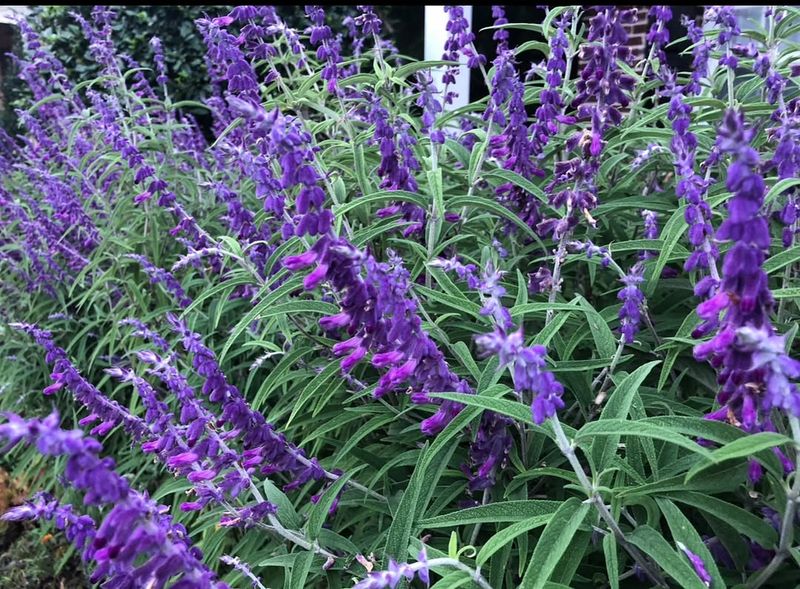
Walk through almost any California neighborhood in 2026 and you will spot Salvia growing in front yards, along driveways, and in garden borders. It is everywhere, and for good reason.
Salvia is one of the hardest-working plants in the low-maintenance garden. It blooms for months, attracts hummingbirds and bees, and asks for almost nothing in return.
There are dozens of Salvia varieties to choose from, and California gardeners are spoiled for options. Some grow compact and tidy, perfect for small spaces.
Others spread wide and tall, filling in large areas with color and texture. Popular choices include Salvia greggii, which offers bright red or pink blooms, and Salvia leucantha, known for its soft purple and white spikes.
Both handle California heat and drought with ease.
Salvia loves full sun and well-drained soil. Once established, it rarely needs watering beyond what rain provides, making it a smart choice for water-conscious homeowners.
You can cut it back lightly after each bloom cycle to encourage fresh growth and more flowers. The plant is also resistant to most pests and diseases, so you will not spend weekends spraying or treating it.
For anyone wanting a yard that looks lush and colorful without constant upkeep, Salvia is one of the best investments you can make in a California landscape this year.
3. Ice Plant (Carpobrotus chilensis)
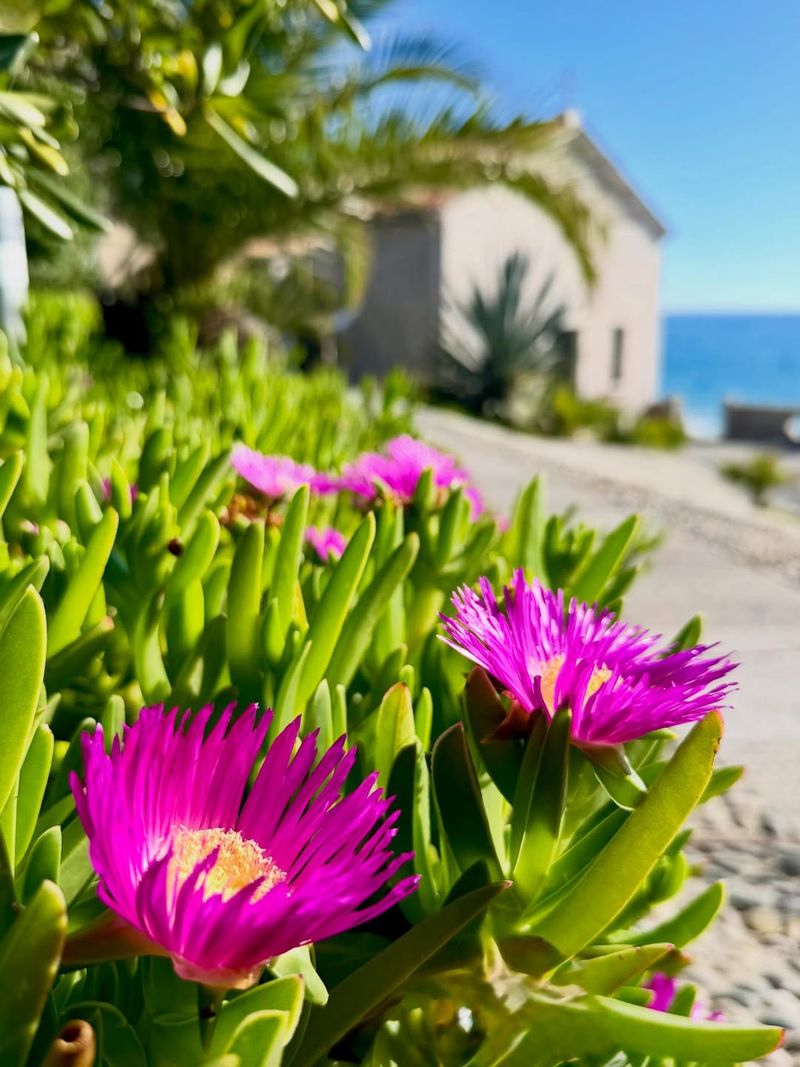
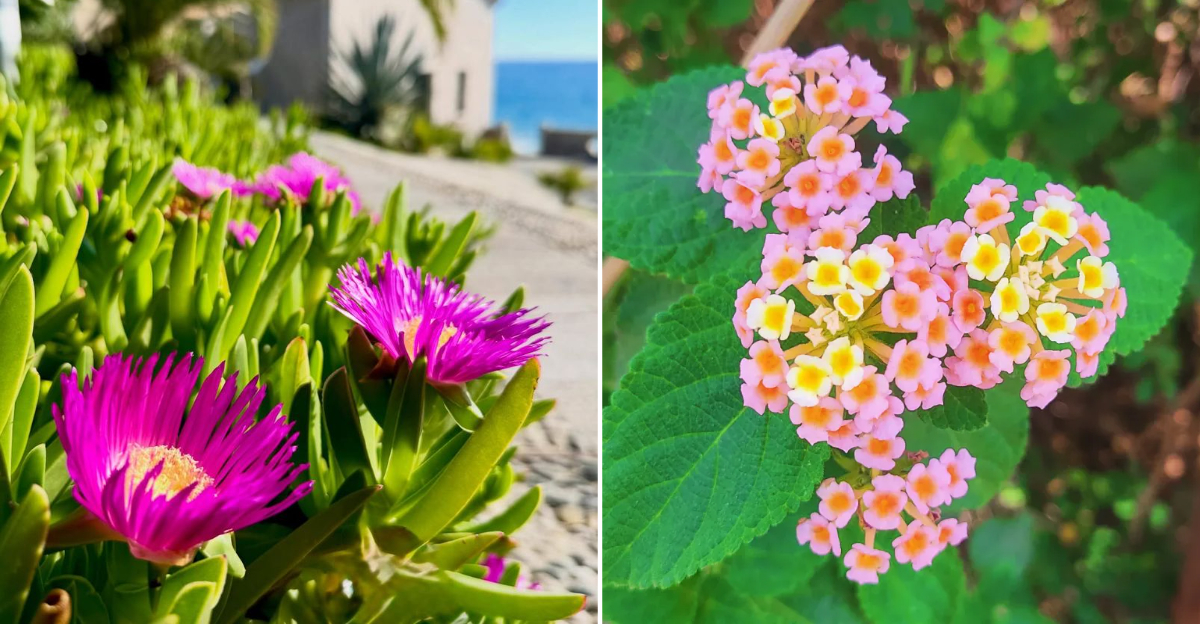
There is something almost magical about the way Ice Plant covers the ground. Its thick, fleshy leaves catch the light and sparkle like tiny crystals, which is exactly how it got its name.
In spring and early summer, it bursts into brilliant pink and purple flowers that practically glow in the California sun. It is one of the most dramatic ground covers you can plant with almost no maintenance required.
Ice Plant is built for California conditions. It loves heat, tolerates drought, and thrives in sandy or rocky soil where other plants struggle.
It spreads quickly and forms a dense mat that crowds out weeds, which means less time pulling and more time enjoying your yard. Coastal California homeowners especially love it because it handles salty air and dry conditions along the shoreline without missing a beat.
Planting Ice Plant on slopes is a smart move for erosion control. Its roots grip the soil and help prevent washouts during winter rains, a common problem on hillside properties across California.
It grows fast enough to cover bare patches in a single season. Water it occasionally while it gets established, then step back and let it do its thing.
It is important to note that some areas of California have restrictions on planting non-native varieties, so check your local guidelines before choosing your specific Ice Plant type for the best results.
4. Mexican Feather Grass (Nassella tenuissima)
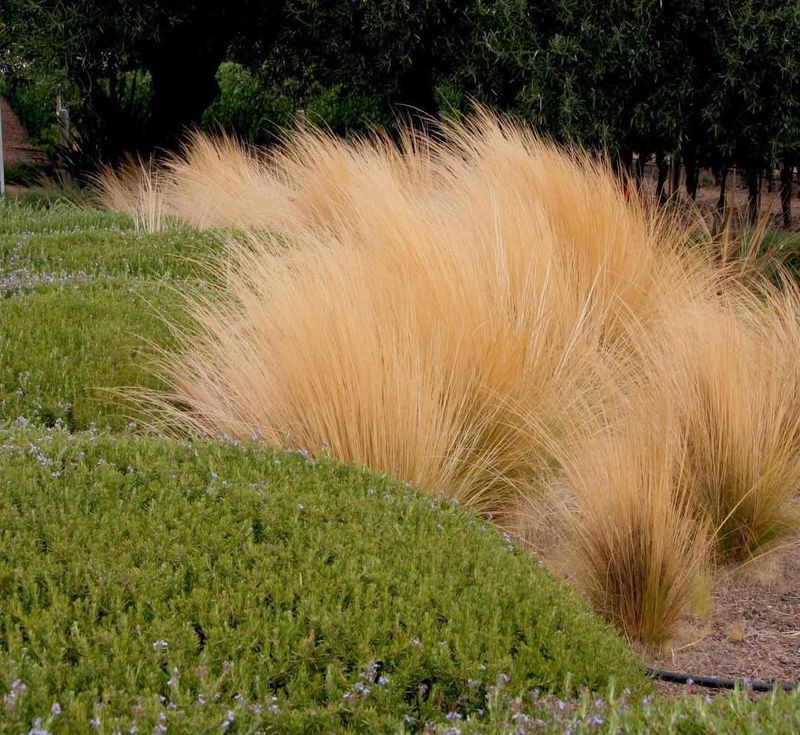
If you have ever seen a clump of Mexican Feather Grass swaying in a gentle California breeze, you know how mesmerizing it can be. The ultra-fine, hair-like blades catch the wind and move in soft, rippling waves.
It starts out bright green in spring and slowly fades to a warm golden blonde by late summer. The effect is dreamy, almost like watching a tiny wheat field right in your own front yard.
This ornamental grass is extremely popular across California right now because it is so easy to grow. It handles heat and drought without complaint, making it perfect for the long, dry summers that stretch across much of the state.
Full sun is where it performs best, and it actually prefers lean soil over rich, fertilized ground. Too much water or nutrients can make it grow floppy and less attractive, so less really is more with this plant.
Mexican Feather Grass works beautifully as a border plant, a filler between boulders, or as a soft contrast next to bold succulents or flowering perennials. It self-seeds readily, which means it can spread and fill in gaps over time.
Keep this in mind if you want to manage its spread, as some California counties classify it as invasive. Always check local regulations before planting, and consider removing seed heads before they drop to keep things tidy and controlled in your yard.
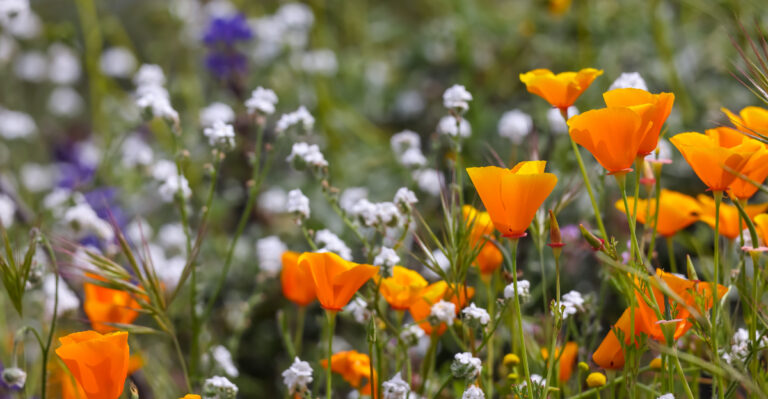
5. California Poppy (Eschscholzia californica)
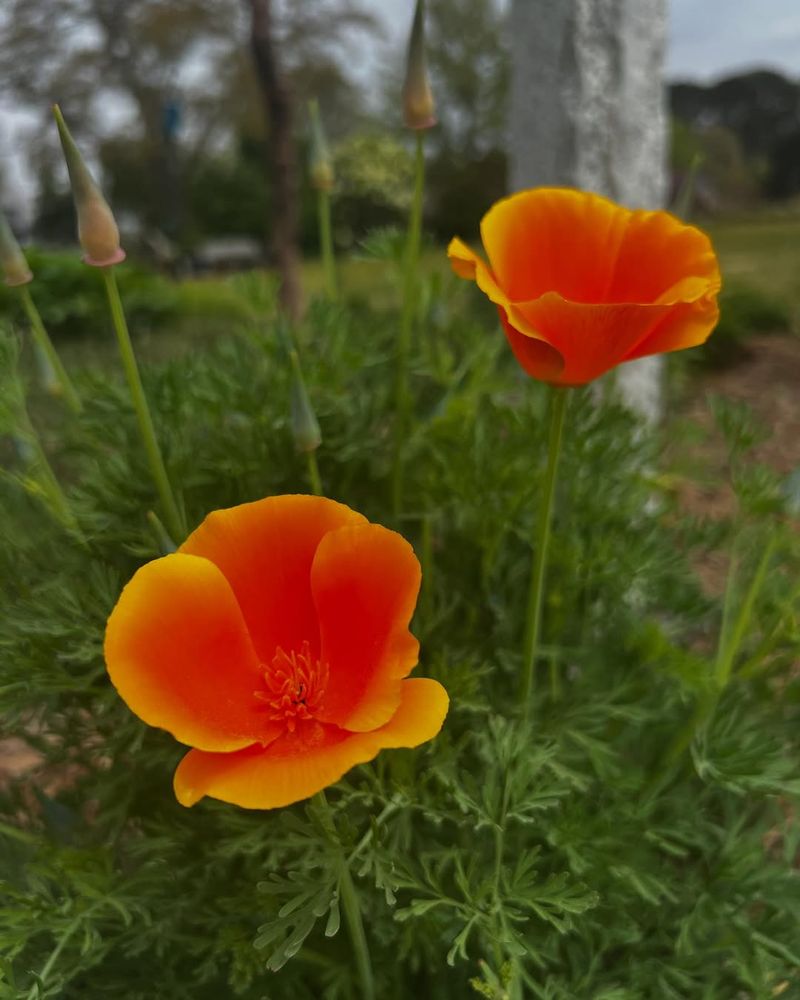
Every spring, roadsides and open fields across California erupt in bright orange, and the star of that show is the California Poppy. As the official state flower, it holds a special place in California gardening culture.
Planting it in your yard feels like celebrating the state itself. And the best part?
It practically grows itself once you give it a patch of sunny, well-drained ground.
California Poppies are annuals, meaning they complete their life cycle in one season. But they reseed themselves so reliably that they come back year after year without any effort from you.
Scatter the seeds in fall, and by spring you will have a cheerful carpet of orange, yellow, and cream blooms. They thrive in poor soil and actually struggle in overly rich or heavily watered garden beds, so resist the urge to pamper them too much.
For California homeowners trying to cut back on water use, this plant is a dream. It needs almost no irrigation once established and handles the dry season with total ease.
It also attracts native bees and other pollinators, making it a great choice for eco-friendly yards. Children love the silky, cup-shaped flowers, and watching them open and close with the sun is a small daily joy.
Whether you plant it in a wildflower meadow style or scatter it through a garden bed, the California Poppy delivers big color for almost no effort at all.
6. Lantana (Lantana camara)
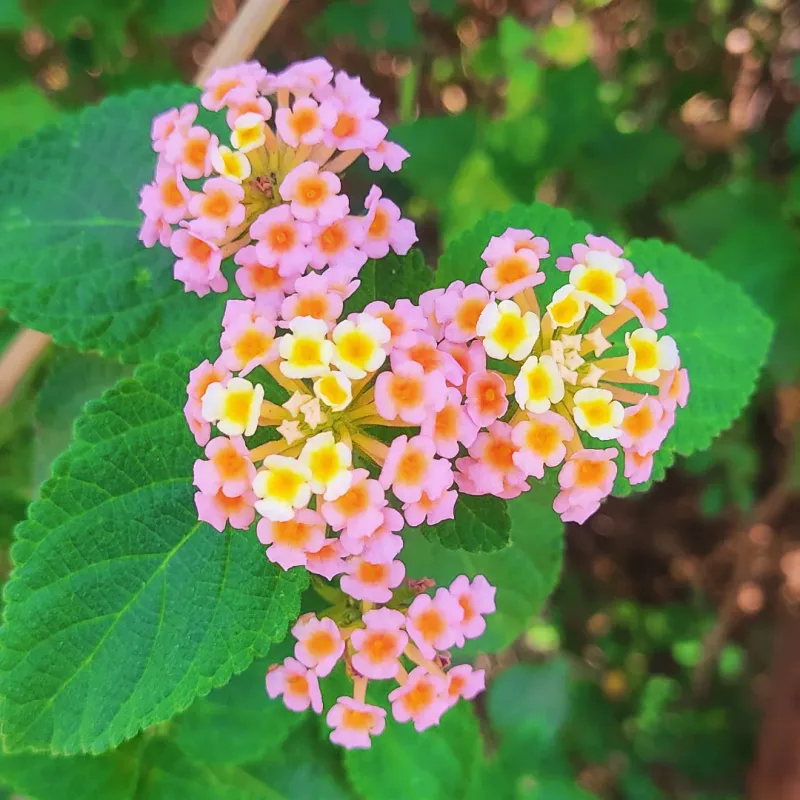
Bold, cheerful, and practically unstoppable, Lantana is one of those plants that makes you look like a gardening expert without much work at all. Its flower clusters come in stunning combinations of orange, yellow, red, and pink, often all on the same plant.
The colors shift and change as the blooms age, giving the plant a constantly fresh and dynamic look throughout the season.
California summers can be brutal, with weeks of intense heat and minimal rainfall. Lantana not only survives those conditions, it thrives in them.
It loves full sun and heat, and once established, it needs very little supplemental water. It blooms from late spring all the way through fall, providing months of continuous color when many other plants have long since faded.
Butterflies absolutely love it, and a Lantana plant in full bloom can become a butterfly buffet on warm California afternoons.
Lantana works well as a ground cover, a container plant, or a sprawling shrub in a mixed border. It grows quickly and fills in spaces efficiently, which is great for covering bare patches in your yard.
Trim it back occasionally to keep it tidy and encourage fresh blooming. One thing to keep in mind for California gardeners is that Lantana can spread aggressively in some regions, so check whether it is appropriate for your specific area before planting.
When used thoughtfully, it is one of the most rewarding and low-effort plants available today.
7. Blanket Flower (Gaillardia x grandiflora)
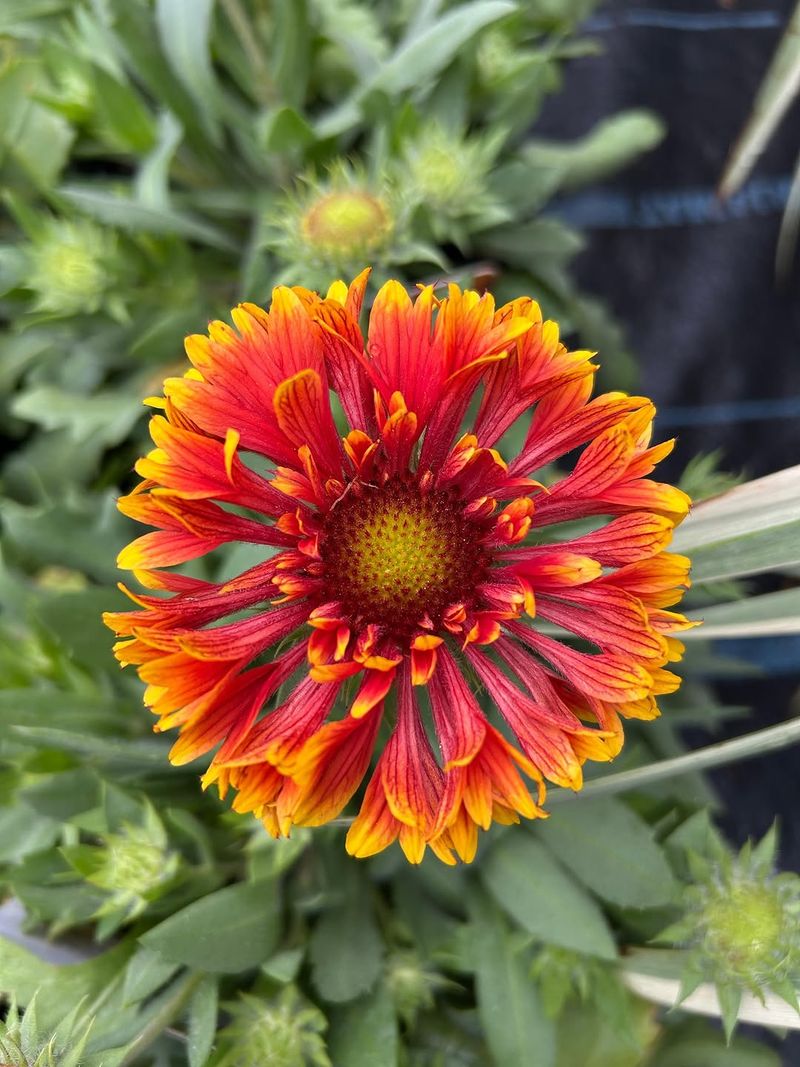
Named after the bold patterns found on Native American blankets, the Blanket Flower brings some serious color to California yards without demanding much attention.
Its daisy-like blooms are a vivid mix of red, orange, and yellow, radiating outward from a rich burgundy center.
The effect is warm and striking, like a little burst of sunset right in your garden bed.
Blanket Flower is a tough perennial that handles California heat and drought remarkably well. It blooms from early summer through fall, giving you months of vibrant color.
Full sun and well-drained soil are all it really needs to put on a great show. It actually performs better in lean soil than in rich, heavily amended ground, so skip the extra fertilizer and let it grow on its own terms.
Overwatering is one of the few things that can cause problems, so water sparingly once the plant is established.
Pollinators go crazy for Blanket Flower. Bees, butterflies, and even goldfinches visit regularly, making it a fantastic choice for anyone who wants to support local wildlife in their California yard.
Deadheading spent blooms encourages the plant to keep producing fresh flowers throughout the season. It also reseeds itself over time, slowly spreading and filling in garden spaces with minimal input from you.
For homeowners across California who want a yard that looks professionally planted but requires only occasional attention, Blanket Flower is absolutely worth adding to your list this year.