7 It Plants Every North Carolina Gardener Is Choosing For A No‑Fuss Yard In 2026
North Carolina gardeners know that a beautiful yard does not have to mean endless weekends of watering, pruning, and replanting.
From the humid Coastal Plain to the rolling Piedmont and the cool Blue Ridge Mountains, North Carolina’s diverse climate calls for plants tough enough to handle hot summers, variable rainfall, and clay-heavy soils.
The good news is that a growing number of gardeners across North Carolina are discovering that the right plant in the right place can thrive with surprisingly little effort.
Whether you are redesigning a sunny border, building a pollinator patch, or simply tired of fussy annuals, the right plants can turn your North Carolina yard into a low-maintenance, thriving space all year long.
1. Black-Eyed Susan Brings Yellow Blooms And Wildlife Activity
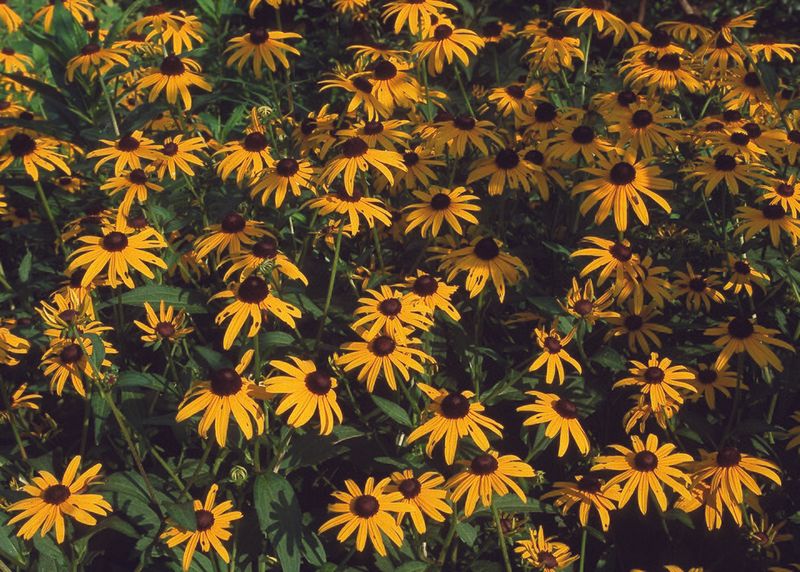
On a sunny midsummer day in the Piedmont or Coastal Plain, fields and borders glow with cheerful golden blooms nodding in the breeze.
Black-Eyed Susan (Rudbeckia hirta) is a native perennial that reliably produces color in sunny spots while requiring surprisingly little attention.
Its adaptability to well-drained soils means it thrives in sandy, loamy, and even moderately clay-heavy ground, as long as excess moisture is avoided.
Once established, the plant tolerates drought conditions with minimal supplemental watering, making it ideal for gardeners seeking low-fuss options.
Bees and butterflies are attracted to its vibrant flowers, while goldfinches and other small birds feed on the seeds, creating a lively, wildlife-friendly yard.
Blooming typically starts in late June and can continue into September, offering weeks of bright summer color when many other perennials fade.
Black-Eyed Susans spread gradually through self-seeding, so a single planting can expand naturally over time. Deadheading spent flowers can extend the bloom period, but leaving seed heads intact adds visual interest through winter and provides food for birds.
Their combination of durability, color, and ecological benefits makes Black-Eyed Susans a dependable choice for sunny borders, naturalized areas, and pollinator gardens across North Carolina.
2. Butterfly Weed Adds Orange Flowers And Pollinator Appeal
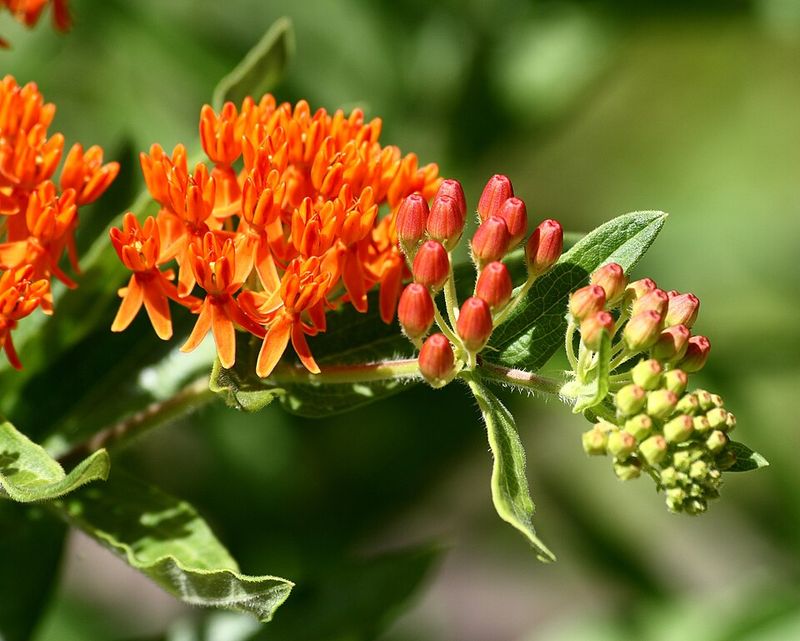
Summer gardens can burst into life when clusters of bright orange Butterfly Weed (Asclepias tuberosa) appear, drawing monarch butterflies, swallowtails, and a host of native bees.
This native milkweed produces dense flower clusters from late spring into midsummer, offering a striking focal point while supporting essential pollinators.
Its deep taproot enables it to endure dry spells and less fertile soils that might stress other perennials, making it a low-maintenance yet ecologically valuable addition.
Butterfly Weed thrives in well-drained sandy or loamy soils and does best in full sun, where its colors and structural form are most vivid.
Mature plants do not respond well to transplanting due to their taproot, so initial placement is important, and once established, watering is minimal. The plant’s lean soil preference means it rarely needs fertilization, which helps keep care simple.
By incorporating Butterfly Weed into sunny borders, pollinator patches, or wildflower meadows, gardeners can enjoy both a showy summer display and the satisfaction of supporting local butterfly populations.
Its vibrant flowers and robust performance in North Carolina climates make Butterfly Weed a standout choice for anyone seeking color, wildlife benefits, and effortless maintenance.
3. Pink Muhly Grass Offers Airy Fall Color And Texture
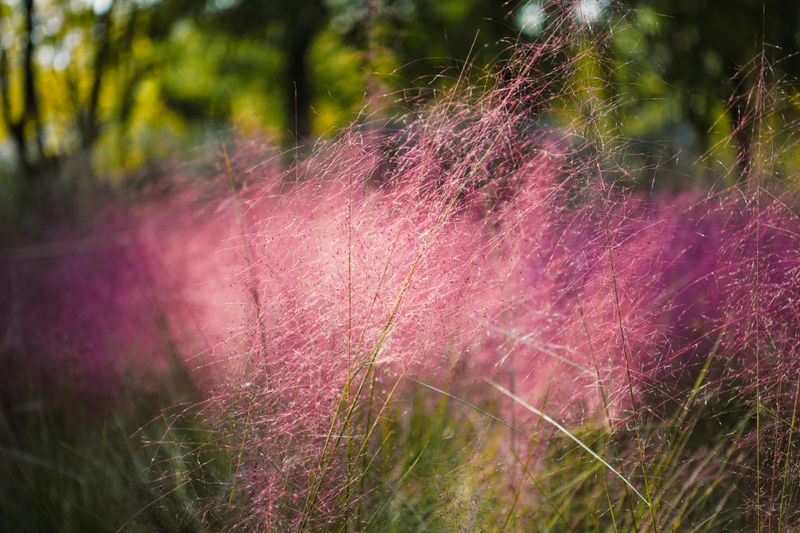
As the warm summer days fade, North Carolina gardens can take on an almost magical quality when Pink Muhly Grass (Muhlenbergia capillaris) emerges with feathery pink seed plumes.
This ornamental grass forms tidy clumps of fine green foliage throughout spring and summer, maintaining a neat appearance with little intervention.
In early fall, the plant produces airy clouds of rosy-hued plumes that add movement, softness, and visual interest to both naturalized and formal garden beds.
Pink Muhly Grass is highly adaptable to sandy, loamy, or moderately clay soils, as long as drainage is adequate, and it tolerates heat and humidity typical of Coastal and Piedmont regions.
Its minimal maintenance requirements make it ideal for low-fuss landscapes: a simple cutback in late winter to a few inches clears old growth, and new shoots emerge readily in spring.
Strategic placement along driveways, borders, or near evergreen shrubs maximizes its textural impact.
Gardeners can pair it with perennials and other grasses to create seasonal contrast while enjoying a plant that thrives on sunshine, withstands occasional drought, and adds stunning fall interest with minimal effort.
Its combination of ease, color, and graceful form makes Pink Muhly Grass a top pick for effortless North Carolina gardens.
4. Switchgrass Provides Upright Form And Year-Round Interest
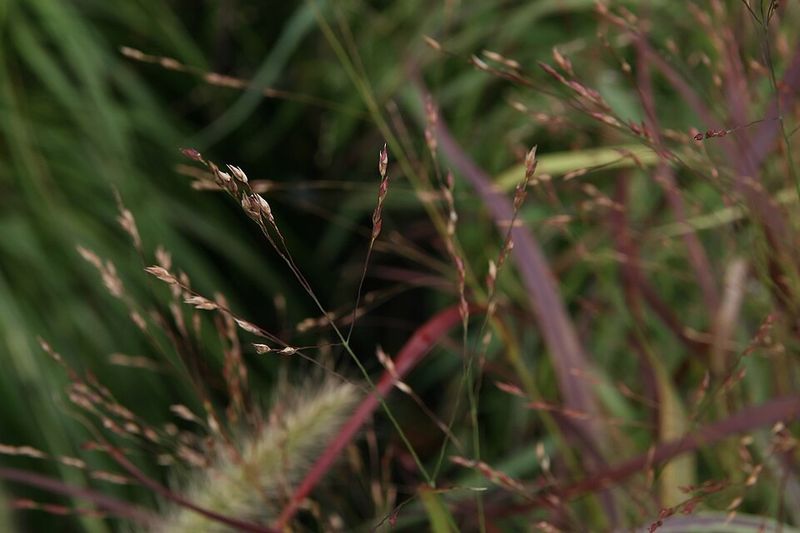
Even small yards benefit from structure, and Switchgrass (Panicum virgatum) delivers with strong vertical form that brings definition to borders, native plantings, and mixed beds.
This warm-season grass emerges green in spring, produces delicate flower panicles in summer, shifts to golden and burgundy tones in fall, and provides upright seed heads that persist into winter, offering both texture and bird forage.
Adaptable to a range of soils, from sandy coastal plots to clay-heavy Piedmont gardens, Switchgrass tolerates heat, humidity, and even occasional wet conditions once established.
Sunlight brings out its best colors and maintains tight, upright clumps, though it can manage in light shade.
Cultivars such as ‘Shenandoah’ and ‘Heavy Metal’ provide predictable, compact growth suited for residential landscapes, while larger varieties add a more naturalized prairie feel. Maintenance is simple: a hard cutback in late winter removes old growth, while minimal watering is needed beyond the first season.
Planting Switchgrass in rain gardens, mass plantings, or as an accent in perennial borders adds seasonal interest and textural variety with remarkably low effort.
Its combination of adaptability, year-round visual appeal, and minimal care makes it a reliable choice for North Carolina gardeners seeking no-fuss vertical structure.
5. Coneflower Produces Long-Lasting Blooms For Bees And Butterflies
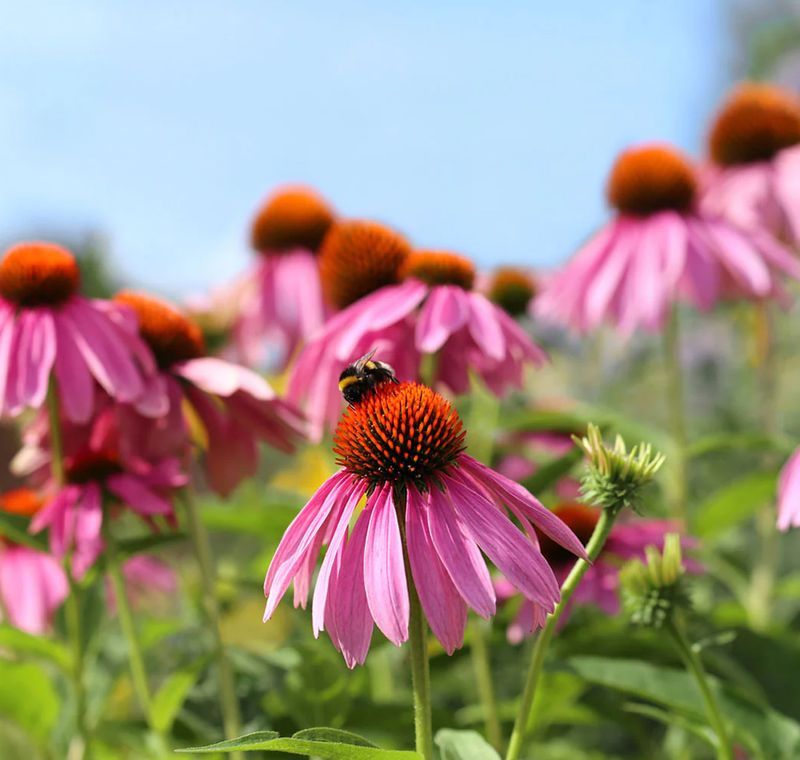
Even during the peak of summer heat, Purple Coneflower (Echinacea purpurea) continues to deliver bold, daisy-like blooms that brighten landscapes while attracting pollinators.
From early summer into fall, its purple-pink petals surround raised orange-brown centers, creating a vibrant display that bumblebees, honeybees, and native bees frequent consistently.
Birds such as goldfinches later feed on the dried seed heads, adding ecological value with minimal extra work. The plant’s sturdy stems make it resistant to wind and rain, helping blooms remain upright even in heavy summer storms.
Coneflower thrives in full sun to partial shade and adapts to sandy, loamy, or clay soils with adequate drainage. Its tolerance for compacted soil allows it to perform well in high-traffic garden areas.
It requires little supplemental watering once established, and over time, it spreads steadily through seed and root division. Occasional division every three to four years can maintain vigor and bloom quality.
Gardeners can place Coneflowers in sunny borders, pollinator gardens, or low-maintenance mixed beds to enjoy reliable color and wildlife benefits.
Its combination of long-lasting blooms, drought tolerance, and minimal care makes it one of the most versatile and resilient native perennials available for North Carolina yards, providing consistent beauty throughout the growing season.
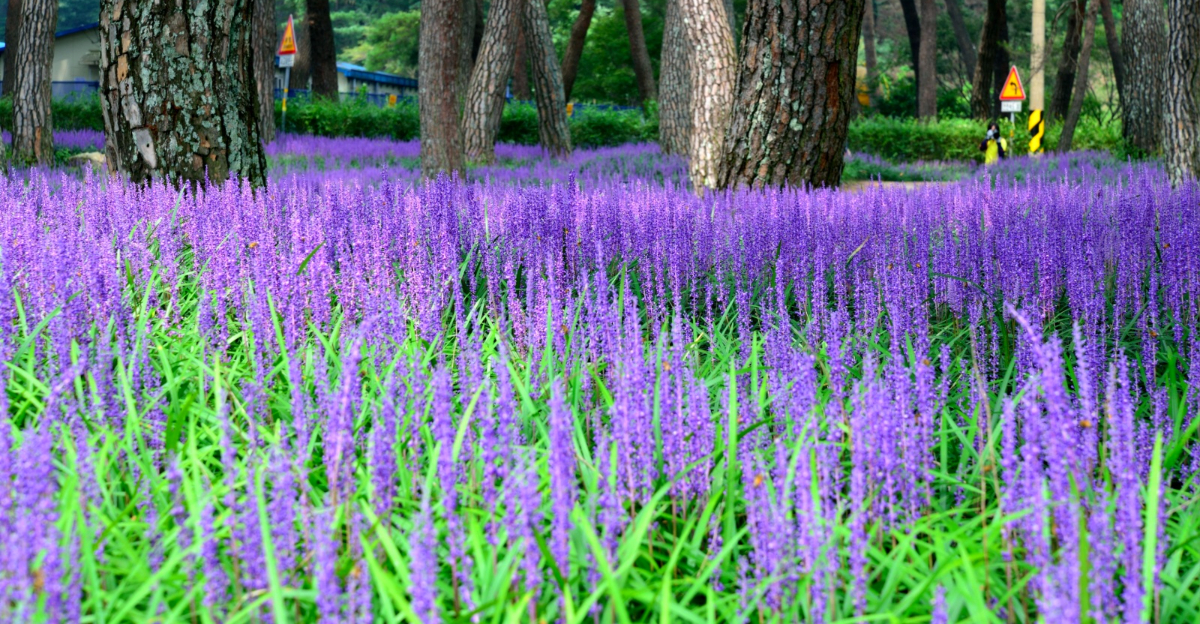
6. Liriope Adds Evergreen Foliage And Purple Flowers
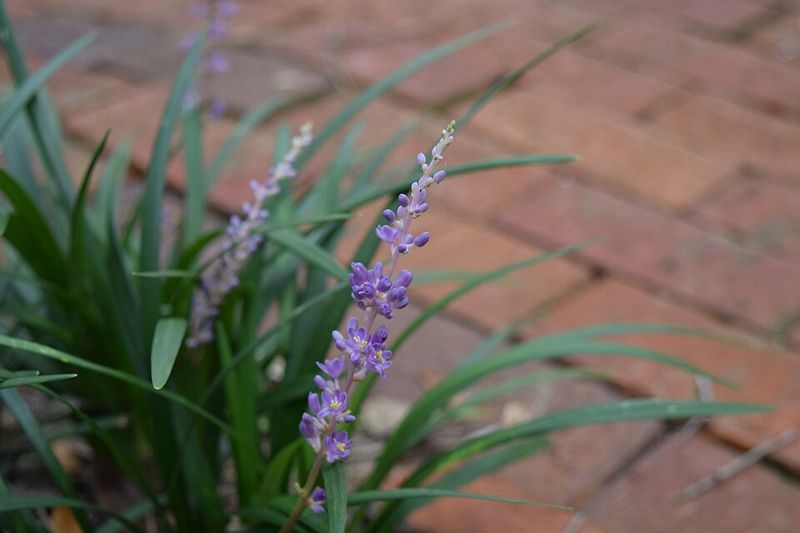
Shaded beds and areas with heavy root competition can be challenging, but Liriope muscari (Monkey Grass) thrives quietly where other plants struggle.
Its dark green, strap-like foliage remains attractive throughout the year, providing reliable coverage even during mild winter months.
In late summer, upright spikes of small violet or purple flowers appear, followed by dark berries that persist into fall, adding seasonal texture and subtle wildlife value.
The plant’s dense growth habit also helps suppress weeds, reducing maintenance in garden beds.
Liriope tolerates a wide range of conditions, from full shade to full sun, and adapts to clay and sandy soils with minimal care once established. Its tolerance for periodic drought and occasional foot traffic makes it practical for pathways or heavily used garden areas.
It works beautifully as a border edging, ground cover under trees, or filler between larger shrubs, making it versatile for low-maintenance landscapes. A simple shear back to three inches in late winter refreshes growth and encourages tidy clumps in spring.
Its resilience, evergreen foliage, and easy upkeep make Liriope an excellent choice for gardeners looking to maintain attractive, functional planting in challenging light and soil conditions without a lot of effort.
7. Sedum Brings Succulent Leaves And Late-Season Color
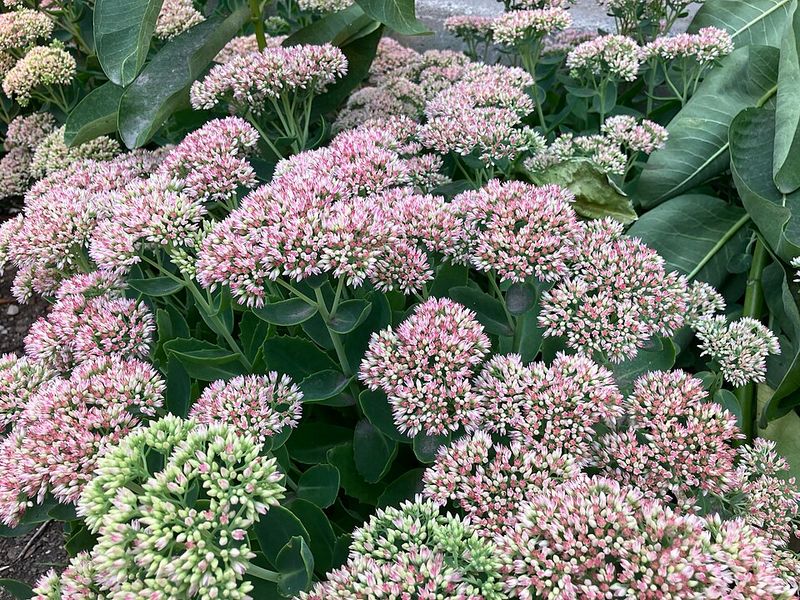
When summer perennials fade and true fall color is still weeks away, upright Sedum varieties such as Hylotelephium spectabile provide a burst of dusty pink, rose, or red flowers that attract bees and butterflies in late summer and early fall.
The plant’s thick, succulent leaves store water efficiently, allowing it to withstand heat and drought conditions common in sunny North Carolina beds.
Sedum prefers well-drained soil and can tolerate sandy soils along the coast or thinner soils in Piedmont areas, making it adaptable across the state.
Its compact clumping habit also makes it perfect for edging or filling gaps in perennial beds, adding dimension without crowding neighboring plants.
After blooming, seed heads remain visually appealing throughout winter, offering structure and occasional wildlife value.
Minimal care is required: stems can be cut back in early spring before new growth begins, and supplemental watering is rarely needed once established.
Sedum’s tolerance for lean soils and ability to thrive in sunny spots reduce the risk of plant stress, making it especially reliable in low-maintenance gardens.
Its combination of toughness, low-maintenance requirements, and late-season blooms makes Sedum an ideal choice for gardeners who want a reliable source of color and texture in sunny, no-fuss landscapes.
Planting it alongside perennials, ornamental grasses, or in rock gardens enhances both aesthetic appeal and seasonal continuity.