8 Javelina-Resistant Plants To Grow In Arizona Before Damage Gets Worse
Javelinas can turn a neat Arizona yard into a mess in a single visit, leaving uprooted plants, chewed stems, and disturbed soil behind.
These stubborn desert foragers are not picky once they find something soft and easy to tear, and they often circle back to the same spots they already sampled.
Seeing the damage more than once can make it feel pointless to replant. The problem is rarely effort; it is plant choice.
Some varieties simply attract javelinas, while others are far less appealing because of scent, texture, or tougher foliage.
Shifting toward plants they usually ignore can reduce repeat damage and finally give your Arizona landscape a chance to stay intact even when wildlife passes through again.
1. Rosemary Forms A Fragrant Barrier Javelinas Think Twice About
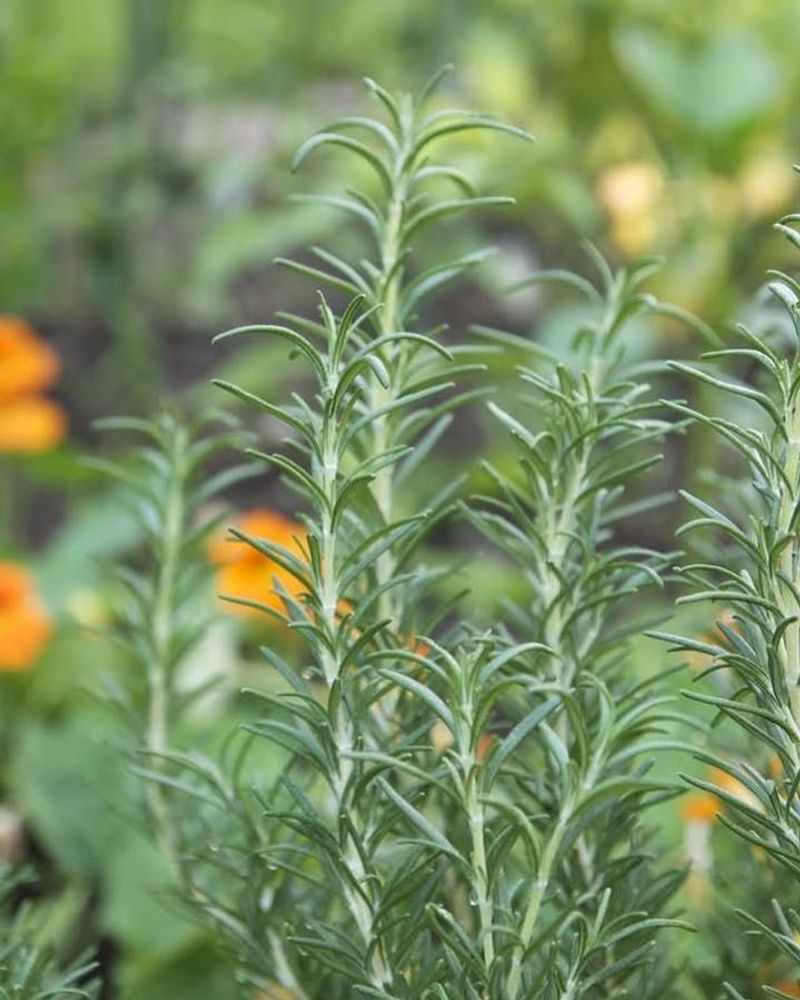
Javelinas hate strong smells, and rosemary delivers exactly that punch. This Mediterranean herb releases powerful aromatic oils that overwhelm their sensitive snouts, making them turn away before taking a single bite.
Planting rosemary along property edges or near vulnerable plants creates an invisible shield that works day and night.
Arizona’s climate suits rosemary perfectly since it handles heat, drought, and poor soil without complaint. Both upright and trailing varieties work equally well for javelina defense.
Beyond pest control, rosemary offers year-round greenery with needle-like leaves that stay attractive through all seasons. Small blue or purple flowers appear in spring, adding color while attracting beneficial pollinators to your yard.
You can also harvest fresh sprigs for cooking, giving this plant double duty in your landscape.
Space plants two to three feet apart for a continuous hedge effect, or use individual specimens as focal points near entryways. Pruning encourages bushier growth and releases more of that protective scent into the air.
In Phoenix and Tucson neighborhoods where javelina pressure runs high, rosemary consistently proves its worth as a first line of defense that looks good while working hard.
Established rosemary needs very little supplemental water, which makes it practical for low-maintenance desert landscapes.
When brushed against or warmed by the sun, the fragrance intensifies, reinforcing that natural barrier around the most vulnerable parts of your yard.
2. Lavender Stands Strong When Foraging Pressure Increases
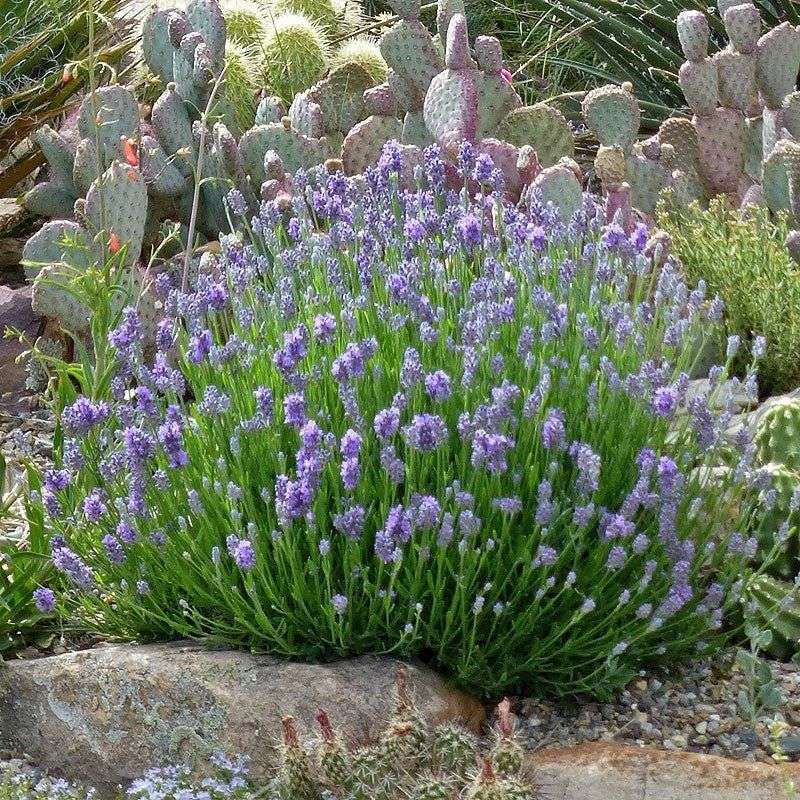
Few plants combine beauty and javelina resistance as effectively as lavender does. Its intensely fragrant oils contain compounds that taste terrible to wildlife, ensuring these foragers avoid it even when other food sources run scarce.
During dry spells when javelinas get desperate, lavender remains untouched while softer plants disappear overnight.
Several lavender varieties flourish in Arizona’s challenging conditions, particularly Spanish and French types that handle extreme heat better than English cultivars. They prefer well-drained soil and full sun exposure, conditions that match most desert landscapes perfectly.
Established plants survive on rainfall alone in many areas, though occasional deep watering improves flowering.
Purple flower spikes emerge in late spring and early summer, creating stunning displays that contrast beautifully with Arizona’s earth-tone palette. The blooms attract butterflies and bees while keeping javelinas at a safe distance.
Even after flowers fade, the silvery foliage provides year-round interest and continues releasing protective scents.
Group multiple plants together for maximum visual impact and stronger scent barriers around gardens. Trim spent flower stalks after blooming to maintain tidy appearance and encourage additional flowering cycles.
In Scottsdale and Sedona gardens where javelina visits are common, lavender serves as both ornamental showpiece and practical guardian, proving that effective protection doesn’t require sacrificing aesthetic appeal in your outdoor spaces.
Lavender also handles reflected heat from gravel and stone better than many flowering plants, making it reliable near patios and walkways. Good air circulation and sharp drainage prevent root rot, which is far more of a threat in Arizona than wildlife browsing.
3. Red Yucca Holds Its Ground In High-Risk Areas
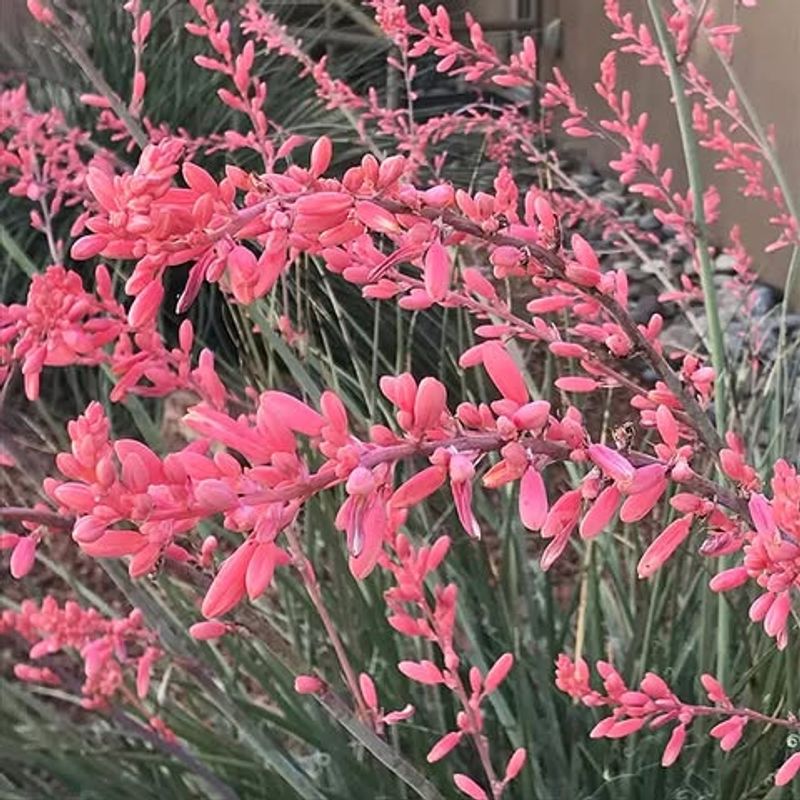
Sharp, sword-like leaves make red yucca a natural fortress against javelina browsing. While not a true yucca, this Texas native brings serious defensive capabilities to Arizona landscapes through its spiky foliage that animals quickly learn to avoid.
The rigid leaves form dense clumps that protect themselves and nearby plants from unwanted attention.
Spectacular coral-pink flower stalks shoot upward from spring through fall, reaching three to five feet tall and attracting hummingbirds by the dozens. These blooms add vertical drama to flat desert gardens while maintaining the plant’s javelina-proof status throughout the flowering period.
Even during peak foraging season, red yucca remains completely ignored by hungry wildlife.
This plant thrives in Arizona’s toughest conditions, including scorching summer heat, freezing winter nights, and months without rain. It grows equally well in Flagstaff’s higher elevations and Yuma’s low desert zones, adapting to various microclimates across the state.
Minimal care requirements make it perfect for busy homeowners who want protection without constant maintenance.
Place red yucca strategically near garden entrances or along pathways where javelinas typically travel through properties. The grass-like foliage stays evergreen year-round, providing consistent texture and color even during winter months.
Multiple plants grouped together create impenetrable barriers that redirect wildlife traffic away from vulnerable areas while adding architectural interest to your landscape design throughout every season.
4. Agave’s Spiny Structure Sends A Clear Warning
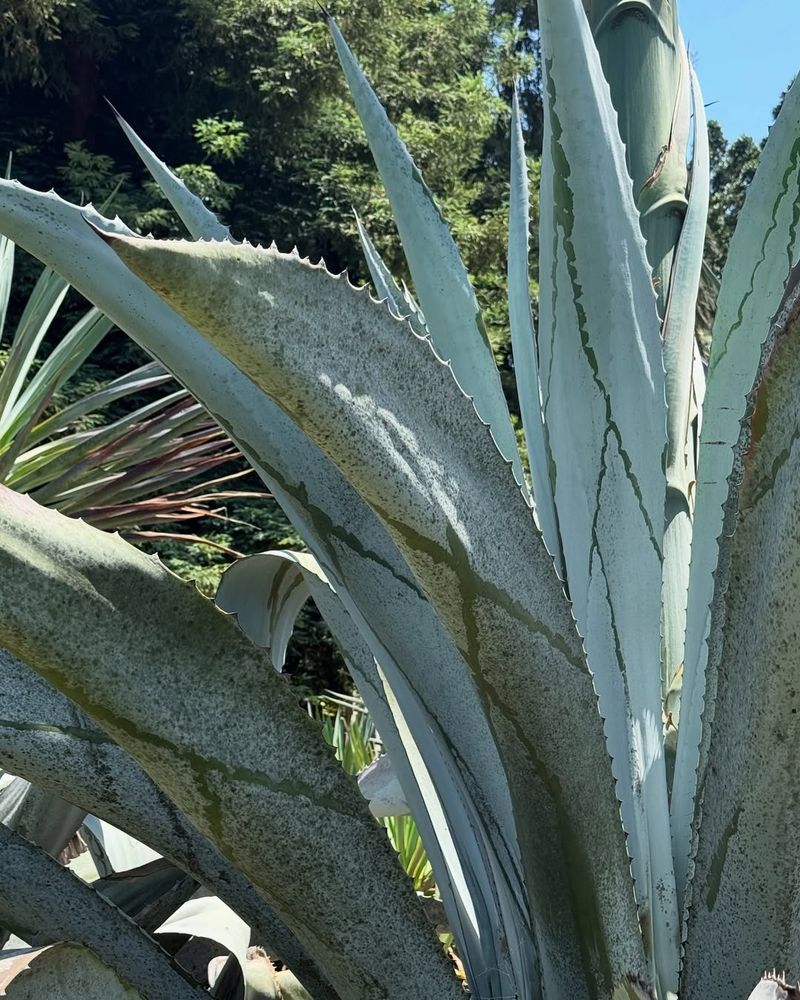
Nothing says “stay away” quite like an agave’s armored appearance. Thick, fleshy leaves ending in needle-sharp points make these succulents completely unappetizing to javelinas, who quickly learn that investigating agaves leads to painful encounters.
Sawlike edges along leaf margins provide additional deterrent that wildlife respects from their first encounter.
Dozens of agave species thrive throughout Arizona, from compact varieties suitable for small yards to massive specimens that become landscape focal points.
They store water in their leaves, allowing them to survive extended droughts without any supplemental irrigation once established.
This makes them ideal for water-conscious gardeners across the state who want beauty without waste.
Agaves grow slowly but steadily, requiring virtually no maintenance beyond occasional removal of dried lower leaves. Their sculptural forms add bold architectural elements that contrast beautifully with softer plants in mixed borders.
Blue-gray, green, or variegated foliage options let you customize color schemes while maintaining javelina protection.
Position larger agaves as statement pieces in rock gardens or near outdoor living areas where their dramatic silhouettes create visual impact. Smaller varieties work well in containers or mass plantings that form protective barriers around more vulnerable species.
Throughout Tempe and Mesa neighborhoods experiencing increased javelina activity, agaves prove that tough defense can also deliver striking beauty, combining form and function in ways few other plants manage to achieve successfully.
5. Texas Sage Shrugs Off Browsing And Keeps Growing
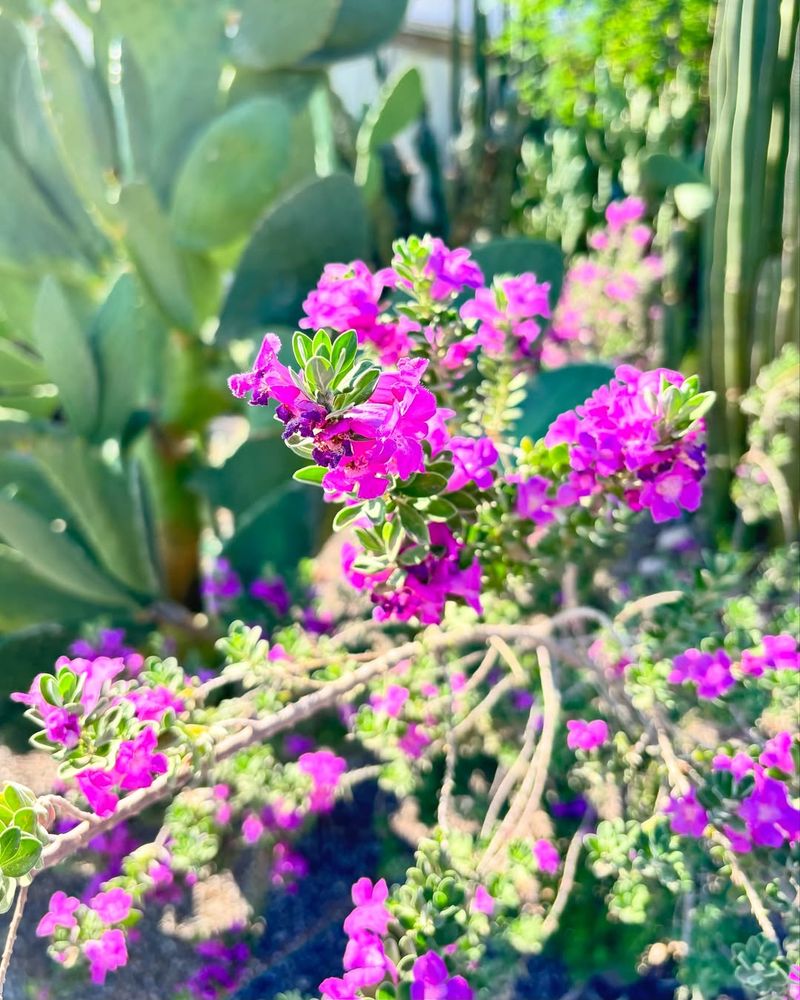
Fuzzy silver leaves and bitter taste make Texas sage completely unpalatable to javelinas. This tough shrub contains compounds that wildlife find offensive, ensuring it remains untouched even when foraging pressure intensifies during drought years.
Its dense branching structure also creates physical barriers that discourage animals from pushing through to reach other plants behind it.
Spectacular purple, pink, or white flowers appear after summer monsoon rains, covering the entire plant in colorful blooms that last for weeks. This dramatic display earned Texas sage its nickname “barometer bush” since flowering often predicts incoming moisture.
Between bloom cycles, the soft gray-green foliage provides subtle color that complements Arizona’s natural landscape beautifully.
Extreme heat tolerance makes Texas sage perfect for the hottest spots in your yard where other plants struggle to survive. It handles reflected heat from walls and pavement without stress, thriving in conditions that would devastate less adapted species.
Mature plants reach four to six feet tall and wide, creating substantial presence without requiring constant trimming.
Use Texas sage as foundation plantings, informal hedges, or standalone specimens throughout your property for reliable javelina protection. It grows successfully from Kingman to Green Valley, adapting to various soil types and elevation ranges across Arizona.
Pruning once yearly after flowering maintains attractive shape while encouraging bushier growth that provides even better wildlife deterrent. This shrub delivers consistent performance year after year with minimal effort required.
6. Vinca Replaces Vulnerable Bedding Plants Before Damage Spreads
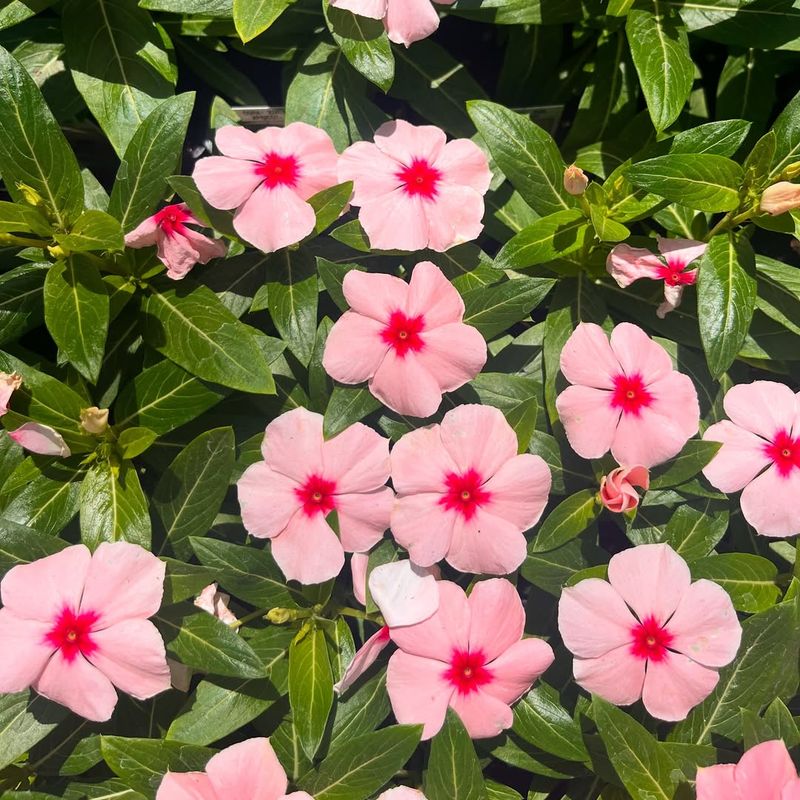
Ground covers often become javelina snacks, but vinca breaks that pattern completely. Its glossy leaves contain alkaloids that taste awful to wildlife, protecting it from browsing while it spreads across bare ground.
This low-growing perennial forms dense mats that choke out weeds while staying completely safe from the four-legged raiders that plague Arizona gardens.
Cheerful flowers in pink, white, or purple appear continuously from spring through fall, adding reliable color to areas where annuals would require constant replacement.
Unlike petunias or pansies that javelinas devour overnight, vinca keeps blooming no matter how many hungry animals pass through your yard.
The combination of attractive flowers and glossy foliage creates polished appearance that elevates overall landscape quality.
Vinca tolerates both sun and partial shade, making it versatile for various planting locations around your property.
It handles Arizona’s heat remarkably well when given adequate water during establishment, then becomes quite drought-tolerant once roots spread deeply.
This adaptability allows it to fill problem areas where other ground covers fail.
Plant vinca as edging along walkways, under trees, or in large beds where you need consistent coverage without constant maintenance. It spreads moderately fast without becoming invasive, filling spaces within one growing season when properly spaced.
In Chandler and Gilbert communities dealing with regular javelina visits, vinca provides the colorful, low-maintenance solution that finally stays intact season after season without disappointing results or wasted effort.
7. Lantana Fills Gaps With Tough, Less-Appetizing Color
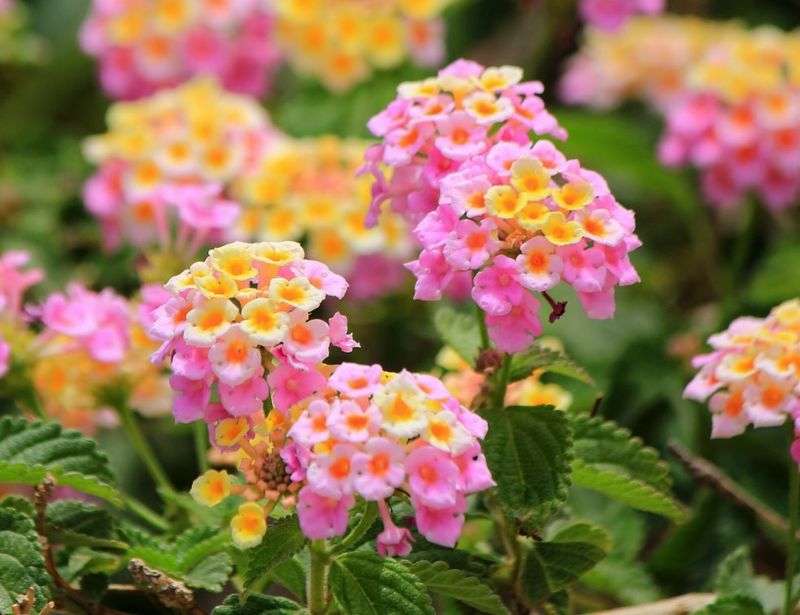
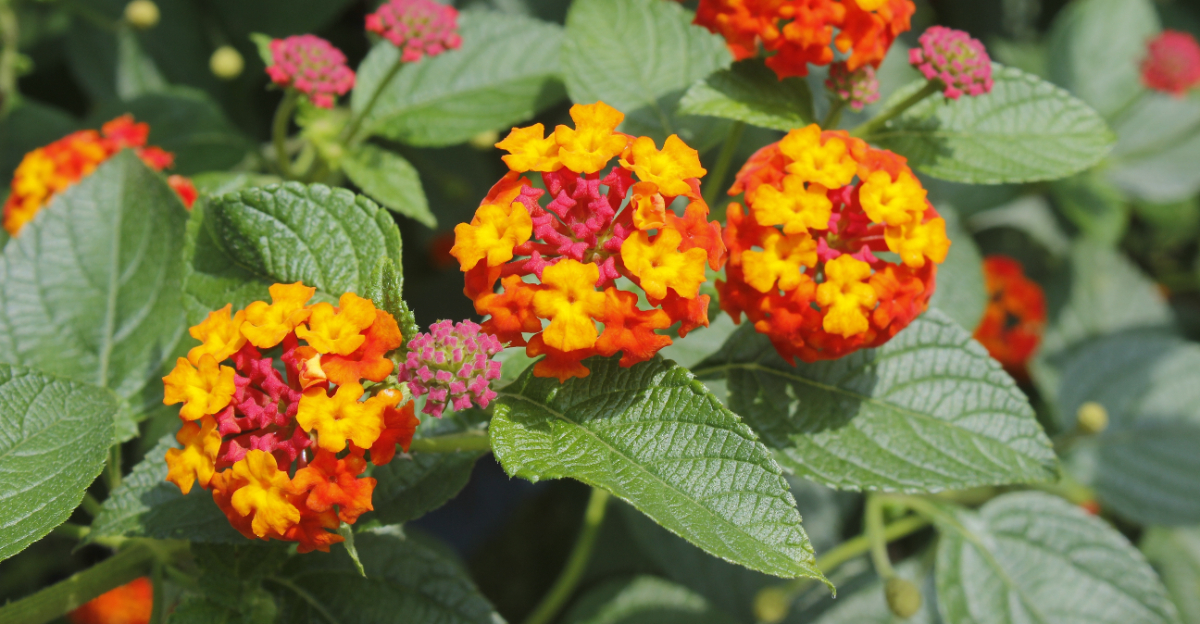
Bright flower clusters and rough-textured leaves make lantana both beautiful and javelina-resistant. Its slightly toxic foliage gives off odors that wildlife find unpleasant, ensuring these colorful plants survive while softer options get destroyed.
The combination of chemical defense and unappealing texture creates double protection that works reliably throughout Arizona’s growing season.
Flower colors range from bright yellows and oranges to purples and pinks, often with multiple shades appearing in the same cluster.
These vibrant blooms attract butterflies and hummingbirds while repelling unwanted four-legged visitors, creating gardens that buzz with beneficial activity.
Flowering continues from spring through fall with minimal deadheading required to maintain the show.
It grows as either spreading ground cover or upright shrub depending on variety selected, giving you flexibility in design applications. Most types reach two to three feet tall and spread wider, filling space quickly without demanding constant attention.
Mass plantings create colorful drifts that brighten hot spots where other flowering plants fail to thrive. Individual specimens work well in mixed borders or containers near patios and entryways where their color provides maximum impact.
Across Prescott and Casa Grande, lantana delivers lasting color without the heartbreak of overnight javelina damage.
That built-in toughness makes it especially valuable in areas where wildlife pressure is constant and plant loss feels inevitable. Instead of replanting every season, you get steady color that holds up to heat, drought, and hungry visitors.
8. Ocotillo Creates A Natural Defense Where Traffic Is Heavy
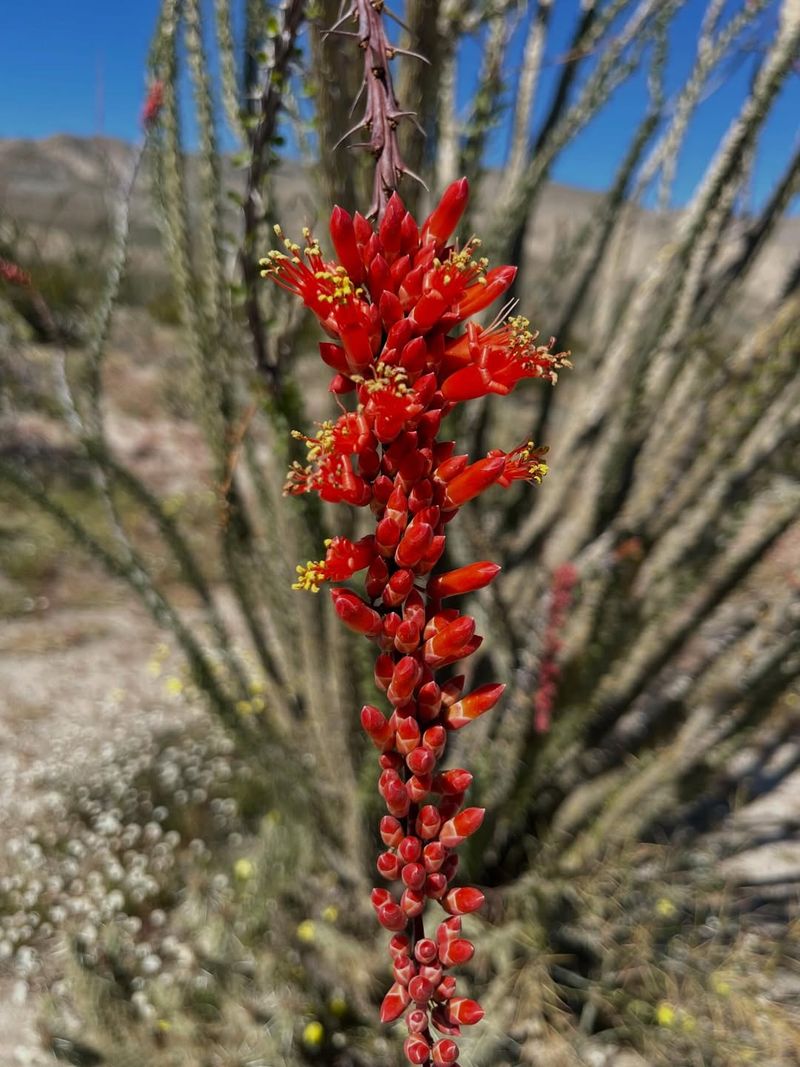
Tall, spiny branches make ocotillo the ultimate javelina barrier plant. Thorns covering every stem from base to tip create formidable obstacles that animals avoid instinctively after one painful encounter.
This native Arizona plant combines serious defensive capabilities with striking appearance that captures attention in any landscape setting.
Brilliant red-orange flowers appear at branch tips following rain, creating spectacular displays that hummingbirds find irresistible. These tubular blooms stand out dramatically against Arizona’s blue skies, adding vertical interest that few other plants provide.
Between flowering periods, the architectural branch structure maintains visual appeal even when leaves drop during extended dry spells.
Ocotillo adapts perfectly to Arizona’s extreme conditions since it evolved here over thousands of years. It grows naturally from low deserts to mid-elevation grasslands, handling temperature swings and irregular rainfall without stress.
Mature plants reach ten to fifteen feet tall, creating living fences that define property boundaries while deterring wildlife intrusion.
Plant ocotillos along property lines or in groups where you need maximum protection from persistent javelina traffic. They establish slowly but live for decades once rooted, providing long-term solutions rather than temporary fixes.
Throughout Tucson and the Phoenix metro areas, where human wildlife conflicts continue increasing, ocotillo remains a time tested choice that Indigenous peoples relied on for centuries.
It proves that sometimes the oldest solutions are still the most effective for modern landscaping challenges.