9 Low Maintenance Perennials That Thrive On Neglect In Georgia
Not every Georgia garden needs constant attention to look good. Some perennials are perfectly happy doing their own thing, asking for very little while still showing up year after year with strong color, good texture, or reliable blooms.
That kind of plant makes a big difference when the weather gets busy, your schedule fills up, or you simply do not want to spend every weekend fussing over the yard.
That is exactly why low maintenance perennials are such a smart choice for Georgia landscapes. The best ones can handle heat, humidity, and the occasional stretch of neglect without falling apart the moment conditions are less than perfect.
They keep the garden looking full and lived in without demanding nonstop care in return.
If you want plants that can hold their own, stay attractive through the season, and make gardening feel easier instead of more stressful, these are the kinds of picks worth knowing about.
1. If You Forget To Water, Black Eyed Susan Keeps Going
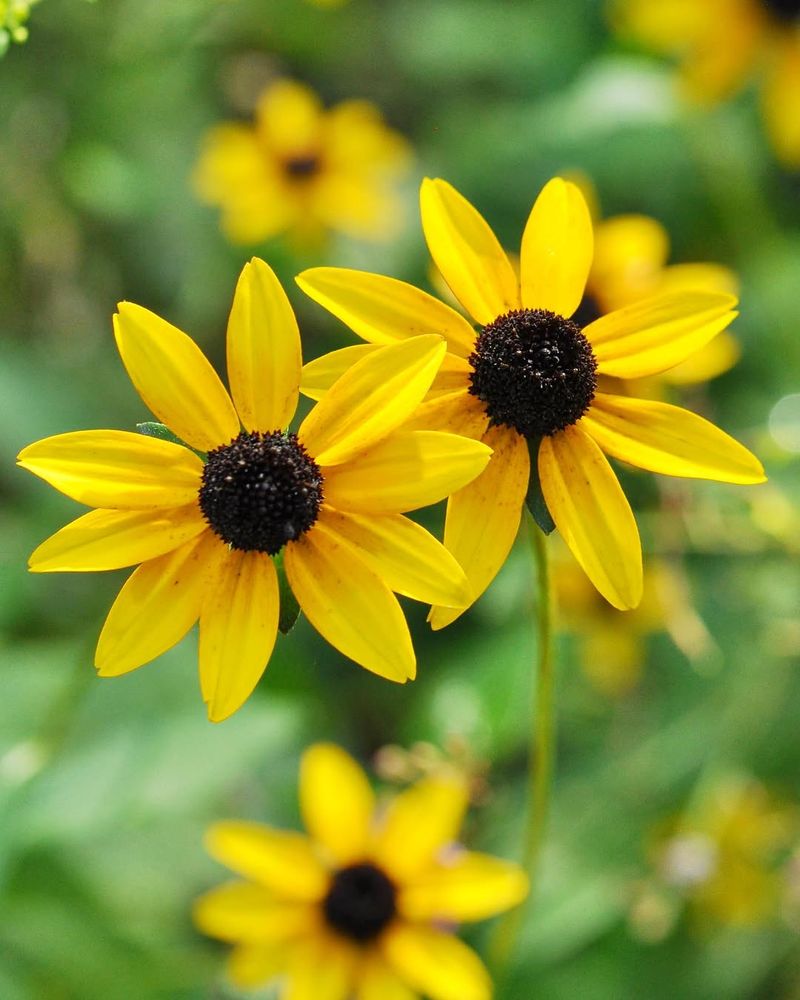
Forget to water for two weeks straight? Black-eyed Susan will not hold it against you.
This tough, cheerful wildflower pushes through Georgia’s brutal summer heat without skipping a beat. The golden-yellow petals surrounding that dark center are hard to miss, and they show up reliably from midsummer all the way into fall.
Plant it in full sun and give it decent drainage, and you are basically done. It handles dry spells better than most plants in a Georgia yard.
Rocky slopes, clay edges, roadside strips — it grows in spots where other flowers would give up after one season.
Bees, butterflies, and goldfinches all visit regularly, so your yard gets some extra life along with the color. If you want even more plants next year, skip deadheading and let the seed heads stand through winter.
Birds will eat some, and the rest will scatter and fill in bare spots on their own. Black-eyed Susan is one of those plants that rewards you more the less you fuss over it.
For Georgia gardeners who want bold summer color without constant upkeep, this one earns its place in any sunny bed.
2. Daylilies Handle Heat, Humidity, And Missed Care Easily
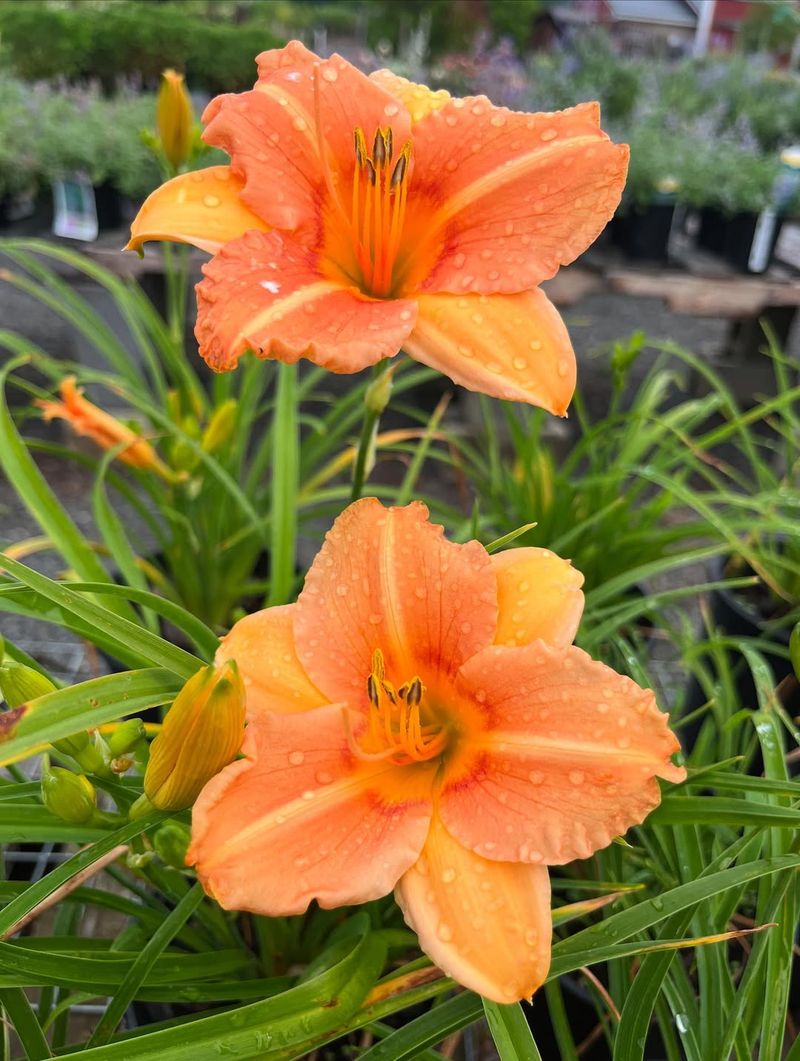
Walk through almost any older Georgia neighborhood and you will spot daylilies growing along fences, driveways, and property edges that clearly have not been touched in years. That tells you something.
These plants have been surviving Georgia summers without much help for generations, and they are not about to stop now.
Daylilies adapt to clay soil, sandy soil, partial shade, and full sun. They handle Georgia’s sticky humidity without developing the fungal problems that plague other flowering plants.
Each flower only lasts one day, but the plant produces so many buds that the show keeps going for weeks.
Dividing clumps every few years keeps them blooming strong, but honestly, skipping that step for a season or two will not cause any real problems.
You can find daylilies in dozens of colors ranging from pale yellow to deep burgundy, so there is no shortage of options to match your garden style.
Established clumps can handle a dry stretch without any visible stress. If you are newer to gardening in Georgia and want something forgiving, daylilies are a solid starting point.
Plant them once and they will reward you for years without asking for much in return.
3. Coneflowers Stay Strong Even In Tough Georgia Summers
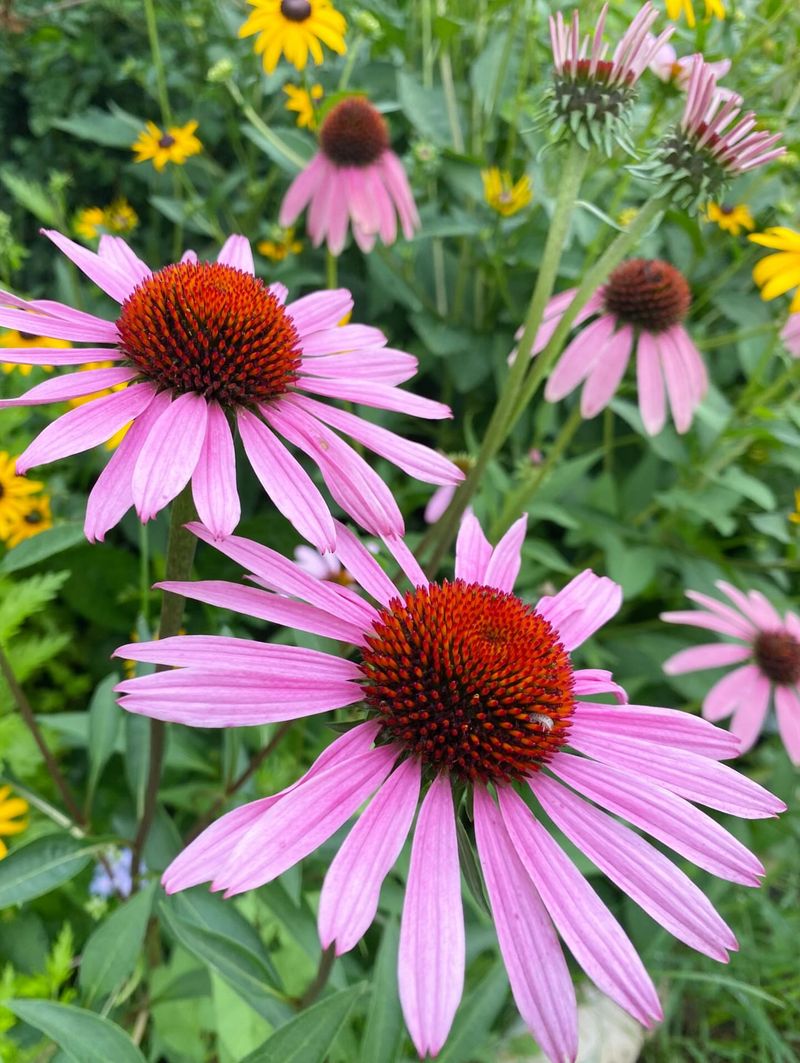
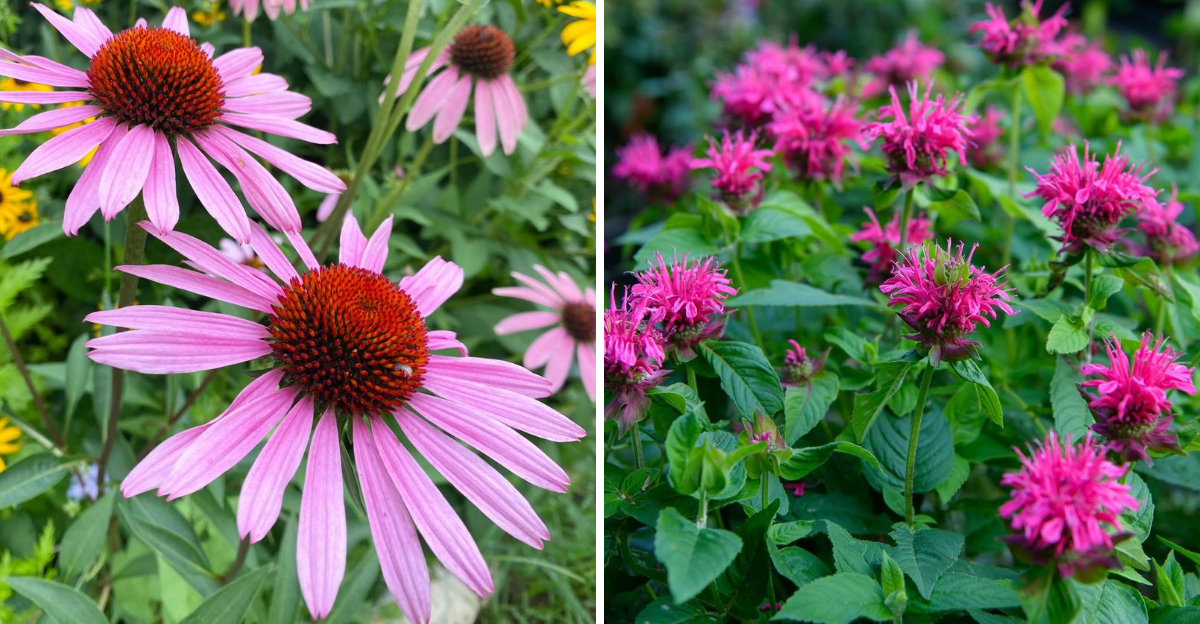
Purple coneflowers have a reputation in Georgia gardens for a reason. They bloom hard during the hottest, driest stretch of summer when most other perennials are struggling to look decent.
That spiky orange center surrounded by drooping pink-purple petals is one of the most recognizable sights in Southern gardens from June through August.
Full sun is where they shine, though they can handle a bit of afternoon shade without much trouble. Well-drained soil matters more than soil quality here — coneflowers planted in soggy ground will not perform well, but give them good drainage and they are remarkably tough.
Georgia’s heat and humidity do not slow them down.
Butterflies and bees swarm coneflowers all summer, and if you leave the seed heads standing after blooming, birds will pick them clean through fall and winter. Deadheading encourages more flowers, but it is entirely optional.
Coneflowers also spread gradually over time, slowly filling in garden beds without becoming invasive. You can divide clumps every three to four years to keep them vigorous, but many Georgia gardeners skip even that step.
Cut them back hard in late fall or just leave them standing for winter wildlife interest.
4. Sedum Thrives In Dry Soil Where Other Plants Struggle
Somewhere in Georgia right now, there is a patch of dry, rocky, nearly impossible soil where nothing seems to grow. Sedum would be perfectly happy there.
Thick, fleshy leaves store water so efficiently that this plant shrugs off dry spells that would stress almost anything else in your garden.
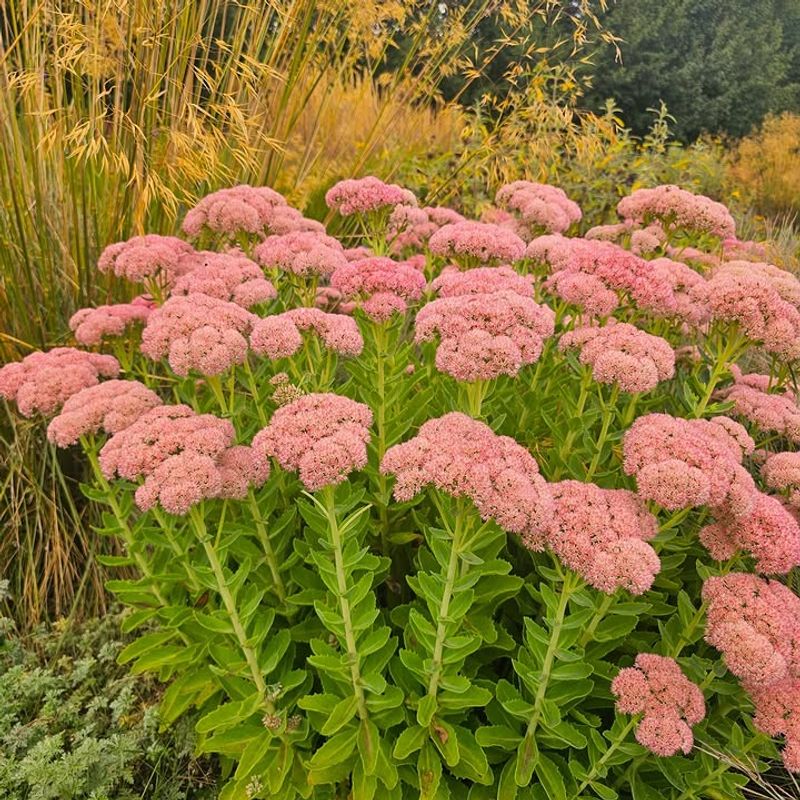
Sedum Autumn Joy is the variety most Georgia gardeners reach for, and it earns that popularity every single year. It starts the season with tight green flower buds that slowly open into flat-topped clusters of pink blooms by late summer.
As fall arrives, those flowers deepen to a dusty rose and then a warm bronze, giving the plant a second act that most perennials cannot match.
Full sun and sharp drainage are really the only two things sedum asks for. Overwatering or heavy clay with poor drainage is the one situation where it genuinely struggles.
Sandy soil, rocky beds, slopes that dry out fast — sedum thrives in all of these. Pollinators love the late-season blooms when other flowers have already faded.
Cut it back to a few inches in early spring and it will bounce back without missing a step. For the forgotten corners of your Georgia yard, sedum is worth trying.
5. Coreopsis Keeps Blooming Without Constant Attention
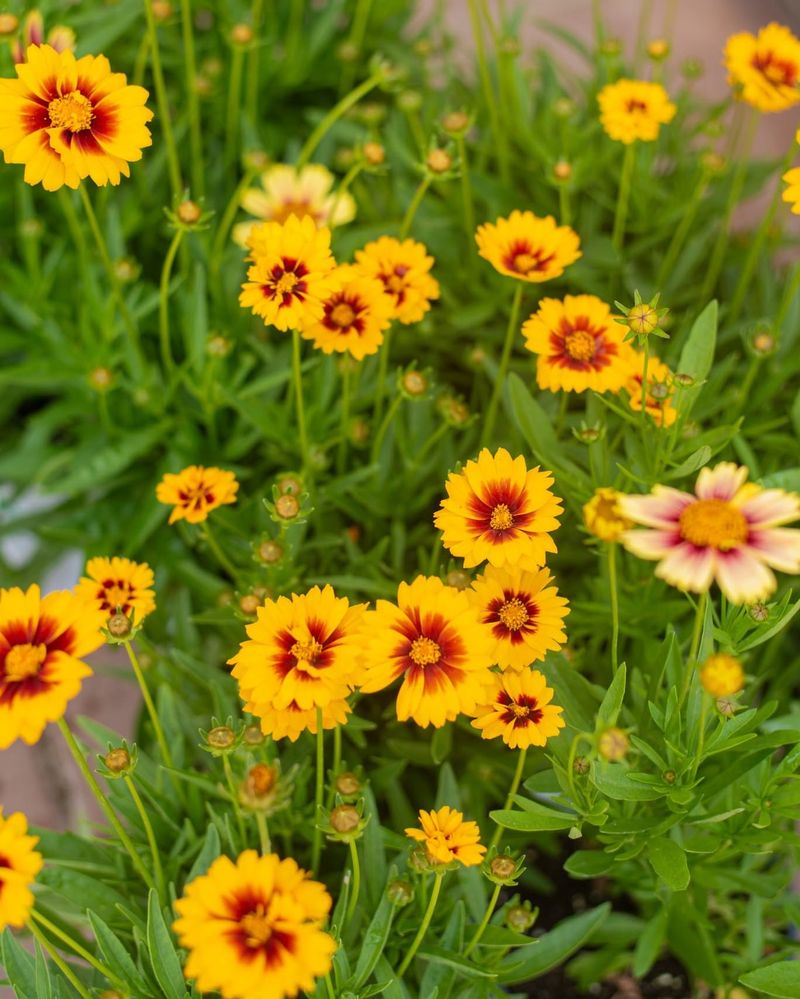
A plant that blooms for months without deadheading, fertilizing, or fussing is rare. Coreopsis pulls it off every summer in Georgia, and it does it with those cheerful yellow daisy-like flowers that seem almost too bright to be real.
Also called tickseed, coreopsis handles Georgia’s heat and humidity without complaint. It prefers full sun and well-drained soil, and once the roots settle in, it barely needs any water beyond what falls naturally.
Sandy or average soil suits it just fine. Rich, heavily amended soil can actually make it flop and sprawl more than you want.
Deadheading spent flowers does encourage a longer bloom period, but skipping a week or two of that chore will not shut the plant down. It just keeps pushing out new buds regardless.
Coreopsis also attracts butterflies consistently throughout the summer, adding movement and life to garden beds.
Some varieties stay compact at around a foot tall, while others reach two feet or more — so check the label and choose based on where you are planting it.
In Georgia landscapes, coreopsis fits equally well in formal borders and informal cottage-style gardens. Plant it in a sunny spot and let it run its season without interruption.
6. Salvia Thrives In Georgia Heat With Very Little Care
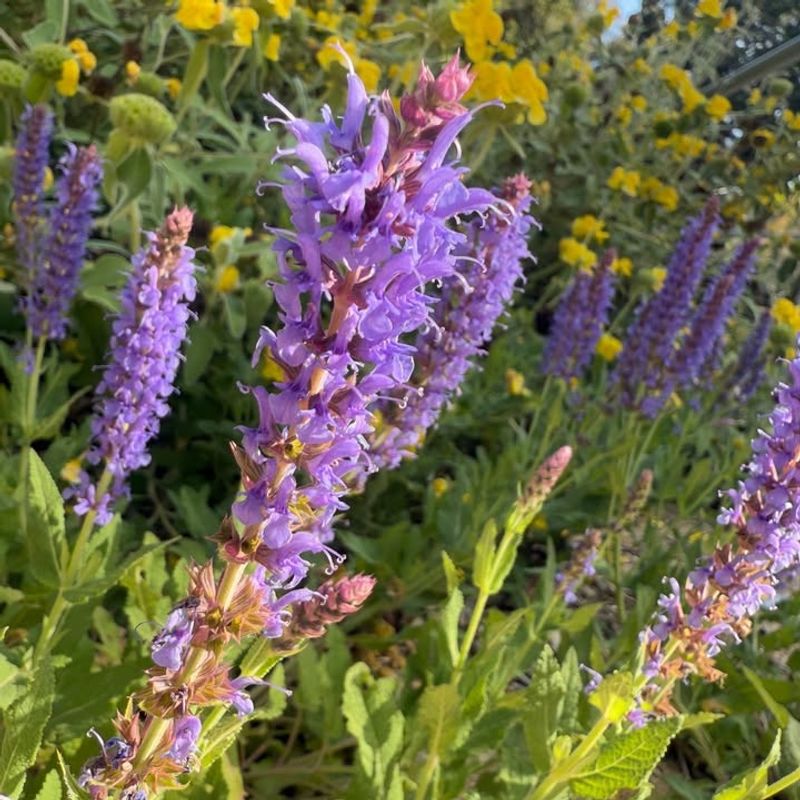
On the hottest, most brutal days of a Georgia August, salvia just keeps blooming.
While other plants wilt by noon, salvia stands upright with its tall purple or blue flower spikes looking completely unbothered by the heat and humidity.
Salvia nemorosa and its relatives are the varieties that perform best across Georgia. They prefer full sun and well-drained soil, and they handle dry stretches without showing much stress.
Cutting them back by about a third after the first big bloom flush encourages a second wave of flowers later in the season. That simple step makes a big difference in how long the color lasts.
Hummingbirds and bees visit salvia constantly throughout summer, which makes it a practical choice for anyone interested in supporting pollinators. Deer tend to avoid it too, which is a genuine bonus for Georgia gardeners in more rural areas.
Salvia does not need rich soil or heavy feeding — in fact, too much fertilizer pushes leafy growth at the expense of flowers. Average soil, good sun exposure, and occasional trimming is about all it takes.
Plant it along borders, in raised beds, or mixed into containers for reliable summer color that holds up even when you are not paying close attention.
7. Yarrow Grows Well Even When Conditions Are Less Than Ideal
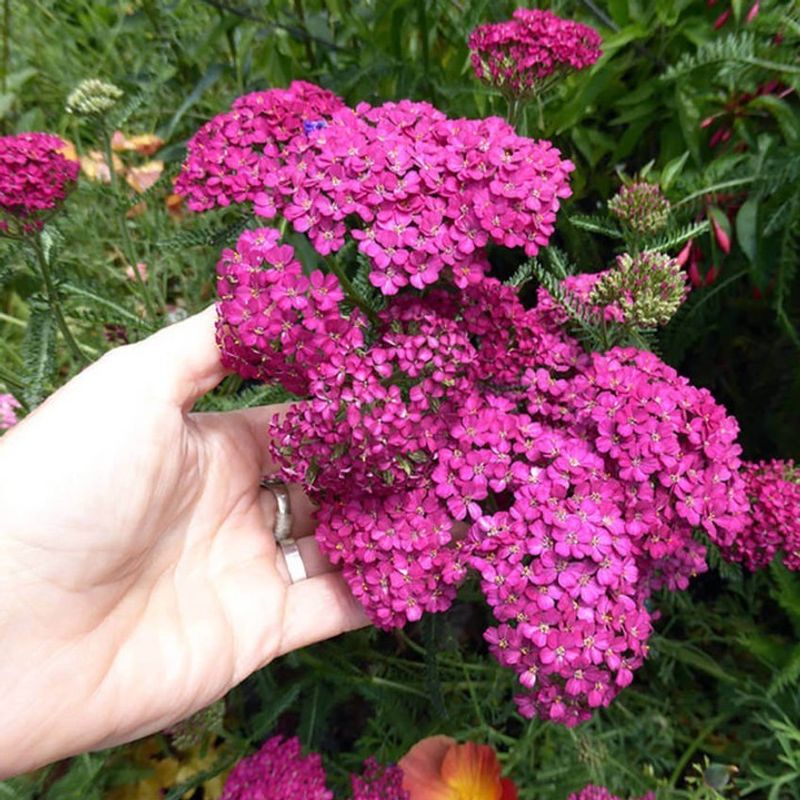
Yarrow is the plant that thrives where you kind of gave up on the spot. Poor soil, full baking sun, dry conditions — yarrow treats those as perfectly normal growing conditions rather than problems to overcome.
Georgia summers are tough, and yarrow has clearly been preparing for exactly that kind of challenge.
Flat-topped flower clusters come in yellow, white, pink, and red, sitting above soft, feathery foliage that smells faintly herbal when you brush against it. Blooms appear from late spring into summer and sometimes push out a second flush if you cut the spent stems back.
Drainage matters a lot with yarrow — wet feet through a Georgia summer will cause more problems than any amount of heat or drought.
Yarrow spreads by underground runners over time, gradually forming wider clumps. Some Georgia gardeners see that as a bonus for filling space; others pull the extras to keep it contained.
Either way, it is easy to manage. Butterflies and beneficial insects visit the flowers regularly throughout the season.
You do not need to fertilize yarrow — extra nutrients tend to make the stems flop over rather than stand upright. Plant it in the hardest spots in your yard and give it almost nothing, and it will likely surprise you.
8. Liriope Fills In Spaces With Almost No Maintenance Needed
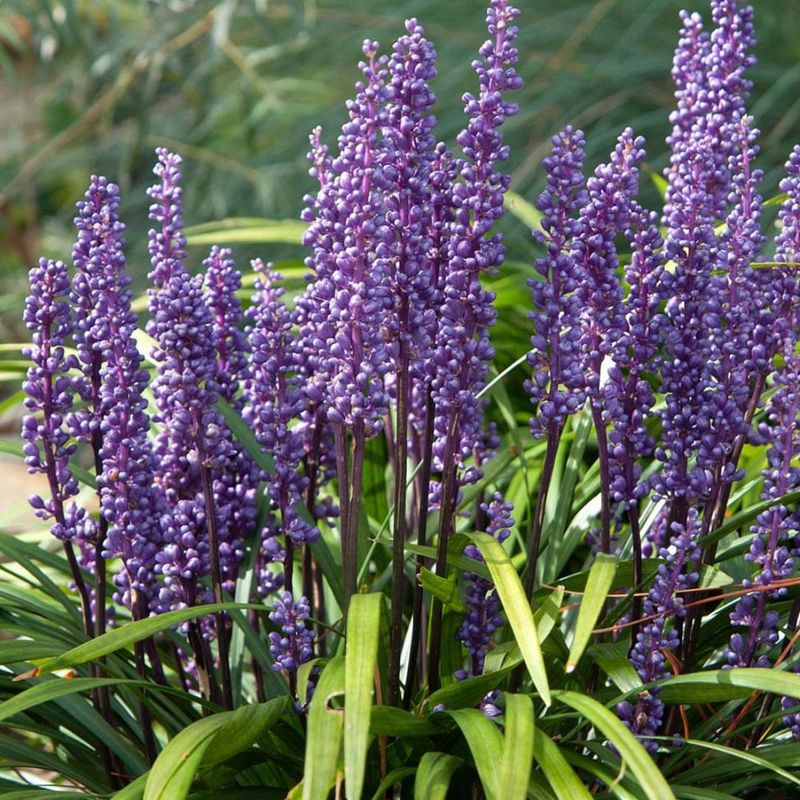
Under trees, along shaded walkways, in dry spots where grass refuses to grow — liriope handles all of it without complaint.
It is one of the most dependable ground covers in Georgia, and once it fills in, it basically takes care of itself year after year.
Grass-like in appearance, liriope produces short purple or white flower spikes in late summer that add a quiet elegance without demanding attention.
The deep green or variegated foliage stays attractive through most of the year, even through Georgia winters when many other plants look rough.
It handles both shade and full sun, which gives it more flexibility than most perennials on this list.
Deer largely ignore it, which matters in suburban and rural Georgia gardens where deer pressure is real. Liriope does not need regular watering once the roots are established, and it rarely needs dividing unless clumps get overcrowded after many years.
Cutting it back to a few inches in late winter before new growth emerges keeps it looking tidy, but skipping that step for a year does not cause lasting harm.
Slope erosion, difficult shaded corners, competition with tree roots — liriope handles all of these situations better than almost anything else you can plant in a Georgia yard.
9. Bee Balm Returns Each Year With Very Little Effort
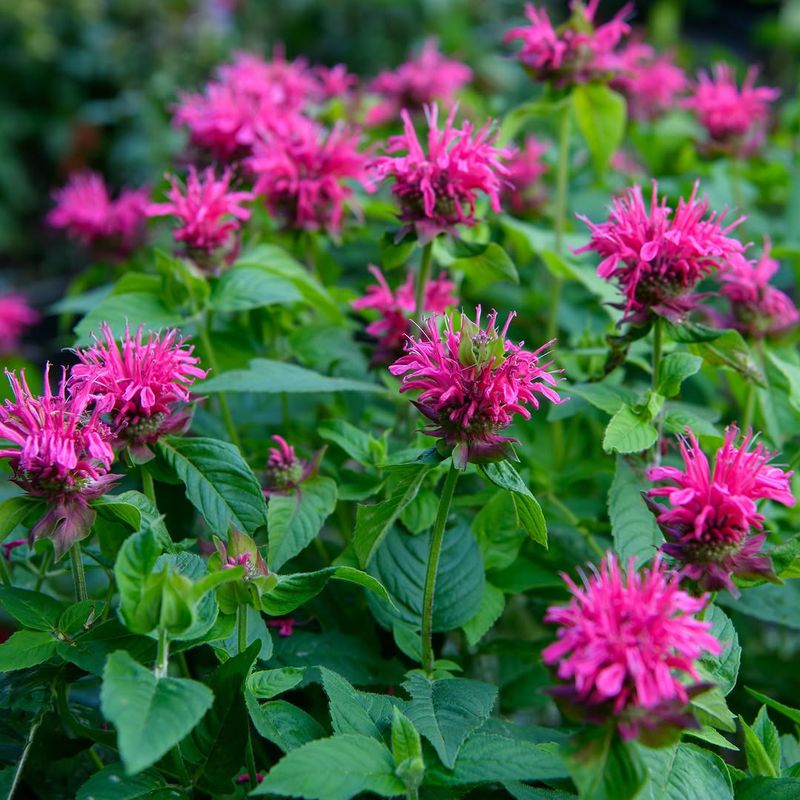
Bee balm has a wild, slightly untamed look that some gardeners love immediately and others have to warm up to.
Either way, the pollinators do not care about your opinion — they swarm those shaggy, spiky flower heads from the moment the first blooms open in early summer.
Red, pink, and purple varieties all grow reliably in Georgia. Bee balm prefers a spot with morning sun and some afternoon shade, especially in the hotter parts of the state where full afternoon sun can stress it during peak summer.
Average soil with decent moisture retention suits it well, though it handles dry spells better than its appearance might suggest.
Powdery mildew on the leaves is common in humid Georgia summers, but it is mostly cosmetic and does not stop the plant from blooming. Choosing mildew-resistant varieties like Jacob Cline or Raspberry Wine reduces that issue significantly.
Cutting stems back after the first bloom flush encourages fresh growth and sometimes a second round of flowers. Bee balm spreads steadily by underground runners, slowly expanding its clump each year.
Dividing it every few years keeps it vigorous and gives you extra plants to move elsewhere in the garden. Hummingbirds visit it consistently, which alone makes it worth growing in any Georgia yard.