Malabar Spinach Tips Every North Carolina Gardener Needs To Know
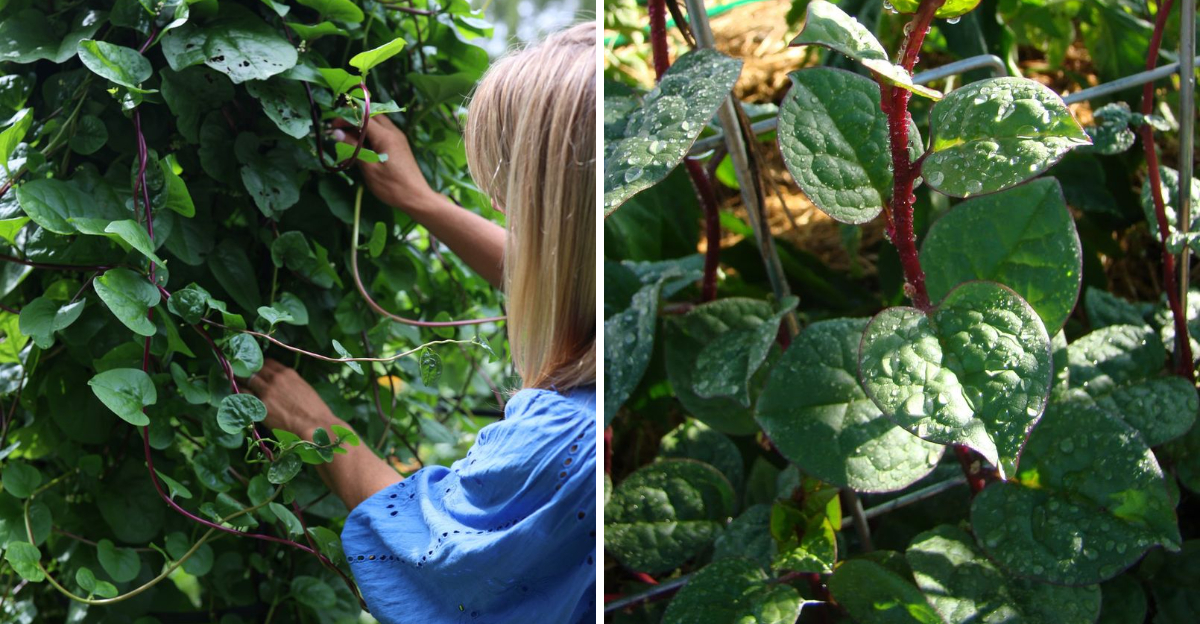
Most leafy greens struggle once North Carolina summer heat arrives, but Malabar spinach does the exact opposite. This fast growing tropical vine thrives when temperatures climb, producing lush, tender leaves long after traditional spinach has faded from the garden.
For gardeners across the state, it offers a reliable way to keep fresh greens on the table during the hottest months.
From the humid Coastal Plain to the rolling Piedmont and the warmer pockets of the Mountains, Malabar spinach adapts well to North Carolina conditions.
Given a sturdy trellis and plenty of sunshine, it climbs quickly and fills the garden with vibrant green growth throughout the season. If you want a vegetable that embraces the heat instead of struggling through it, Malabar spinach is worth a spot in your garden.
With the right approach, this impressive vine can deliver a steady harvest all summer long.
1. Pick The Perfect Planting Time For North Carolina
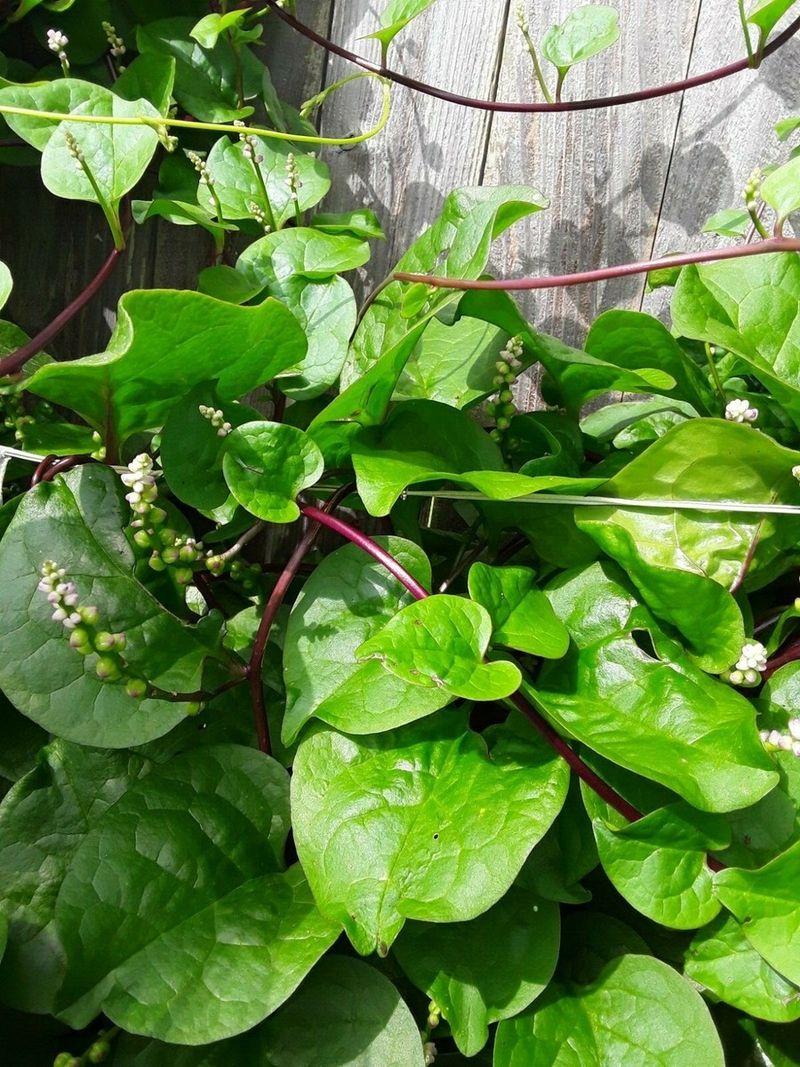
Timing is everything when it comes to growing Malabar spinach in North Carolina. This tropical vine is frost-sensitive, meaning cold temperatures can seriously set it back before it even gets started.
The sweet spot for planting is two to three weeks after your area’s average last frost date, which generally falls in late April to early May across most of the state.
In the western mountain regions of North Carolina, gardeners may want to wait until mid-May just to be safe. Coastal areas and the Piedmont tend to warm up faster, so you can often get a head start there.
Planting too early in cold soil can slow germination and stress young plants unnecessarily.
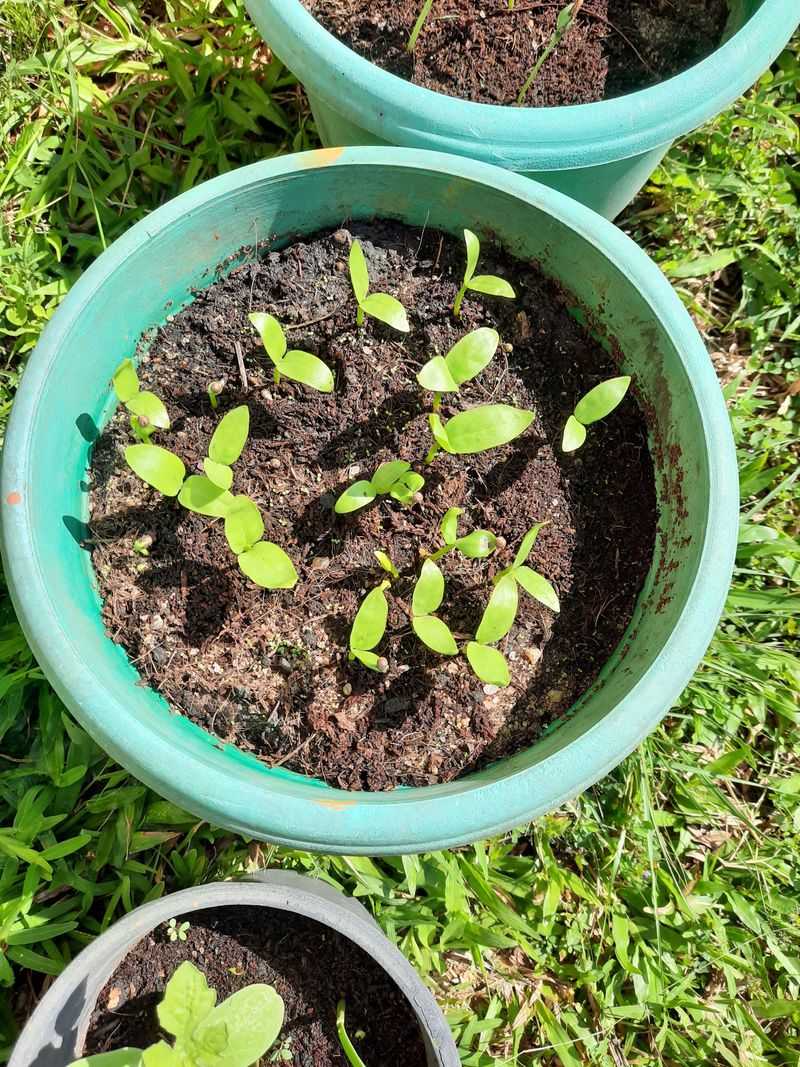
Starting seeds indoors about six to eight weeks before your target outdoor planting date gives you a big advantage. You get stronger, more established transplants that hit the ground running once the warm weather arrives.
North Carolina’s hot summers are actually ideal for this vine, so the earlier you can safely get it in the ground, the longer your harvest window will be. A little patience at the start pays off in a huge way all season long.
2. Soak Your Seeds Before Planting
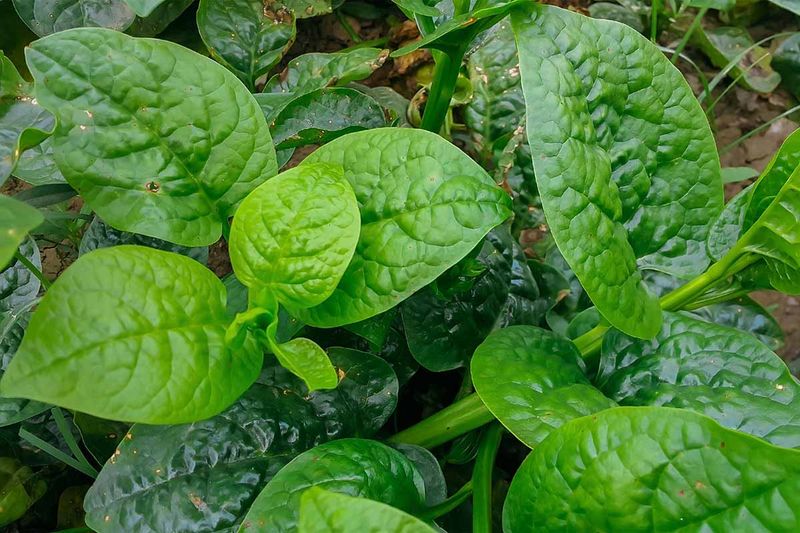
Malabar spinach seeds have a notoriously tough outer coating that can slow germination down quite a bit. One of the easiest tricks to speed things up is soaking your seeds in room-temperature water for at least twelve hours before planting.
Some gardeners even leave them overnight, and the results are noticeably better.
When you soak the seeds, the hard shell softens and allows moisture to reach the inner seed more quickly.
You might actually see small seeds beginning to crack open or swell after a good soak, which is a great sign that sprouting is on its way. This simple step can cut your germination time by several days.
After soaking, plant the seeds about half an inch deep in moist, warm soil. If you are starting them indoors in North Carolina before the last frost, use a seed-starting mix and place the tray somewhere warm, ideally around 75 to 85 degrees Fahrenheit.
A heat mat works wonderfully for this. Once you see those first little sprouts poking through the soil, you will be glad you took those extra few minutes the night before to prep your seeds properly. It is a small effort with a surprisingly big payoff.
3. Build The Right Soil Foundation
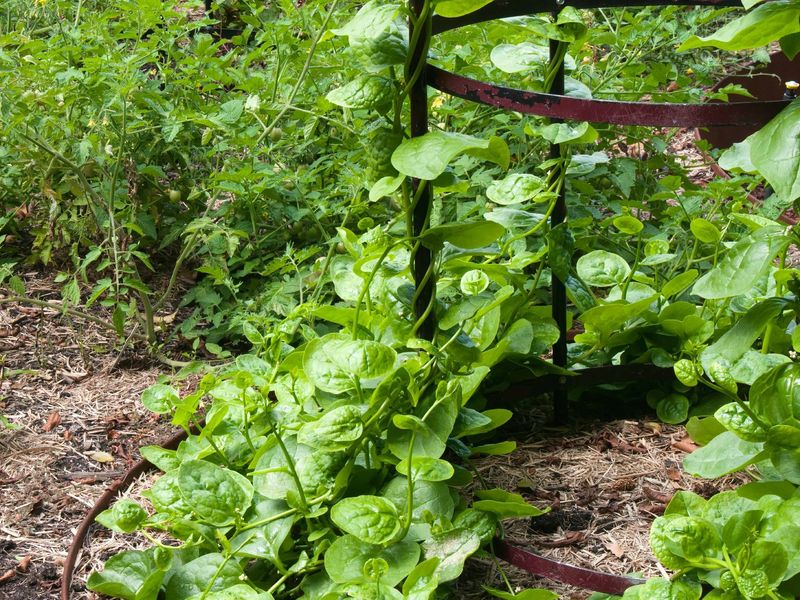
Great soil is the backbone of any thriving garden, and Malabar spinach is no exception to that rule. This plant grows best in well-draining, fertile soil that is rich in organic matter.
Compacted or waterlogged soil will slow its growth and make the roots struggle to breathe properly.
Aim for a soil pH between 5.5 and 7.0, which is slightly acidic to neutral. Most North Carolina soils fall somewhere in this range, but it is always smart to test your soil before planting season begins.
Your local NC Cooperative Extension office can help you with affordable soil testing kits and recommendations tailored to your county.
Mixing in a generous amount of compost or aged manure before planting does wonders for both fertility and drainage. Compost feeds the soil’s natural biology, which in turn feeds your plants in a steady, balanced way throughout the season.
If your garden bed tends to stay wet after rain, consider building a raised bed or adding coarse sand to improve drainage. Malabar spinach wants moisture, but it absolutely cannot tolerate sitting in soggy soil for long periods.
Getting the soil right before you plant saves you a lot of troubleshooting later in the summer growing season.
4. Give It Plenty Of Sunshine (With Smart Shade)
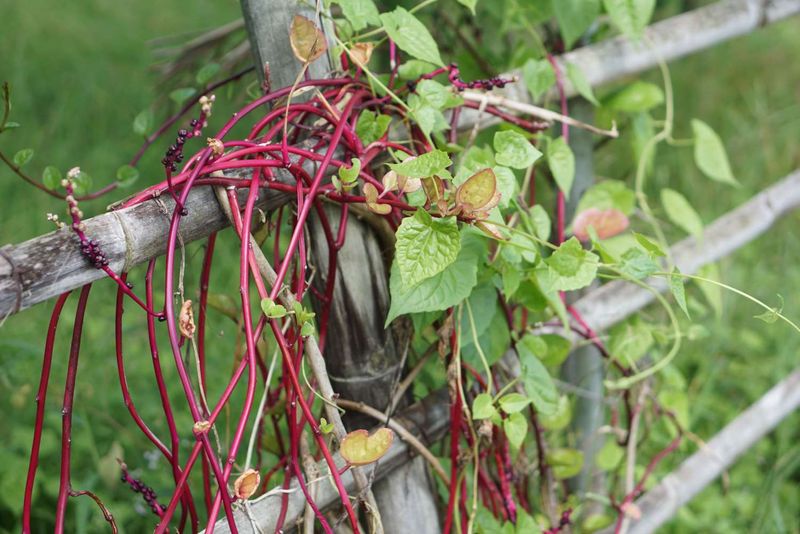
Malabar spinach is a true sun lover, and in North Carolina, it gets plenty of what it craves. Full sun, meaning at least six to eight hours of direct sunlight per day, encourages the fastest and most vigorous growth.
The more warmth and light this vine gets, the happier it tends to be throughout the growing season.
That said, North Carolina summers can get brutally hot, especially in July and August. During heat waves, intense afternoon sun can sometimes scorch the large, glossy leaves and stress the plant more than necessary.
Positioning your trellis or planting spot so the vine gets morning sun and light afternoon shade is a smart strategy many experienced gardeners swear by.
You do not need to build an elaborate shade structure to protect your plants. Planting near a fence, a larger shrub, or even a taller vegetable like corn can provide natural afternoon relief.
Interestingly, Malabar spinach handles partial shade better than most heat-loving vegetables, which gives you more flexibility when planning your garden layout. Even in shadier spots, it still produces beautifully if it gets consistent warmth.
Finding that sweet balance between sun and shade in your North Carolina garden truly unlocks this plant’s full potential all summer long.
5. Water Smart To Keep Your Vine Thriving
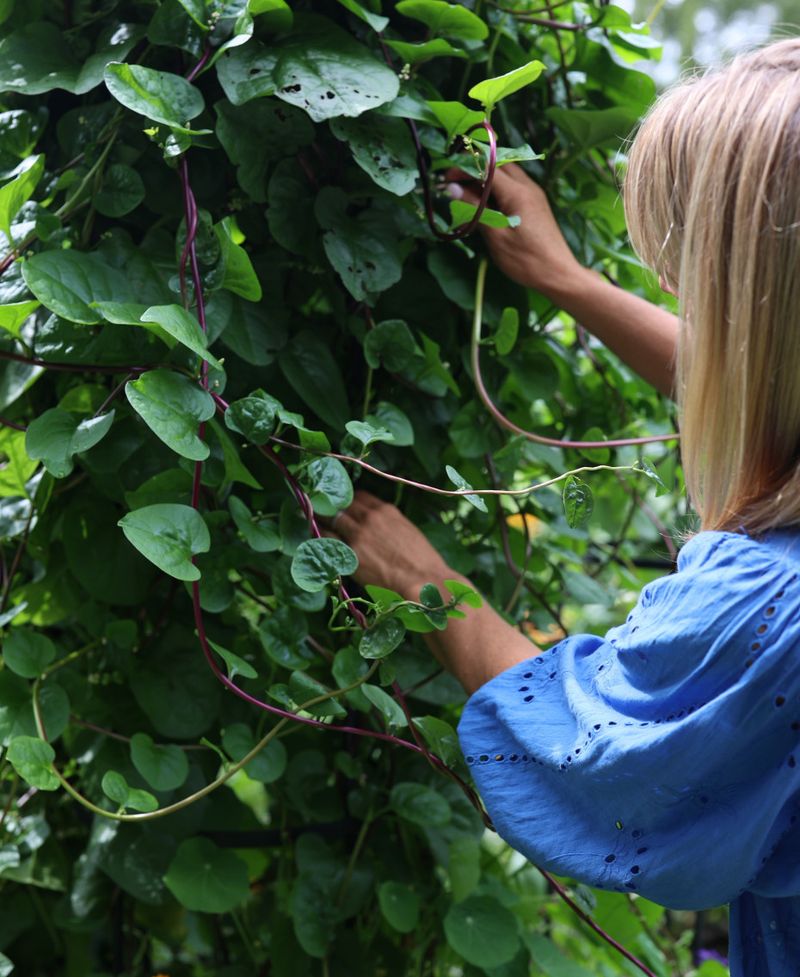
Consistent moisture is one of the most important factors in growing healthy Malabar spinach, especially during North Carolina’s hot and sometimes dry summer months.
Watering deeply at the base of the plant encourages roots to grow downward, which makes the vine more resilient during short dry spells.
Shallow, frequent watering tends to produce weaker root systems over time.
Avoid overhead watering whenever possible. Wetting the leaves regularly creates conditions that fungal diseases absolutely love, and nobody wants to deal with leaf spots or mildew mid-season.
A soaker hose or drip irrigation system keeps moisture right where it belongs, at the roots, without splashing water all over the foliage.
Mulching around the base of your plants is a game changer for moisture retention. A two to three inch layer of straw, wood chips, or shredded leaves keeps the soil cooler, slows evaporation, and even suppresses weeds at the same time.
In North Carolina’s humid summers, mulch also helps regulate soil temperature swings between hot days and cooler nights. Water your plants in the early morning so any accidental leaf wetness has time to dry before temperatures climb.
Staying consistent with your watering routine throughout the season keeps your Malabar spinach lush, productive, and full of flavor.
6. Set Up A Strong Support Structure Early
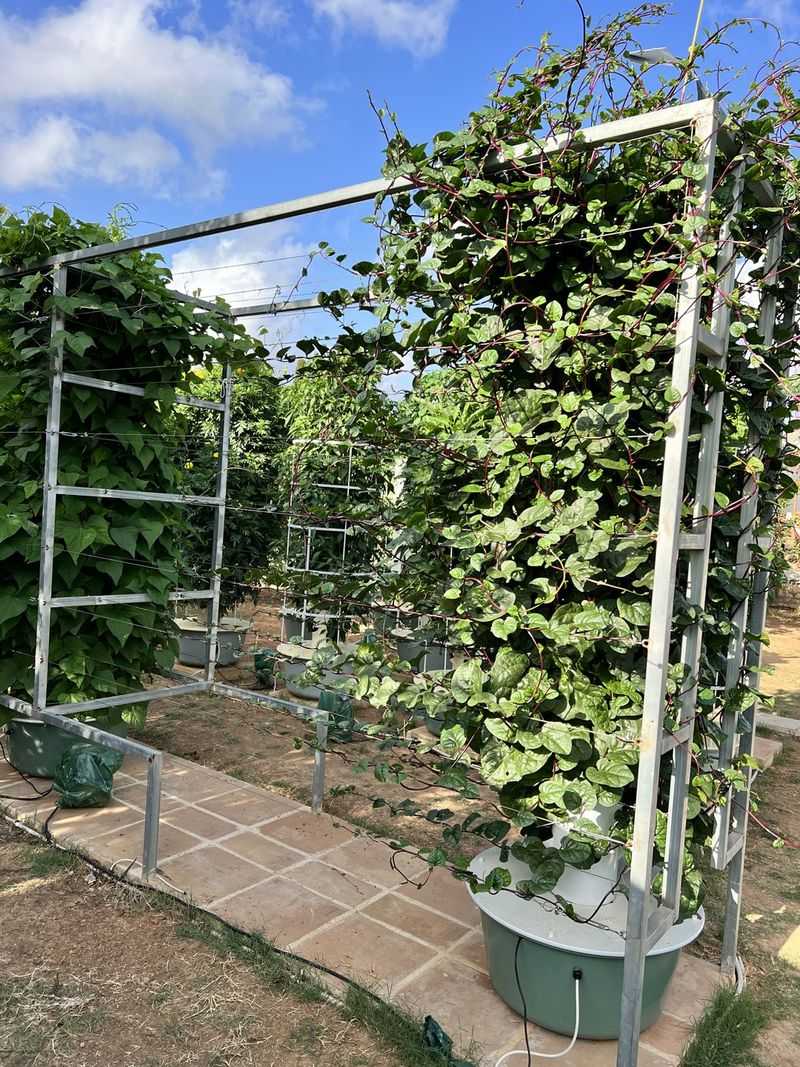
Malabar spinach is a vigorous climbing vine that can reach six to ten feet tall under good growing conditions. Without proper support, it sprawls across the ground, becomes difficult to harvest, and is more vulnerable to pests and disease.
Setting up a sturdy trellis, fence, or arbor at planting time is one of the smartest moves you can make in your North Carolina garden.
The support structure needs to be strong enough to handle the weight of a fully loaded vine by midsummer. Lightweight wire or flimsy stakes often bend or collapse under the plant’s enthusiastic growth.
T-posts with wire mesh, wooden lattice panels, or even a section of chain-link fence all work beautifully for this purpose and last multiple growing seasons.
Training the young vines to climb in the right direction early on saves a lot of hassle later. Gently guide the stems toward the trellis and loosely tie them with soft garden twine if needed.
Once the vines understand where to go, they tend to climb on their own with very little encouragement. Vertical growing also maximizes space in smaller North Carolina gardens, letting you grow more food in less square footage.
Plus, the lush green wall of foliage looks absolutely stunning as a living backdrop in any backyard garden setting.
7. Feed Your Plants For Maximum Leaf Production
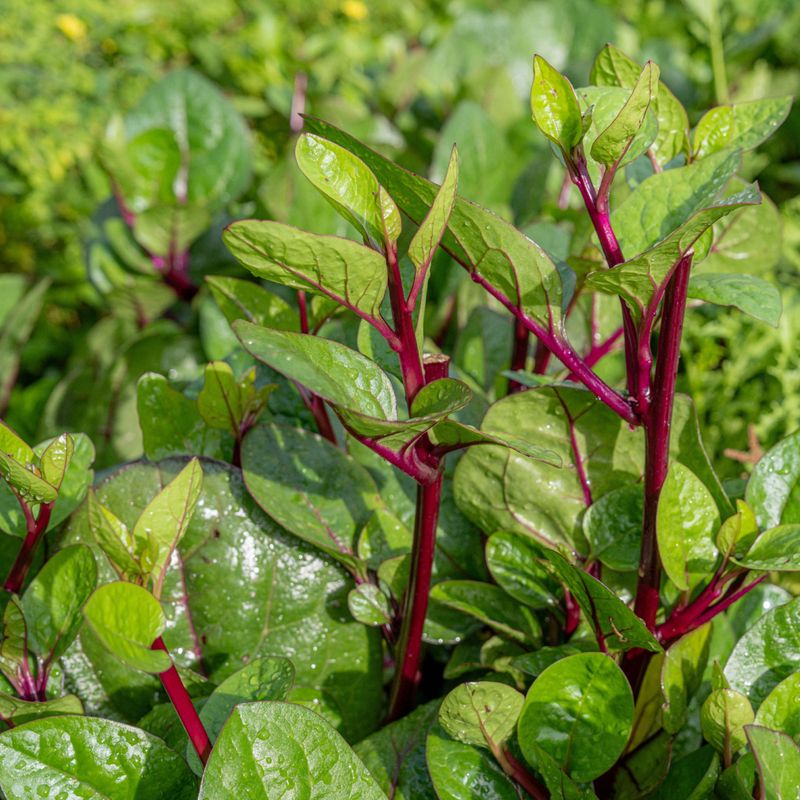
Malabar spinach is a leafy green, which means nitrogen is its best friend for producing those big, glossy, edible leaves.
Applying a balanced organic fertilizer, something around an NPK ratio of 10-10-20, gives the plant a steady supply of nutrients throughout the growing season.
Organic options release nutrients slowly, which prevents the burn that synthetic fertilizers can sometimes cause.
Side-dressing with compost every four to six weeks is another excellent way to keep your vine well-fed without overdoing it. Too much nitrogen late in the season can actually cause the plant to put more energy into lush foliage and less into steady, manageable growth.
Balance is key, and organic matter helps you achieve that balance naturally.
North Carolina’s clay-heavy soils in many parts of the Piedmont can sometimes lock up nutrients, making them harder for plant roots to access. Improving your soil with compost over time gradually fixes this problem season by season.
If you notice yellowing leaves or slow growth mid-summer, a light application of liquid fish emulsion or seaweed fertilizer can give your plants a quick, gentle boost.
Regular trimming of young leaf tips actually stimulates the plant to produce even more growth, so harvesting frequently and feeding consistently go hand in hand for a bumper crop all season.
8. Keep An Eye Out For Pests
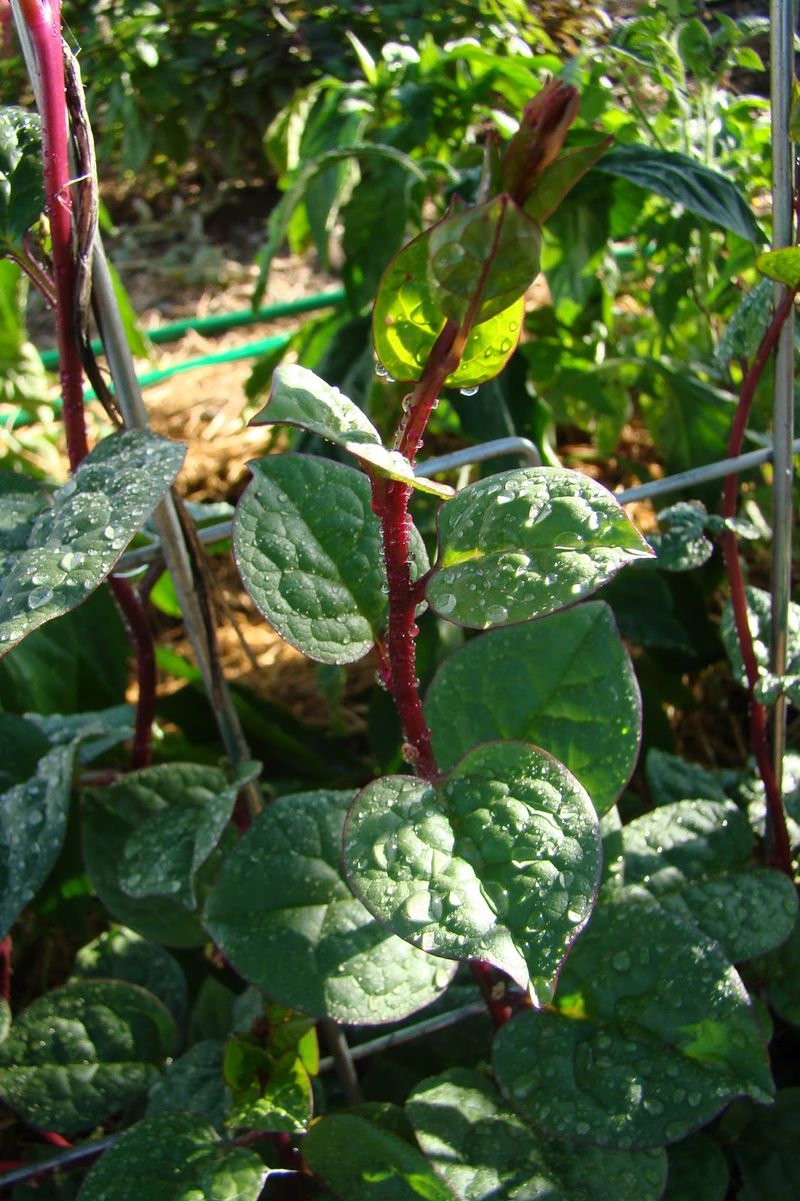
One of the best things about growing Malabar spinach in North Carolina is that it is naturally resistant to most common garden pests.
Japanese beetles, aphids, and caterpillars that plague other vegetables tend to leave this plant alone, which is a huge relief for gardeners who prefer low-maintenance crops.
That said, no plant is completely immune, and a little monitoring goes a long way.
Slugs and snails are the most likely troublemakers you will encounter, especially during wet stretches of weather. They chew irregular holes in the leaves overnight, leaving behind a telltale slime trail.
Handpicking them in the early morning or evening is effective, and placing crushed eggshells or food-grade diatomaceous earth around the base of the plant creates a scratchy barrier they strongly dislike crossing.
Walking through your garden a few times a week and inspecting the undersides of leaves is the best early-warning system you can have. Catching a small problem before it becomes a big one saves your harvest and keeps your plants looking beautiful.
In North Carolina’s warm, humid climate, conditions can sometimes favor fungal issues on the foliage as well. Good air circulation around your trellis and avoiding overhead watering dramatically reduces that risk.
Staying observant keeps your Malabar spinach healthy and productive from early summer right through the first signs of cooler fall weather.
9. Harvest Often To Keep Production Going
Harvesting Malabar spinach at the right time and in the right way makes a dramatic difference in how productive your plant stays all season.
You can typically start picking leaves and tender stem tips about 70 to 80 days after planting, once the vines are well established and climbing confidently.
Waiting too long between harvests allows the plant to become woody and less flavorful.
Pinching off the top few inches of each growing stem is the most effective harvesting technique. This encourages the plant to branch out and produce multiple new shoots instead of just continuing to grow upward in one long, lanky vine.
The more you harvest, the bushier and more productive your plant becomes, which is exactly what you want in a North Carolina summer garden.
Young leaves and tender stems are the most flavorful and have the best texture for cooking. Older, larger leaves tend to get tougher and more mucilaginous, which some people enjoy but others find a bit slimy.
For fresh salads, always grab the youngest growth at the tips. Malabar spinach works beautifully in stir-fries, soups, and as a substitute for regular spinach in almost any recipe.
Harvesting every five to seven days keeps the vine in peak production mode and gives you a steady supply of fresh greens straight from your North Carolina garden.
10. Plan Ahead For The End Of The Season
Malabar spinach is a frost-sensitive tropical plant, so once North Carolina temperatures begin dropping in the fall, your vine will naturally slow down and eventually stop producing.
Knowing this ahead of time lets you plan your garden season smartly rather than being caught off guard when the cooler weather rolls in.
Most North Carolina gardeners treat it as a warm-season annual and plan accordingly.
One great strategy for extending your harvest is starting a second batch of seeds indoors in midsummer. By the time your first planting slows down in early fall, your fresh transplants will be ready to take over and keep producing for a few more weeks.
This relay planting approach works especially well in the warmer coastal regions of North Carolina where frost arrives later in the year.
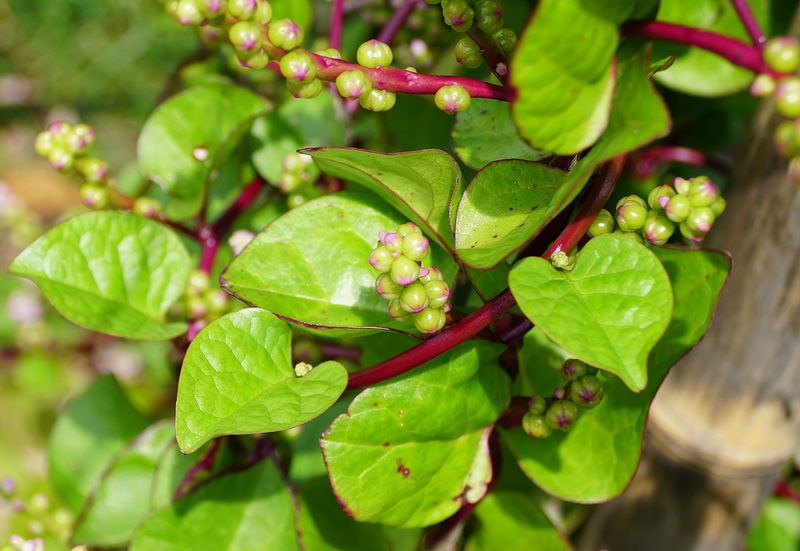
Saving seeds from your Malabar spinach is surprisingly easy and very rewarding. Allow a few berries to fully ripen on the vine until they turn deep purple or black.
Collect them, rinse off the pulp, and let the seeds dry completely before storing them in a cool, dry place for next year. Saving your own seeds also means you are selecting plants that have already proven they can thrive in your specific North Carolina microclimate.
It is a satisfying way to close out the growing season and set yourself up for an even better harvest the following summer.