Maryland Wisteria Grows Better When Pruned This Way In January

Wisteria has a way of taking over Maryland gardens if it’s given even a small opening, wrapping itself around structures and stretching far beyond where it was first planted.
That fast, forceful growth is exactly why winter pruning plays such an important role in keeping the vine productive instead of chaotic.
January offers a rare pause in wisteria’s growth cycle, when the plant is resting but its structure is fully visible. At this point, every cut has a clear purpose because there are no leaves hiding what needs attention.
Pruning now isn’t about reducing size alone, but about deciding where energy will go once warmer weather returns.
Maryland’s cold but relatively stable winter conditions allow cuts to heal before sap starts moving again in early spring.
Handled correctly, January pruning encourages shorter spurs that focus on flower production rather than endless runners.
When wisteria is pruned with intention during this window, it becomes easier to manage and far more reliable in bloom once the season changes.
1. Start By Removing Long, Whippy Shoots First

Those long, thin vines that twist around everything in sight are the first things you should tackle.
Wisteria loves to send out wild runners that can stretch rapidly during a single growing season.
They look messy and rarely produce any flowers, so cutting them back is your top priority.
In Maryland, January weather is usually mild enough to work outside without freezing your fingers off. You can easily spot these whippy shoots because they’re lighter in color and more flexible than older wood.
They often wrap around gutters, railings, or nearby trees if left unchecked.
Grab a sharp pair of bypass pruners and cut these shoots back to just a few inches from the main vine. Make your cuts at a slight angle to help water run off and prevent rot.
This step clears away the clutter and lets you see the plant’s true structure underneath.
Removing these shoots early in the process makes the rest of your pruning work much easier. You’ll have a clearer view of which branches to keep and which ones to trim further.
Maryland gardeners who skip this step often end up with a tangled mess by spring.
Don’t worry about cutting too much at this stage. Wisteria is incredibly tough and bounces back quickly from heavy pruning.
Focus on clearing away the excess growth so you can move on to shaping the plant properly.
2. Cut Side Shoots Back To A Few Strong Buds
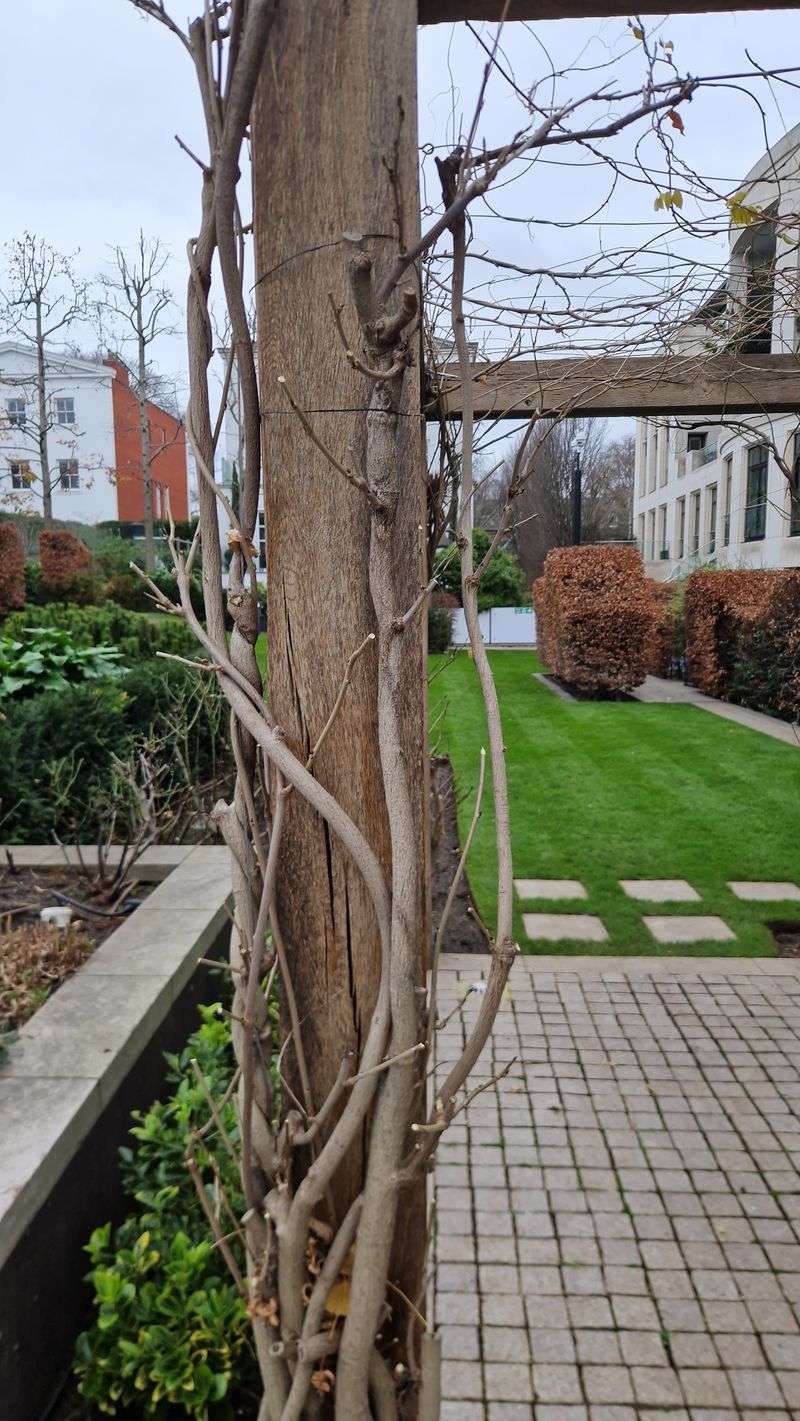
Side shoots are the smaller branches that grow off the main framework of your wisteria. Trimming them down to just two or three buds encourages the plant to put energy into flowering instead of leaf production.
Each bud you leave behind has the potential to become a beautiful cluster of blooms come spring.
Look closely at each side shoot and count the plump buds starting from where it connects to the main vine. These buds are easy to spot in January because they’re slightly swollen and darker than the smooth bark around them.
In Maryland’s winter light, they stand out clearly against the bare wood.
Use clean, sharp pruners to make your cut just above the second or third bud. Cutting at a slight angle helps the wound heal faster and prevents water from pooling on the cut surface.
This simple technique makes a huge difference in how many flowers you’ll see in a few months.
Side shoots that are left too long will produce lots of leaves but very few flower clusters. By shortening them now, you’re telling the plant exactly where you want it to focus its energy.
Maryland’s spring weather will reward your effort with cascading blooms.
Repeat this process on every side shoot you can reach. It might feel tedious, but the results are absolutely worth it.
Your wisteria will look neater and bloom more heavily than ever before.
3. Keep The Main Framework Vines Intact
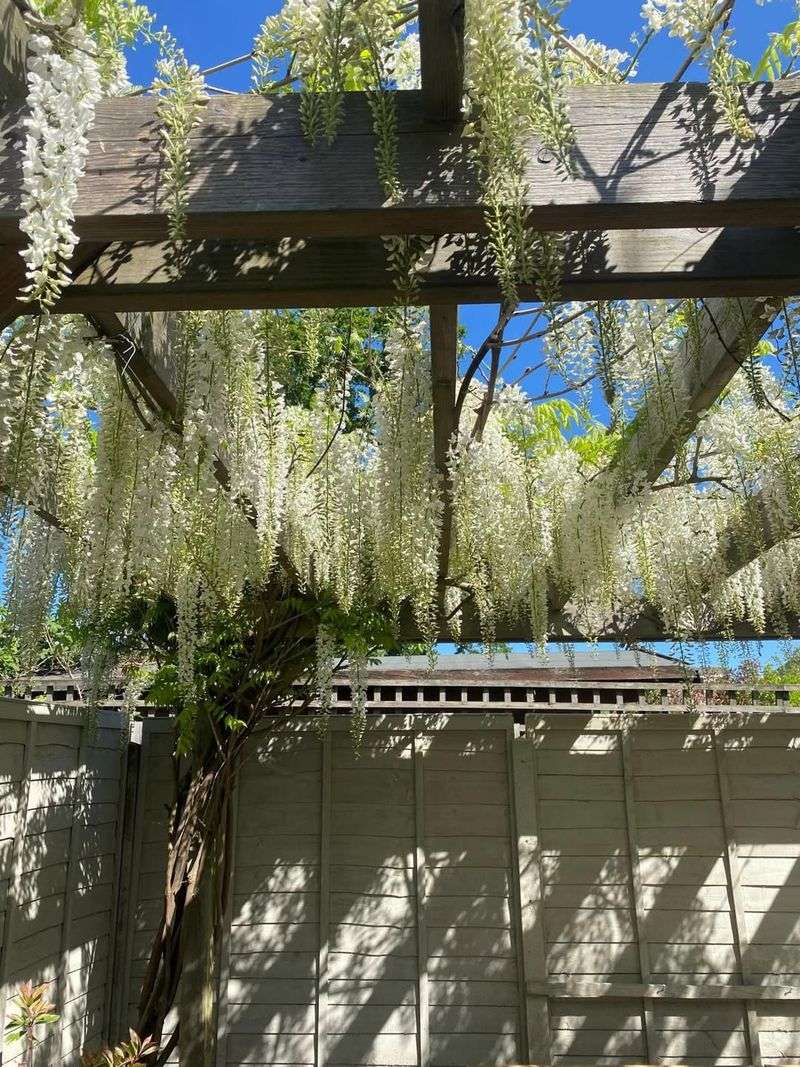
Your wisteria’s main framework is like the skeleton of the plant. These thick, woody vines form the permanent structure that supports all the flowering shoots.
Never cut into these unless they’re damaged or growing in a direction you can’t manage.
In Maryland, mature wisteria vines can be as thick as your wrist or even thicker. They’re usually darker and rougher in texture compared to newer growth.
These vines are what give your plant its shape and strength, so treat them with respect.
When you’re pruning in January, work around these main vines carefully. Identify which ones are part of the permanent structure and which are just overgrown side branches.
The framework vines should follow your trellis, arbor, or fence in a way that looks intentional and balanced.
If one of the main vines is broken or diseased, you can remove it, but do so thoughtfully. Cutting away a major vine changes the entire shape of the plant and can take years to recover from.
Maryland winters are usually gentle, but ice or wind damage does happen occasionally.
Focus your pruning efforts on the smaller growth that sprouts from these framework vines. Leave the main structure alone unless absolutely necessary.
This approach keeps your wisteria strong and allows it to fill in beautifully each spring with fresh flowering shoots.
4. Shorten Excess Growth That Pulls Away From Supports
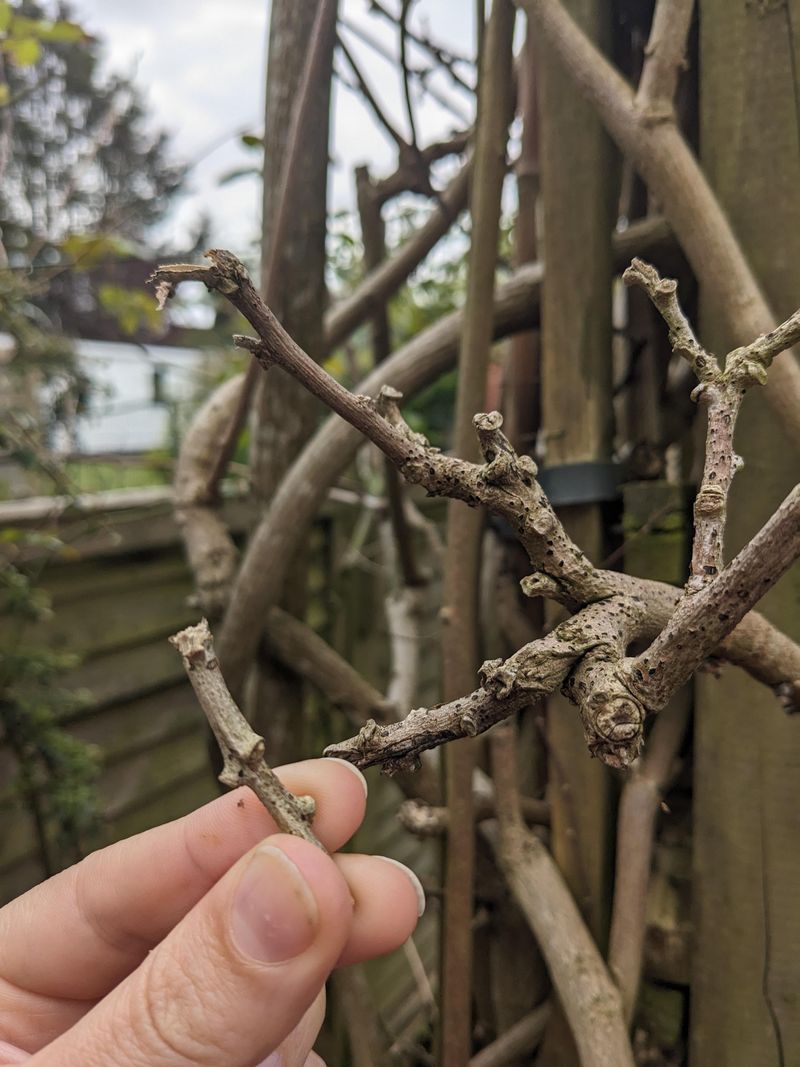
Wisteria vines have a mind of their own and often grow away from the supports you’ve provided. These wayward shoots can pull at your trellis, wrap around downspouts, or reach toward nearby structures.
Cutting them back keeps your plant under control and looking tidy.
In Maryland gardens, wisteria can quickly become invasive if you don’t stay on top of pruning. Shoots that pull away from supports are not only messy but also less likely to flower well.
They waste the plant’s energy on growth that doesn’t contribute to the overall display.
Walk around your wisteria and look for vines that are heading in the wrong direction. These are usually easy to spot because they’re stretching out into open space or tangling with things they shouldn’t.
January is the ideal time to fix these problems before spring growth begins.
Use your pruners to cut these shoots back to a point where they rejoin the main structure. Make clean cuts and don’t leave long stubs, which can attract pests or disease.
This step helps your wisteria stay within its designated space.
Shortening excess growth also improves air circulation around the plant. Better airflow reduces the risk of fungal issues and keeps your wisteria healthier overall.
Maryland’s humid springs can be tough on plants that are too crowded or tangled.
5. Remove Thin Or Weak Vines That Won’t Flower Well
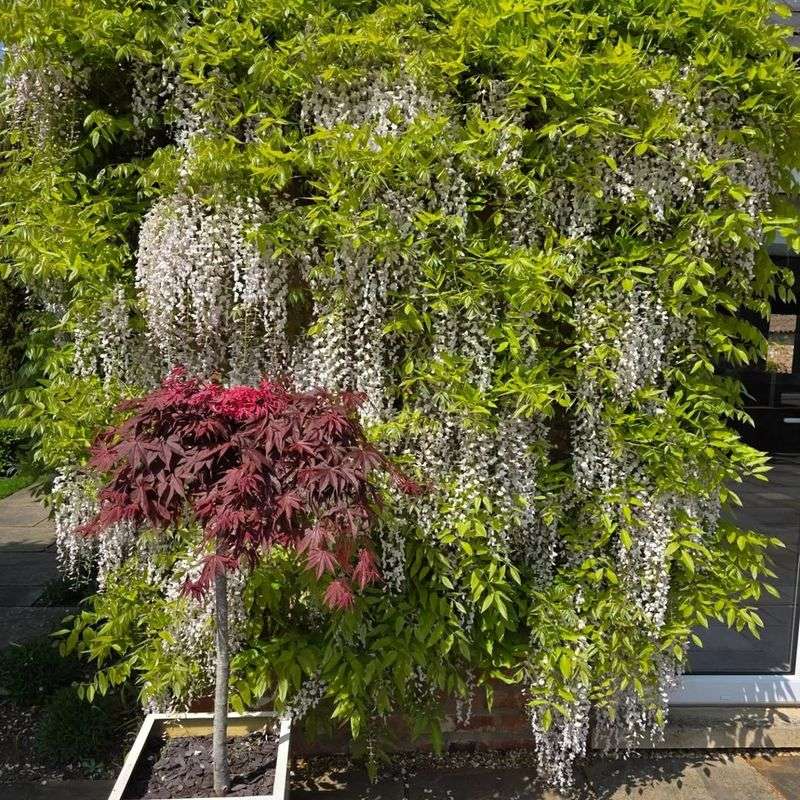
Not all vines are created equal. Some are thin, spindly, and unlikely to produce any flowers no matter how much you care for them.
Removing these weak vines frees up space and resources for the stronger, more productive parts of your wisteria.
Thin vines are easy to identify in January when the plant is bare. They’re usually lighter in color and much more flexible than the robust shoots that will bloom.
In Maryland, winter is the best time to assess which vines are worth keeping and which should go.
Cut these weak vines back to their base or to a point where they meet a stronger branch. There’s no benefit in keeping growth that won’t contribute to the plant’s beauty or health.
This type of pruning is sometimes called thinning, and it’s essential for a well-maintained wisteria.
Weak vines also tend to get in the way when you’re trying to shape the plant. They create visual clutter and make it harder to see the strong framework underneath.
Removing them simplifies your pruning work and makes the final result look much cleaner.
Maryland gardeners who prune out weak growth in January often notice a dramatic improvement in flowering. The plant can focus all its energy on the vines that matter, leading to bigger, more abundant blooms.
Don’t be afraid to be ruthless with these underperformers.
6. Focus On Shape Before You Focus On Length
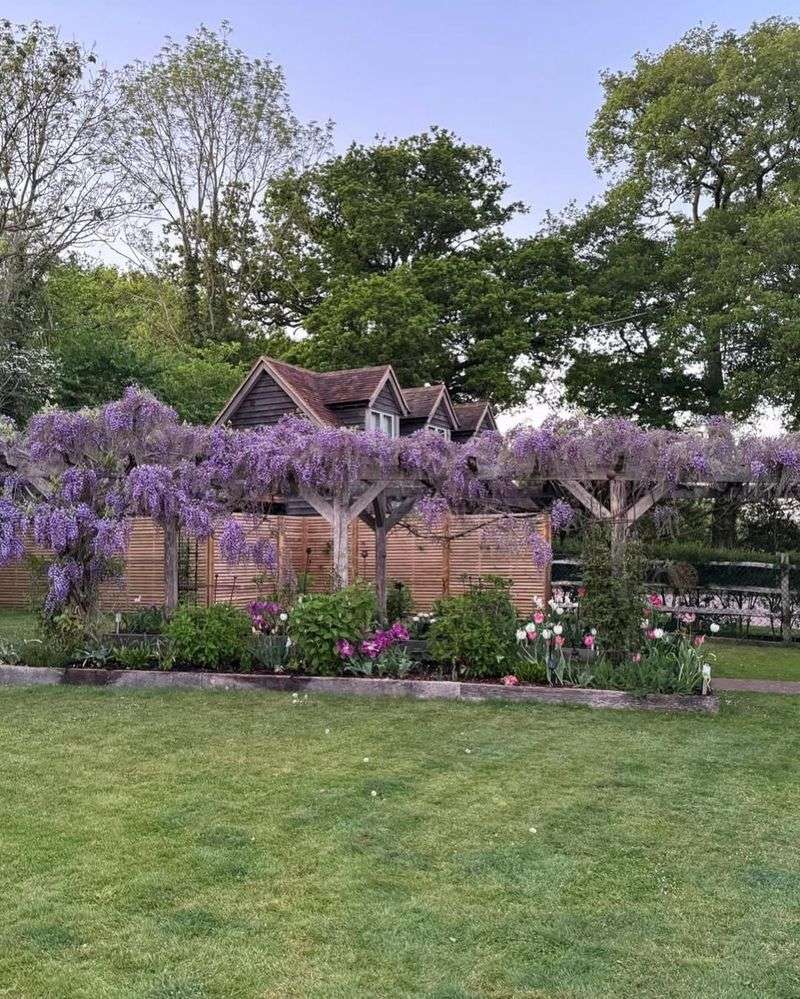
Many gardeners make the mistake of worrying about how long each vine is before they think about the overall shape. The best approach is to step back and visualize the form you want your wisteria to take, then prune to achieve that vision.
In Maryland, wisteria can be trained into many different shapes, from flat espaliers against walls to cascading canopies over arbors. Decide what look you’re going for before you start cutting.
This planning saves time and prevents you from removing vines you’ll later wish you’d kept.
Look at your wisteria from several angles. Walk around it and imagine how it will look when it’s covered in leaves and flowers.
The shape you create in January will be the foundation for the entire growing season.
Trim away vines that disrupt the symmetry or balance of your design. If you’re aiming for a neat, formal look, remove any shoots that stick out awkwardly.
For a more relaxed, natural appearance, you can be a bit less strict, but you should still aim for a pleasing overall form.
Shaping your wisteria properly also makes future pruning easier. Once you’ve established a good framework, maintenance becomes a simple matter of trimming back new growth each year.
Maryland’s wisteria can live for decades, so investing time in shaping now pays off for years to come.
7. Leave Short Spurs Where Flowers Will Form
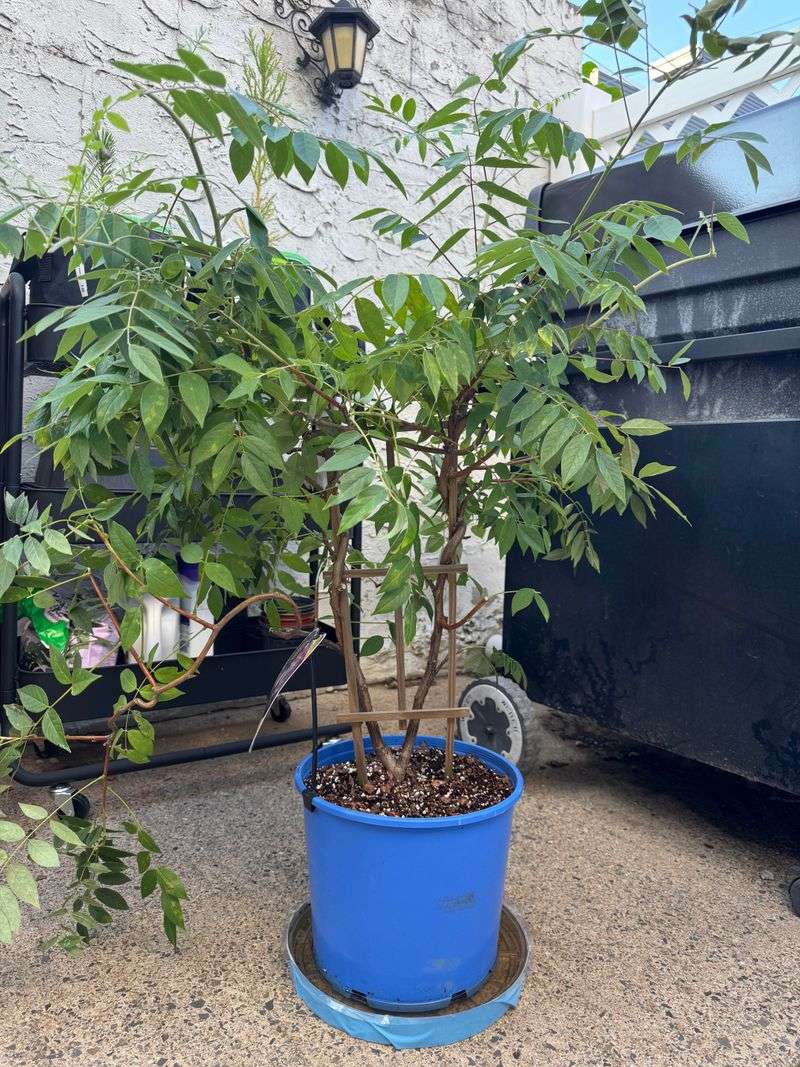
Flower spurs are short, stubby growths that produce the gorgeous blooms wisteria is famous for. Identifying and preserving these spurs is one of the most important parts of January pruning.
If you cut them off by mistake, you’ll lose a lot of your spring flower display.
Spurs are typically only a few inches long and have fat, rounded buds clustered along their length. In Maryland’s winter chill, these buds are dormant but ready to burst into life when temperatures warm up.
They’re usually found on older wood rather than on the long, whippy shoots you trimmed earlier.
When you’re cutting back side shoots, make sure you’re leaving at least a few buds on each one. These buds will develop into spurs that produce flowers.
Cutting too close to the main vine removes the flowering potential and leaves you with a plant that’s all leaves and no blooms.
Take your time and examine each branch before you cut. It’s easy to get into a rhythm and accidentally remove spurs along with unwanted growth.
Slow down and be intentional about what you’re keeping and what you’re removing.
Maryland wisteria that’s been pruned with care in January will reward you with cascades of fragrant flowers in spring. The short spurs you leave behind are the key to that stunning display, so protect them as you work.
8. Step Back Often To Check Balance As You Prune
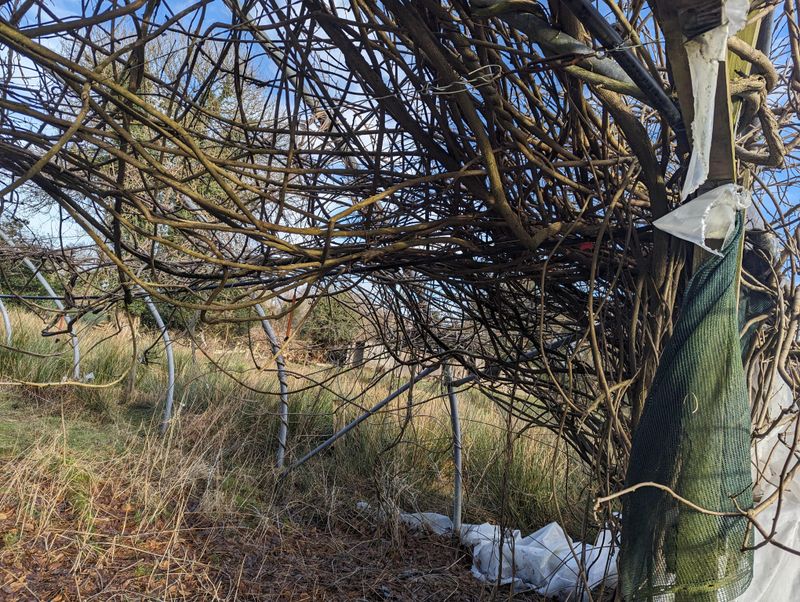
Pruning can be absorbing work, and it’s easy to get so focused on individual cuts that you lose sight of the big picture. Stepping back every few minutes helps you see whether the plant is staying balanced and symmetrical as you work.
In Maryland, many wisteria vines grow on arbors or pergolas where you can walk underneath and view them from multiple angles. Take advantage of this and check your progress from the front, sides, and back.
Uneven pruning is much easier to fix as you go than after you’re finished.
Look for gaps or areas where the plant seems too thin. You might need to leave a few extra shoots in those spots to fill them in.
On the other hand, if one section looks too crowded, you can remove a bit more growth to open it up.
Balance doesn’t always mean perfect symmetry. Sometimes a slightly asymmetrical shape looks more natural and appealing.
Trust your eye and adjust as needed. The goal is a plant that looks healthy, full, and attractive from every direction.
Stepping back also gives your hands and arms a rest. Pruning can be physically tiring, especially if you’re working on a large, mature wisteria.
Taking breaks keeps you sharp and helps you make better decisions about what to cut next.
9. Finish With A Clean Outline That Won’t Explode In Spring
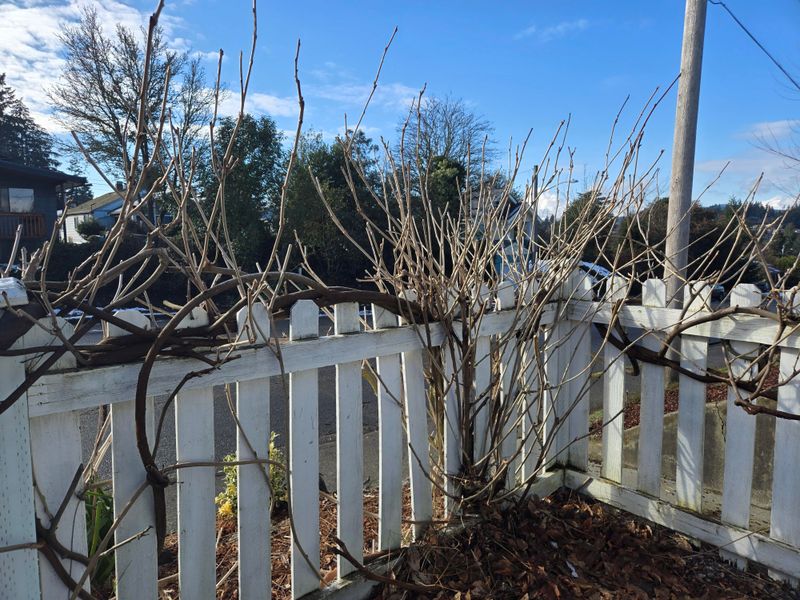
Your final pass should focus on creating a neat, tidy outline that won’t turn into a tangled jungle when new growth starts. Wisteria grows vigorously in spring, so if you leave too much wood behind, it can quickly become overwhelming.
Walk around your wisteria one last time and look for any stray shoots you might have missed. Trim them back so the plant has a clean, defined edge.
In Maryland, this attention to detail makes the difference between a well-groomed garden feature and a chaotic mess.
Check the top of the plant as well as the sides. Wisteria often sends up vertical shoots that can block views or grow into roof eaves.
Cutting these back now prevents problems later. You want a shape that’s easy to maintain and looks intentional.
A clean outline also makes it easier to spot pests or disease when the growing season begins. You’ll be able to see new growth clearly and catch any issues before they become serious.
Maryland’s warm, humid springs can encourage all sorts of garden problems, so visibility is important.
Once you’re satisfied with the outline, gather up all the clippings and dispose of them properly. Leaving them around the base of the plant can attract pests or create a breeding ground for fungi.
A tidy finish to your pruning session sets your wisteria up for a spectacular spring show.