10 Michigan Perennials You Should Avoid Pruning Before Bloom
Is your Michigan garden currently a victim of “premature pruning”?
As soon as the snow retreats and that first tease of spring warmth hits, it is incredibly tempting to grab your shears and tidy up every brown stem in sight.
But hold that thought – that “messy” garden is actually holding your next big display of flowers hostage. Many of our most beloved perennials, from delicate bleeding hearts to classic peonies, set their buds on last year’s growth.
If you prune too early, you aren’t just cleaning up; you’re accidentally snipping off your best blooms before they even have a chance to shine.
Ready to stop the frustration of a patchy, flowerless spring?
Let’s look at which plants actually need your patience and how smart, seasonal timing will transform your landscape into a thriving, colorful sanctuary.
1. Peonies Hold Their Buds On Last Year’s Stems
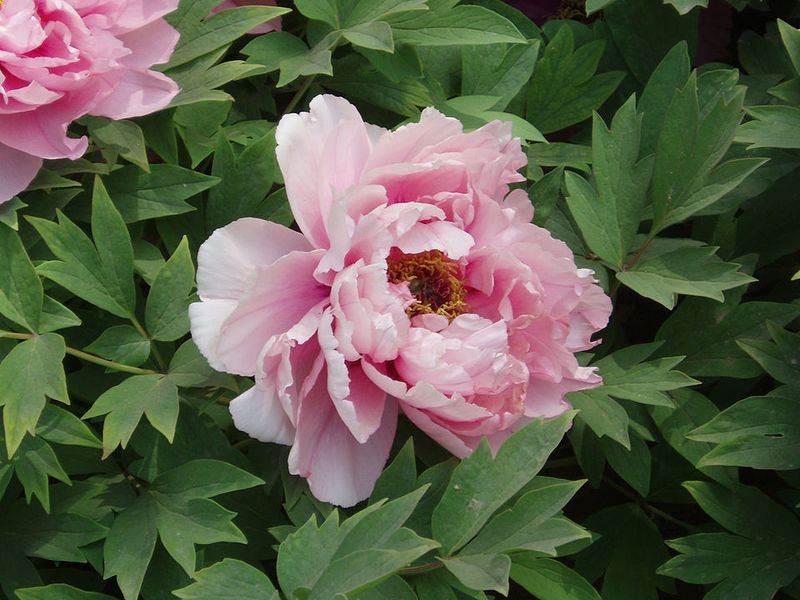
Few perennials in a Michigan garden inspire as much anticipation as peonies, with their oversized blooms and sweet fragrance arriving just as summer gets started.
What many gardeners overlook is that peonies develop their flower buds on growth from the previous season.
Cutting back those stems in early spring, before the buds have had a chance to open, essentially removes the blooms you have been waiting months to enjoy.
Peonies prefer full sun and well-drained soil, and Michigan’s clay-heavy soils can sometimes hold too much moisture around the roots. Adding compost or working in some organic matter improves drainage and encourages stronger stems.
These plants are remarkably cold-hardy and actually need a period of cold to bloom well, which makes Michigan’s winters a natural advantage rather than a challenge.
The right time to cut back peony foliage is in late fall, after the leaves have yellowed and the plant has gone fully dormant. During the growing season, deadhead spent blooms to keep energy focused on root development.
Avoid piling mulch directly over the crown, since peonies need their buds close to the soil surface to bloom properly. Patience with pruning is truly the key to a spectacular peony display each June.
2. Bleeding Heart Blooms From Previous Season Growth
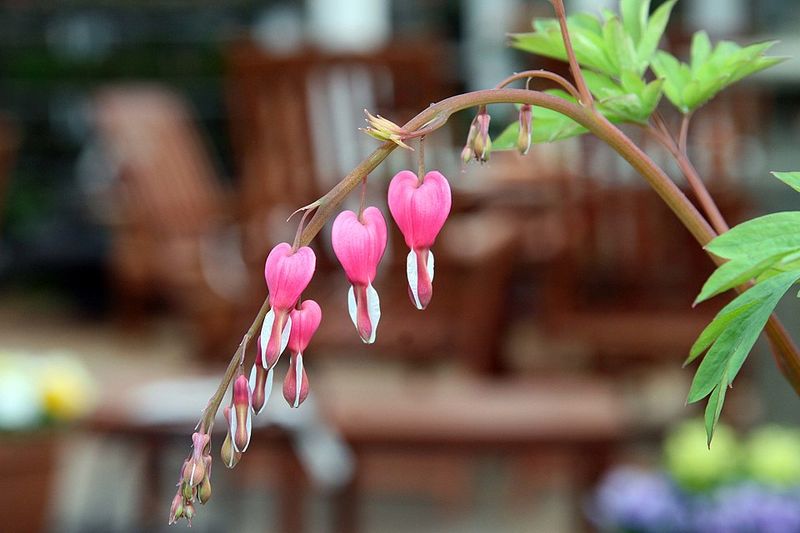
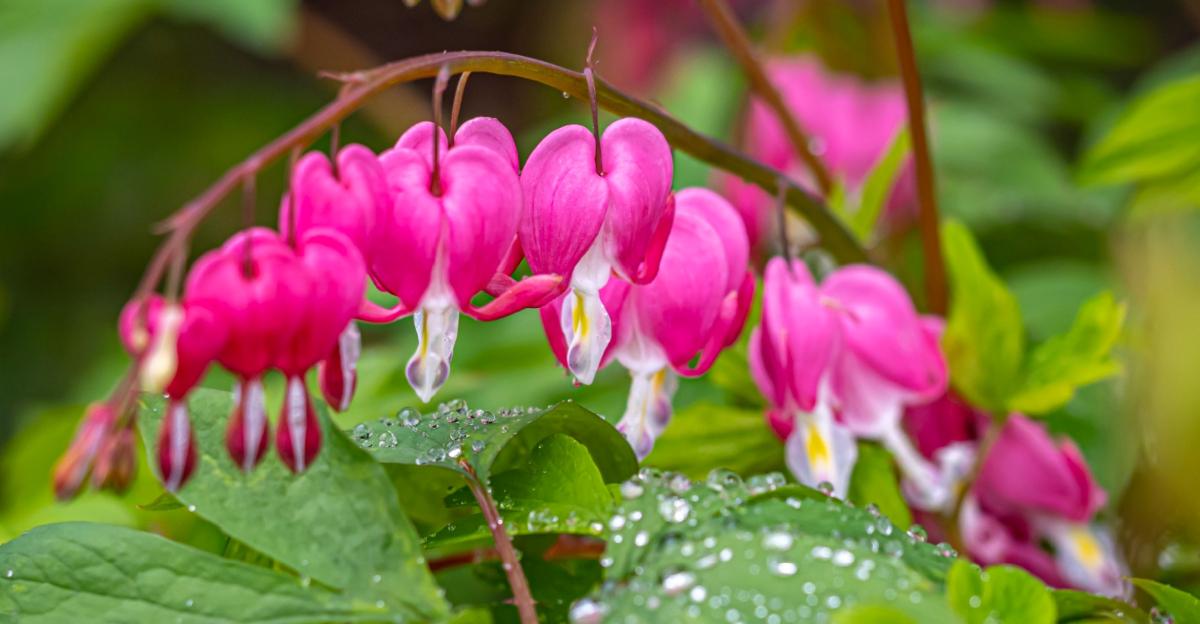
There is something almost storybook about a bleeding heart in full bloom, its arching wands of heart-shaped flowers swaying gently in a shaded Michigan garden.
This beloved perennial forms its flower buds on stems that developed during the previous growing season.
Pruning those stems back before the flowers open means losing the entire spring display, which can be a real disappointment after a long Michigan winter.
Bleeding heart thrives in partial to full shade, making it an excellent choice for spots under deciduous trees or along north-facing fences.
It prefers consistently moist, humus-rich soil and tends to struggle in dry conditions.
In Michigan, it typically blooms from late April through May, depending on location and the severity of the winter.
Once the foliage begins to fade and yellow naturally in early summer, that is the signal to trim it back. Hostas or ferns planted nearby can fill the gap left when bleeding heart goes dormant.
Avoid cutting back the stems while flowers are still present, even if the foliage looks a little tired.
Supporting the plant with a light layer of compost in fall helps it return reliably year after year with strong, bloom-ready stems ready for spring.
3. Astilbe Keeps Flower Spikes On Old Stems
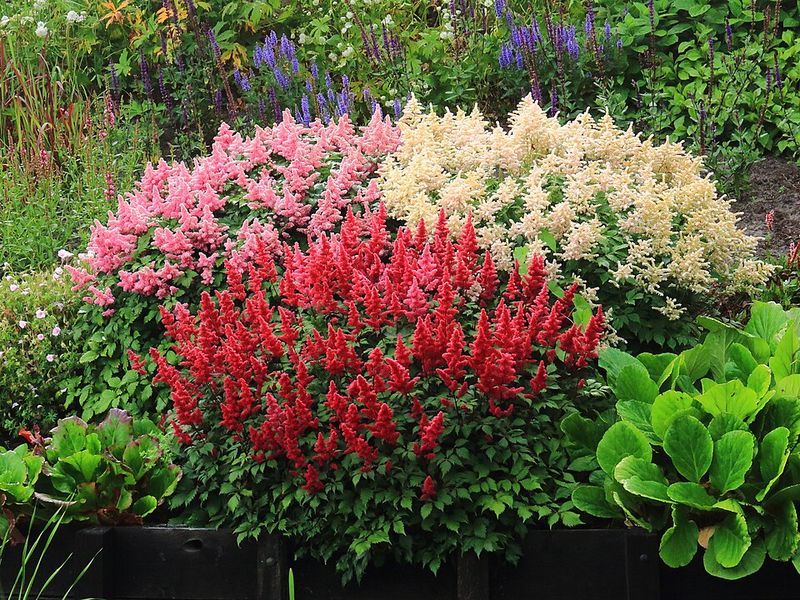
Walk through any well-designed Michigan shade garden in midsummer and there is a good chance you will spot the feathery plumes of astilbe rising above the foliage.
What makes this plant a bit tricky is that it builds its flower spikes on stems from the previous season.
Cutting those stems down too early in spring can leave you with a lush mound of leaves but no blooms to enjoy when July rolls around.
Astilbe does best in partial shade with consistently moist, organically rich soil. Michigan’s humid summers can actually work in its favor, as long as the soil does not dry out between waterings.
Raised beds or areas near rain gardens tend to suit it well, and adding mulch around the base helps retain moisture during drier spells.
The old flower spikes, even after they fade to a rusty brown in late summer, can be left standing through fall and winter. They add visual interest to the garden and protect the crown from frost heaving in Michigan’s freeze-thaw cycles.
Trim them back in early spring only after you can clearly see new growth emerging from the base. That small act of patience protects the blooms you are counting on for summer color.
4. Coral Bells Carry Buds From Last Year
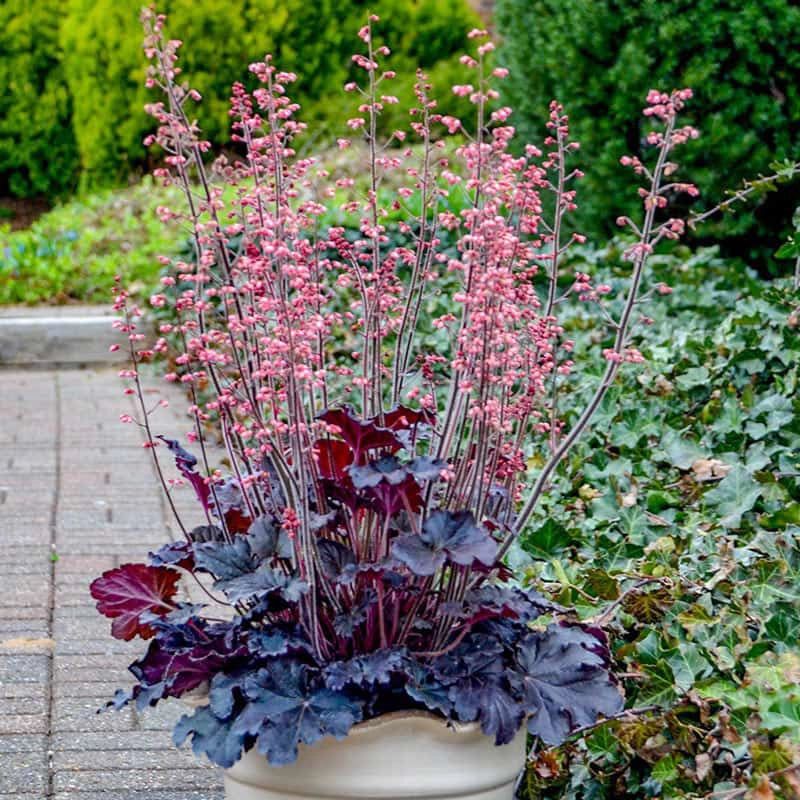
Coral bells are often grown for their stunning foliage, but the tall, airy flower stems they send up each season deserve just as much attention.
These stems develop from growth that began the previous year, meaning an overly enthusiastic pruning session in early spring can remove the buds before they ever get a chance to open.
In Michigan, where spring arrives unevenly, it is easy to mistake dormant coral bell growth for dead material that needs clearing away.
This perennial handles both sun and partial shade, though Michigan gardeners often find it performs best with morning sun and afternoon shade.
It prefers well-drained soil with moderate moisture and benefits from a light top-dressing of compost each spring.
Avoid heavy clay without amendment, as soggy roots can weaken the plant over a Michigan winter.
Rather than cutting back the entire plant in early spring, wait until you see new leaves emerging clearly from the crown. At that point, you can remove any truly damaged or dead outer leaves without disturbing the developing flower stems.
Leaving a bit of the previous season’s foliage intact through winter also helps insulate the crown against Michigan’s coldest temperatures.
Coral bells reward a hands-off approach with both colorful leaves and delicate blooms throughout late spring.
5. Daylilies Form Flowers On Established Leaves
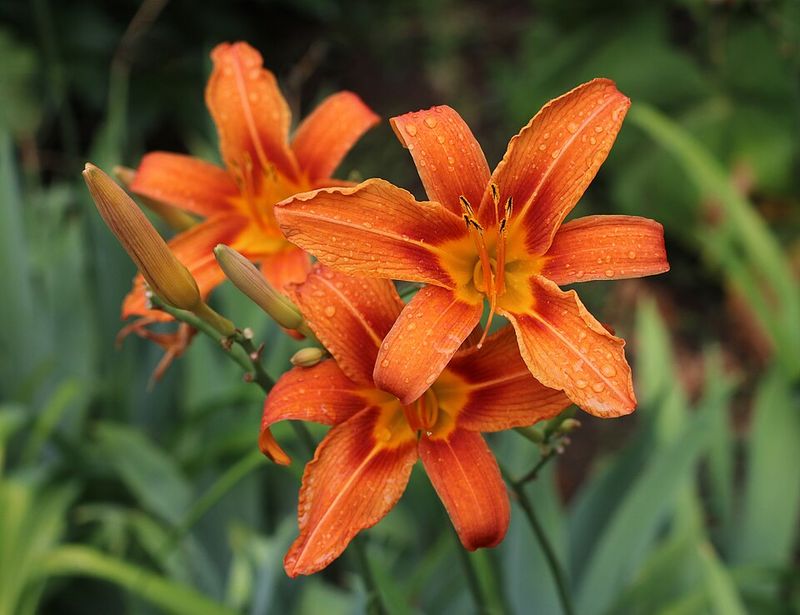
Daylilies are one of the most forgiving perennials a Michigan gardener can grow, but there is one timing mistake that can significantly reduce their bloom count: pruning the foliage too early in spring.
The flower scapes, those tall stems that carry each bloom, form from the base of established leaf fans that developed the season before.
Cutting back the foliage before the plant has fully emerged and set those scapes can interrupt the blooming process entirely.
These plants love full sun and adapt to a wide range of Michigan soils, though they do best with good drainage and moderate moisture.
Clumps that have been in the ground for three or more years often bloom most heavily, making division every few years a good practice for keeping plants vigorous.
Divide in early fall or early spring before significant new growth appears.
In spring, resist the urge to cut away the old, dried foliage until you can see fresh green growth emerging from the crown.
At that point, trimming the brown tips back is fine and helps the garden look tidy.
Avoid cutting all the way to the ground until after the blooming season ends in late summer. Daylilies are tough, but respecting their growth cycle means more blooms per stem across the entire season.
6. Hostas Store Energy For Spring Flowers
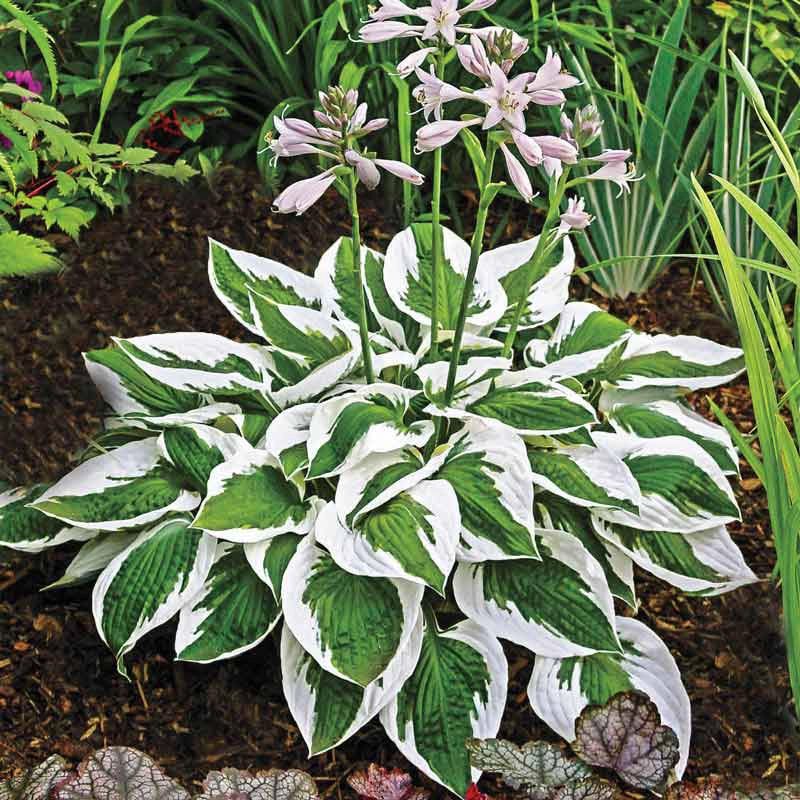
Most people plant hostas for the bold, textured leaves rather than the flowers, but these shade-loving perennials do produce tall, slender bloom stalks topped with lavender or white flowers each summer.
Those flower stalks develop from energy stored in the crown and roots over the previous season.
Pruning too aggressively in early spring, before the plant has fully pushed its new growth, can remove or damage the emerging bloom stalks before they reach their full height.
Hostas thrive in partial to full shade, which makes them ideal for spots under mature trees common in many Michigan landscapes.
They prefer consistently moist, well-amended soil and benefit from a thick layer of mulch to retain moisture during warm stretches.
Michigan’s humid summers tend to suit them well, though slugs can be a persistent problem in wet years.
In late fall, after the first hard frost has knocked the foliage down, that is the ideal time to remove the dead leaves and tidy the crown. Come spring, wait for the tightly rolled shoots to fully emerge before doing any cleanup.
Those emerging spikes contain both the new season’s leaves and the flower stalks, so disturbing them early risks snapping off the blooms before they open. Hostas respond beautifully to patience and consistent moisture.
7. Lupines Grow Bloom Spikes From Old Growth
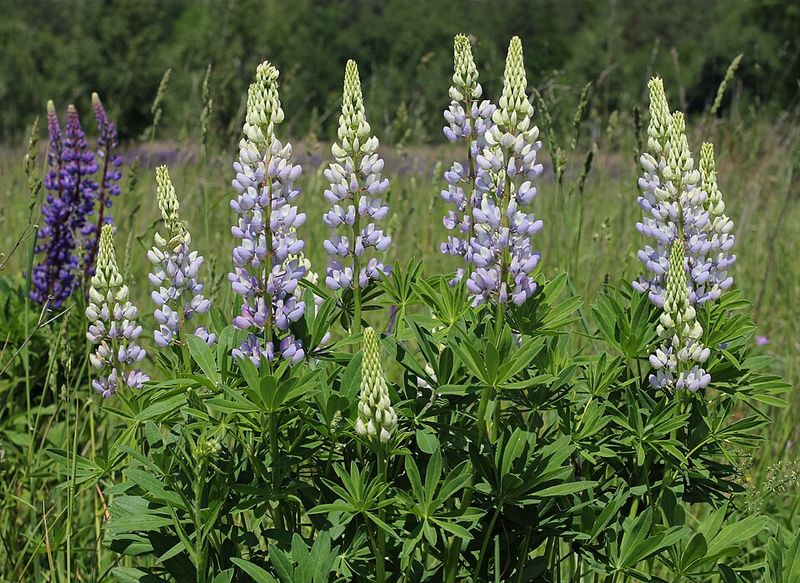
A row of lupines in full bloom is one of the most eye-catching sights a Michigan garden can offer in late spring. Those tall, colorful spikes develop from the basal rosette of foliage that overwintered from the previous season.
Cutting that rosette back before the bloom spikes emerge means you are removing the exact structure the plant needs to push those flowers skyward.
Lupines prefer full sun to light shade and do best in slightly acidic, well-drained soil. Michigan’s sandy soils in the northern Lower Peninsula can actually be ideal, while heavier clay soils in other parts of the state may need amendment for good drainage.
These plants also fix nitrogen, making them a genuinely helpful addition to garden beds with nutrient-poor soil.
Cool spring temperatures in Michigan actually encourage lupine blooming, and a late frost is less damaging to established plants than an ill-timed pruning session.
After blooms fade, deadheading the spent spikes can encourage a second flush of flowers later in summer.
Allow some seed heads to mature if you want natural reseeding, as lupines can be short-lived perennials that benefit from self-renewal. Leave the overwintered rosette untouched until you can clearly see the bloom spike beginning to emerge from its center.
8. Siberian Iris Sets Buds On Last Year’s Rhizomes
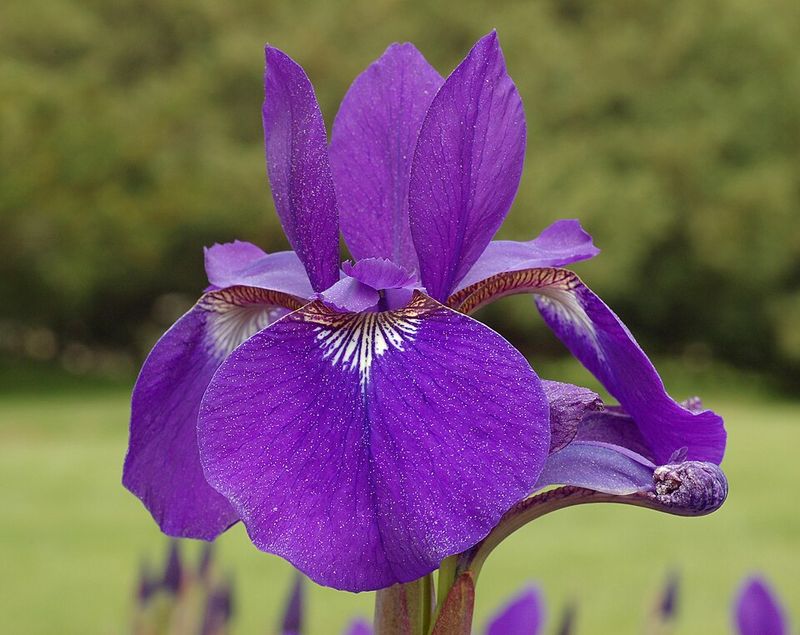
Siberian iris brings a refined, almost architectural beauty to Michigan gardens, with its slender upright leaves and elegant blooms appearing in late spring.
Unlike bearded iris, Siberian iris forms its flower buds directly from the rhizomes and foliage crowns that developed during the previous growing season.
Trimming those leaves back before bloom time removes the very tissue the plant relies on to push up its flowers.
This iris variety does well in full sun to partial shade and tolerates a range of soil types, including the wetter conditions found near Michigan rain gardens or pond edges.
It is more cold-hardy than many iris types, handling Michigan’s winters without significant protection once established.
Consistent moisture during the growing season promotes the strongest bloom display.
After flowering wraps up in early summer, the foliage can be left to grow through the rest of the season, as it continues to feed the rhizomes for next year’s blooms.
In fall, cutting the leaves back to about four to six inches helps prevent disease and keeps the garden tidy over winter.
Dividing overcrowded clumps every four to five years refreshes bloom production significantly. Just make sure any division work happens in early fall rather than spring, when buds are already forming on the rhizomes below the soil surface.
9. Columbine Blooms From Overwintered Stems
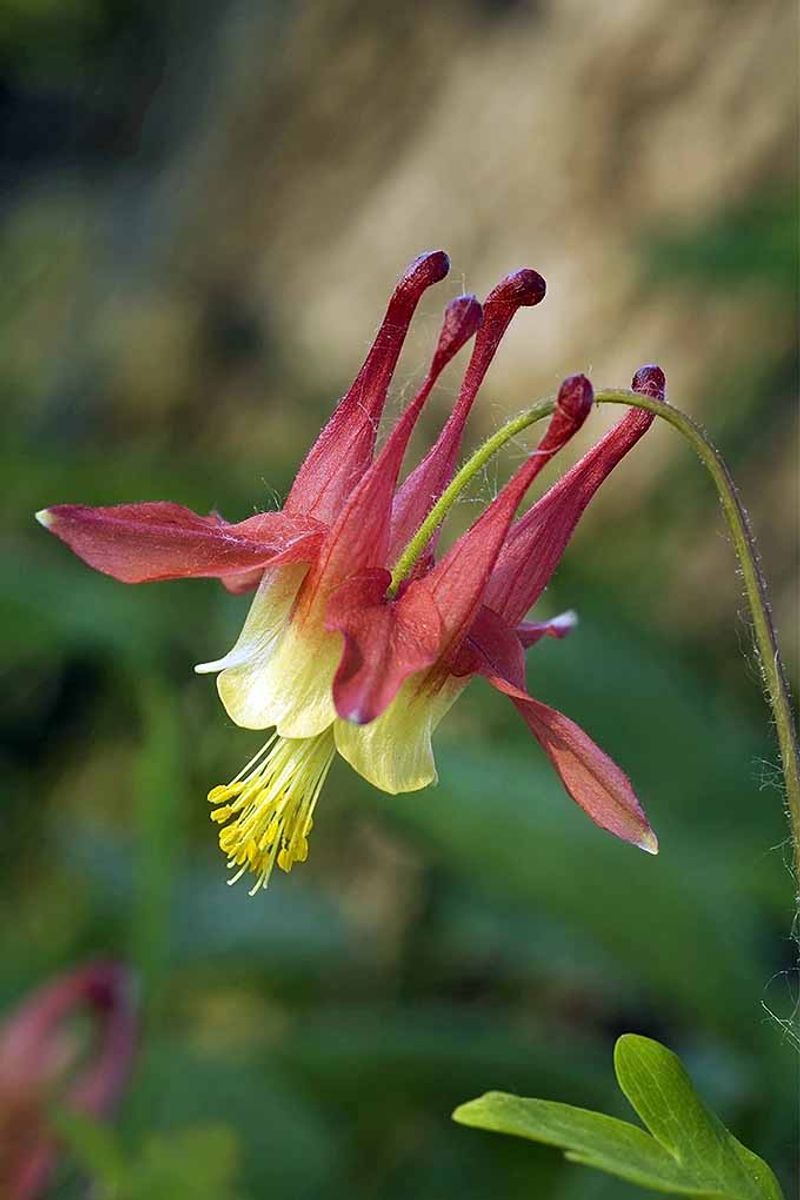
Columbine has a whimsical, cottage-garden quality that suits Michigan’s woodland edges and shaded borders beautifully.
The flower stems that carry those distinctive spurred blooms grow directly from the basal foliage that overwintered from the previous season.
Pruning that foliage in early spring, thinking it looks messy or frost-damaged, often removes the developing bloom stems before they have a chance to show themselves.
This perennial prefers partial shade but can handle more sun if the soil stays reasonably moist. It adapts well to Michigan’s varied soils and tends to naturalize over time, self-seeding freely in spots it finds comfortable.
In woodland-style gardens, this spreading habit adds a relaxed, natural feel without much effort from the gardener.
Columbine blooms from late April through June in most parts of Michigan, depending on elevation and local microclimates. After flowering, the foliage sometimes develops powdery mildew as summer heat builds.
Rather than cutting it back immediately, wait until the seeds have fully ripened if you want the plant to self-sow. Then trim the foliage back to the basal rosette and allow fresh growth to emerge.
Come the following spring, resist any early cleanup until you can see the new flower stems clearly rising from the center of the plant.
10. Hellebores Protect Early Flowers With Old Foliage
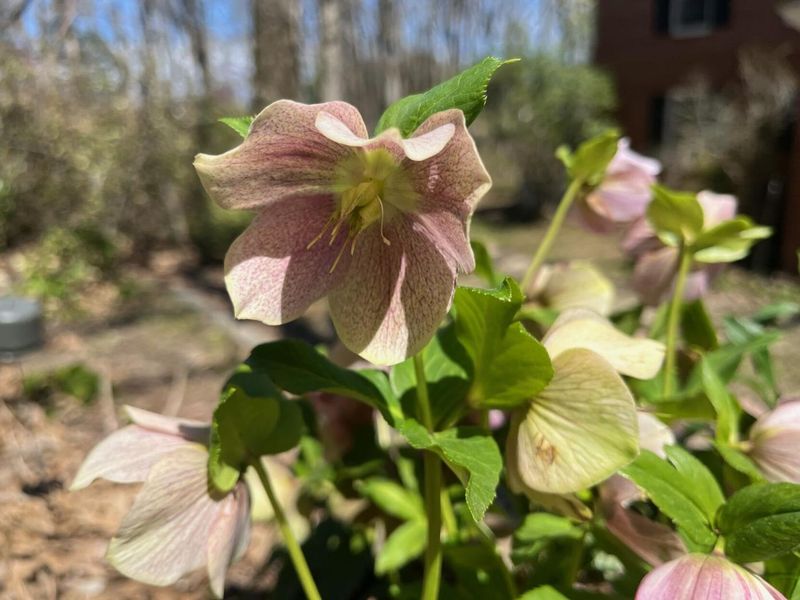
Hellebores earn their nickname as the Christmas or Lenten rose by blooming earlier than almost any other perennial in a Michigan garden, sometimes pushing flowers up while snow is still on the ground.
The old, leathery foliage from the previous season plays a direct role in protecting those early blooms from frost and helping the plant conserve energy as flowers develop.
Removing that foliage too early exposes the tender bloom stems to Michigan’s late winter cold and can result in frost-burned flowers.
These plants thrive in partial to full shade with rich, well-drained soil and steady moisture. They are slow to establish but remarkably long-lived once settled in, often outlasting many other perennials in the same bed.
A sheltered spot near a building or under evergreens helps moderate the harsh temperature swings Michigan experiences in late winter and early spring.
The best time to remove the old foliage is just as the new flower buds become clearly visible, typically in late February or early March in southern Michigan and a few weeks later farther north.
At that point, cutting the old leaves back at the base gives the blooms room to open fully and improves air circulation around the plant.
Hellebores rarely need dividing and reward minimal interference with reliable, early-season color year after year.