Michigan Tomatoes Grow Bigger And Taste Better When Gardeners Fertilize This Way
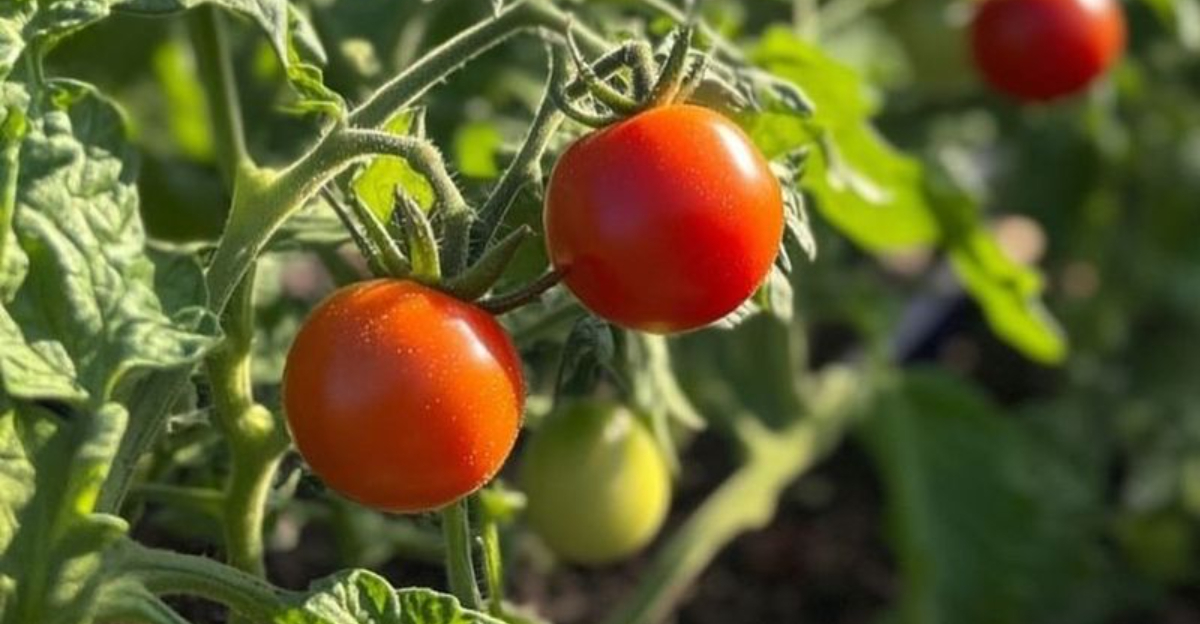
Early summer in Michigan brings a familiar sight. Tomato plants stretching fast, leaves getting thicker, and gardeners wondering how to push growth without hurting flavor.
This is where fertilizer choices quietly make a huge difference. Many people feed tomatoes on a schedule and hope for the best, but that approach often leads to lots of green growth and disappointing taste.
Michigan’s cool starts, heavy rains, and sudden heat swings change how nutrients move through the soil, which means timing and method matter more than most realize.
When you adjust how you fertilize, plants respond with stronger stems, steadier growth, and fruit that actually tastes like summer.
It also helps avoid wasted money and unnecessary products. If you want bigger harvests and better flavor from the same garden space, this is one habit worth rethinking right now.
Start With A Soil Test
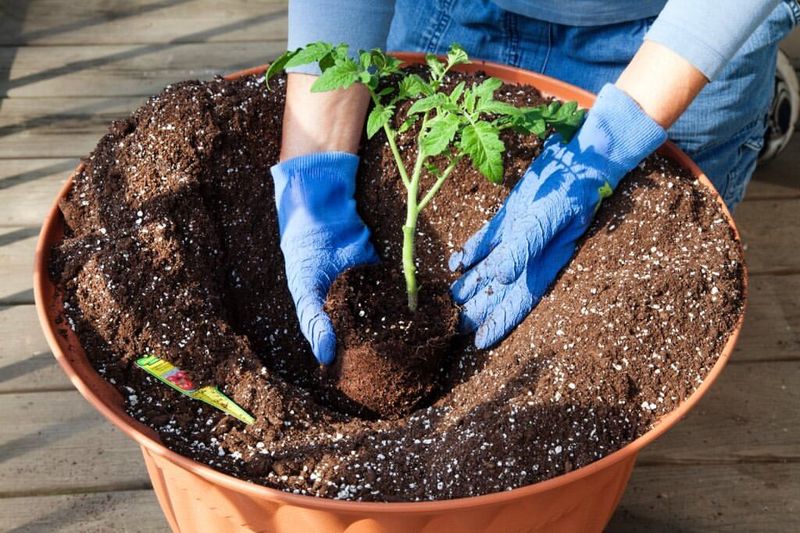
Before you even think about dropping a single tomato seedling into the ground, getting your soil tested is absolutely essential. Michigan soils can vary dramatically from one yard to the next, with some areas having sandy textures while others contain heavy clay.
A professional soil test reveals exactly what nutrients are present and which ones are lacking, taking all the guesswork out of your fertilization strategy.
Tomatoes thrive best when the soil pH falls between 6.0 and 6.8, which is slightly acidic. If your test results show a pH that is too high or too low, you can make adjustments using lime to raise it or sulfur to lower it.
This simple step ensures that nutrients become available to your plants rather than remaining locked in the soil.
Most county extension offices offer affordable soil testing services, and the results typically arrive within a week or two. The report will include specific recommendations for amendments based on what you plan to grow.
Armed with this information, you can create a customized fertilization plan that addresses your garden’s unique needs, leading to tomatoes that are both bigger and bursting with flavor.
Side-Dress With Nitrogen During Growth
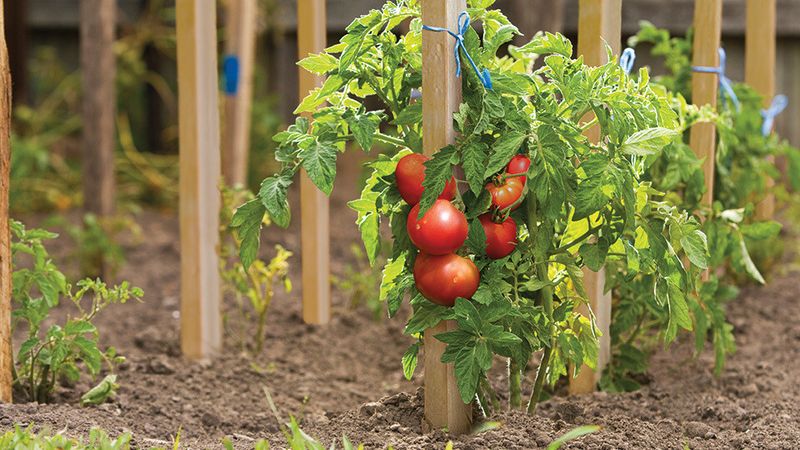
Once your tomato plants have settled in and flowers begin to appear, they need an extra boost of nitrogen to support continued growth and fruit production.
Side-dressing involves applying fertilizer in a band alongside the plant rows rather than directly at the base of each stem.
This technique delivers nutrients right where the feeding roots are actively growing, about six to eight inches away from the main stem.
Ammonium sulfate and well-composted manure both work wonderfully for this purpose. Apply the nitrogen source carefully, using about two tablespoons per plant if you are using a granular fertilizer.
Lightly scratch it into the soil surface and water thoroughly to help it dissolve and move into the root zone.
Timing matters significantly with side-dressing applications. The ideal moment is when the first flowers open and again about three weeks later when fruits are beginning to swell.
Too much nitrogen late in the season can encourage excessive foliage at the expense of fruit development, so resist the urge to over-fertilize.
This strategic feeding approach keeps your Michigan tomatoes producing abundantly while maintaining that perfect balance between plant vigor and fruit quality that makes homegrown tomatoes so incredibly delicious.
Incorporate Organic Matter
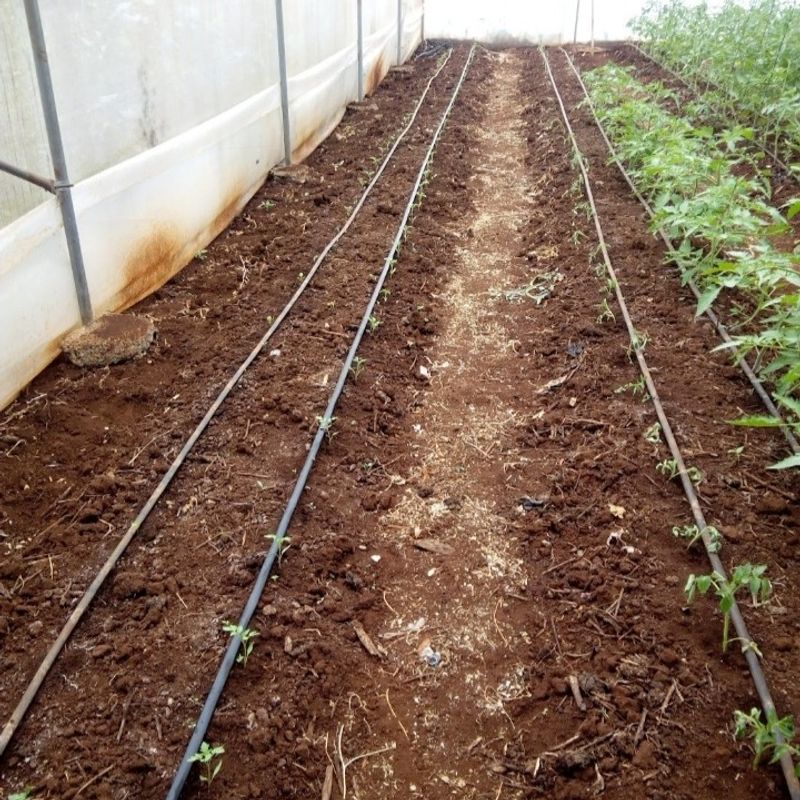
Adding compost or well-aged manure to your tomato beds does far more than just provide nutrients. These organic materials transform soil structure, creating spaces that hold both air and water in perfect balance.
In Michigan, where spring rains can be heavy and summer droughts occasionally strike, this improved soil texture helps tomatoes weather whatever conditions come their way.
Compost releases nutrients slowly throughout the growing season, acting like a time-release capsule that feeds plants steadily.
This gradual nutrient availability often results in tomatoes with more complex, robust flavors compared to those grown with synthetic fertilizers alone. The beneficial microorganisms in compost also help protect plants from soil-borne diseases.
Work two to three inches of compost or aged manure into the top foot of soil each spring before planting. If you are building new beds, you can mix in even more to create a nutrient-rich environment from the start.
Avoid using fresh manure, which can burn plant roots and introduce harmful bacteria. Well-aged organic matter smells earthy rather than pungent and crumbles easily in your hands, indicating that it has broken down sufficiently to benefit your tomatoes without causing any harm.
Use Balanced Pre-Plant Fertilizer
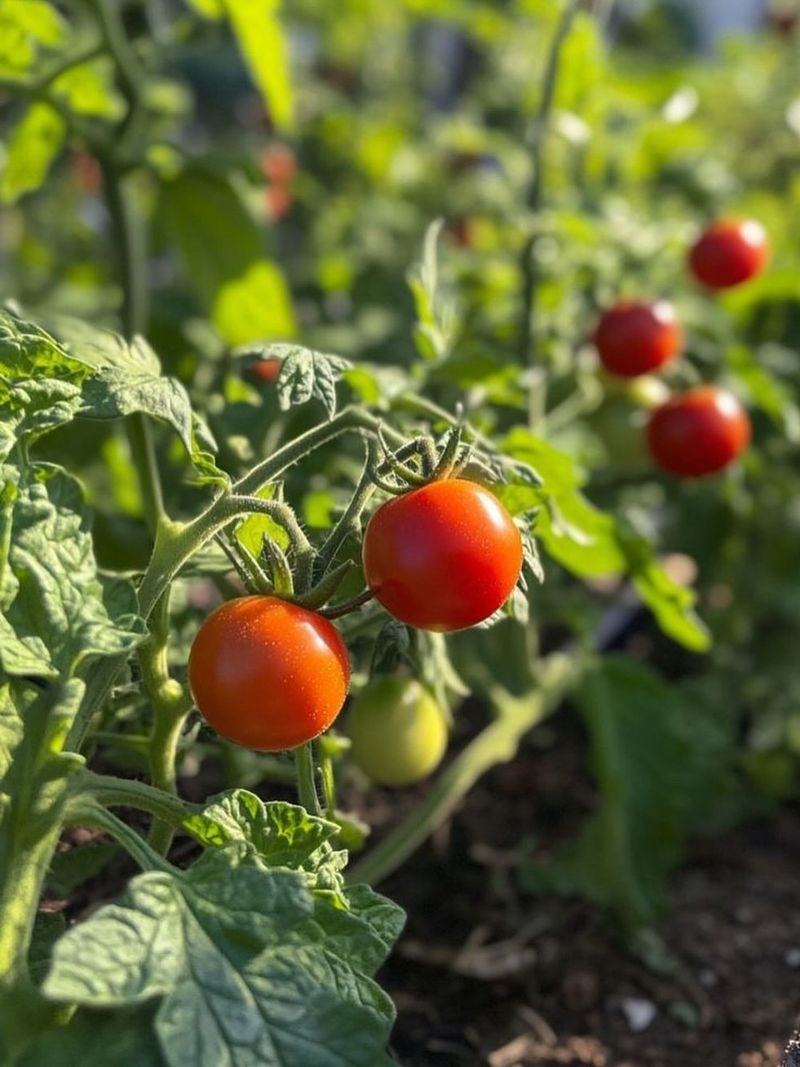
Getting your tomato plants off to a strong start requires incorporating a balanced fertilizer into the soil before planting day arrives.
A formula like 10-10-10 provides equal amounts of nitrogen, phosphorus, and potassium, which are the three primary nutrients every plant needs.
Nitrogen supports leafy growth, phosphorus encourages robust root development, and potassium helps with overall plant health and disease resistance.
Work the fertilizer into the top six to eight inches of soil about a week before transplanting your seedlings. This gives the nutrients time to integrate with the soil particles and become readily available when roots start exploring their new home.
Spread the fertilizer evenly across the planting area rather than concentrating it in one spot, which could cause root burn.
For Michigan gardeners, timing this application correctly means your tomatoes will establish quickly despite the relatively short growing season. Strong early growth translates to more flowers, which means more fruit later on.
The balanced approach ensures that no single nutrient dominates, creating the ideal foundation for plants that will eventually produce tomatoes with exceptional size and taste throughout the summer months.
Use Liquid Fertilizer For Quick Nutrient Uptake
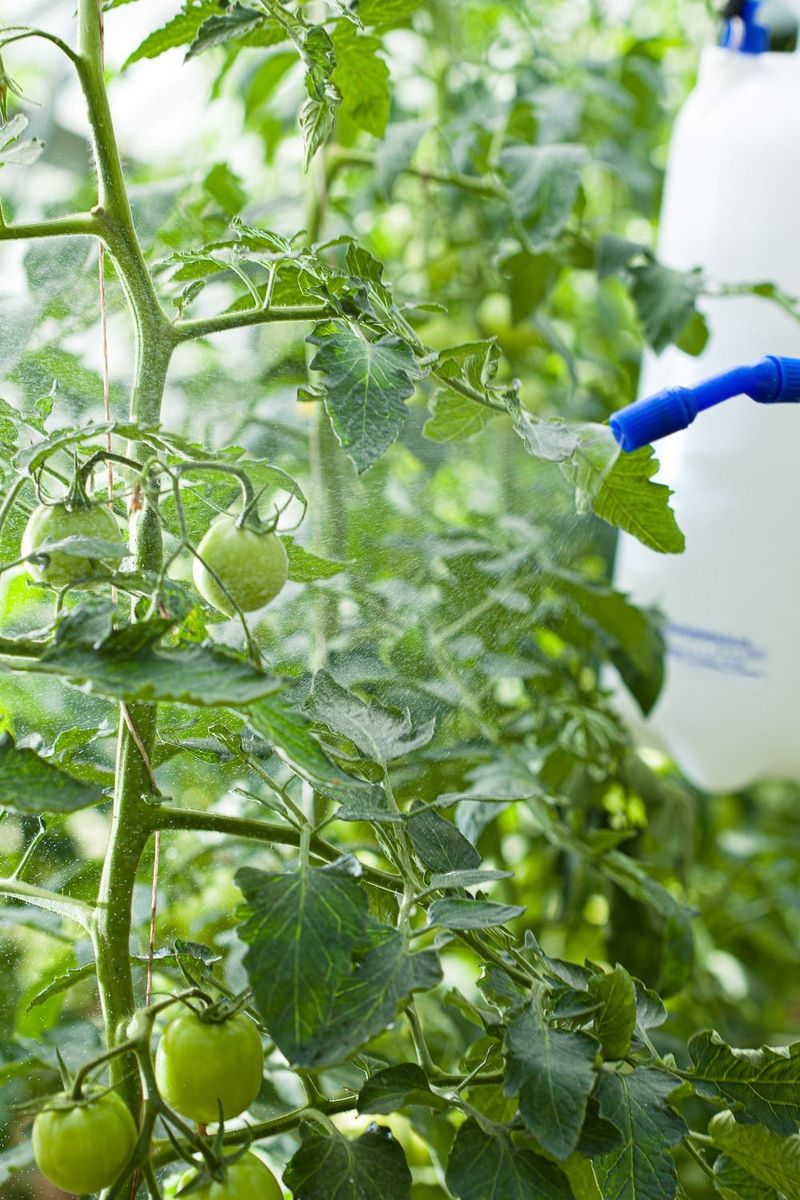
Sometimes your tomato plants need a rapid nutrient boost, and that is where liquid fertilizers truly shine.
Products like fish emulsion and seaweed extract provide nutrients in forms that plants can absorb almost immediately, either through their roots or directly through their leaves when applied as a foliar spray.
This quick action makes liquid fertilizers perfect for addressing deficiency symptoms as soon as they appear.
Calcium and magnesium are particularly important micronutrients that prevent blossom end rot, a common problem where the bottom of tomatoes develops dark, sunken spots.
Liquid fertilizers formulated with these minerals can help prevent this frustrating condition.
Mix the fertilizer according to package directions, typically diluting it significantly with water to avoid burning tender plant tissues.
Apply foliar sprays early in the morning or late in the evening when temperatures are cooler and leaves can absorb nutrients without the stress of intense sunlight.
For root application, water the diluted fertilizer around the base of plants every two to three weeks during active growth.
Michigan gardeners often notice that tomatoes respond within days to liquid fertilizer applications, with leaves becoming darker green and new growth appearing more vigorous and healthy.
Apply Fertilizer At The Base, Avoid Leaf Contact
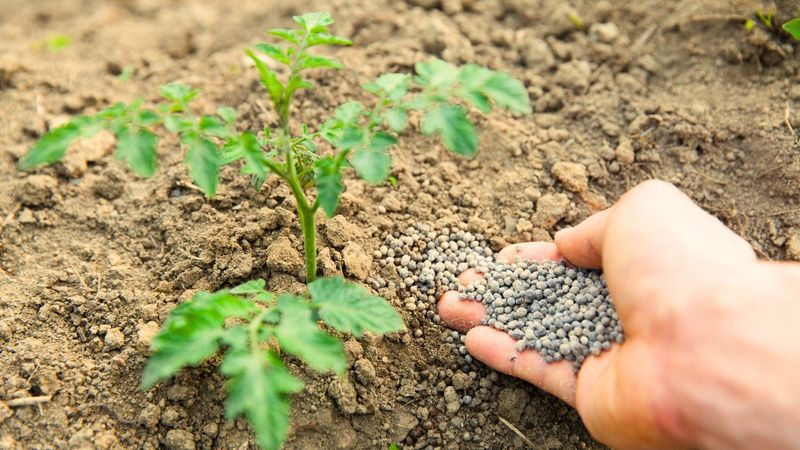
Proper fertilizer placement makes an enormous difference in how effectively your tomatoes can use the nutrients you provide.
Directing granular or liquid fertilizers to the soil around the root zone ensures that nutrients reach the area where roots are actively absorbing water and minerals.
This targeted approach maximizes efficiency while minimizing waste and potential plant damage.
When fertilizer lands on tomato leaves, especially during sunny weather, it can cause unsightly brown spots or even serious burns that compromise photosynthesis.
The salts in most fertilizers draw moisture out of leaf tissues when they make direct contact, creating damage that looks similar to disease symptoms. Keeping fertilizer off foliage prevents this problem entirely.
Create a shallow circular trench about six inches away from the stem of each plant and apply granular fertilizer into this depression. Cover it lightly with soil and water thoroughly to dissolve the nutrients and carry them into the root zone.
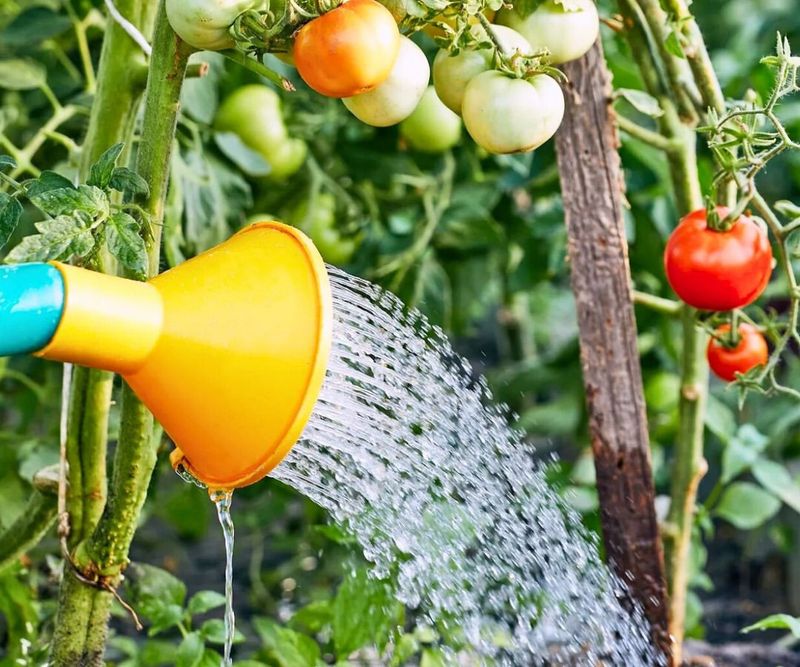
For liquid fertilizers, aim your watering can or hose-end sprayer at the soil surface rather than showering the entire plant.
This careful application method helps Michigan tomatoes access all the nutrition they need without suffering any setbacks from fertilizer burn, resulting in healthier plants that produce bigger, better-tasting fruit.
Adjust Fertilization Based On Growth Stage
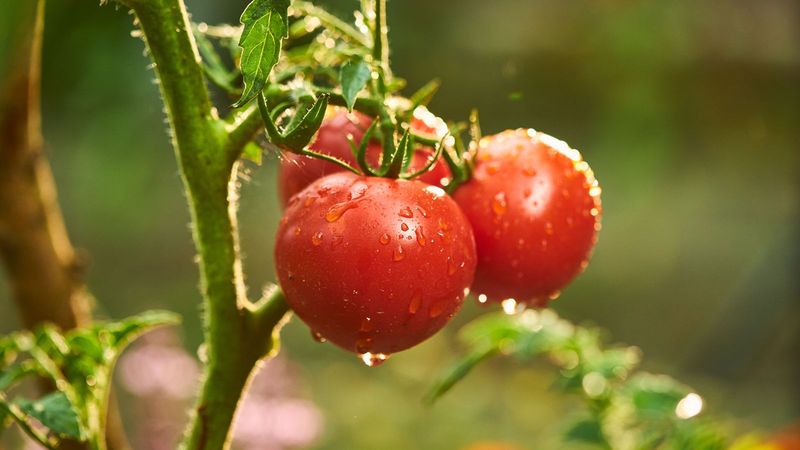
Tomato plants have changing nutritional needs as they progress from tiny seedlings to mature, fruit-bearing powerhouses.
Young plants require modest amounts of nitrogen to develop their initial leaves and stems without growing too quickly or becoming weak and leggy. During this early phase, too much nitrogen can actually delay flowering and reduce your eventual harvest.
As plants mature and begin setting flowers, their nutrient requirements shift dramatically. They need less nitrogen and more phosphorus and potassium to support flower development and fruit formation.
Phosphorus strengthens the reproductive structures, while potassium improves fruit quality, enhancing both flavor and texture.
Create a fertilization schedule that reflects these changing needs throughout Michigan’s growing season.
Start with a balanced or slightly nitrogen-heavy formula at planting, switch to a lower-nitrogen blend when flowers appear, and finish with a potassium-rich formula as fruits develop and ripen.
Many gardeners use formulas like 5-10-10 or 4-8-8 during the fruiting stage.
This strategic adjustment ensures that your plants always receive exactly what they need when they need it, resulting in tomatoes that grow impressively large while developing the sweet, complex flavors that make homegrown varieties so superior to anything you can buy at the store.
Maintain Consistent Moisture With Fertilization
Even the most perfectly fertilized tomato plants cannot reach their full potential without adequate water. Nutrients dissolve in soil moisture and travel to roots through water movement, making irrigation just as important as fertilization itself.
When soil dries out between waterings, nutrient uptake stops completely, no matter how rich the soil might be.
Inconsistent watering causes numerous problems beyond simple nutrient deficiency. Tomatoes that experience alternating wet and dry conditions often develop cracked skin as fruits expand rapidly when water becomes available again.
The flavor can also turn bitter or bland when plants experience drought stress during fruit development.
Michigan gardeners should aim for deep, thorough watering that moistens soil to a depth of six to eight inches rather than frequent shallow sprinkling. Water early in the day so foliage can dry before evening, reducing disease risk.
Mulching around plants with straw or shredded leaves helps maintain even soil moisture between waterings. During hot summer weeks, established plants typically need one to two inches of water weekly, either from rain or irrigation.
By coordinating your watering schedule with your fertilization program, you create optimal conditions for nutrient absorption, resulting in tomatoes that grow large and develop the rich, sweet-tart flavor that makes them the highlight of summer meals.