8 Milkweed Types Michigan Gardeners Can Grow To Support Monarch Butterflies
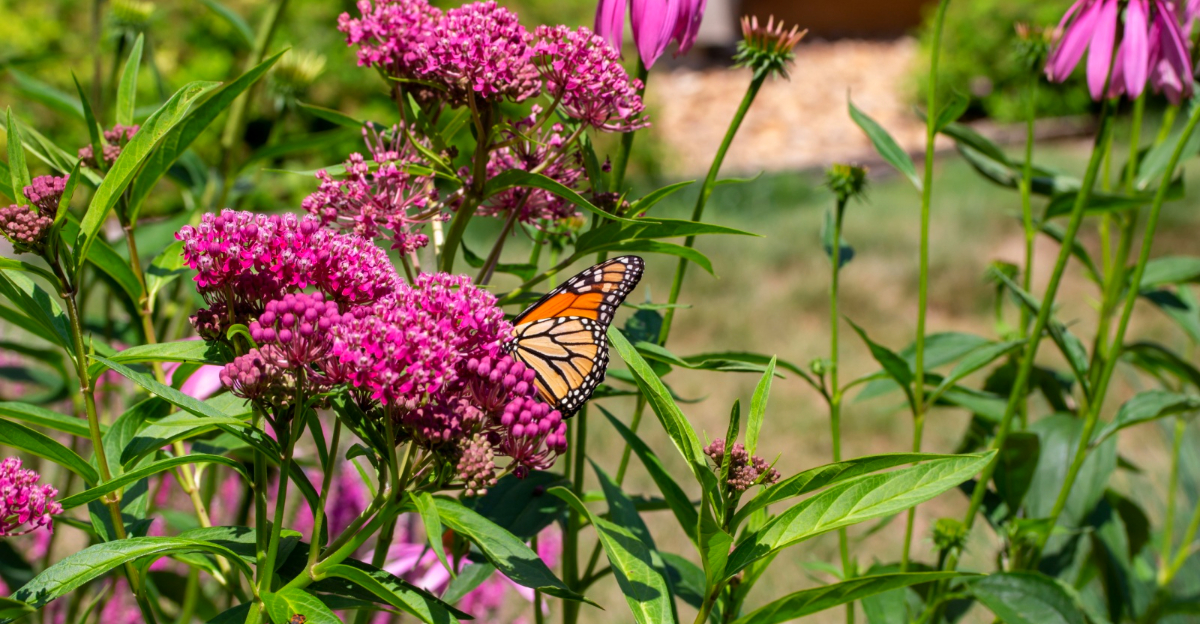
Michigan is a crucial stop for migrating monarch butterflies, and gardeners in the state have the power to make a real difference in their conservation.
Milkweed is the only plant monarch caterpillars can feed on, and it’s equally valuable for adult monarchs as a nectar source during their long migrations.
With Michigan’s varied landscape – ranging from moist lowlands to dry prairies – there are many different milkweed species that can thrive in your garden.
Whether you have a sunny spot, a shaded corner, or a wetland area, there’s a milkweed variety that will not only provide essential food for monarchs but also add beauty and interest to your garden throughout the seasons.
Here are eight milkweed types to consider for your Michigan garden to help support monarch butterflies.
1. Common Milkweed Supports Monarchs Favorite Nectar Source
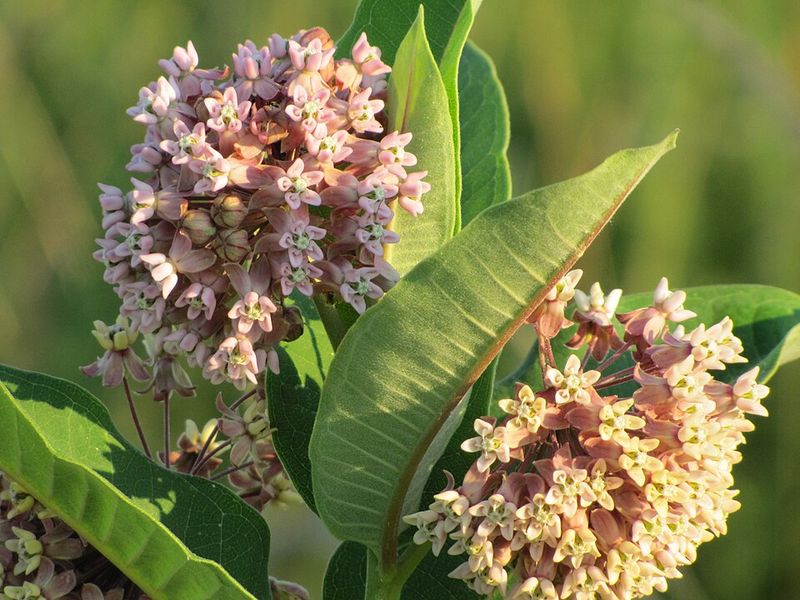
Few plants in the Michigan landscape carry as much wildlife value as Common Milkweed, a robust native perennial that has fed monarch caterpillars for centuries.
Known scientifically as Asclepias syriaca, this plant produces rounded clusters of sweetly fragrant pink to purple flowers from late June through August.
Those blooms attract not just monarchs but also bees, beetles, and a wide variety of native pollinators.
Common Milkweed grows best in full sun and tolerates a wide range of soils, including the clay-heavy soils found across much of Michigan.
It spreads by underground rhizomes, so give it room to naturalize, ideally in a meadow border or a low-maintenance pollinator patch.
Plants typically reach three to five feet tall at maturity, making them a bold visual statement in summer gardens.
One thing to keep in mind is that this species spreads eagerly, which can be managed with occasional edging. Despite its spreading habit, it stays well-behaved in open areas.
Michigan gardeners who have struggled to establish other natives often find Common Milkweed refreshingly easy to grow from transplants or seed, rewarding patience with lush foliage and blooms that monarchs simply cannot resist.
2. Swamp Milkweed Thrives In Wetland Gardens
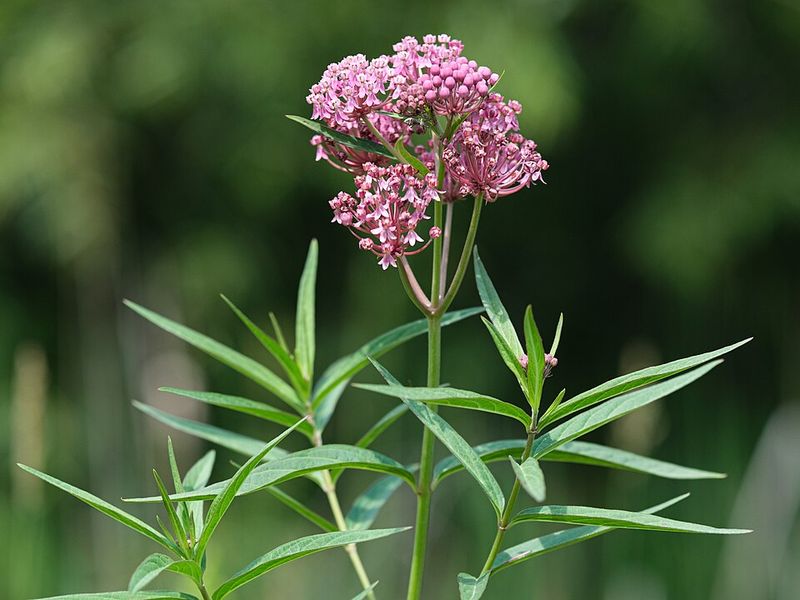
Standing at the edge of a rain garden or naturalized pond, Swamp Milkweed looks right at home in ways that few other plants can match.
Asclepias incarnata is a Michigan native built for moisture, thriving in consistently wet soils, rain gardens, stream banks, and low-lying areas where other plants might struggle.
Its rosy-pink flower clusters bloom from late June into August, offering a reliable nectar supply right when monarch migration ramps up.
Full sun brings out the best blooms, though Swamp Milkweed tolerates partial shade reasonably well. Plants grow three to four feet tall, forming upright clumps that look attractive even before flowering.
Unlike Common Milkweed, this species spreads much more slowly through clump expansion rather than aggressive rhizome spreading, making it a friendlier choice for smaller garden spaces.
Michigan summers can bring heavy rainfall and humidity, conditions that Swamp Milkweed handles with ease. It establishes well in clay soils as long as drainage is not excessive.
Monarch caterpillars feed on the foliage enthusiastically, and the flowers attract hummingbirds alongside butterflies.
For gardeners near wetlands or with naturally wet yards, this plant is a standout choice that combines beauty with genuine ecological purpose.
3. Butterfly Weed Bright Blooms For Monarchs And Bees
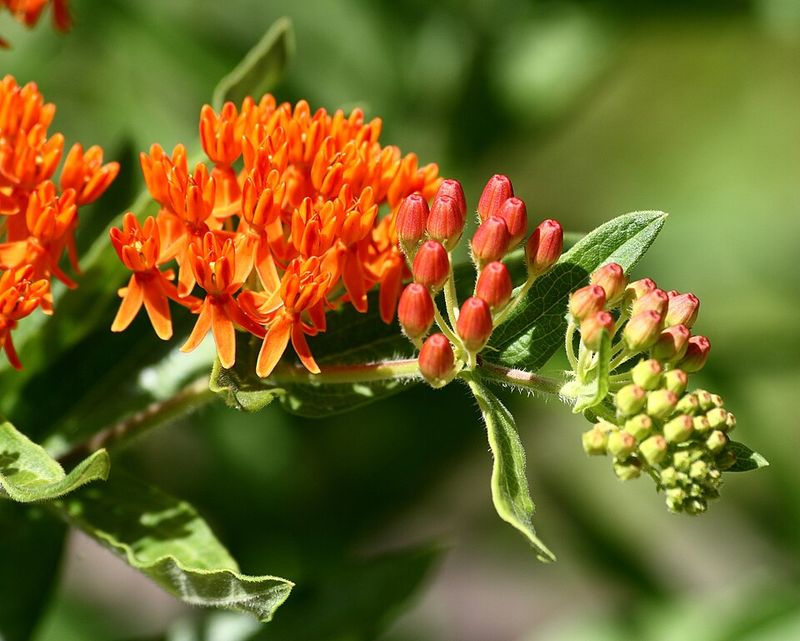
Blazing orange flower clusters make Butterfly Weed one of the most eye-catching native plants a Michigan gardener can grow.
Asclepias tuberosa earns its name honestly, drawing monarchs, swallowtails, skippers, and bumblebees in impressive numbers every summer.
Blooms appear from late June through August, and the plant often re-blooms lightly into early fall if spent flower heads are removed.
Unlike most milkweeds, Butterfly Weed prefers dry to medium, well-drained soils and actually struggles in wet or heavy clay conditions. Sandy loam or amended garden beds suit it perfectly.
Full sun is a must, and once established, the deep taproot makes this plant remarkably drought-tolerant, a real advantage during Michigan’s dry July and August stretches.
Mature plants reach one to two feet tall and wide, fitting neatly into mixed perennial borders.
One quirky fact worth knowing: Butterfly Weed is slow to emerge in spring, often appearing weeks after neighboring plants have leafed out. Marking its location with a small stake prevents accidental disturbance.
This species does not spread aggressively, making it a tidy, long-lived garden resident. Its seedpods split open in fall, releasing silky-tailed seeds that drift beautifully on the breeze across Michigan gardens.
4. Purple Milkweed Adds Color And Nectar To Gardens
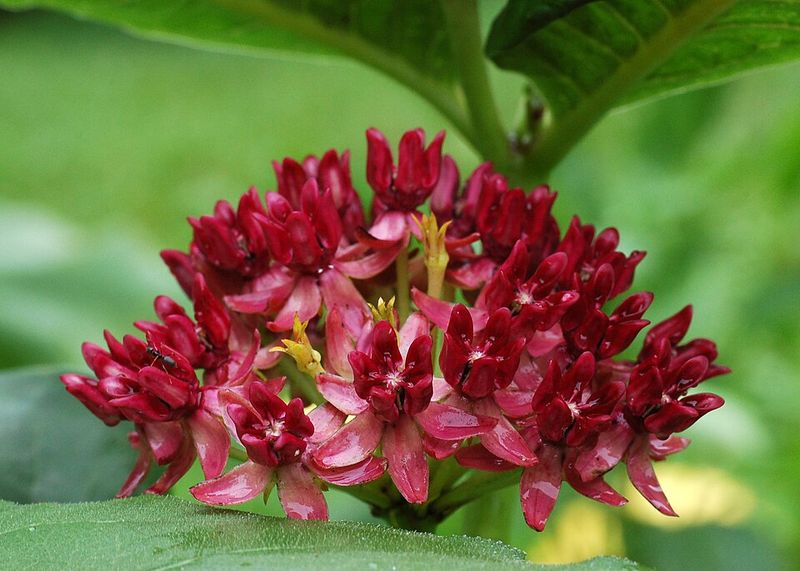
Rich magenta flower clusters set Purple Milkweed apart from its more common relatives, giving Michigan gardens a jewel-toned burst of color that is hard to overlook.
Asclepias purpurascens is a true Michigan native, historically found in open woodlands, meadow edges, and disturbed prairies across the lower peninsula.
Its flowers bloom from June through July, arriving a bit earlier than some other milkweed species and offering monarchs an important early-season nectar boost.
This species grows best in full sun to light partial shade and prefers well-drained, slightly dry to medium soils. It tolerates sandy soils well, making it a strong candidate for gardens in western Michigan where sandy ground is common.
Plants reach two to three feet tall and spread moderately through rhizomes, forming loose colonies over time without becoming invasive.
Purple Milkweed is considered somewhat less common in cultivation than Common or Swamp Milkweed, but specialty native plant nurseries in Michigan stock it regularly.
Monarch caterpillars feed on the foliage, and the blooms attract a wide range of native bees and beetles alongside adult butterflies.
Gardeners who want a milkweed that stands out visually while still providing top-tier wildlife value will find Purple Milkweed a rewarding and relatively low-maintenance choice.
5. Poke Milkweed Grows Well In Shady Spots
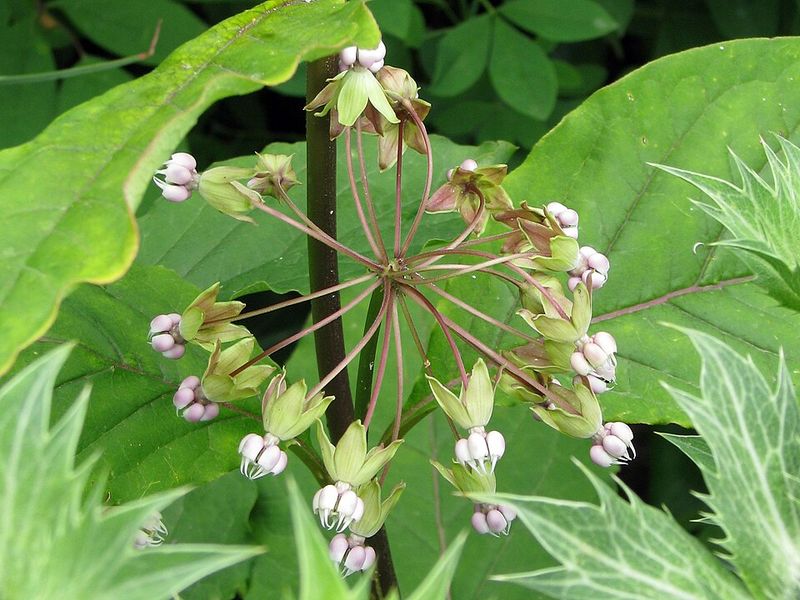
Most milkweeds demand full sun, which makes Poke Milkweed a genuinely exciting option for gardeners dealing with shaded yards or woodland borders.
Asclepias exaltata is one of the few milkweed species that performs well in partial to full shade, making it invaluable for Michigan gardeners whose properties include tree canopy or north-facing beds.
Its flowers hang in loose, drooping clusters of white to pale pink and bloom from June into July.
Poke Milkweed prefers moist, well-drained soils rich in organic matter, the kind of conditions typically found under deciduous trees. It grows quite tall, often reaching three to five feet, giving it a bold presence in shaded understory plantings.
Spread is modest, occurring slowly through rhizomes rather than aggressive colonization.
Monarch caterpillars absolutely use this species as a host plant, making it a critical resource in forested Michigan landscapes where other milkweeds cannot survive.
The flowers, though understated compared to flashier species, still attract native bees and other pollinators willing to venture into shadier spots.
For homeowners with mature oak or maple trees, Poke Milkweed fills a difficult niche beautifully, supporting monarchs in garden spaces that would otherwise offer no milkweed support at all.
6. Sullivant’s Milkweed A Midwest Native Monarch Favorite
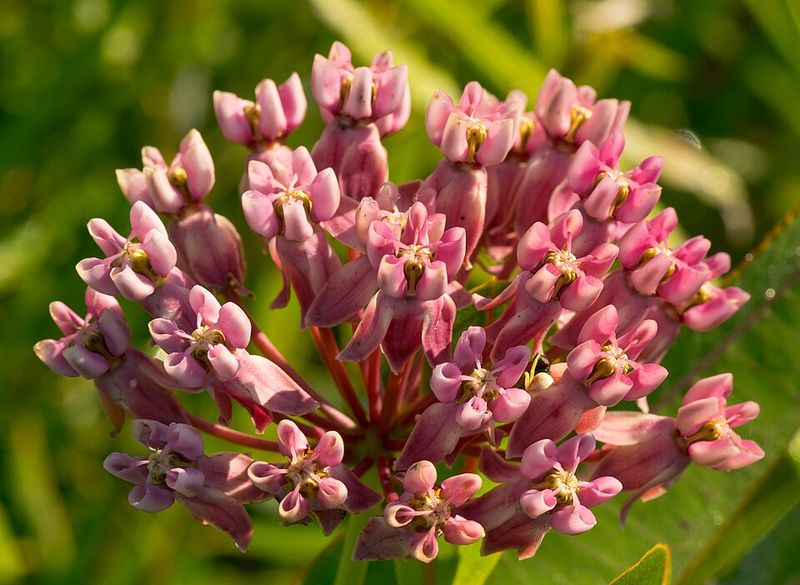
Sullivant’s Milkweed carries the look of Common Milkweed but with a cleaner, smoother elegance that experienced gardeners tend to appreciate immediately.
Asclepias sullivantii features broad, smooth leaves without the fine hairs found on its more common cousin, and its large rose-pink flower clusters bloom from June through August with impressive consistency.
Native to Midwest prairies and open meadows, this species feels right at home in Michigan’s agricultural heartland.
Full sun and moist to medium, well-drained soils suit Sullivant’s Milkweed best, and it handles clay soils better than many other milkweed species.
Plants grow three to four feet tall and spread through rhizomes at a moderate pace, eventually forming handsome colonies in open garden areas or restored prairie plantings.
It is somewhat less aggressive in spreading than Common Milkweed, which many gardeners find appealing.
Monarchs use this plant eagerly as both a nectar source and a caterpillar host plant. The large, sturdy leaves provide ample food for growing larvae, and the flowers produce abundant nectar for adults.
Sullivant’s Milkweed is not always easy to find at mainstream garden centers, but Michigan native plant nurseries and seed suppliers carry it. Once established, it proves to be a long-lived, low-maintenance addition to any pollinator-focused planting.
7. Whorled Milkweed Perfect For Dry Gardens
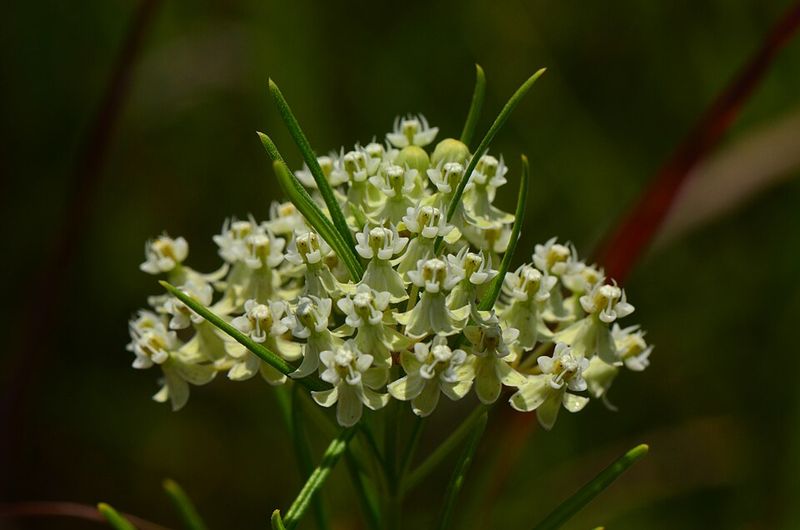
Slender, needle-like leaves arranged in neat whorls around upright stems give Whorled Milkweed a delicate, almost feathery appearance that stands apart from other milkweed species.
Asclepias verticillata is built for dry conditions, thriving in sandy, gravelly, or well-drained soils where heavier plants struggle to survive.
For Michigan gardeners dealing with dry slopes, sandy roadsides, or drought-prone raised beds, this species is a genuine problem-solver.
Small clusters of white to greenish-white flowers bloom from July through September, providing a late-season nectar source when many other milkweeds have finished flowering.
Plants grow one to two feet tall, spreading gradually through rhizomes to form low, airy colonies.
Full sun is preferred, and established plants handle Michigan’s dry summer spells without needing supplemental watering once rooted in.
Monarch caterpillars feed on the narrow foliage, and the flowers attract an interesting variety of small native bees and wasps that often go unnoticed in the garden.
Whorled Milkweed’s fine texture makes it a nice contrast plant alongside broader-leaved natives like coneflowers or black-eyed Susans.
It is also a solid choice for naturalized areas and pollinator meadow mixes, where its spreading habit fills in gaps without overwhelming neighboring plants.
8. Green Milkweed A Unique Native For Pollinators
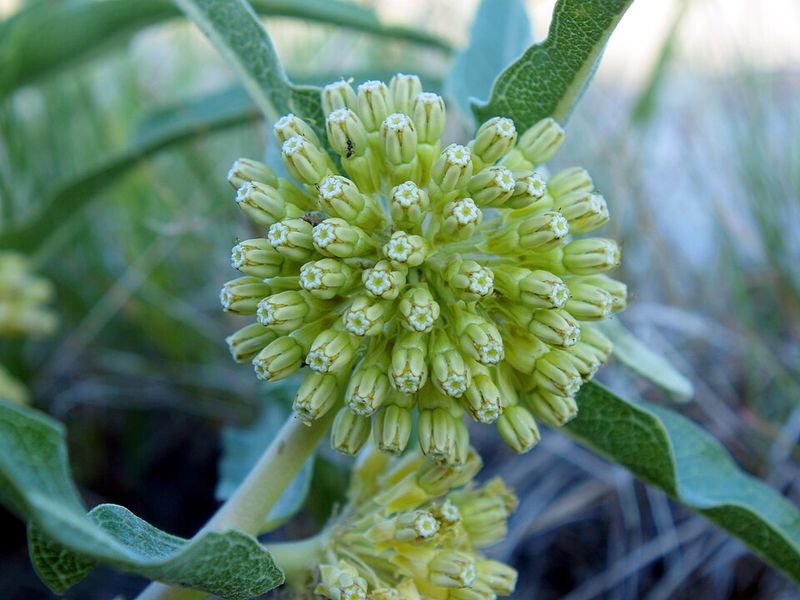
Green Milkweed is the quiet surprise of the milkweed world, producing unusual rounded clusters of green flowers that blend into the foliage at first glance but reward closer inspection with real charm.
Asclepias viridiflora is a native of dry prairies, open woodlands, and sandy plains, making it a natural fit for Michigan’s western and southern sandy landscapes.
Its subtle coloring makes it a favorite among gardeners who appreciate understated native plants alongside showier species.
Full sun and dry, well-drained soils are essential for this species. It grows one to two feet tall with a clumping rather than spreading habit, so it stays tidy and predictable in the garden.
Blooms appear from June through August, and despite their green color, the flowers produce nectar that attracts a surprisingly diverse group of pollinators, including specialist bees, wasps, and beetles rarely seen on other plants.
Monarch caterpillars use Green Milkweed as a host plant, and adding it to a pollinator garden creates habitat diversity that benefits the entire local ecosystem.
Because it does not spread aggressively and stays compact, it works well in smaller native plant gardens or as a front-border accent.
Michigan native plant enthusiasts often seek it out specifically for its rarity and the ecological richness it quietly brings to any planting.