11 Most Common Weeds In Pennsylvania And How To Identify Them
You know that feeling when you’ve just finished tidying up the yard, only to spot those same stubborn plants popping right back up a week later? It’s part of the rhythm of gardening in Pennsylvania.
One minute everything looks neat and cared for, the next there’s something creeping through the lawn or squeezing between your tomatoes like it owns the place.
Some of these weeds are so common they’ve been around for decades, showing up in flower beds, driveways, and veggie patches alike. The tricky part is that not all of them look like trouble at first glance.
A few even blend in so well you might mistake them for something worth keeping.
That’s where things start to get interesting, because a handful of these familiar faces have small details that give them away fast, once you know exactly what to look for next.
1. White Clover
Spreading across Pennsylvania lawns like a living carpet, this low-growing plant often shows up where grass struggles to establish. White clover thrives in these tougher spots, quietly filling in gaps with ease.
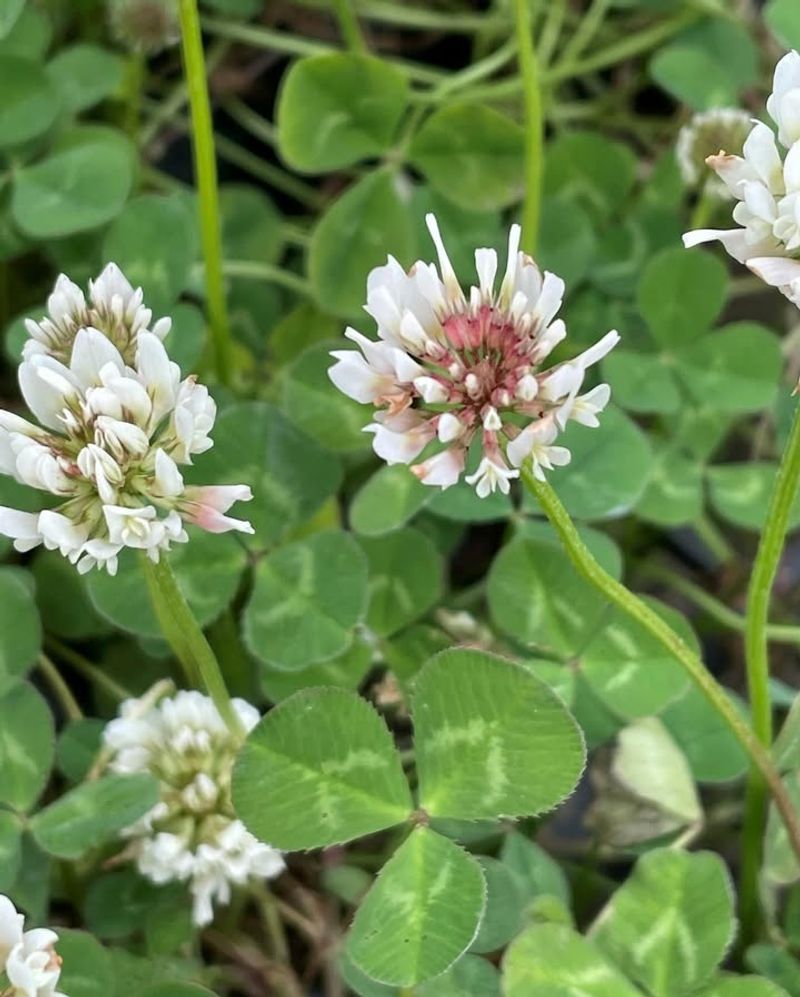
Leaves appear in groups of three rounded leaflets, each marked with a distinctive whitish crescent or chevron pattern that makes identification much easier once you know what to look for.
The flowers appear as small, round, white pom-poms sitting atop stems that rise above the foliage during late spring and summer. Many homeowners actually appreciate this plant because it stays green during dry spells when grass turns brown.
Bees absolutely love the blooms, making yards with white clover buzzing hubs of pollinator activity. This plant fixes nitrogen in the soil, which can actually benefit surrounding grass by enriching the ground naturally.
You’ll often spot it taking over in compacted soil or areas with low fertility where turfgrass can’t compete effectively. The stems creep along the ground, rooting at nodes and creating new plants as they spread outward.
In Pennsylvania, white clover typically grows from spring through fall, though growth may slow earlier in cooler areas depending on local weather conditions.
Look for it especially in lawns that receive partial shade or inconsistent watering throughout the growing season. Each leaflet measures about half an inch across, and the entire plant rarely grows taller than six inches.
2. Common Dandelion
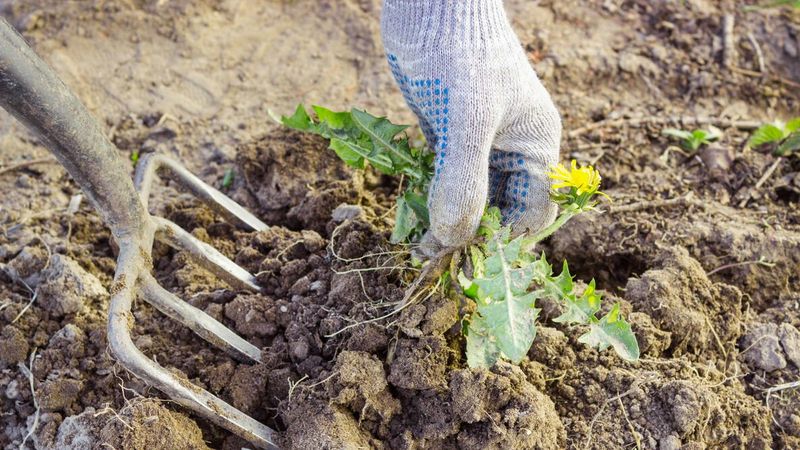
Bright yellow flowers that transform into fluffy white seedheads make dandelions instantly recognizable across Pennsylvania.
Every part of this plant grows from a central rosette, with deeply notched leaves that gave the plant its name from the French “dent de lion” or lion’s tooth.
That thick taproot can extend more than ten inches deep into the soil, making complete removal challenging for gardeners. The hollow stems contain a milky white sap that oozes out when you break them.
Dandelions bloom from early spring through fall in Pennsylvania, with peak flowering in spring and another noticeable flush later in the season.
Each sunny yellow flower head actually contains dozens of tiny individual flowers clustered together. After blooming, the flowers close up and transform into those iconic seed puffs that kids love to blow on.
A single plant can produce thousands of seeds annually, each equipped with its own tiny parachute for wind dispersal.
You’ll find dandelions thriving in full sun locations throughout Pennsylvania, from manicured lawns to abandoned lots. The leaves taste slightly bitter and have been used in salads and teas for generations.
They’re one of the first plants to bloom in spring, providing early food for hungry pollinators emerging from winter.
3. Smooth Crabgrass And Large Crabgrass
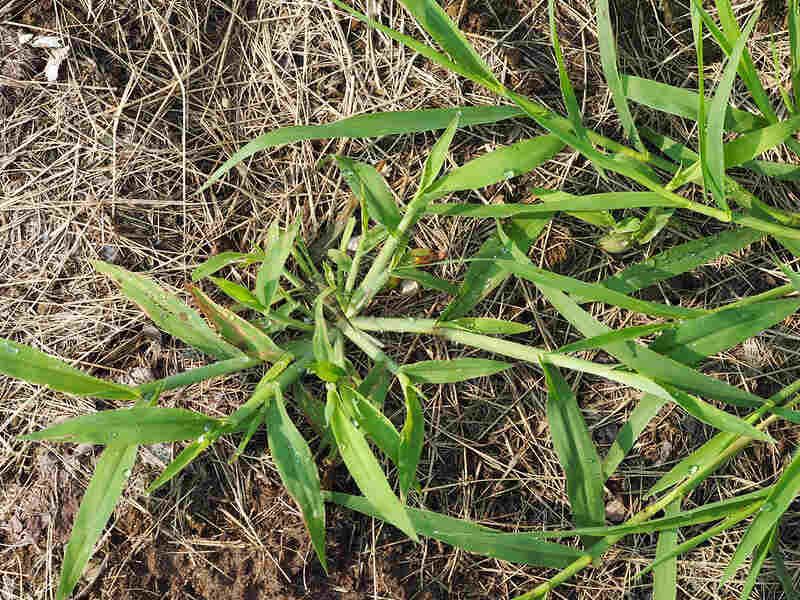
Crabgrass earns its name from the way its stems sprawl outward like crab legs across your Pennsylvania lawn. Smooth crabgrass has hairless leaves and stems, while large crabgrass features noticeably hairy leaf sheaths near the base.
Both types germinate from seed when soil temperatures consistently reach about 55 degrees Fahrenheit in spring.
The plants grow low to the ground in a circular pattern, often rooting at stem joints where they touch soil.
Each plant can spread two feet or more in diameter by the end of Pennsylvania’s growing season.
Light green leaves with a slightly blue-gray tint help distinguish crabgrass from desirable turfgrass species. Seed heads emerge on finger-like spikes that radiate from a central point, resembling a bird’s foot.
A single plant produces thousands of seeds before the first frost, ensuring next year’s invasion.
These annual grasses thrive in hot, dry conditions that stress cool-season lawns common throughout Pennsylvania. You’ll notice them filling in bare spots, thin areas, or places where grass has been scalped by mowing too short.
The plants turn purplish-brown after frost and disappear completely, leaving behind seeds ready to sprout next spring.
4. Goosegrass
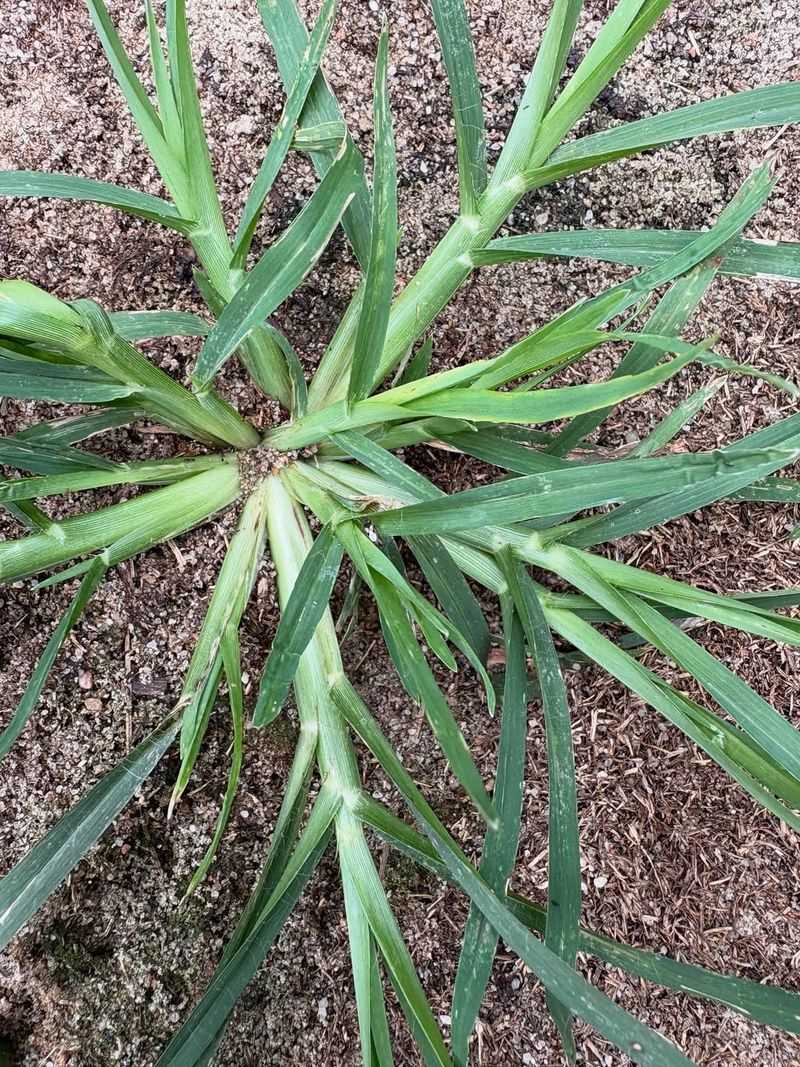
A distinctive rosette with a silvery-white centre often gives this plant away, standing out against surrounding greenery with a slightly bleached look. Goosegrass is known for this pale centre, which becomes more noticeable as it matures.
Stems grow flat along the ground, spreading outward in a star-like pattern from that central point, creating a low, compact shape.
When compared with crabgrass, the stems feel noticeably flattened rather than round when rolled between your fingers, which helps with quick identification.
This summer annual germinates slightly later than crabgrass, typically appearing in Pennsylvania lawns during late spring.
It absolutely loves compacted soil and thrives in high-traffic areas where people or vehicles constantly pass.
Dark green leaves fold along the midrib, creating a distinctive crease that helps with identification. The seed heads also emerge on finger-like spikes, but they’re typically darker and more compressed than crabgrass spikes.
Goosegrass tolerates closer mowing than many other weeds, which explains why it dominates sports fields and pathways.
You’ll often spot it growing right in cart paths, driveways, or along sidewalks throughout Pennsylvania. The plant produces a tough, fibrous root system that anchors firmly even in hard-packed ground.
Each plant can generate thousands of seeds that remain viable in soil for several years.
It continues growing vigorously through Pennsylvania’s hot, humid summers when cool-season grasses slow down.
5. Ground Ivy
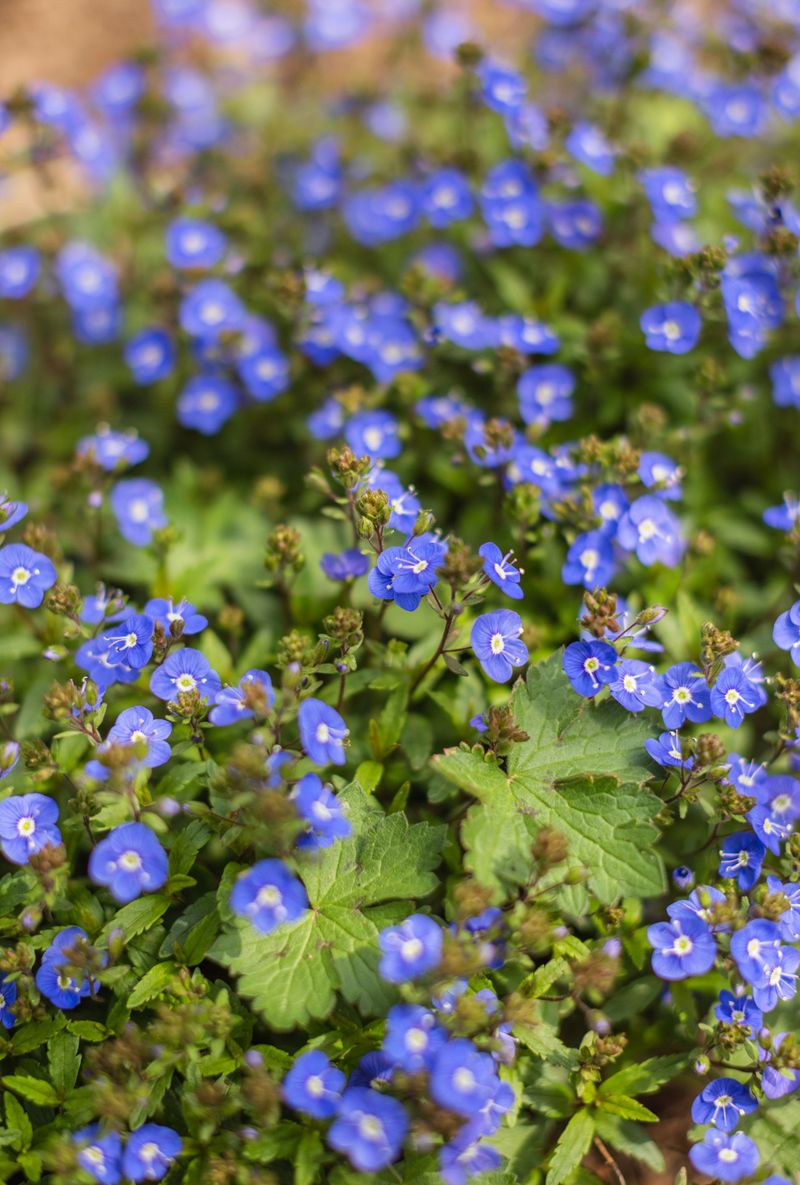
Round, scalloped leaves with a distinctive minty aroma when crushed make ground ivy easy to identify in Pennsylvania landscapes. This perennial spreads by creeping stems that root at every node, forming dense mats that smother everything underneath.
The square stems reveal its membership in the mint family, along with those tiny tubular purple flowers in spring.
Ground ivy thrives in shady, moist areas where grass struggles, making it common under trees throughout Pennsylvania.
Each leaf sits opposite another on the stem, creating a symmetrical pattern along the trailing branches. The plant stays green year-round in Pennsylvania, continuing to spread even during mild winter periods.
Small purple-blue flowers bloom in clusters during April and May, attracting early-season bees and other pollinators.
Also called creeping charlie, this plant can quickly take over entire sections of lawn or garden beds.
The leaves have rounded teeth along their edges and prominent veining that creates a slightly wrinkled appearance.
It tolerates a wide range of soil conditions but really flourishes in damp, shaded spots with rich organic matter. Stems can extend several feet in length, weaving through other plants and rooting constantly as they grow.
The minty scent becomes quite strong when you mow over patches of this persistent invader.
6. Common Chickweed
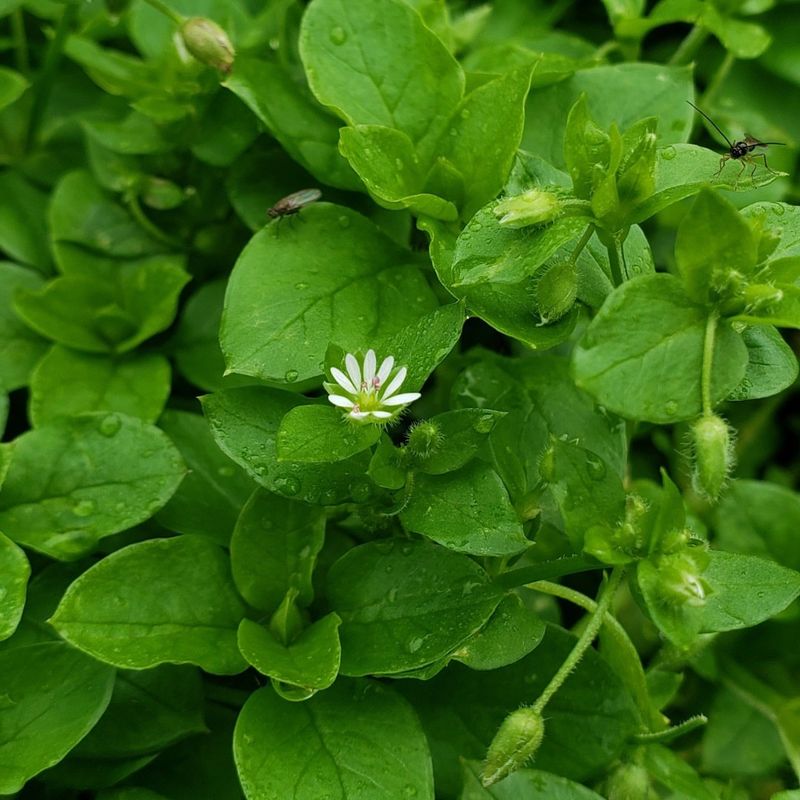
Have you ever noticed tiny white flowers that look like little stars spreading across your garden beds? Common chickweed often forms low, delicate mats that can appear almost overnight in Pennsylvania landscapes.
Each small flower has five petals so deeply notched they can look like ten at first glance, adding to the confusion. Oval leaves grow in opposite pairs along weak, sprawling stems that rarely stay upright for long.
A single line of fine hairs running along one side of the stem is a helpful detail that confirms its identity.
As a cool-season annual, it tends to thrive in spring and fall, often fading during the hotter parts of summer.
The plant feels slightly sticky when you handle it, and the stems break easily with a stringy texture.
Chickweed spreads rapidly, forming dense mats that can cover several square feet in just a few weeks.
It prefers moist, fertile soil and often indicates areas with good drainage and rich organic content. You’ll commonly find it in vegetable gardens, flower beds, and thin areas of lawn throughout Pennsylvania.
The leaves are edible and have been used in salads and sandwiches, tasting mild and slightly grassy.
Seeds germinate in both spring and fall, giving this plant two chances annually to establish in your yard. Despite its delicate appearance, chickweed competes aggressively with desirable plants for water and nutrients.
7. Broadleaf Plantain
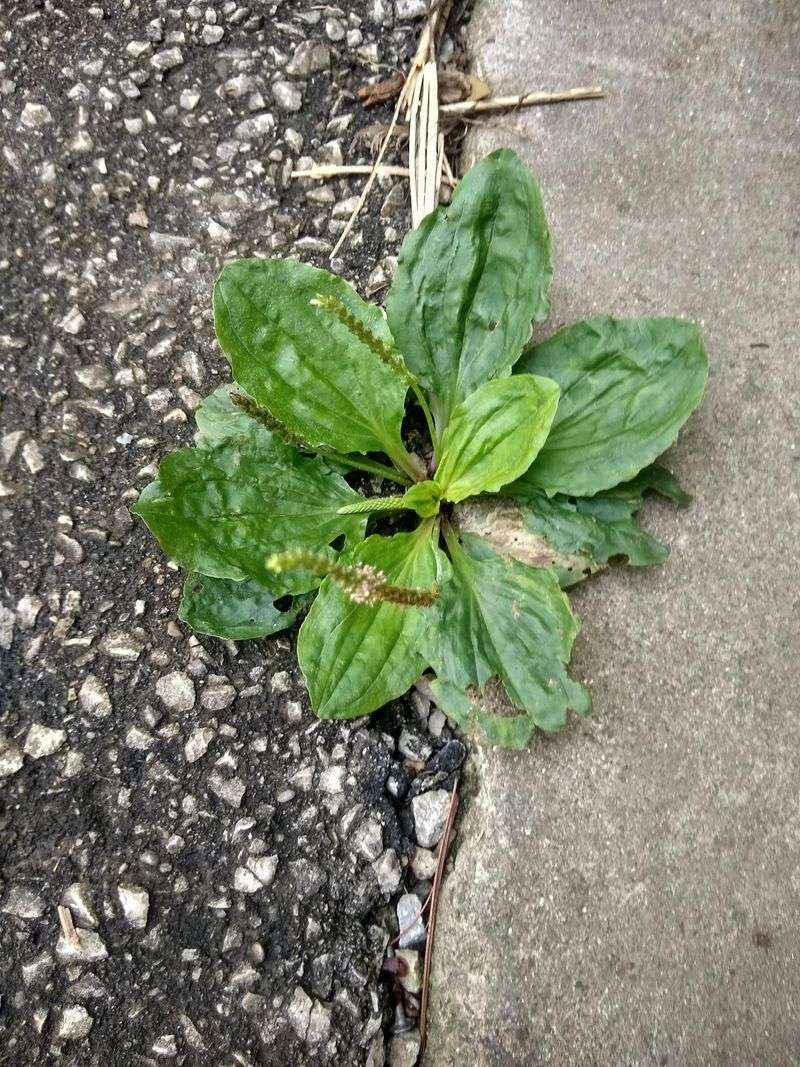
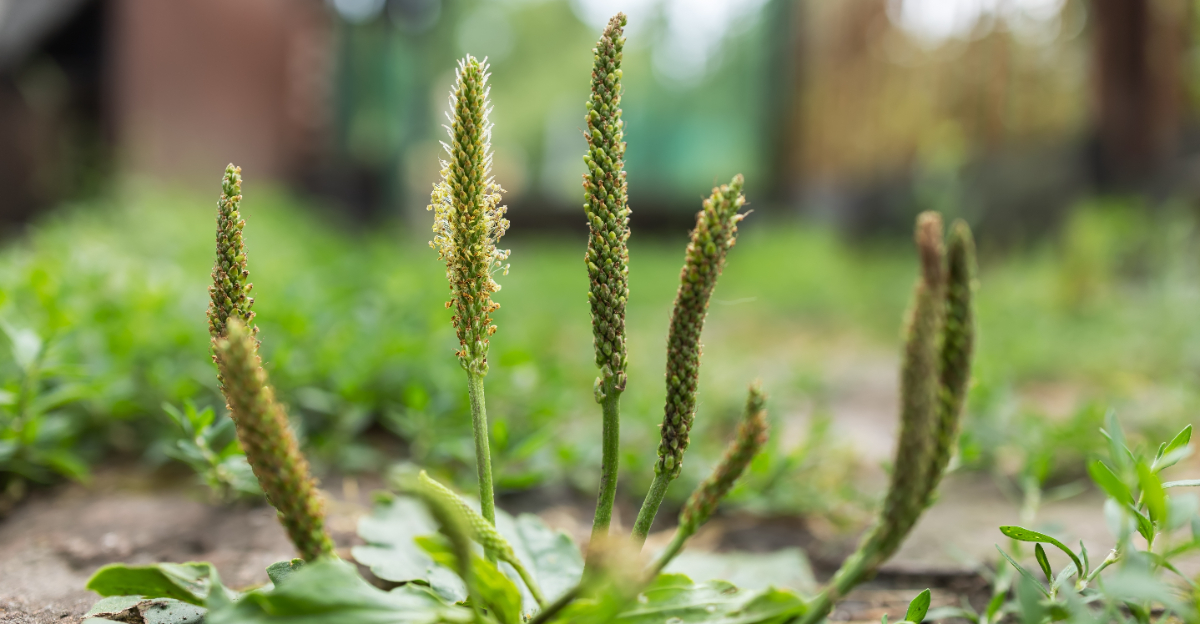
Wide, oval leaves with prominent parallel veins radiating from the base form distinctive rosettes of broadleaf plantain.
The leaves lie nearly flat against the ground, creating a plate-like appearance that gives the plant its common name. Tall, leafless flower stalks rise from the center, topped with dense cylindrical spikes covered in tiny greenish flowers.
These seed spikes turn brown as they mature, resembling miniature corn dogs standing at attention above the foliage.
Broadleaf plantain tolerates compacted soil exceptionally well, often thriving where nothing else will grow in Pennsylvania.
The thick, fibrous roots anchor deeply, making the plant remarkably drought-resistant once established.
You’ll commonly find it growing in pathways, along driveways, and in heavily trafficked areas of lawns. Each rosette can spread up to six inches across, crowding out grass and other plants.
The leaves have a slightly bitter taste and have been used medicinally for centuries to soothe insect bites and minor wounds.
Seeds can remain viable in soil for several years, allowing new plants to appear when conditions become favourable and soil is disturbed.
A single plant produces thousands of tiny seeds that stick to shoes, paws, and equipment, spreading readily. The plant remains green from early spring through late fall across Pennsylvania, going dormant only in winter.
8. Prostrate Knotweed
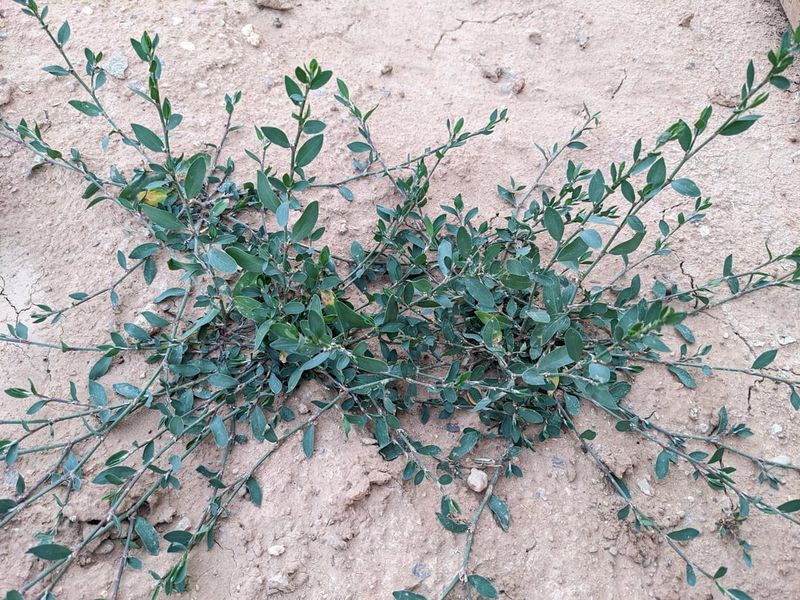
Pressed tightly against the ground, wiry stems spread outward across compacted soil, creating a low, tough presence that’s easy to overlook at first. Prostrate knotweed is often found in these conditions where other plants struggle to take hold.
Dense, circular mats develop over time, allowing it to handle frequent foot traffic without showing much wear or damage. Tiny oval leaves, barely a quarter-inch long, alternate along the tough, bluish-green stems.
Small papery sheaths called ocrea wrap around the stem at each leaf joint, a characteristic feature of the knotweed family.
Inconspicuous white or pinkish flowers appear in the leaf axils throughout summer, hardly noticeable unless you look closely.
This annual thrives in the worst soil conditions imaginable, from gravel driveways to packed dirt pathways across Pennsylvania. The taproot extends surprisingly deep for such a low-growing plant, helping it survive drought and harsh conditions.
Prostrate knotweed germinates early in spring and continues growing until cooler temperatures and frost slow its growth in fall across most parts of Pennsylvania.
The stems have swollen joints that give the plant its knotweed name, visible as slight bumps along their length. Each plant produces numerous small seeds that can remain viable in soil for many years.
Despite its tough nature, the plant has a delicate appearance with its fine-textured foliage and wire-like stems.
9. Yellow Woodsorrel
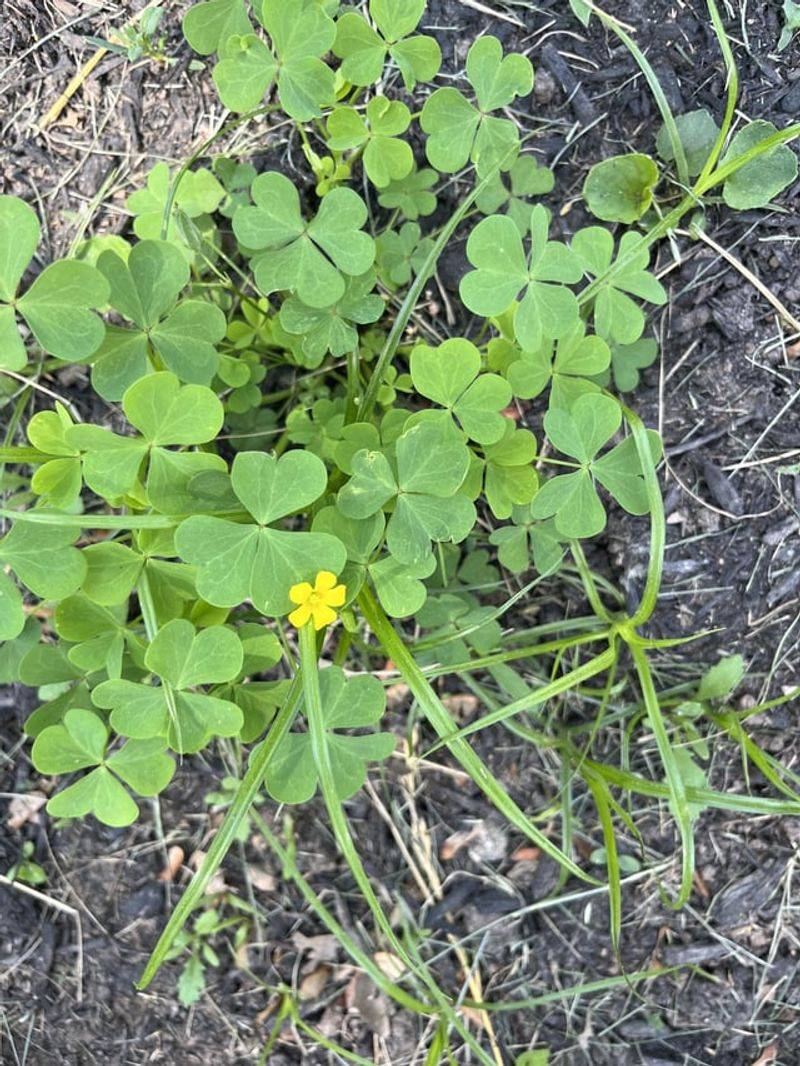
Heart-shaped leaflets arranged in groups of three make yellow woodsorrel look deceptively similar to clover at first glance.
The key difference shows up in the leaflet shape, with woodsorrel’s leaflets being distinctly heart-shaped rather than rounded. Bright yellow flowers with five petals appear throughout the growing season, followed by pointed seed capsules that explode when touched.
Those explosive seed pods can launch seeds several feet away, helping the plant spread rapidly across Pennsylvania gardens.
The leaves fold downward at night or during cloudy weather, a phenomenon called nyctinasty that helps reduce water loss. All parts of the plant contain oxalic acid, giving them a distinctly sour, lemony taste when chewed.
Yellow woodsorrel thrives in both sun and shade, making it adaptable to various locations throughout Pennsylvania landscapes.
The plant often grows as a low, spreading species that may behave as an annual or short-lived perennial depending on conditions and location.
Stems may be upright or trailing, often rooting at nodes where they contact moist soil.
You’ll frequently find it invading mulched areas, vegetable gardens, and landscape beds across Pennsylvania.
The leaves often have a burgundy or purplish spot at the base of each leaflet, though this marking isn’t always present. Seeds remain viable for years in soil, germinating whenever cultivation or disturbance brings them to the surface.
10. Common Purslane
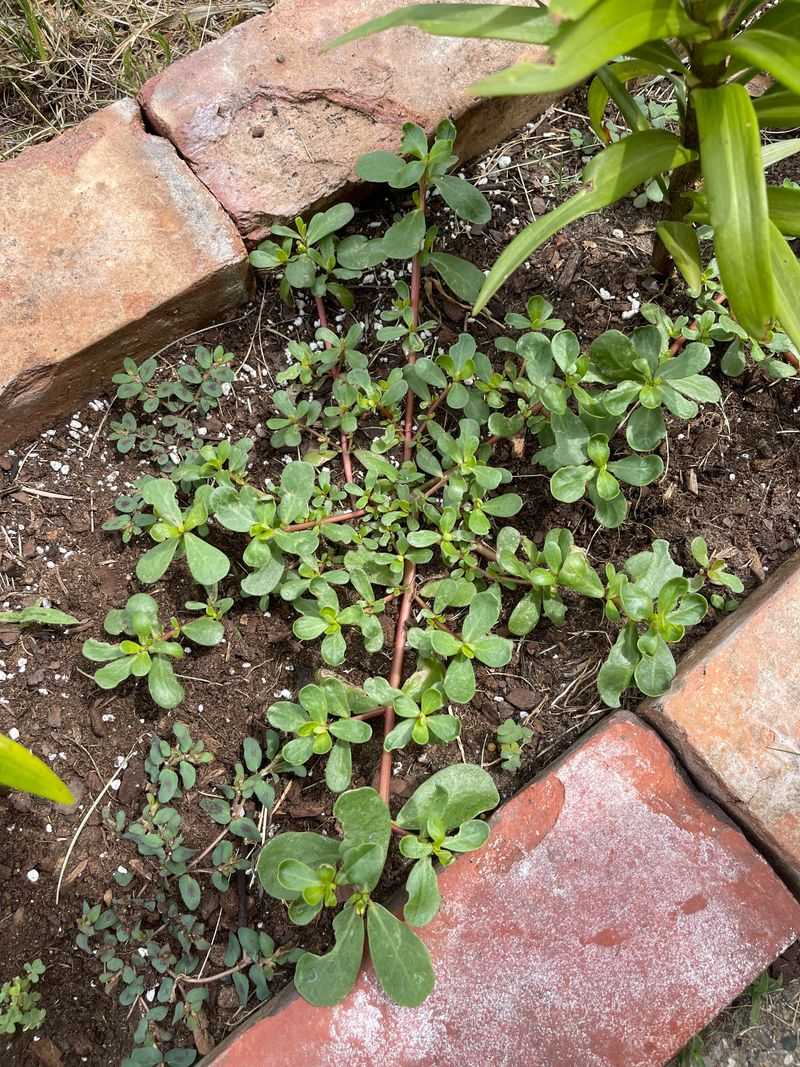
Spreading low across the ground, thick succulent stems form reddish mats that stand out against surrounding soil in many Pennsylvania gardens. Common purslane is often recognised by this growth habit once it becomes established.
Fleshy, paddle-shaped leaves store water, helping the plant continue growing during hot, dry periods when many other plants begin to slow down. Small yellow flowers with five petals open only on sunny mornings, closing by afternoon and remaining shut on cloudy days.
Purslane grows as a summer annual, germinating when soil warms in late spring and spreading rapidly through summer.
The smooth, reddish stems branch repeatedly, creating dense mats that can smother vegetable seedlings and ornamental plants. Each plant can spread up to two feet in diameter, covering substantial ground area in just weeks.
Broken stem pieces can root under the right conditions, which means simple cultivation may not always prevent regrowth if fragments remain on moist soil.
The leaves and stems are completely edible, tasting slightly salty and lemony, and they’re loaded with omega-3 fatty acids.
Seeds can germinate from more than an inch deep in soil, and they remain viable for decades. The plant tolerates poor, dry soil better than almost any other weed common to Pennsylvania landscapes.
Despite being considered a nuisance, purslane is actually cultivated as a vegetable crop in many countries.
11. Wild Violet
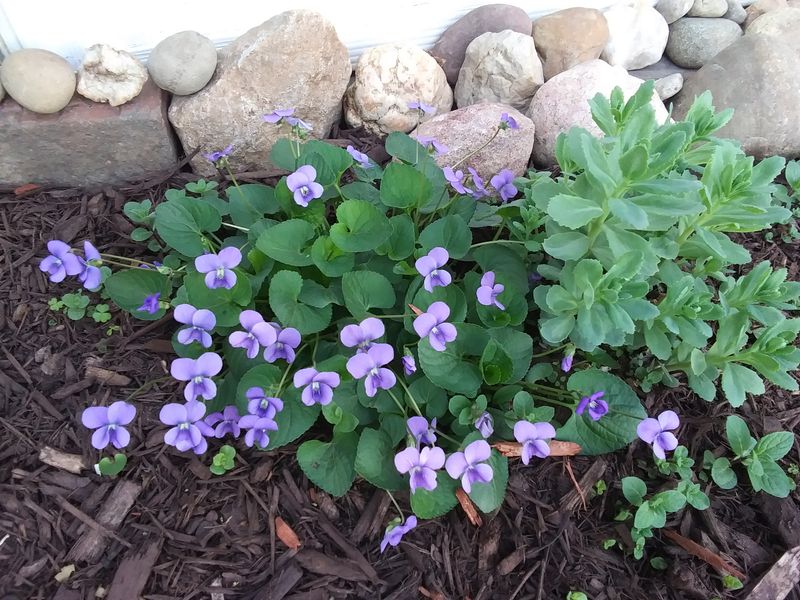
Ever noticed small clumps of heart-shaped leaves with softly scalloped edges appearing in lawns and garden beds? That’s often a sign of wild violet settling into the space.
The flowers range from deep purple to white, each with five petals and a distinctive white throat marked with darker veining.
Wild violets spread by seeds, rhizomes, and above-ground runners called stolons, gradually forming expanding colonies over time.
These perennials bloom heavily in spring, though you might spot occasional flowers appearing throughout summer and fall in Pennsylvania. The plant produces two types of flowers, the showy ones you notice and hidden cleistogamous flowers that self-pollinate without opening.
Those hidden flowers produce most of the seeds, which ants carry away and disperse across your Pennsylvania landscape.
Wild violets thrive in both sun and shade, though they spread most aggressively in moist, shaded areas.
The thick, fleshy roots store energy reserves that allow the plant to regrow repeatedly even after top growth is removed. You’ll often find wild violets forming dense patches that crowd out grass in lawns or spread through flower beds.
The leaves and flowers are edible, with the flowers making colorful additions to salads and the leaves used in cooking.
Many people actually enjoy wild violets and consider them attractive additions rather than problematic weeds.
They can provide early-season nectar for some pollinators, depending on local conditions and timing within Pennsylvania’s spring growing season.