Mushroom Compost Or Black Kow? The Better Pick For Oregon Gardens

Picking the right soil amendment in Oregon is not as simple as grabbing a bag and getting to work.
What improves one garden bed can create problems in another, especially in a state where soil conditions shift from heavy clay in the Willamette Valley to lighter coastal soils.
Add in wet winters, dry summers, and sensitive crops, and the choice starts to matter a lot more than it seems at first. That is exactly where the mushroom compost versus Black Kow question comes in.
Both can improve soil, but they behave differently once they hit the ground.
Understanding how each one affects drainage, pH, salt levels, and nutrient balance helps you avoid common mistakes and get better results from season to season.
1. Why Oregon Soil Changes The Compost Question
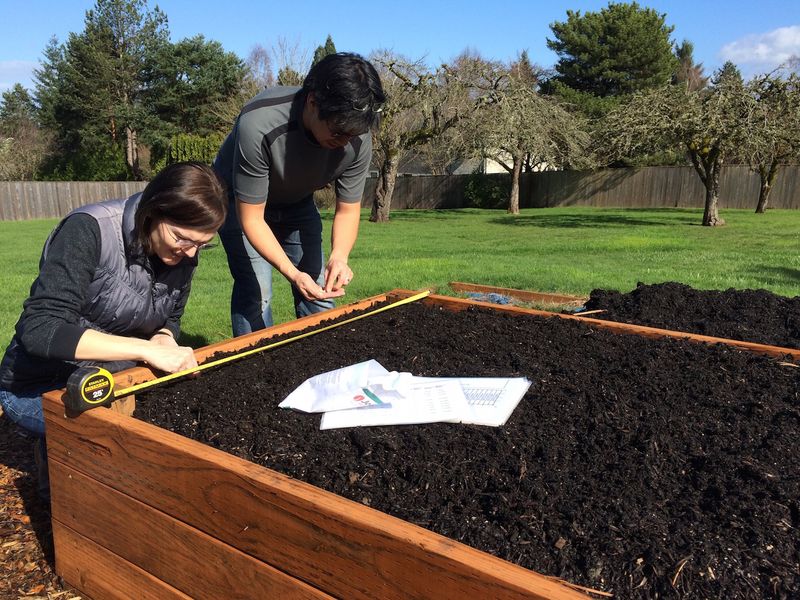
Oregon’s soil is not one-size-fits-all, and that fact alone shapes every amendment decision a gardener makes here.
From the heavy clay soils common in the Willamette Valley to the sandier ground found in parts of southern Oregon and the coast, the baseline you are working with changes how any compost or manure product will behave once it hits your bed.
Mushroom compost and Black Kow each interact differently depending on what is already in your soil.
A clay-heavy yard in Eugene may respond well to an amendment that loosens structure and adds air pockets, while a raised bed with already-rich organic matter may not need the same boost.
Oregon’s rainy winters also mean that nutrients from amendments can leach out more quickly than in drier climates, so timing and application rates matter.
The state’s growing regions also vary in natural pH. Many Oregon soils tend to be slightly acidic, which can either complement or clash with certain amendments depending on your plants.
Knowing your baseline soil texture, drainage behavior, and pH gives you a much stronger foundation for choosing between these two popular products.
A little observation of how your soil drains after a winter rain can tell you more than almost anything else.
2. Mushroom Compost Can Be Rich But Tricky
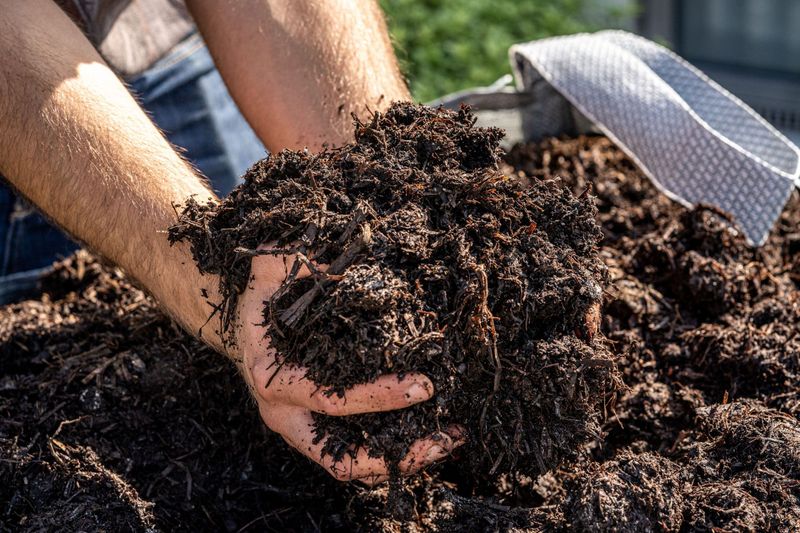
Spent mushroom substrate has a lot going for it as a garden amendment.
Made from materials like straw, peat, and other organic matter used during mushroom cultivation, it breaks down into a dark, crumbly product that improves soil structure and supports microbial activity.
Many Oregon gardeners reach for it at the start of spring because it looks and feels like premium compost.
That richness, though, comes with a few considerations worth knowing before you spread a thick layer across your beds. Mushroom compost can carry elevated salt levels, especially in fresher batches.
In Oregon’s wetter months, some of that salt may flush out naturally, but in raised beds with limited drainage or during a dry stretch, high salt concentrations can stress plant roots and reduce germination rates for direct-seeded vegetables.
The pH of mushroom compost also tends to run slightly alkaline compared to Oregon’s naturally acidic soils.
For most vegetable gardens and mixed borders, this is not a major concern at moderate application rates.
However, if you are working around rhododendrons, blueberries, or azaleas, which thrive in acidic conditions, adding mushroom compost without testing first could gradually shift the pH in a direction those plants will not appreciate.
Mixing it with native soil rather than using it straight is usually the safer approach in Oregon gardens.
3. Black Kow Adds Organic Matter More Gently
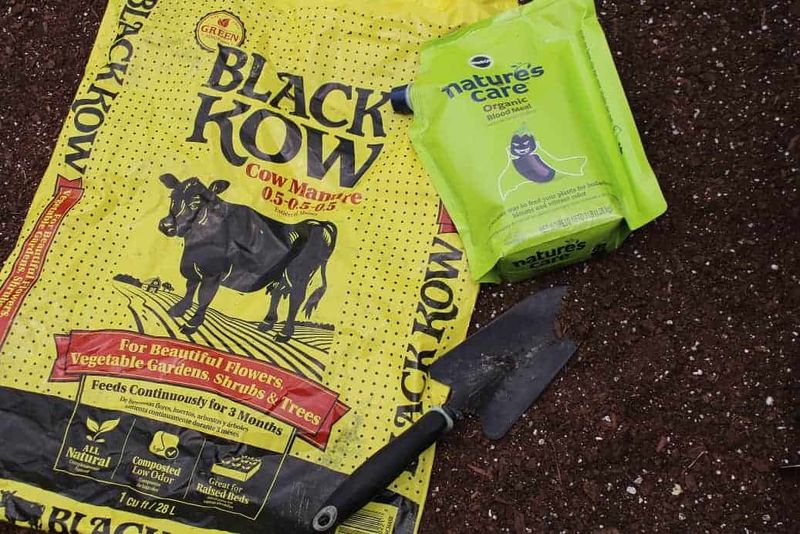
Composted cow manure has been a gardening staple for generations, and Black Kow is one of the more widely available products of this type in Oregon garden centers.
It is fully composted, meaning the raw manure has been processed long enough to reduce pathogens and weed seeds while becoming a stable, earthy-smelling amendment that blends easily into existing soil.
One of the practical strengths of Black Kow is its relatively moderate nutrient profile compared to some other amendments. It adds nitrogen, phosphorus, and potassium, but in a form that releases gradually rather than flooding the soil all at once.
That slow-release quality suits Oregon’s long growing season well, providing steady support without the risk of nutrient burn that can come from stronger concentrated fertilizers.
Black Kow also improves soil structure in a way that most Oregon gardeners find reliable. In clay-heavy soils, it helps open up pore space and improve drainage over time.
In sandier ground, it adds organic matter that holds moisture longer during the dry summer months.
The pH of Black Kow tends to be near neutral or very slightly alkaline, which rarely causes trouble in typical vegetable beds or mixed borders.
For gardeners who want a low-drama amendment that works dependably across a range of Oregon growing conditions, Black Kow earns its place in the shed.
4. Salt Levels Matter More Than Many Gardeners Realize
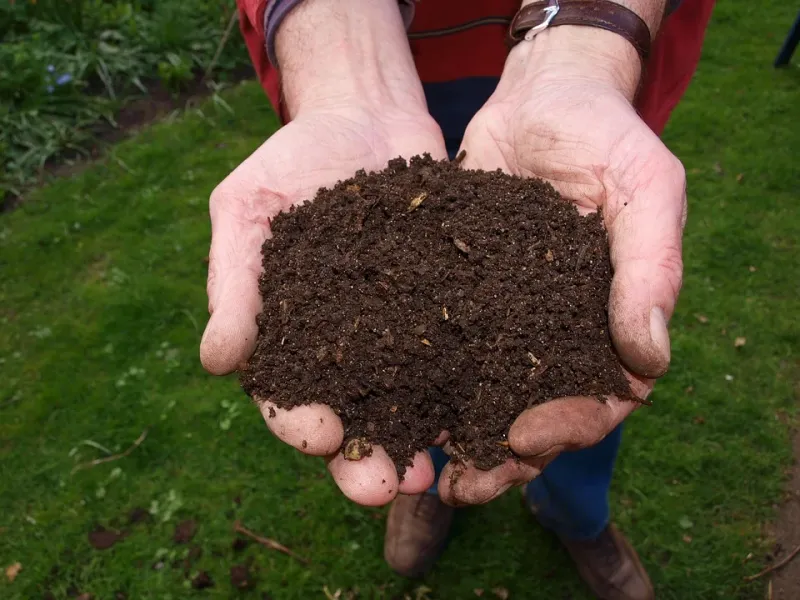
Most gardeners think about nutrients when they pick up a bag of compost, but salt content is a factor that quietly causes problems in Oregon beds more often than people expect.
Both mushroom compost and composted manure products can carry measurable salt levels, and those salts affect how well seeds germinate and how comfortably established plants grow.
Mushroom compost tends to have higher electrical conductivity, which is the measure used to estimate salt concentration in soil. Fresher or lower-quality batches can be especially elevated.
When applied heavily in a raised bed, particularly one that does not drain freely, those salts can accumulate and create conditions that stress roots even when water and nutrients seem plentiful.
Oregon’s rainy winters do help flush salts from in-ground beds, but raised beds with limited drainage do not get that same natural reset.
Black Kow, being fully composted over a longer period, generally carries lower salt levels than mushroom compost, though the gap varies by batch and brand.
If you are starting seeds directly in a bed you have just amended, this difference matters quite a bit.
Seedlings are especially sensitive to salt stress in their first few weeks.
Letting freshly amended soil rest for a couple of weeks before seeding, or blending amendments into existing soil rather than layering them heavily, can reduce the risk in either case.
5. Soil Tests Make This Choice Much Easier
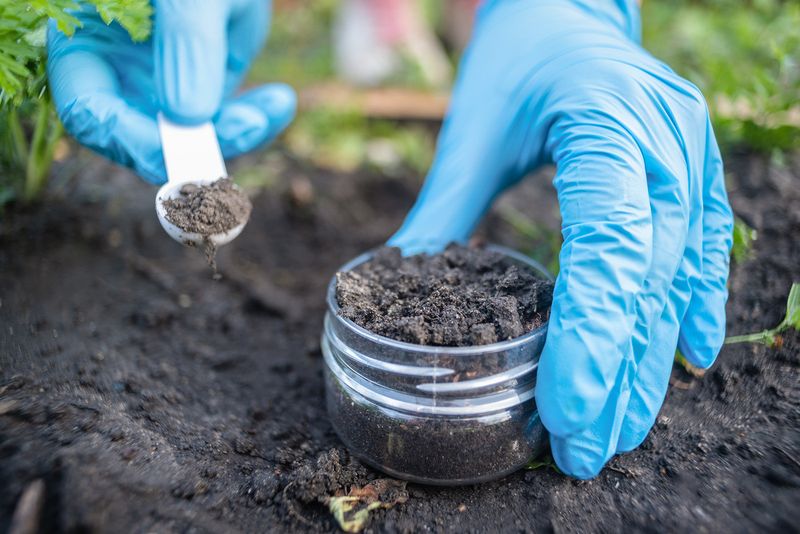
Before spending money on amendments, knowing what your soil actually needs gives you a real advantage.
A basic soil test reveals pH, nutrient levels, and sometimes organic matter content, all of which directly influence whether mushroom compost or Black Kow is the smarter buy for your Oregon garden this season.
Oregon State University’s Extension Service offers soil testing resources, and many local county extension offices can point you toward affordable options.
The results are usually straightforward to read and come with recommendations tailored to the crops or plants you are growing.
If your soil is already at or above neutral pH, adding mushroom compost repeatedly could push things in a direction that limits nutrient availability for some plants.
If your nitrogen levels are low and your organic matter is thin, Black Kow may give you exactly what you need without complicating the pH picture.
Testing also helps you avoid over-amending, which is a surprisingly common issue in Oregon home gardens where enthusiastic spring prep leads to compacted, overly rich beds that struggle to drain.
Raised beds especially benefit from periodic testing because nutrients concentrate over time with no natural leaching from surrounding ground.
Spending a small amount on a soil test before buying bags of amendment is one of the most practical steps any Oregon gardener can take, and it removes much of the guesswork from this decision entirely.
6. Vegetable Beds Need A More Careful Approach

Growing food in Oregon’s climate is genuinely rewarding, but vegetable beds have specific needs that make the choice between mushroom compost and Black Kow worth thinking through carefully.
Vegetables are generally heavy feeders that respond well to consistent organic matter and steady nutrient availability, but they are also sensitive to salt stress and pH swings during their most critical growth stages.
Black Kow tends to be the more forgiving option for vegetable beds, especially when you are direct-seeding crops like carrots, beets, or lettuce.
Its lower salt content and steady nutrient release reduce the risk of seedling setback that can happen with higher-salt amendments.
Mixing it into the top several inches of bed soil before planting gives roots a welcoming environment from the start.
For transplants, which are a bit more tolerant of amended soil, both products can work well when blended into existing soil at reasonable rates.
Mushroom compost is not off the table for vegetable gardens, but it works best when mixed with native soil or other amendments rather than used as the primary growing medium.
Applying it in fall and letting Oregon’s winter rains work it into the soil before spring planting helps reduce salt levels naturally.
Whichever product you choose, avoiding heavy applications right at planting time gives your vegetables the best chance of establishing well and producing through Oregon’s long growing window.
7. Acid-Loving Plants May Need Extra Caution
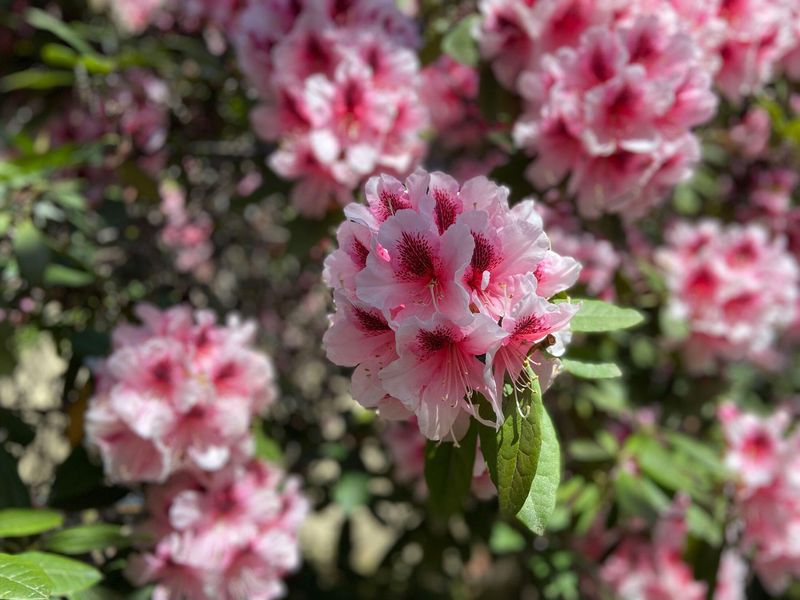
Rhododendrons, azaleas, blueberries, and camellias are fixtures in Oregon gardens, and they all share a strong preference for acidic soil conditions.
Oregon’s natural soil chemistry often supports these plants reasonably well, but adding the wrong amendment repeatedly can slowly shift pH in ways that limit nutrient uptake and reduce flowering or fruit production over time.
Mushroom compost, which tends to run slightly alkaline, is one product that acid-plant gardeners should use sparingly or avoid near established specimens.
Even small, repeated applications can nudge pH upward enough to cause iron chlorosis, a condition where leaves yellow between veins because the plant cannot access iron efficiently in higher-pH soil.
Blueberries are especially sensitive to this and may show symptoms within a single season of pH drift.
Black Kow, while typically near neutral pH, is generally less risky around acid-loving plants than mushroom compost, though it is still not an acidifying amendment.
If you want to lower pH for blueberries or rhododendrons in Oregon, products like elemental sulfur or acidic mulches such as pine bark or wood chips are more targeted tools.
Around these plants, both mushroom compost and Black Kow are best used cautiously and in small amounts, with regular soil testing to monitor any pH changes.
Keeping a close eye on leaf color through the growing season is one of the easiest ways to catch a problem early.
8. The Best Pick Depends On What You’re Growing
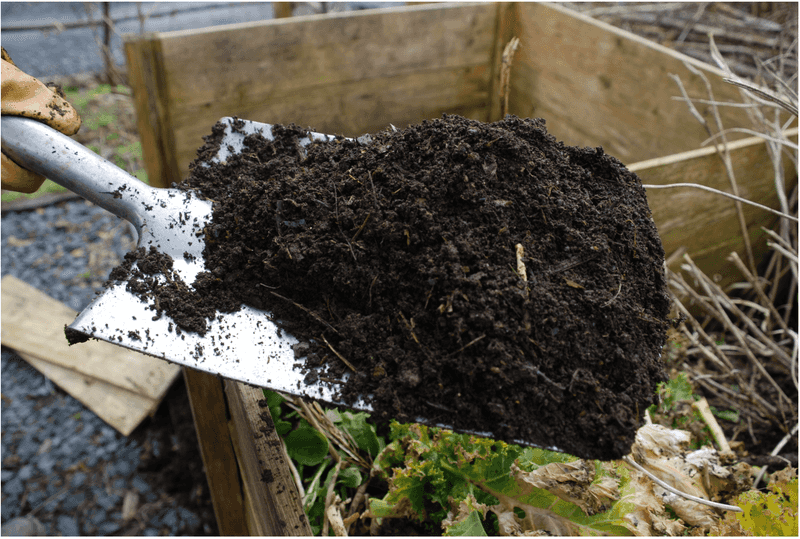
After weighing all the variables, the honest answer is that neither mushroom compost nor Black Kow is universally superior for every Oregon garden situation.
The better pick really does come down to what you are growing, what your soil already looks like, and how you plan to apply the amendment through the season.
For vegetable beds and raised beds where seedlings are getting their start, Black Kow’s gentler salt profile and steady nutrient release tend to make it the safer and more consistent choice.
It blends into Oregon’s varied soils with minimal drama and supports a wide range of crops without requiring extra steps to manage pH or salt.
For ornamental beds, mixed borders, or established trees and shrubs that are not acid-lovers, mushroom compost can be a solid option when applied at moderate rates and worked into the soil well ahead of the growing season.
Oregon gardeners who grow a mix of vegetables, ornamentals, and acid-loving natives may find themselves reaching for different products in different parts of the yard, which is a completely reasonable approach.
Using a soil test as your guide, starting with modest application rates, and observing how your plants respond over a season gives you real information that no bag label can fully provide.
Both products have a place in Oregon gardens when matched thoughtfully to the right situation.