8 Native Georgia Plants You Should Never Prune In Early Spring
Do you ever get that itch to grab the pruning shears the moment Georgia’s first warm spell hits in February?
It is the classic gardener’s dilemma: you want a tidy yard, but that early-season haircut might be costing you the best display of the year.
The secret that many new gardeners miss is that most of our favorite native shrubs and small trees have already tucked their flower buds away on last year’s wood.
If you trim too early, you are essentially pruning away this spring’s show before it even begins.
Throw in Georgia’s unpredictable late-season cold snaps, and it becomes clear that “doing nothing” is often the most strategic move you can make.
Let’s dive into which plants actually crave your patience and why waiting to prune is the key to a fuller, more vibrant landscape.
1. Native Azaleas Bring Spring Blooms And Set Buds Soon After
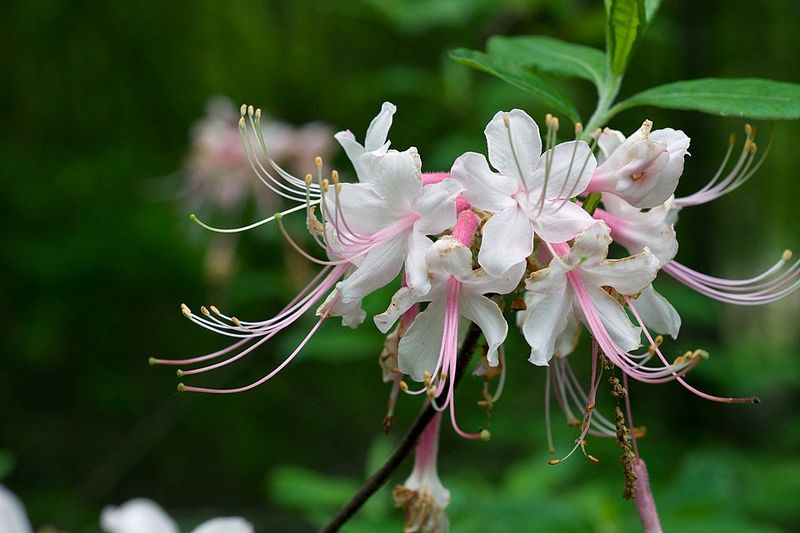
Walk through any Georgia woodland in spring and the sight of native azaleas in full bloom is enough to stop you in your tracks.
What most gardeners do not realize is that those blooms were quietly forming on the plant since the previous summer, tucked into buds along older stems.
Reaching for the pruning shears in early spring, before the flowers open, can remove buds that will not re-form in time for that season’s bloom.
Native azaleas like Florida flame azalea and Piedmont azalea are particularly sensitive to mistimed pruning. Once those buds are cut off, the shrub may leaf out normally but produce fewer or no flowers that season.
A far better approach is to wait until the flowers have fully faded, then make selective cuts to shape or thin the shrub.
Right after bloom is the window when the plant can recover quickly and still have enough of the growing season ahead to set new buds for next year.
In early spring, focus on mulching around the base, checking soil moisture during dry stretches, and removing only branches that are clearly broken or damaged.
Sharp, clean tools make a real difference when you do prune, since ragged cuts can invite problems that healthy plants do not need.
2. Oakleaf Hydrangea Holds Flower Buds On Older Wood
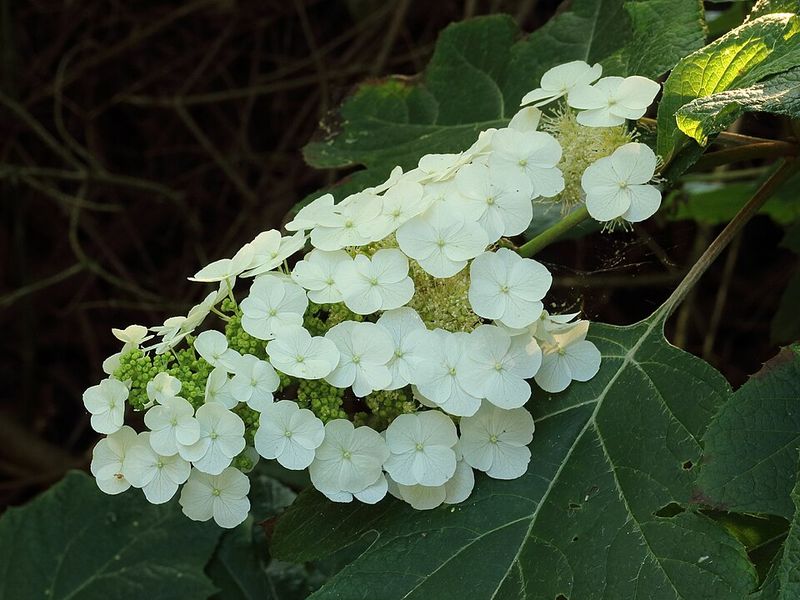
Few shrubs are as reliably dramatic in a Georgia garden as oakleaf hydrangea, with its large cone-shaped flower heads and bold, deeply lobed leaves that turn rich shades of burgundy and orange come fall.
Getting those impressive blooms, though, depends heavily on leaving older stems alone during early spring cleanup season.
Oakleaf hydrangea blooms on old wood, meaning the flower buds for the current season formed on stems that grew the previous year. An early spring trim that removes those stems can reduce the bloom right along with them.
Many gardeners assume a shrub that looks a bit scraggly after winter needs shaping, but with oakleaf hydrangea, that older wood is often where the flower buds are waiting.
The best time to prune oakleaf hydrangea is soon after flowering finishes, typically in early summer, giving the plant time to grow and set buds for next year.
In early spring, the most productive thing you can do is refresh the mulch layer, water during any unusually dry spells, and gently remove any canes that snapped under ice or wind.
Avoid heavy shearing at any time of year, since this native shrub has a naturally beautiful arching form that looks best when cuts are selective and thoughtful rather than blunt and uniform.
3. Mountain Laurel Offers Late Spring Blooms And Evergreen Leaves
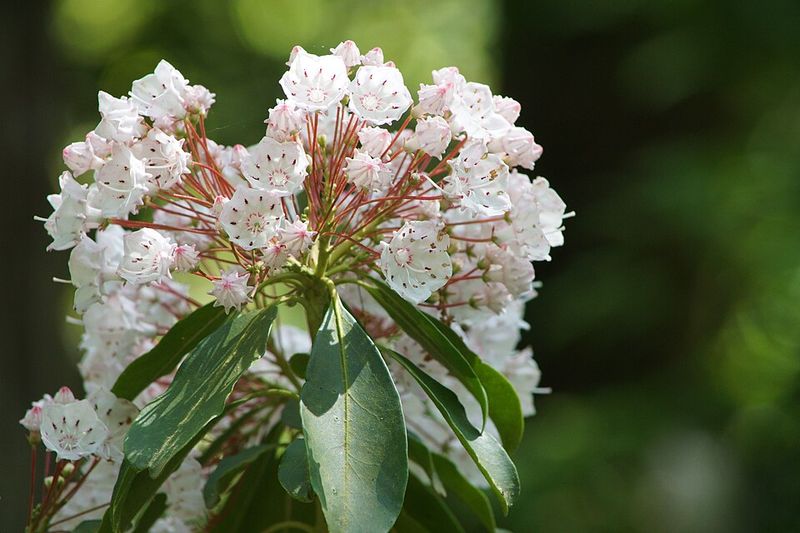
Mountain laurel is one of those plants that earns its place in the garden four seasons at a time, with glossy evergreen leaves that look good year-round and clusters of intricate cup-shaped flowers that open in late spring.
That late bloom time is part of what makes early spring pruning such a costly mistake with this particular native.
The flower buds on mountain laurel develop through the previous growing season and sit quietly through winter, waiting for the right conditions to open. Pruning in early spring, even with the best intentions, can remove a meaningful portion of those buds before they ever get the chance to open.
The result is a plant that looks tidy but blooms poorly that season.
Mountain laurel tends to grow slowly, which means every stem carries real value.
Rather than pruning for shape in early spring, focus on keeping the area around the base clear of competing weeds and refreshing mulch to hold moisture during Georgia’s sometimes dry spring weeks.
If the plant has any dead or winter-damaged branches, those can be removed carefully without disturbing healthy bud-bearing wood.
When shaping is genuinely needed, wait until after flowering, then make deliberate cuts rather than shearing the whole plant back uniformly.
4. Flowering Dogwood Brings Spring Color And Fall Berries
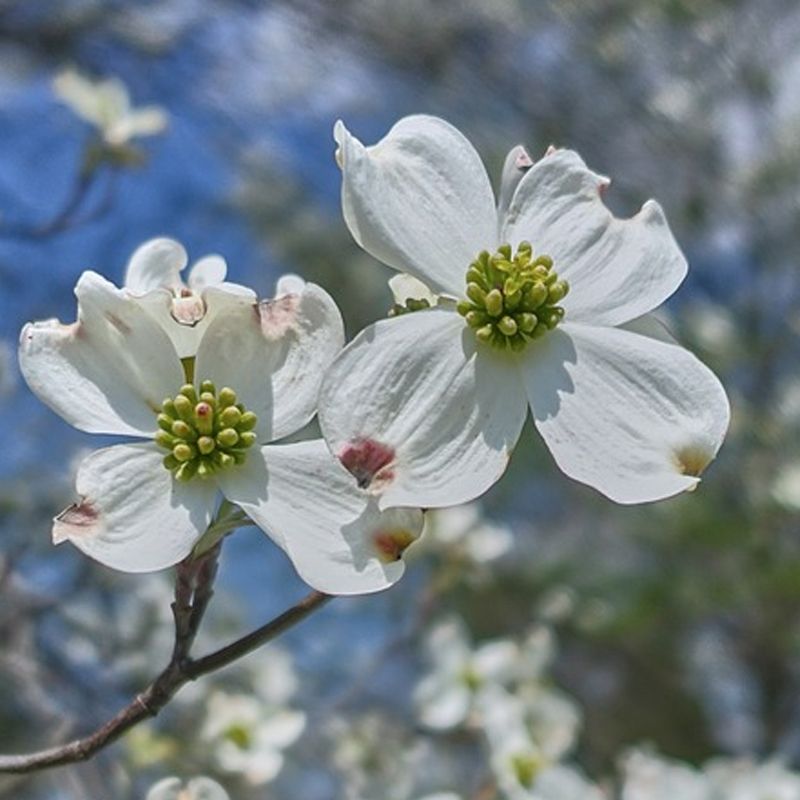
Flowering dogwood has a way of making even the most ordinary yard feel like something worth slowing down for in spring, with wide-spreading branches covered in white or pink bracts that open before the leaves fully emerge.
That early, showy display is tied to buds that formed the previous season, which is why early spring pruning can quietly reduce one of the season’s best moments.
Flowering dogwood sets both flower and leaf buds in late summer and fall. By the time February arrives in Georgia, those buds are already formed and ready to open with the first reliable warmth.
Cutting branches at that point removes buds that will not be replaced until the following season, and heavy pruning can stress the tree at a time when it is putting energy into flowering and leafing out.
Dogwoods generally do not need much routine pruning, and that is a good thing. The natural branching pattern is part of the tree’s charm, and over-trimming tends to disrupt it.
If you notice broken limbs after a late winter storm, those can be addressed carefully with clean cuts.
Otherwise, early spring care for a flowering dogwood is better spent checking for adequate moisture, applying a light layer of mulch away from the trunk, and simply stepping back to enjoy the show.
5. Eastern Redbud Pops With Pink Blooms Before Leaves
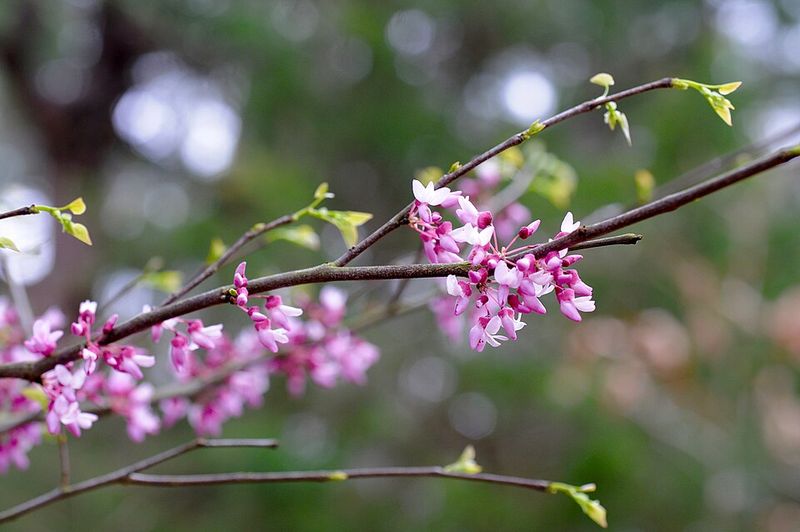
There is something almost theatrical about an eastern redbud in early spring, when every branch is suddenly covered in clusters of bright magenta-pink flowers before a single leaf has appeared.
That bare-branch bloom is one of the most recognizable signs of spring across Georgia, and it happens because flower buds formed and overwintered right along the stems, waiting for their moment.
Pruning an eastern redbud in early spring means cutting into bud-loaded branches at the exact moment the tree is preparing for bloom. Even a moderate trim can noticeably reduce the display.
Timing pruning to just after flowering finishes is often the simplest way to keep next spring’s bloom potential high while still allowing you to handle shape and structure.
Keep cuts selective, focusing on crossing branches or stems that are crowding the canopy rather than shearing the whole tree for a neater silhouette.
In early spring, the most helpful things you can do are water during dry stretches, check that mulch is not piled against the trunk, and make sure any broken branches from late winter weather are removed cleanly with sharp tools.
6. Virginia Sweetspire Adds White Spring Flowers And Fall Color

Virginia sweetspire is the kind of native shrub that pulls double duty beautifully, offering long arching clusters of white flowers in late spring and then turning into a blaze of red, orange, and purple foliage in fall.
Getting both of those seasonal moments requires understanding when and why pruning can work against the plant rather than for it.
Virginia sweetspire blooms on the previous season’s wood, so cutting stems back in early spring can remove buds before they open. The result is often a shrub that leafs out fine but flowers less that year.
Waiting until the flower clusters have finished in late spring or early summer gives you a much better window for any shaping that the shrub genuinely needs.
Virginia sweetspire does spread by suckers over time, and managing that spread is a reasonable task, but it tends to be easier after bloom rather than before.
In early spring, spend time refreshing mulch, especially since sweetspire appreciates consistent moisture and does well with a good organic mulch layer.
Remove only clearly damaged stems, make cuts at a natural fork rather than mid-stem, and let the plant keep its natural arching shape.
7. White Fringetree Shows Fringe Like Blooms In Late Spring
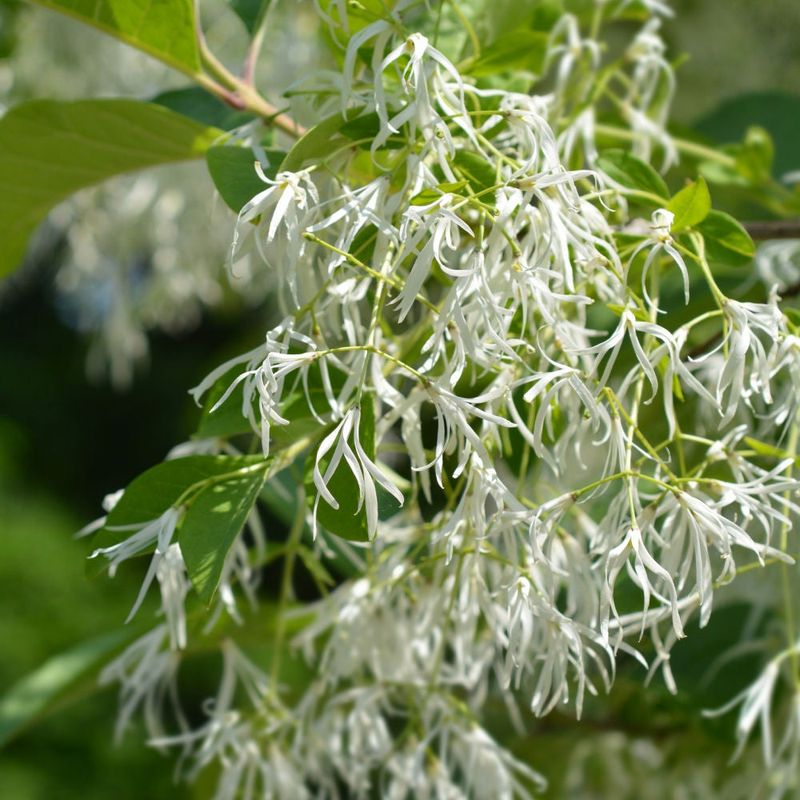
Few native trees generate as many second glances in a Georgia garden as white fringetree when it reaches its late spring peak, draped in soft, airy clusters of white flowers that look almost like Spanish moss floating from the branches.
That remarkable bloom is not something the tree produces casually, and early spring pruning can interfere with it more than most gardeners expect.
Flowers are produced on older wood, so removing a lot of last year’s growth in early spring can reduce bloom.
The tree also leafs out fairly late compared to many other natives, which can make it look behind in early spring and tempt gardeners into unnecessary action.
Patience is genuinely rewarded with white fringetree. Once the flowers have finished in late spring, that is the right moment to assess the tree’s shape and make any selective cuts needed to improve structure or remove crossing branches.
White fringetree grows at a moderate pace, so major pruning is rarely needed and usually looks best when done conservatively.
Early spring care is better focused on checking soil moisture, applying mulch in a wide ring around the base, and removing only branches that are visibly broken or rubbing.
8. Spicebush Opens Early Flowers And Supports Wildlife

Long before most of Georgia’s garden is showing any real color, spicebush is already dotting its bare stems with clusters of small, bright yellow flowers.
That early bloom is one reason spicebush is so useful to early-season pollinators, and it is also one reason early spring pruning can reduce the show.
Spicebush blooms on old wood, so the buds for those early flowers are already set before the first warm days arrive. Trimming the shrub in early spring, even lightly, can remove part of that bud set and reduce flowering.
Spicebush also supports spicebush swallowtail larvae, so keeping the shrub healthy matters beyond the blooms.
After flowering finishes, spicebush leafs out quickly and settles into a full, rounded form that rarely needs aggressive pruning.
If shaping is needed, a light trim shortly after bloom is a reasonable approach, focusing on stems that are crossing or growing in an awkward direction.
Avoid shearing the whole shrub into a uniform shape, since spicebush has a naturally layered woodland character that looks best when cuts are thoughtful and minimal.
In early spring, mulching and moisture management are far more useful than a cosmetic haircut.