Native Michigan Flowers That Bloom Before Trees Fully Leaf Out
Before Michigan trees fill out with thick leaves, a quieter kind of flower show begins close to the ground. These native blooms appear early, taking in the extra sunlight that reaches the forest floor and garden beds before shade takes over.
That short window is when they shine, adding soft color and early beauty just when winter starts to loosen its grip. Many of these flowers may look delicate, but they are tough, well timed, and deeply connected to the natural rhythm of spring.
They also give early pollinators an important food source when not much else is blooming. For gardeners, that makes them even more rewarding to grow.
Some open for only a brief time, which adds to their charm and makes them easy to miss if you are not paying attention. In Michigan, these early native flowers bring one of spring’s most special and short lived displays.
1. Trout Lily
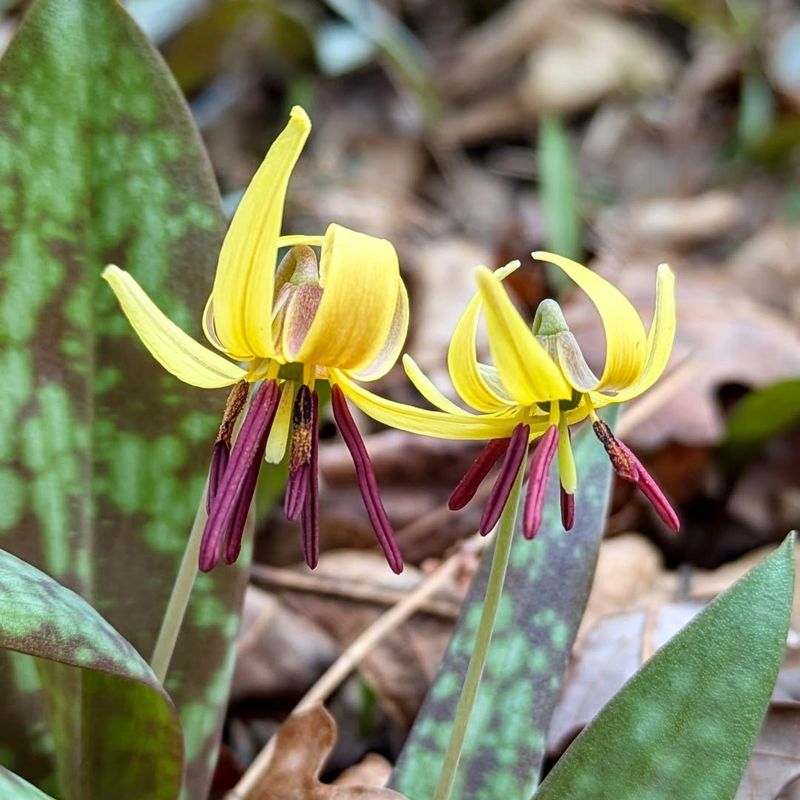
Imagine walking through a Michigan woodland in April and spotting a carpet of speckled leaves dotted with tiny yellow blooms. That is exactly what Trout Lily looks like, and it is one of the most charming sights of early spring.
The leaves are mottled with brown and green patterns that actually resemble the markings on a brook trout, which is exactly how this plant got its name.
Each plant sends up a single nodding yellow flower that gently droops toward the ground, almost like it is shy about showing off. It blooms before the trees fully leaf out, which means it gets full sunlight on the forest floor for just a few precious weeks.
That timing is no accident because Trout Lily has evolved specifically to take advantage of that brief sunny window.
Trout Lily thrives in moist, rich woodland soil and often grows in large colonies that spread slowly over many years. A single colony can actually be decades old, quietly expanding underground through underground stems called corms.
If you find a big patch in a Michigan forest, you are looking at a plant community that has been growing there for a very long time. Gardeners who want to grow it at home should plant it in shaded spots with consistently moist soil for the best results.
2. Spring Beauty
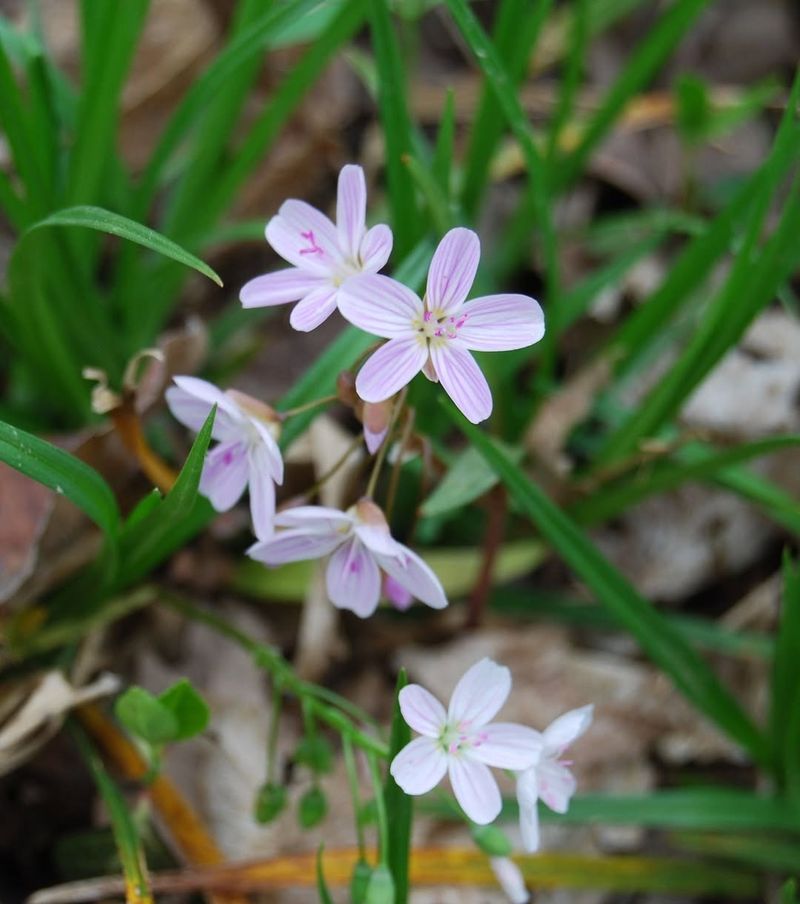
There is something almost storybook about Spring Beauty. Tiny, delicate, and covered in pink pinstripes, this little wildflower pops up across Michigan woodlands every April like a quiet announcement that warmer days are coming.
Claytonia virginica is its scientific name, and it belongs to a group called spring ephemerals, which are plants that bloom fast, set seed, and disappear before summer fully arrives.
Spring Beauty produces small flowers with five white or pale pink petals, each one decorated with darker pink veins running through it.
Those stripes are not just for looks because they actually act as guides for pollinators, pointing bees and early butterflies straight toward the nectar.
This makes Spring Beauty one of the most important early food sources for insects waking up after a long Michigan winter.
You will usually find Spring Beauty growing in rich, moist woodland soil, often forming large, dense colonies that spread across the ground in impressive drifts.
It loves the open sunlight that reaches the forest floor before the tree canopy fills in, and it makes the most of every warm spring day.
If you want to add it to your garden, choose a shaded spot with well-drained but consistently moist soil. Once established, it spreads on its own and returns faithfully every spring without much help from you at all.
3. Bloodroot
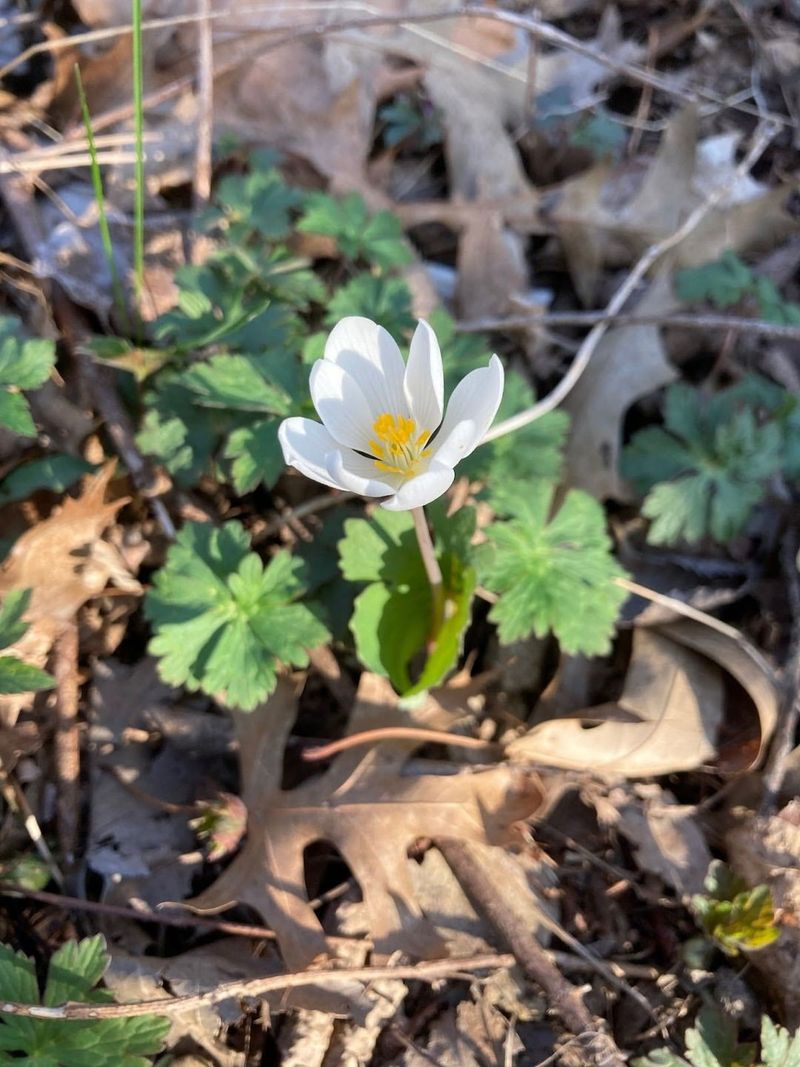
Few wildflowers in Michigan make as bold a first impression as Bloodroot. Pure white petals surrounding a bright golden center, it almost glows against the dull browns of the early spring forest floor.
Sanguinaria canadensis has been growing in Michigan woodlands for thousands of years, and Indigenous communities historically used the plant’s distinctive red-orange sap for dye and ceremonial purposes.
Bloodroot blooms in April, often appearing when the air is still cool and the trees are barely showing any buds.
One of the most interesting things about this flower is that it opens wide in sunlight and actually closes up at night or on cloudy days, almost like it is being protective of its pollen.
Each flower only lasts a few days, so catching it in full bloom feels like a rare gift.
The large, lobed leaf wraps around the flower stem early on, almost cradling the bloom as it rises from the ground. Once the flower fades, the leaf continues to grow and gather sunlight for the rest of the season.
Bloodroot grows best in shaded woodland areas with moist, humus-rich soil and does not like to be disturbed once it is established. In a Michigan native garden, it pairs beautifully with other woodland ephemerals and adds a touch of elegance to shady corners that other plants might struggle to fill.
4. Dutchman’s Breeches
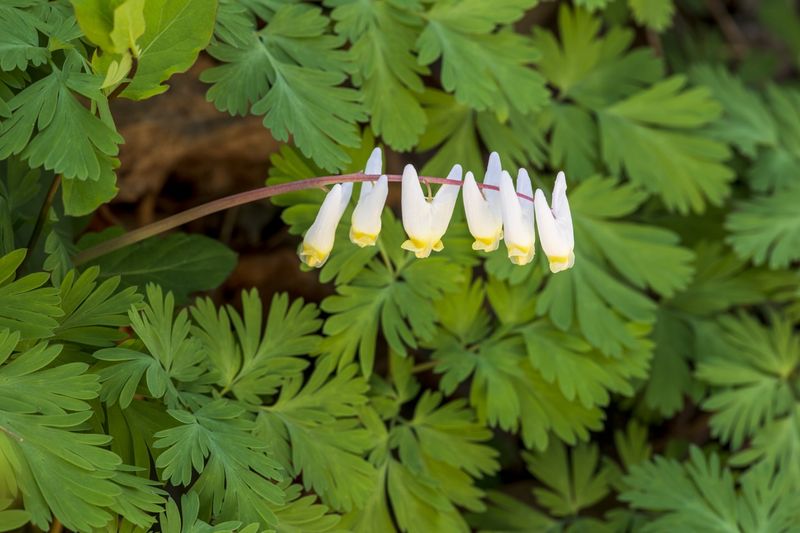
Dutchman’s Breeches might have the most entertaining name of any wildflower in Michigan, and the flowers themselves live up to the fun.
Each tiny bloom looks exactly like a pair of upside-down white pantaloons hanging out to dry on a clothesline, which is precisely where the old Dutch-inspired nickname comes from.
Dicentra cucullaria is quirky, charming, and surprisingly easy to fall in love with once you spot it in the wild.
This plant blooms in April across Michigan’s woodland areas, sending up arching stems lined with those signature pant-shaped flowers above feathery, blue-green foliage.
It times its bloom perfectly to catch the sunlight that floods the forest floor before the trees leaf out overhead.
Bumblebees are among the few insects strong enough to push into the flower and reach the nectar inside, making this a plant with a very selective guest list.
Dutchman’s Breeches prefers cool, moist woodland soil and does best in partial shade, tucked under deciduous trees where it gets plenty of early spring light.
After flowering, the foliage fades away by early summer, which means it pairs really well with other plants that fill in the space later in the season.
If you are building a Michigan native plant garden, this one adds a whimsical, playful energy that visitors always notice and ask about. It is small, but it absolutely steals the show every April.
5. Virginia Bluebells
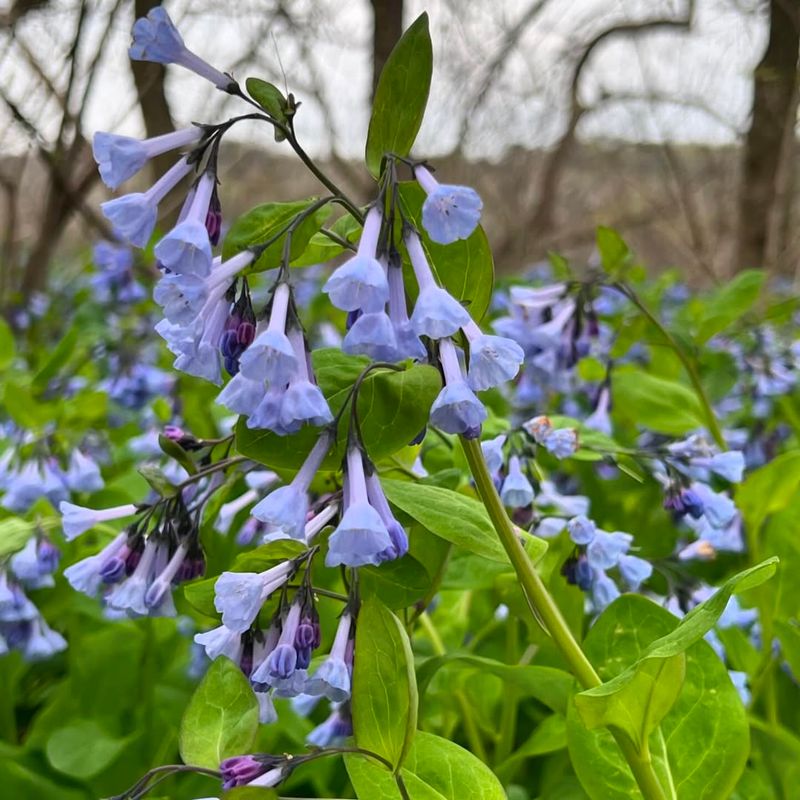
Walking through a Michigan floodplain forest in April and stumbling upon a sea of blue flowers is one of those experiences that genuinely stops you in your tracks. Virginia Bluebells do that to people.
Mertensia virginica produces clusters of soft, sky-blue bell-shaped flowers that dangle gracefully from arching stems, and the effect when they grow in large groups is breathtaking in the most literal sense.
What makes them even more interesting is the color shift they go through. The buds start out pink and then gradually transform into that signature clear blue as they open, giving each cluster a two-toned look that is rare in the plant world.
They bloom from April into early May in Michigan, perfectly timed to catch the sunlight before the forest canopy closes in overhead and shades the ground below.
Virginia Bluebells thrive in moist, rich soil and are especially happy growing near streams, rivers, or low-lying areas where the ground stays consistently damp.
They grow naturally in Michigan’s floodplain woodlands and riverside forests, where they often form massive, sweeping colonies.
Pollinators absolutely love them, particularly long-tongued bees and early butterflies searching for nectar. For gardeners, planting them near a rain garden or low wet spot in partial shade mimics their natural habitat beautifully.
Once settled in, they spread steadily and reward you with a bigger, more spectacular show every single spring.
6. Hepatica
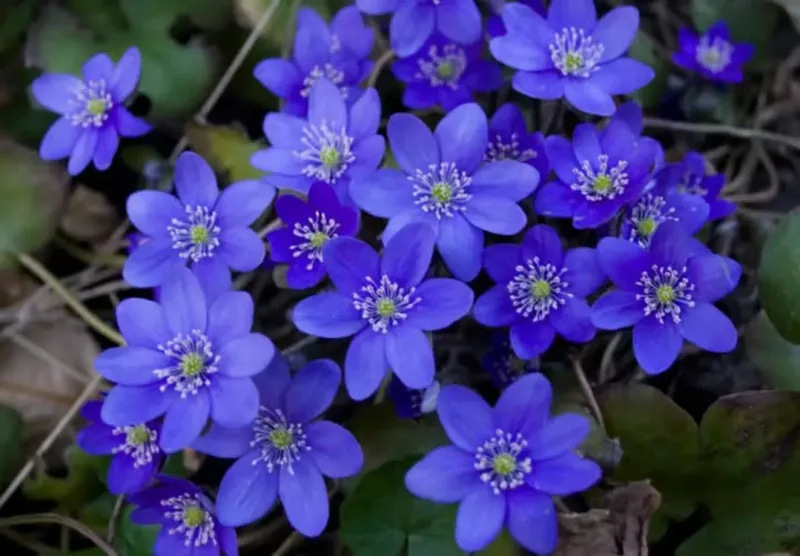
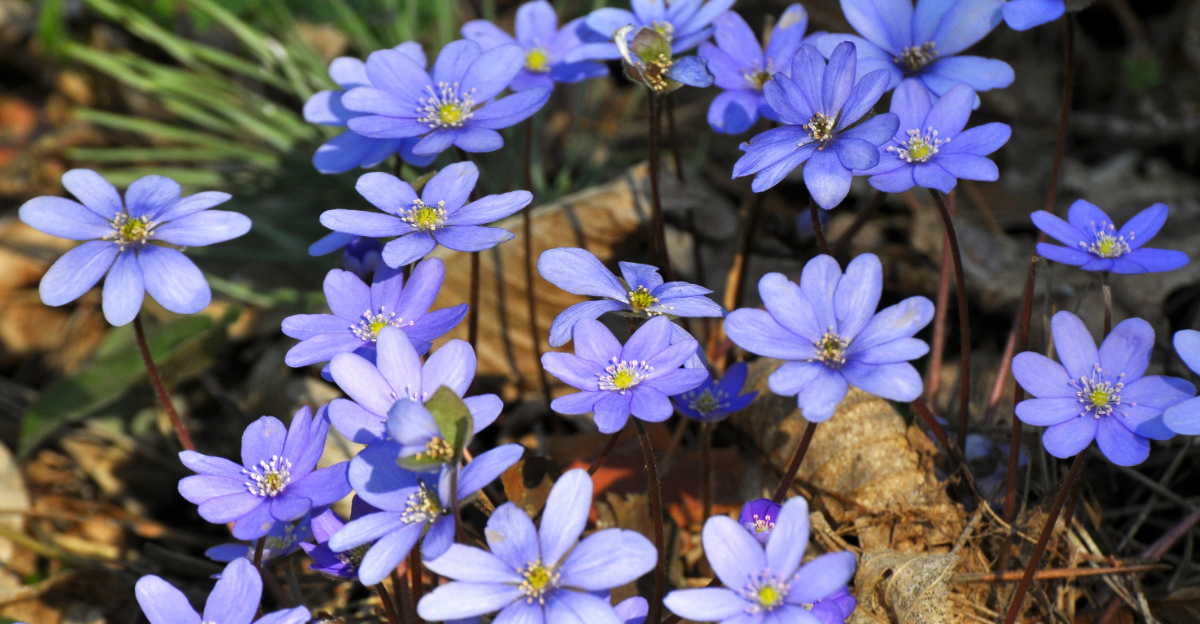
Hepatica does not wait for perfect conditions. While most other plants are still waiting for warmer soil, this tough little wildflower is already pushing its flowers up through the leaf litter in late March, sometimes while there is still a faint chill in the Michigan air.
It is one of the earliest blooming wildflowers in the entire state, and that bold timing is a big part of what makes it so special.
The flowers come in shades of blue, purple, pink, or white, and each one rises on a fuzzy stem above a cluster of three-lobed leaves from the previous year.
Those old leaves stay through winter and actually help protect the plant during cold months, which is a clever survival trick.
New leaves do not appear until after the plant has already finished flowering, which is the opposite of how most plants work.
Hepatica is one of the more adaptable native wildflowers in Michigan because it can grow in both dry and moist woodland soils, making it easier to establish in a wider range of garden settings than some of its more particular woodland neighbors.
It prefers dappled shade under deciduous trees and does well on slopes or hillsides where water drains away from the roots.
For gardeners who want early spring color with very little maintenance, Hepatica is a genuinely rewarding choice that returns reliably year after year.
7. Large-Flowered Trillium
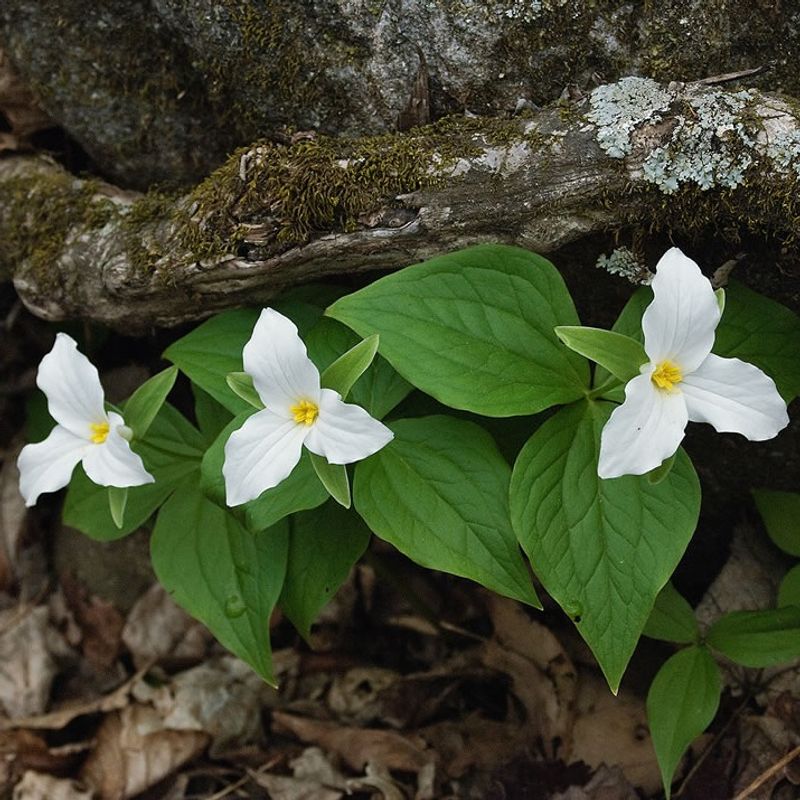
If Michigan had an official wildflower of spring, Large-Flowered Trillium would be a very strong candidate.
Trillium grandiflorum is iconic in the truest sense of the word, with its three large, brilliant white petals rising above a whorl of three broad leaves in a way that looks almost too perfect to be real.
It is the kind of flower that stops hikers mid-step and sends gardeners straight to their phones to take pictures.
Large-Flowered Trillium blooms in late April and into May across Michigan, right at the point when trees are just beginning to push out their first leaves. It catches the last of the open canopy light and uses those final bright weeks to attract pollinators and set seed.
Over time, the white flowers age to a soft pink, adding another layer of color to the woodland floor as the season progresses.
Rich, shaded woodland soil is where this plant truly thrives, and it has a reputation for being slow to establish but incredibly long-lived once it settles in. A single plant can live for decades in the right conditions.
It is also the state wildflower of Ohio and a beloved symbol of old-growth forests throughout the Great Lakes region. In Michigan, picking Trillium is illegal in many areas because the plant takes so many years to recover.
Admire it on the trail, photograph it freely, and consider growing it in a shaded native garden where it can flourish undisturbed for generations.