Native Michigan Plants That Wake Up Early In Spring And Feed Pollinators
As winter fades across Michigan, the first signs of life begin to appear in places you might not expect. While many plants are still dormant, a few early risers push through the soil and start growing as soon as the temperatures begin to climb.
These native plants do more than just signal the start of spring. They play an important role in supporting pollinators that are just becoming active after the cold months.
At a time when food sources are still limited, these early blooming plants provide much needed nectar and pollen. Bees, butterflies, and other pollinators depend on them to get a strong start to the season.
Adding these plants to your yard can help create a more balanced and lively space right from the beginning of spring. Once you see how much activity they bring, you may start looking forward to these early blooms just as much as the warmer days ahead.
1. Bloodroot
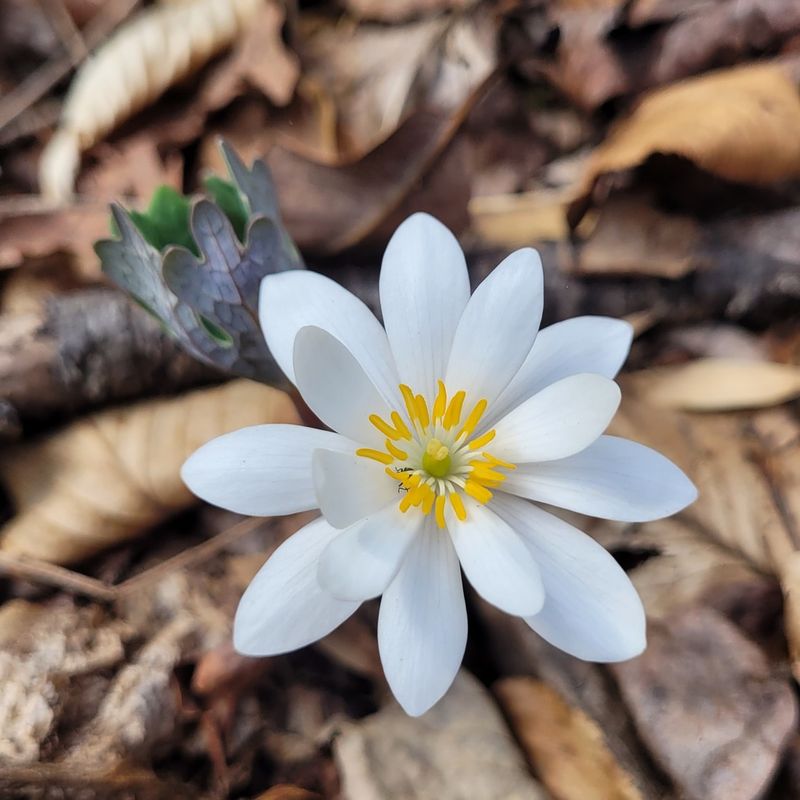
Before the trees even think about growing leaves, bloodroot is already putting on a show. This remarkable native plant pushes up through the Michigan forest floor almost immediately after snow clears, sometimes as early as late March.
Its crisp white flowers with bright yellow centers are genuinely stunning against the brown woodland soil, and they do not last long, making each bloom feel like a small gift.
Bloodroot thrives in rich, moist soil with good shade, which makes it a natural fit for Michigan’s many wooded areas. It grows well under oaks, maples, and other hardwood trees where the soil stays cool and damp throughout early spring.
Gardeners who have a shaded corner with decent soil will find bloodroot surprisingly easy to establish once it settles in.
For pollinators, this plant is basically a first-of-the-season restaurant. Bees and beetles visit the flowers eagerly because almost nothing else is blooming yet in Michigan at that point.
The plant spreads slowly over time through underground rhizomes, gradually forming soft colonies that look beautiful and wild.
Planting bloodroot in a shaded Michigan garden gives you early color and gives pollinators an early meal they truly need to survive the season ahead.
2. Virginia Bluebells
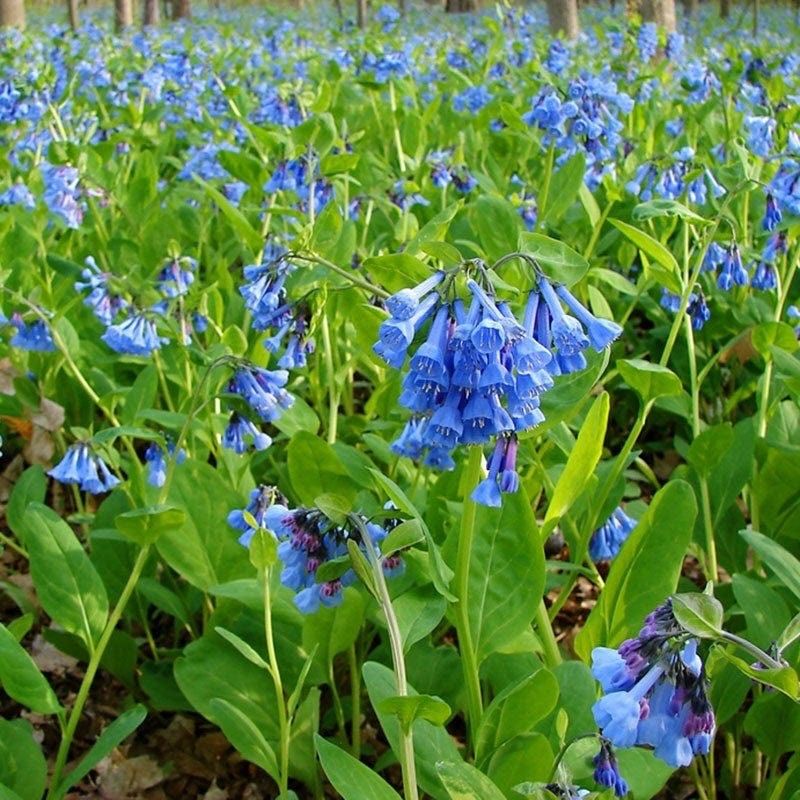
Few wildflowers create a scene as breathtaking as Virginia bluebells in full bloom. Walking through a Michigan woodland in April and spotting a carpet of those soft blue-purple bells is the kind of thing that sticks with you.
The color is unusual for a wildflower, almost like someone painted the forest floor in watercolor, and pollinators clearly love it just as much as people do.
Virginia bluebells prefer moist, rich woodland soil and grow remarkably fast in early spring. They take full advantage of the sunlight that reaches the forest floor before tree canopies fill in, completing most of their growth cycle in just a few weeks.
This makes them what gardeners call a spring ephemeral, meaning they appear, bloom, and fade before summer even gets started in Michigan.
Bumblebees and other long-tongued bees are particularly drawn to these flowers because the tubular shape fits them perfectly.
Planting Virginia bluebells along a woodland path or near a rain garden in Michigan gives pollinators a reliable early stop on their spring foraging routes.
They naturalize beautifully over time, spreading into larger colonies without much help. Once established in a Michigan garden, they come back stronger and more impressive every single year.
3. Wild Columbine
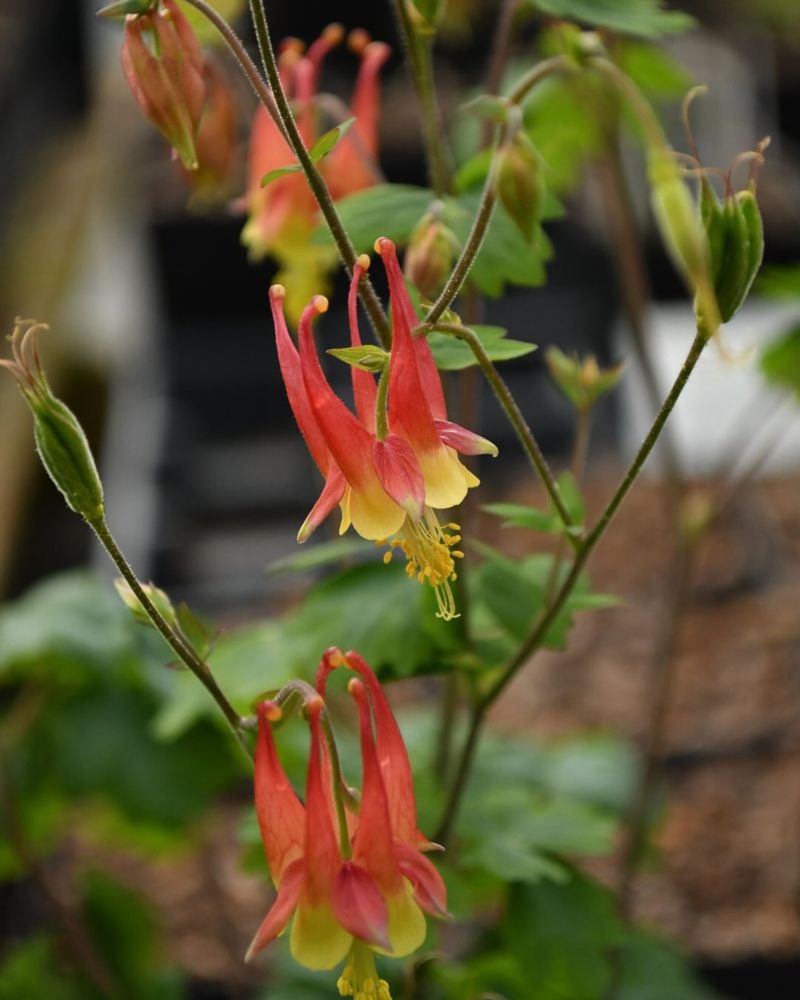
Wild columbine has one of the most recognizable flowers of any native Michigan plant. Those nodding red and yellow blooms with their long backward-pointing spurs look almost like tiny lanterns hanging from delicate stems.
They catch the eye immediately, and they are engineered almost perfectly for the pollinators that visit them most often in Michigan each spring.
Hummingbirds returning to Michigan in late April and May arrive right as wild columbine hits its peak bloom, which is no coincidence.
The long nectar spurs match the bill length of ruby-throated hummingbirds almost exactly, making this one of the most important native food sources for those birds during their arrival window.
Bumblebees also visit regularly, often finding creative ways to access the nectar from the side of the flower.
Unlike many early bloomers, wild columbine handles a wide range of growing conditions across Michigan. It tolerates rocky, well-drained soil and does well in partial shade or even fairly open spots with morning sun.
Once established, it self-seeds gently and fills in gaps in garden beds naturally over time. Gardeners across both Lower and Upper Michigan have success with this plant because it is tough, adaptable, and genuinely beautiful from the moment its first buds open each spring season.
4. Marsh Marigold
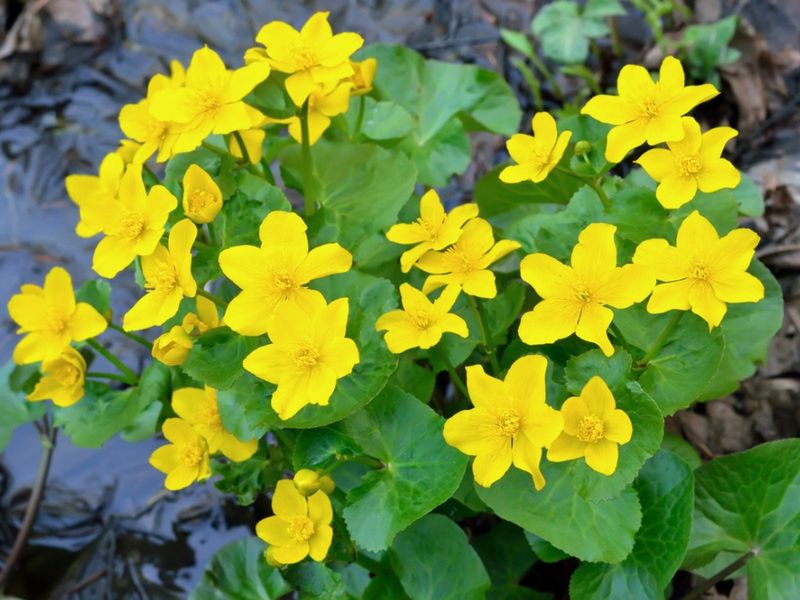
Bright, bold, and almost impossibly cheerful, marsh marigold is one of the first splashes of color to appear in Michigan’s wetlands each spring.
Those glossy yellow flowers pop against the gray and brown landscape of early April like tiny suns, and they signal to pollinators that the season has officially started.
Wetland areas and low spots across Michigan come alive the moment this plant begins to bloom.
Marsh marigold needs consistently wet or saturated soil to perform at its best, which is why it thrives naturally along Michigan stream banks, pond edges, and boggy meadows.
It is not a plant for dry garden beds, but for anyone with a rain garden, a low-lying yard, or a spot that stays wet in spring, it is absolutely perfect. Michigan’s water-rich landscape gives this plant plenty of places to grow and thrive.
Early pollinators, especially mining bees and small native bees, visit marsh marigold flowers heavily because the open, bowl-shaped blooms make nectar easy to access.
There is no complicated flower structure to navigate, just a wide-open landing pad full of pollen and nectar.
Adding marsh marigold to a wet Michigan garden spot creates an early-season pollinator hub that fills a gap when almost nothing else is available. It is a plant that works hard for the ecosystem every single spring.
5. Spring Beauty
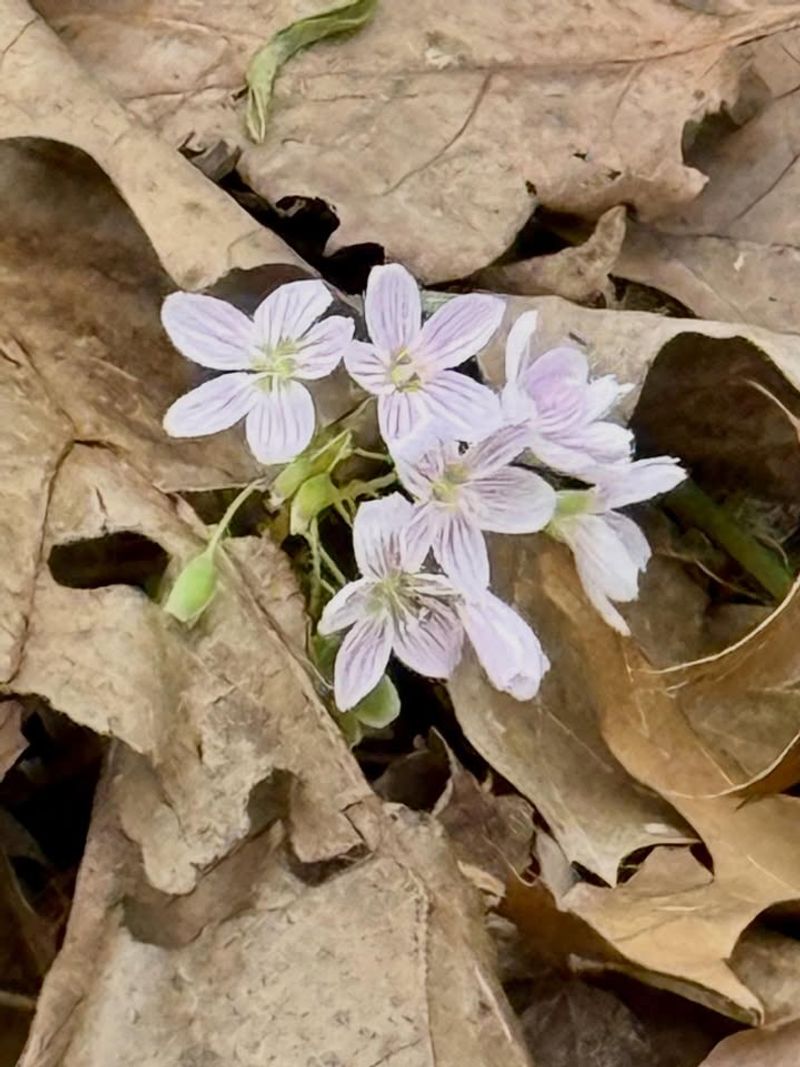
Spring beauty might be small, but it punches well above its weight when it comes to supporting Michigan’s pollinator community.
Those tiny pink and white striped flowers appear in dense colonies across woodland floors throughout both Lower and Upper Michigan, often before most people have even started thinking about spring gardening.
Spotting a patch of spring beauty in the woods feels like finding a secret the forest is sharing only with you.
This little wildflower grows from a small underground corm and pushes up through the soil very early in the season. It prefers rich, moist woodland soil with partial to full shade, conditions that are easy to find across much of Michigan’s forested landscape.
The plants bloom for several weeks in March and April, giving pollinators a reliable food source during a stretch of time when options are still very limited.
Native bees, especially a small specialist bee called the spring beauty mining bee, depend heavily on this plant for early-season pollen. That relationship makes spring beauty more than just a pretty wildflower; it is a critical piece of the native ecosystem puzzle in Michigan.
Planting it in a shaded corner of a yard or along a naturalized garden edge is easy since it spreads on its own and asks for very little care once established in the right spot.
6. Dutchman’s Breeches
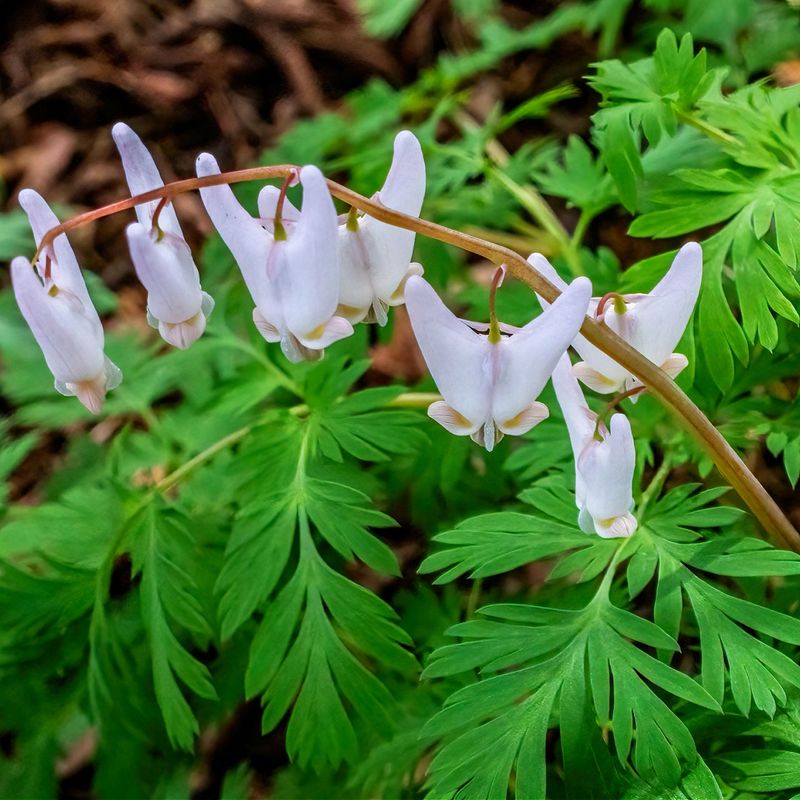
Dutchman’s breeches has one of the quirkiest looks in the entire native plant world. Those small white flowers dangling upside down from arching stems genuinely look like tiny pairs of old-fashioned pants hung out to dry, which is exactly how the plant got its memorable name.
Growing through Michigan woodlands in early April, it brings a touch of whimsy to the forest floor that makes you stop and look twice.
Like many spring ephemerals in Michigan, Dutchman’s breeches times its growth brilliantly. It emerges and blooms during the narrow window when sunlight still reaches the woodland floor, before the tree canopy fills in overhead and shades everything out.
The feathery, blue-green foliage is almost as attractive as the flowers, giving the plant a soft, delicate texture that contrasts beautifully with darker forest soil.
Bumblebee queens, freshly emerged from their winter resting spots, are the primary visitors to these flowers in Michigan. The flower shape is specifically suited to long-tongued bees that can reach the nectar stored deep inside the spurs.
Planting Dutchman’s breeches in a shaded native garden or woodland edge in Michigan adds real ecological value because it feeds some of the most important pollinators at the most critical time of year.
It spreads slowly through underground bulblets, gradually building into a lovely colony over several seasons.
7. Hepatica
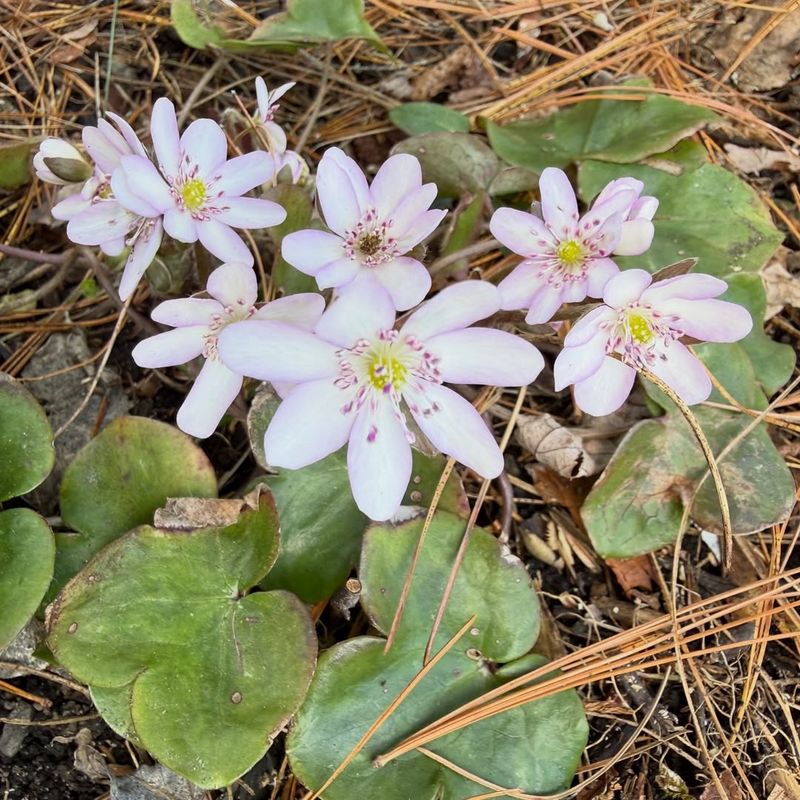
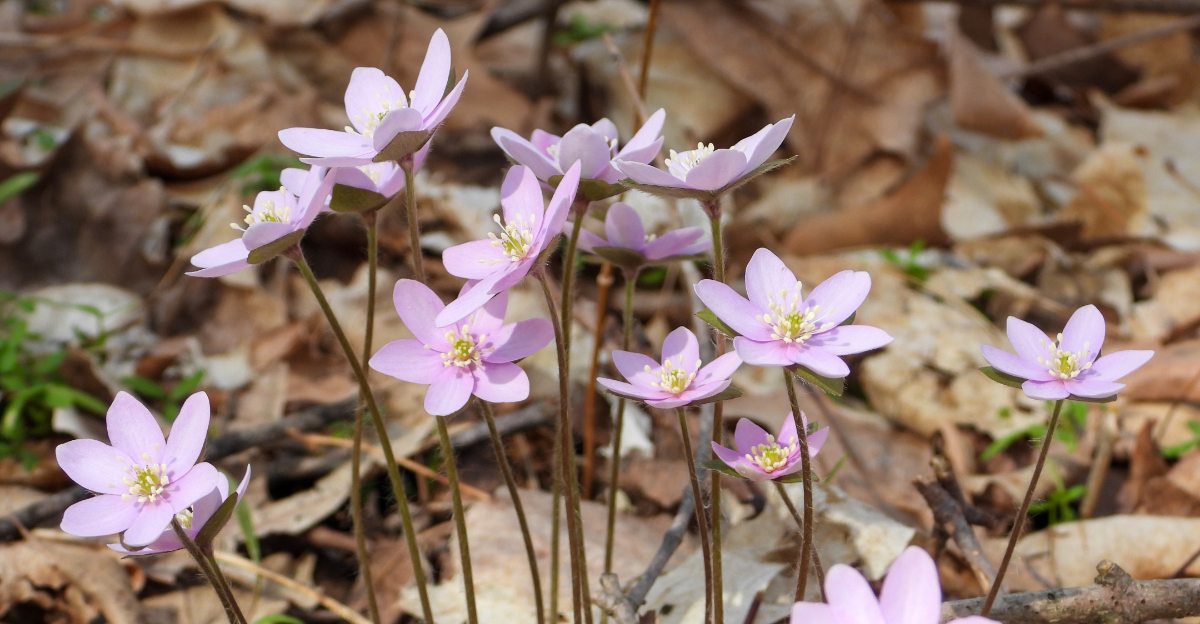
Hepatica is the kind of plant that makes you feel like spring is personally keeping a promise. It blooms so early in Michigan that you can sometimes find its fuzzy little flower buds poking up while patches of snow still linger nearby in the woods.
Few native plants anywhere in the state beat hepatica to the punch when it comes to first bloom of the year, and pollinators notice immediately.
You will find hepatica growing on well-drained wooded slopes and hillsides across Michigan, often in areas with a thin layer of leaf litter over rocky or sandy soil.
It prefers slightly alkaline conditions and does particularly well in forests with a lot of limestone bedrock, which shows up in several regions across the state.
The flowers come in shades of lavender, blue, pink, and white, often varying even within the same small patch of plants.
Early bees and flies visit hepatica flowers eagerly because the blooms appear before almost any other native plant is open in Michigan. The flowers stay open on warm, sunny days and close up again at night or during cold snaps, which helps protect the pollen inside.
Hepatica is slow to establish but incredibly long-lived once it settles into the right spot. Adding it to a shaded, well-drained Michigan garden is an investment that pays off beautifully for pollinators and gardeners alike for many years to come.