8 Native Michigan Shrubs Perfect For Front Yards
There’s something comforting about walking past a front yard that feels alive, full of shrubs that bloom year after year.
You remember planting your own, the patience it takes, and the satisfaction of seeing each new leaf and flower appear season after season.
Native shrubs bring structure, color, and wildlife to a yard without the fuss of constant upkeep.
They thrive in Michigan’s soil and climate, giving familiar gardens a natural elegance while quietly attracting birds, butterflies, and pollinators that make every morning feel a little brighter.
Choosing the right shrubs now sets the stage for a front yard that stands out while staying low-maintenance. With a few well-picked plants, your yard can become a lively, inviting space that’s ready to flourish as the spring unfolds.
1. New Jersey Tea That Pops With Color
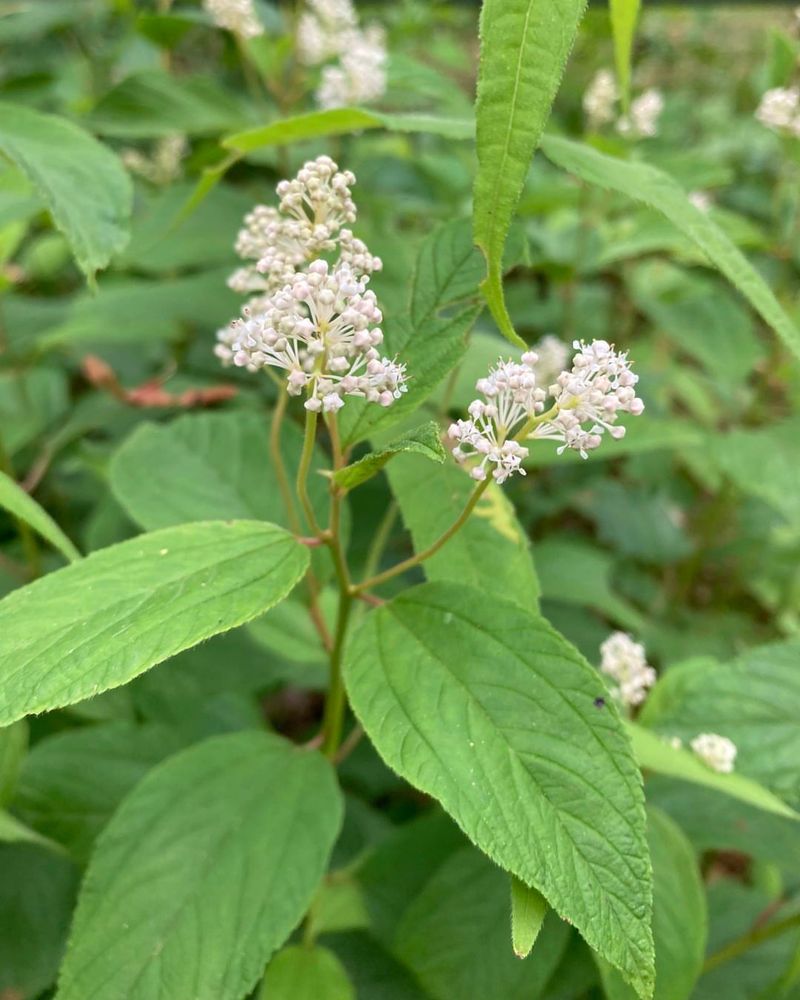
Long before tea bags existed, early American colonists brewed their morning drink from the leaves of this remarkable little shrub. New Jersey Tea, known scientifically as Ceanothus americanus, is a compact native shrub that grows just two to four feet tall, making it an excellent choice for front yards in Michigan where you want something manageable, attractive, and naturally low-maintenance without a lot of fuss.
It is also deer-resistant, adding another layer of practicality for gardeners in areas with wildlife.
Every summer, this shrub bursts into clouds of tiny white flowers that attract bumblebees, butterflies, and other native pollinators by the dozen. The blooms are showy and cheerful, giving your front yard a fresh, welcoming look right when your neighbors are spending the most time outdoors.
Because the plant stays relatively small, it works beautifully as a border plant along walkways, driveways, or even near patios for close-up enjoyment and pairs well with other perennials.
One of the best things about New Jersey Tea is its deep taproot, which makes it remarkably drought-tolerant once established. Michigan summers can get dry, and this shrub handles those stretches without needing constant watering.
It prefers well-drained soil and full sun to light shade. Pruning lightly after bloom keeps it tidy, encourages fresh, vigorous growth each season, and can also improve air circulation, supporting overall plant health and reducing potential pest issues.
2. Red‑Chokeberry Bringing Berry Bliss
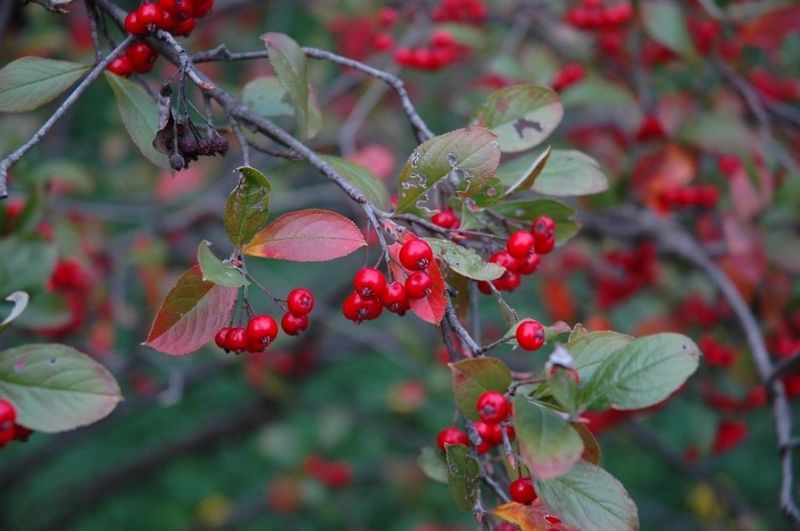
Few native Michigan shrubs can match the year-round drama that Red Chokeberry brings to a front yard. Aronia arbutifolia puts on a show in every season, starting with clusters of delicate white flowers in spring, transitioning to glossy green leaves through summer, and then exploding into brilliant red foliage and jewel-bright berries in the fall.
Its adaptability makes it a favorite for gardeners who want both beauty and wildlife benefits in one plant.
Those berries are the real star of the show. Bright red and densely packed along the branches, they persist well into winter, giving your front yard color and texture even after most other plants have gone bare.
Red Chokeberry produces berries that attract birds such as robins, cedar waxwings, and bluebirds, adding wildlife interest and movement to your yard throughout the colder months.
Red Chokeberry grows six to ten feet tall and spreads gradually through suckers, forming a dense, natural-looking colony over time. It handles both wet and dry soils with ease, which makes it an especially flexible choice for Michigan landscapes where drainage can be unpredictable.
Plant it in full sun for the most vibrant berry production and the richest fall color possible. It also works well as an informal hedge, a wildlife-friendly border, or a privacy screen along property lines, adding both beauty and a sense of enclosure to your front yard space.
3. Michigan Holly That Shines All Year
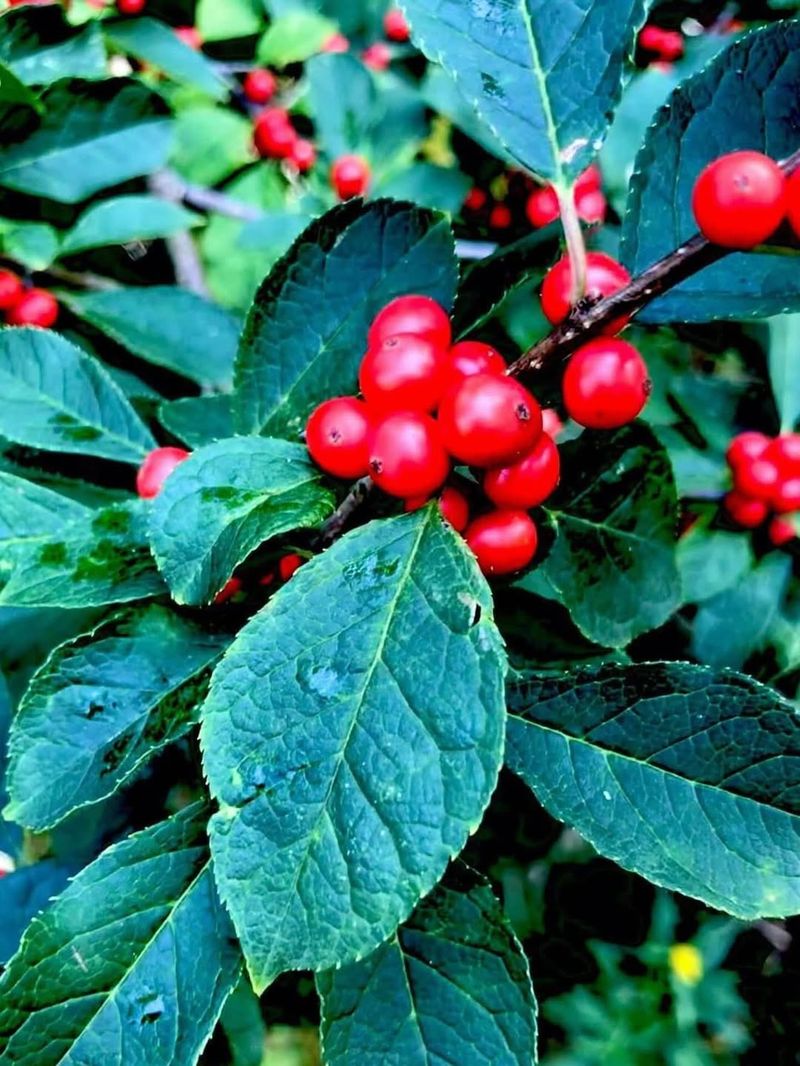
Walk through any Michigan wetland in December and you might spot a blaze of red glowing against the gray winter landscape. That is Winterberry Holly, also called Michigan Holly, and it is one of the most stunning native shrubs you can plant in your front yard if you want serious visual impact during the coldest months of the year.
Unlike most hollies, Michigan Holly is deciduous, meaning it drops its leaves in fall. But that is actually what makes it so special.
Once the leaves fall, hundreds of brilliant red berries are left clinging to bare branches, creating a look that feels almost like nature’s own holiday decoration. The display lasts from late October all the way through February, feeding hungry birds throughout the winter season.
Growing six to ten feet tall, this shrub thrives in moist to wet soils, which is great news for Michigan gardeners who struggle with low-lying, poorly drained areas in their front yards. It tolerates clay soil surprisingly well and prefers full sun to partial shade for maximum berry production.
One important tip: you need both a male and female plant nearby for the female to produce those gorgeous berries. Plant one male for every three to five female plants and your front yard will reward you with a breathtaking winter display year after year.
4. Buttonbush That Birds Can’t Resist
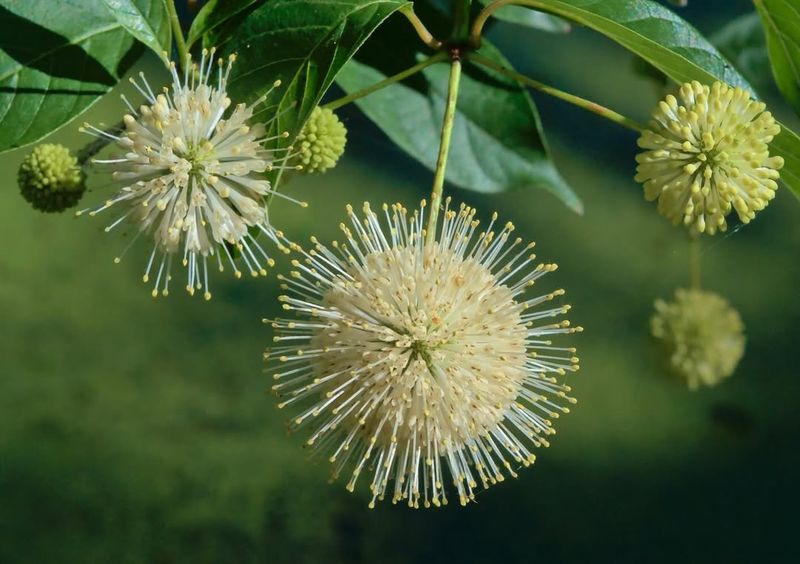
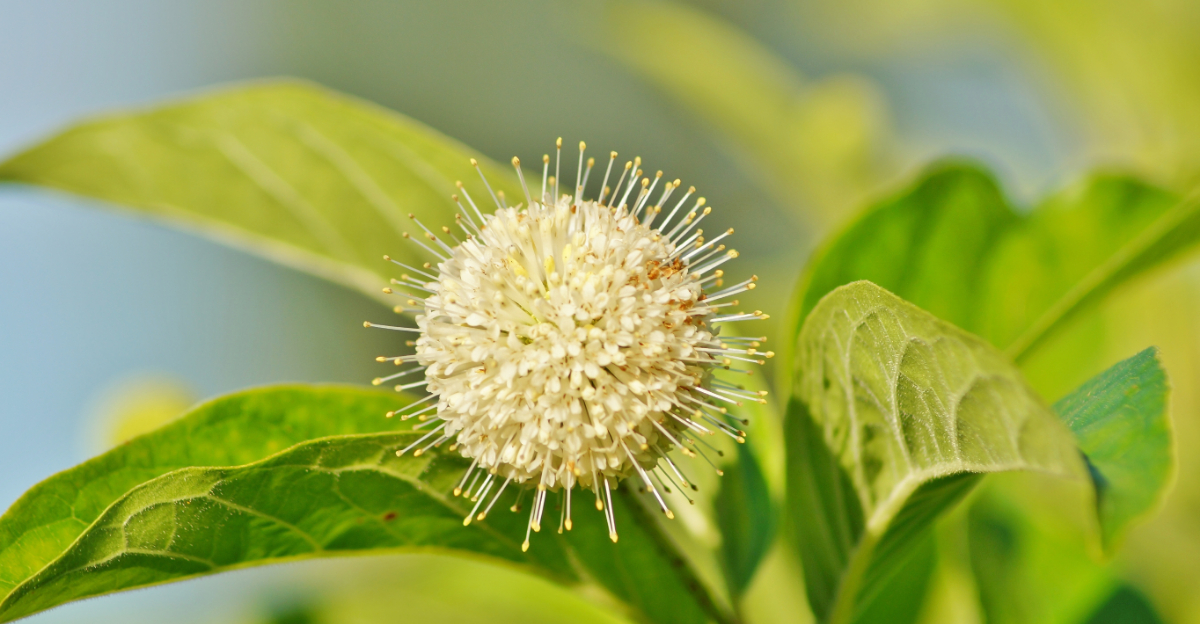
If you want a shrub that genuinely stops people in their tracks, Buttonbush is your answer. The flowers of Cephalanthus occidentalis look like something out of a science fiction movie, perfectly round white spheres covered in tiny tubular blooms that stick out in every direction like a botanical pincushion.
They are unlike anything else you will find in a Michigan front yard, and they bloom all summer long.
Pollinators go absolutely wild for Buttonbush. Bees, butterflies, hummingbirds, and even sphinx moths flock to the blooms, making your front yard a buzzing, fluttering hub of ecological activity.
After the flowers fade, round reddish-brown seed heads form and persist into winter, adding another layer of texture and visual interest to your landscape.
Buttonbush grows best in moist to wet soils, making it a perfect solution for front yard areas that tend to stay soggy after rain. It thrives in Michigan’s heavier clay soils and handles periodic flooding without any trouble.
In the right spot, it can grow six to twelve feet tall, so give it some room to spread out and show off. Full sun produces the most flowers, though it tolerates partial shade reasonably well.
If you have a rain garden or a low-lying area in your Michigan front yard that you have struggled to plant successfully, Buttonbush is exactly the native solution you have been looking for.
5. Common Ninebark Stealing The Spotlight
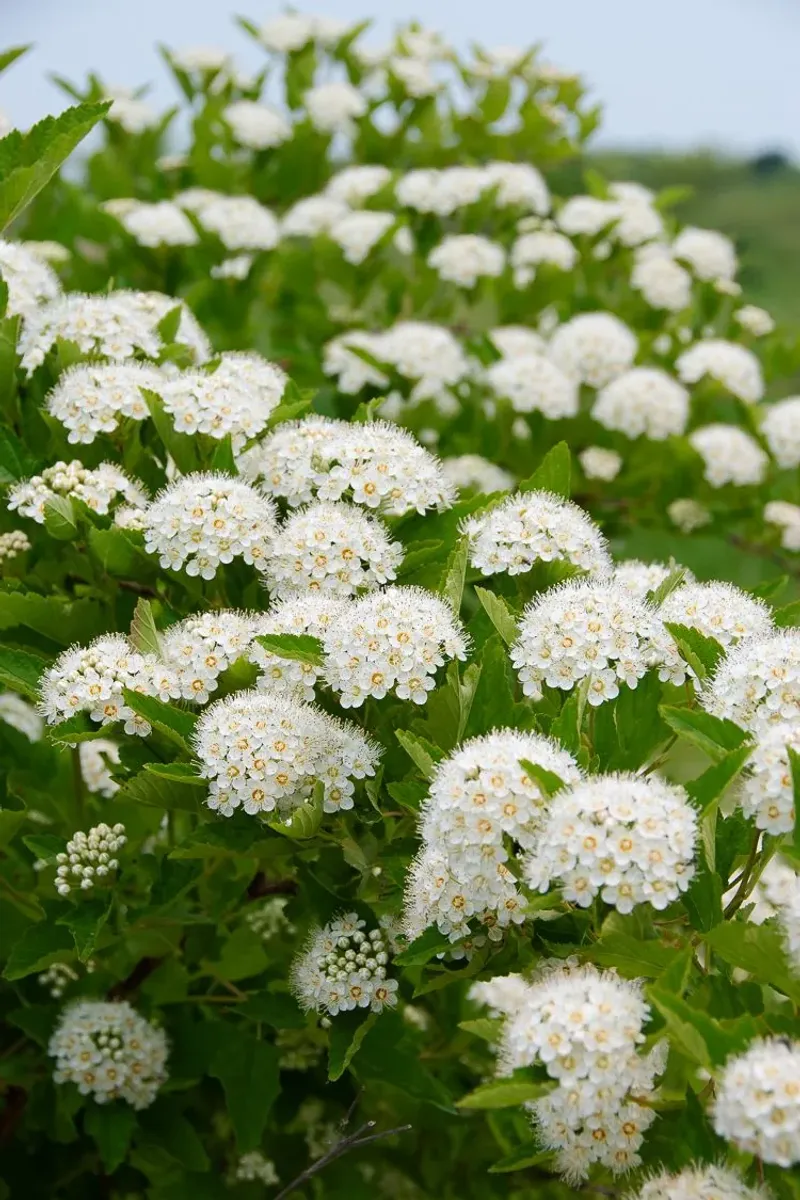
Named for its fascinating peeling bark that seems to shed layer after layer like pages of a book, Common Ninebark is one of the toughest and most adaptable native shrubs you can grow in Michigan. Physocarpus opulifolius has been a staple of Midwestern landscapes for good reason, and it earns its spot in front yards across the state every single season.
Spring brings clusters of white to pale pink flowers that attract native bees and other pollinators. By late summer, reddish seed capsules add a pop of color that carries the visual interest right through fall.
The exfoliating bark then becomes the star of winter, peeling back in papery strips to reveal rich cinnamon and orange tones underneath. Honestly, very few shrubs offer this much seasonal variety in a single plant.
Common Ninebark grows five to ten feet tall and handles an impressive range of conditions, from full sun to partial shade and from dry sandy soils to moist clay. It is one of the most forgiving native shrubs available to Michigan gardeners, tolerating poor soils, drought, and even occasional flooding.
Newer cultivars like Diablo and Coppertina offer deep purple or copper-toned foliage that makes the plant even more visually dramatic. Pruning right after flowering keeps the shape tidy and encourages strong new growth.
For a reliable, low-maintenance native shrub that looks great all year, Ninebark is hard to beat anywhere in Michigan.
6. Downy Arrowwood That Draws The Eye
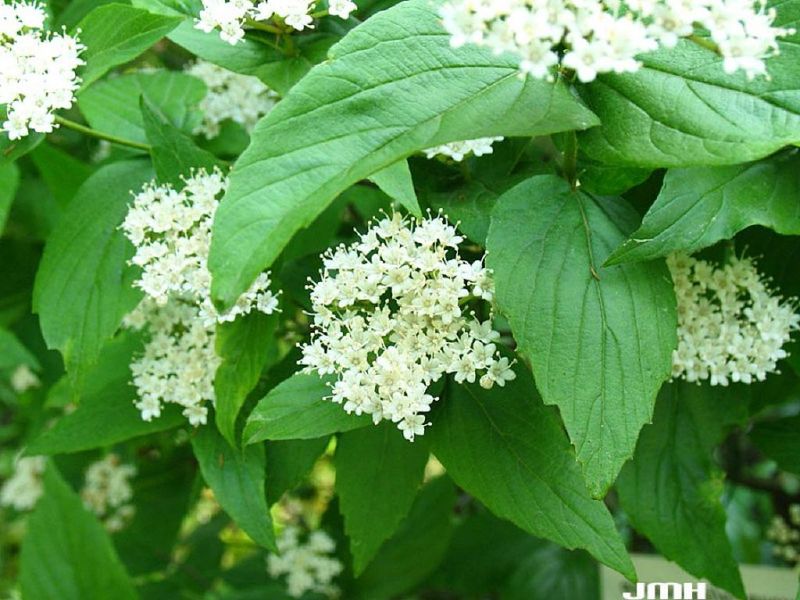
Viburnums are some of the most beloved native shrubs in the Midwest, and Downy Arrowwood Viburnum earns its place at the top of that list. Viburnum rafinesquianum is a medium-sized shrub that brings elegance and wildlife value to Michigan front yards without demanding much in return from the gardener.
Flat-topped clusters of creamy white flowers appear in late spring and early summer, filling the air with a subtle, pleasant fragrance. By late summer, those flowers transform into clusters of small blue-black berries that ripen just in time for migrating birds to fuel up for their long journeys south.
Downy Arrowwood Viburnum produces berries that attract a variety of songbirds, supporting local wildlife without specifying an exact number of species.
Growing four to six feet tall and wide, Downy Arrowwood Viburnum fits comfortably in most front yard spaces without overwhelming the landscape. It handles both full sun and partial shade equally well, and it adapts to a range of soil types from sandy to clay-heavy.
Fall foliage turns shades of reddish-purple, adding one final burst of color before winter arrives. For Michigan homeowners who want a shrub that attracts wildlife, looks refined, and requires minimal care, this viburnum checks every box.
Plant it near a window so you can enjoy watching birds feast on those berries from the comfort of your own living room.
7. Fragrant Sumac That Fills The Air
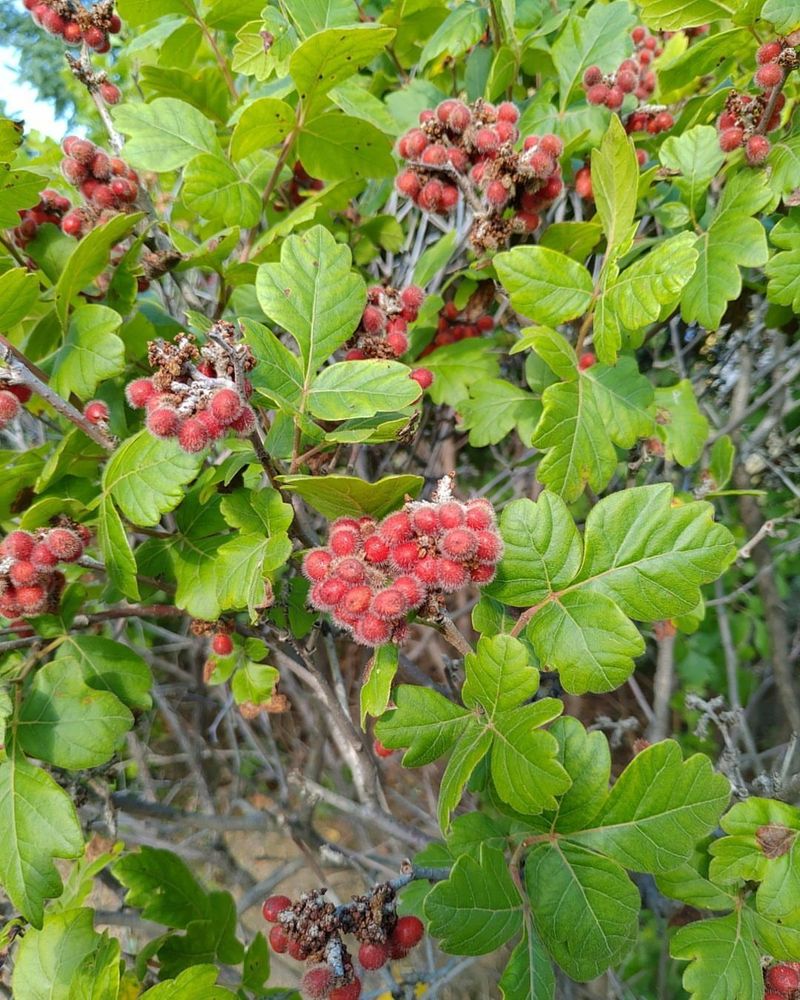
Rub a leaf between your fingers and you will immediately understand how Fragrant Sumac got its name. Rhus aromatica releases a wonderfully spicy, citrusy scent when its foliage is disturbed, making it one of the most sensory-rich native shrubs you can plant in a Michigan front yard.
Beyond the fragrance, this plant is a powerhouse of ecological value and visual appeal.
Early spring brings tiny yellow flowers before the leaves even emerge, providing one of the earliest nectar sources for native bees waking up after the long Michigan winter. Small fuzzy red berries follow in summer, attracting birds and small mammals.
Come fall, the foliage transforms into a stunning mix of orange, red, and purple tones that rivals any ornamental plant on the market.
Fragrant Sumac is a spreading, low-growing shrub that typically reaches three to six feet tall but can spread eight feet or wider over time. That spreading habit makes it absolutely ideal for stabilizing slopes, covering bare hillsides, or filling large areas of a front yard where mowing is difficult or impractical.
It thrives in dry, rocky, or sandy soils that would challenge most other plants, and it handles full sun with ease. Michigan gardeners dealing with challenging, well-drained sites will find Fragrant Sumac to be one of the most dependable and rewarding native options available.
Once established, Fragrant Sumac is low-maintenance and drought-tolerant, though occasional pruning and monitoring may be needed to maintain shape and control spread.
8. Silky Dogwood Sneaking Into Hearts
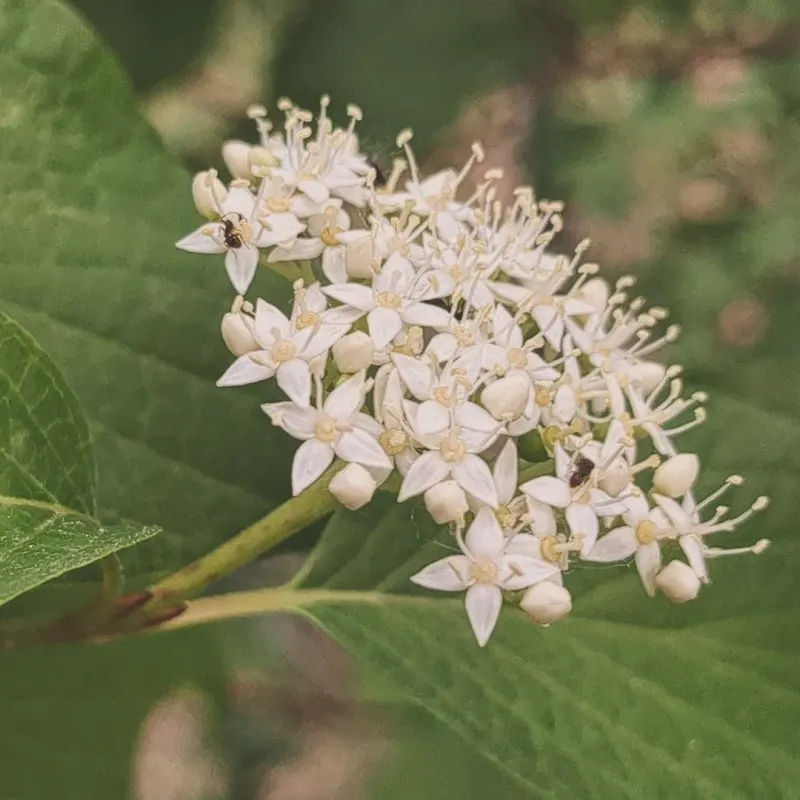
It might not have the flashiest reputation in the world of native Michigan shrubs, but gardeners who plant silky dogwood quickly become some of its biggest fans. Cornus amomum is a medium to large shrub with a relaxed, natural form that brings a soft, woodland feel to front yard landscapes while quietly doing enormous ecological work behind the scenes.
Late spring and early summer bring flat clusters of creamy white flowers that are magnets for native bees and beetles. By late summer, clusters of blue-white berries ripen and are eagerly consumed by over forty species of birds, including wood thrushes, robins, and gray catbirds.
The berries do not last long once the birds find them, which tells you everything you need to know about their popularity in the local food chain.
Silky Dogwood grows six to ten feet tall and wide, preferring moist to wet soils that many other shrubs would struggle in. It is a natural fit for rain gardens, low-lying front yard areas, or spots near downspouts where water tends to collect after storms.
Full sun to partial shade suits it well, and it handles Michigan’s heavy clay soils without complaint. The reddish-brown stems add subtle winter interest after the leaves drop.
For Michigan homeowners who want a tough, wildlife-friendly native shrub that thrives in challenging wet conditions, Silky Dogwood is a reliable and genuinely rewarding choice worth planting.