9 Native North Carolina Plants That Thrive With Almost No Water
Hot, dry stretches can turn a North Carolina garden into a challenge almost overnight. One week everything looks lush, and the next the soil is dry and plants start showing stress.
For gardeners across the Piedmont, Mountain region, and Coastal Plain, keeping a yard looking good through summer often feels like a constant battle with the hose. But some plants are built for exactly these conditions.
Native species have spent generations adapting to North Carolina’s heat, soil, and changing rainfall patterns.
Once established, many can handle dry periods with little extra care while still bringing steady color and life to the landscape. Choosing the right plants can completely change how your garden performs in summer.
With these tough, water smart natives, North Carolina yards can stay vibrant and full even when rain is hard to come by.
1. Eastern Red Cedar
Eastern Red Cedar is not the flashiest plant on this list, but it might be the most dependable.
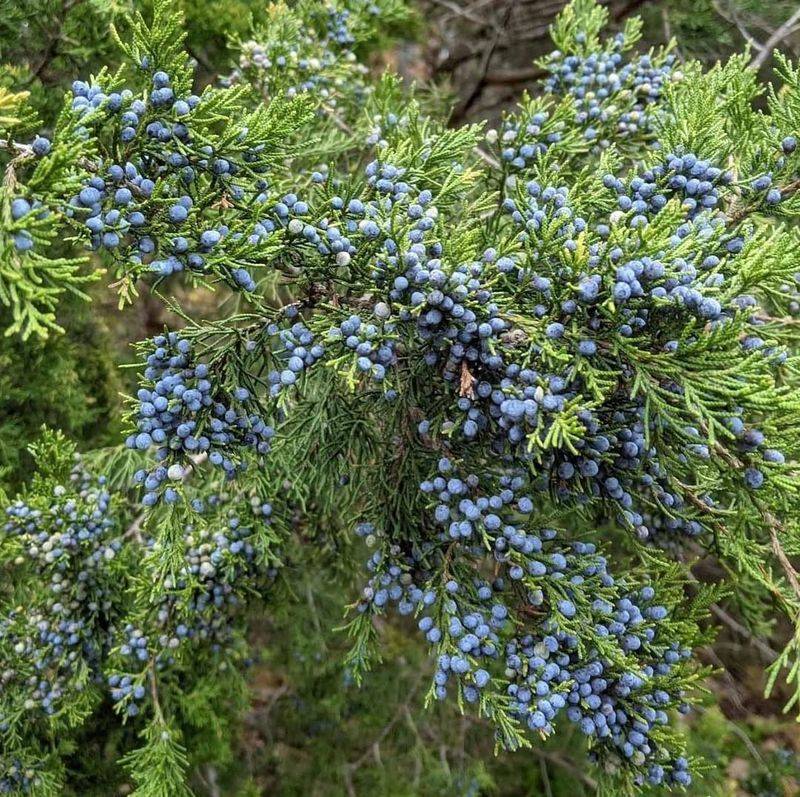
Juniperus virginiana has been growing across North Carolina for centuries, thriving in dry, rocky hillsides, sandy fields, and thin soils where most trees would struggle to survive.
Once established, this native evergreen essentially takes care of itself, requiring almost no supplemental watering even during long dry spells. What makes it so tough is its natural adaptation to lean conditions.
The tree has a wide-spreading root network that efficiently collects water from a large area of soil. Its dense, scale-like foliage also reduces water loss, helping it stay green and healthy through North Carolina’s hottest months.
You can plant Eastern Red Cedar as a windbreak, a privacy screen, or simply as a bold standalone tree in a dry corner of your yard. Beyond its practical toughness, this tree provides real wildlife value.
Cedar waxwings and mockingbirds feast on the small blue berries it produces each fall and winter, and its dense branches offer nesting cover for many bird species.
The wood is naturally fragrant and resistant to rot, which is why it has historically been used for fence posts and cedar chests.
For a low-maintenance North Carolina landscape, Eastern Red Cedar deserves a serious spot on your planting list.
2. Purple Coneflower
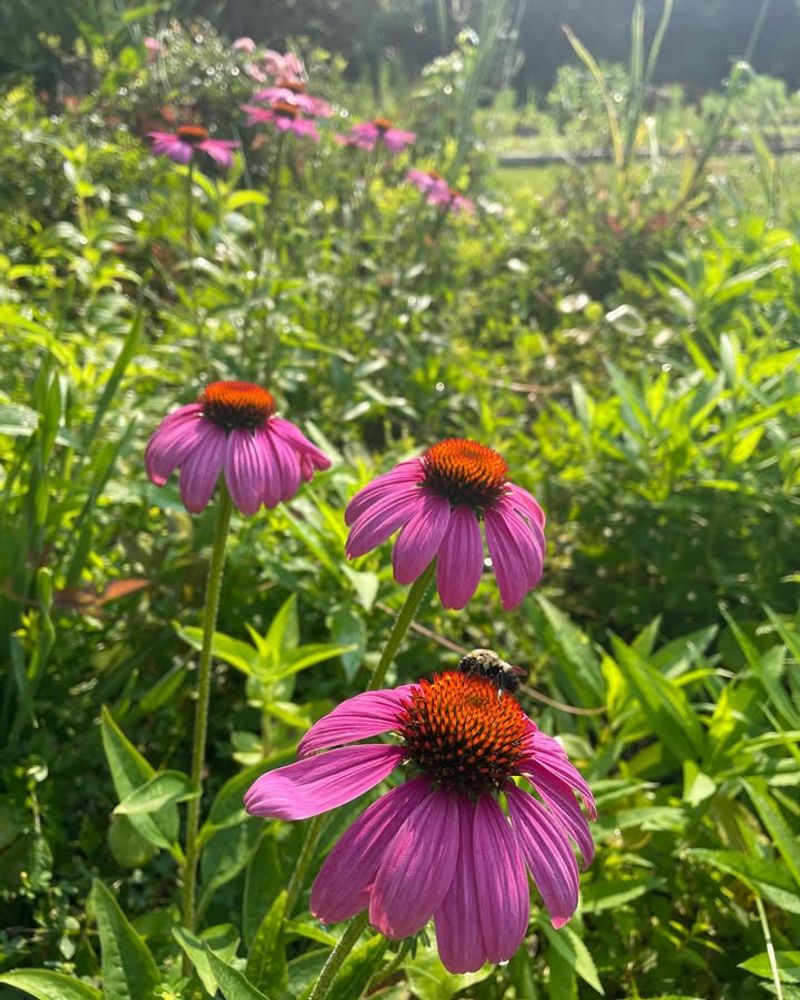
Few plants put on a summer show quite like Purple Coneflower, and the best part is that it barely needs your help to do it.
Native across the eastern United States and thriving in North Carolina gardens, Echinacea purpurea is one of those rare plants that actually seems to prefer being left alone.
Plant it in a sunny spot with well-drained soil, give it a little water while it settles in during its first season, and then step back and watch it take off.
The secret behind its drought toughness is a deep, thick root system that reaches far into the soil to pull up moisture even when the surface looks bone dry.
Those roots store energy and water through heat waves, keeping the plant strong when other flowers start to wilt.
By midsummer, you will see bold purple petals fanning out around a raised, spiky orange center that gives the plant its unmistakable look. Pollinators absolutely love this plant.
Bees, butterflies, and goldfinches all visit regularly, making it a lively addition to any North Carolina yard.
Purple Coneflower also reseeds itself naturally, so one small patch can slowly spread into a fuller, more impressive display over the years.
It handles clay soil, sandy soil, and everything in between, making it one of the most forgiving native flowers you can grow here.
3. Little Bluestem
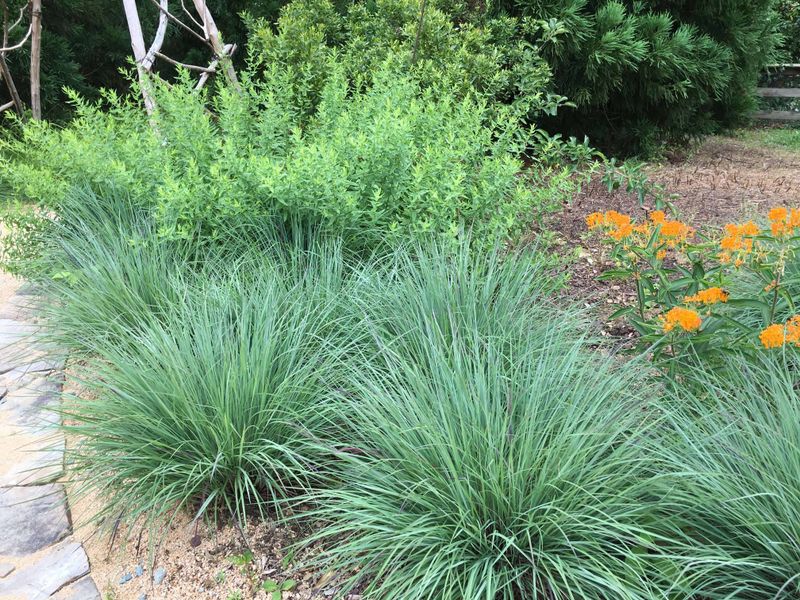
Little Bluestem might just be the most underrated native plant in North Carolina. Most people walk right past ornamental grasses without a second thought, but this one earns its place in the garden through every single season.
In spring and summer, the upright clumps of blue-green foliage look clean and fresh. Then, as fall arrives, the whole plant shifts to a stunning mix of copper, bronze, and reddish-purple that can stop you in your tracks.
Schizachyrium scoparium evolved in dry prairies and open savannas, so it is perfectly suited for the dry, sunny spots in North Carolina where other plants struggle. Once established, it needs almost no supplemental water at all.
The root system runs deep, anchoring the plant firmly and tapping into moisture well below the dry surface layer.
It also handles poor, sandy, or rocky soil without complaint, making it a smart choice for challenging areas of your yard. Beyond its beauty, Little Bluestem offers real ecological value.
The fluffy white seed heads that form in late fall feed songbirds through winter, and the dense clumps provide cover for small insects and ground-nesting birds.
This grass stays upright even through winter, so it adds structure and movement to the landscape long after other plants have gone dormant.
For North Carolina gardeners looking for something beautiful, easy, and genuinely wildlife-friendly, Little Bluestem is a clear winner.
4. Black-Eyed Susan
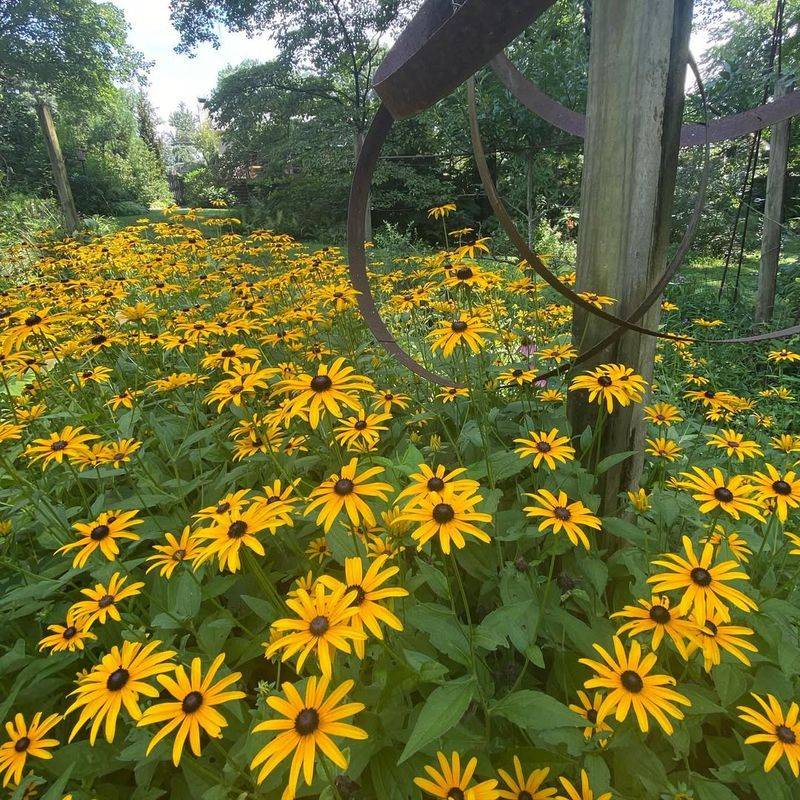
Bright, cheerful, and nearly unstoppable, Black-Eyed Susan is one of those plants that makes you look like a great gardener without much effort.
Rudbeckia hirta grows naturally in roadsides, meadows, and open fields all across North Carolina, and that wild background tells you everything about how tough it really is.
This plant was built for heat, poor soil, and long stretches without rain. The sunny yellow blooms with their rich dark centers appear from late spring all the way through early fall, giving your garden months of reliable color.
Even during North Carolina’s notoriously hot and dry July and August, Black-Eyed Susan keeps flowering when other plants tap out.
It handles clay, sandy, and rocky soils with equal ease, and it actually does better in leaner ground than in overly rich, moist garden beds.
One fun detail that many gardeners appreciate is how well it plays with other native plants. Pair it with Little Bluestem grass or Purple Coneflower, and you get a natural-looking native planting that practically maintains itself.
Bees and butterflies visit the blooms constantly, and birds enjoy the seed heads in late fall. Black-Eyed Susan also reseeds freely, so your initial planting can naturalize into a bigger patch over time.
For a North Carolina garden that wants big color with minimal fuss, this wildflower is hard to beat.
5. Adam’s Needle Yucca
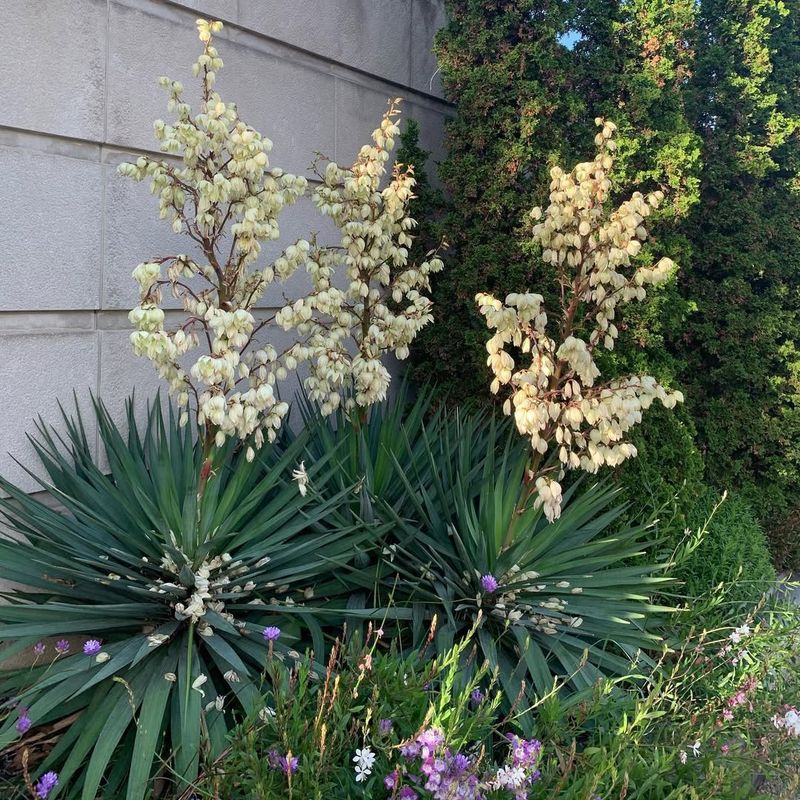
If you want a plant that looks bold, sculptural, and completely unbothered by dry weather, Adam’s Needle Yucca is your answer.
Yucca filamentosa is native to the sandy soils of the southeastern United States, including much of North Carolina’s coastal plain and piedmont, and it has a no-nonsense attitude toward drought that few plants can match.
Its thick, sword-shaped leaves are designed to hold moisture and shed heat, which means it can go weeks without rain and never skip a beat.
Once a year, usually in early summer, the plant sends up a dramatic flower spike that can reach six feet or more in height.
The spike is covered in large, creamy white bell-shaped flowers that open in the evening and have a faint sweet fragrance.
It is one of the most striking sights in any North Carolina garden, and the whole display comes from a plant that asks for almost nothing in return.
Yucca does best in full sun and fast-draining soil. It actually suffers in wet or poorly drained ground, so avoid low spots in your yard. Sandy or rocky soil suits it perfectly, and it can handle the reflected heat from driveways and patios without any stress.
The curly white threads along the leaf margins give it its common name, and those threads help identify it as the native species.
For a dramatic, water-wise focal point, nothing in the native North Carolina plant world quite competes with this one.
6. Tickseed Coreopsis
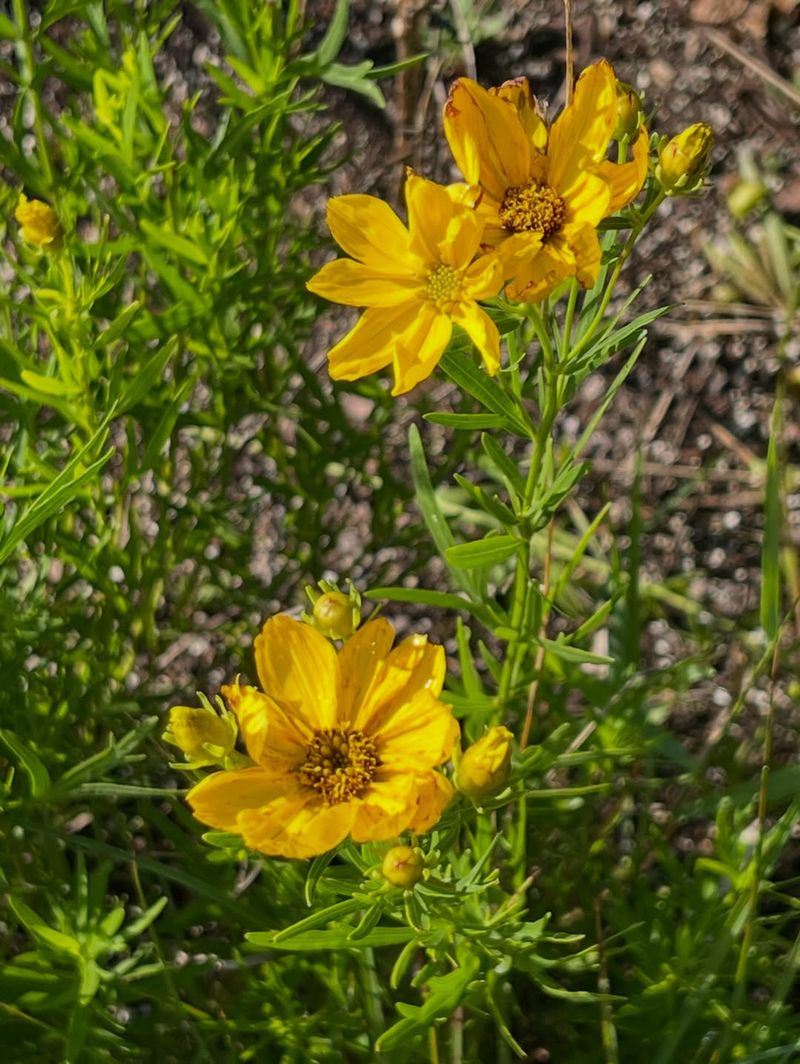
Coreopsis verticillata, commonly called Threadleaf or Tickseed Coreopsis, is one of those plants that rewards neglect.
The more you fuss over it, the less happy it seems, but give it a dry, sunny spot in a North Carolina garden and it will reward you with months of non-stop golden-yellow blooms.
From late spring all the way into fall, this native wildflower keeps pumping out cheerful flowers without needing much water or fertilizer at all.
The leaves are thin and feathery, almost needle-like, which reduces the surface area exposed to the sun and cuts down on water loss.
That clever leaf structure is one reason Coreopsis handles heat and drought so well. The plant forms a neat, rounded mound that looks tidy in garden borders, and unlike some native wildflowers, it does not flop or spread aggressively.
It stays where you put it while still expanding gradually into a fuller clump over time. North Carolina gardeners often use Coreopsis along walkways, in rock gardens, or mixed into sunny perennial beds.
It pairs especially well with Black-Eyed Susan and Little Bluestem for a natural meadow feel that requires very little upkeep.
Bees and butterflies are frequent visitors to the blooms, and the plant is relatively resistant to deer browsing, which is a real bonus in suburban and rural areas of the state. Deadheading spent flowers can extend the bloom season even further.
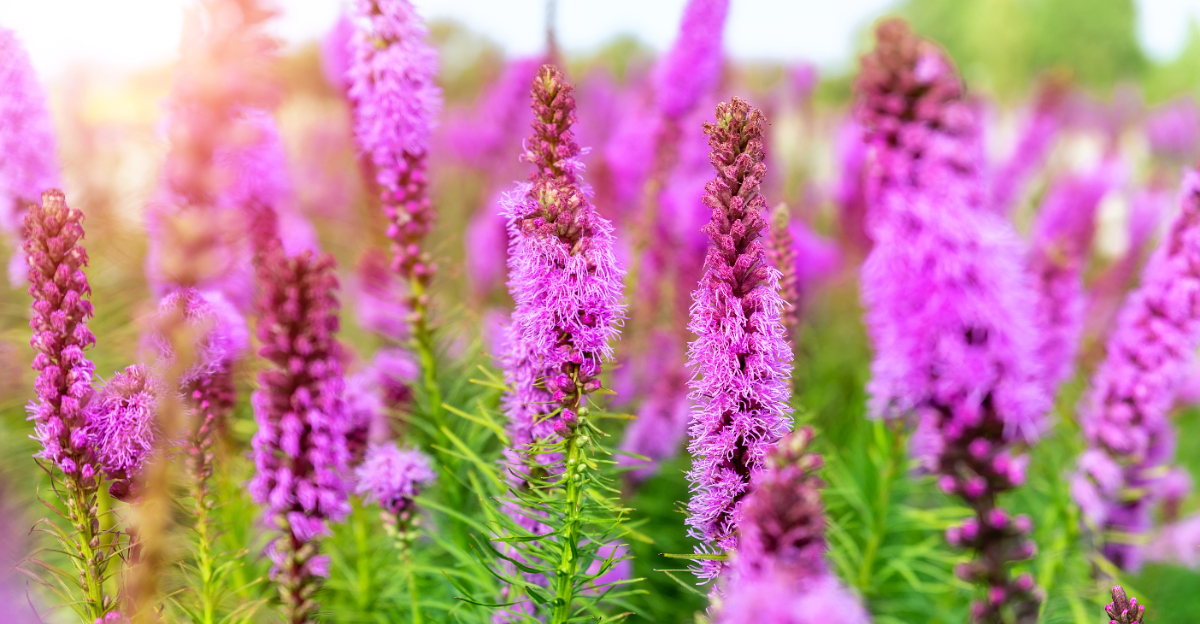
7. Blazing Star
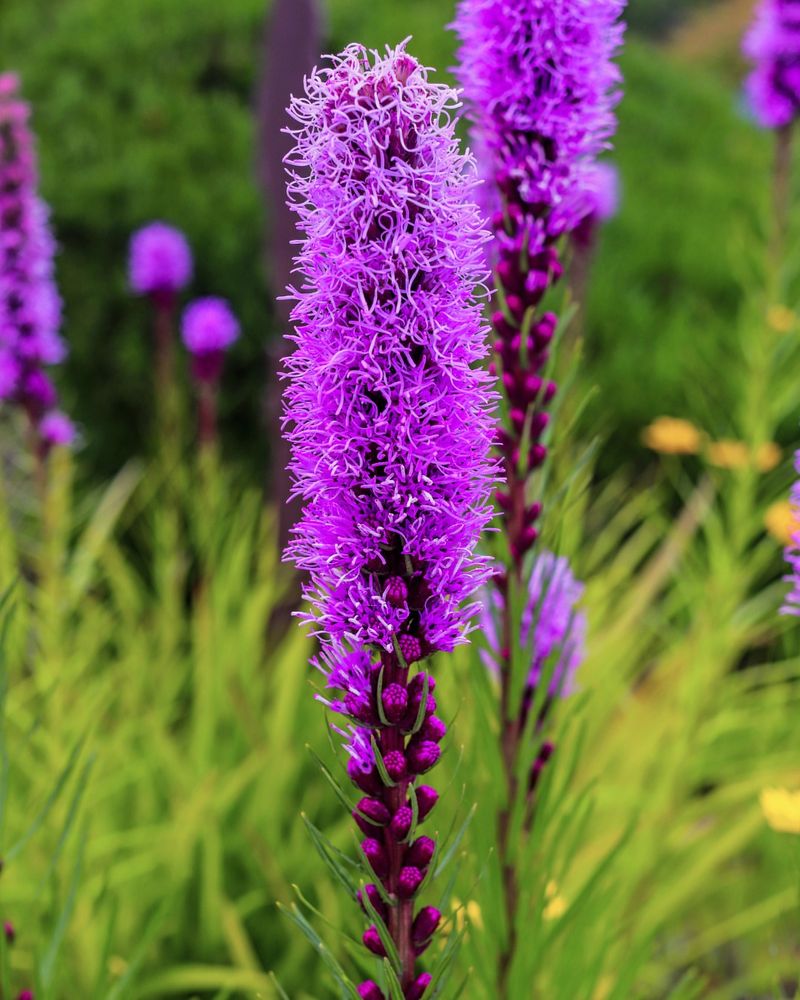
There is something genuinely exciting about watching a Blazing Star bloom.
Unlike most flowers that open from the bottom of the spike upward, Liatris spicata opens from the top down, which creates a distinctive look that gardeners and pollinators both seem to love.
The tall, wand-like spikes of rosy purple flowers rise two to four feet above the ground, creating a striking vertical accent in any sunny North Carolina garden bed or meadow planting.
What makes Blazing Star especially valuable for water-conscious gardeners is its underground corm, which is a rounded storage organ similar to a bulb.
That corm stores water and nutrients, letting the plant survive extended dry periods without wilting.
The root system also runs surprisingly deep for a relatively modest-sized plant, pulling moisture from well below the surface during North Carolina’s dry summer months. Poor, sandy, or rocky soil is no obstacle for this tough native.
Monarch butterflies, swallowtails, and bumblebees are especially drawn to the blooms, and hummingbirds occasionally visit as well.
After the flowers fade, the seed heads attract goldfinches and other small songbirds that pick through them during fall.
Blazing Star looks beautiful planted in masses, but even a small cluster of three or five plants makes a real visual impact.
It is also surprisingly long-lived, returning reliably year after year in North Carolina gardens with very little attention from the gardener.
8. Virginia Pine
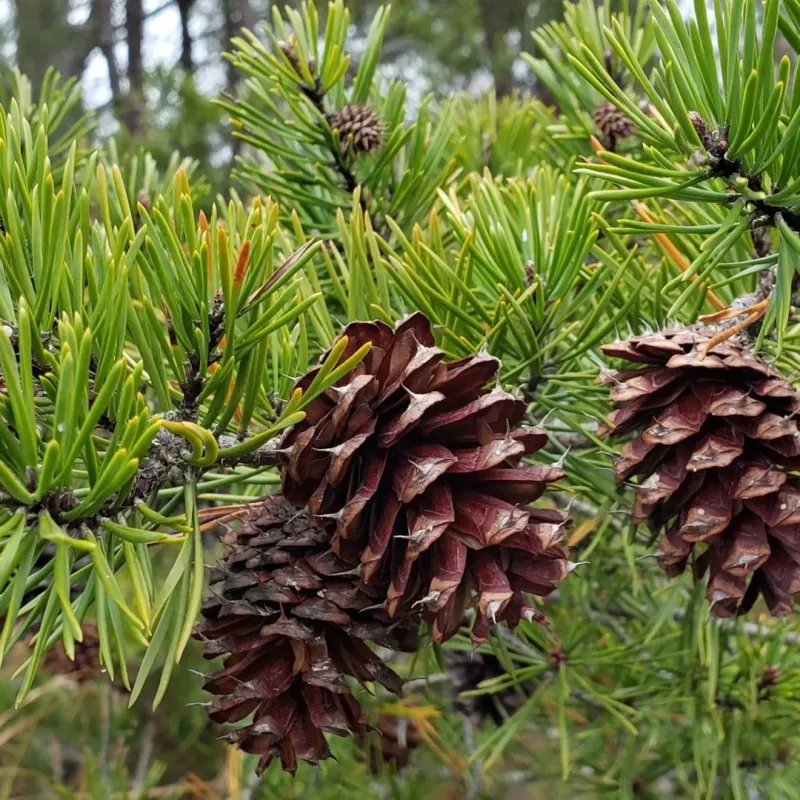
Virginia Pine has a reputation for growing where other trees refuse to bother. Pinus virginiana naturally colonizes dry, sandy ridges, rocky outcrops, and worn-out fields across North Carolina, which makes it one of the most resilient native trees in the state.
While it may not have the towering elegance of a White Pine or the fall color of a maple, Virginia Pine more than earns its place in low-maintenance landscapes through sheer, quiet toughness.
The tree typically reaches 15 to 40 feet in height with a somewhat irregular, open crown that gives it a characterful, rugged appearance.
Its short, twisted needles stay green year-round, providing winter structure and color in the landscape.
Once established, Virginia Pine needs essentially no supplemental irrigation, drawing on deep roots to survive even extended dry periods.
It actually performs better in lean, well-drained soils than in rich, moist ground where it can become susceptible to root problems.
For North Carolina homeowners dealing with dry, difficult slopes or areas where erosion is a concern, Virginia Pine is a genuinely practical solution.
It stabilizes soil with its root system while providing year-round evergreen cover. Birds and small mammals use it for shelter and nesting, and its cones provide food for squirrels and finches.
Planting a grove of Virginia Pines on a challenging dry slope can transform a problem area into a thriving, self-sustaining piece of native North Carolina woodland.
9. Butterfly Weed
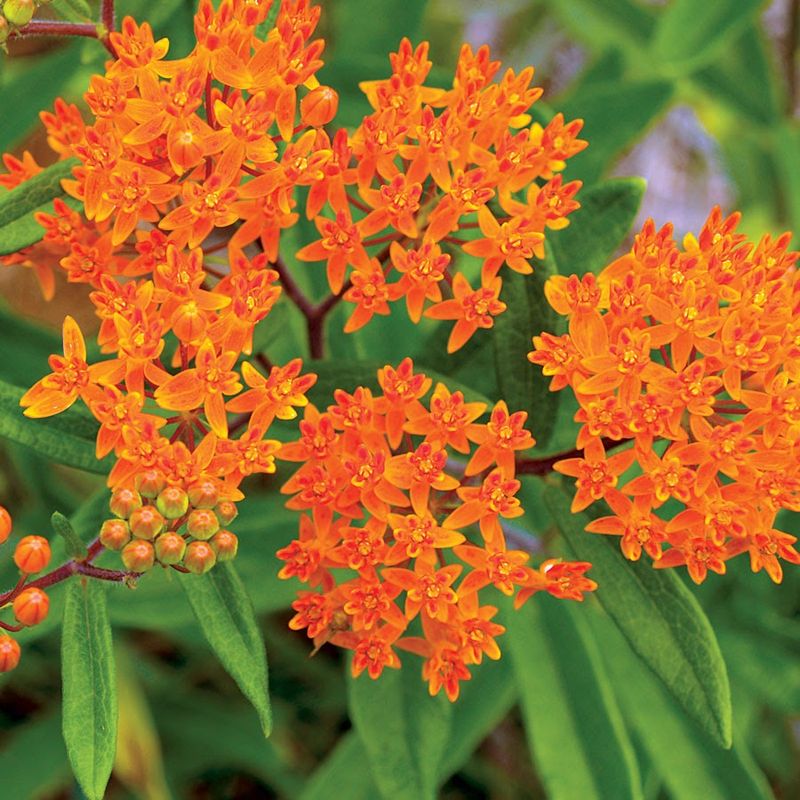
Bright orange and absolutely buzzing with pollinators on a summer afternoon, Butterfly Weed is one of the most rewarding native plants you can grow in North Carolina.
Asclepias tuberosa is a type of milkweed, but unlike its taller relatives, it stays compact, tidy, and manageable in a garden setting.
The clusters of vivid orange flowers appear from June through August, and they attract monarch butterflies, swallowtails, bees, and hummingbirds in impressive numbers.
The real secret to its drought toughness is a deep, thick taproot that can reach several feet into the soil.
That taproot stores water and energy, allowing the plant to thrive in full sun and dry, sandy conditions that would stress most other flowering perennials. North Carolina’s warm, dry summers are practically ideal for this plant.
It actually resents heavy, wet soil, so well-drained or even poor ground suits it far better than a rich, moist garden bed.
One thing worth knowing before you plant is that Butterfly Weed is slow to emerge in spring, often not showing above ground until late April or May.
Mark its location so you do not accidentally dig it up thinking nothing is there. Once it appears, growth is steady and the blooms are spectacular.
Seed pods form after flowering, and when they split open in fall, silky white seeds drift away on the breeze, ready to start new plants in other dry, sunny corners of your North Carolina garden.