Native North Carolina Shrubs That Outperform Popular Landscape Favorites
Some of the best shrubs for North Carolina yards are not the ones stacked at big garden centers. Many native shrubs grow better, handle local weather with less trouble, and bring more life to the landscape than the usual popular picks.
They are built for North Carolina’s heat, humidity, clay soil, and changing seasons, which means they often need less fuss once they settle in.
Even better, these shrubs feed birds, bees, and butterflies while adding color, texture, and beauty to your yard.
Some offer bright blooms in spring, others shine with berries, rich green leaves, or fiery fall color. If you want a landscape that looks great and works with nature instead of against it, native shrubs are a smart choice.
These standout picks prove that local plants can easily outshine many common landscape favorites.
1. Virginia Sweetspire (Itea virginica)
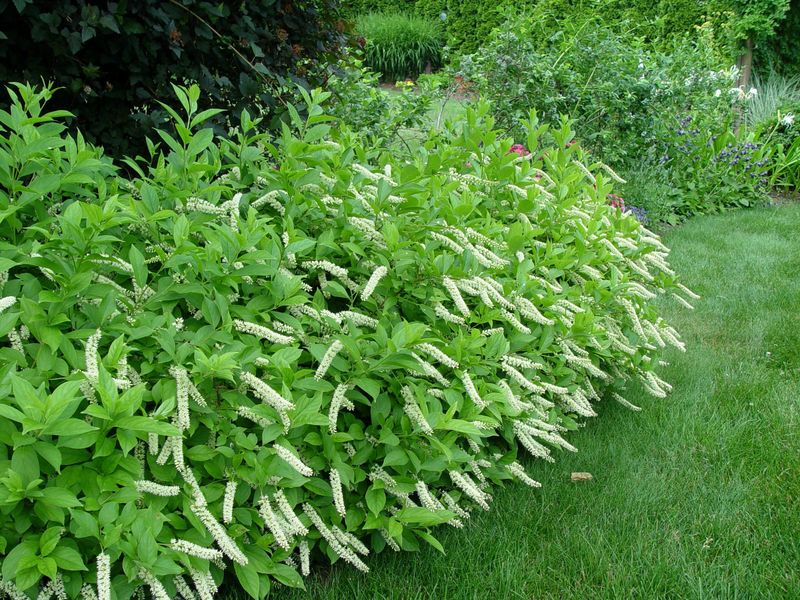
Few shrubs earn a spot in a North Carolina garden as easily as Virginia Sweetspire. Its long, white, bottlebrush-style flower spikes appear in late spring and smell wonderfully sweet, drawing in bees and butterflies right when the garden needs pollinators most.
Unlike many fancy foundation shrubs that struggle in soggy spots, Virginia Sweetspire actually loves moist ground.
NC State notes it grows naturally along stream banks, swamps, and wet pine barrens across North Carolina, so it fits right into the state’s many low-lying and moisture-prone yards.
It adapts well to average garden soil too, making it flexible in a way that most popular shrubs simply are not.
Once established, it needs very little attention from you. Fall is where this shrub truly surprises people.
The foliage turns blazing shades of red, orange, and burgundy, often holding color well into late autumn.
Many homeowners spend a lot on Japanese maples for that kind of fall show, but Virginia Sweetspire delivers it naturally and at a fraction of the effort. It spreads slowly by suckers, so over time it fills in nicely as a low hedge or mass planting.
Plant it near a downspout, rain garden, or shady border and watch it outshine every overused foundation shrub in the neighborhood.
2. Inkberry Holly (Ilex glabra)
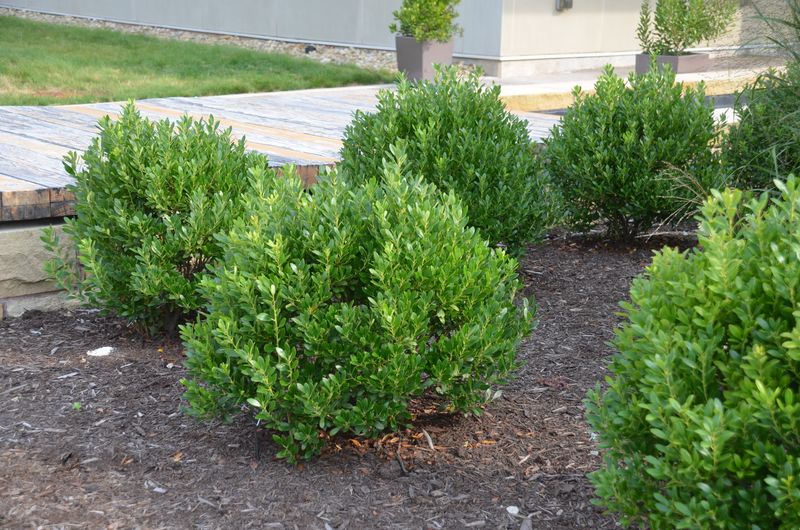
Boxwood has been the go-to evergreen shrub for decades, but in North Carolina’s acidic, moist, or coastal soils, Inkberry Holly runs circles around it.
This native evergreen keeps its glossy dark green leaves year-round, giving your yard that clean, structured look without the constant fussing that boxwood demands.
It naturally grows beside swamps and bogs right here in North Carolina, so wet spots that would rot other shrubs are no problem for Inkberry.
One of the biggest advantages is its tolerance for acidic soil, which covers a huge portion of North Carolina landscapes from the Piedmont to the Coastal Plain.
It also handles clay and sandy soils with ease, which is rare for an evergreen shrub this attractive.
The small black berries that appear in fall and winter are a bonus, bringing in birds like cedar waxwings and hermit thrushes to your yard.
Inkberry grows in a naturally rounded shape and takes pruning well if you want a neater hedge.
It spreads gently by root suckers, which helps it fill in over time as a low-maintenance privacy screen.
Varieties like ‘Shamrock’ and ‘Compacta’ stay smaller and work great for foundation planting.
If you have been fighting to keep boxwood alive in a wet or shady corner of your North Carolina yard, switching to Inkberry Holly is one of the smartest landscape decisions you can make.
3. Yaupon Holly (Ilex vomitoria)
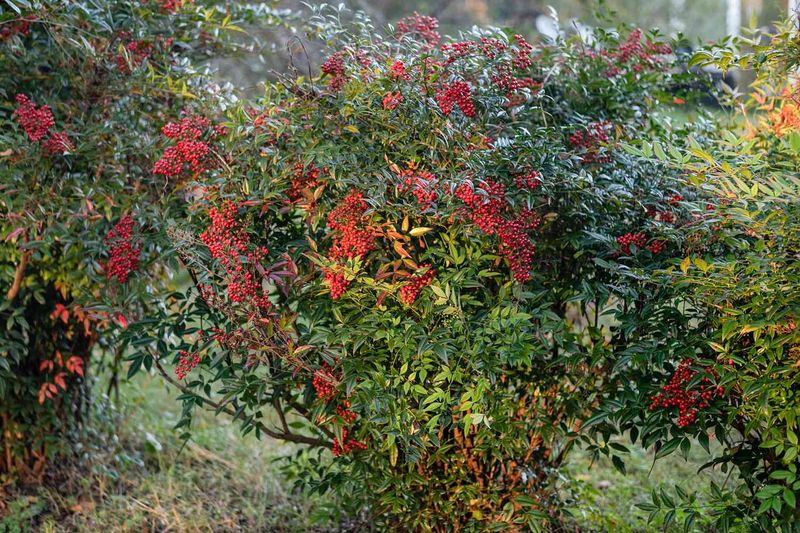
Yaupon Holly might have the most unfortunate scientific name in the plant world, but do not let that fool you.
This tough native shrub is one of the most versatile and resilient plants you can grow in North Carolina, especially along the coast or in the hot, dry Piedmont.
Where popular evergreen screening shrubs like Nellie Stevens Holly or Leyland Cypress struggle with drought or salt spray, Yaupon Holly just keeps going strong.
NC State confirms it handles drought, salt spray, occasional flooding, and heavy pruning, which makes it almost unbeatable for North Carolina’s Coastal Plain landscapes.
It also thrives in the warmer parts of the Piedmont, where summer heat can be brutal on less-adapted plants.
The female plants produce clusters of small, bright red or orange berries that birds absolutely love through fall and winter, adding real wildlife value to your yard.
Yaupon Holly comes in many forms, from large screening shrubs to compact weeping varieties that work as accent plants. ‘Will Fleming’ grows tall and narrow, perfect for tight spaces. ‘Nana’ stays low and rounded, great for foundation beds.
You can shear it into formal shapes or let it grow naturally for a relaxed, wildlife-friendly look.
Honestly, if North Carolina had an official toughness award for native shrubs, Yaupon Holly would win it every single year without breaking a sweat.
4. Wax Myrtle (Morella cerifera)
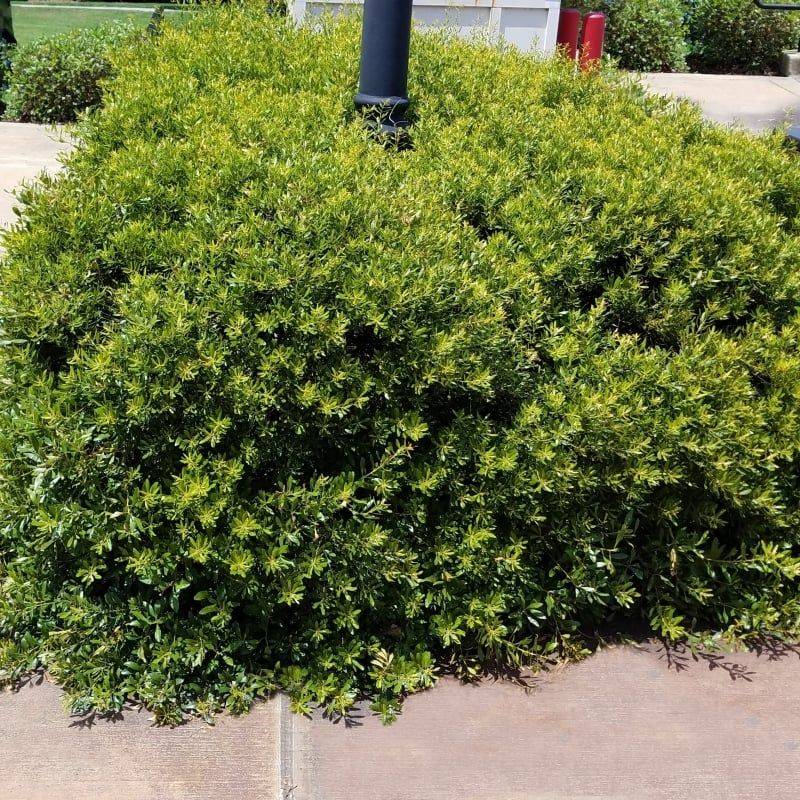
Gardeners searching for a fast-growing, tough native hedge in North Carolina do not need to look further than Wax Myrtle.
This shrub grows quickly, smells amazing when you brush against its aromatic leaves, and handles conditions that would flatten most popular hedge plants.
NC State notes it grows from wet swampy areas all the way to dry uplands, which is a remarkable range that almost no nonnative hedge shrub can match.
Coastal North Carolina gardeners especially love Wax Myrtle because it shrugs off salt spray, sandy soil, and high winds without complaint.
It is semi-evergreen to evergreen depending on the winter, so it provides year-round screening in most parts of the state.
The waxy blue-gray berries that cover female plants in fall and winter are a favorite food source for yellow-rumped warblers, which flock to them during migration right across North Carolina.
Wax Myrtle can grow up to fifteen feet tall and wide if left alone, making it a great choice for a privacy screen or windbreak along a property line.
It responds well to pruning and can even be trained into a small multi-trunk tree shape for a more formal look.
Because it fixes nitrogen in the soil, it actually improves poor ground over time, which is a bonus most people never expect from a hedge shrub. It truly earns its place in any North Carolina yard.
5. Oakleaf Hydrangea (Hydrangea quercifolia)
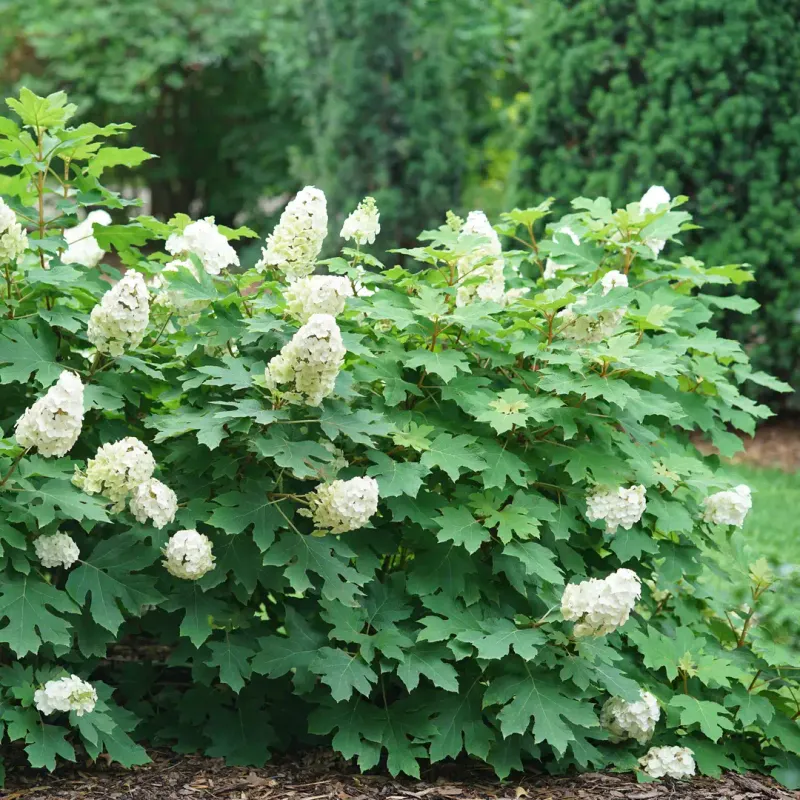
Walk through any garden center in North Carolina and you will find rows of nonnative hydrangeas that need constant babying to look good.
Oakleaf Hydrangea, a true native to the southeastern United States including North Carolina, offers just as much beauty without nearly as much drama.
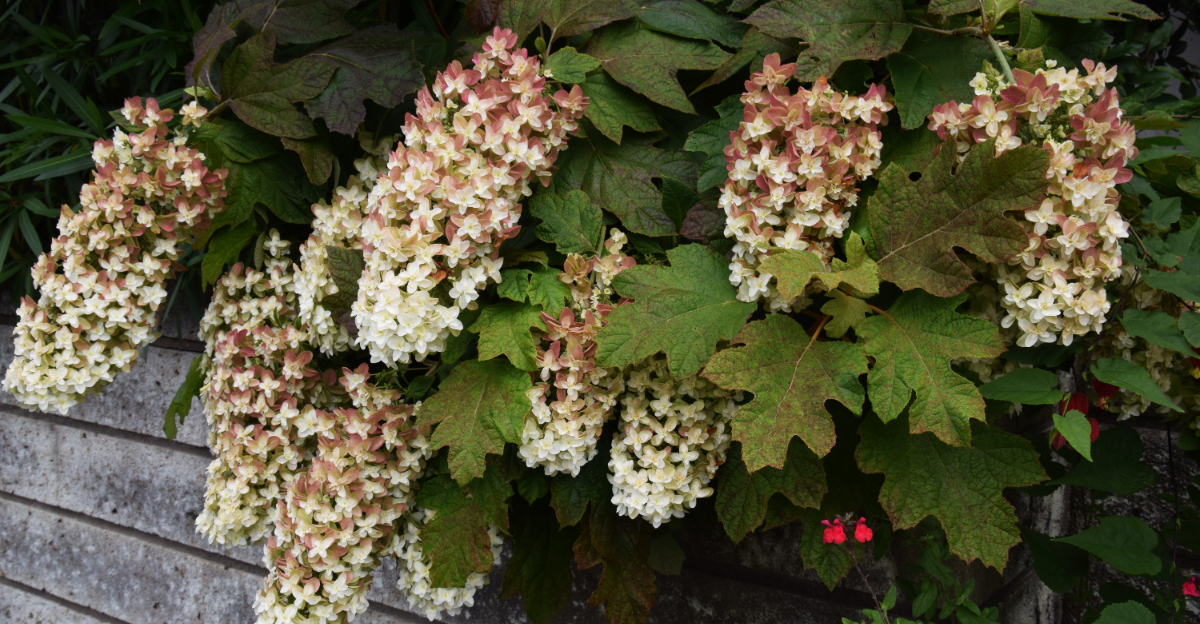
Its large, cone-shaped white flower clusters appear in late spring and slowly age to a warm pinkish-tan through summer, giving you months of interest from a single plant.
NC State recommends it for full sun to part shade in well-drained soil, and it performs especially well in the dappled light under tall pines and oaks, which are everywhere across North Carolina.
The leaves are shaped just like oak leaves and turn rich shades of burgundy and orange in fall, making this shrub a three-season showstopper.
When winter arrives, the peeling cinnamon-colored bark adds texture and warmth to the bare garden.
Oakleaf Hydrangea grows six to eight feet tall and wide on average, making it a bold anchor for a mixed border or a woodland garden edge.
It is more drought-tolerant than most hydrangeas once established, which is a huge advantage during North Carolina’s hot summers.
Birds use its dense branching for nesting, and the faded flower heads look beautiful even through winter.
For part-shade spots where other flowering shrubs give up, this native plant truly delivers the goods season after season.
6. American Beautyberry (Callicarpa americana)
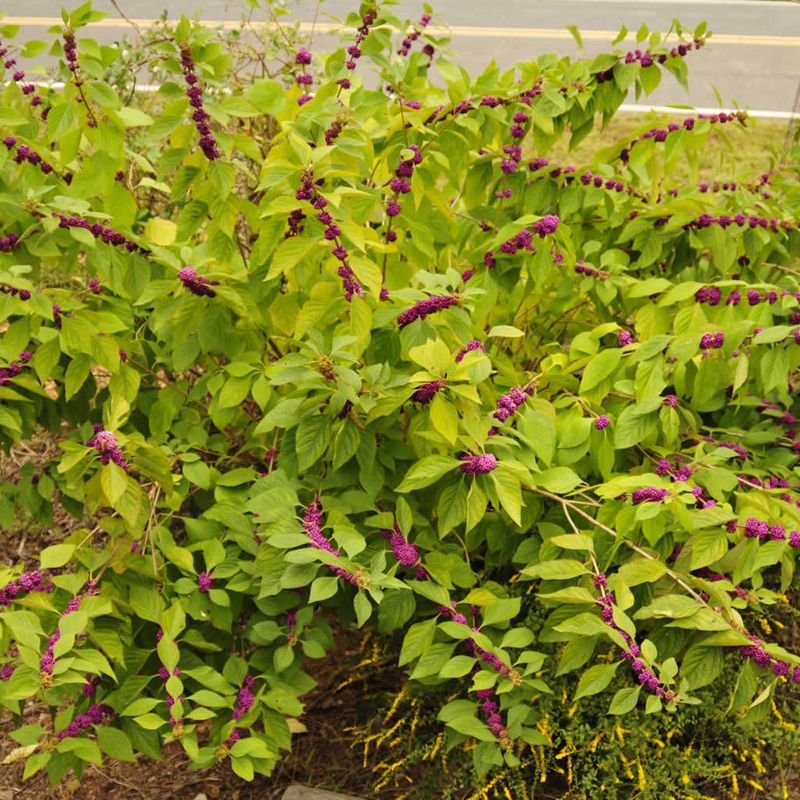
Nothing in the garden stops people in their tracks quite like American Beautyberry. The vivid, almost neon-purple berry clusters wrap tightly around the arching stems in September and October, creating a color show that looks almost too bold to be real.
NC State describes it as native to North Carolina, growing along meadows, thickets, woodlands, and pond and stream margins across the state.
What makes American Beautyberry stand out beyond its looks is how well it fits into a wildlife-friendly yard. Birds like mockingbirds, robins, and brown thrashers eagerly eat the berries through fall.
Deer tend to leave it alone, which is a real bonus in suburban and rural North Carolina where deer pressure is heavy.
It also grows naturally in part shade, making it useful under trees where many ornamental shrubs refuse to flower or fruit well.
American Beautyberry grows fast, typically reaching four to six feet tall and wide in just a few years.
It can be cut back hard in late winter and will bounce back vigorously, so you never have to worry about it getting out of hand.
White-berried varieties like ‘Lactea’ are available if you want a softer look, but the classic purple is hard to beat for pure drama.
For anyone in North Carolina wanting a low-effort shrub that delivers serious fall impact, American Beautyberry is an absolute must-have in the yard.
7. Summersweet (Clethra alnifolia)
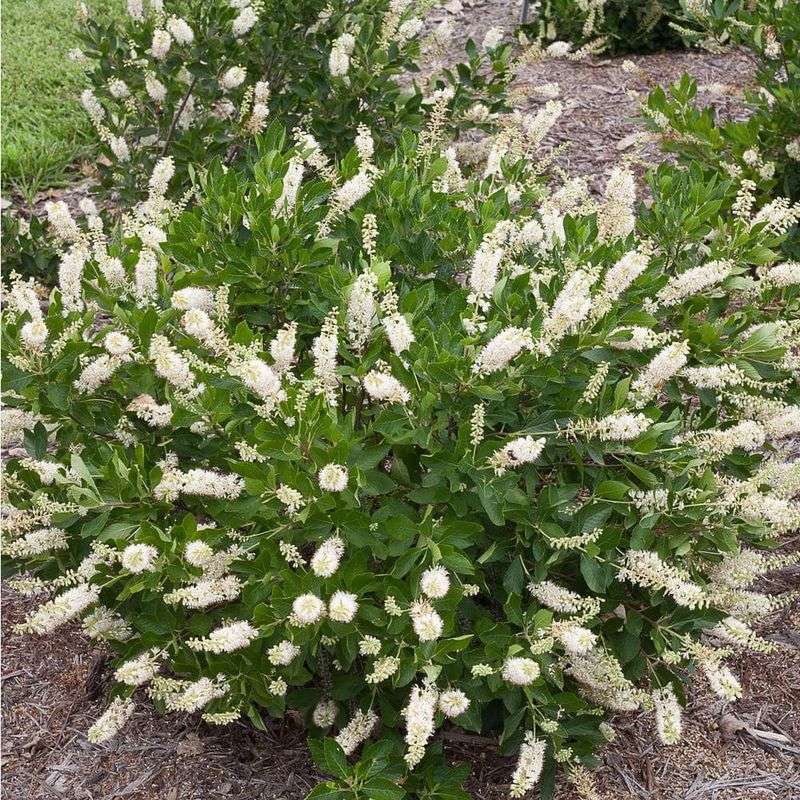
Most flowering shrubs in North Carolina put on their show in spring and then spend the rest of the summer looking green and forgettable. Summersweet breaks that pattern in the best possible way.
Its fragrant white flower spikes open in July and August, right in the heart of summer when almost nothing else is blooming, and the sweet scent drifts across the yard on warm evenings in a way that is genuinely hard to forget.
NC State places Summersweet naturally in swamps, damp thickets, and sandy woods across North Carolina, which tells you a lot about where it thrives best.
Wet spots, rain gardens, and low areas near downspouts are perfect for this shrub, and it handles part shade beautifully, which makes it useful in spots where sun-loving plants would struggle.
Butterflies and bees flock to the flowers in summer, making it a pollinator magnet during the hottest months of the year.
Summersweet typically grows four to six feet tall and spreads slowly by suckers to form a natural colony over time.
The fall foliage turns clear yellow to golden orange, giving the plant one last burst of color before winter.
Compact cultivars like ‘Hummingbird’ and ‘Ruby Spice,’ which has pink flowers, are widely available at North Carolina nurseries and fit smaller garden spaces well.
For a damp, shaded corner that needs summer interest, Summersweet is genuinely one of the best native choices available anywhere in the state.
8. Buttonbush (Cephalanthus occidentalis)
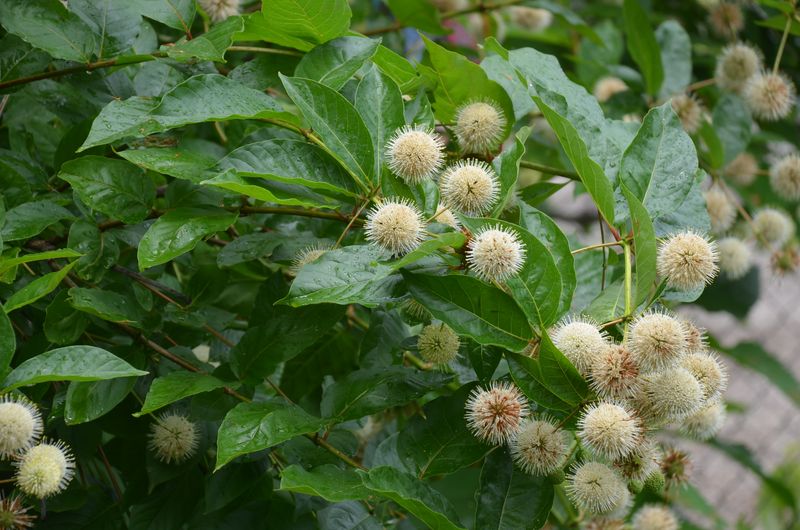
Buttonbush is the kind of shrub that makes people stop and ask, “What is that?” Its flowers are unlike anything else in the garden, perfectly round white spheres that look like tiny pincushions covered in delicate white pins.
They bloom in midsummer and attract an impressive variety of bees, butterflies, and hummingbirds, making a Buttonbush in full bloom one of the most lively spots in any North Carolina yard.
NC State notes that Buttonbush grows in all areas of North Carolina, from the mountains to the coast, which makes it one of the most widely adaptable native shrubs in the entire state.
It naturally grows in swamps, along stream banks, and in low wet areas, so it is perfectly matched to rain gardens, pond edges, and any soggy spot in your yard where standard shrubs struggle and eventually fail.
It handles standing water better than almost any other landscape shrub. Buttonbush grows six to twelve feet tall depending on conditions, so it works well as a back-of-border plant or a naturalistic screen near a water feature.
The round seed heads that follow the flowers add winter interest and are eaten by ducks and other waterfowl.
For North Carolina homeowners dealing with chronically wet low spots in the yard, Buttonbush is not just a good option, it is genuinely the best native shrub you can plant to solve that problem beautifully and sustainably.