9 Native Ohio Trees That Won’t Outgrow The Front Yard Too Fast
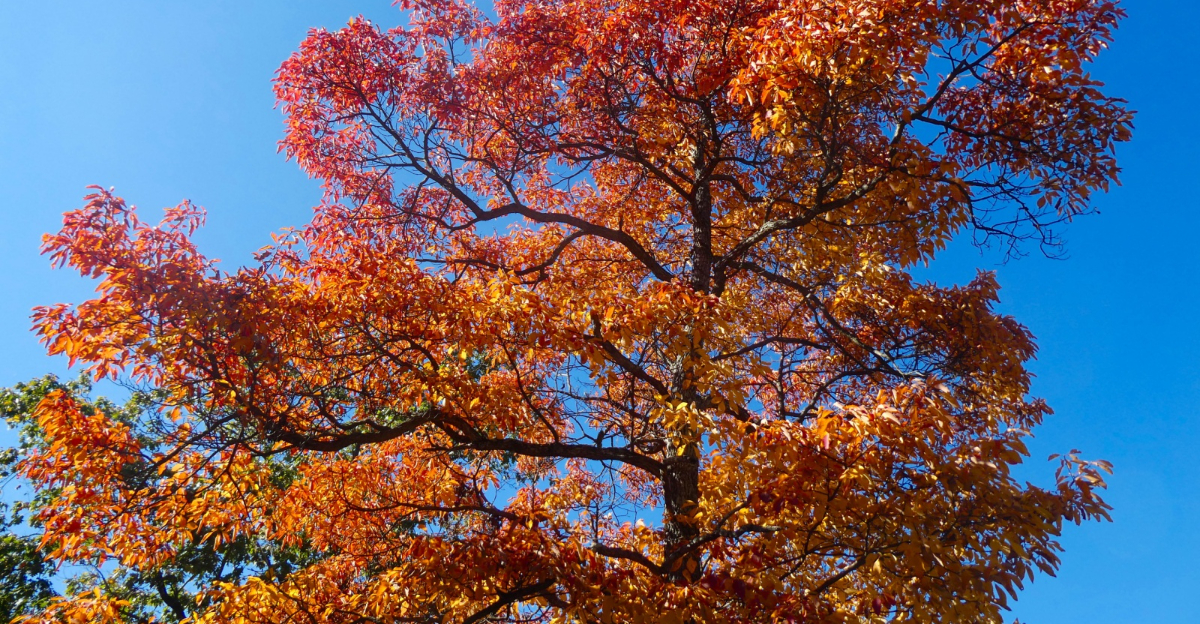
A front yard tree can add beauty, shade, and value, but the wrong choice can become a problem much faster than many homeowners expect. Some trees shoot up, spread wide, and start crowding walkways, foundations, power lines, or the rest of the landscape before you know it.
That makes growth rate just as important as looks, especially in a smaller Ohio yard. The good news is that native trees offer a smarter option.
Many bring the beauty, habitat value, and seasonal interest people want without taking over the space too quickly. Instead of planting something that soon feels too big for the lot, homeowners can choose native trees with a more manageable pace and size.
That means less stress, fewer pruning headaches, and a better long-term fit right where curb appeal matters most. These native Ohio trees stand out for giving front yards lasting character without racing out of scale too fast.
1. Eastern Redbud Brings Spring Color Without Racing Skyward
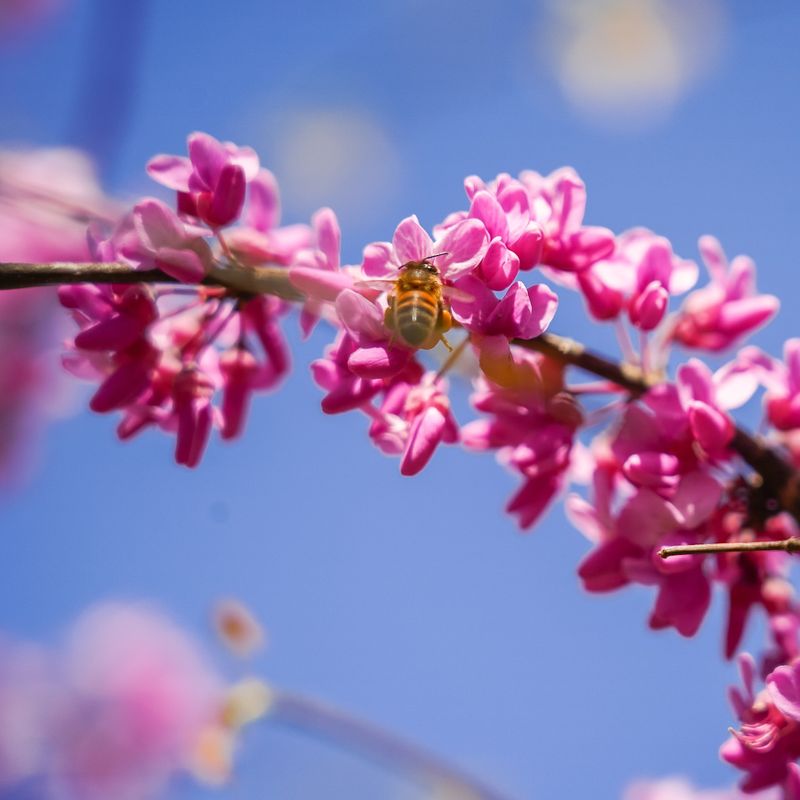
Few things signal the end of winter in Ohio quite like an eastern redbud exploding into bloom. Before a single leaf appears, the bare branches get completely coated in clusters of bright pink to rosy-purple flowers, creating one of the most eye-catching displays in any neighborhood.
Neighbors will stop and stare, and you will be glad you planted it.
Eastern redbud is a true Ohio native, found naturally along woodland edges and stream banks across much of the state. It typically matures at 20 to 30 feet tall with a spread that can match its height, giving it a graceful, rounded form.
That size is genuinely manageable for most front yards, especially compared to large shade trees that can top 60 or 70 feet.
Growth is moderate rather than aggressive. You can expect roughly one to two feet per year under good conditions, which means the tree fills in at a satisfying pace without quickly overwhelming the space.
The heart-shaped leaves provide a pleasant canopy through summer, and fall brings a soft yellow color. Eastern redbud also supports native bees early in the season when few other food sources are available, making it as ecologically valuable as it is beautiful.
2. Serviceberry Gives You Four Season Beauty In A Smaller Footprint
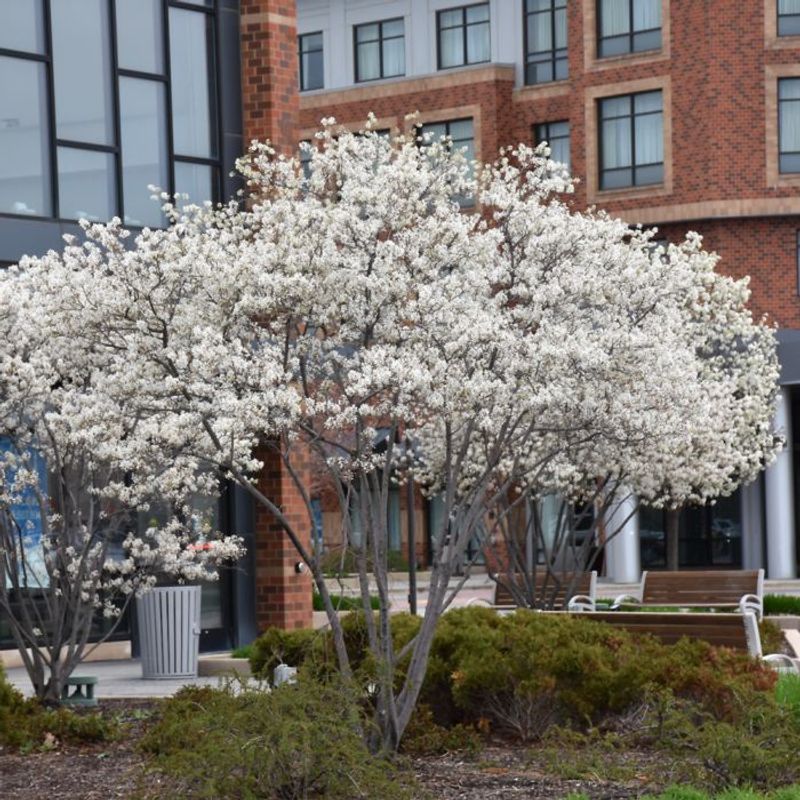
Serviceberry might be the most underappreciated native tree in Ohio, and that is genuinely hard to understand once you see one through a full calendar year. In early spring, it produces a soft cloud of white flowers that appear just as the forsythias are fading.
The timing is perfect for filling that brief gap when the yard feels like it needs something fresh.
By early summer, the small berries ripen to a deep red-purple and get snapped up quickly by birds, especially cedar waxwings and robins. If you want to beat the birds to a handful, the flavor is sweet and mild, a bit like a blueberry with a hint of almond.
Fall brings warm orange and red foliage that holds color well into the season.
Downy serviceberry, the species most commonly found in Ohio, typically grows 15 to 25 feet tall with a similar spread. Growth tends to be moderate, and the tree rarely becomes a maintenance problem.
It tolerates partial shade well, which is helpful for yards that do not get full sun all day. Ohio homeowners with limited front yard space will find serviceberry fits without crowding, giving four distinct seasons of visual interest from a single, well-scaled native tree.
3. Flowering Dogwood Stays Front Yard Friendly And Full Of Charm
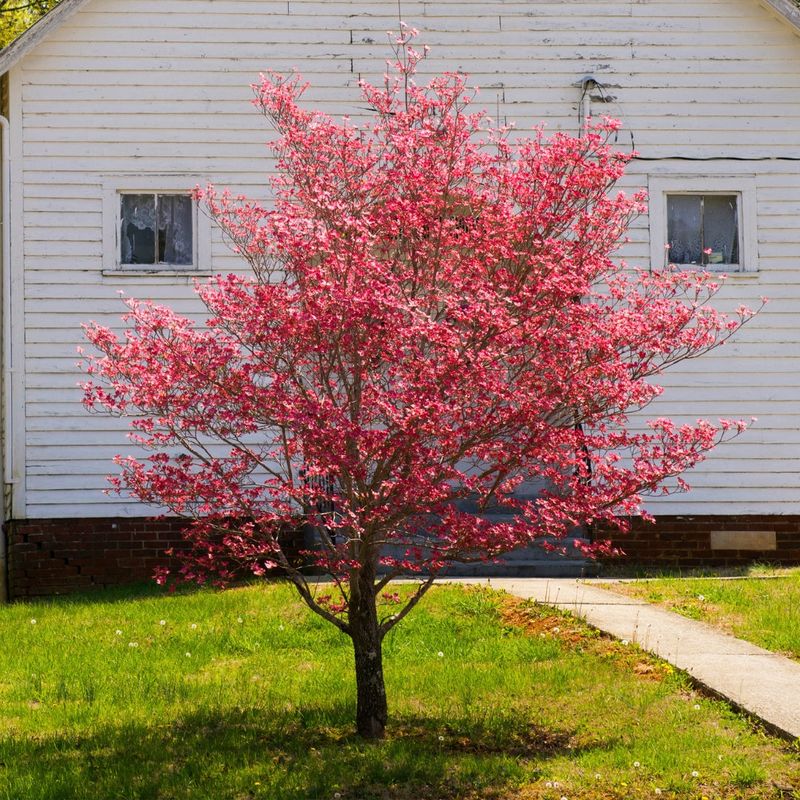
There is a reason flowering dogwood has been a beloved landscape tree for generations. The horizontal layered branching gives it a sculptural quality that looks good even in winter when the leaves are gone.
Come spring, the large white or soft pink bracts open wide and hold for weeks, creating a display that feels almost theatrical for a tree of its modest size.
In Ohio, flowering dogwood is native to the eastern and southern parts of the state, where it grows naturally as an understory tree beneath taller hardwoods. That origin matters for placement.
It genuinely prefers partial shade and well-drained, slightly acidic soil. Planting it in a spot with afternoon shade and good drainage will reward you with a healthier, longer-lived tree than one stuck in hot, dry, full sun all day.
Mature size typically ranges from 15 to 25 feet in both height and spread, making it an excellent front yard scale. Growth is relatively slow, often less than a foot per year in average conditions, so patience is part of the deal.
Red berries in fall attract birds, and the foliage turns a rich burgundy-red before dropping. For Ohio homeowners who want something classic and refined, flowering dogwood delivers consistently across all four seasons.
4. American Hornbeam Grows Slowly And Ages Gracefully
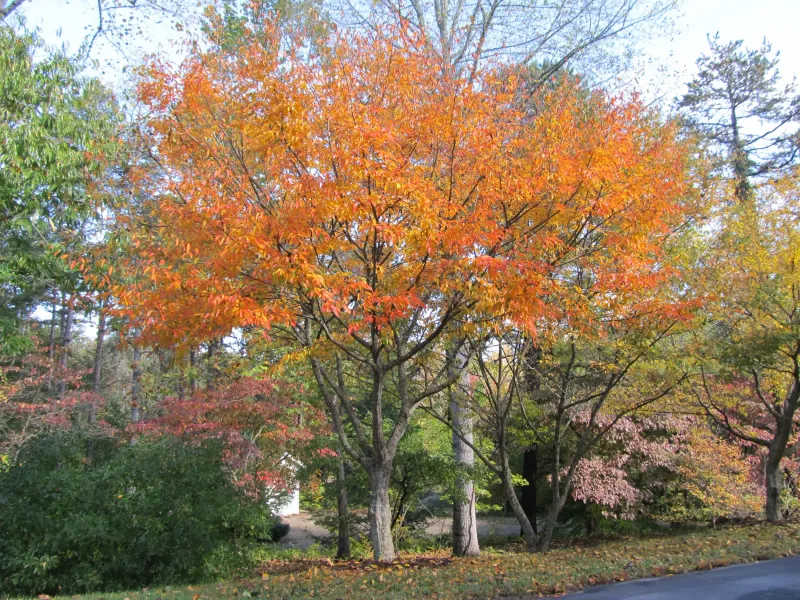
Walk up to an American hornbeam and the first thing you notice is the bark. It has a smooth, sinewy, muscle-like appearance that looks almost sculpted, giving the tree a quiet elegance that gets more pronounced with age.
Common nicknames include musclewood and ironwood, both of which point to just how dense and tough this native tree actually is.
American hornbeam is a natural Ohio understory tree, found along stream banks and in moist, shaded woodlands across the state. It is genuinely slow-growing, typically putting on less than a foot of new growth per year.
That pace can feel frustrating early on, but the payoff is a refined, long-lived tree that stays at a front yard scale for decades without requiring constant management.
Mature height generally falls between 20 and 35 feet, with a spread that can be similar or slightly narrower. The dense, dark green foliage provides good shade through summer, and fall color ranges from orange to red to yellow, often all at once on the same tree.
American hornbeam performs best in partial to full shade with consistently moist soil, so it is an especially smart pick for Ohio front yards that get limited direct sun. Patience with this tree is genuinely rewarded over the long run.
5. Eastern Hophornbeam Is The Quiet Native Tree More Yards Should Have
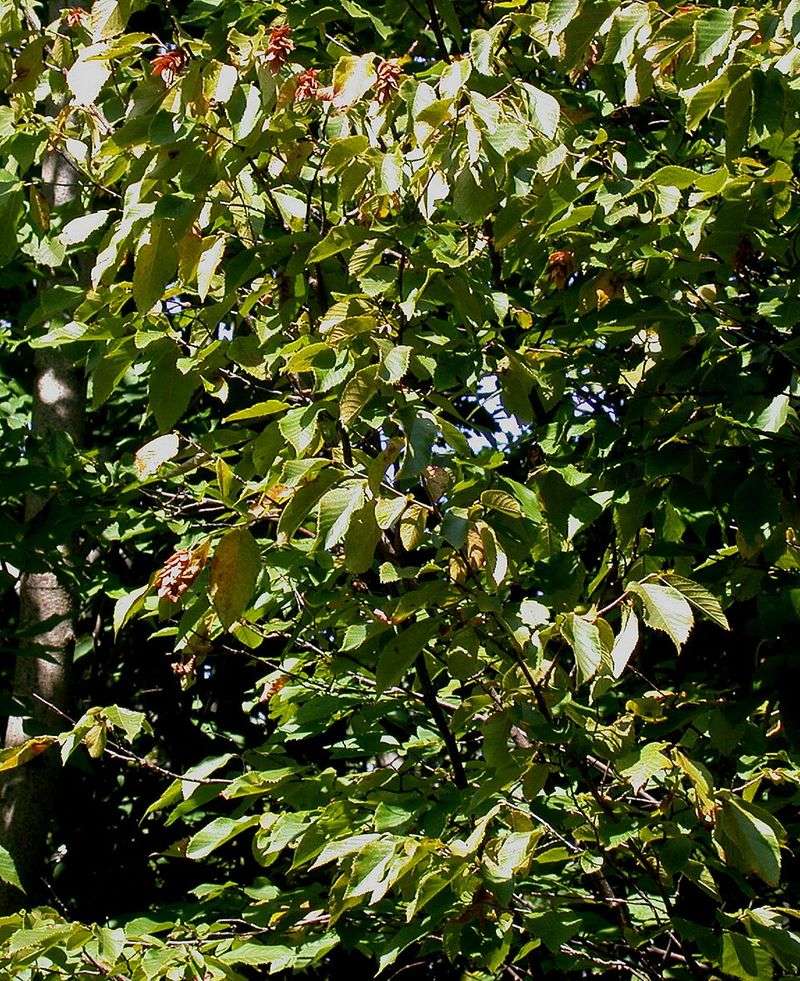
Most people have never heard of eastern hophornbeam, and that is exactly the problem. Nurseries do not always stock it, garden magazines rarely feature it, and yet it quietly checks almost every box an Ohio homeowner could want in a front yard tree.
It is native, tough, adaptable, and beautifully scaled for smaller spaces.
The common name comes from the papery, hop-like seed clusters that hang from the branches in late summer and early fall. They have a delicate, almost ornamental quality that sets this tree apart from more familiar natives.
The bark is finely shredded and textured in a way that adds visual interest through the winter months when the yard can look bare and flat.
Eastern hophornbeam grows slowly, typically less than a foot per year, and matures at roughly 25 to 40 feet tall with a spread somewhat narrower than its height. That restrained growth habit makes it genuinely easy to live with over time.
It tolerates dry, rocky soils and partial shade, giving it flexibility across a range of Ohio front yard conditions where other trees might struggle. Birds use the seeds as a food source through winter, adding wildlife value.
For homeowners willing to look past the more familiar options, eastern hophornbeam offers quiet, lasting character that only improves with age.
6. Sassafras Adds Character Without Rushing To Take Over
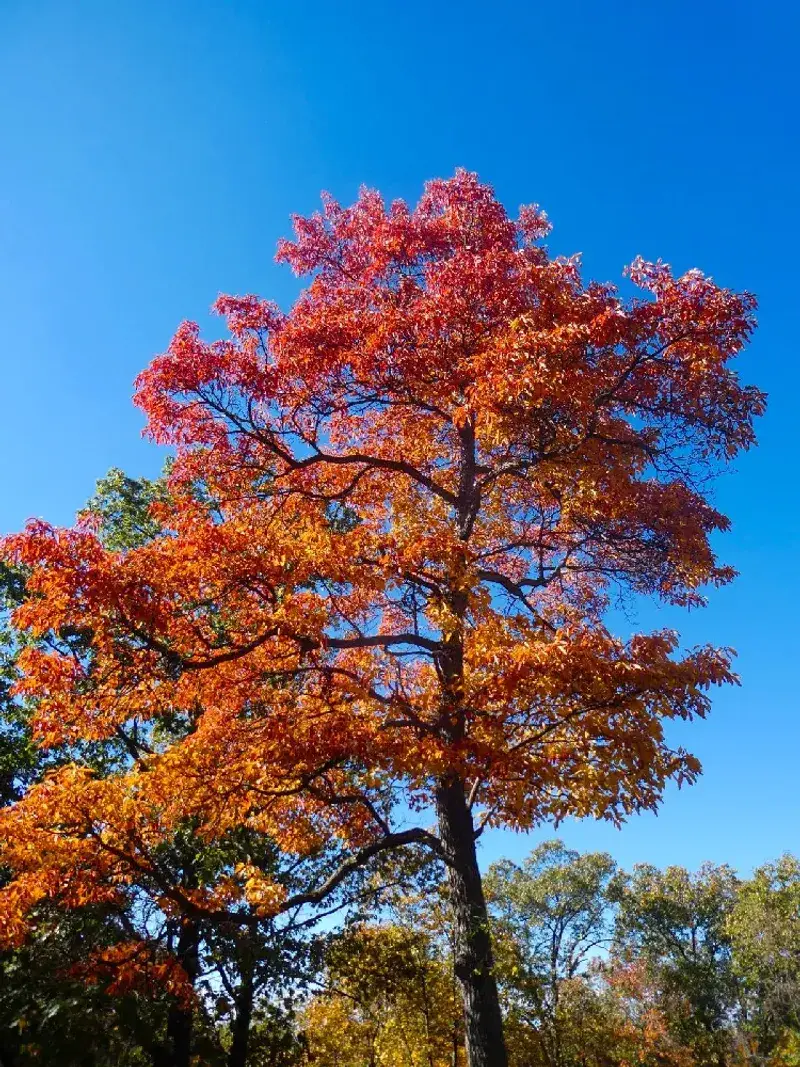
Sassafras has one of the most distinctive leaf shapes of any tree in Ohio. On a single branch, you can find leaves with one lobe, two lobes shaped like a mitten, and three lobes, all at the same time.
That quirky variation makes the tree genuinely fun to look at up close, and kids especially love trying to find all three shapes on one branch.
Fall color on sassafras is outstanding. The leaves turn shades of orange, red, yellow, and even purple, often mixing all of those tones at once on the same tree.
Few native trees can match that range of autumn color, and it comes reliably year after year without much fuss from the homeowner.
Sassafras grows at a moderate pace and can eventually reach 30 to 60 feet in wild settings, but in managed front yards it tends to stay considerably smaller and develops more slowly. One thing worth knowing upfront is its tendency to send up root sprouts around the base over time.
Removing those sprouts regularly keeps the tree tidy and prevents a gradual spread you did not plan for. Planted with that understanding, sassafras brings genuine native character, wildlife value through its fruit, and vivid seasonal color to Ohio front yards without racing aggressively out of scale.
7. Fringetree Keeps A Front Yard Feeling Light And Manageable
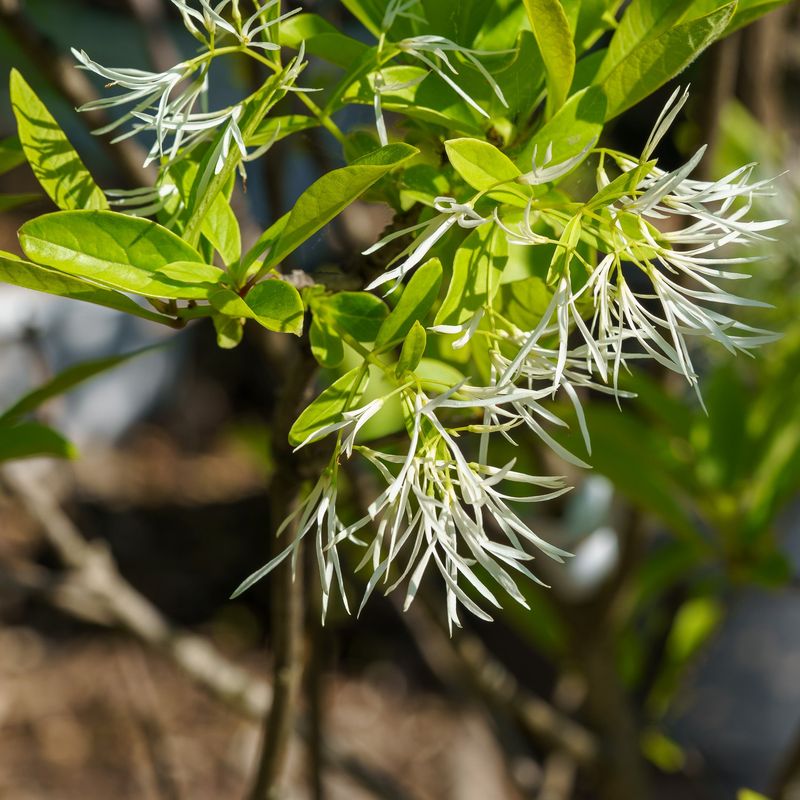
Blooming fringetree looks like someone draped the branches in soft white lace. The flowers hang in loose, feathery clusters that give the whole tree an airy, almost floating quality during late spring.
The fragrance is light and sweet, noticeable when you walk past on a calm evening, and the overall effect is one of the most elegant displays any Ohio front yard can offer.
Fringetree is native to parts of Ohio and the broader eastern United States, and it grows at a relaxed pace that makes it easy to manage over time. Mature size typically falls between 12 and 20 feet tall with a similar or slightly wider spread, keeping it genuinely front yard friendly without requiring aggressive pruning to stay in bounds.
One practical detail worth knowing: fringetree is dioecious, meaning male and female flowers appear on separate plants. Female trees produce small blue-black fruits in late summer that birds find highly attractive.
Male trees tend to have showier flower clusters, so if maximum bloom impact is the goal, a male plant delivers that. Fringetree performs well in moist, well-drained soil and tolerates partial shade, giving it good flexibility across Ohio yard conditions.
For homeowners who want something genuinely graceful and native without planting a tree that quickly dominates the space, fringetree is a strong answer.
8. Pawpaw Brings Native Personality Without Fast Overgrowth
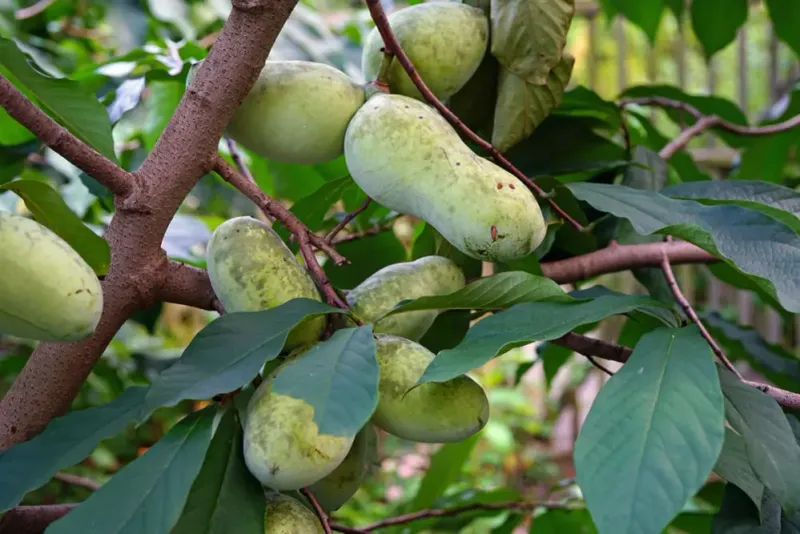
Pawpaw is the kind of tree that makes people do a double take the first time they see it in an Ohio yard. The leaves are enormous, long, and drooping in a way that looks almost tropical, which is not what most people expect from a native Midwestern tree.
That bold, lush texture gives the front yard a completely different character than most ornamental trees can offer.
Ohio actually sits within the heart of pawpaw country. It grows naturally along stream banks and in rich bottomland forests across much of the state, and Native Americans relied on its fruit for centuries.
The fruit itself is creamy, sweet, and custard-like, earning pawpaw the nickname of Ohio banana in some circles.
Growth is moderate to slow, and in managed landscape settings pawpaw typically reaches 15 to 25 feet tall. One habit to plan for is its tendency to form colonies through root sprouting over time.
Removing the sprouts regularly keeps a single-trunk form if that is what you prefer. Pawpaw performs best in partial shade with moist, rich soil, and it genuinely thrives in Ohio conditions when sited correctly.
For homeowners who want a front yard tree with real native personality, unusual foliage, and an edible bonus, pawpaw is a surprisingly practical and interesting choice.
9. Witch Hazel Offers Unusual Beauty On A More Modest Scale
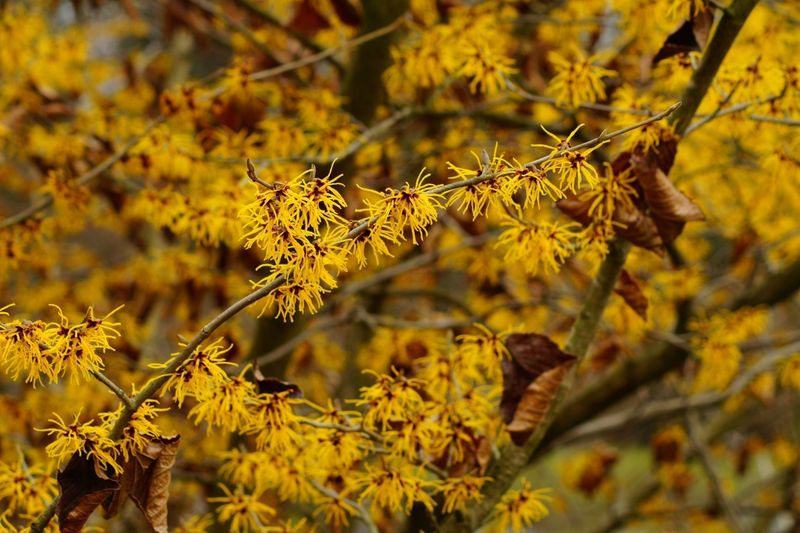
Witch hazel earns its place on this list by doing something almost no other Ohio native tree or large shrub can claim: it blooms in late fall or even mid-winter, when everything else in the yard has gone dormant and gray. The flowers are spidery, ribbon-like, and bright yellow, appearing directly on the bare branches in a way that feels genuinely surprising the first time you see it on a cold November or December day.
Native witch hazel, Hamamelis virginiana, grows naturally in Ohio woodlands and is well adapted to the state’s climate. It tends to develop as a multi-stemmed large shrub or small tree, typically reaching 15 to 20 feet tall and wide at maturity.
Growth is slow to moderate, and the overall scale stays front yard friendly without ever becoming overwhelming.
Fall foliage is a warm yellow, adding one more layer of seasonal interest before the flowers take over. Witch hazel tolerates partial shade well, making it a smart option for front yards that do not get full sun all day.
Wildlife value is solid too, with the seeds providing food for birds and small mammals. For Ohio homeowners who want something genuinely different, something that turns heads in the off-season and stays at a human scale, witch hazel is a quietly brilliant choice.