7 Native Pennsylvania Trees That Won’t Outgrow The Front Yard Too Fast
A front yard tree can make a house feel complete. It adds shape, shade, curb appeal, and that settled look that makes a home seem more welcoming right away.
The catch is that some trees start off looking like the perfect fit, then grow much faster and much larger than anyone expected.
A few years later, they are pressing too close to the house, crowding walkways, or demanding more pruning than the average homeowner ever wanted to deal with.
That is why smaller native trees deserve a lot more attention in Pennsylvania. They offer the beauty and seasonal interest people want, but they are also better matched to local conditions.
Since they belong in the region, they are already used to Pennsylvania weather, soil, and the ups and downs of the seasons.
If you want a tree that adds character without turning into a future problem, choosing one with a more manageable growth habit is a smart move. The right native tree can give your front yard charm for years without making the space feel smaller and smaller over time.
1. Eastern Redbud (Cercis Canadensis)
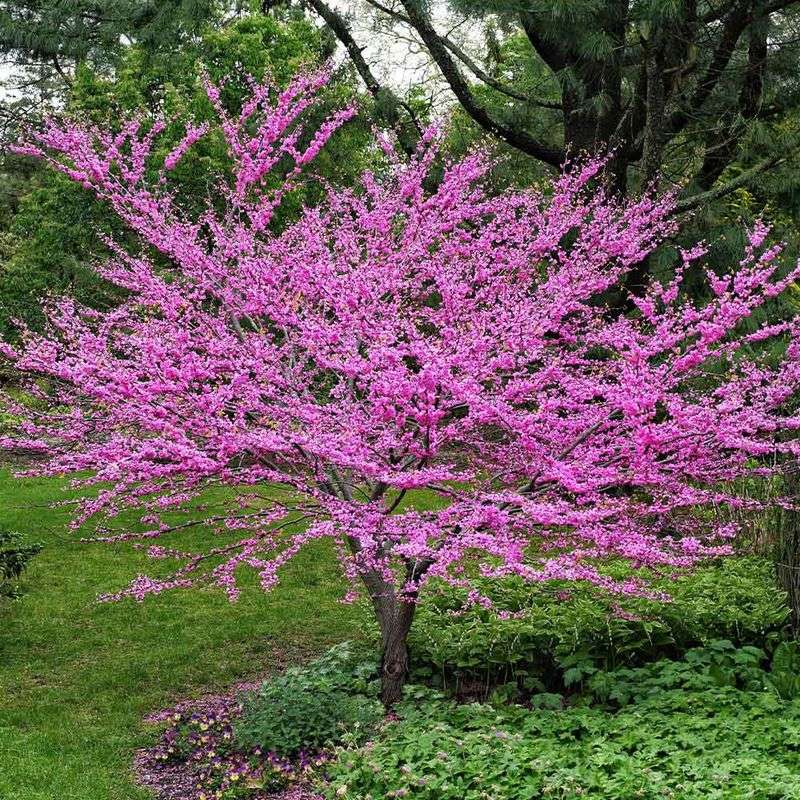
Every spring, the Eastern Redbud puts on a show that stops people in their tracks. Before the leaves even appear, the branches explode with bright pink-purple blooms that cover the entire tree.
It is one of the most eye-catching native trees you can plant in a Pennsylvania front yard. Mature trees reach about 20 to 30 feet tall, which makes them a perfect fit for smaller spaces.
The growth rate is moderate, so you won’t wake up one day to find it has doubled in size overnight. That slow-to-moderate pace gives you time to enjoy each stage of the tree’s growth.
After the spring bloom fades, heart-shaped leaves fill in and create a lovely canopy through summer. In fall, those leaves turn yellow, adding another pop of color before they drop.
The Eastern Redbud is adaptable to both full sun and partial shade, which gives Pennsylvania homeowners a lot of flexibility when choosing a planting spot.
It also handles a variety of soil types, including the clay-heavy soils common in many parts of Pennsylvania.
Birds and pollinators are drawn to the flowers, making it a great choice for anyone who loves backyard wildlife. Plant it as a front-yard focal point and let it be the star of your landscape every season.
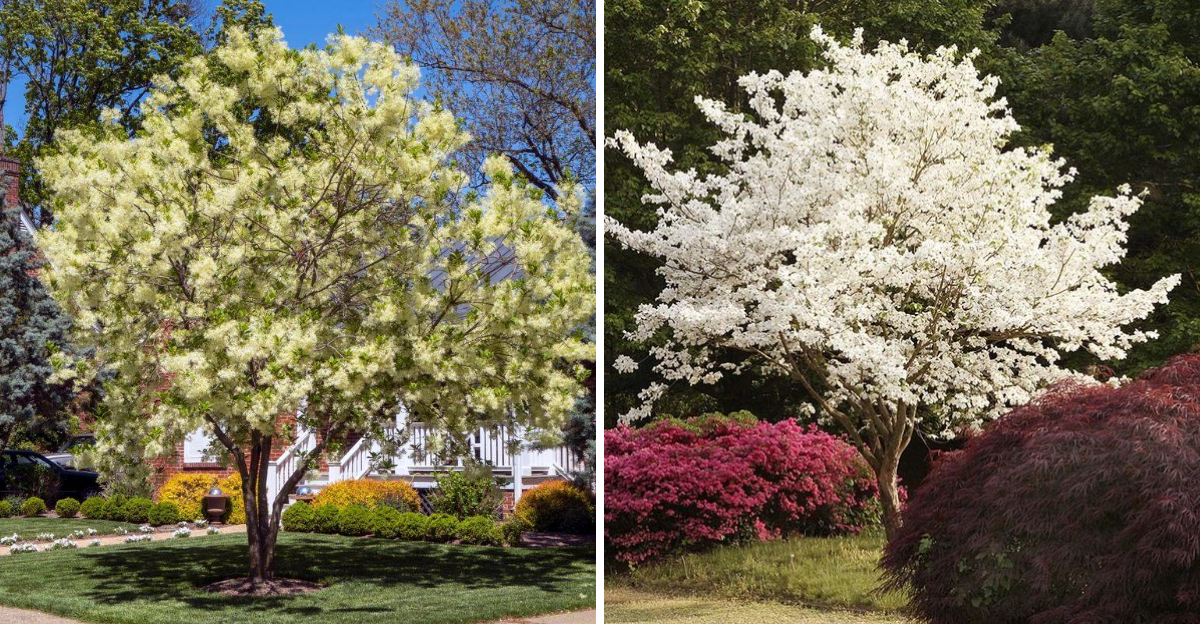
2. Flowering Dogwood (Cornus Florida)
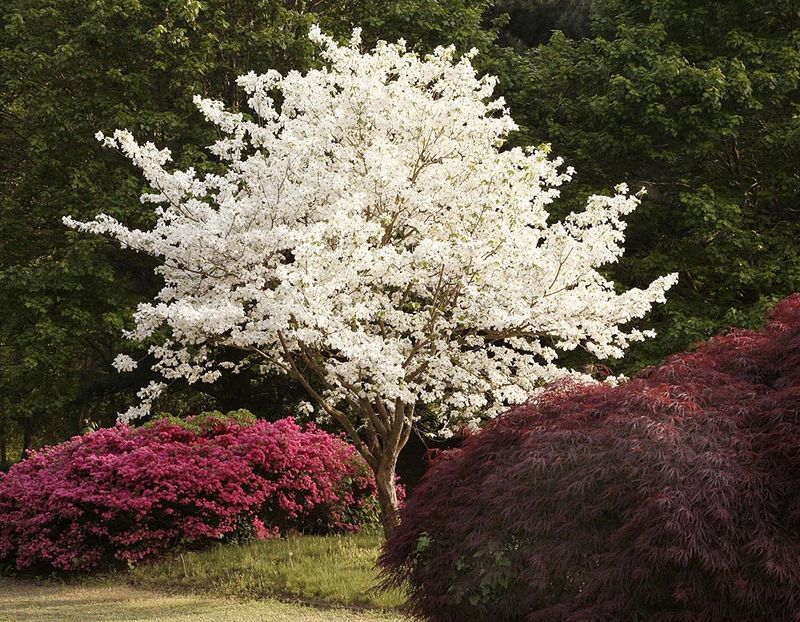
Ask any Pennsylvania gardener which native tree they love most, and there is a good chance Flowering Dogwood comes up every single time. This tree has a special kind of charm that is hard to explain until you see it in person.
The layered, horizontal branches give it a graceful, sculptural look even in winter when the leaves are gone.
Flowering Dogwood grows 15 to 30 feet tall, staying naturally compact without much help from you. It does not rush to grow, which is great news for front yards where space is limited.
The slow growth means less pruning and more time enjoying the tree rather than managing it.
Spring brings large white or pink flower-like bracts that seem to float above the branches. By fall, the foliage turns deep red and burgundy, and small clusters of red berries appear.
Those berries are a favorite food source for birds like robins and bluebirds, making your Pennsylvania front yard a little wildlife hotspot.
Flowering Dogwood prefers partial shade and well-drained, slightly acidic soil, conditions that are easy to find across much of Pennsylvania. It does best when planted away from harsh afternoon sun, especially in hotter summers.
With four seasons of visual interest packed into one compact tree, it is hard to find a better ornamental choice for a front yard in the Keystone State.
3. Serviceberry (Amelanchier Canadensis)
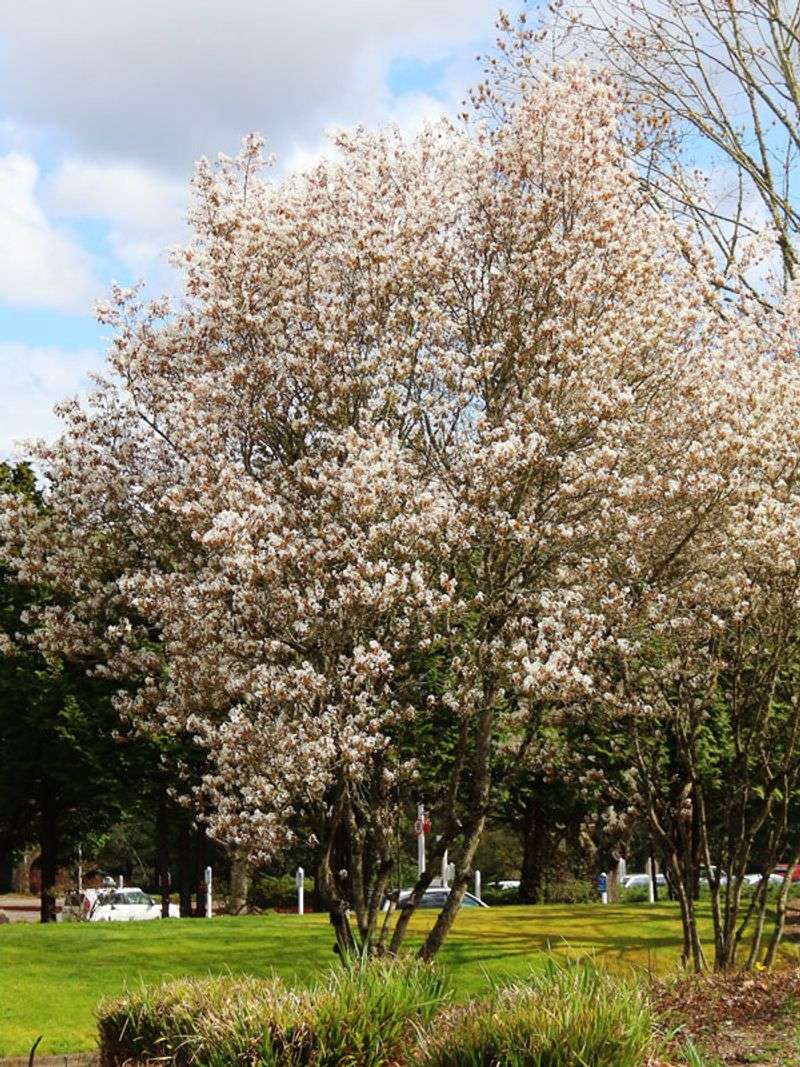
Long before European settlers arrived, Native Americans across Pennsylvania were harvesting the sweet, blueberry-like fruits of the Serviceberry tree. Today, this underrated native gem is making a comeback in front yards across the state, and for good reason.
It offers something interesting in every single season without ever growing too large to manage.
Serviceberry tops out at around 15 to 25 feet tall, making it a natural fit for smaller front yards. In early spring, clusters of delicate white flowers appear before most other trees have even started budding.
That early bloom makes it a welcome sign that warmer days are on the way in Pennsylvania.
By early summer, the tree produces small, sweet berries that birds absolutely love. If you get there first, the berries are also edible for people and taste a bit like blueberries with a hint of almond.
Fall brings another reward in the form of brilliant orange and red foliage that rivals any tree in the neighborhood.
Serviceberry is adaptable to a wide range of soil conditions and light levels, from full sun to partial shade. It works beautifully in natural-style landscapes or as a standalone specimen near the front of your home.
For Pennsylvania homeowners who want multi-season interest without a high-maintenance commitment, Serviceberry checks every single box without fail.
4. Eastern Red Cedar (Juniperus Virginiana)
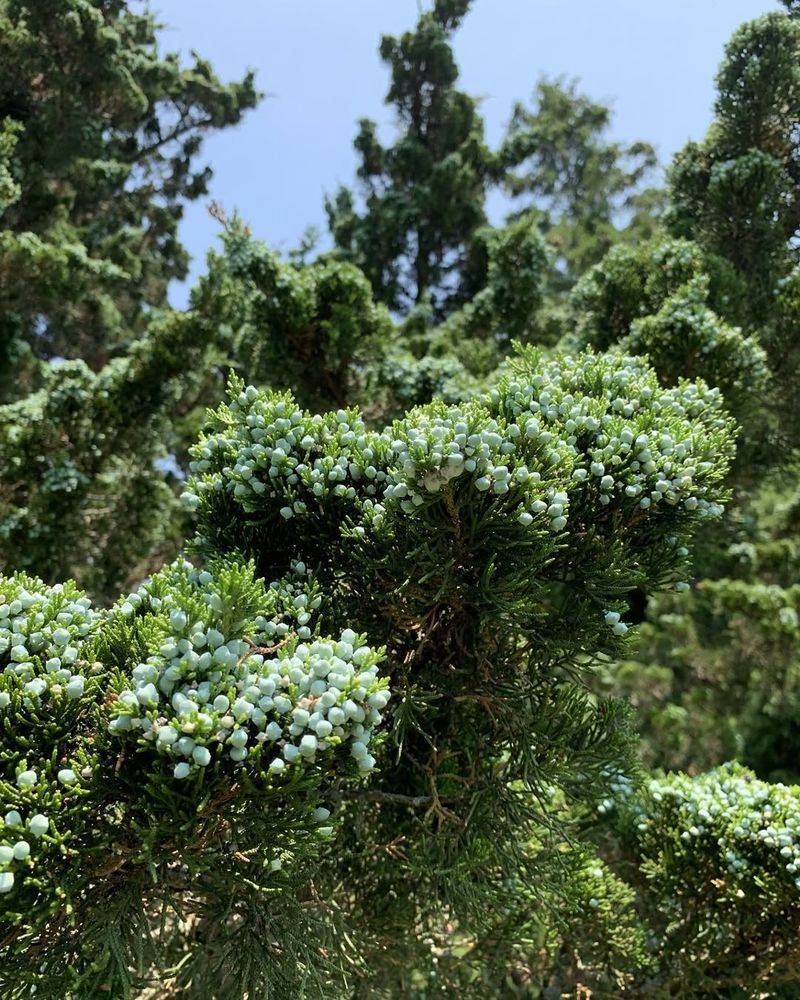
Not every front yard needs a flowering tree. Sometimes what a space really needs is a strong, year-round green anchor that holds the landscape together through every season.
Eastern Red Cedar delivers exactly that, and it does so with very little fuss from the homeowner.
Despite its name, Eastern Red Cedar is actually a juniper, not a true cedar. It grows 20 to 40 feet tall but often stays much narrower than other trees of similar height.
That slim, upright form makes it a smart choice for Pennsylvania yards where width is limited but vertical space is available.
The growth rate is slow to moderate, so it won’t suddenly dominate your front yard before you have a chance to react. Its dense, evergreen foliage provides privacy screening and wind protection year-round.
In winter, when most other trees are bare, Eastern Red Cedar still looks full and alive, which is a big visual bonus.
Female trees produce small, bluish berries that are a critical food source for cedar waxwings and other birds throughout Pennsylvania. The tree tolerates drought, poor soils, and even some urban pollution, making it one of the toughest native options available.
If you want something that looks great in January just as much as it does in June, Eastern Red Cedar is a reliable and rewarding choice for your Pennsylvania front yard.
5. American Hornbeam (Carpinus Caroliniana)
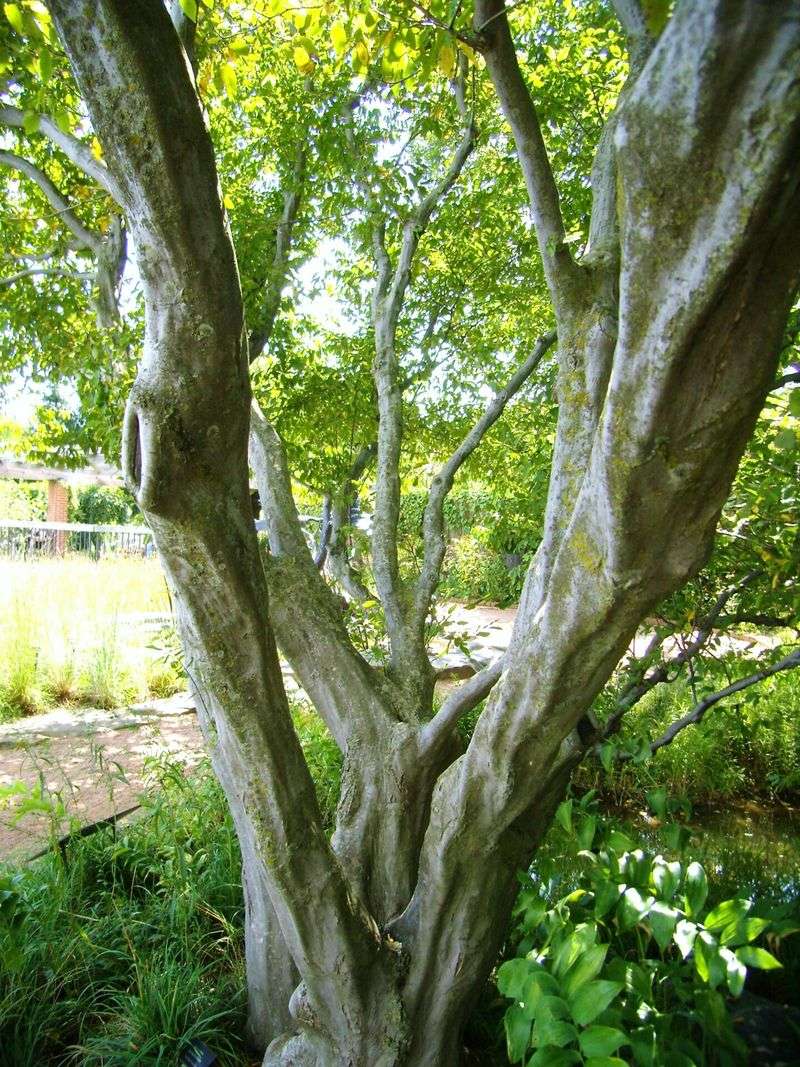
There is a reason American Hornbeam is nicknamed “musclewood.” Run your hand along its smooth, gray bark and you will feel the rippled, sinew-like texture that makes this tree unlike anything else growing in Pennsylvania.
It is a quiet, understated tree that rewards those who pay close attention to it. American Hornbeam grows slowly, reaching 20 to 35 feet at maturity over many years.
That slow pace is actually a great advantage for front yards in Pennsylvania neighborhoods where space is tight. You get a handsome, well-behaved tree that grows at a pace you can easily keep up with.
It naturally thrives as an understory tree, meaning it does well in shaded spots where other trees struggle.
If your front yard gets limited direct sunlight because of nearby structures or larger trees, American Hornbeam is one of the best native options you can plant. It tolerates a wide range of soil types and even handles occasional wet conditions.
In fall, the leaves shift to warm shades of yellow, orange, and red, giving shaded front yards a bright seasonal display. The tree also produces small, hop-like seed clusters that are a food source for birds and small animals across Pennsylvania.
For a woodland-style front yard or a shaded spot that needs a refined, slow-growing native tree, American Hornbeam is a genuinely underappreciated choice that deserves far more attention from homeowners.
6. Sweetbay Magnolia (Magnolia Virginiana)
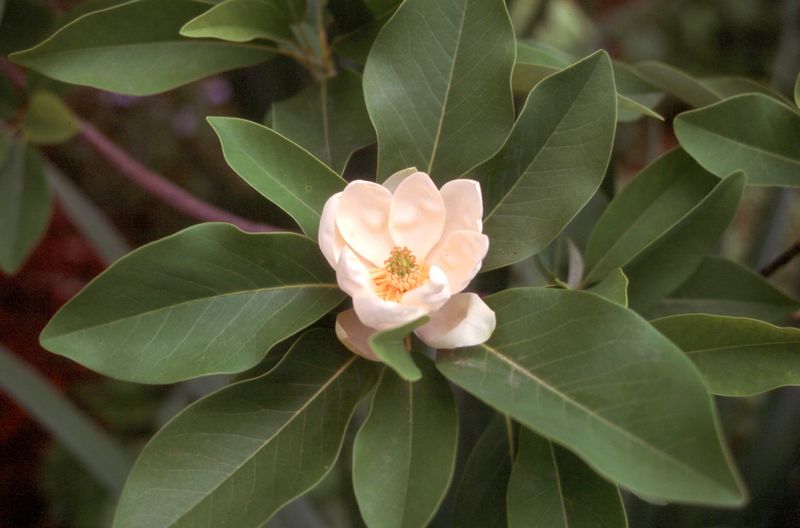
Close your eyes and imagine the scent of a warm summer evening in Pennsylvania, and Sweetbay Magnolia might just be the source of that memory.
The creamy white flowers on this native tree carry a soft, lemony fragrance that drifts through the air on still summer nights. It is the kind of tree that makes your whole front yard feel more inviting.
Sweetbay Magnolia grows 15 to 30 feet tall, and with a little light pruning, it can easily be kept on the smaller end of that range. The moderate growth rate means it fills in nicely without becoming overwhelming.
In Pennsylvania, it often behaves as a semi-evergreen, holding onto some of its glossy green leaves well into late fall or even early winter.
The flowers appear in late spring and continue blooming sporadically through summer, giving you a much longer show than most flowering trees. After the blooms fade, small red seed pods appear and attract birds to your yard.
The combination of fragrance, flowers, and wildlife value makes it a standout choice for ornamental front-yard planting.
Sweetbay Magnolia prefers moist, slightly acidic soil and does well in both full sun and partial shade. It is more adaptable than many other magnolia species, which makes it a practical option for a variety of Pennsylvania front yard conditions.
Plant it near a walkway or front window so you can enjoy the fragrance up close throughout the blooming season.
7. Eastern Fringe Tree (Chionanthus Virginicus)
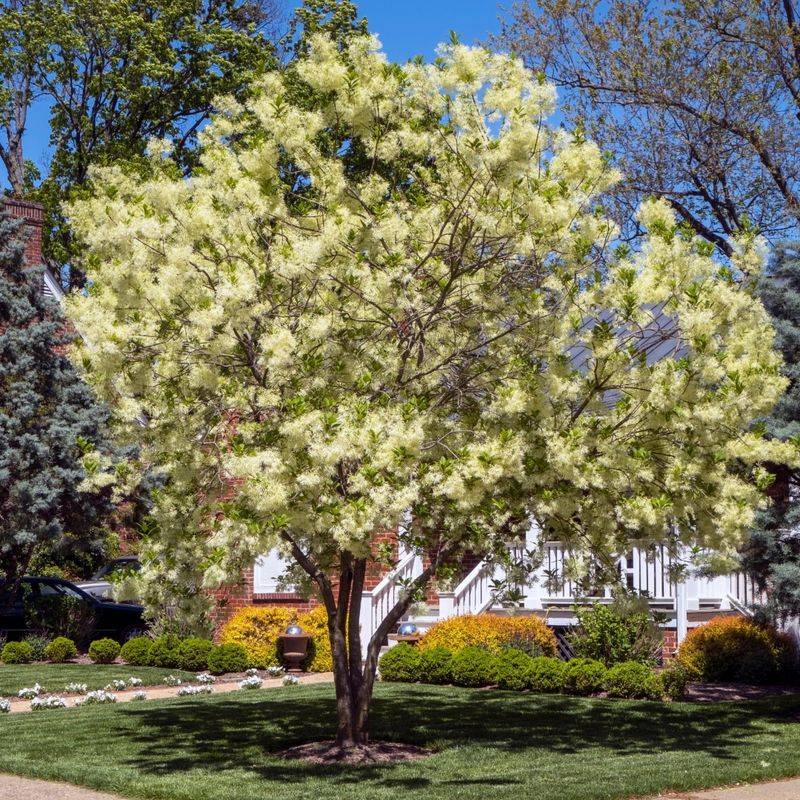
If you have never seen an Eastern Fringe Tree in full bloom, you are in for a real treat. In late spring, the tree erupts in long, feathery clusters of white flowers that drape over the branches like soft white fringe.
It looks like something out of a fairy tale, and it grows right here in Pennsylvania. Eastern Fringe Tree is naturally small, topping out at just 12 to 20 feet tall.
It is also one of the slowest-growing native trees in Pennsylvania, which sounds like a drawback but is actually a huge advantage for tight front yards.
Slow growth means you get to enjoy this beautiful tree for many years without worrying about it crowding your home or walkway.
The flowers are not just pretty. They are also fragrant, releasing a light, sweet scent that carries through the air on warm spring days.
After the blooms drop, female trees produce small, olive-like fruits that birds find irresistible. That makes Eastern Fringe Tree both a statement piece and a wildlife magnet in one compact package.
It adapts well to a range of soil types and can handle both full sun and partial shade, giving Pennsylvania homeowners plenty of flexibility with placement.
Because it is naturally small and slow, it works especially well in urban or suburban front yards where space is at a premium. Plant it where it can be seen from inside your home, and enjoy the show every single spring.