7 Native Pennsylvania Vines That Grow Quickly And Attract Pollinators

Some plants quietly settle into a garden, while others seem eager to climb, spread, and fill empty spaces with life. In Pennsylvania, native vines fall into that second group.
These energetic climbers can quickly cover fences, trellises, and arbors while bringing color and movement to the landscape.
One of the best things about native vines is how well they fit into the local environment. They are already adapted to Pennsylvania’s seasons, soil, and weather changes.
That often means less fuss for gardeners and stronger plants that grow with confidence once they get established.
Even better, many of these vines are magnets for pollinators. Bees, butterflies, and hummingbirds often flock to their flowers, turning a simple garden feature into a lively gathering spot.
With the right vine in place, a plain fence or arbor can become a vibrant part of the garden that supports wildlife while adding natural beauty.
1. Coral Honeysuckle (Lonicera Sempervirens)
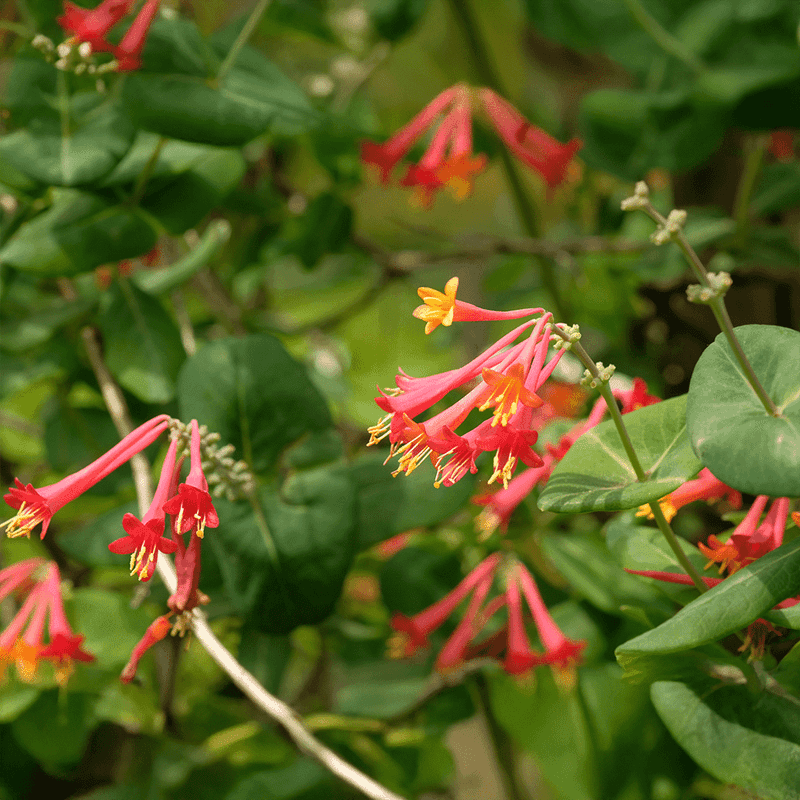
Few vines turn heads quite like Coral Honeysuckle. With its bright red, trumpet-shaped flowers clustered along long stems, this native beauty is practically impossible to ignore.
It blooms from spring all the way through summer, giving your garden months of color and activity.
Pollinators absolutely love it. Hummingbirds visit constantly to sip nectar from the tubular blooms, and native bees and butterflies are not far behind.
In Pennsylvania, where pollinator populations need all the support they can get, planting Coral Honeysuckle is a genuinely helpful act. It is also a great alternative to Japanese honeysuckle, which is invasive and harmful to local ecosystems.
Growing Coral Honeysuckle is easy, even for beginners. It thrives in full sun to partial shade and handles Pennsylvania’s varied weather conditions well.
Plant it near a fence, arbor, or trellis and watch it climb with enthusiasm. It grows at a moderate to fast pace, reaching up to 20 feet in length over time.
Once established, it is fairly low-maintenance. You do not need to water it constantly, and it does not require heavy fertilizing.
A light pruning after the blooming season keeps it looking tidy and encourages even more flowers the following year. Songbirds like the American goldfinch also enjoy the small red berries that appear after flowering.
If you want a vine that works hard, looks stunning, and supports Pennsylvania wildlife from spring through fall, Coral Honeysuckle deserves a spot in your yard.
2. Trumpet Vine (Campsis Radicans)
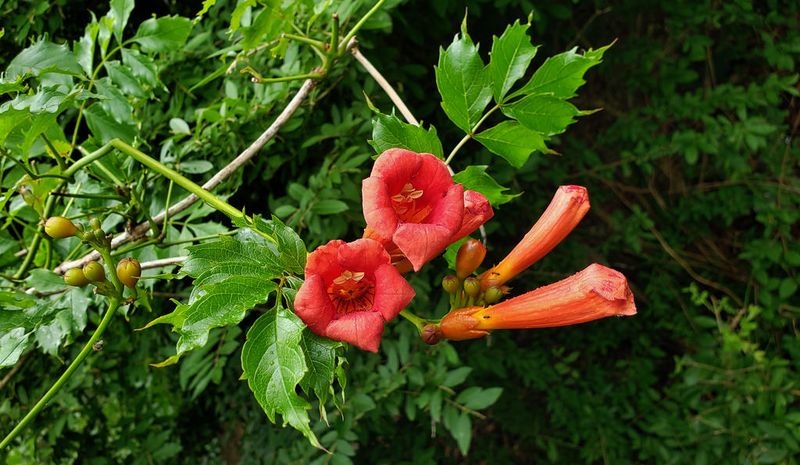
Bold, fast, and absolutely stunning, Trumpet Vine is the vine that makes neighbors stop and stare. Its large, flaring orange blooms look almost tropical, yet this plant is completely native to the eastern United States, including Pennsylvania.
Once it gets going, it grows with impressive speed and can easily cover a fence or pergola in just a few seasons.
Hummingbirds treat Trumpet Vine like a favorite restaurant. The wide, tubular flowers are perfectly shaped for hummingbird beaks, and the birds return again and again throughout the summer.
Butterflies and bees also visit regularly, making this vine a pollinator hotspot in any Pennsylvania garden.
One thing to keep in mind is that Trumpet Vine is a vigorous grower. That is mostly a good thing, but it does mean you will want to plant it somewhere with room to spread.
Give it a strong support structure like a thick trellis or fence post, because it gets heavy as it matures. Regular pruning keeps it manageable and actually encourages more blooming.
It grows best in full sun and tolerates a wide range of soil types, which makes it very adaptable across Pennsylvania’s different regions. It is drought-tolerant once established, so you will not need to fuss over watering during dry spells.
Trumpet Vine blooms from midsummer through early fall, filling those late-season weeks with color when many other plants have already faded. It is a powerhouse vine that rewards you with very little effort required.
3. Virginia Creeper (Parthenocissus Quinquefolia)

Walk through almost any Pennsylvania woodland in fall and you will likely spot Virginia Creeper blazing red across trees, fences, and stone walls.
This native vine is one of the most adaptable plants in the region, thriving in sun, shade, dry soil, and moist conditions alike. It truly earns the title of a no-fuss native.
During spring and early summer, Virginia Creeper produces clusters of tiny greenish flowers that might not win any beauty contests, but pollinators do not seem to mind.
Native bees visit the blooms regularly, and the dark blue-black berries that appear in late summer and fall are a critical food source for more than 35 species of birds, including woodpeckers, thrushes, and mockingbirds.
Virginia Creeper climbs using adhesive-tipped tendrils that grip surfaces firmly without causing major damage. It can scale walls, fences, and tree trunks with ease, spreading quickly to cover large areas.
In Pennsylvania gardens, it is often used to hide unsightly structures or add green coverage to bare spaces fast.
The real showstopper comes in autumn. The five-leaflet clusters transform into brilliant shades of red, orange, and purple, creating a fiery display that rivals any ornamental plant.
It is completely native, supports local wildlife year-round, and grows fast enough to see results within a single season.
For gardeners in Pennsylvania who want coverage, color, and ecological value all in one plant, Virginia Creeper checks every single box without asking for much in return.
4. American Wisteria (Wisteria Frutescens)

Purple, fragrant, and absolutely breathtaking in bloom, American Wisteria is the well-behaved cousin of the invasive Asian wisterias that have caused so many problems across the eastern United States.
Native to the southeastern and mid-Atlantic regions, including parts of Pennsylvania, this vine delivers all the drama of wisteria without the ecological headaches.
The hanging clusters of purple to lavender flowers appear in late spring and often rebloom later in summer. Bees go wild for these blooms.
Bumblebees especially love American Wisteria and can be seen buzzing around the flowers on warm days. Butterflies and other native pollinators also stop by regularly, making it a lively addition to any Pennsylvania pollinator garden.
Unlike its Asian relatives, American Wisteria does not spread aggressively or strangle nearby trees. It still needs a sturdy support like an arbor or strong trellis, because it does get heavy and vigorous over time.
Pruning twice a year, once in summer and once in late winter, keeps it in great shape and encourages even more flower production.
It grows best in full sun with moist, well-drained soil, though it tolerates some shade. In Pennsylvania, it pairs beautifully with other native plants in a mixed garden border or as a focal point on a garden structure.
The fragrance alone is worth planting it. Standing near a blooming American Wisteria on a warm spring morning is one of those simple pleasures that makes gardening in Pennsylvania feel truly rewarding and worthwhile.
5. Passionflower (Passiflora Incarnata)
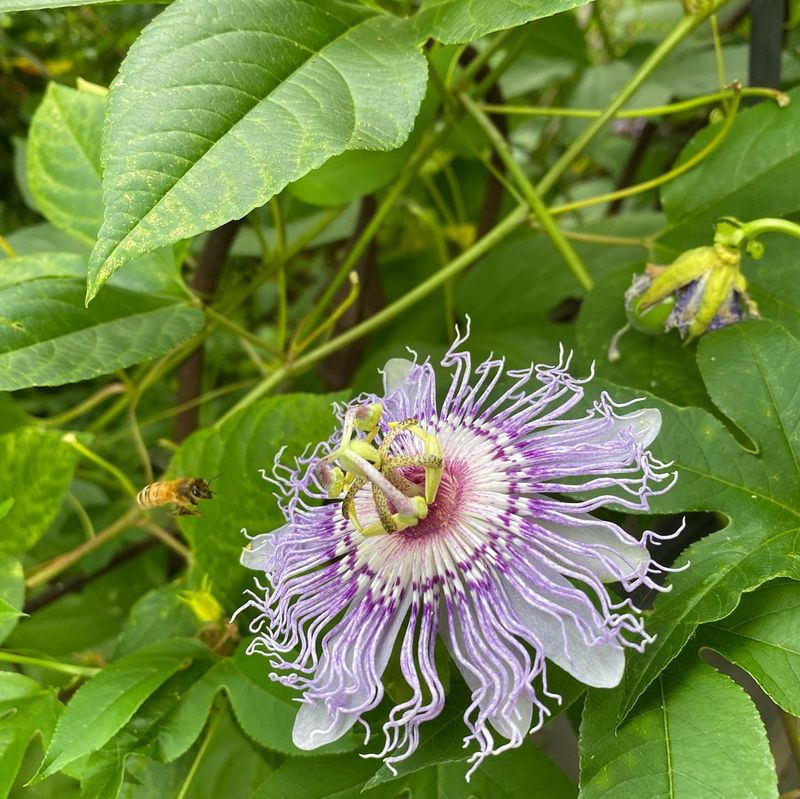
Nothing in the native Pennsylvania garden looks quite as exotic as Passionflower. Also known as maypop, this fast-growing vine produces some of the most intricate and otherworldly flowers you will ever see on a plant that is completely at home in Pennsylvania.
The blooms are lavender and white with a fringed, almost alien-looking corona that stops people in their tracks.
Butterflies are the biggest fans. The zebra longwing and gulf fritillary use Passionflower as a host plant, meaning they lay their eggs on its leaves so their caterpillars can feed.
Native bees are also frequent visitors, drawn in by the generous supply of pollen and nectar. Planting Passionflower in your Pennsylvania yard is practically like installing a butterfly nursery right in your garden.
Maypop earns its nickname by popping up quickly in spring after drying back to the ground each winter. It spreads through underground rhizomes, so it can fill in a space fast.
That is mostly a great thing, though you may want to contain it in smaller garden spaces. Give it a trellis or fence to climb, and it will reward you with blooms from midsummer through early fall.
The yellow egg-shaped fruits that follow the flowers are actually edible and have a sweet, tropical flavor. Birds and small wildlife enjoy them too.
Passionflower grows best in full sun and well-drained soil across Pennsylvania. It is drought-tolerant once established, making it a tough and reliable vine that delivers beauty, food, and habitat all at once.
6. Dutchman’s Pipe (Aristolochia Macrophylla)

Shaped like something out of a fairy tale, the flowers of Dutchman’s Pipe are curved, tubular, and just a little bit mysterious. They look remarkably like old-fashioned curved tobacco pipes, which is exactly where the name comes from.
But the real story of this native Pennsylvania vine is not about its quirky flowers. It is about the butterfly it supports.
Dutchman’s Pipe is the sole host plant for the pipevine swallowtail butterfly, one of Pennsylvania’s most stunning native butterflies. Female pipevine swallowtails seek out this plant specifically to lay their eggs.
The caterpillars then feed on the large, heart-shaped leaves. Without Dutchman’s Pipe, the pipevine swallowtail cannot complete its life cycle, making this vine genuinely essential for local butterfly conservation.
The vine itself is a bold, leafy grower that thrives in partial to full shade. In Pennsylvania, it does particularly well in woodland garden settings where other vines might struggle.
The leaves are enormous, sometimes reaching a foot across, which creates a dense, lush curtain of green that provides excellent privacy and shade coverage on a fence or pergola.
Dutchman’s Pipe prefers moist, rich soil and grows at a moderate pace, eventually reaching 20 to 30 feet in length. It is a fantastic choice for shaded areas of Pennsylvania gardens where sunlight is limited.
Planting it is a direct investment in local biodiversity. Few native vines carry as much ecological weight as this one, and it remains one of the most important plants you can grow for Pennsylvania’s native butterfly populations.
7. Climbing Prairie Rose (Rosa Setigera)
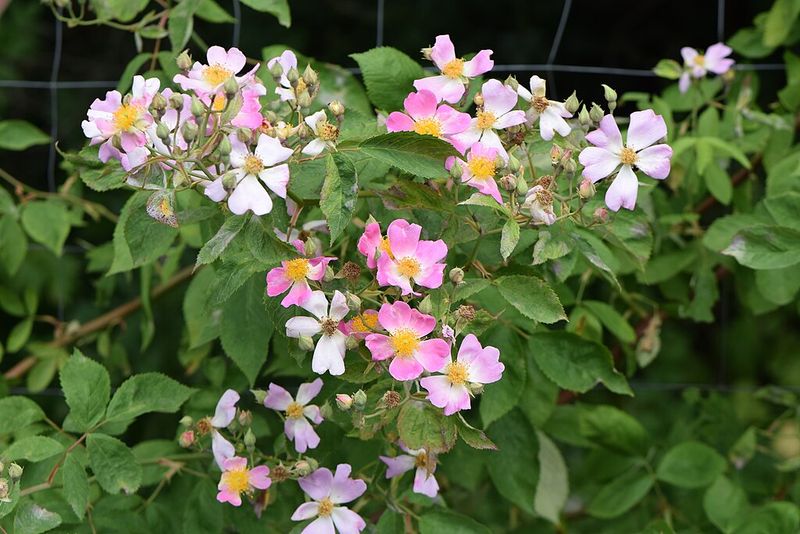
Sweet-smelling, graceful, and loved by pollinators, the Climbing Prairie Rose is the only native climbing rose found in North America.
Unlike the thorny, high-maintenance hybrid roses many gardeners struggle with, this native charmer is rugged, adaptable, and genuinely easy to grow across Pennsylvania’s varied landscapes.
Its single-petaled pink blooms have a simple elegance that feels right at home in a naturalistic garden.
Bees are the primary pollinators of Climbing Prairie Rose, and they visit the open flowers enthusiastically. Because the blooms are single-petaled rather than densely doubled, bees can easily access the pollen and nectar at the center.
Butterflies and other native insects also stop by, making this rose a reliable pollinator magnet throughout its late June to July bloom period.
After the flowers fade, small red rose hips develop and persist through fall and winter. These hips are a valuable food source for birds, including cedar waxwings and American robins.
The dense, arching canes also provide excellent nesting cover for small birds, adding another layer of wildlife value to an already impressive plant.
Climbing Prairie Rose grows best in full sun and tolerates a range of soil conditions, including clay-heavy soils common in many parts of Pennsylvania.
It can reach 10 to 15 feet in length and looks spectacular trained along a split-rail fence or allowed to scramble over a garden wall.
Pruning after bloom keeps it healthy and shapely. For Pennsylvania gardeners who love roses but want something truly native and low-fuss, this climbing beauty is an outstanding and rewarding choice.