8 Native Plants That Fill Georgia Gardens With Butterflies And Bees
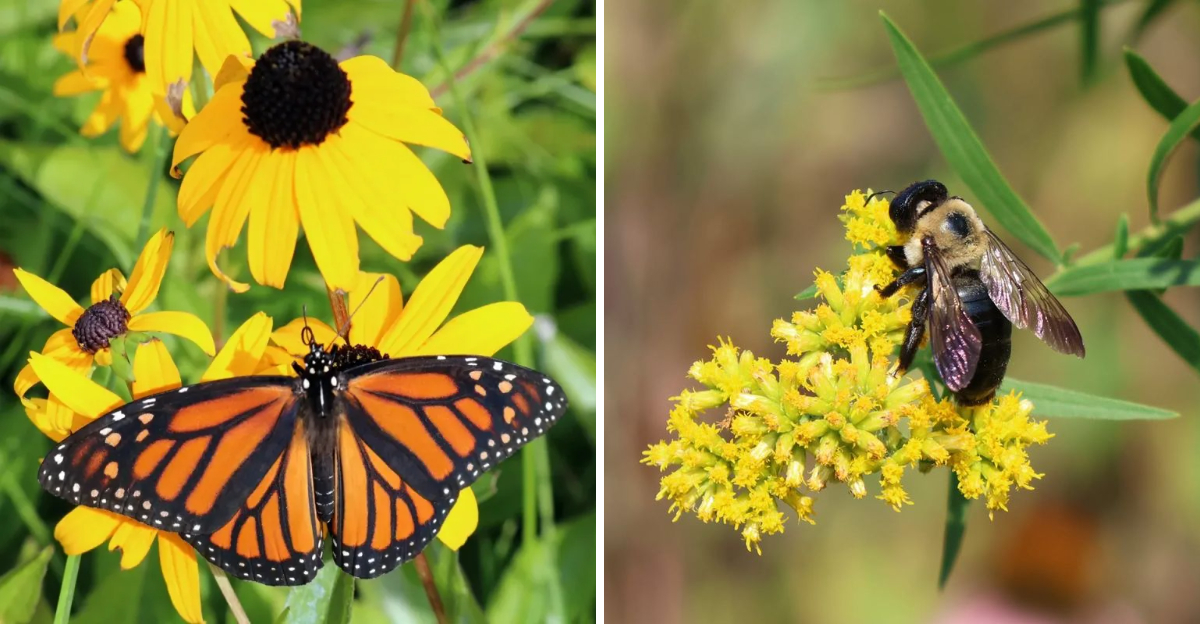
Butterflies drifting through the air and bees moving from flower to flower can completely change how a Georgia garden feels. Suddenly the yard isn’t just plants and soil anymore.
It becomes lively, colorful, and full of movement. And the secret behind that kind of garden often comes down to one simple thing: planting the right natives.
Many plants that naturally grow in Georgia are magnets for pollinators. They bloom in ways that butterflies notice right away, and their nectar keeps bees coming back again and again.
Even better, these plants are already adapted to Georgia’s climate, which means they tend to grow stronger and need less fuss once established.
If a garden has been feeling a little quiet lately, adding the right native plants can quickly change the scene.
Before long, butterflies begin gliding through the yard and bees stay busy from bloom to bloom, turning the garden into a lively place again.
1. Purple Coneflower Attracts Butterflies And Native Bees
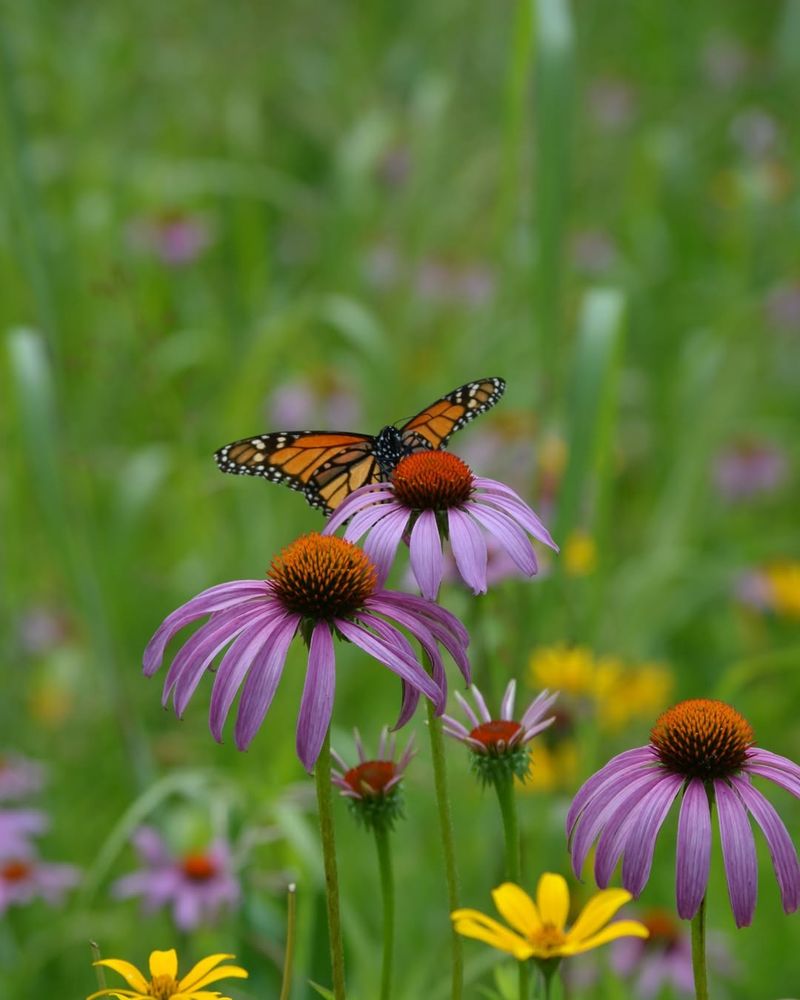
Few plants in a Georgia garden stop visitors in their tracks quite like purple coneflower. Those wide, daisy-like blooms in shades of pink and purple rise up on sturdy stems and practically call out to every passing butterfly and bumblebee in the neighborhood.
Echinacea purpurea is tough. It handles Georgia summers without much fuss, thriving in full sun and average soil that would stress out plenty of other perennials.
Eastern tiger swallowtails, painted ladies, and fritillaries all show up once it starts blooming in early summer.
Native bees absolutely swarm the center cones, which are packed with pollen. Plant it in groups of five or more for maximum impact — a single plant is nice, but a cluster is a full-on pollinator party.
Deadheading spent blooms will push out more flowers, but leaving some seed heads standing through fall and winter gives goldfinches and other seed-eating birds a meal when food gets scarce.
In Georgia, purple coneflower blooms from roughly June through August, sometimes longer in warmer southern parts of the state. Pair it with black-eyed Susan for a classic wildflower combination that keeps color going all season.
Space plants about eighteen inches apart and water regularly the first season to help roots settle in before summer heat peaks.
Once established, purple coneflower becomes surprisingly drought tolerant, which is one reason it performs so reliably in Georgia gardens.
The plants also return year after year, slowly forming larger clumps that bring even more butterflies and bees back each summer.
2. Black Eyed Susan Supports Pollinators With Bright Summer Blooms
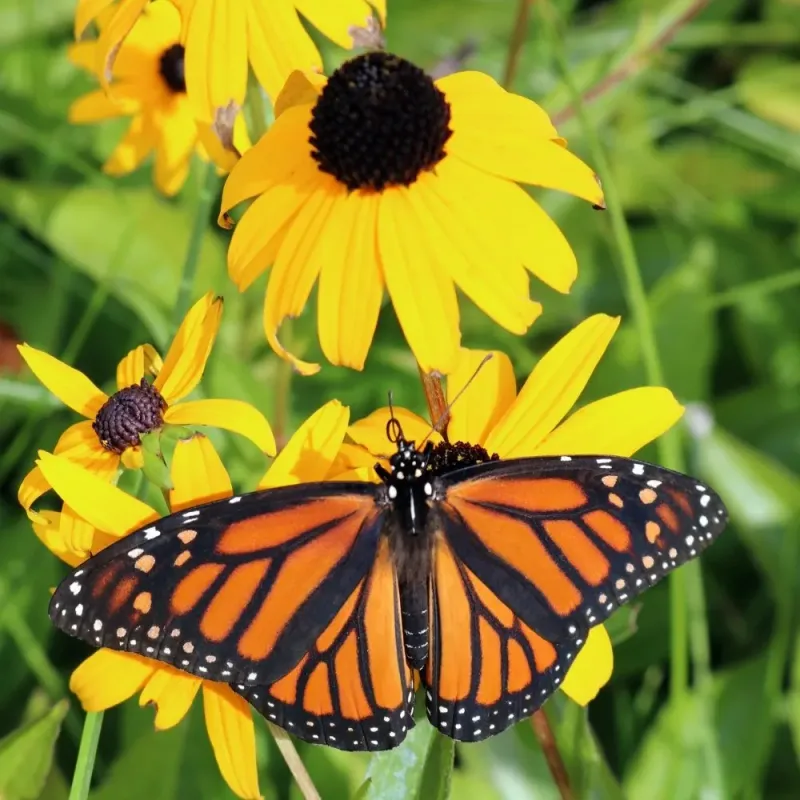
Walk past a patch of black-eyed Susan on a July afternoon in Georgia and you will count more bee species than you ever expected to see in one place.
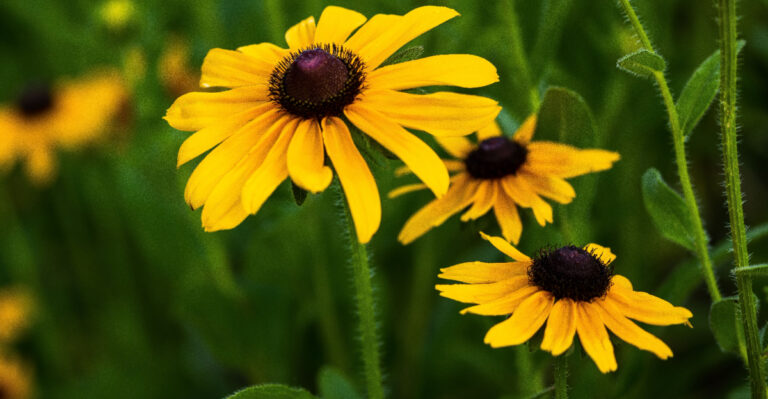
Rudbeckia hirta is a pollinator magnet, plain and simple, and its cheerful yellow blooms with dark chocolate centers are hard to miss from across the yard.
Bumblebees, sweat bees, and small native bees treat it like an all-you-can-eat buffet. Butterflies including skippers, sulphurs, and fritillaries are regulars too.
What makes this plant especially valuable is its long bloom window — in Georgia it can flower from late May all the way through October without much encouragement.
Black-eyed Susan grows well in dry, sunny spots where other plants struggle. Sandy soil, clay soil, poor drainage — it adapts to conditions that would send more finicky plants into a tailspin.
Scatter seeds directly into prepared ground in fall and they will germinate the following spring, spreading gradually into a dense, self-sustaining stand.
It works beautifully along fence lines, at the back of a border, or mixed into a meadow-style planting. Georgia gardeners who let a few plants go to seed at the end of the season will often find volunteer seedlings popping up nearby the following spring.
No replanting required — just let nature do the work.
3. Bee Balm Draws Hummingbirds Butterflies And Bees
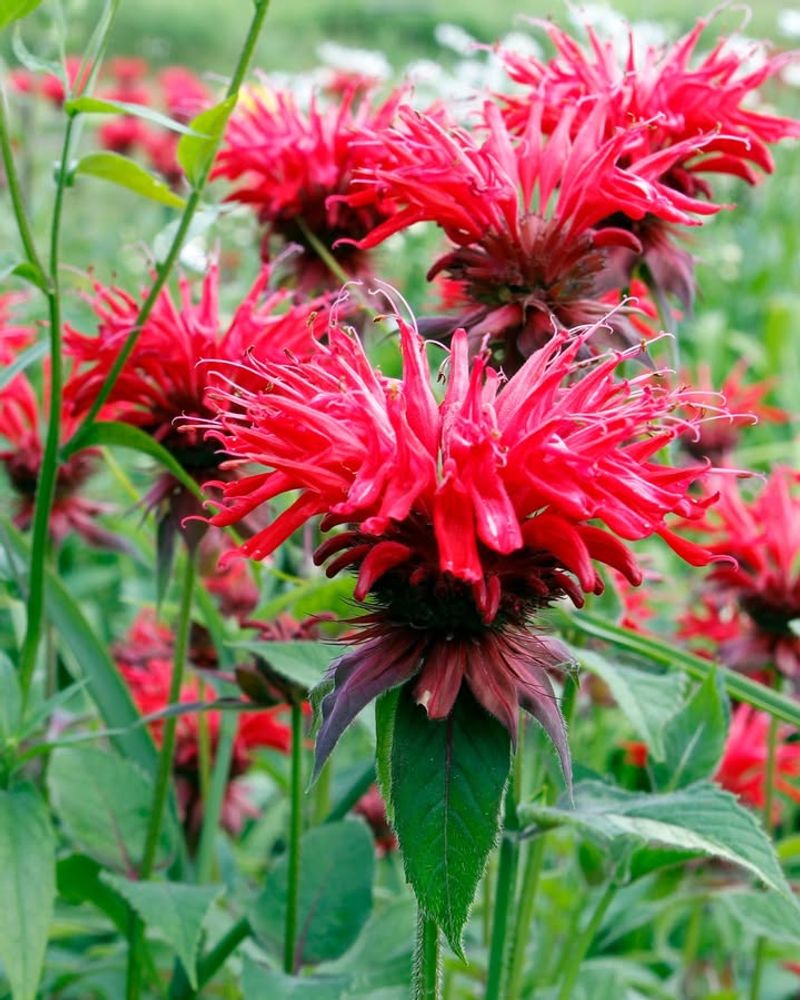
Bee balm is one of those plants that makes a Georgia garden feel genuinely wild.
Its shaggy, firework-shaped blooms in shades of red, pink, and purple show up in midsummer and immediately draw a crowd — hummingbirds, swallowtails, sphinx moths, and more bee species than most people can identify on sight.
Monarda species native to Georgia include Monarda fistulosa and Monarda punctata, both of which are excellent choices for in-state gardens. They prefer full sun to light shade and soil that drains reasonably well.
In heavy clay common across parts of the Georgia Piedmont, amending with compost before planting makes a noticeable difference.
Powdery mildew can show up on the leaves during humid Georgia summers, especially in spots with poor air circulation.
Planting with adequate spacing — about eighteen to twenty-four inches between plants — helps reduce that issue significantly.
Some gardeners cut plants back by half in late spring to encourage bushier growth and better airflow.
Bee balm spreads by underground rhizomes, so expect a clump to expand over a few seasons. Divide it every two or three years to keep it from crowding neighbors and to reinvigorate blooming.
The fragrant leaves are a bonus — crush one between your fingers and you get a strong oregano-like scent that explains why this plant has been used in teas and cooking for generations across the Southeast.
4. Coreopsis Provides Nectar For Pollinators Through Summer
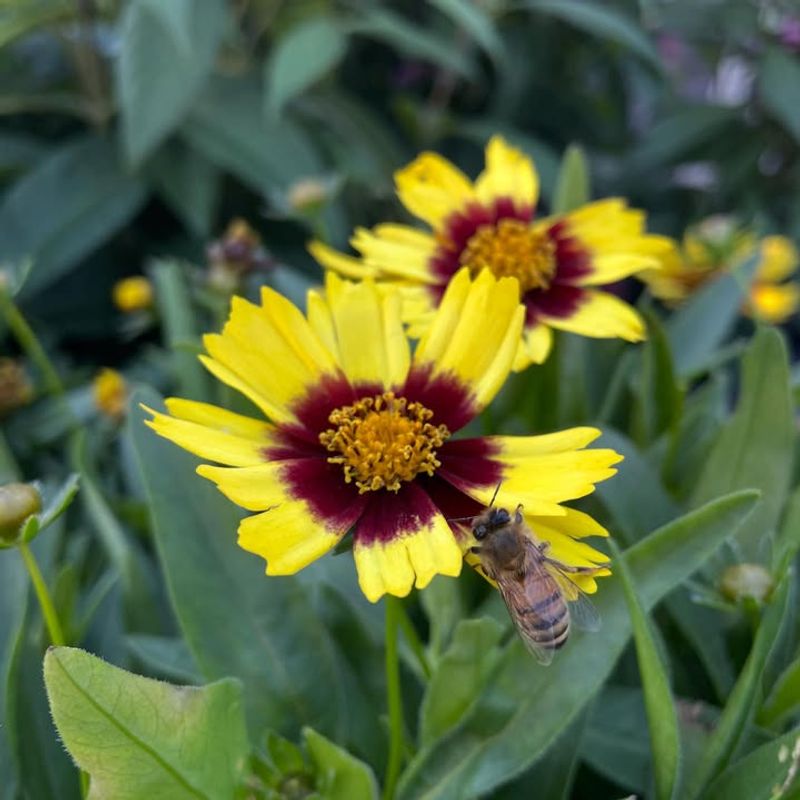
Coreopsis is Georgia’s own — it is actually the state wildflower, and for good reason.
These sunny yellow blooms carpet roadsides and meadows across the state every spring and summer, feeding a constant stream of small native bees, sweat bees, and butterflies that depend on open, accessible flowers.
Coreopsis tinctoria and Coreopsis lanceolata are both excellent choices for Georgia gardens. They ask for almost nothing beyond full sun and soil that does not stay waterlogged.
Once plants are established, they handle dry spells with ease, which is a real advantage during Georgia’s often scorching July and August stretches.
Deadhead spent flowers regularly and blooming continues for weeks longer than it would otherwise. Skip deadheading toward the end of the season and the seed heads attract finches and sparrows looking for an easy meal.
Either approach works — it just depends on whether you want more flowers or more birds.
Coreopsis works especially well in naturalistic plantings and cottage-style borders. Mix it with bee balm or black-eyed Susan for a layered look that stays interesting all summer long.
Annual varieties self-seed freely, so a single planting can turn into a permanent feature without any replanting on your part.
For Georgia gardeners who want strong pollinator support with minimal ongoing effort, coreopsis is one of the most reliable choices available.
5. Butterfly Weed Serves As A Key Plant For Monarch Butterflies
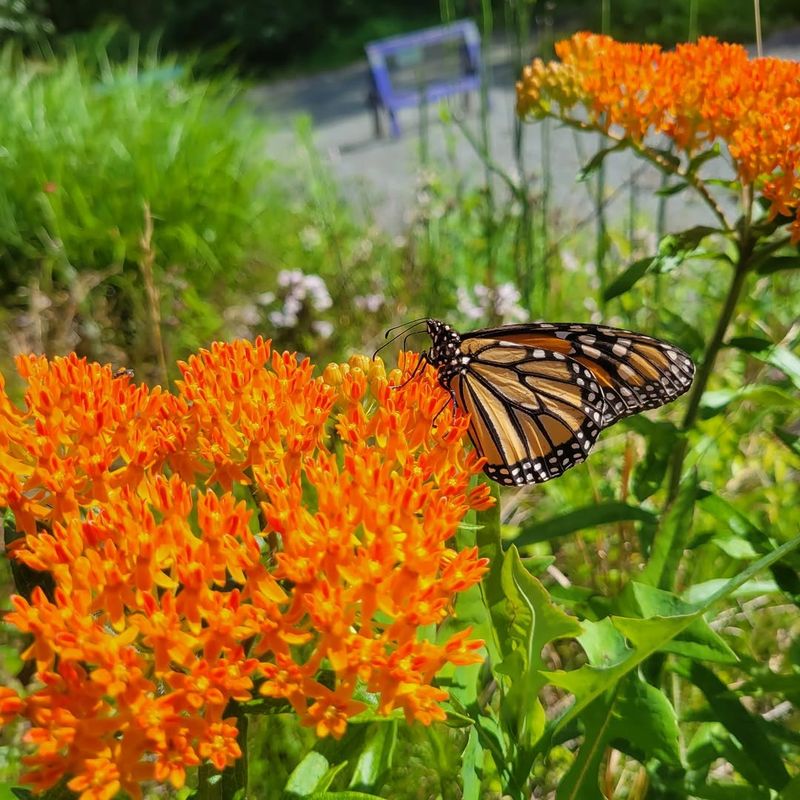
Monarch butterflies need milkweed to survive — no milkweed, no monarchs. Butterfly weed, or Asclepias tuberosa, is the showiest milkweed species native to Georgia, and its clusters of vivid orange flowers are almost impossible to overlook in a summer garden.
Adult monarchs feed on the nectar, but the plant’s real importance is as a host for monarch caterpillars. Female monarchs seek out milkweed specifically to lay eggs, and the caterpillars feed exclusively on milkweed leaves.
Planting butterfly weed in Georgia helps support the monarch population along its migration route through the Southeast.
Beyond monarchs, this plant draws fritillaries, swallowtails, and a wide range of native bees. It blooms from June into August in most parts of Georgia, thriving in sandy, well-drained soil and full sun.
Heavy clay soil is its main enemy — raised beds or amended planting areas solve that problem in gardens where drainage is poor.
Butterfly weed has a deep taproot, so it does not transplant well once established. Choose your planting spot carefully and leave it alone.
It emerges late in spring, so mark the location to avoid accidentally digging it up before growth starts. Seed pods that form after flowering can be collected and scattered in fall, gradually expanding your planting without any cost.
Over a few seasons, a small patch can become a genuine monarch waystation right in your own Georgia backyard.
6. Blazing Star Produces Nectar Rich Flower Spikes
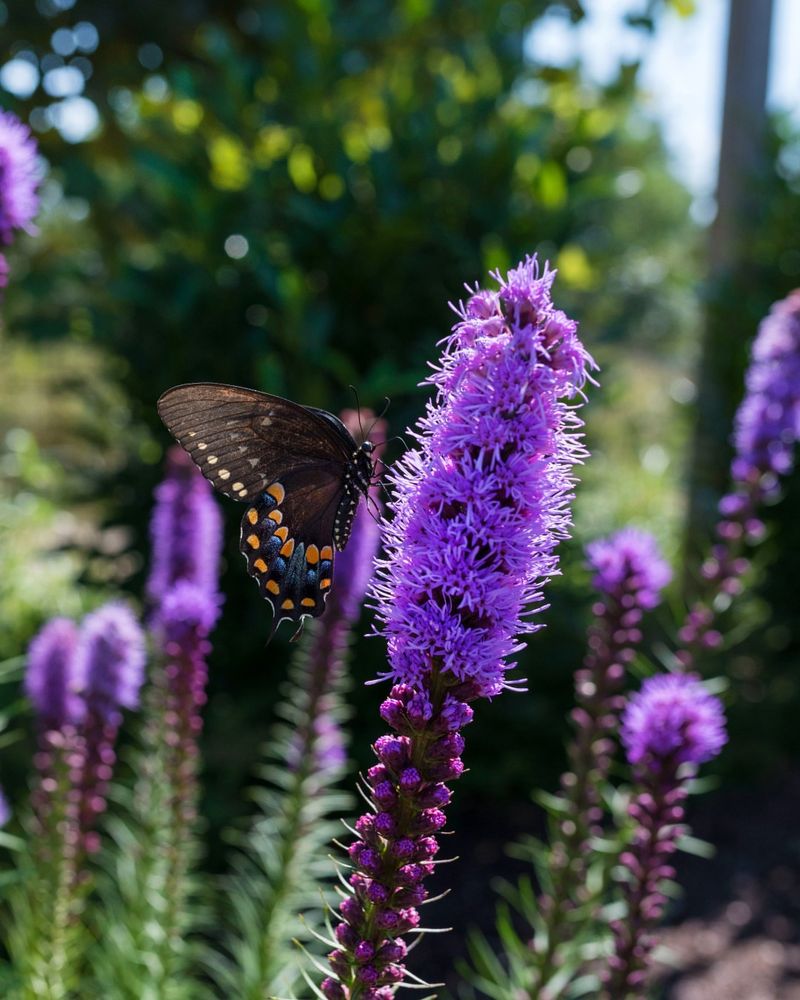
Blazing star has one of the most unusual blooming habits in the native plant world — its flower spikes open from the top down, which is the opposite of most spike-type flowers.
That quirk aside, what really matters is that monarchs, swallowtails, and bumblebees treat it like one of the best nectar sources of the entire season.
Liatris spicata grows naturally in Georgia’s meadows and open woodlands, so it is well adapted to the state’s heat and humidity. It prefers full sun and well-drained soil.
In Georgia gardens, it typically blooms from July into September, filling a critical window when many other native plants are starting to fade.
The tall, feathery purple spikes stand out visually in any planting. They work well at the back of a border or mixed into a prairie-style garden alongside coneflower and goldenrod.
Plants grow from corms, which can be purchased and planted in fall for blooms the following summer. Space them about twelve inches apart — they will gradually form dense clumps that get more impressive each year.
Goldfinches and other small songbirds feed on the seed heads in fall, so there is good reason to leave spent stalks standing rather than cutting them back immediately.
Blazing star also holds up well as a cut flower, which is a nice bonus for Georgia gardeners who like bringing a little of the garden indoors during late summer.
7. Goldenrod Feeds Pollinators Late In The Season
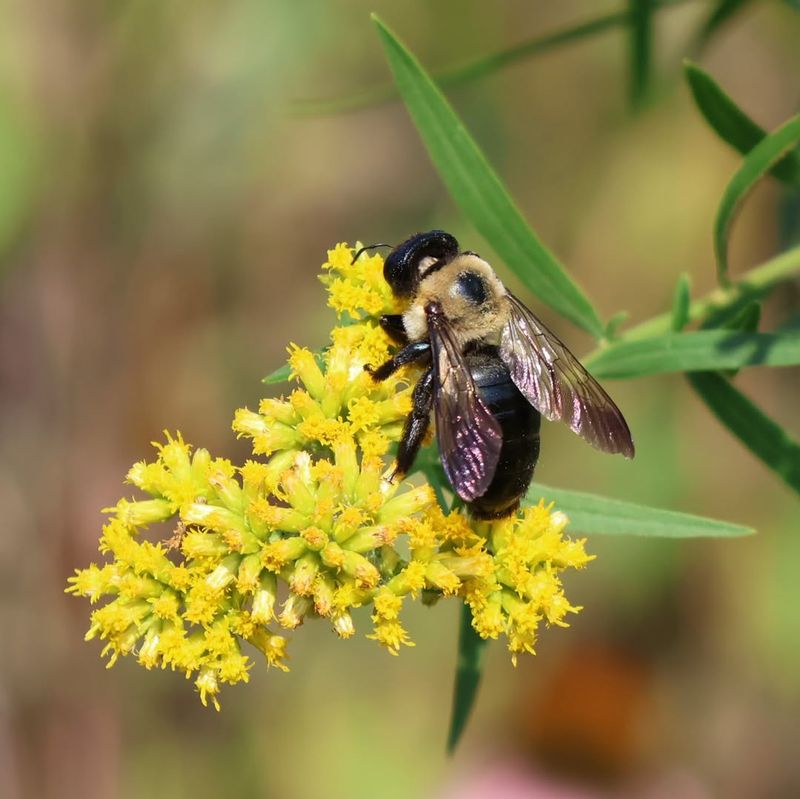
Goldenrod gets a bad reputation it does not deserve. Many people blame it for fall allergies, but the real culprit is ragweed, which blooms at the same time.
Goldenrod pollen is heavy and sticky — it travels by insect, not by wind — so it is not going anywhere near your sinuses.
What goldenrod actually does is feed hundreds of pollinator species at exactly the time of year when most other flowers have wrapped up.
In Georgia, native Solidago species bloom from late August into October, giving migrating monarchs a critical fuel stop and supporting native bees that need to build up winter food stores before cold weather arrives.
Solidago rugosa, Solidago nemoralis, and Solidago odora are all native to Georgia and worth planting. They thrive in average to poor soil and full to partial sun.
Rich, heavily fertilized soil actually pushes them toward excessive leafy growth at the expense of flowers, so skip the fertilizer entirely.
Goldenrod spreads by rhizomes and can get assertive in a small garden. Planting it in a contained bed or mowing around it seasonally keeps it from taking over.
In larger naturalistic plantings or meadow gardens — common in rural parts of Georgia — letting it spread freely creates broad swaths of late-season color that are genuinely spectacular when viewed from a distance on a sunny October afternoon.
8. Joe Pye Weed Brings Butterflies To Late Summer Gardens
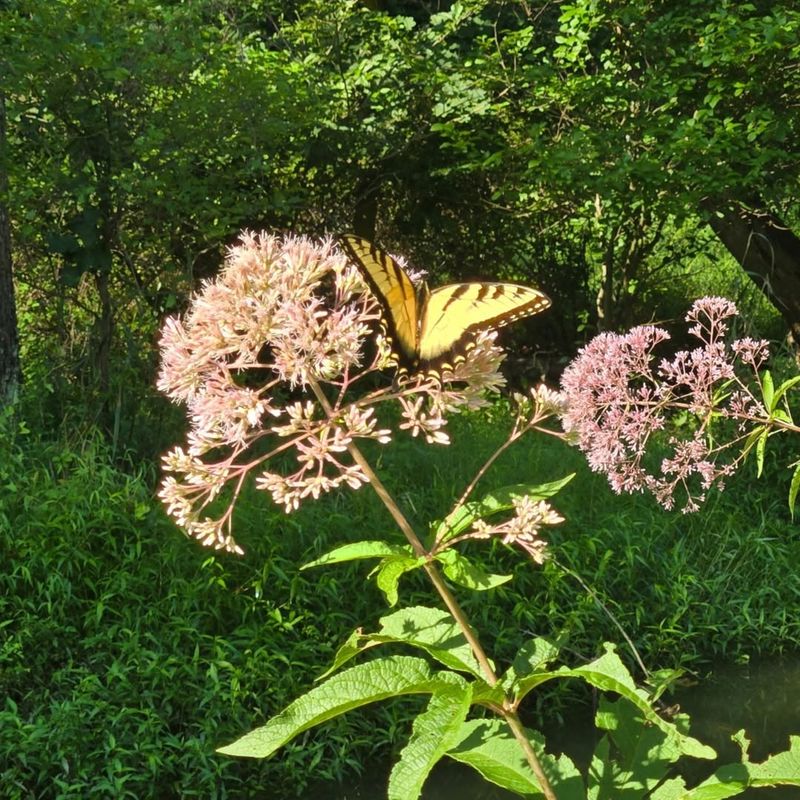
Stand next to a mature Joe Pye weed plant in August and count how many butterfly species land on it within ten minutes.
Eastern tiger swallowtails, great spangled fritillaries, and monarchs are common visitors, and on a warm afternoon the flower heads can be almost completely covered with wings.
Eutrochium fistulosum, the hollow-stemmed Joe Pye weed native to Georgia, is a big plant — it regularly reaches six to eight feet tall in good conditions.
That height makes it a natural backdrop for shorter perennials, and its large, domed clusters of dusty pink-mauve flowers are genuinely striking from late July through September.
It prefers moist soil and tolerates partial shade better than most of the other plants on this list, which makes it useful in spots that get afternoon shade or stay damp after rain.
Along creek banks, at the edges of rain gardens, or in low spots in Georgia yards where water collects — those are ideal locations.
Cut plants back to about twelve inches in late fall to keep them tidy and encourage strong new growth the following spring. Joe Pye weed is a long-lived perennial that improves with age, forming wider, more floriferous clumps each season.
For Georgia gardeners looking to extend the butterfly season well into September, few plants deliver as reliably or as dramatically as this one.