Native Plants That Truly Thrive In North Carolina’s Mountain Climate
Gardening in the mountains of North Carolina feels different from almost anywhere else in the state. Cooler temperatures, misty mornings, and rich forest soils create a landscape where many plants thrive naturally.
It is one of the most botanically diverse areas in the eastern United States, which means mountain gardeners have access to some truly remarkable native plants.
Across this region, native species are often the easiest and most rewarding choices for the garden.
They are already adapted to the local climate, rainfall patterns, and acidic soils that define much of the mountain landscape.
Once established, many require very little care while still providing beauty throughout the seasons. Planting natives also brings birds, pollinators, and other wildlife into the garden.
These nine North Carolina mountain plants are some of the best options for creating a landscape that looks natural, vibrant, and perfectly suited to its surroundings.
1. Rhododendron Catawbiense
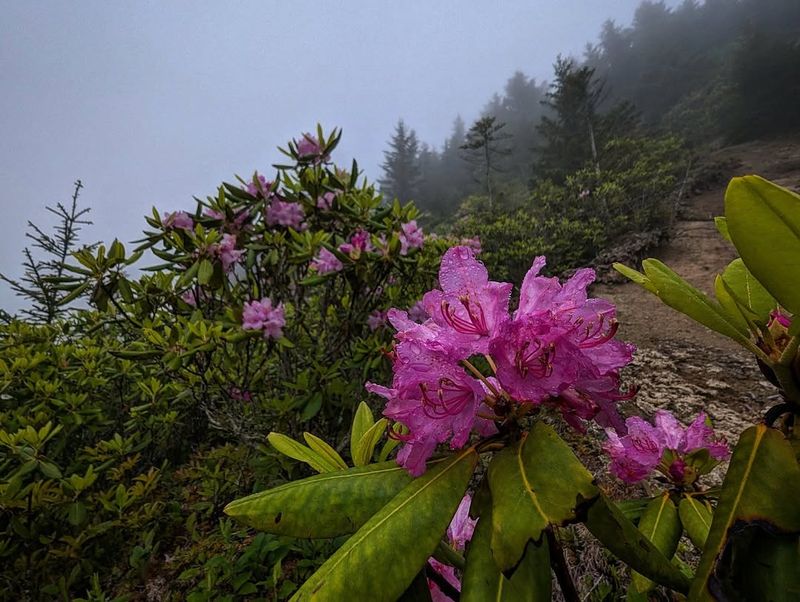
Few sights in western North Carolina compare to a hillside covered in Catawba Rhododendron bursting into bloom.
This tough, evergreen shrub is native to the Appalachian Mountains and has been growing here long before any garden was ever planted.
Its large, glossy leaves stay green all year, giving your landscape structure and color even in the coldest winter months.
Come late spring, the Catawba Rhododendron produces enormous clusters of purple to rose-pink flowers that can stop anyone in their tracks. The blooms are bold, layered, and absolutely stunning against the backdrop of mountain forest.
Pollinators love them, and so do photographers who visit the region every single year just to capture the display.
Planting this shrub is straightforward when you match its natural conditions.
It thrives in cool, acidic soil with good drainage and prefers partial shade, similar to the dappled light found under tall hardwood trees.
Amend your soil with pine bark or leaf compost to boost acidity if needed. Avoid heavy clay and waterlogged spots, as those conditions stress the roots over time.
Once established in the right location, this plant requires very little attention and rewards you with spectacular blooms season after season.
It truly earns its place in any North Carolina mountain garden.
2. Mountain Laurel
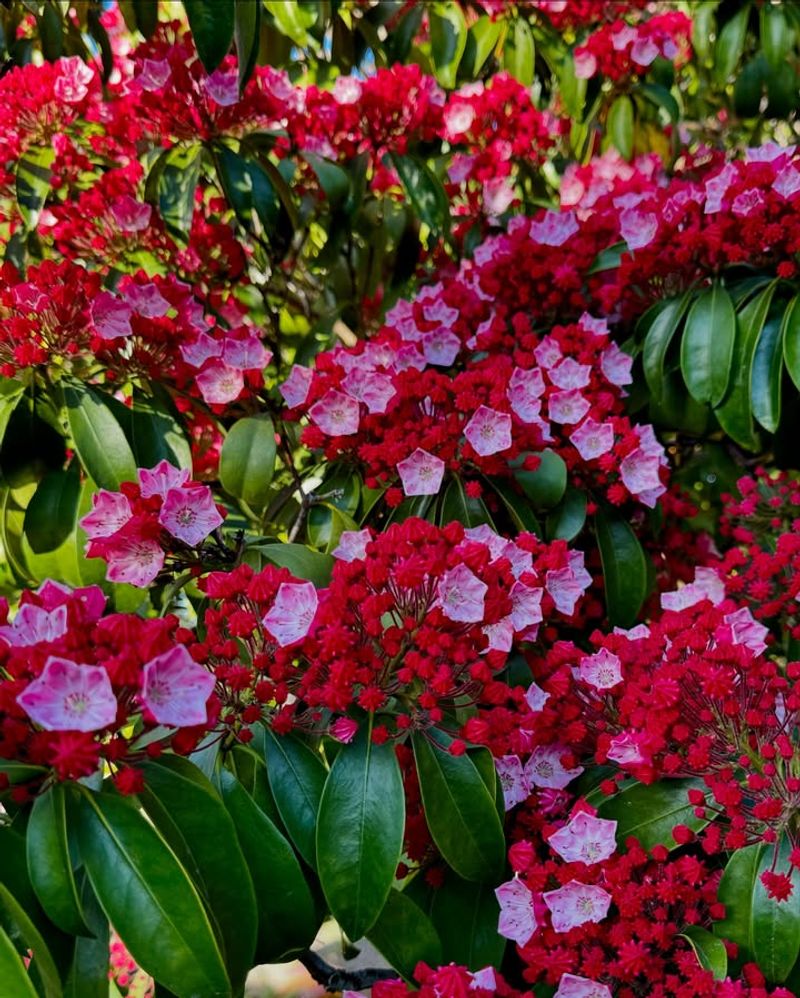
Mountain Laurel holds a special place in North Carolina’s mountain landscape, and it is actually the state flower of both North Carolina and Connecticut.
Seeing it bloom along a forest trail in late spring feels like stumbling onto something magical.
The flowers are unlike anything else, each one shaped like a tiny geometric star with a delicate pink or white color that brightens even the shadiest woodland corner.
This evergreen shrub grows naturally under the canopy of oaks and pines throughout the mountains of western North Carolina.
It prefers acidic, well-drained soil and does best with partial shade rather than full afternoon sun.
Planting it near taller trees mimics its natural habitat and keeps the foliage looking lush and healthy throughout the year.
One fun fact worth knowing: Mountain Laurel flowers have a built-in spring mechanism in their stamens that flicks pollen onto visiting bees, making it one of nature’s most clever pollination designs.
For home gardeners, adding a layer of pine needle mulch around the base helps maintain soil moisture and keeps the pH in the right range.
Avoid overwatering once the plant is established, as soggy roots are the most common problem.
With a little patience and the right spot, Mountain Laurel will become one of the most eye-catching plants in your entire North Carolina mountain garden.
3. Flame Azalea
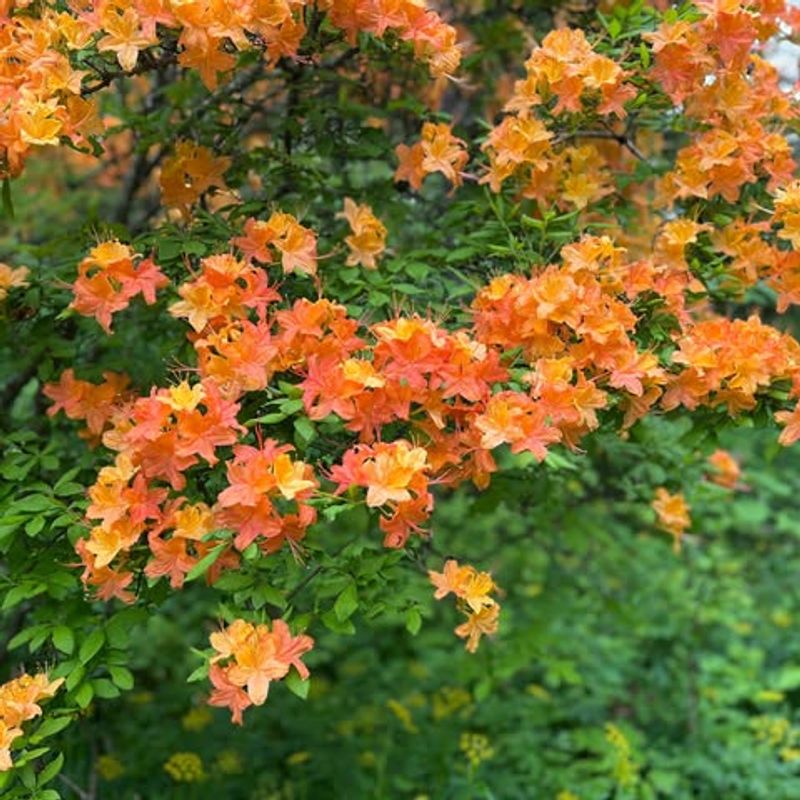
Imagine walking through a mountain forest in late May and suddenly seeing a shrub absolutely ablaze with orange and red flowers.
That is exactly what Flame Azalea looks like in person, and it is genuinely one of the most dramatic native plants found in North Carolina’s high country.
Naturalist William Bartram famously described it as “the most gay and brilliant flowering shrub yet known” back in the 1700s, and that description still holds up today.
Flame Azalea is a deciduous shrub, meaning it drops its leaves in fall, but the spring flower show more than makes up for the bare winter branches.
The blooms range from soft yellow to deep red-orange, often covering the entire plant before the leaves even fully emerge.
Woodland slopes with well-drained, acidic soil and partial shade are where this plant naturally thrives across the southern Appalachians.
For gardeners in North Carolina’s mountain communities, Flame Azalea fits beautifully along the edge of a tree line or on a gently sloping bed.
Mix organic matter like shredded hardwood mulch into the planting area to improve drainage and nutrition.
Avoid planting in low spots where water collects after rain. Since this plant is already adapted to the local climate, it rarely needs extra fertilizer or fussing once settled in.
The reward is a fiery spring display that neighbors will absolutely stop to admire every single year.
4. Serviceberry
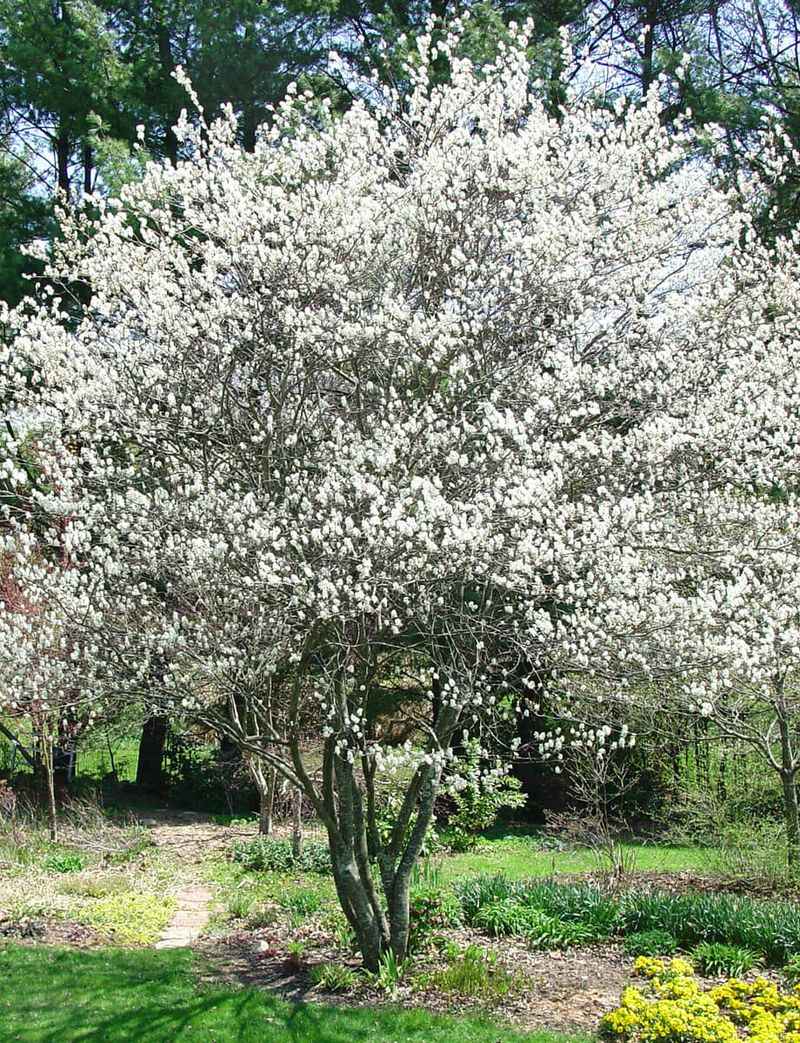
Serviceberry is one of those plants that earns its keep in every single season, and mountain gardeners in North Carolina absolutely love it for that reason.
In early spring, it bursts into bloom with delicate white flowers before most other trees have even started to leaf out.
That early color is a welcome sight after a long mountain winter, and it signals that warmer days are finally on the way.
By early summer, the tree produces small, round berries that ripen from red to deep purple-blue.
These berries are edible and have a mild, sweet flavor similar to blueberries, making them popular with both people and wildlife.
Birds especially flock to Serviceberry trees, so planting one is basically an open invitation to create a lively, wildlife-friendly backyard in the North Carolina mountains.
Fall brings yet another treat, as the leaves turn shades of orange, red, and gold before dropping for winter.
Serviceberry grows naturally along forest edges and rocky slopes throughout western North Carolina, which means it is already well adapted to the region’s conditions.
It tolerates a range of soil types but prefers well-drained, slightly acidic ground with good organic content. Full sun to partial shade both work well.
Plant it near a window or patio where you can enjoy the wildlife activity it attracts throughout the year without any extra effort on your part.
5. Black Cohosh
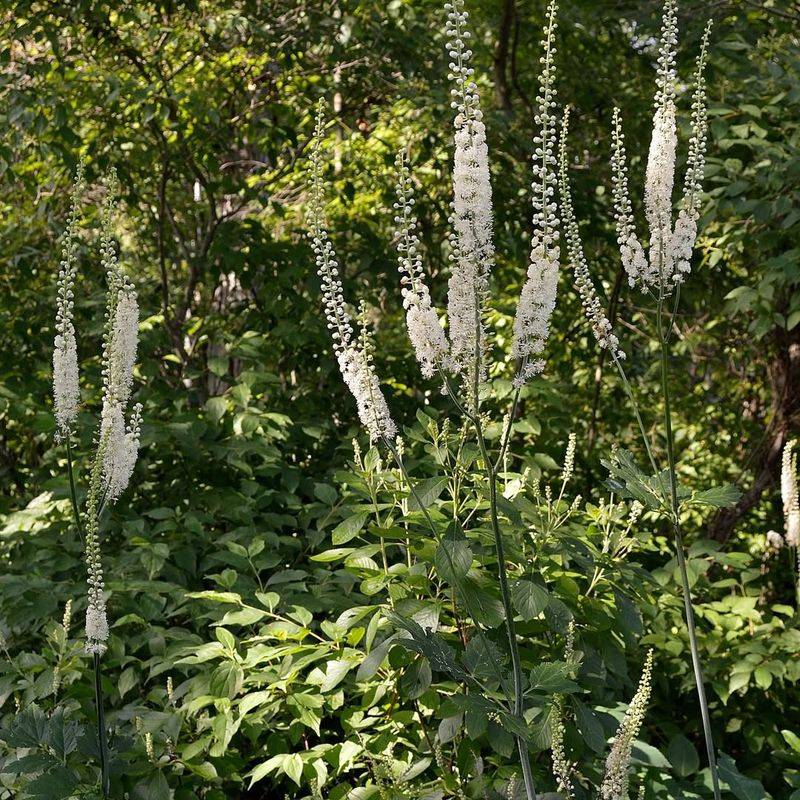
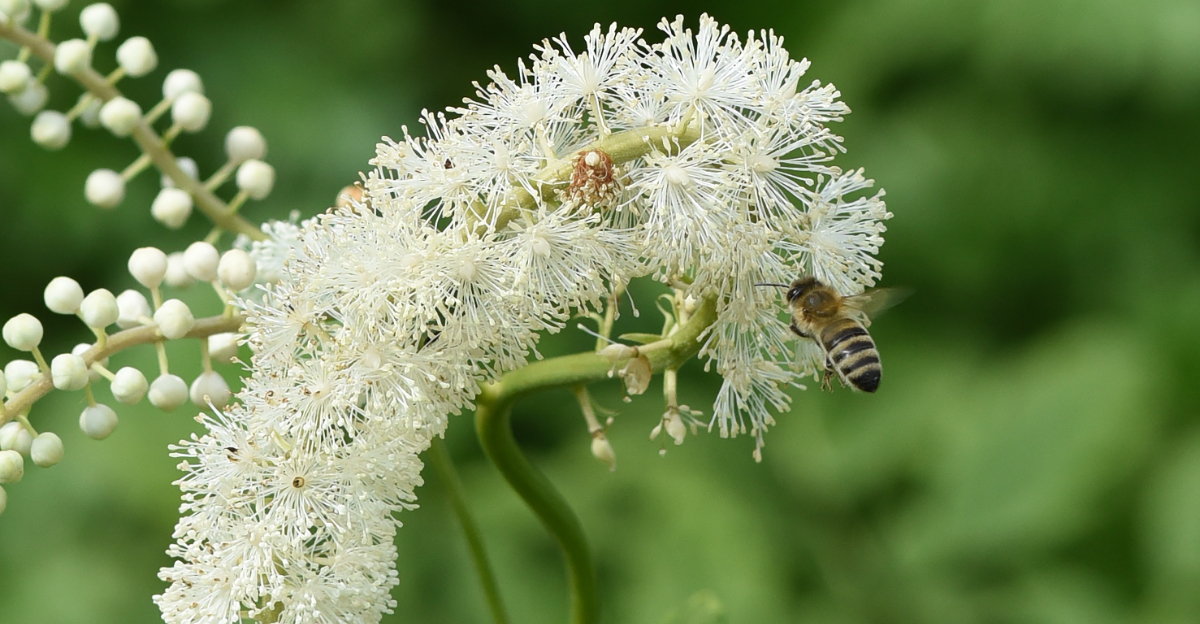
There is something almost theatrical about Black Cohosh in full bloom. The plant sends up tall, wand-like spikes of white flowers that can reach six feet or more, towering gracefully above the surrounding woodland floor.
In the shaded mountain gardens of North Carolina, those bright white blooms glow like candles against the deep green foliage, creating a striking visual that feels completely natural and effortlessly elegant.
This native perennial grows wild throughout the Appalachian region, thriving in the rich, moist woodland soil found under mature hardwood trees.
It prefers partial to full shade, which makes it a fantastic choice for those tricky spots in the garden where other plants struggle to survive.
The broad, deeply cut leaves are attractive even when the plant is not blooming, providing lush texture throughout the growing season.
Black Cohosh also has a long history of use in traditional herbal medicine, particularly among Indigenous communities of eastern North America.
Today it remains a commercially harvested plant, making locally grown specimens even more valuable for conservation.
For home gardeners, planting it in groups of three or more creates a dramatic woodland effect. Keep the soil consistently moist and rich by adding leaf litter or compost each fall.
Avoid disturbing the roots once planted, as this perennial prefers to settle in and spread slowly over time into a truly impressive clump.
6. Foamflower
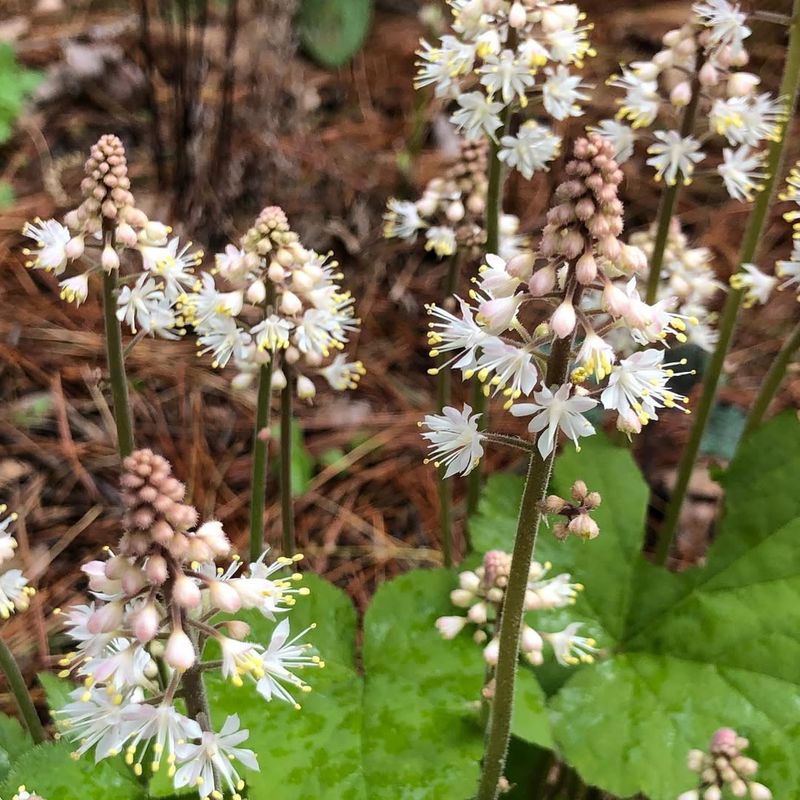
Low-growing, soft, and absolutely charming, Foamflower is one of those native plants that makes a woodland garden feel truly complete.
It spreads gently across the forest floor, forming a dense mat of heart-shaped leaves that stay attractive from spring right through to late fall.
When it blooms in spring, the plant sends up airy spikes of tiny white flowers that look almost like foam drifting above the foliage, which is exactly how it got its memorable name.
Foamflower grows naturally throughout the Appalachian region, including the mountain forests of North Carolina, where it thrives in moist, shaded spots with rich organic soil.
It is a perfect groundcover for areas under large trees where grass refuses to grow well. The spreading habit fills in bare patches naturally over time, reducing erosion on slopes and suppressing weeds without any chemical help.
For gardeners looking to create a naturalistic woodland landscape, Foamflower pairs beautifully with Black Cohosh, ferns, and Wild Columbine.
Plant it in fall or early spring and water regularly during the first growing season to help roots establish. After that, it is remarkably self-sufficient in a shaded North Carolina mountain garden.
Some varieties also show lovely reddish or bronze tones in the foliage, adding extra visual interest beyond the bloom season. It is a small plant with a big impact on the overall look and feel of a native garden.
7. Wild Columbine
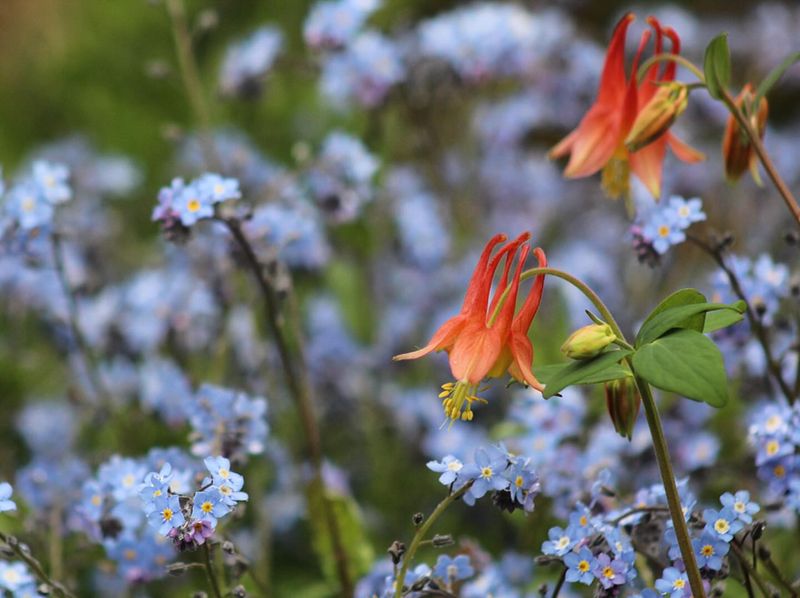
Wild Columbine is the kind of plant that makes a garden feel alive in the truest sense. Its nodding red and yellow flowers dangle like tiny lanterns in spring, swaying gently in the mountain breeze and drawing hummingbirds in from seemingly out of nowhere.
Watching a ruby-throated hummingbird hover at a Wild Columbine flower is one of those simple, joyful moments that reminds you exactly why native plants are so worth growing.
Eastern Red Columbine is native to a wide range of habitats across North America, and it performs exceptionally well in the rocky woodland soils common throughout the mountains of North Carolina.
It is not fussy about growing conditions, tolerating everything from full shade to partial sun, and even managing in thin, rocky soil where other plants would struggle. That adaptability makes it especially useful in challenging garden spots.
The plant self-seeds freely once established, quietly spreading itself around the garden and popping up in unexpected places that often turn out to be perfect.
Gardeners tend to love this quality because it means more flowers with almost no extra effort. Pair it with Foamflower or ferns for a layered, natural look.
Spring blooms attract not just hummingbirds but also native bumblebees and long-tongued butterflies.
In North Carolina’s mountain gardens, Wild Columbine brings movement, color, and wildlife energy to even the quietest shaded corner of your yard.
8. Solomon’s Seal
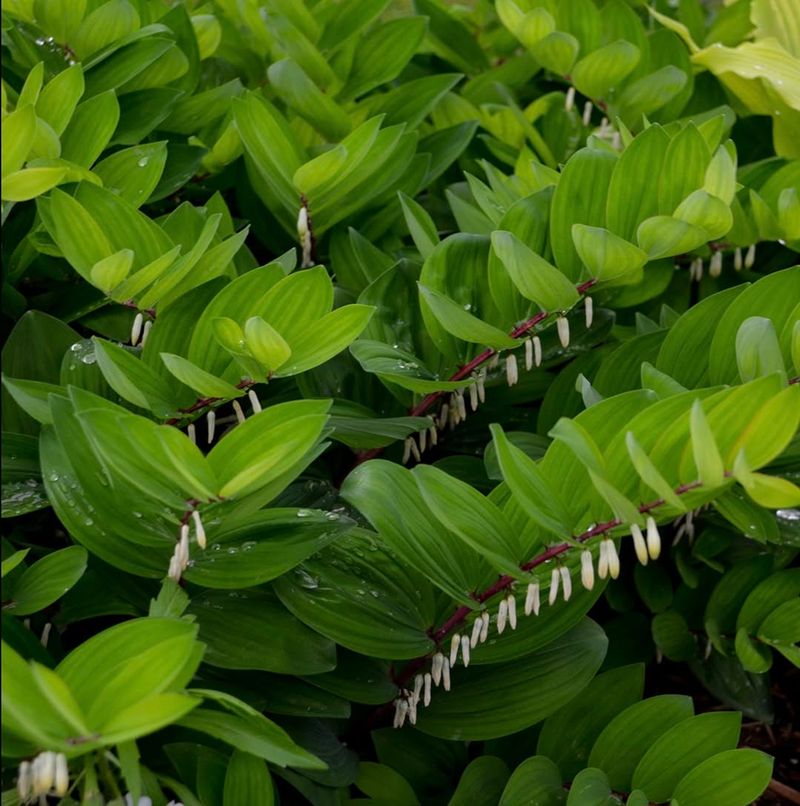
Solomon’s Seal brings a quiet, understated elegance to shaded mountain gardens that is genuinely hard to replicate with any other plant.
The arching stems grow in a graceful curve, lined on each side with smooth oval leaves and small white bell-shaped flowers that dangle underneath like tiny pendants in spring.
It is the kind of plant that garden visitors always notice and then immediately ask about, which makes it a wonderful conversation starter.
This native perennial grows naturally in the cool, shaded forests of the Appalachian region, including the mountain slopes and hollows of western North Carolina.
It prefers deep, rich, moist soil and does best in partial to full shade, making it an ideal companion for taller woodland plants like Black Cohosh and ferns.
The foliage turns a clear, warm yellow in autumn before the stems retreat underground for winter.
One interesting detail about Solomon’s Seal: the name comes from the circular scars left on the underground rhizome after each year’s stem falls away, which resemble the wax seals once used on official documents.
For gardeners, this rhizome is actually easy to divide and share with friends, making it a wonderful plant to pass along.
Plant it in groups along a shaded path or at the base of a slope in your North Carolina mountain garden.
With consistent moisture and good organic soil, it spreads steadily into a truly beautiful and low-maintenance planting over time.
9. Christmas Fern
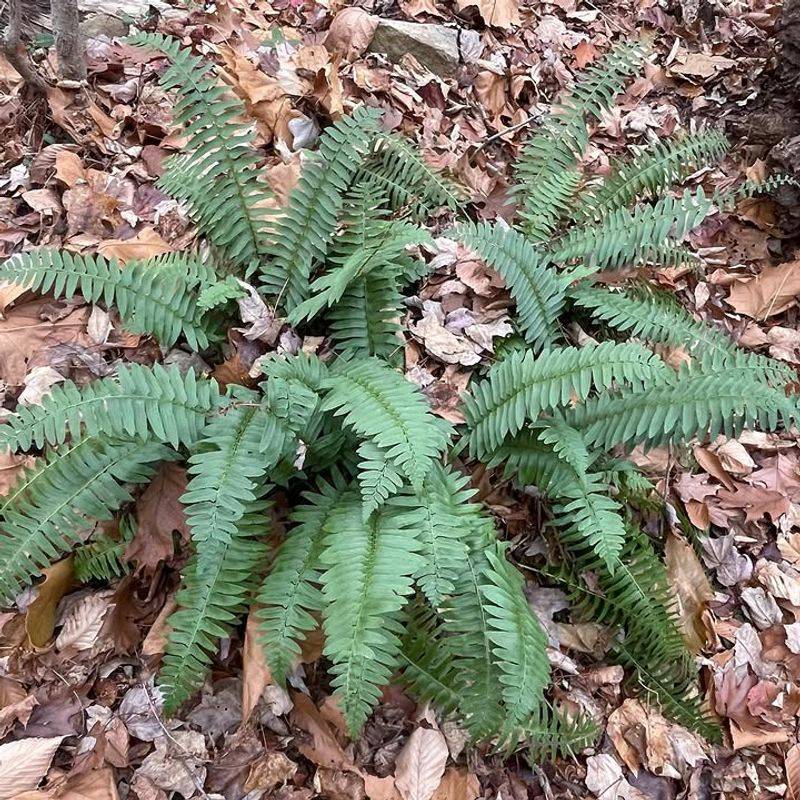
When everything else in the winter garden has gone brown and bare, Christmas Fern holds its color with quiet confidence.
The dark, glossy green fronds stay upright and fresh-looking throughout the coldest months, which is exactly why early settlers reportedly used it as holiday decoration and gave it the festive name it carries today.
In North Carolina’s mountain region, where winters can be genuinely cold and snowy, that evergreen reliability is especially valuable.
Christmas Fern grows naturally on rocky, shaded slopes and along stream banks throughout the Appalachian Mountains.
It is one of the most adaptable native ferns in the eastern United States, tolerating dry shade, rocky soil, and steep terrain where many other plants simply cannot get a foothold.
That toughness makes it a top choice for erosion control on challenging hillside spots in mountain landscapes.
For home gardeners in North Carolina, Christmas Fern works beautifully as a groundcover under mature trees or along the shaded side of a house or fence.
It pairs naturally with Foamflower, Wild Columbine, and Solomon’s Seal to create a layered woodland planting that looks intentional and beautiful year-round.
Plant it in fall or early spring, water it through the first season, and then largely leave it alone.
Over time, each clump grows wider and fuller, providing a reliable anchor of green color in every corner of your mountain garden no matter the season.