7 Native Shrubs Perfect For North Carolina Front Yards
Many North Carolina yards rely on the same handful of landscape plants, but native shrubs often perform far better with far less effort.
These plants evolved in the region, which means they already know how to handle the heat, humidity, and shifting rainfall that come with life in the Tar Heel State.
Instead of struggling through summer stress, they settle in and grow with confidence. Across the Coastal Plain, Piedmont, and Mountain regions, native shrubs offer dependable beauty while supporting birds, pollinators, and other wildlife.
They also tend to require less watering and fertilizer once established, making them a practical choice for busy homeowners. The right shrub can anchor a sunny slope, soften a foundation bed, or add structure to the front of your home.
These North Carolina native shrubs are some of the best choices for creating a landscape that looks beautiful and works naturally with the local environment.
1. Oakleaf Hydrangea
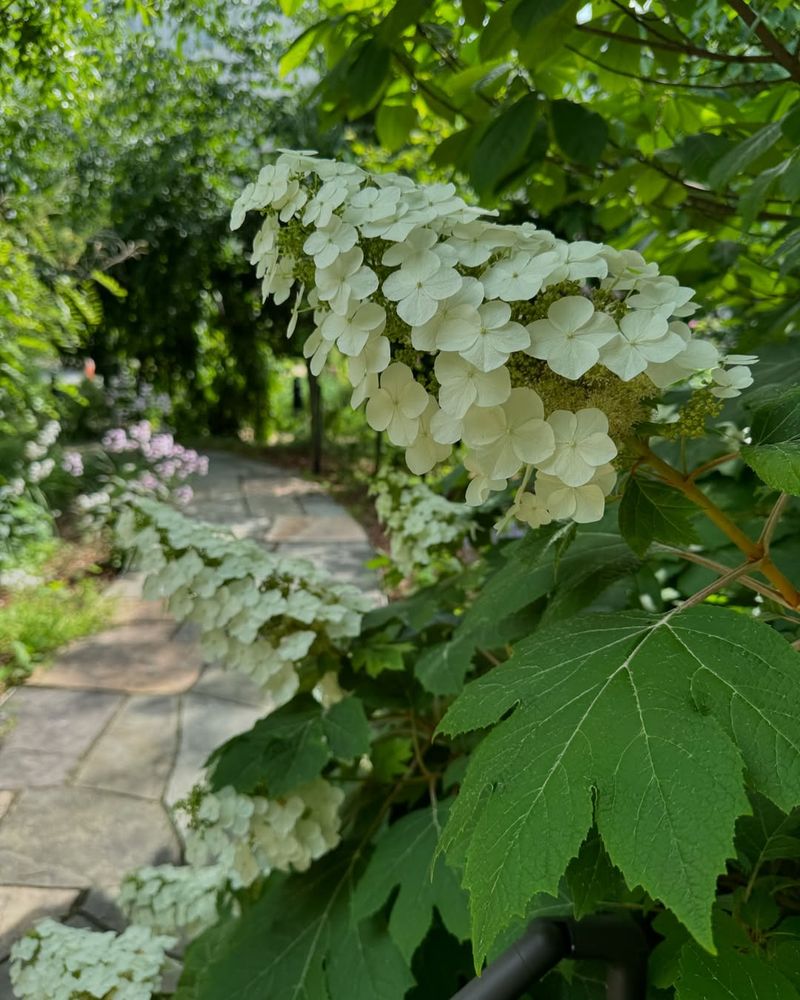
Few shrubs command attention the way Oakleaf Hydrangea does from the moment it blooms. Native to the southeastern United States, including right here in North Carolina, this bold beauty earns its place in any front yard.
Its large, cone-shaped white flower clusters appear in late spring and can stretch up to a foot long, creating a showstopping display along walkways or near entryways.
What makes this shrub truly special is how it performs across every season. Summer brings those iconic white blooms that slowly fade to a warm pinkish-tan as temperatures rise.
Then fall arrives and the oak-shaped leaves shift into deep shades of red, burgundy, and bronze, giving your yard a rich, layered look that lasts well into autumn.
Oakleaf Hydrangea grows best in partial shade with well-drained soil, making it a natural fit for spots under trees or along the shaded side of a house. It typically reaches six to eight feet tall and wide, so give it room to spread.
The peeling bark adds winter interest even after the leaves drop. North Carolina gardeners love this shrub because it handles summer heat without skipping a beat, needs very little extra care once established, and rewards you with beauty in every single season.
2. Fothergilla
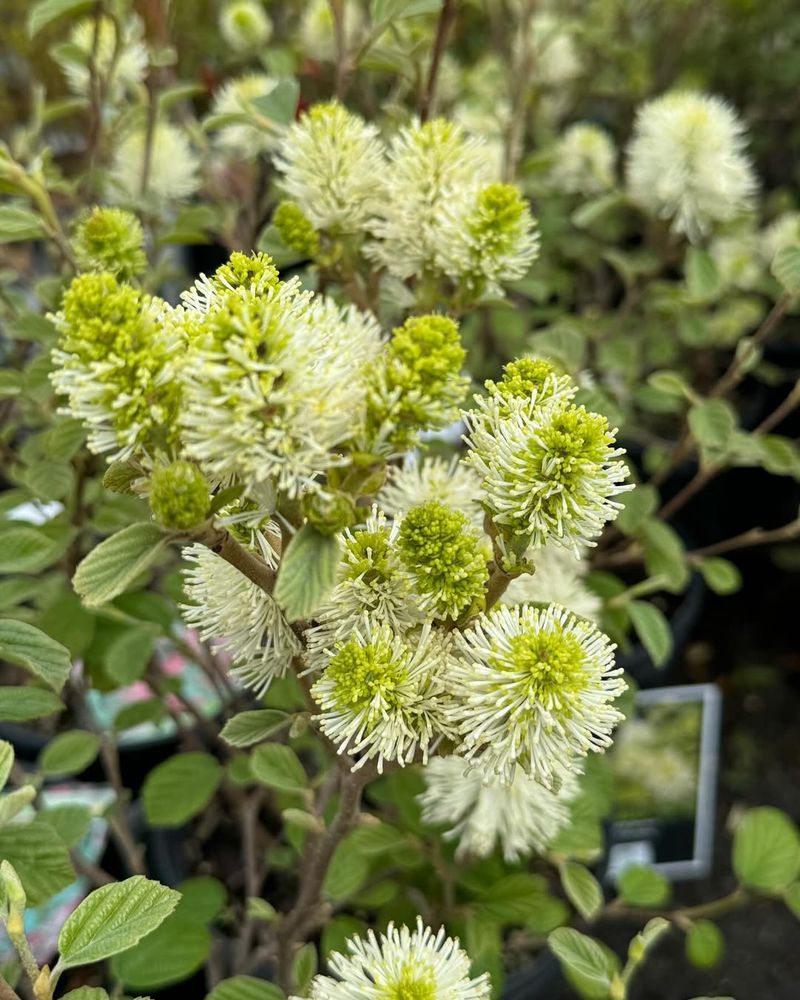
Fothergilla has a trick up its sleeve that most shrubs simply cannot match: it blooms before its leaves even appear in spring.
Those fluffy, white bottlebrush-like flowers emerge on bare branches in early spring, creating a soft, dreamy display that signals the end of winter in North Carolina yards.
The fragrance is genuinely lovely, carrying a honey-like sweetness that makes this shrub worth planting near a front walkway or porch where you will pass it every day.
Once the flowers fade, rounded blue-green leaves fill in and provide a clean, tidy look through the growing season.
Fothergilla grows naturally in the southeastern United States, and both Fothergilla gardenii and Fothergilla major perform well across much of North Carolina.
The smaller species stays around three feet tall, while the larger can reach six to ten feet, so you have options depending on the scale of your front yard planting bed.
Fall is when Fothergilla truly shows off its full personality. The foliage transforms into a breathtaking mix of orange, red, and yellow, often all appearing on the same plant at once.
Few shrubs offer this kind of multicolor fall display. It performs best in full sun to partial shade with moist, acidic, well-drained soil.
Pairing it with evergreen companions like Inkberry Holly gives your North Carolina front yard a balanced look that carries interest through every season of the year.
3. American Beautyberry
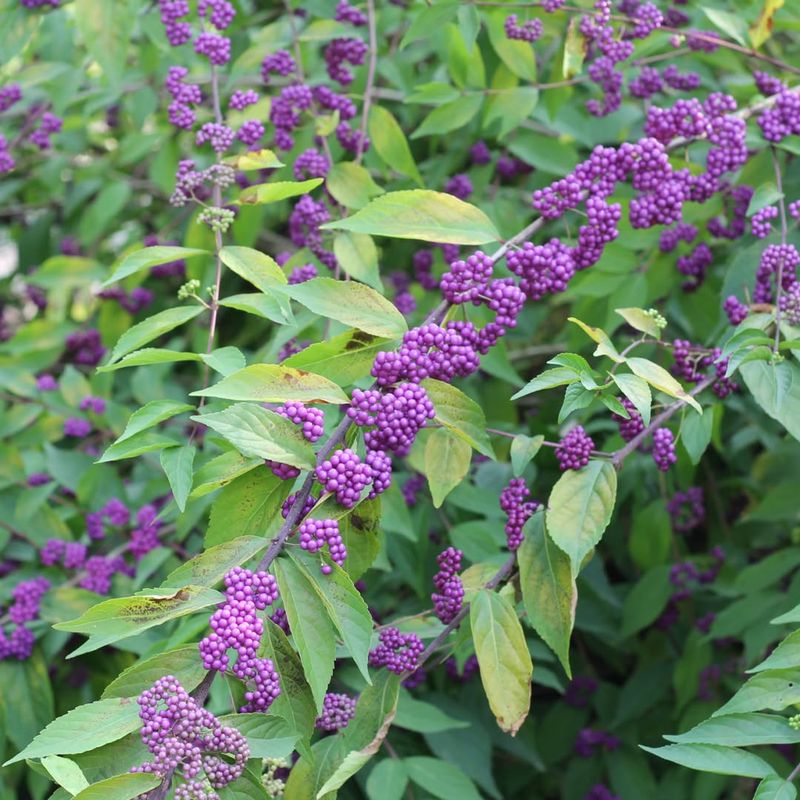
Nothing stops a neighbor in their tracks quite like the electric purple berries of American Beautyberry in full fall display.
This native North Carolina shrub grows in open woodlands and meadows naturally, which means it already knows how to thrive in the conditions your yard throws at it.
The arching branches give it a relaxed, graceful shape that works beautifully in informal garden beds or mixed borders.
Through the summer months, small clusters of soft pink flowers appear along the stems, attracting pollinators and adding a subtle charm to the landscape.
Then, as temperatures cool, those flowers give way to the shrub’s real showpiece: tight, jewel-bright clusters of purple berries that wrap around every stem like strings of tiny beads.
Birds absolutely love them, so expect feathered visitors throughout the fall season.
American Beautyberry grows three to eight feet tall and performs well in full sun or partial shade, giving you flexibility when choosing a planting spot. It prefers well-drained soil but adapts to a range of conditions found across North Carolina.
One fun fact worth knowing: early settlers reportedly used crushed leaves from this plant to repel insects. Cutting the shrub back hard in late winter encourages vigorous new growth and the best berry production for the following season.
4. Red Chokeberry
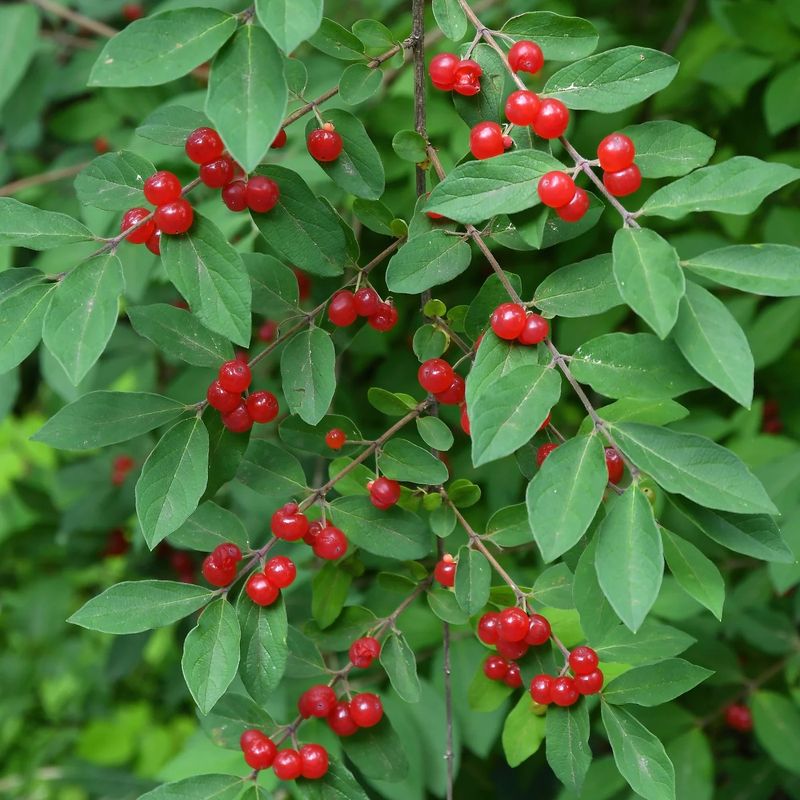
Red Chokeberry earns serious respect from North Carolina gardeners who have dealt with challenging planting spots.
This tough native shrub tolerates wet soils, average soils, full sun, and partial shade, covering a wide range of conditions that would frustrate less adaptable plants.
If you have a low spot in your front yard that stays soggy after rain, Red Chokeberry might be exactly the solution you have been searching for.
Spring brings clusters of small white flowers with a delicate charm that pollinators appreciate. The glossy green foliage looks sharp and tidy through summer, giving the shrub a refined appearance that suits formal and informal front yard designs equally well.
Then fall rolls in across North Carolina and the show really begins, with the leaves turning rich shades of red and orange while clusters of bright red berries develop along every branch.
Those red berries persist well into winter, providing a valuable food source for birds like cedar waxwings and mockingbirds when other food becomes scarce.
Red Chokeberry typically grows six to ten feet tall but responds well to pruning if a more compact shape fits your front yard better.
Cultivars like ‘Brilliantissima’ offer especially vibrant berry color and strong fall foliage. Planting it in groups of three or more creates a fuller, more impactful visual display and gives wildlife an even more generous food supply throughout the colder months ahead.
5. Virginia Sweetspire
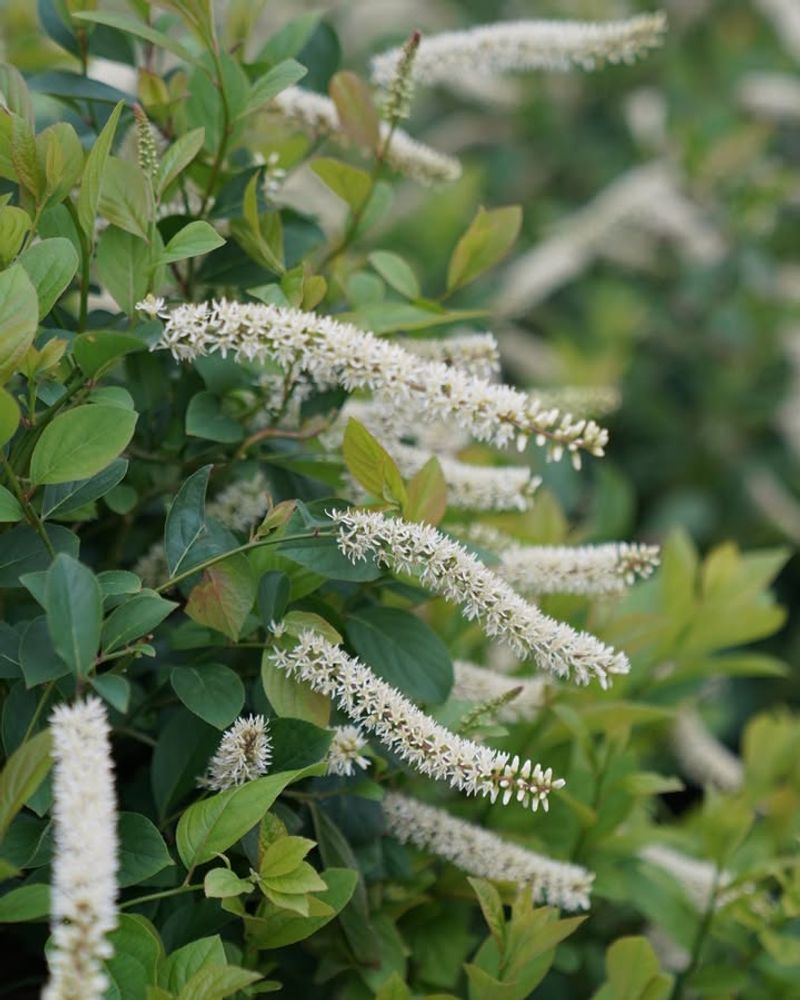
Virginia Sweetspire is the kind of plant that quietly wins over every gardener who gives it a chance. Reliable, adaptable, and genuinely beautiful, this North Carolina native thrives in conditions that would stress out many other shrubs.
It handles moist soils, heavy clay, and the thick summer humidity of the Piedmont and coastal regions without complaint, making it a practical choice for tricky spots near downspouts or low-lying areas.
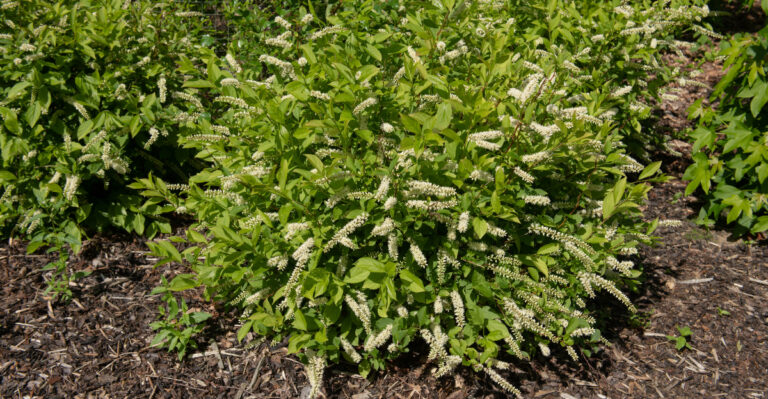
Late spring brings long, arching spikes of fragrant white flowers that curve gracefully at the tips, almost like a soft fountain of bloom. The sweet scent drifts pleasantly through the yard and draws in bees and butterflies looking for a reliable nectar source.
Once flowering wraps up, the foliage stays lush and green through the summer, holding its good looks until fall arrives with something even better.
When cooler temperatures settle over North Carolina, Virginia Sweetspire lights up with some of the most intense red and burgundy fall color of any native shrub.
It spreads gently by suckers to form a tidy colony, making it excellent as a low hedge or foundation planting along the front of a home.
Most selections stay three to five feet tall and wide, fitting neatly into smaller yards. The cultivar ‘Henry’s Garnet’ is especially popular for its outstanding fall color and compact, manageable size.
6. Inkberry Holly
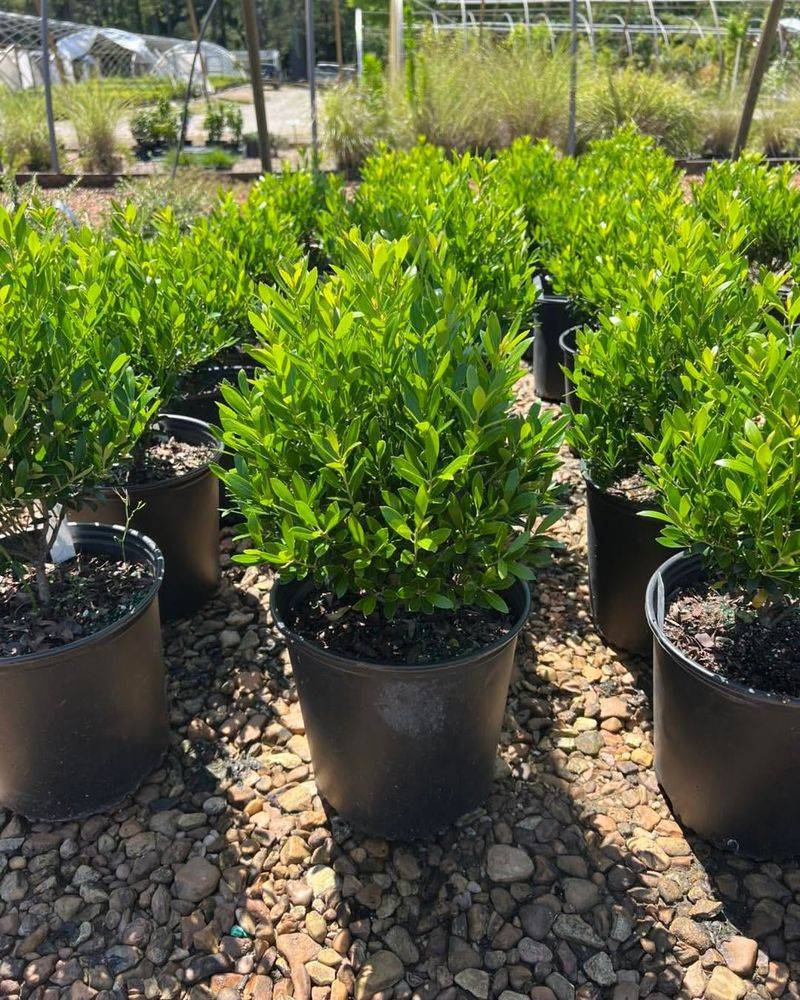
Year-round greenery is something every front yard benefits from, and Inkberry Holly delivers exactly that without demanding much in return.
This native evergreen shrub grows naturally in the coastal plain and wetland edges of North Carolina, which tells you a lot about its toughness.
Sandy soils, acidic conditions, and spots that stay occasionally wet after heavy rain are no problem for this dependable plant.
The smooth, dark green leaves stay on the plant through winter, giving your front yard structure and color when most other shrubs have gone bare. Small white flowers appear in spring, and by late summer, clusters of shiny black berries develop along the stems.
Those berries might look modest compared to flashier fruiting shrubs, but birds know exactly where to find them and visit regularly through the colder months.
Inkberry Holly works particularly well as a foundation planting or low, informal hedge along the front of a home in North Carolina.
It typically grows four to eight feet tall, though compact cultivars like ‘Compacta’ and ‘Shamrock’ stay closer to three to four feet, which suits smaller front yard spaces nicely.
Because its root system is non-aggressive, you can plant it near walkways or foundations without worry. It grows best in full sun to partial shade and pairs beautifully with ornamental grasses or other native shrubs for a layered, naturalistic front yard look.
7. Dwarf Yaupon Holly
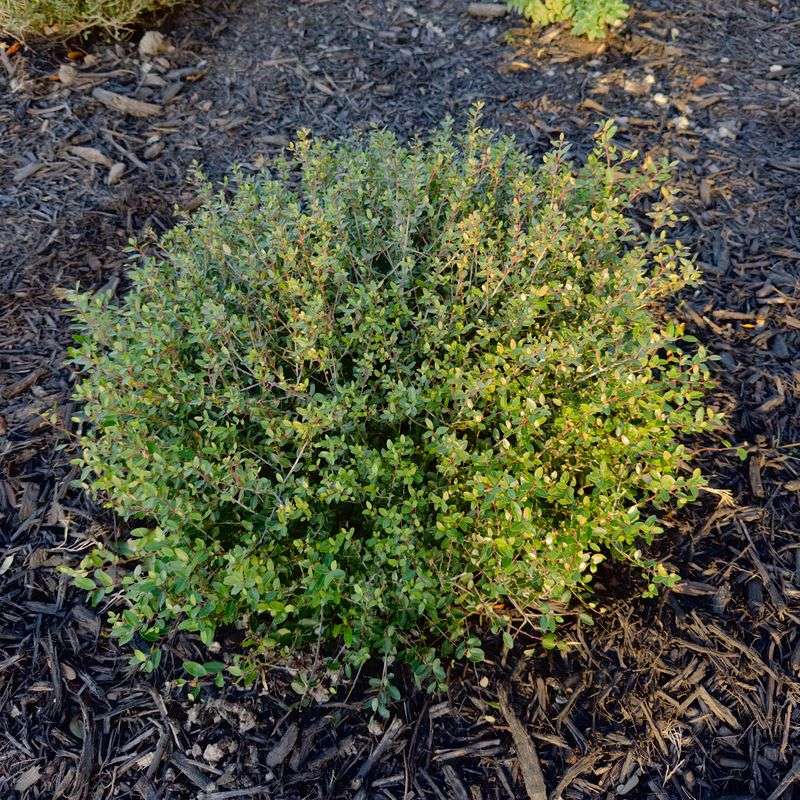
If low-maintenance evergreen structure is what your North Carolina front yard needs, Dwarf Yaupon Holly is practically purpose-built for the job.
The species Ilex vomitoria is native to North Carolina’s coastal plain, meaning this plant has deep roots in the local landscape.
The dwarf selections, like ‘Nana’ and similar compact forms, bring all that native toughness into a tidy, manageable package that works beautifully along walkways, foundations, and borders.
One of the biggest selling points is drought tolerance. Once established in your yard, Dwarf Yaupon Holly handles dry spells that would stress out other shrubs, making it a smart choice for sunny front yard exposures where the soil tends to dry out quickly between rain events.
It grows in full sun to partial shade and adapts to a wide range of soil types, from sandy coastal soils to heavier clay common in the Piedmont region of North Carolina.
The dense, fine-textured evergreen foliage stays a rich dark green year-round, providing a clean, polished look that complements both traditional and modern home styles.
Most dwarf selections stay three to four feet tall and wide, making them easy to maintain with minimal pruning.
Unlike the full-sized species, these compact forms rarely need heavy shearing to stay neat. Pair them with flowering natives like Fothergilla or Virginia Sweetspire to add seasonal color alongside their reliable year-round evergreen presence in your front yard.