10 Native Wildflowers That Can Thrive In Your Texas Garden This Summer
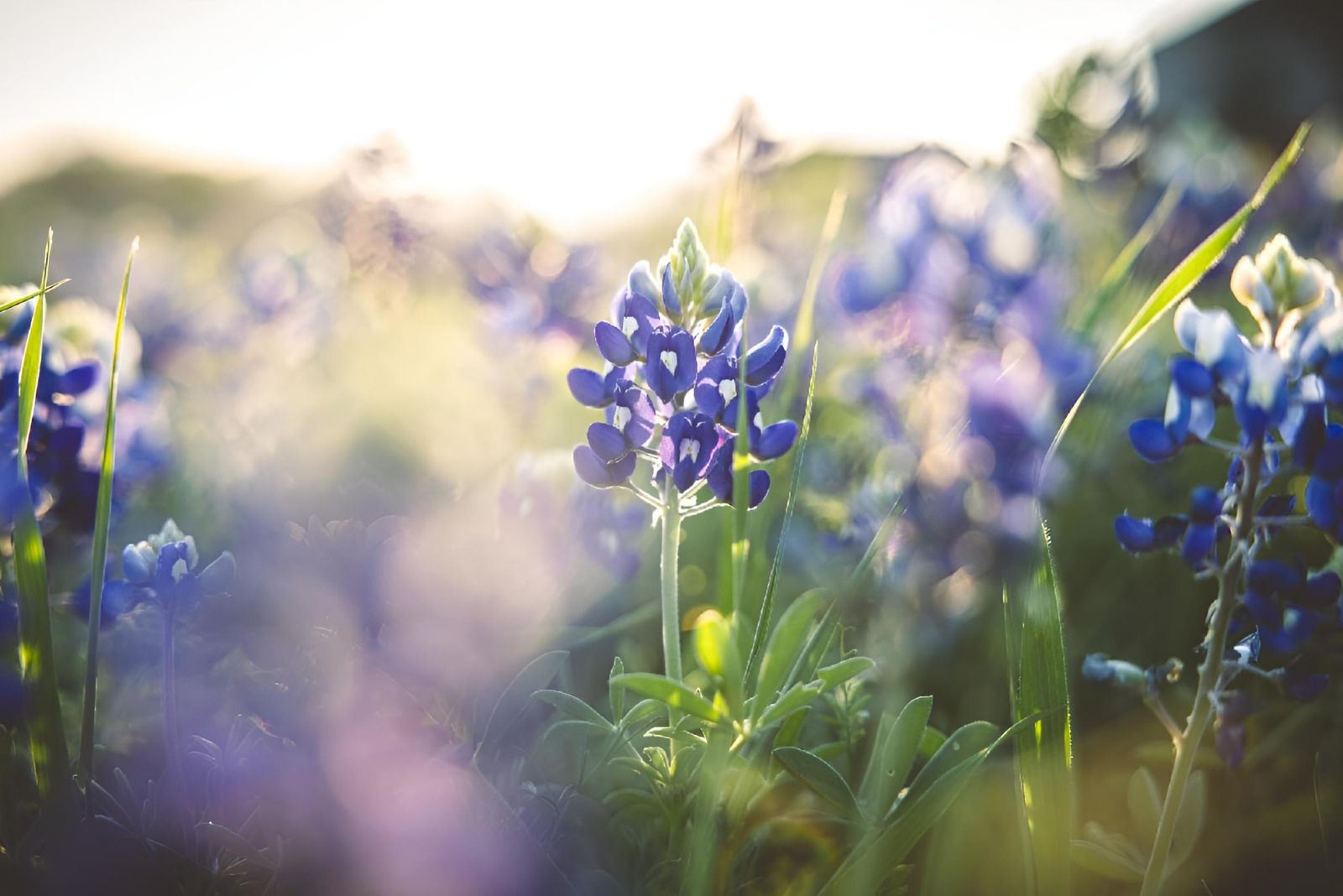
Texas summers are famous for their heat, bright sunshine, and long stretches without much rain. While some plants struggle in these conditions, many native wildflowers seem to welcome them.
These hardy blooms have spent generations adapting to the Texas climate, which makes them a natural fit for local gardens.
Planting native wildflowers is one of the easiest ways to add color and life to your yard during the hottest months of the year. Their vibrant petals can turn simple garden beds into lively displays filled with reds, yellows, purples, and blues.
Even better, these flowers often attract butterflies, bees, and other helpful pollinators that keep a garden buzzing with activity.
Texas gardeners also appreciate how little fuss these plants require. Because they are already suited to the local soil and weather, they tend to grow with far less effort than many non native varieties.
With the right selection, your garden can stay bright and lively all summer long.
1. Texas Bluebonnet (Lupinus Texensis)
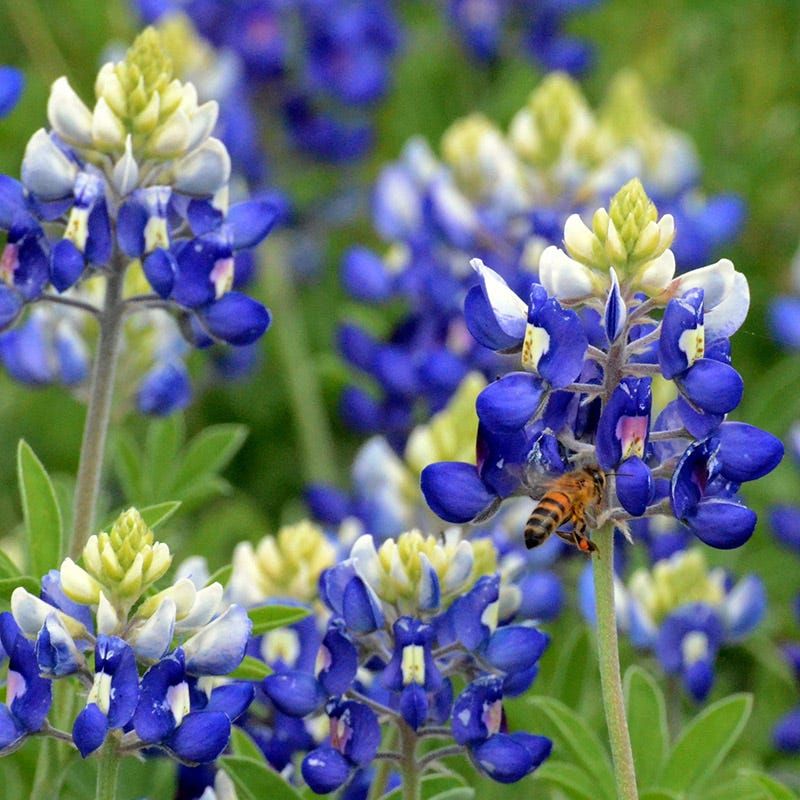
No flower says Texas quite like the bluebonnet. It is the official state flower and one of the most recognized wildflowers in the entire country.
Every spring, roadsides and open fields across Texas burst into waves of deep blue and white, creating scenes that feel almost magical.
Bluebonnets love full sun and well-drained soil. They do not like wet or soggy ground, so planting them on a slope or in a raised bed works great.
Scatter seeds in the fall, around October or November, and let the cool winter months help them sprout naturally.
One cool thing about bluebonnets is that they actually improve your soil. Like other plants in the legume family, their roots add nitrogen back into the ground, which helps nearby plants grow stronger.
They typically bloom from March through May, but the show they put on is absolutely worth the wait.
If you live in Central Texas or the Hill Country, you are in prime bluebonnet territory. Once established, they reseed themselves every year, so you may only need to plant them once. Just sit back and enjoy the blue carpet they create each spring season.
2. Indian Blanket (Gaillardia Pulchella)
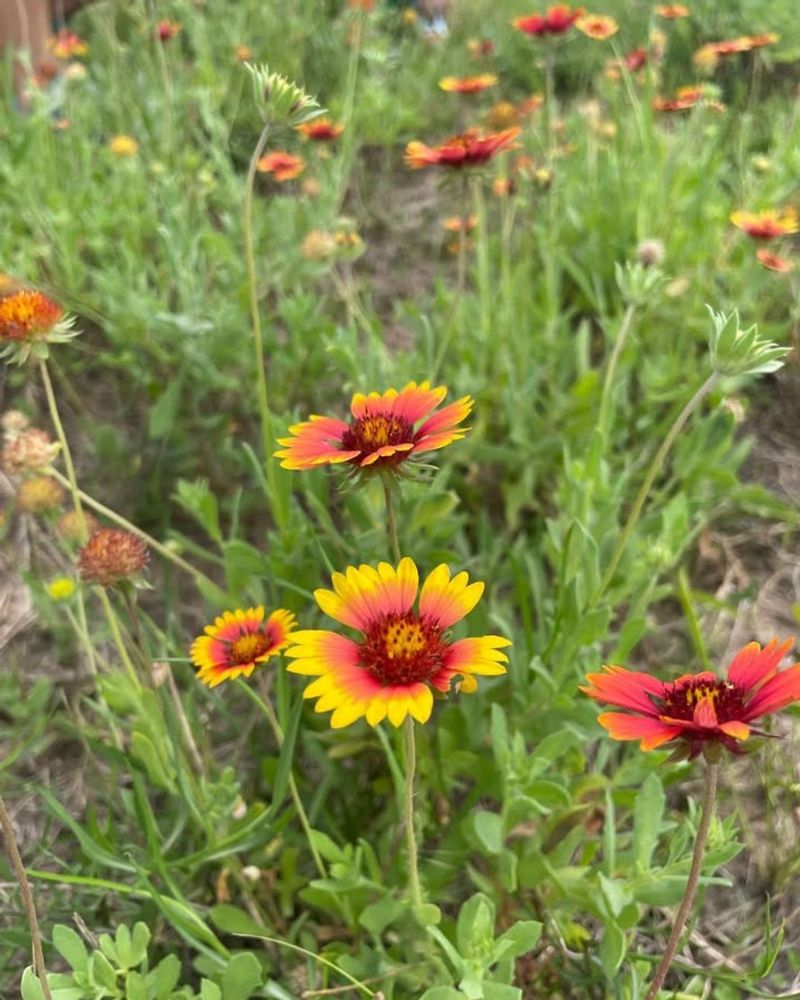
Walk through almost any open Texas field in summer and you will likely spot the Indian Blanket waving in the breeze. Also called firewheel, this wildflower earns its nickname with bold red petals tipped in golden yellow, looking almost like a spinning wheel of flame.
One of the best things about Indian Blanket is how tough it is. Poor soil? No problem. Long dry spells? It handles those too. This flower was practically made for Texas summers, where heat and drought can challenge even the hardiest plants in your garden.
Plant seeds in the fall or early spring in a sunny spot. Indian Blanket grows fast and starts blooming by late spring, continuing all the way through summer and into fall. That is a long season of color that most other plants simply cannot match in the Texas heat.
Bees, butterflies, and other pollinators absolutely love this flower. If you want to bring more life and movement into your yard, Indian Blanket is a top pick.
It looks stunning when planted in large groups, creating a fiery patchwork of color that brightens up any Texas garden beautifully.
3. Black-Eyed Susan (Rudbeckia Hirta)
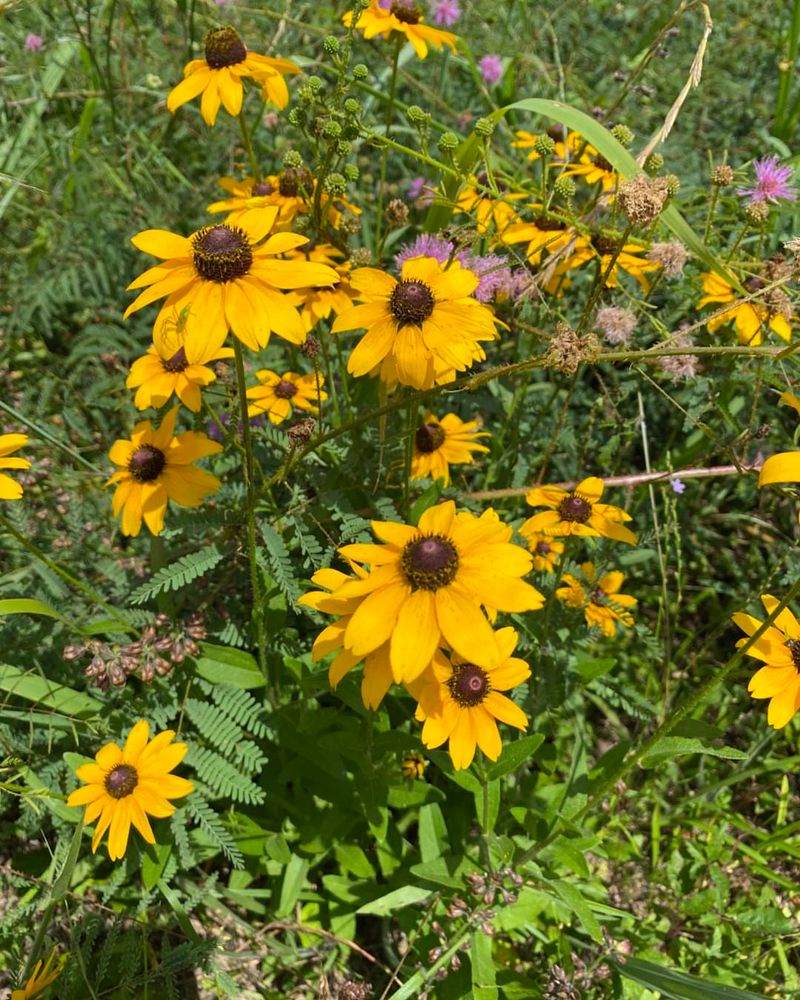
Sunny, bold, and impossible to ignore, the Black-Eyed Susan is one of those flowers that just makes you smile.
Its bright yellow petals surround a dark brown center, creating a classic daisy-like look that fits perfectly into any Texas garden style, from wild and natural to neat and tidy.
Black-Eyed Susans bloom from late spring straight through summer, giving you months of cheerful color.
They grow well in full sun and tolerate dry conditions once established, making them a solid choice for Texas gardeners who want low-maintenance beauty during the hottest months of the year.
These flowers are pollinator magnets. Bees and butterflies flock to them, and if you leave the seed heads standing after blooming, birds will visit to snack on the seeds too.
So planting a patch of Black-Eyed Susans is basically setting up a little wildlife buffet right in your backyard.
They grow about one to three feet tall and work well as a border plant or mixed into a wildflower meadow. In Texas, they thrive across most of the state.
Scatter seeds in fall or early spring, give them a sunny spot, and watch them reward you with weeks of golden blooms.
4. Purple Coneflower (Echinacea Purpurea)
Here is a wildflower that is as useful as it is beautiful. Purple Coneflower, known scientifically as Echinacea purpurea, has been used in herbal medicine for centuries.
Native Americans used it to treat everything from colds to wounds, and today it is still a popular natural remedy sold in stores nationwide.
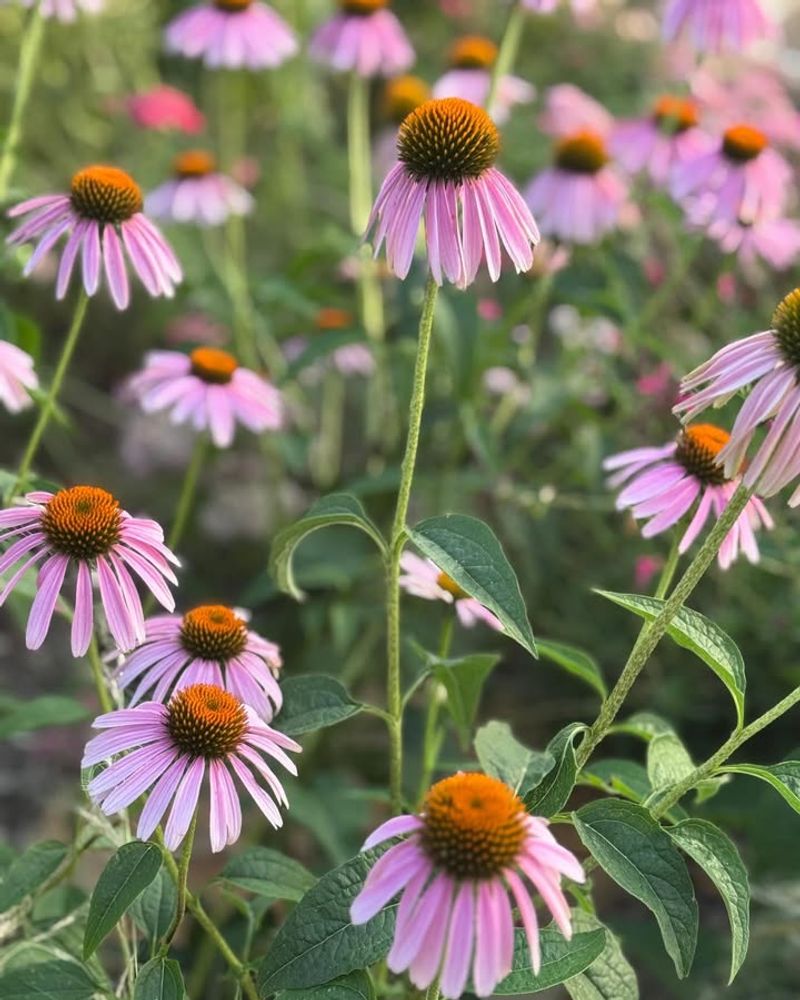
In the garden, Purple Coneflower is a showstopper. Large pinkish-purple petals droop slightly around a spiky orange-brown center cone, giving it a unique look unlike most other wildflowers.
It blooms from June through August, right in the heart of the Texas summer heat. Once established, this plant is remarkably tough. It handles Texas heat and humidity well and does not need much water after its first growing season.
Plant it in full sun with well-drained soil, and it will reward you with bigger and better blooms each year it returns.
Pollinators go absolutely wild for Purple Coneflower. Butterflies, bees, and even goldfinches love visiting it.
Leaving the seed heads standing through winter gives birds a food source during colder months. Whether you grow it in Dallas, Houston, or anywhere across Texas, this flower is a reliable summer garden star.
5. Lemon Beebalm (Monarda Citriodora)
Crush a leaf of Lemon Beebalm between your fingers and you will instantly understand how it got its name. The scent is fresh, bright, and lemony, almost like a herb you would find in a kitchen garden.
That fragrance is not just pleasant for people though. Bees, butterflies, and hummingbirds are completely drawn to it.
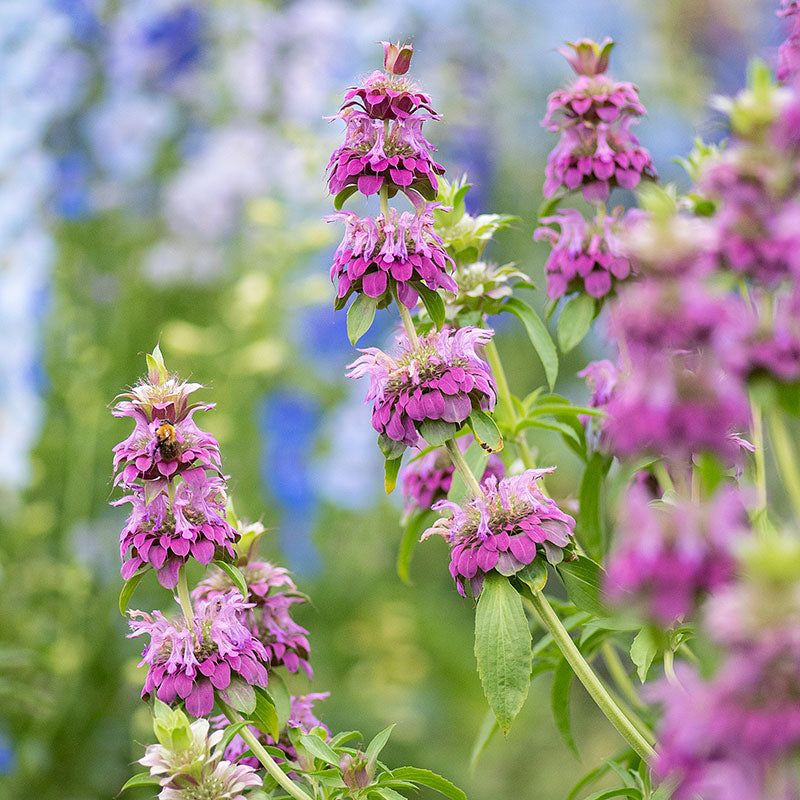
Lemon Beebalm grows in tiered rings of small lavender-pink flowers stacked up along an upright stem. It is a native Texas wildflower that blooms from late spring into summer, thriving in the heat and dry conditions that define a typical Texas growing season.
This plant does well in poor or sandy soils, which makes it a great fit for areas of your yard where other plants struggle. Full sun is ideal.
Once it gets going, it reseeds generously, meaning you could have a whole patch spreading naturally over time without much effort on your part.
Beyond the garden, Lemon Beebalm has a history as a tea plant. Some people dry the leaves and steep them for a refreshing citrus-flavored drink.
So you get a wildflower that feeds pollinators, looks lovely, smells amazing, and might even end up in your teacup. That is a pretty impressive list for one Texas native.
6. Coreopsis (Coreopsis Tinctoria)
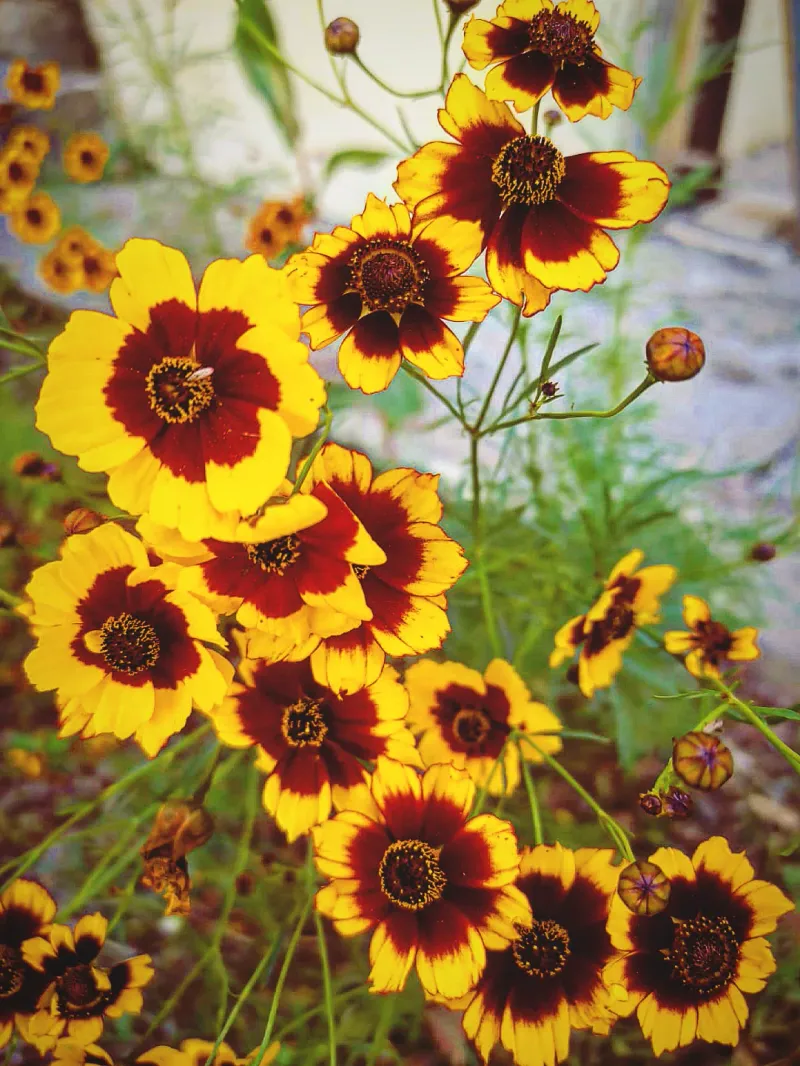
Sometimes called plains coreopsis or golden tickseed, Coreopsis tinctoria is one of the most cheerful wildflowers you can grow in a Texas garden.
Its blooms are a lively mix of bright yellow petals with deep red or maroon centers, creating a two-toned look that stands out in any wildflower planting.
What makes Coreopsis so popular with Texas gardeners is its ability to bloom for a long time. From late spring through the end of summer, these flowers keep going strong even when the Texas sun is blazing hot.
They are annual plants, but they reseed so freely that they often come back year after year on their own.
Coreopsis grows best in full sun and tolerates poor, dry soil very well. In fact, too much fertilizer or rich soil can actually make them produce more leaves than flowers.
Less really is more with this plant. Scatter seeds in fall or early spring and let nature do the rest. Historically, Coreopsis tinctoria was used by Native Americans to make a reddish-orange dye from its flowers.
Today, it is mostly appreciated for its garden beauty and its ability to attract bees and butterflies across Texas. Plant it in masses for the most stunning visual effect all summer long.
7. Mexican Hat (Ratibida Columnifera)
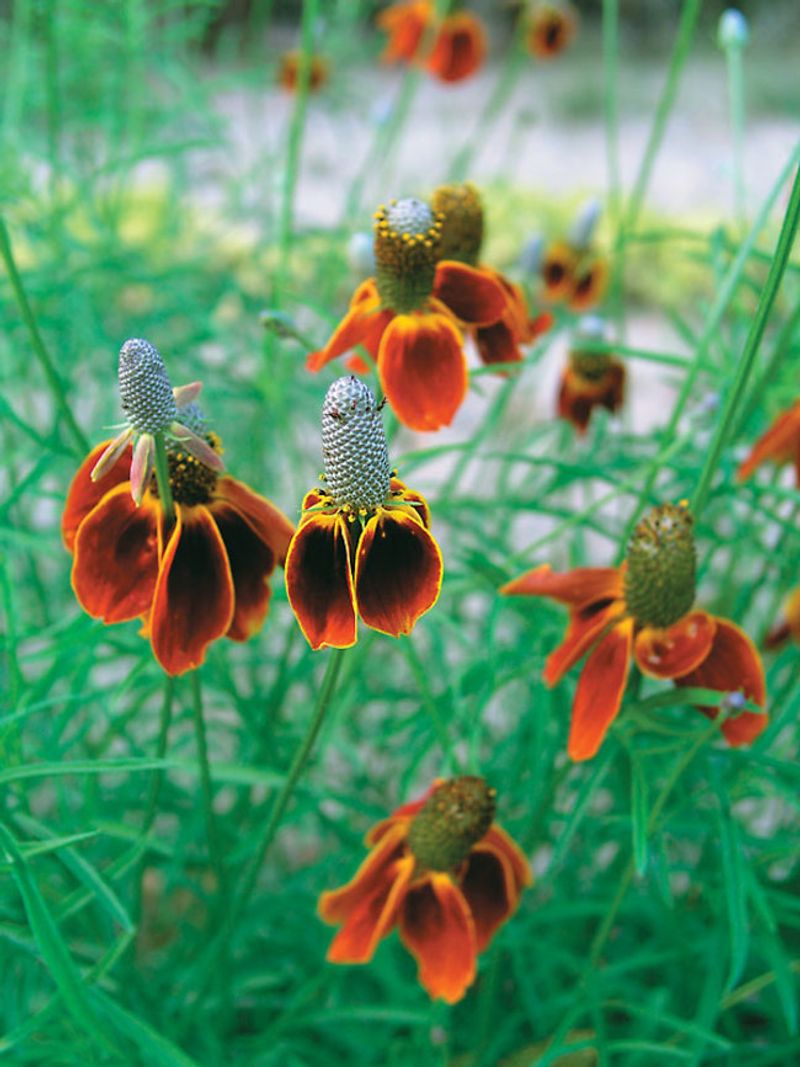
One look at Mexican Hat and you will know exactly how it got its name. The flower has a tall, thimble-shaped central cone with drooping red and yellow petals hanging down around it, resembling the wide brim of a traditional Mexican sombrero.
It is one of the most distinctive wildflowers native to Texas. Mexican Hat thrives in hot, sunny conditions and is incredibly drought-tolerant once established. It grows naturally in dry prairies, roadsides, and open fields across Texas and the Great Plains.
For gardeners in West Texas or other drier parts of the state, this wildflower is an especially smart choice.
The blooming season is long, stretching from late spring all the way through fall. Plants grow one to two feet tall and tend to spread over time through reseeding.
They prefer sandy or rocky, well-drained soil and do not need supplemental watering once they settle in, which saves you time and effort.
Bees and butterflies visit Mexican Hat regularly, making it a functional as well as beautiful garden addition.
The unique cone-shaped center also provides interesting texture and visual contrast when planted alongside flatter blooms like Black-Eyed Susans or Coreopsis. For a truly wild Texas garden look, Mexican Hat is a must-have plant.
8. Winecup (Callirhoe Involucrata)
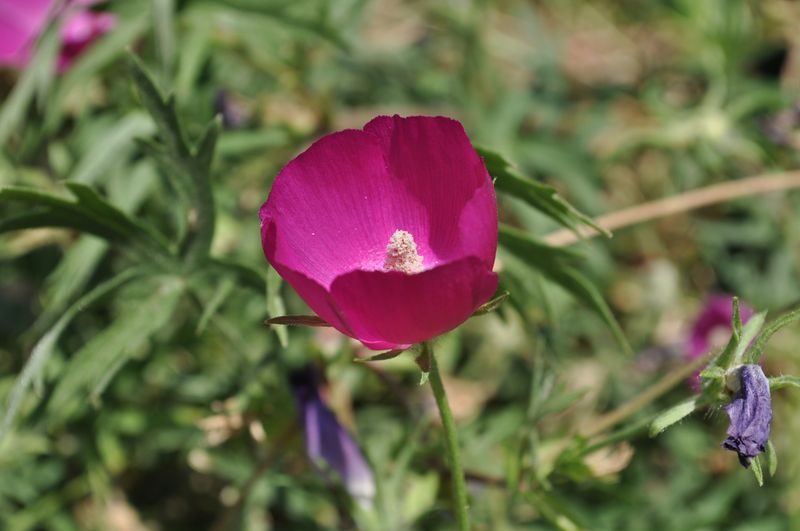
Bold, vivid, and practically maintenance-free, Winecup is a native Texas wildflower that earns its spot in any sunny garden. Its flowers are a striking magenta to deep wine-red color, shaped like open cups that face upward toward the sky.
When they are in full bloom, they create a low carpet of intense color that stops people in their tracks.
Winecup is a low-growing plant, usually reaching only eight to twenty inches tall. That compact size makes it perfect for rock gardens, garden borders, and sunny slopes where other plants might not fill in as nicely.
It spreads outward rather than upward, covering ground in a pretty, natural-looking way. Drought tolerance is one of Winecup’s greatest strengths.
It grows from a deep taproot that stores water and nutrients, allowing it to survive long dry stretches without any help from a garden hose. Once established in your Texas yard, it basically takes care of itself through summer heat.
Blooming from early spring into summer, Winecup pairs beautifully with other native Texas wildflowers. Try planting it alongside Indian Blanket or Black-Eyed Susan for a colorful, layered look.
Butterflies and bees love visiting the open cup-shaped blooms, adding even more life and movement to your outdoor space.
9. Standing Cypress (Ipomopsis Rubra)
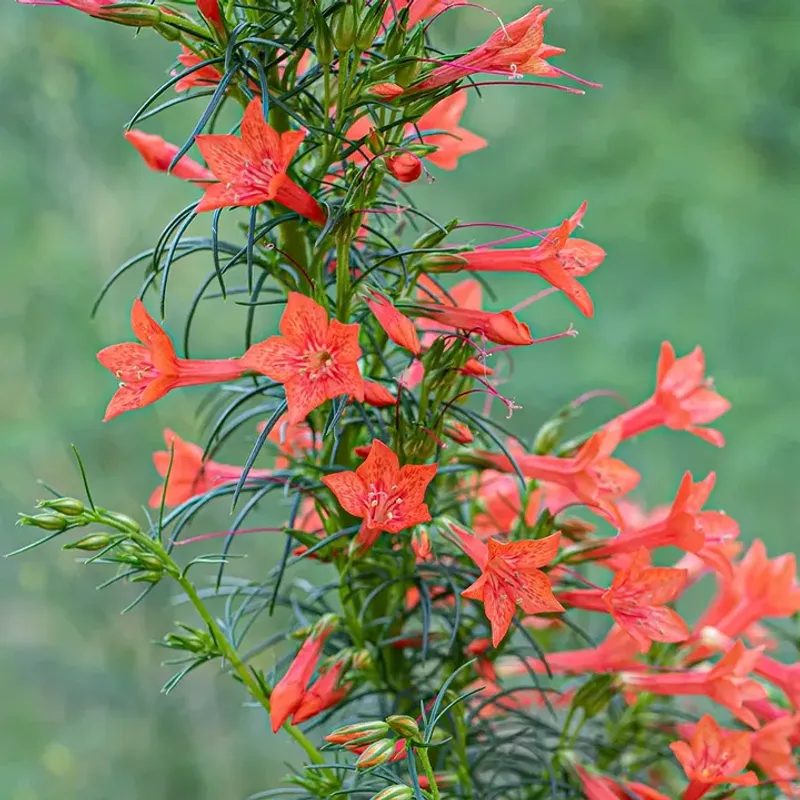
If you want to add some serious height and drama to your Texas garden, Standing Cypress is the answer. This native wildflower can shoot up to six feet tall, producing a tall, narrow spike covered in brilliant red tubular flowers.
Despite the name, it is not related to cypress trees at all. It belongs to the phlox family and is purely a flowering plant.
Hummingbirds absolutely love Standing Cypress. The long, tube-shaped red flowers are perfectly designed for hummingbirds to reach the nectar inside.
Planting a few of these near a window or porch gives you a front-row seat to hummingbird visits all summer long in your Texas yard.
Standing Cypress is a biennial, which means it takes two years to complete its life cycle. In the first year, it grows a low rosette of feathery green leaves.
In the second year, it sends up that dramatic flower spike. After blooming, it reseeds and starts the cycle again naturally.
It grows best in full sun with sandy or well-drained soil and handles Texas heat and drought with ease. Scatter seeds in fall for blooms the following summer.
Standing Cypress looks especially striking when planted in groups along a fence or garden wall for maximum visual height and impact.
10. Gregg’s Mistflower (Conoclinium Greggii)
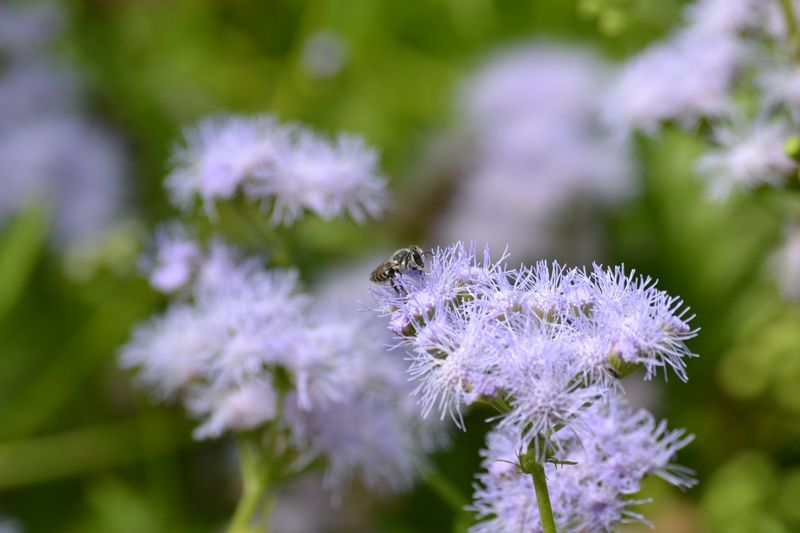
Toward the end of summer, when many flowers are starting to fade, Gregg’s Mistflower is just getting warmed up.
Named after naturalist Josiah Gregg, who explored the American Southwest in the 1800s, this native Texas wildflower produces fluffy clusters of soft blue to lavender-purple blooms that look almost like a mist floating above the foliage.
Butterflies are completely obsessed with Gregg’s Mistflower. It is considered one of the top butterfly-attracting plants in all of Texas, especially for migrating monarch butterflies that pass through the state each fall.
If you want to support monarch migration, planting this flower is one of the best things you can do.
Gregg’s Mistflower grows well in full sun to partial shade and tolerates drought once established. It works nicely along dry creek beds, rocky slopes, or garden borders.
In warmer parts of Texas like the Rio Grande Valley and South Texas, it may even stay semi-evergreen through winter.
Plants grow one to three feet tall and spread gradually over time. They bloom from late summer through fall, extending your garden’s color season well beyond what most other wildflowers offer.
For a Texas garden that stays beautiful and wildlife-friendly from spring all the way into autumn, Gregg’s Mistflower is an essential native plant to include.