North Carolina Trees That Could Get You Fined If You Keep Them On Your Property
Whether you’ve lived in North Carolina for decades or you just unpacked your boxes, you know this state is a gardener’s paradise.
Our unique climate, stretching from the salty coast to the humid Piedmont and the cool Appalachian peaks, allows almost anything to grow.
But as any seasoned local will tell you, just because something can grow here doesn’t mean it should.
While we love our lush landscapes, there is a shortlist of trees that have moved from “pretty backyard shade” to “ecological and legal headache.”
Between aggressive invasive species that choke out our native forests and neighborhood ordinances designed to keep our streets safe, some trees can actually end up costing you a hefty fine.
A quick heads-up before we dive in: while North Carolina doesn’t have a “tree police” force roaming the state to ticket you for a Mimosa tree, local city codes and HOAs are a different story.
Most fines are triggered when a tree becomes a public nuisance, blocks a sidewalk, or poses a safety risk.
Here’s a look at the trees that might look great in a photo but could lead to a localized legal headache if they aren’t managed properly.
1. Tree Of Heaven (Ailanthus Altissima)
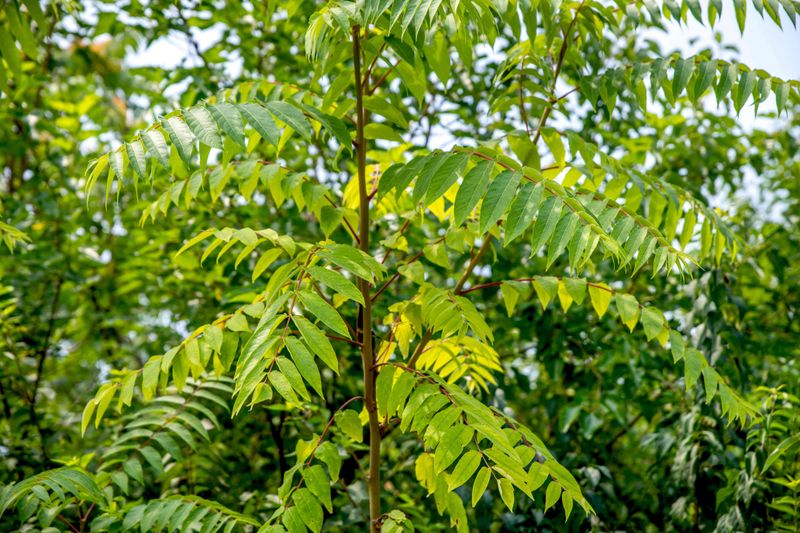
Most people see a tall, leafy tree and think nothing of it. But the Tree of Heaven (Ailanthus altissima) is one of the most aggressively invasive plants spreading across North Carolina right now.
What makes this tree especially problematic is its connection to the spotted lanternfly, a destructive pest that uses it as a preferred host plant before moving on to damage valuable crops like grapes, apples, hops, and hardwood trees.
The spotted lanternfly has already caused significant agricultural losses in mid-Atlantic states, and North Carolina officials are actively working to slow its southern advance.
Some local governments in the state have already started requiring homeowners to remove the Tree of Heaven, especially when it spreads onto neighboring properties or into protected green spaces.
The tree releases allelopathic chemicals, primarily a compound called ailanthone, into the surrounding soil, which actively suppress the germination and growth of competing plants.
This effectively lets it colonize an area and crowd out native species over time, reducing biodiversity and degrading wildlife habitat.
It can grow up to six feet per year under favorable conditions, meaning a small sapling can become a towering, seed-producing problem in just a few seasons.
Cutting it down without treating the stump often makes things worse, the tree responds to damage by sending up multiple new sprouts from its roots, a survival mechanism that makes casual removal attempts backfire.
Proper control typically involves herbicide treatment applied directly to a freshly cut stump or injected into the bark.
If you spot this tree on your property, contact your local NC Cooperative Extension office right away.
They can confirm the identification and walk you through the safest removal methods for your situation.
Acting early can save you from a formal removal order and a potential fine, and it helps protect the broader ecosystem your neighbors depend on too.
Your North Carolina Garden Changes Every Week. Your Plan Should Too.
Gardening in North Carolina changes quickly throughout the season. Every Friday you’ll receive a simple weekly plan showing exactly what to plant, prune, fertilize, harvest, and protect so you never miss the right timing.
2. Princess Tree / Empress Tree (Paulownia Tomentosa)
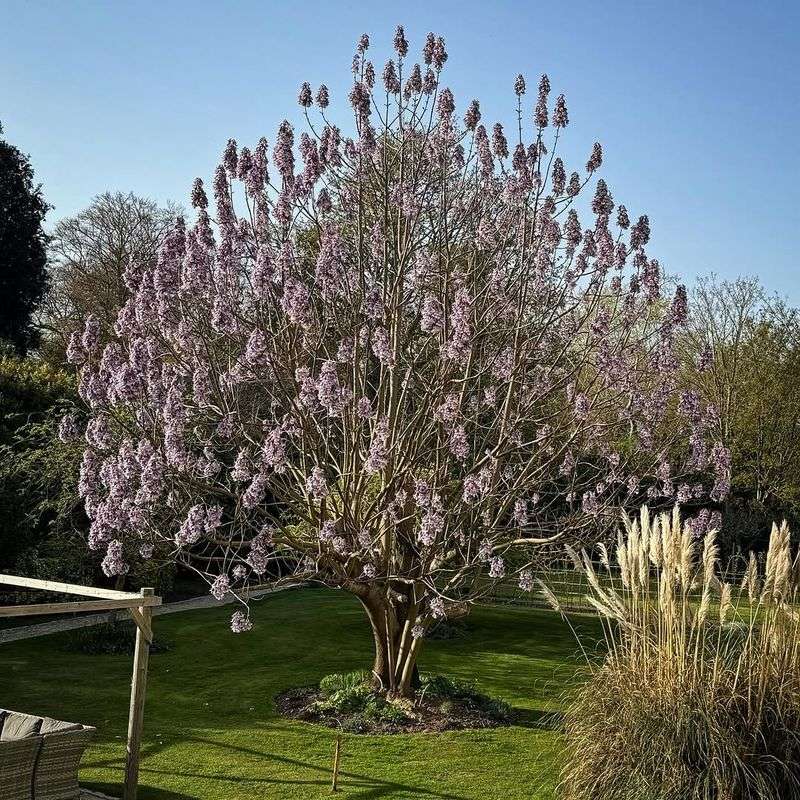
At first glance, the Princess Tree looks stunning. Its large purple flowers bloom every spring, and the massive leaves give it a tropical, eye-catching appearance.
Many homeowners in North Carolina actually planted it on purpose, not realizing the trouble it could bring later.
Paulownia tomentosa is officially listed as an invasive species in North Carolina, and it spreads aggressively into forests and protected natural areas.
A single tree can produce up to 20 million seeds per year, and those seeds travel easily on the wind.
Once it moves beyond your yard and into a neighboring natural area, you could be looking at a removal order from local authorities.
The concern is especially serious near state parks, nature preserves, and conservation corridors throughout North Carolina.
Some municipalities have the authority to issue fines if invasive vegetation on private property is left unmanaged and spreads beyond property lines.
If you already have one growing in your yard, it is worth calling your county cooperative extension office to find out what your local rules say.
Swapping it out for a native flowering tree like a serviceberry or redbud is a smart move that keeps you fine-free and supports local wildlife at the same time.
3. Mimosa / Silk Tree (Albizia Julibrissin)
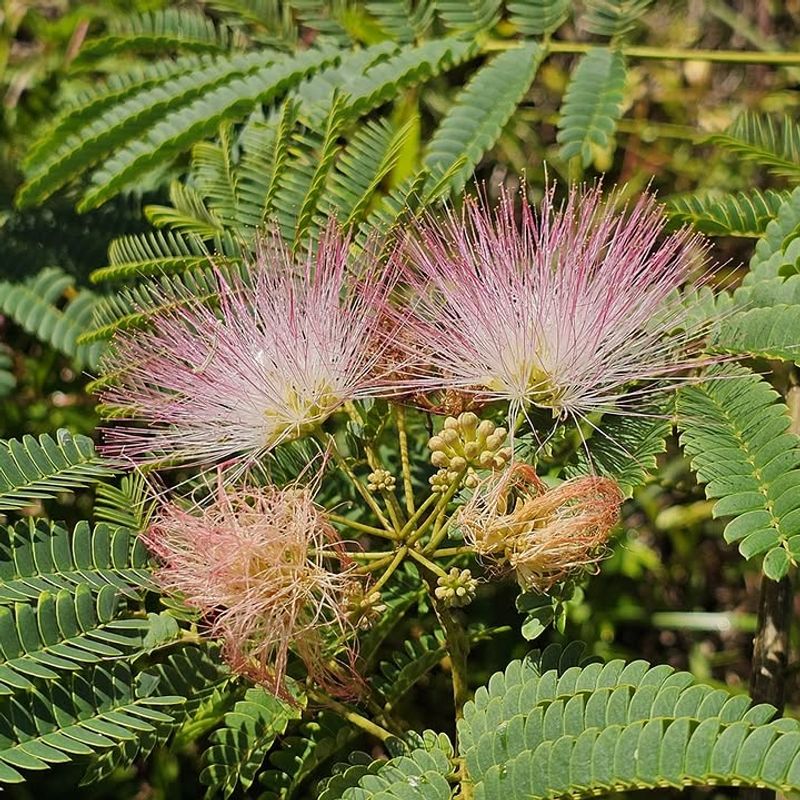
Few trees get as many compliments as the Mimosa. Those soft, feathery pink blooms are practically irresistible, and the fern-like leaves give it a delicate, almost magical look.
It is easy to see why so many North Carolina homeowners have welcomed it into their yards over the years.
The problem is that Mimosa, also known as the Silk Tree, is a documented invasive species in North Carolina.
It spreads quickly along roadsides, stream banks, and forest edges, pushing out native plants that local wildlife depend on.
Seeds from a single tree can remain viable in the soil for years, making it incredibly difficult to get under control once it takes hold.
Nuisance vegetation ordinances in many North Carolina cities and counties give local officials the power to act when a Mimosa spreads into rights-of-way, utility easements, or neighboring properties.
If your tree is dropping seeds onto a public sidewalk or road, that alone could trigger a complaint and a potential fine.
Homeowners are often surprised to learn that a tree they have loved for years is suddenly a liability.
Native alternatives like the Eastern redbud offer beautiful spring color without the invasive baggage, and they actually support pollinators that are native to the region.
4. Bradford Pear / Callery Pear (Pyrus Calleryana)
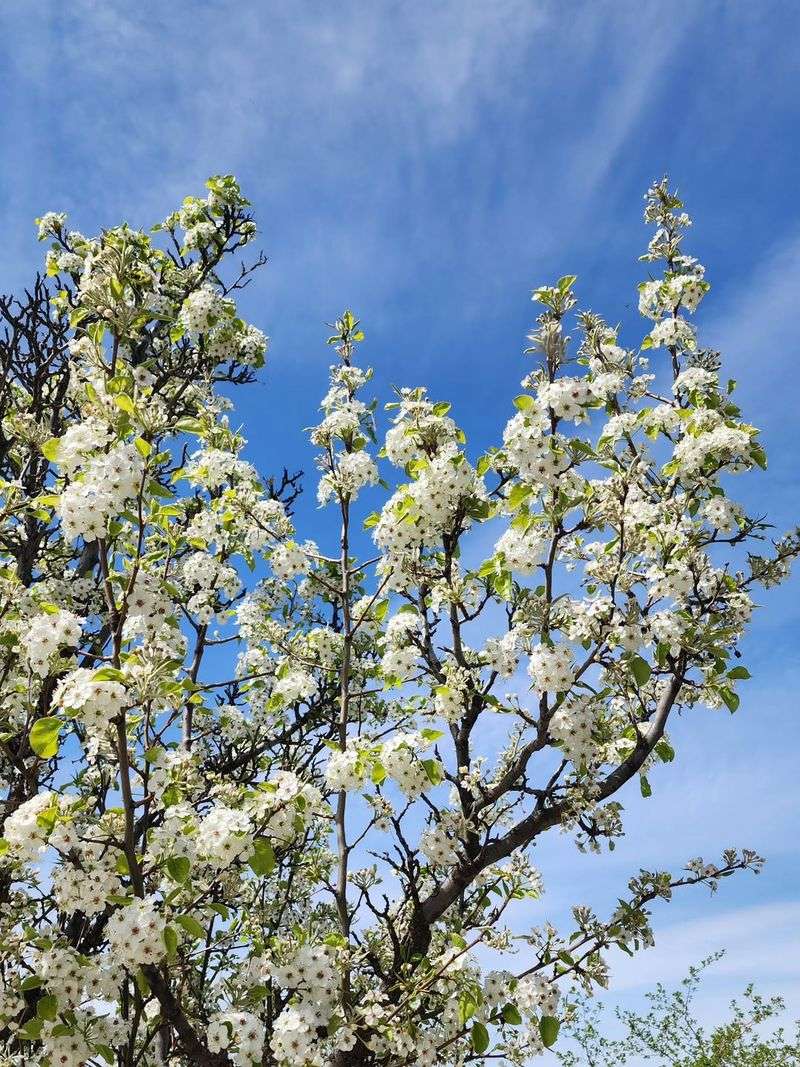
For decades, the Bradford Pear was the go-to ornamental tree for neighborhoods across North Carolina.
Developers loved it, landscapers planted it everywhere, and homeowners admired those white spring blooms every year without a second thought. Now, the story has completely changed.
North Carolina officially added Callery Pear, the species that includes Bradford Pear, to its invasive species list.
While the state has not issued a blanket ban forcing every homeowner to remove existing trees immediately, some regulated landscapes, new developments, and municipal areas are subject to stricter rules.
Fines can apply when these trees are planted in violation of local landscaping codes or when they spread into natural areas.
Bradford Pears are notorious for cross-pollinating with wild Callery Pear populations, producing thorny, aggressive offspring that take over fields and forest edges.
That combination of ornamental popularity and ecological damage is exactly why North Carolina has taken a firm stance.
If you are in a homeowners association or a planned development, check your landscaping guidelines carefully because Bradford Pear violations are increasingly common.
Replacing it with a native option like a flowering dogwood or fringe tree gives your yard that same beautiful spring display while keeping you on the right side of local regulations.
5. Chinese Tallow Tree (Triadica Sebifera)
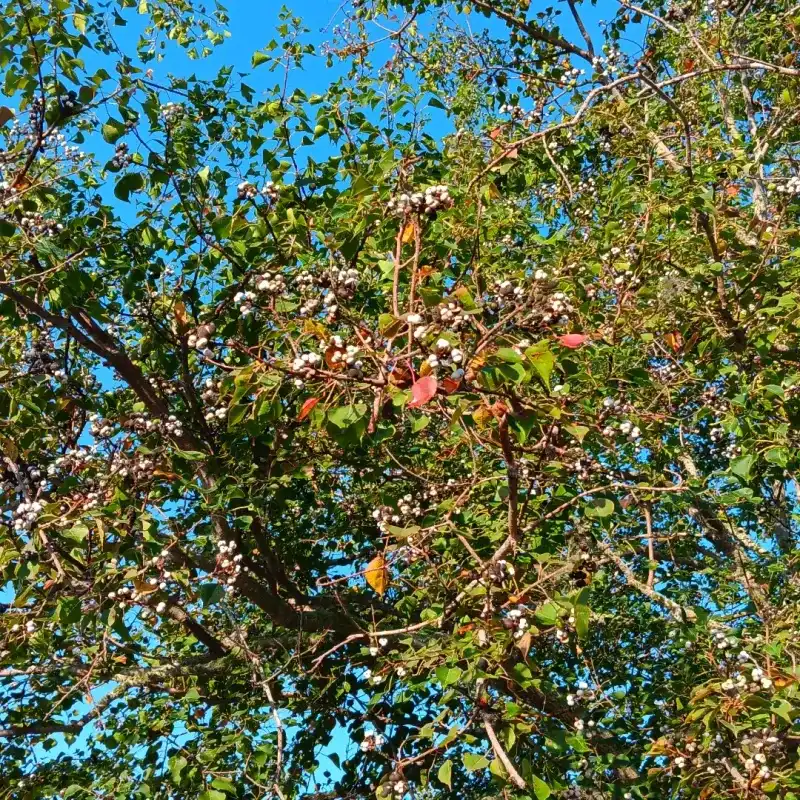
Walk through a coastal or piedmont property in North Carolina in the fall, and you might spot a tree with brilliant red, orange, and yellow leaves that looks absolutely gorgeous.
That could very well be the Chinese Tallow Tree, and as pretty as it is, it comes with some serious strings attached.
Triadica sebifera is considered one of the most invasive woody plants in the southeastern United States.
It spreads rapidly through both seeds and root sprouts, forming dense thickets that crowd out native vegetation.
Several southeastern states have placed restrictions or outright prohibitions on it, and North Carolina is increasingly paying attention to its spread, particularly in wetland and coastal areas.
If the Chinese Tallow on your property begins spreading onto adjacent land, into drainage areas, or toward protected wetlands, local authorities may step in and require removal at your expense.
The fines and removal costs can add up quickly, especially if the spread is significant. Birds love the white waxy seeds, which unfortunately means the tree gets transported far and wide without any help from humans.
Replacing it with a native tree like a sweetgum or blackgum gives you that same spectacular fall color without putting your property at legal risk or harming the local ecosystem.
6. Hazardous Or Structurally Compromised Trees (Any Species)
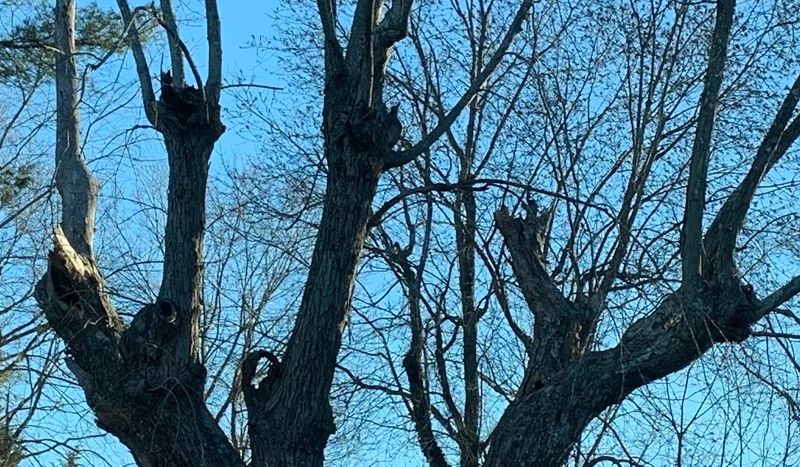
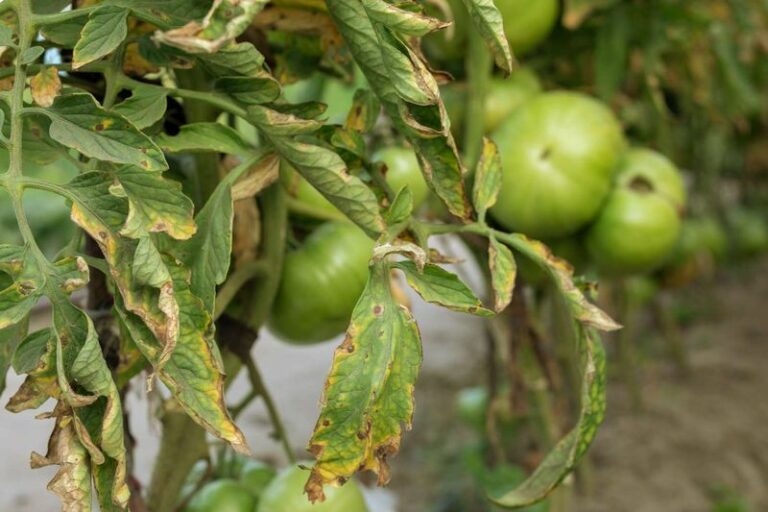
A tree does not have to be invasive to get you into legal trouble in North Carolina. If a tree on your property is visibly diseased, structurally compromised, or leaning dangerously toward a structure or public area, local authorities have the power to step in.
Ignoring a hazardous tree is one of the fastest ways to end up with a municipal fine. Many North Carolina cities and towns have property maintenance codes that specifically address dangerous trees.
If a neighbor or passerby files a complaint, an inspector may visit and assess the situation. When a tree is deemed a hazard, the homeowner typically receives a notice requiring removal within a set timeframe.
Failing to act within that window results in fines, and in some cases, the municipality removes the tree and sends the bill straight to the property owner.
Spotting warning signs early makes a huge difference. Cracks in the trunk, large sections of missing bark, fungi growing at the base, and significant lean after a storm are all red flags worth taking seriously.
Getting an assessment from a certified arborist gives you a professional opinion and documentation that shows you acted responsibly.
North Carolina homeowners who stay proactive about tree health not only avoid fines but also protect their homes, neighbors, and the overall look of their property for years to come.