8 Noxious Plants Found In North Carolina Yards That Can Irritate Skin
North Carolina yards can look calm and familiar, but many hide plants that trigger skin reactions the moment they’re brushed, pulled, or stepped on during normal yard work.
Warm temperatures and long growing seasons give these plants plenty of time to spread unnoticed.
Most people blame sudden rashes on heat, insects, or allergies without realizing a plant was the real cause.
Several noxious plants grow comfortably across North Carolina lawns, fence lines, and wooded edges, blending in with harmless greenery. Because they look ordinary, exposure often happens before anyone realizes there’s a problem.
The irritation they cause isn’t always immediate, which makes it harder to connect symptoms to the source.
That delay leads many gardeners to keep working around the same plants again and again.
Once you know which plants commonly cause skin irritation, those reactions stop feeling random and start making sense.
1. Poison Ivy
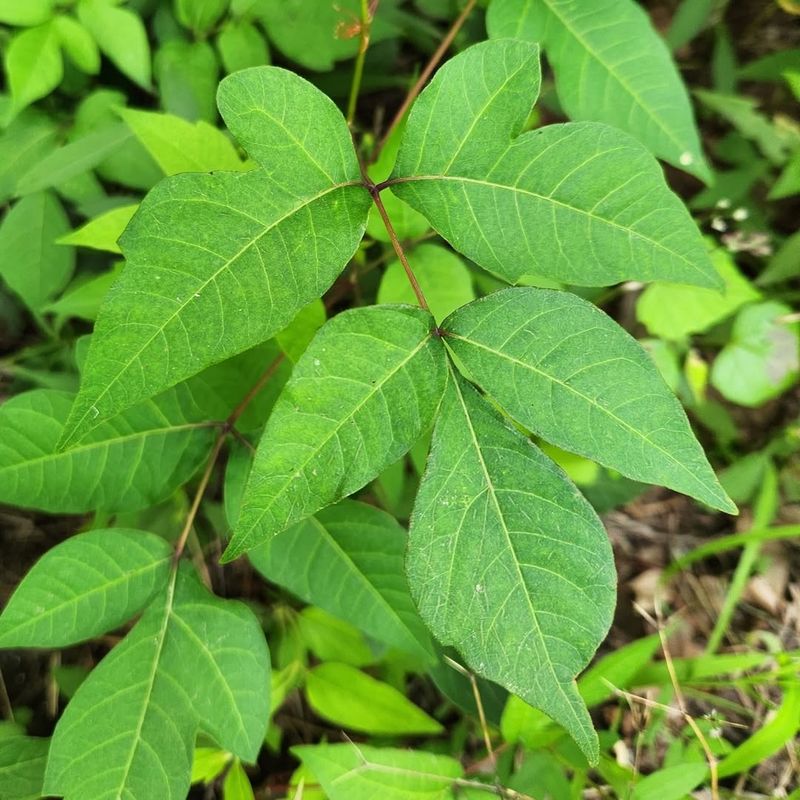
Most people in North Carolina have heard warnings about this notorious plant since childhood. Recognizing poison ivy can save you from days of miserable itching and oozing blisters.
The classic saying “leaves of three, let it be” remains the best identification tip for this common yard invader. Each leaf cluster consists of three pointed leaflets that can appear shiny or dull depending on the season.
The middle leaflet grows on a slightly longer stem than the two side leaves.
Color changes throughout the year make poison ivy tricky to spot sometimes. Spring brings reddish new growth, summer turns leaves green, and fall creates beautiful but dangerous yellow, orange, and red foliage.
Vines climbing up trees or fences often develop fuzzy, hair-like roots along their length.
This sticky substance can remain active on dried plant material, clothing, tools, and pet fur for months or even years. Even tiny amounts can trigger severe rashes.
Reactions typically appear within 12 to 48 hours after contact with the plant. The rash starts as redness and swelling, then develops into itchy bumps and fluid-filled blisters.
Washing exposed skin with cool water and soap within 30 minutes can reduce reaction severity. Remove contaminated clothing carefully and wash everything separately in hot water.
Calamine lotion and cool compresses provide relief for mild cases.
North Carolina’s warm, humid climate creates perfect growing conditions for poison ivy throughout the state. The plant thrives in yards, parks, along trails, and anywhere soil gets disturbed regularly.
Woodland edges and fence lines become particularly dense with growth.
2. Poison Oak
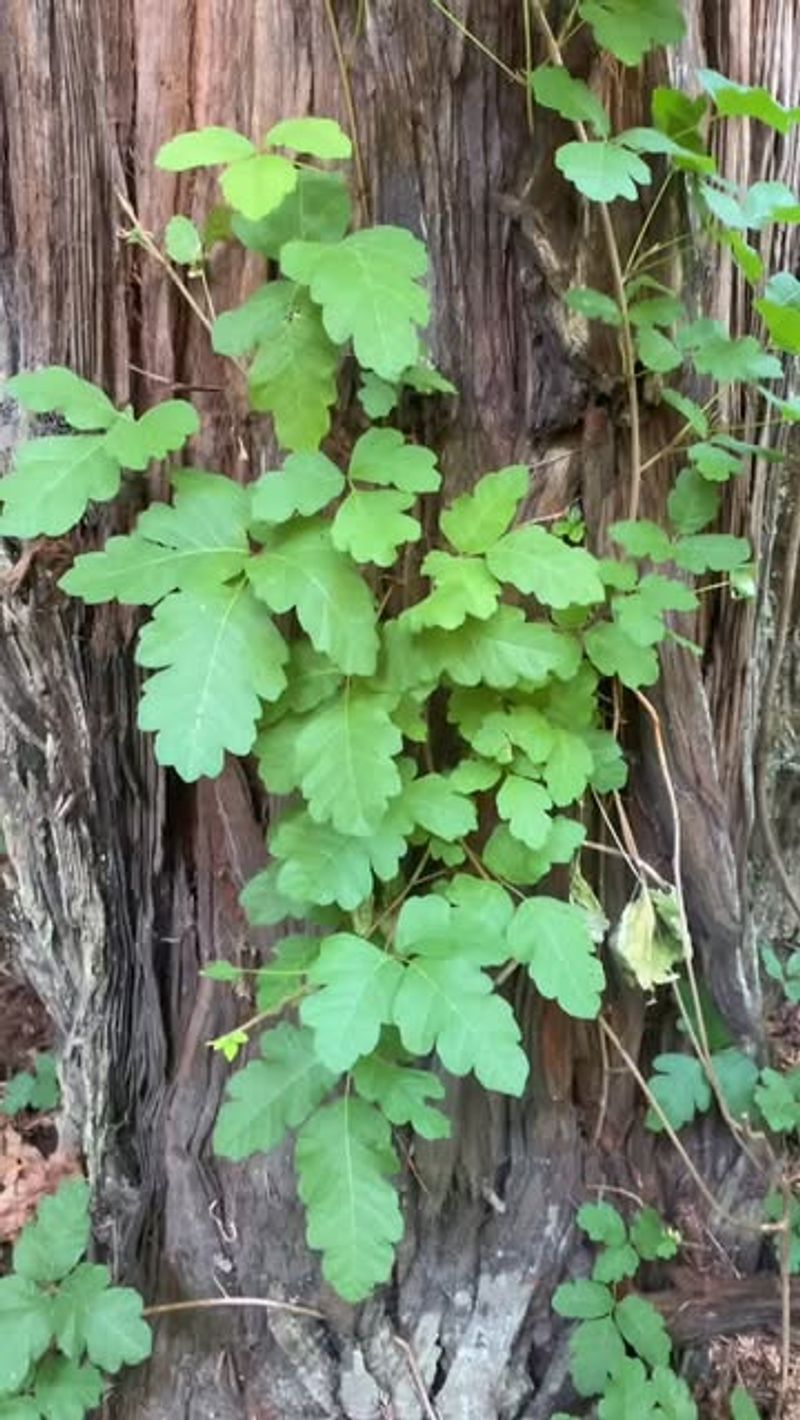
Confusion between poison oak and poison ivy happens frequently because they share similar characteristics and growth patterns. Both plants belong to the same family and produce identical allergic reactions through urushiol oil.
Leaflets on poison oak have rounded, lobed edges that resemble oak tree leaves rather than the pointed tips of poison ivy. Three leaflets still form each leaf cluster, maintaining the “leaves of three” warning rule.
The lobes create a scalloped appearance that distinguishes it from its infamous cousin.
Growth habits vary between shrub forms and climbing vines depending on available support structures. Shrubby poison oak typically reaches two to four feet tall in open areas.
When growing near trees or fences, it develops woody vines similar to poison ivy.
Seasonal color changes create stunning displays that tempt unsuspecting gardeners to collect fallen leaves. Spring growth emerges bronze or reddish, summer brings medium green coloring, and autumn produces brilliant reds and oranges.
White berries appear in late summer and persist through winter.
Mixed hardwood forests and disturbed areas provide ideal habitat.
The same urushiol oil that makes poison ivy problematic causes identical reactions from poison oak contact. Rashes, blisters, and intense itching develop within hours to days after exposure.
Sensitivity varies among individuals, but most people react strongly.
Prevention strategies mirror those used for poison ivy avoidance and treatment. Learning to identify the distinctive leaf shape helps you steer clear during yard work and outdoor activities.
Protective clothing and prompt washing reduce reaction severity.
3. Poison Sumac
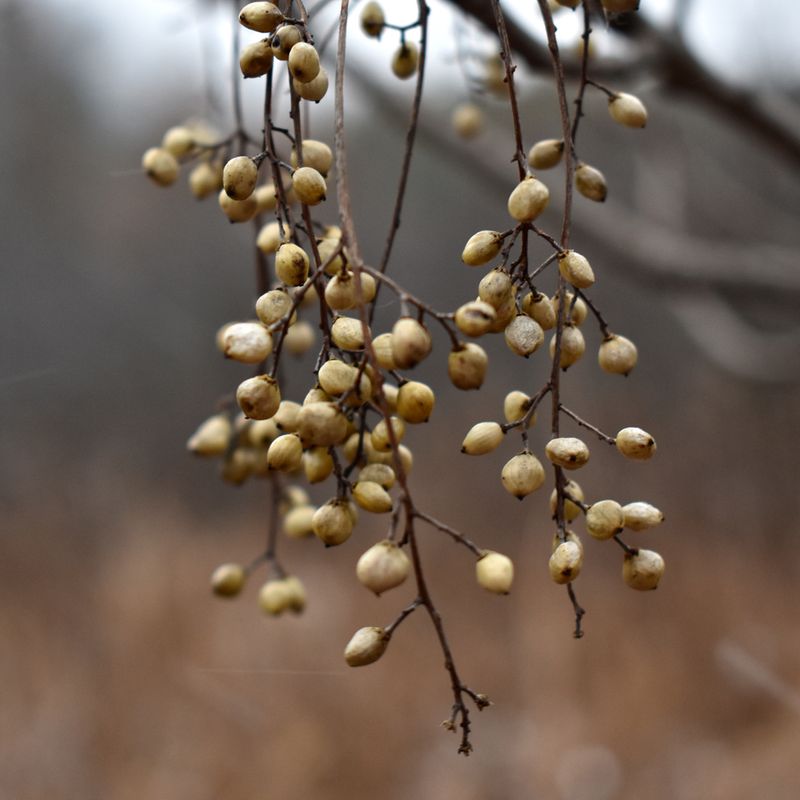
Wetland areas and swampy sections of North Carolina yards harbor this particularly potent skin irritant. Poison sumac produces stronger reactions than poison ivy or poison oak in most people who encounter it.
Identifying features include compound leaves with 7 to 13 smooth-edged leaflets arranged in pairs along a central stem. A single leaflet tops each leaf, creating an odd number total.
The leaflets lack the three-leaf pattern of poison ivy and oak.
Smooth, oval leaflets with pointed tips grow two to four inches long on reddish stems. Young leaves emerge with a reddish tint before maturing to bright green in summer.
Fall transforms the foliage into spectacular shades of orange, red, and purple.
Growth form appears as a tall shrub or small tree reaching up to 20 feet in ideal conditions. Multiple smooth gray stems rise from the base without the hairy vines seen in poison ivy.
Drooping clusters of whitish-green berries hang from branches in late summer.
Habitat preferences limit poison sumac distribution compared to its more common relatives throughout the state. Bogs, swamps, and wet ditches provide the consistently moist soil this plant requires.
Properties near streams or poorly drained areas face higher risk.
Even brief contact can trigger severe, widespread rashes covering large body areas. Reactions often require medical treatment rather than home remedies.
Blisters from poison sumac tend to be larger and more painful than those from other urushiol-producing plants. Swelling can become severe enough to interfere with normal activities.
The rash may persist for several weeks without proper treatment.
4. Stinging Nettle
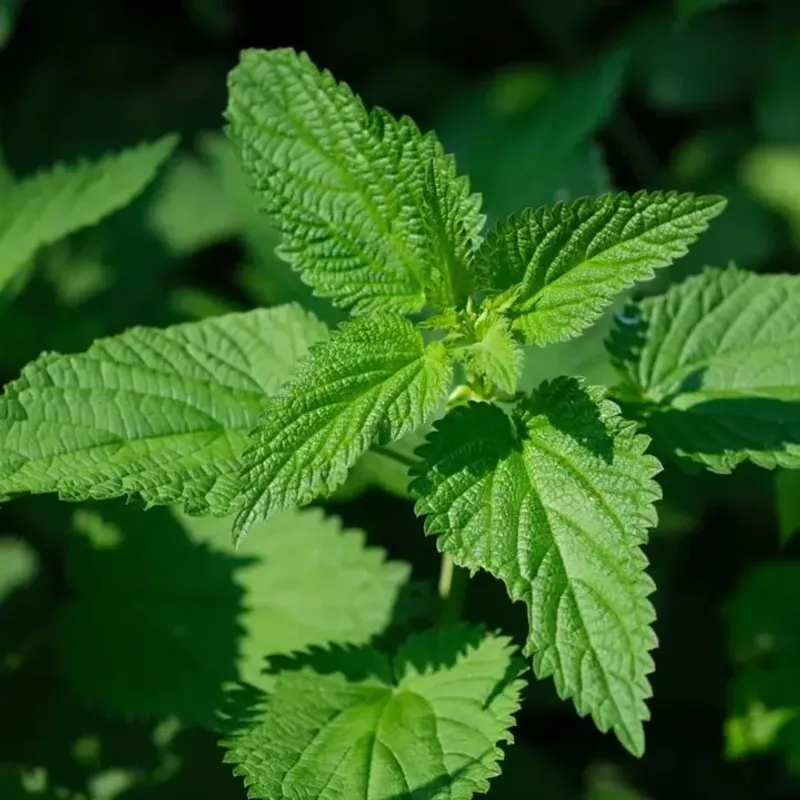
Brushing against this plant delivers immediate, burning pain that feels like dozens of tiny needles piercing your skin simultaneously. Stinging nettle doesn’t rely on allergic reactions to cause discomfort like poison ivy relatives do.
Tiny hollow hairs covering the stems and leaves act like miniature hypodermic needles when touched. These hairs break off in your skin and inject a cocktail of chemicals including histamine, acetylcholine, and formic acid.
The injection causes instant stinging and burning sensations.
Plant identification becomes easier once you know what to look for in North Carolina gardens and wild areas. Opposite pairs of heart-shaped leaves with deeply serrated edges line square stems that can reach six feet tall.
The entire plant appears covered in fine, almost fuzzy hairs.
Growing season runs from spring through fall in Tar Heel State yards with adequate moisture and nutrients. Disturbed soils along fences, in ditches, and near compost piles become favorite spots.
Shaded areas with rich soil support dense colonies.
Pain from nettle stings typically peaks within the first hour after contact, then gradually subsides over several hours. Red, raised welts mark the affected areas and may itch intensely as they heal.
Some people develop larger reactions with significant swelling.
Immediate treatment involves carefully removing any visible hairs stuck in your skin using tape or a credit card edge. Avoid rubbing or scratching, which pushes more irritants deeper into skin.
Washing with soap and cool water helps remove chemical residues.
Interestingly, this painful plant has culinary and medicinal uses when properly prepared through cooking or drying. Heat and dehydration neutralize the stinging compounds completely.
Many cultures have harvested young nettle shoots as nutritious spring greens for centuries.
5. Wild Parsnip
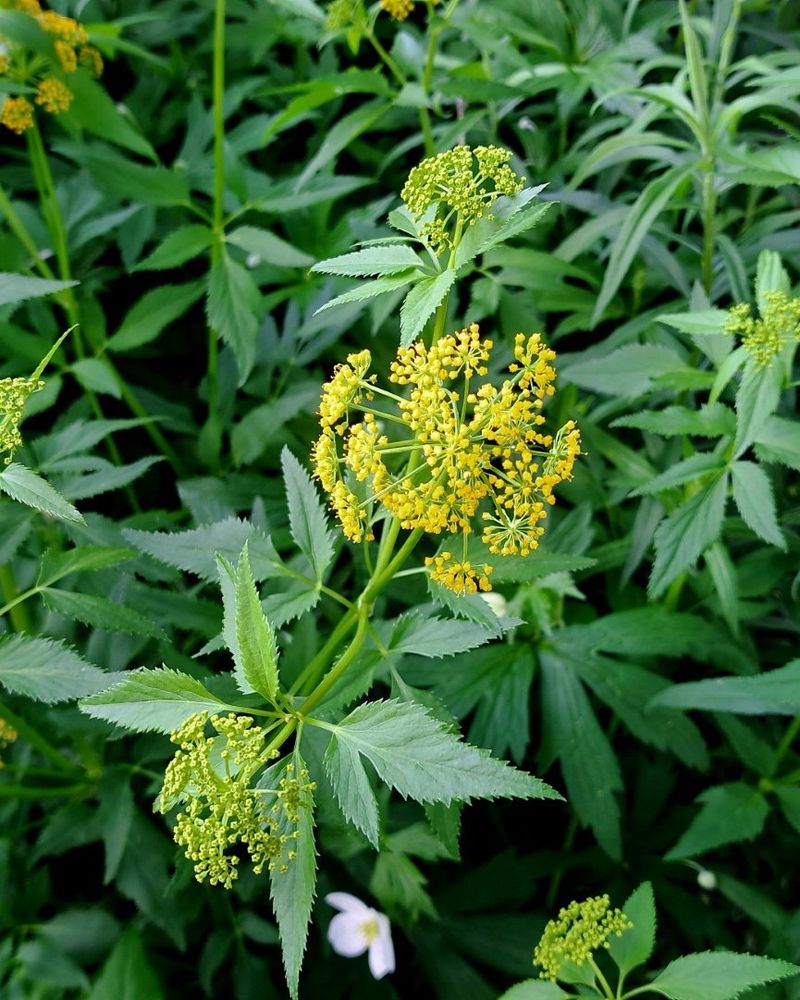
Sunshine transforms this innocent-looking plant into a skin-damaging hazard through a bizarre chemical reaction. Wild parsnip doesn’t cause immediate pain like stinging nettle or allergic rashes like poison ivy.
Phytophotodermatitis is the technical term for the reaction that occurs when plant sap contacts skin exposed to sunlight. Chemicals called furanocoumarins in the sap become activated by ultraviolet light, causing severe burns.
The process can happen without you feeling anything initially.
Tall flowering stalks reaching three to five feet high display flat-topped clusters of small yellow flowers in summer. Compound leaves divided into pairs of toothed leaflets resemble large celery or carrot foliage.
The plant is actually a wild relative of the cultivated parsnip vegetable.
First-year plants form low rosettes of leaves that many people mistake for harmless weeds in North Carolina yards. Second-year growth produces the tall flowering stalks that create seeds and spread the plant.
Recognizing both growth stages helps with early identification and removal.
Skin reactions develop 24 to 48 hours after sap exposure and sun contact, creating painful red patches and blisters. The affected areas often develop dark pigmentation that can persist for months or even years.
Patterns on skin frequently show streaks or handprints where sap was smeared.
Severity of burns depends on sap concentration, sun exposure duration, and individual skin sensitivity. Some reactions rival second-degree burns in intensity and require medical treatment.
Children playing in areas with wild parsnip face particular risk.
North Carolina roadsides, vacant lots, and unmowed field edges provide ideal habitat for wild parsnip colonization. The plant tolerates various soil conditions and thrives in full sun.
Disturbed areas along new construction sites often see rapid establishment.
Removal requires full protective coverage including gloves, long sleeves, pants, and eye protection.
6. Cow Parsnip
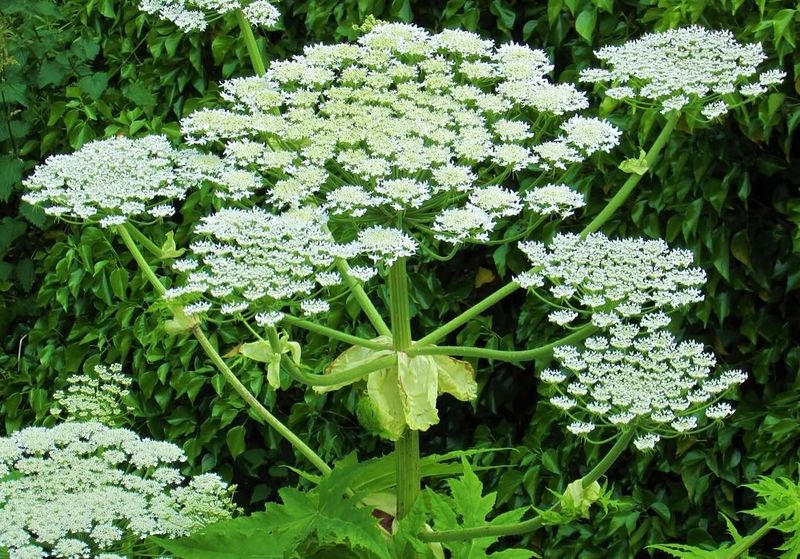
Massive size makes this native plant impossible to miss once it reaches full growth in moist North Carolina yards. Cow parsnip can tower over six feet tall with leaves spanning more than a foot across.
The same phototoxic compounds found in wild parsnip exist in cow parsnip sap, though typically in lower concentrations. Contact followed by sun exposure still produces painful blisters and burns.
Giant hogweed, a related invasive species, causes even more severe reactions but remains rare in the state.
Huge, deeply lobed leaves divided into three sections create a distinctive tropical appearance unusual for native plants. White flower clusters form large, flat-topped umbels similar to wild parsnip but much bigger.
Thick, hollow stems covered in coarse hairs can reach three inches in diameter.
Habitat preferences include stream banks, wet meadows, and shaded woodland edges with consistent moisture throughout the growing season. North Carolina mountain regions see more cow parsnip than coastal areas.
The plant thrives in rich, organic soils.
Native status means cow parsnip serves important ecological roles despite its potential to harm human skin. Wildlife browse the foliage, and numerous insects visit the flowers for nectar and pollen.
Removing it from natural areas isn’t necessary or recommended.
Property owners should focus on keeping cow parsnip away from high-traffic areas where accidental contact is likely. Mowing around plants maintains distance without requiring direct handling.
Marking locations helps you remember to avoid them during yard work.
Children find the enormous leaves and hollow stems fascinating, making education about the plant’s dangers essential. Teaching kids to recognize and avoid cow parsnip prevents painful learning experiences.
Supervising play areas near wet sections of your property adds another safety layer.
7. Spurges
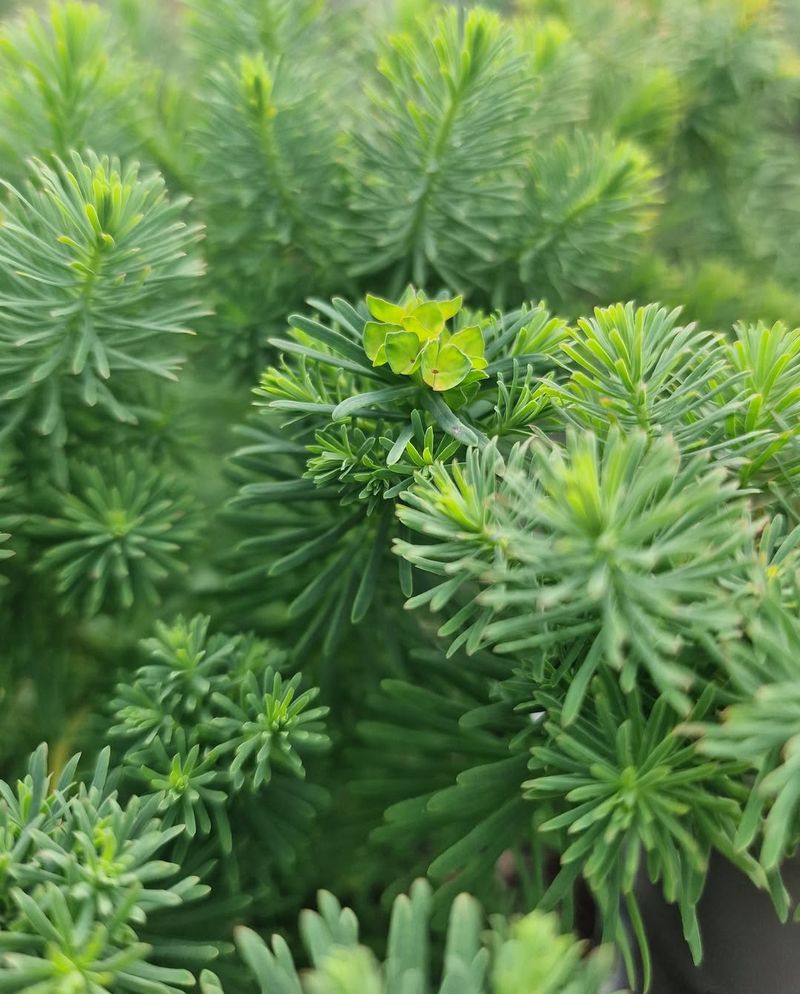
Several spurge species common in North Carolina yards produce milky white sap that irritates skin on contact. Prostrate spurge, spotted spurge, and leafy spurge all share this defensive characteristic.
Breaking or cutting any part of a spurge plant releases the distinctive latex-like sap immediately. The fluid contains irritating compounds that cause redness, itching, and sometimes blistering in sensitive individuals.
Eyes are particularly vulnerable to serious damage from sap contact.
Low-growing spurges often invade lawns, garden beds, and cracks in pavement throughout the Tar Heel State. Prostrate spurge forms flat mats of reddish stems with tiny oval leaves arranged in pairs.
Spotted spurge looks similar but displays a dark red blotch in the center of each leaf.
Identifying spurges becomes easier when you learn to spot their unique flower structures and growth patterns. What appear to be flowers are actually specialized structures called cyathia containing both male and female parts.
True flowers are tiny and easy to overlook.
Skin reactions vary from mild redness and itching to painful blisters depending on individual sensitivity and sap concentration. Some people develop contact dermatitis after repeated exposure even if initial contacts caused no problems.
Wearing gloves during weeding sessions provides important protection.
North Carolina’s warm growing season allows spurges to produce multiple generations annually, creating persistent weed problems. Seeds remain viable in soil for years, complicating control efforts.
Hand-pulling before seed production reduces future infestations.
Garden spurges including popular ornamental varieties also produce irritating sap despite their decorative appeal. Euphorbia species sold at nurseries require the same careful handling as weedy relatives.
Pruning and arranging cut stems can expose you to sap.
Washing affected skin immediately with soap and cool water minimizes reaction severity after spurge sap contact. Avoid touching your face or eyes until after thorough hand washing.
Contaminated clothing should be laundered separately.
8. Virginia Creeper
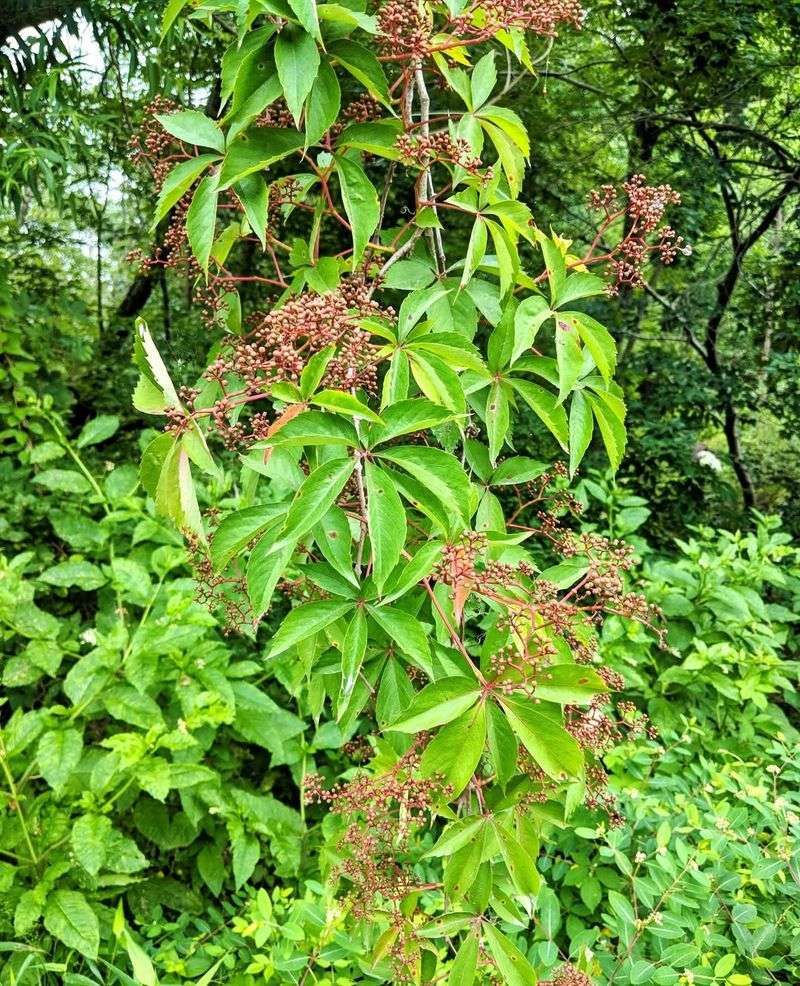
Five-leaflet clusters distinguish this common vine from three-leafed poison ivy, but many North Carolina residents still confuse the two plants. Virginia creeper causes skin irritation in some people, though reactions are generally milder than poison ivy.
Calcium oxalate crystals in the leaves and berries create the irritating effect rather than urushiol oil. These needle-like crystals pierce skin cells when plant material is crushed or broken, causing redness and itching.
Some individuals develop more severe reactions including blisters.
Climbing ability rivals poison ivy as Virginia creeper scales walls, fences, and trees using adhesive tendrils. The vine can completely cover structures and reach heights of 50 feet or more.
Branching tendrils end in small adhesive pads that stick to virtually any surface.
Foliage creates spectacular fall color displays with brilliant reds, oranges, and purples covering entire buildings. This ornamental value leads many property owners to encourage Virginia creeper growth intentionally.
The plant provides excellent wildlife habitat and food sources.
Dark blue berries appear in late summer and persist into winter, attracting numerous bird species to North Carolina yards. The berries are toxic to humans and can cause stomach upset if ingested.
Children should be taught not to eat the attractive but dangerous fruits.
Skin sensitivity to Virginia creeper varies widely among individuals, with some people never experiencing reactions. Others develop itchy rashes after every contact with the foliage.
Wearing gloves during pruning or removal protects sensitive skin.
Distinguishing Virginia creeper from poison ivy becomes critical for safe yard work in the Tar Heel State. Counting leaflets provides the easiest identification method, with five indicating Virginia creeper and three signaling poison ivy.
Both plants often grow in the same areas.