8 Ohio Plants That Provide Early Spring Food For Robins
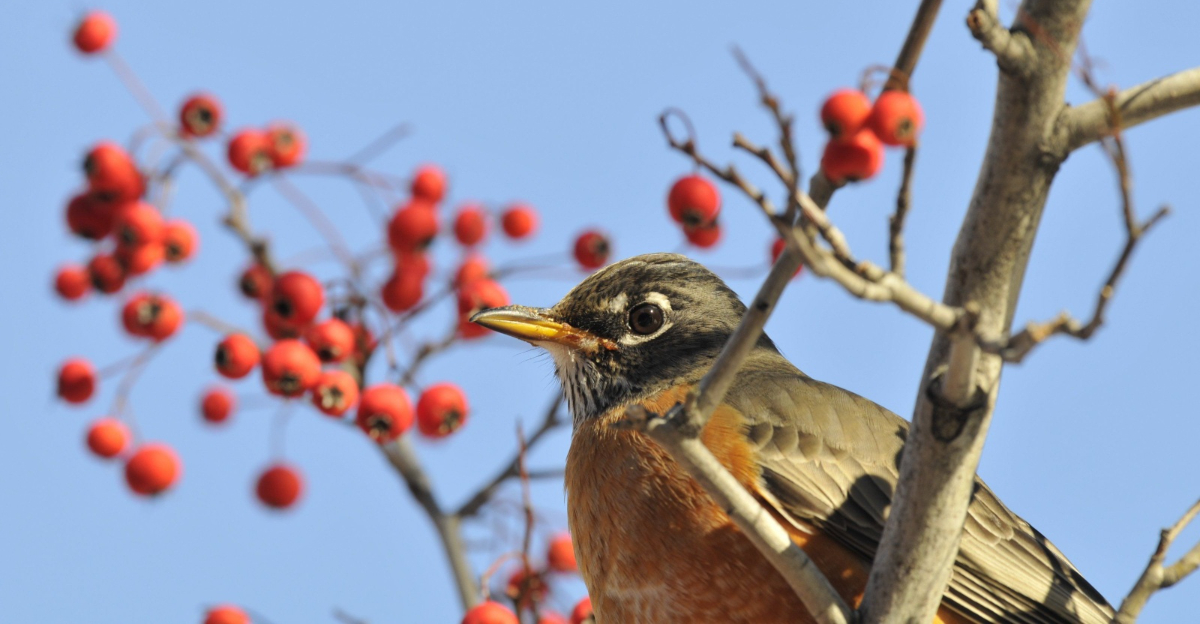
The first robin song of early spring feels like a promise that winter is finally loosening its grip. As these familiar birds return to Ohio yards, food can still be scarce, and the right plants make all the difference.
Early berries, tender shoots, and insect rich growth help robins recover energy, rebuild strength, and settle in for the nesting season ahead.
A yard planted with the right species becomes more than a garden. It turns into a vital feeding ground during one of the toughest times of the year for wildlife.
Even while the air stays cool and trees remain bare, certain plants quietly support returning robins and bring your landscape to life with movement and song.
1. Serviceberry Feeds The First Robins
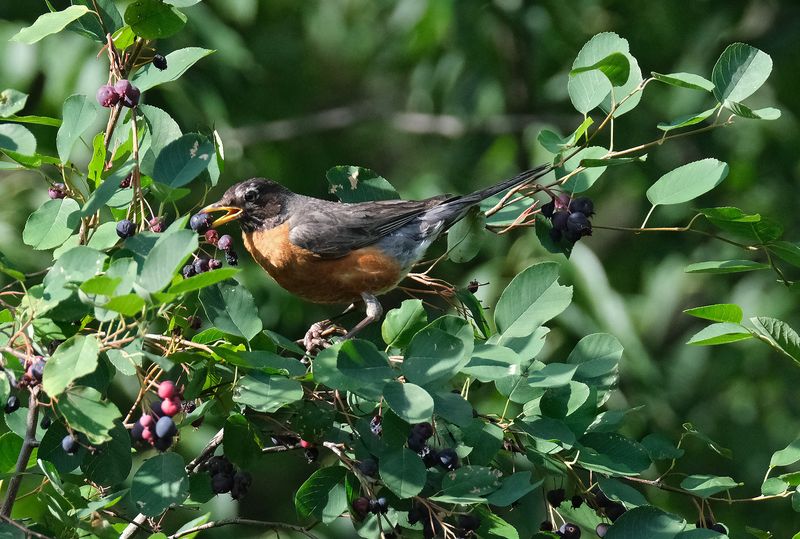
Few plants match the perfect timing of serviceberry when it comes to feeding robins in early spring. This native Ohio tree produces delicate white flowers in April, followed quickly by small, dark berries that ripen just as robins are establishing territories and beginning to nest.
The fruit appears earlier than most other berry-producing plants, making it an essential food source during a critical window.
Serviceberries thrive in partial shade to full sun and adapt well to various soil types found throughout Ohio. The multi-stemmed shrub form works beautifully in smaller yards, while the tree varieties make excellent specimens for larger properties.
Native populations support not just robins but also cedar waxwings, catbirds, and numerous other songbirds.
Planting serviceberry near windows or patios allows you to watch robins feast on the ripening fruit throughout May and early June. The berries are also edible for people, with a sweet flavor reminiscent of blueberries, though birds typically claim most of the harvest.
Beyond fruit production, serviceberry offers year-round interest with spring blooms, summer berries, brilliant fall color, and attractive gray bark that stands out in winter. This hardworking native deserves a place in every Ohio wildlife garden focused on supporting robins during their most demanding season.
2. Dogwood Berries Support Early Visitors
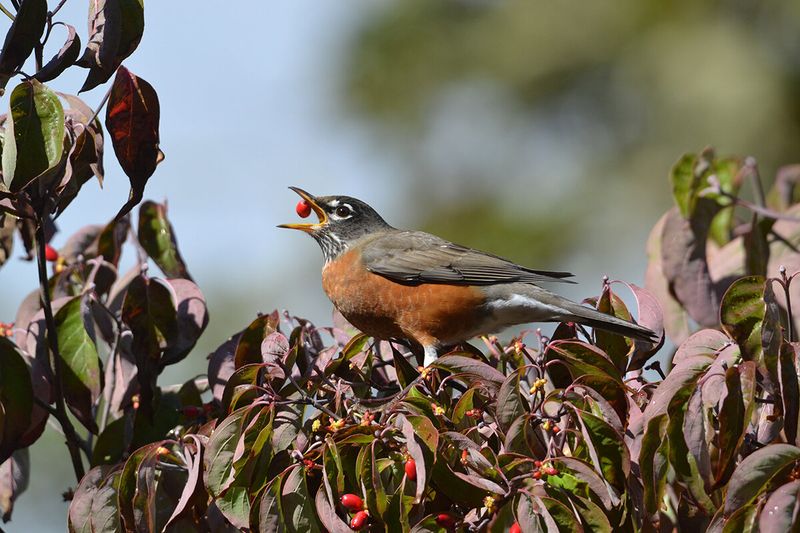
Dogwoods produce bright red berries that persist from late summer well into spring, providing robins with a dependable food source when fresh options remain scarce. The high fat content in these drupes gives birds the energy they need to survive cold snaps and fuel their demanding springtime activities.
Gray dogwood and silky dogwood, both native to Ohio, are particularly valuable for wildlife.
Beyond berries, dogwoods attract countless insects during their spring bloom period, offering robins the protein-rich diet they need for successful nesting. The flowers draw beetles, flies, and other invertebrates that robins eagerly consume.
This dual benefit makes dogwoods exceptionally valuable in early spring landscapes.
Most dogwood species prefer moist, well-drained soil and partial shade, conditions common in Ohio woodlands and suburban yards. They form thickets over time, creating excellent cover for ground-feeding robins and other birds seeking shelter from predators.
The dense branching structure also provides ideal nesting sites.
Flowering dogwood, with its iconic spring blooms, works well as an understory tree, while shrubby varieties like gray dogwood excel in naturalized areas and rain gardens. All types contribute to a layered landscape that mimics natural forest edges, the preferred habitat for robins throughout Ohio.
3. Winterberry Sustains Birds Through Late Cold
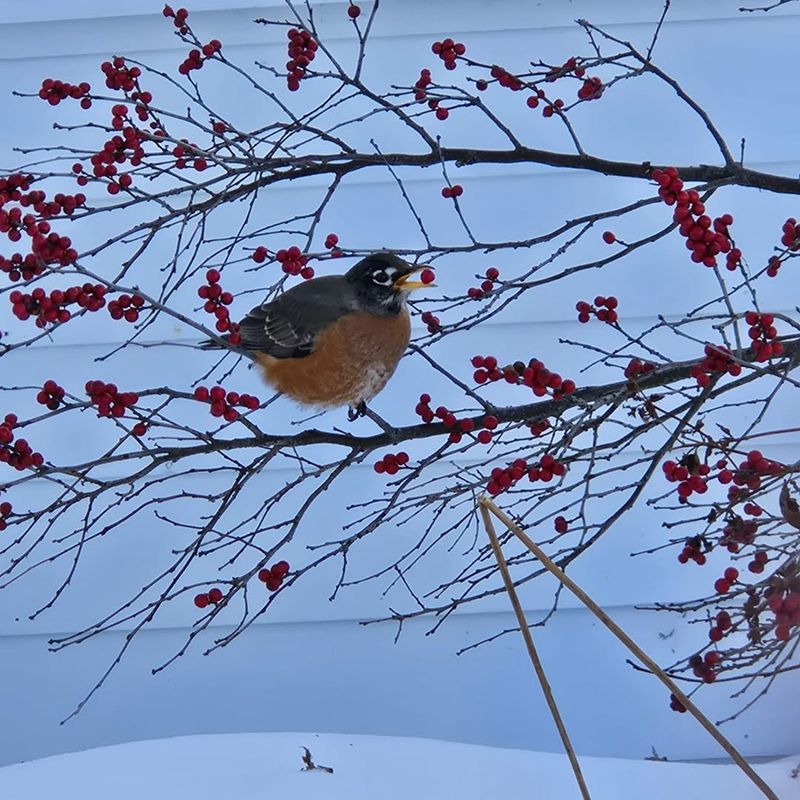
Winterberry holly stands out as one of the most reliable food sources for robins navigating the uncertain transition from winter to spring. The brilliant red berries cling to bare branches throughout the coldest months, becoming increasingly palatable to birds as they soften with repeated freezing and thawing.
Robins often ignore these berries in early winter, but by March and April, they become a crucial resource.
This native deciduous holly thrives in Ohio’s moist soils and even tolerates occasional flooding, making it perfect for low-lying areas and rain gardens. Female plants produce the showy berries, but you’ll need a male pollinator planted nearby to ensure good fruit set.
One male can pollinate multiple females within a hundred feet.
Winterberry performs best in full sun to partial shade and acidic soil, though it adapts to various conditions across Ohio. The shrub typically reaches four to eight feet tall, fitting well into foundation plantings and mixed borders.
Cultivars like ‘Winter Red’ and ‘Red Sprite’ offer especially heavy berry production.
Robins often arrive in flocks to strip winterberry shrubs of their remaining fruit during late winter warm spells, providing spectacular wildlife viewing opportunities just when gardeners are most eager for signs of spring.
4. Red Cedar Offers Winter Held Food
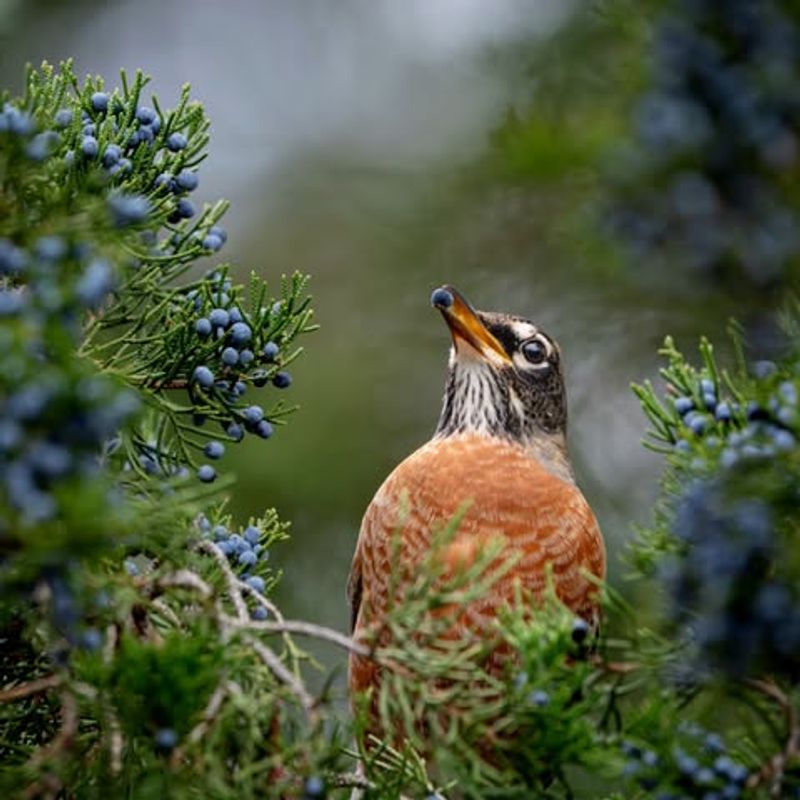
Eastern red cedar produces small, blue, berry-like cones that remain on the tree throughout winter and into spring, serving as emergency rations for robins during harsh weather. While not the first choice for most birds, these juniper berries become increasingly important when other food sources are buried under snow or depleted.
Robins and other thrushes turn to them when conditions demand it.
Red cedar is actually a juniper, not a true cedar, and it’s one of the most widespread native conifers in Ohio. The evergreen foliage provides dense shelter that robins use for roosting during cold nights and protection from spring storms.
This dual function as both food source and cover makes red cedar especially valuable in wildlife landscapes.
These tough, adaptable trees grow in full sun and tolerate poor, dry soils that challenge many other plants. They’re particularly useful for establishing windbreaks and screening in challenging locations.
Red cedars can reach thirty to forty feet tall, though compact cultivars are available for smaller properties.
Female trees produce the berries, which appear as waxy blue-gray structures clustered along the branches. Plant both male and female trees to ensure good cone production.
In Ohio landscapes, red cedar bridges the gap between winter and spring, offering robins a reliable backup food source during unpredictable weather.
5. Crabapple Provides Early Season Fruit
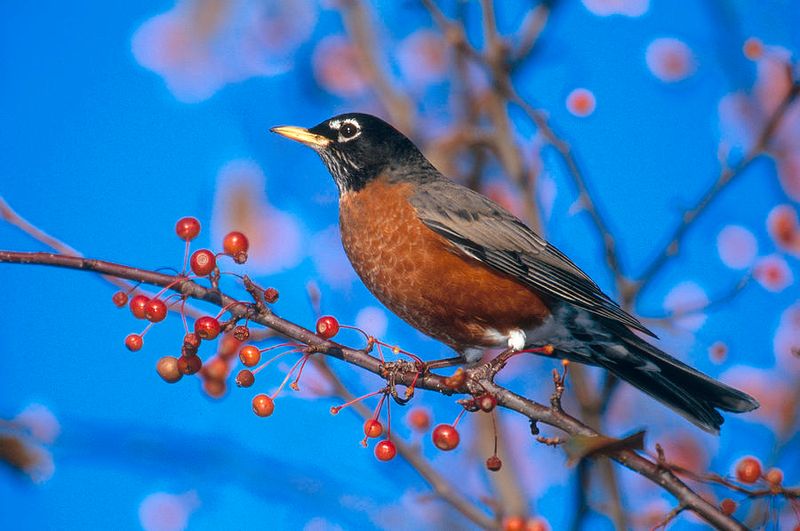
Crabapples that persist through winter become a vital food source for robins returning to Ohio in early spring. Small-fruited varieties hold their apples longest, with some remaining edible well into April.
As these fruits ferment slightly and soften with freeze-thaw cycles, they become more attractive and digestible for robins seeking quick energy after their migration.
Selecting disease-resistant crabapple cultivars ensures healthy trees that produce reliable fruit crops year after year. Varieties like ‘Prairifire,’ ‘Royal Raindrops,’ and ‘Sugar Tyme’ offer excellent disease resistance while providing abundant small fruits that robins prefer.
Trees with fruits measuring half an inch or less are most useful for birds.
Crabapples thrive in full sun and well-drained soil, adapting to most Ohio locations. They bloom spectacularly in spring, attracting the insects that robins need for protein during nesting season.
This combination of early insect activity and persistent fruit makes crabapples doubly valuable.
Space crabapples where you can enjoy watching robins feast on the fruit from indoor viewing spots. The trees work well as specimens, in mixed borders, or planted in small groves.
Their moderate size, typically fifteen to twenty feet tall, fits residential landscapes perfectly. By choosing varieties specifically for wildlife value rather than just ornamental appeal, you create a landscape that truly serves Ohio’s returning robins.
6. Chokecherry Attracts Protein Rich Insects
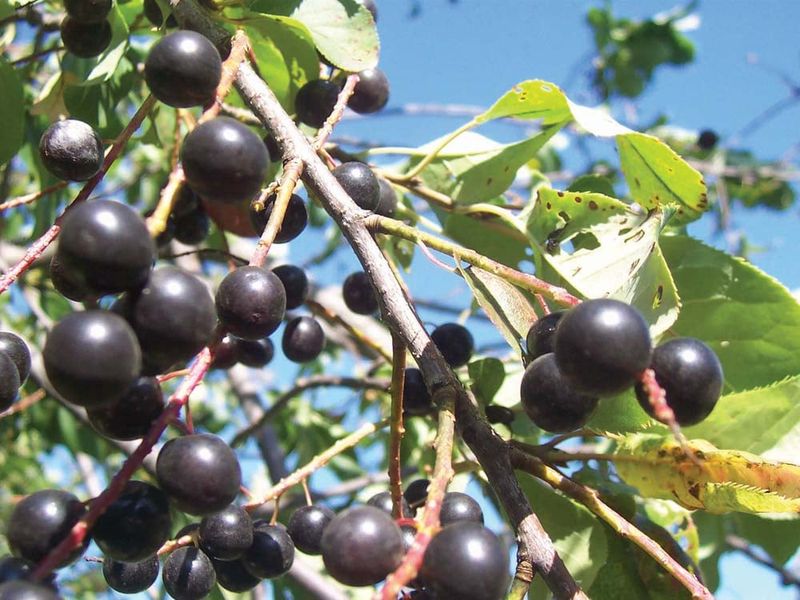
Chokecherry blooms explode with fragrant white flowers in late April and early May, creating a magnet for insects exactly when robins need protein most desperately. Nesting robins require vast quantities of soft-bodied insects to feed their rapidly growing chicks, and chokecherry delivers by attracting beetles, flies, caterpillars, and countless other invertebrates to its abundant blossoms.
This native Ohio shrub or small tree produces dark purple cherries by midsummer, but its greatest value for spring robins lies in the insect activity surrounding its flowers. The blooms appear reliably even after late frosts, providing consistent foraging opportunities during unpredictable spring weather.
Chokecherry grows aggressively in full sun to partial shade, spreading by root suckers to form colonies over time. This tendency makes it ideal for naturalizing along property edges, in hedgerows, or anywhere you want to establish dense wildlife habitat.
The suckering habit can be controlled through regular pruning if needed.
Plant chokecherry where its white flower clusters can be appreciated from a distance while allowing robins undisturbed access for foraging. The shrub tolerates a wide range of Ohio soils and requires minimal maintenance once established.
Birds consume the summer cherries, though they’re quite tart for human taste. For early spring robin support, the insect attraction during bloom time represents chokecherry’s most important contribution to Ohio yards.
7. Wild Grape Supplies Lingering Sweetness
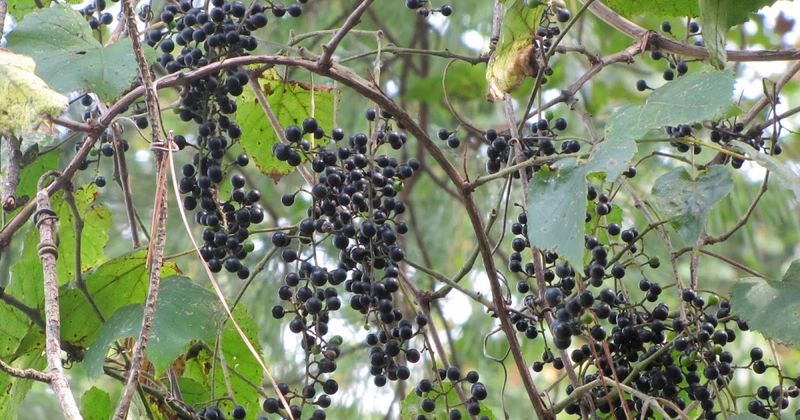
Wild grape vines hold dried and semi-dried fruit well into spring, offering robins a sweet, high-energy food source during lean times. Grapes that weren’t consumed during fall and winter become increasingly valuable as they concentrate sugars and remain accessible when ground-level foods are unavailable.
Robins eagerly seek out these lingering clusters, often traveling to known grape locations repeatedly.
Native riverbank grape and fox grape grow vigorously throughout Ohio, climbing into trees and over fences to create dense tangles. While some gardeners view them as aggressive, these vines provide exceptional wildlife value.
The thick growth offers shelter and nesting sites in addition to food, creating complete habitat for robins and many other species.
Grapes thrive in full sun and tolerate various soil conditions, though they prefer moisture and fertility. Allow them to grow over sturdy arbors, withered trees, or fence lines where their vigorous growth won’t overwhelm desired plants.
The vines require strong support due to their substantial weight when mature.
Spring flowers attract insects that robins hunt, adding another layer of value beyond the persistent fruit. The large leaves provide cooling shade in summer, and the peeling bark offers nesting material.
In Ohio landscapes, wild grape creates vertical habitat structure that robins use throughout the year, with overwintered fruit serving as a critical bridge food during early spring’s challenging conditions.
8. Sumac Holds Food Into Spring
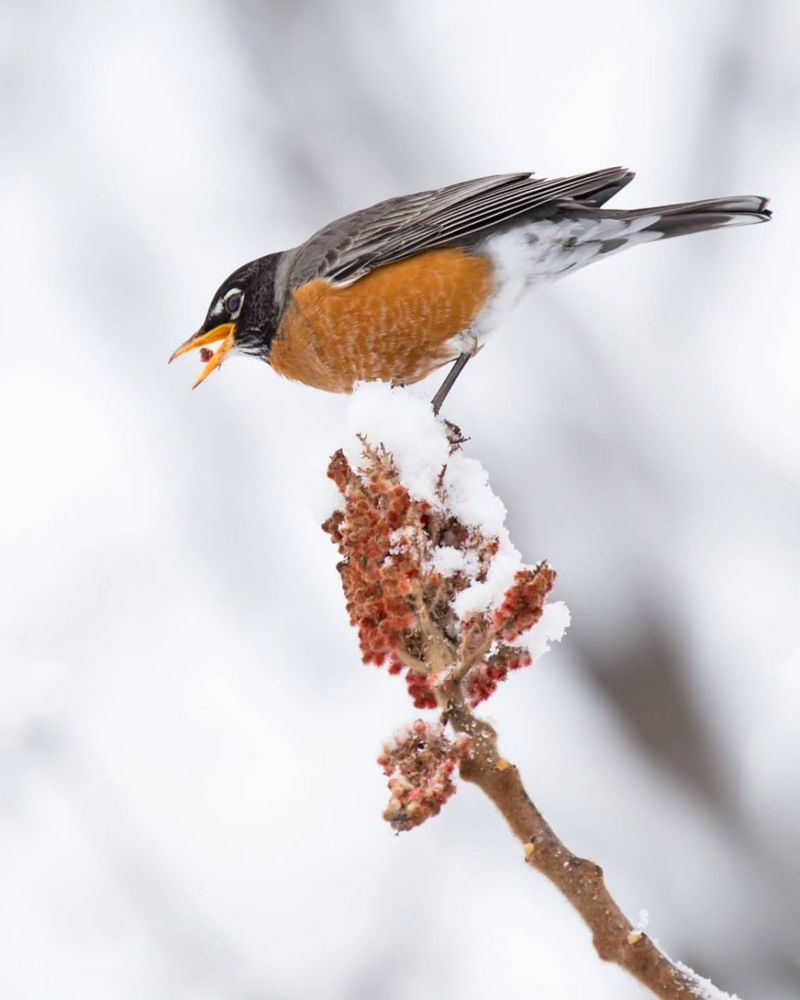
Staghorn sumac and smooth sumac produce distinctive upright clusters of fuzzy red seeds that persist throughout winter and remain available to robins well into spring. These seed heads become softer and more palatable as weather breaks down their coating, making them increasingly attractive to birds as winter transitions to spring.
Robins often feed on sumac in mixed flocks, stripping the clusters systematically.
Both sumac species are Ohio natives that thrive in poor, dry soils where many other plants struggle. They spread by root suckers to form colonies, creating the thicket habitat that robins prefer for foraging and cover.
The compound leaves turn brilliant orange and red in fall, offering significant ornamental value alongside wildlife benefits.
Sumac grows quickly in full sun, reaching ten to fifteen feet tall with an equal or greater spread. The plants tolerate drought, salt, and compacted soil, making them ideal for challenging sites along roadsides and property edges.
Their ability to stabilize slopes and prevent erosion adds practical value.
Plant sumac where its spreading habit won’t conflict with more formal garden areas. The colonies provide excellent screening and wildlife habitat in naturalized sections of Ohio properties.
The seed clusters also attract other birds including bluebirds and cardinals. For robins, sumac represents a dependable late-winter and early-spring food source that bridges the gap until insects and earthworms become abundant in warming soil.