Ohio’s First Spring Bulbs That Wake Up Gardens In April
After months of gray skies and frozen ground, the first signs of life in an Ohio garden feel almost electric. Before trees fill out or most perennials wake up, a handful of bulbs quietly push through cool, damp soil and steal the show.
Bright blooms start appearing in early April, often when the rest of the landscape still looks bare.
Across Ohio, from city yards to rural gardens, these early risers bring color back in a way that feels both sudden and welcome.
Knowing which bulbs show up first makes it much easier to plan a garden that comes alive right at the start of spring.
1. Crocus Brings The First Bright Color After Winter
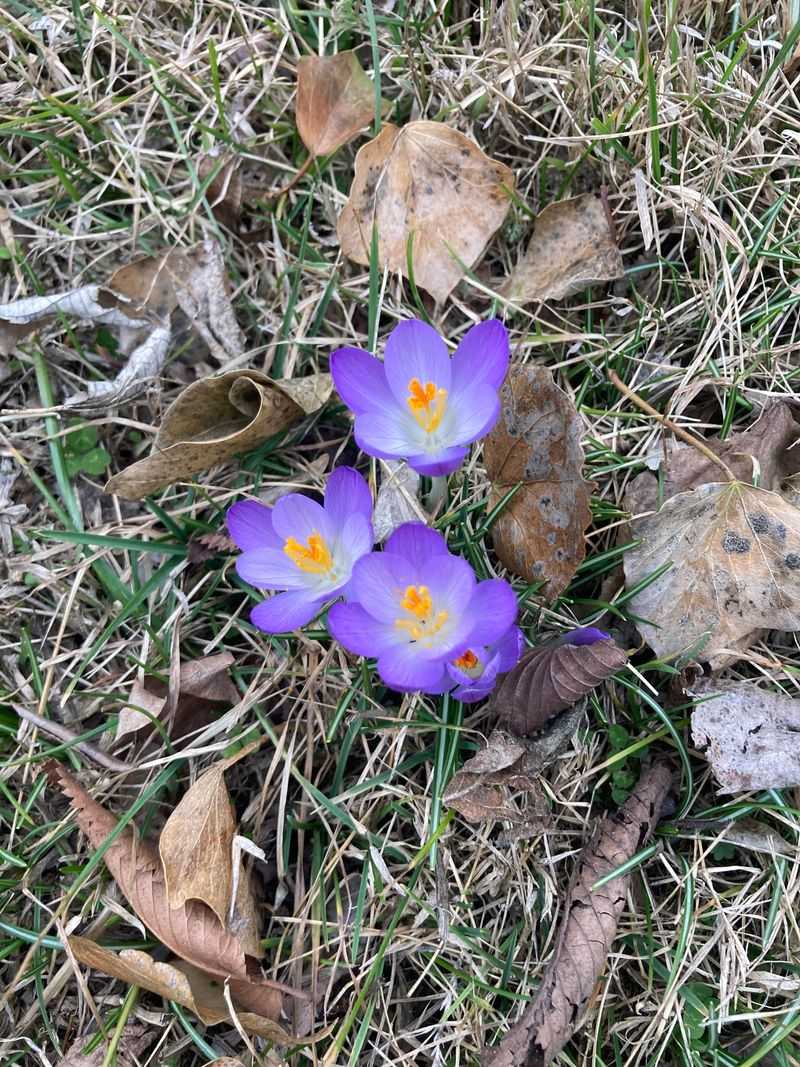
Few sights in an Ohio garden feel as rewarding as a cluster of crocuses pushing up through soil that was frozen just weeks before.
These small but bold flowers often appear as early as late February or early March in southern Ohio, with most of the state seeing blooms through April.
Colors range from rich purple and golden yellow to soft white and even striped varieties, and their low-growing habit makes them easy to tuck along walkways, under trees, or at the front of garden beds.
Crocuses grow from corms, not true bulbs, and they naturalize well over time, meaning a small planting can slowly expand into a cheerful carpet of color.
Plant them in fall at a depth of about three to four inches in well-drained soil that receives at least a few hours of sunlight daily.
They handle Ohio’s freeze-thaw cycles well and tend to bounce back even after a late frost covers their blooms with a thin layer of ice.
Deer tend to leave crocuses alone, which is a genuine bonus for Ohio gardeners in suburban and rural areas.
Squirrels can occasionally dig up the corms, so planting in groups and covering with wire mesh can help protect a new planting during its first season.
2. Snowdrops Push Through Cold Soil With Early Blooms
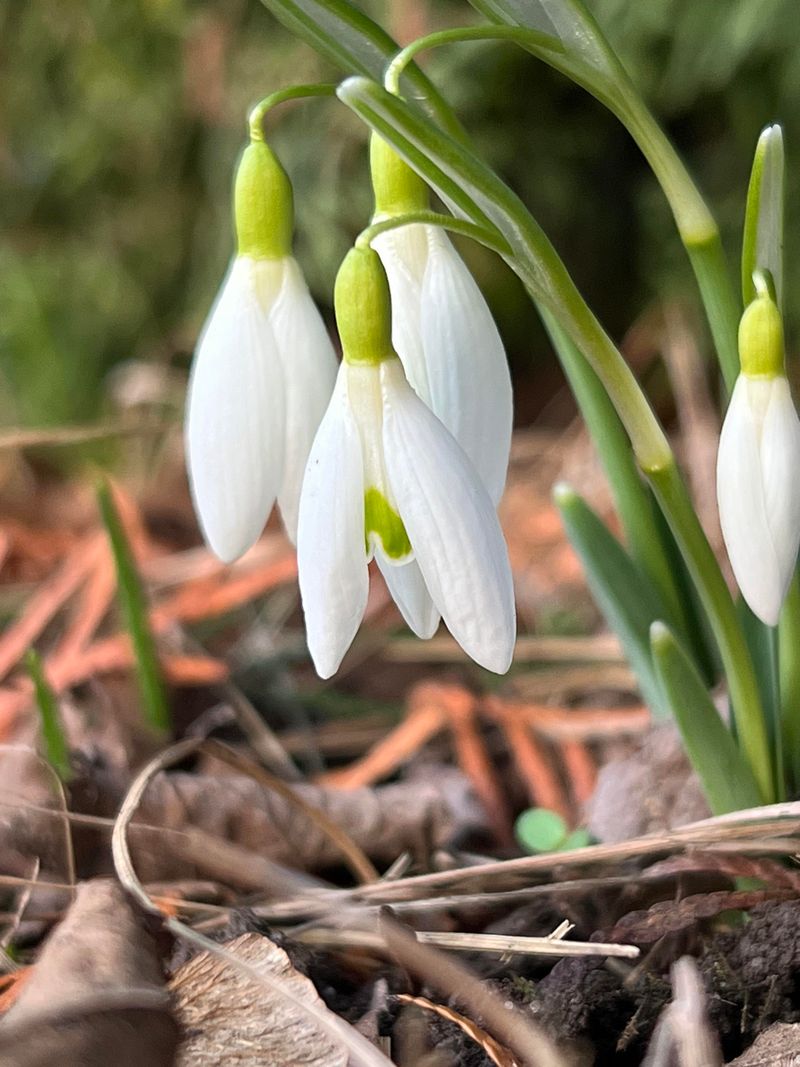
Snowdrops have a kind of quiet stubbornness that Ohio gardeners genuinely appreciate.
While most plants are still dormant, these small white flowers are already pushing through cold, sometimes frozen ground, often appearing before any other bulb in the garden.
Their nodding, bell-shaped blooms hang delicately from slender green stems, and though they are modest in size, they carry a lot of emotional weight after a long Ohio winter.
In Ohio, snowdrops typically bloom from late January through early March depending on the region, with northern counties seeing them a bit later than areas near the Ohio River.
They prefer a spot with partial shade and moist, well-drained soil, making them a natural fit under deciduous trees where they can soak up early spring sunlight before the canopy fills in.
Plant the bulbs in fall about three inches deep and roughly three inches apart.
Snowdrops naturalize slowly but reliably, gradually forming dense clumps that become more impressive each year.
Dividing clumps right after they finish blooming, while the foliage is still green, is the most reliable way to spread them around the garden.
They are also resistant to deer and rodents, which makes long-term establishment much easier in Ohio landscapes.
3. Glory Of The Snow Adds Soft Blue Carpets To Early Beds
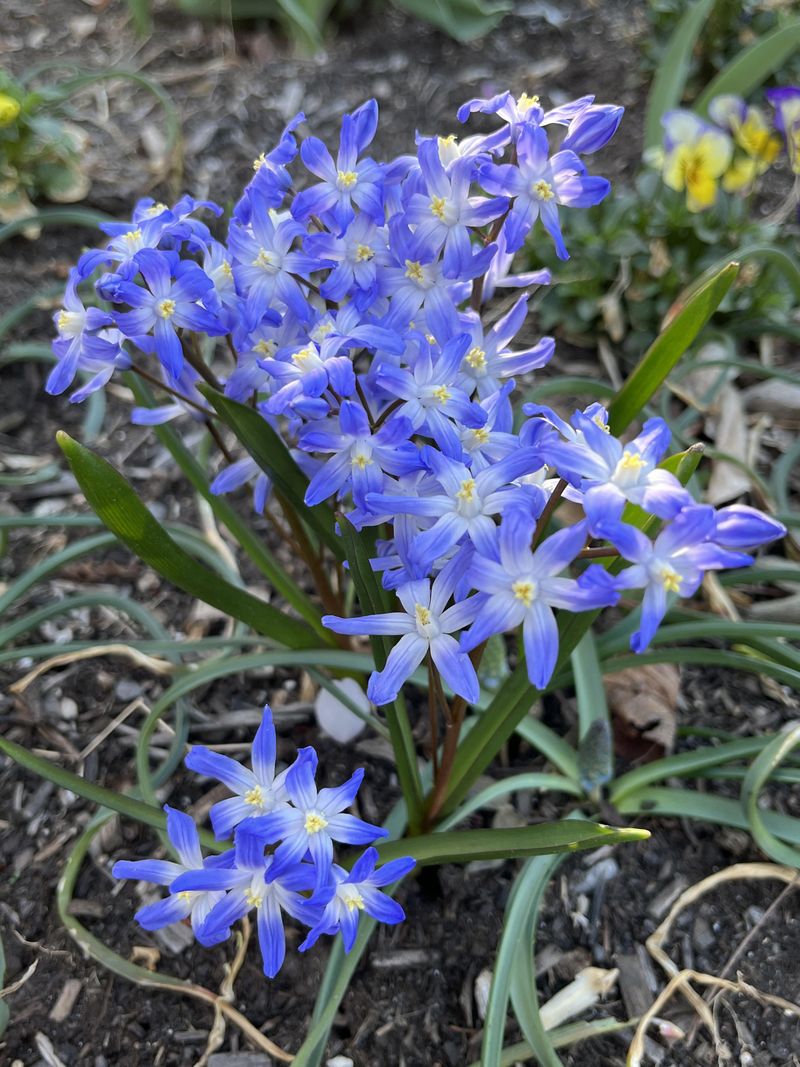
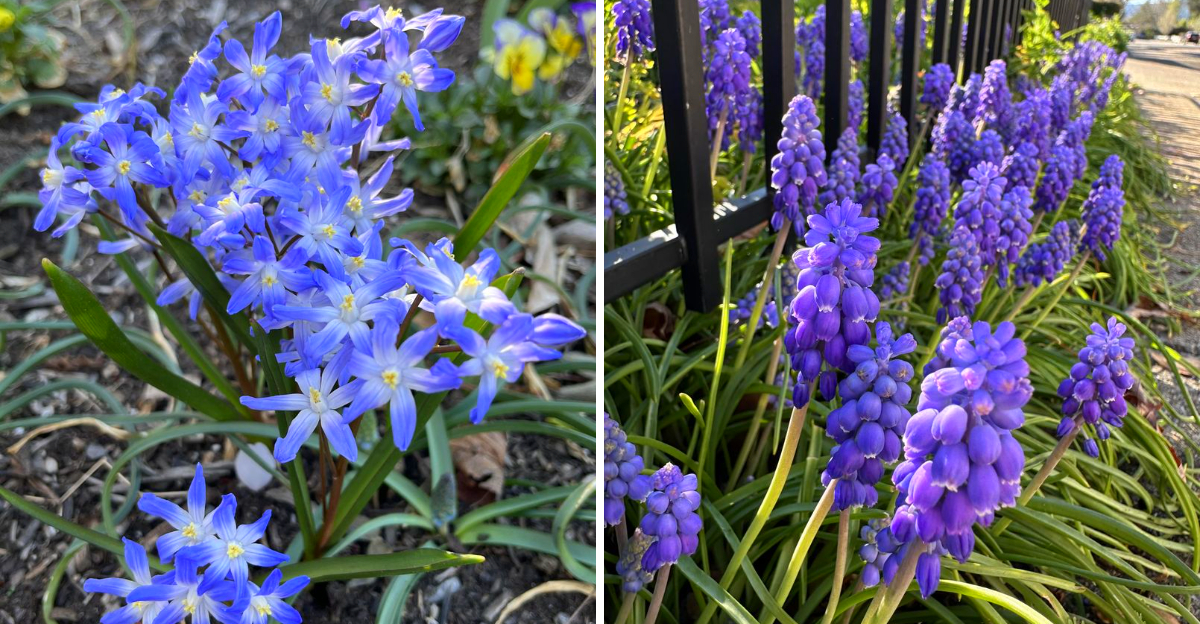
Glory of the Snow, known botanically as Chionodoxa, earns its name honestly.
Originally native to mountain regions of Turkey and Greece, this small bulb thrives in the cold conditions that Ohio gardeners know well, often blooming while nighttime temperatures are still dipping below freezing.
The star-shaped flowers appear in shades of soft blue, lavender, and white, usually with a bright white center that gives each bloom a luminous quality in morning light.
In Ohio gardens, Glory of the Snow typically blooms in March and early April, making it one of the first true color-bearing bulbs of the season.
It works especially well planted in large drifts beneath deciduous trees or along the edges of garden beds where its low, spreading habit won’t compete with taller plants later in the season.
Bulbs should be planted in fall at a depth of about three inches in well-drained soil with partial to full sun exposure.
One of the most appealing qualities of this plant is how readily it self-seeds and naturalizes. Over several years, a modest planting can expand into a sweeping ground-level display that requires almost no maintenance.
Ohio gardeners looking for a low-effort early bloomer that rewards patience will find Chionodoxa well worth the initial investment of time and planting.
4. Siberian Squill Spreads Waves Of Vivid Blue Each Spring
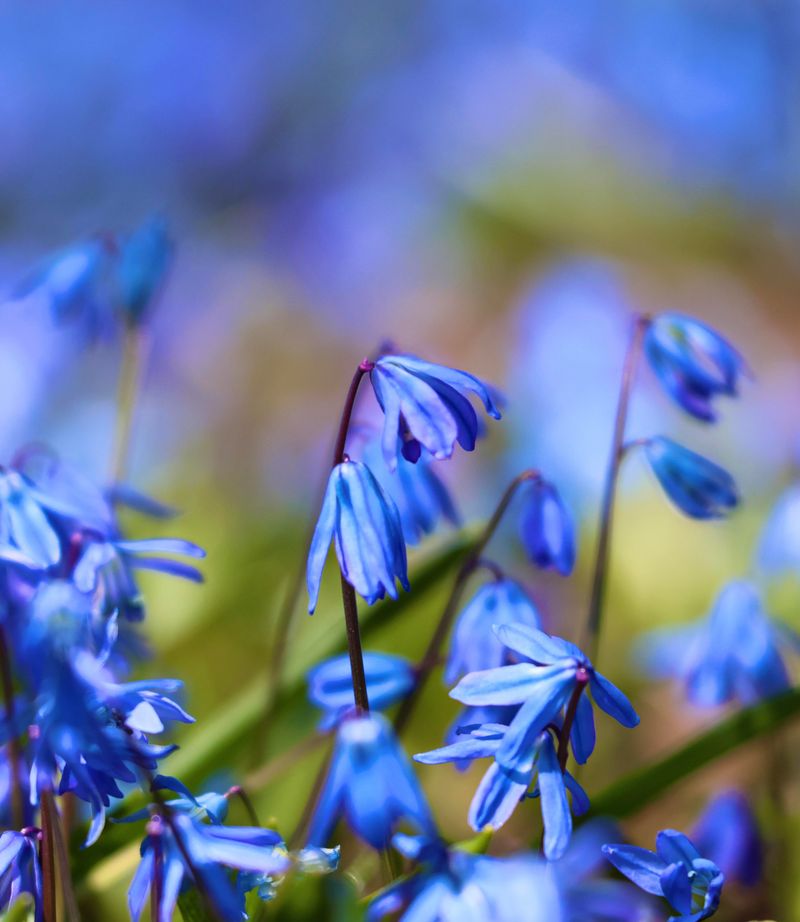
Walk past an established planting of Siberian Squill in early April and the intensity of the blue might genuinely stop you mid-step.
Few spring bulbs produce a color quite this saturated, a deep, almost electric blue that stands out dramatically against bare soil and brown leaf litter.
Native to Siberia and parts of southwestern Asia, this tough little bulb has no trouble handling the cold, wet springs that Ohio regularly delivers.
Siberian Squill, or Scilla siberica, typically blooms in Ohio from late March through early April. Each small bulb produces several nodding, bell-shaped flowers on stems that reach only about four to six inches tall.
Because of its compact size, it works well planted in large quantities under trees, along pathways, or woven between other early-blooming perennials.
Plant bulbs in fall about three inches deep in any reasonably well-drained soil that gets some sun.
This bulb naturalizes aggressively, spreading both by offsets and by self-seeding, which means a small initial planting can eventually cover a large area with minimal effort.
Some Ohio gardeners use Siberian Squill as a lawn substitute under mature trees where grass struggles to grow.
Just be aware that once established, it can be difficult to remove, so choose your planting location thoughtfully before getting started.
5. Daffodils Light Up Ohio Gardens With Cheerful Yellow Blooms
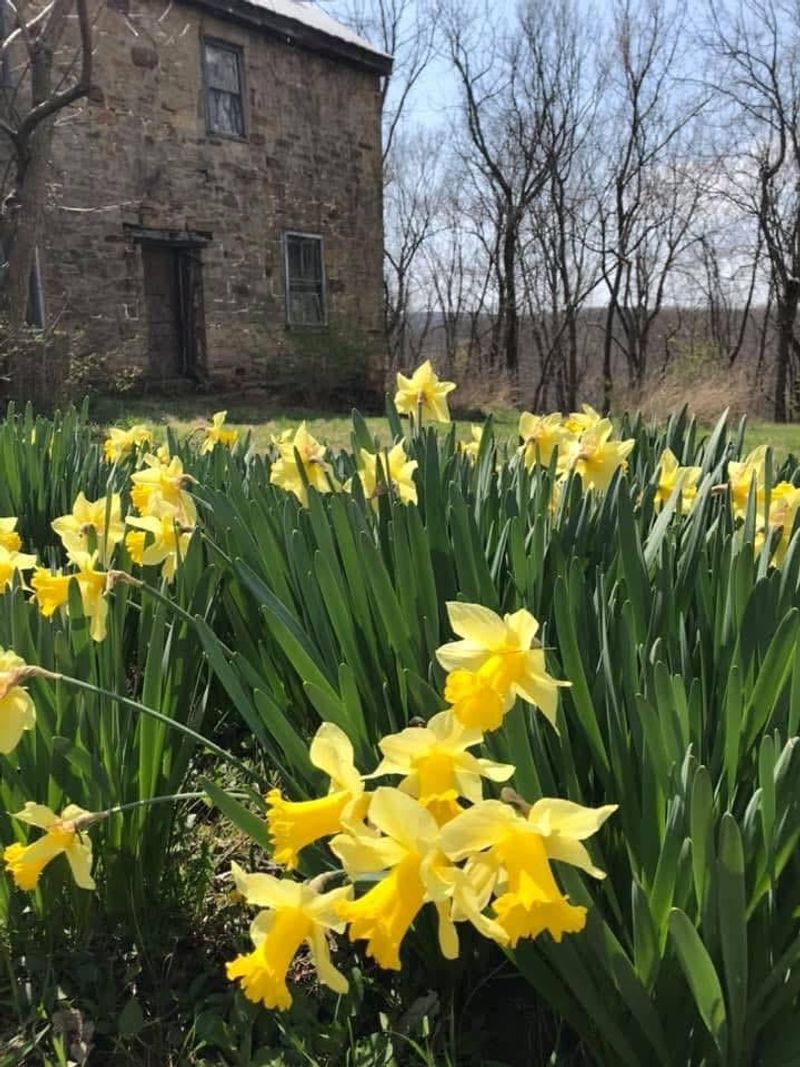
There is something undeniably cheerful about a daffodil. The bold yellow trumpets seem to announce spring with confidence, and in Ohio, they typically reach peak bloom sometime between late March and late April depending on the variety and location.
Early-season daffodil varieties can appear before the calendar officially flips to spring, while later cultivars extend the show well into the warmer weeks of April across central and northern Ohio.
Daffodils are among the most reliable bulbs an Ohio gardener can plant. They come back year after year without much fuss, gradually multiplying into larger clumps that become more impressive over time.
Plant bulbs in fall at a depth of about two to three times the height of the bulb, in a sunny to partly shaded spot with well-drained soil.
They handle Ohio’s clay-heavy soils reasonably well as long as water does not pool around the bulbs during winter.
One of the biggest practical advantages of daffodils is that deer, rabbits, and most other wildlife tend to avoid them entirely due to the mildly toxic compounds found throughout the plant.
This makes them an especially smart choice for Ohio gardeners in areas where animal browsing is a regular challenge.
With hundreds of cultivar options available, there is a daffodil suited to nearly every garden style and color preference.
6. Hyacinths Fill The Air With Strong Spring Fragrance
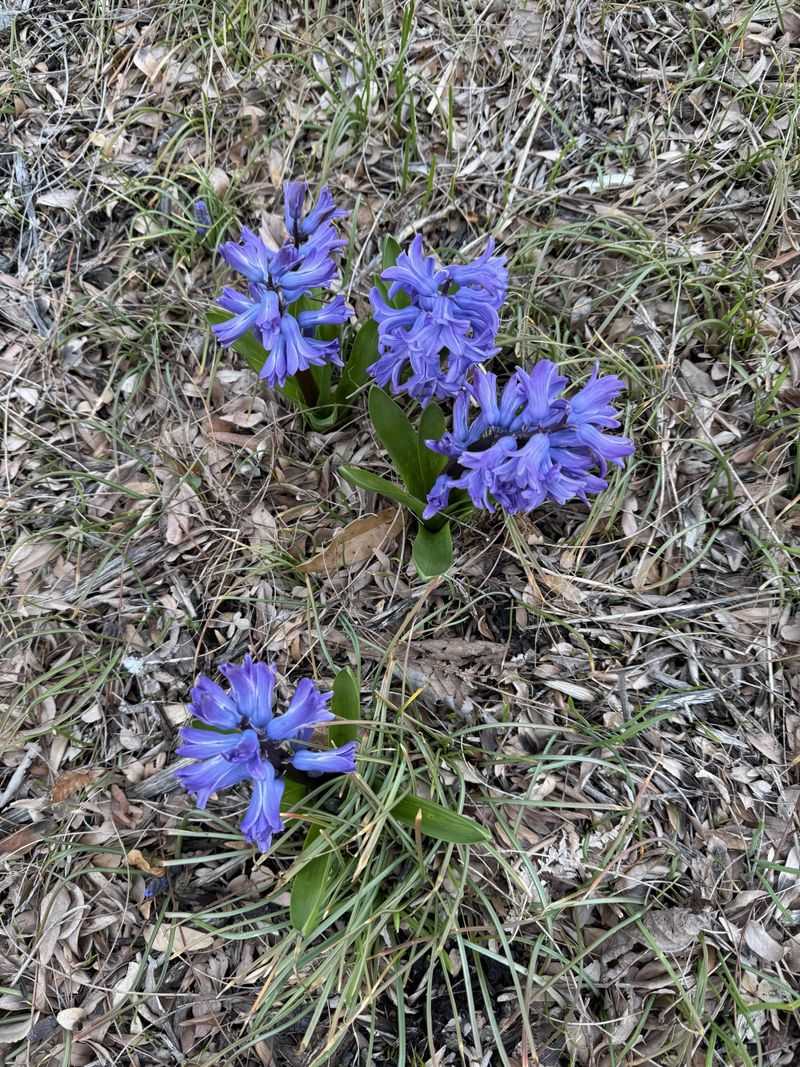
The moment hyacinths open in an Ohio garden, the fragrance is unmistakable. Even a single stem can perfume the air around an entire garden bed, and a small grouping planted near a front door or patio can make the whole yard smell like spring has fully arrived.
That intense scent is part of what makes hyacinths so beloved, but their dense, upright flower spikes packed with tiny blooms are equally impressive visually.
In Ohio, hyacinths typically bloom in April, bridging the gap between the very earliest spring bulbs and the later-season tulips.
They come in a wide range of colors including deep purple, soft pink, bright white, coral, and pale yellow, making them easy to mix into existing color schemes.
Plant bulbs in fall about six inches deep in well-drained soil that receives full to partial sun. Good drainage is especially important in Ohio, where wet spring soils can cause bulbs to rot if water sits around them.
Hyacinths are fairly resistant to deer and rabbits, which is a practical advantage for Ohio gardeners in areas with heavy wildlife pressure.
Over time, the flower spikes may become slightly looser and less formal-looking as bulbs mature, but many gardeners find this relaxed appearance quite appealing.
Forcing hyacinth bulbs indoors during winter is also a popular way to enjoy their fragrance months before outdoor blooms arrive.
7. Grape Hyacinth Creates Dense Clusters Of Lasting Color
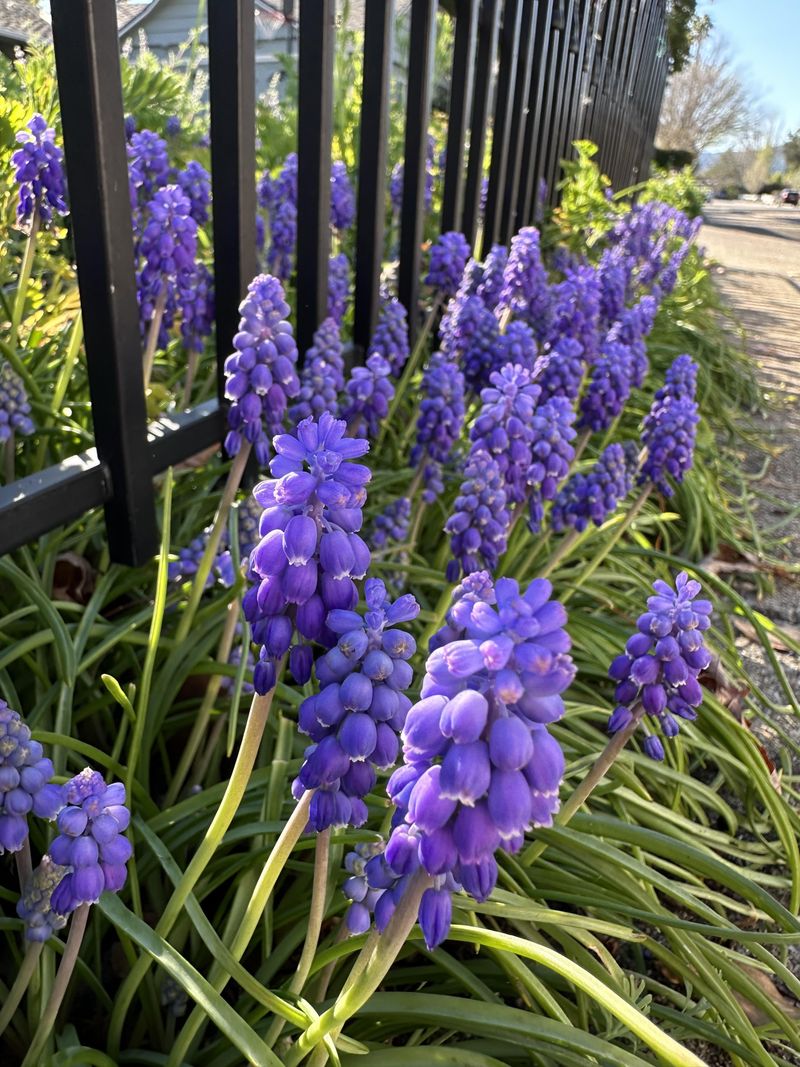
Grape Hyacinth, or Muscari, might be small in stature but it delivers a color punch well beyond its size.
The tightly packed clusters of tiny, urn-shaped flowers in shades of deep blue, violet, and purple look remarkably like miniature bunches of grapes, which explains the common name.
In Ohio gardens, these cheerful little spikes typically bloom from late March through April, often overlapping with daffodils and creating striking color combinations in mixed plantings.
One of the most useful things about Grape Hyacinth is its adaptability. It grows well in full sun or partial shade and tolerates a fairly wide range of soil conditions, making it forgiving for Ohio gardeners who are still learning the quirks of their yard.
Plant bulbs in fall about three inches deep and three to four inches apart. They naturalize readily, gradually forming dense colonies that fill in gaps between larger plants and add reliable color to the early spring garden year after year.
Grape hyacinth has an interesting quirk: its foliage often emerges in fall, stays green through winter, and then fades after the flowers finish in spring.
This means the plants are visible in the garden during the colder months, which can look a little untidy in a formal landscape but adds a certain lushness to informal or naturalized garden areas throughout Ohio.
8. Early Tulips Add Bold Color As Spring Warms Up
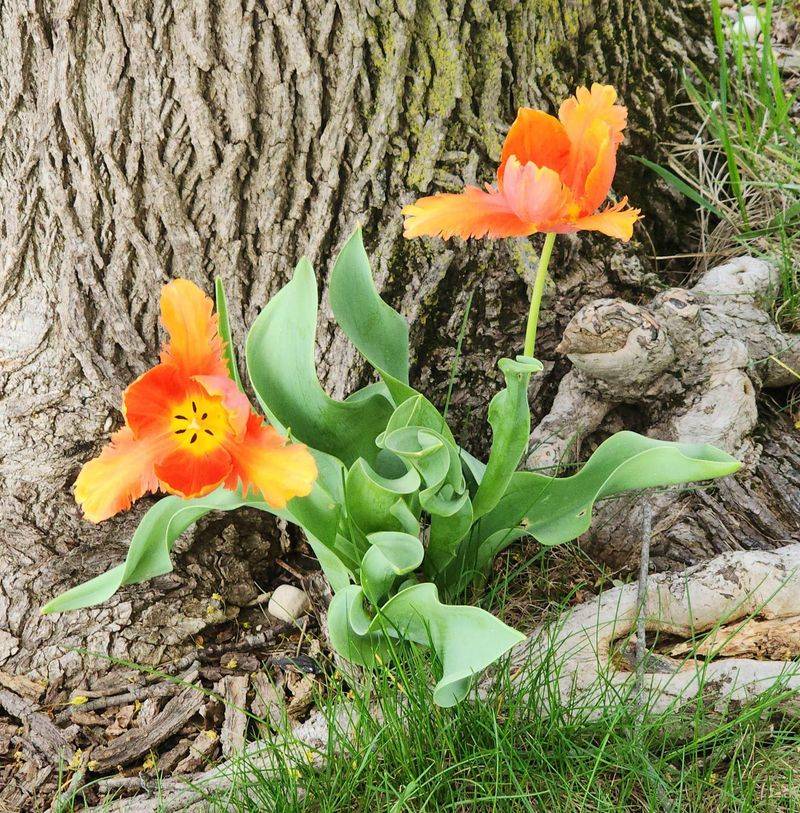
Tulips are probably the most recognized spring bulb in the world, and Ohio gardens are no exception to their appeal.
While late-season tulip varieties bloom in May, early tulip cultivars – including species tulips and single early types – open up in April when Ohio soil is still cool but warming steadily.
These early bloomers tend to be shorter and sturdier than their later counterparts, which helps them hold up against the unpredictable wind and rain that April in Ohio often brings.
Species tulips, in particular, are worth seeking out for Ohio gardens because they are more likely to naturalize and return reliably for several years rather than fading after one or two seasons.
Plant tulip bulbs in fall at a depth of about six to eight inches in well-drained soil with full sun exposure.
Deeper planting helps insulate the bulbs from Ohio’s temperature swings and can extend their lifespan in the garden.
Deer and rabbits are genuinely fond of tulips, so gardeners in areas with heavy wildlife pressure may want to use physical barriers or repellent sprays during the growing season.
Planting tulips in containers is another practical solution that many Ohio gardeners use to protect their investment.
Early tulip varieties come in a broad range of colors, from soft pastels to vivid reds and oranges, offering plenty of options for any garden palette.
9. Winter Aconite Signals The Shift From Winter To Spring
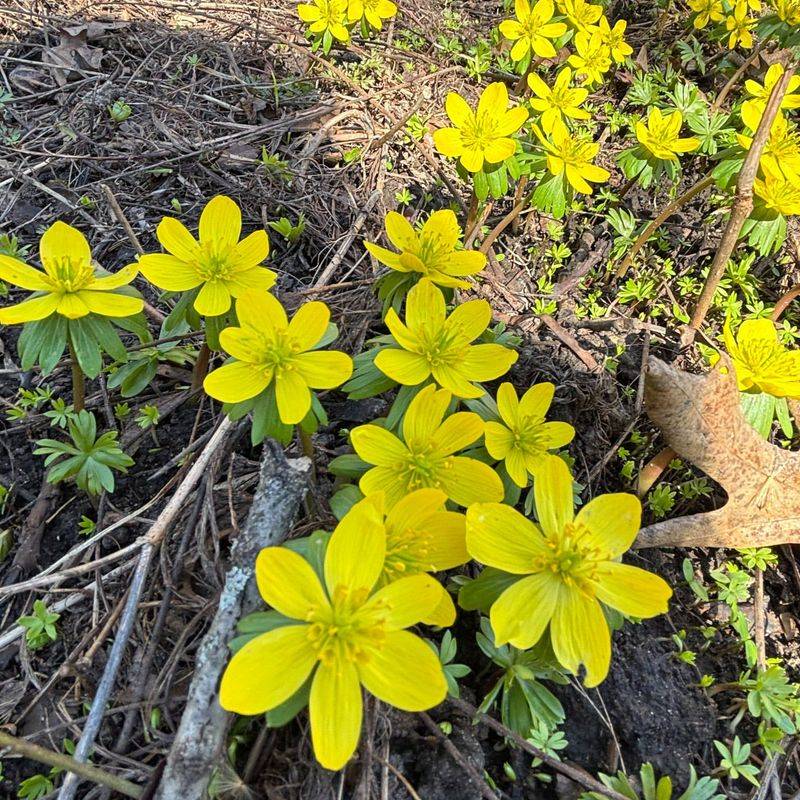
Before most Ohioans have even started thinking seriously about spring gardening, Winter Aconite is already opening its bright yellow flowers close to the ground.
This tiny but determined plant often blooms in late January or February across southern Ohio, with central and northern parts of the state typically seeing it in late February through March.
Each flower sits on a short stem barely two to four inches tall, surrounded by a decorative ruff of deeply cut green leaves that frames the bloom like a tiny collar.
Winter Aconite grows from small tubers rather than traditional bulbs, and it can be a little fussy to establish. Soaking the tubers in water for several hours before planting in early fall can improve germination rates considerably.
Once established, however, Winter Aconite spreads reliably by self-seeding and can form dense colonies under deciduous trees, along woodland edges, or in any spot with moist, humus-rich soil and dappled light.
Pairing Winter Aconite with snowdrops is a classic combination that works especially well in Ohio gardens because both plants bloom around the same time and share similar growing preferences.
Together they create a cheerful yellow and white ground-level display during the bleakest stretch of the Ohio gardening year, offering a genuine psychological lift when color is most needed and least expected.
10. Striped Squill Offers Delicate Blooms With Subtle Detail
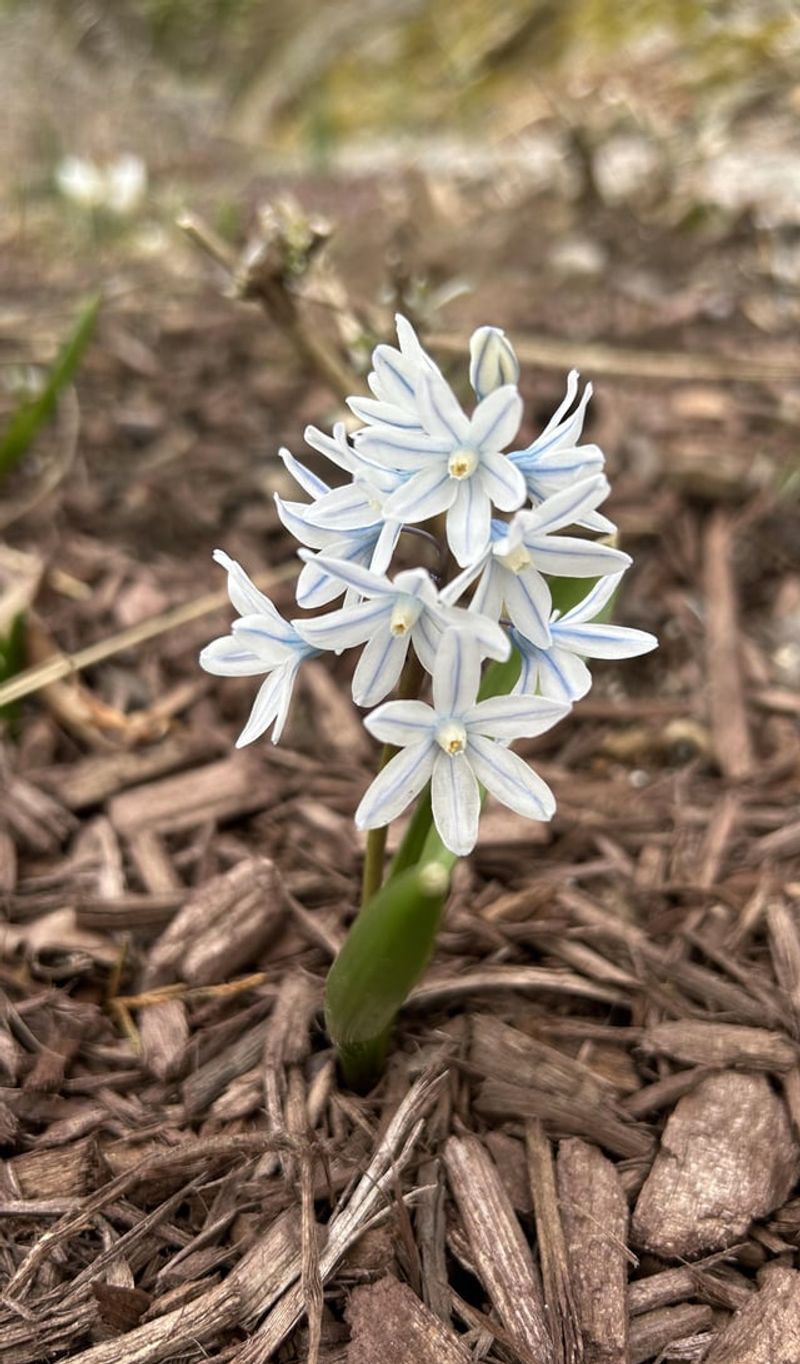
Striped Squill, known botanically as Puschkinia scilloides, tends to fly under the radar compared to flashier spring bulbs, but gardeners who discover it often become devoted fans.
The flowers are soft white to pale blue with a distinct darker blue stripe running down the center of each petal, giving them a refined, almost watercolor quality that sets them apart from bolder early bloomers.
In Ohio, Striped Squill typically blooms in March and early April, arriving right alongside snowdrops and early crocuses.
Each bulb produces several flower stems reaching about four to six inches tall, with multiple small blooms clustered loosely along each stem.
The effect is delicate rather than dramatic, which makes Striped Squill a natural companion for rock gardens, woodland edges, or the front border of a mixed bed where something understated is needed to balance larger, louder plants.
Plant bulbs in fall about three inches deep in well-drained soil with partial to full sun.
Like several other early Ohio spring bulbs, Striped Squill naturalizes gradually over time, slowly expanding into soft drifts that require little maintenance once established.
It handles Ohio’s cold winters without any special protection and is generally ignored by deer and other browsing animals.
For gardeners who appreciate quiet elegance over bold statements, this underused bulb offers a subtle reward that feels especially satisfying when it reappears faithfully each April.