Oregon Cucumber Leaves Turn Yellow For These 9 Reasons
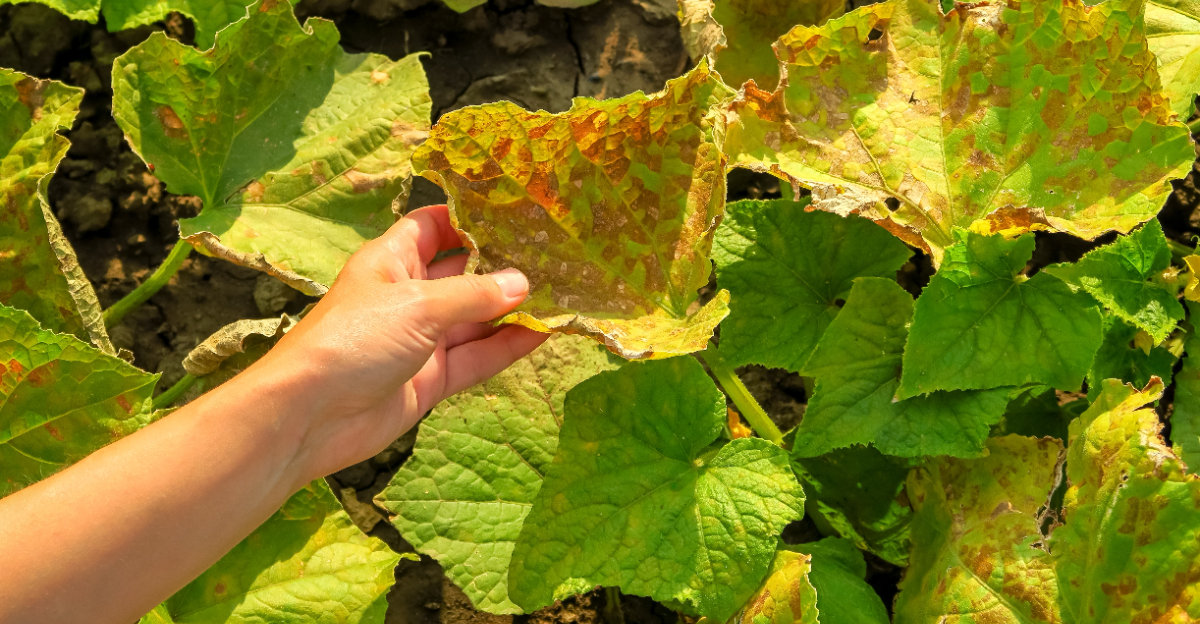
Yellow cucumber leaves can make a thriving Oregon garden look troubled almost overnight.
The vines may still be growing, the flowers may still be opening, yet those fading leaves are hard to ignore. Nothing ruins a proud garden stroll quite like spotting a suspicious patch of yellow.
The tricky part is that cucumbers use the same warning color for several different problems. Some causes are minor and easy to correct. Others can spread quickly if they are overlooked.
The ever changing summer conditions in Oregon can make the mystery even harder to solve.
A plant may react to what happened days earlier, so the obvious explanation is not always the right one.
Instead of guessing and reaching for the nearest garden product, take a closer look at the pattern. Those yellow leaves are telling a story, and the details can point you toward the real problem.
1. The Roots Are Getting Too Little Water
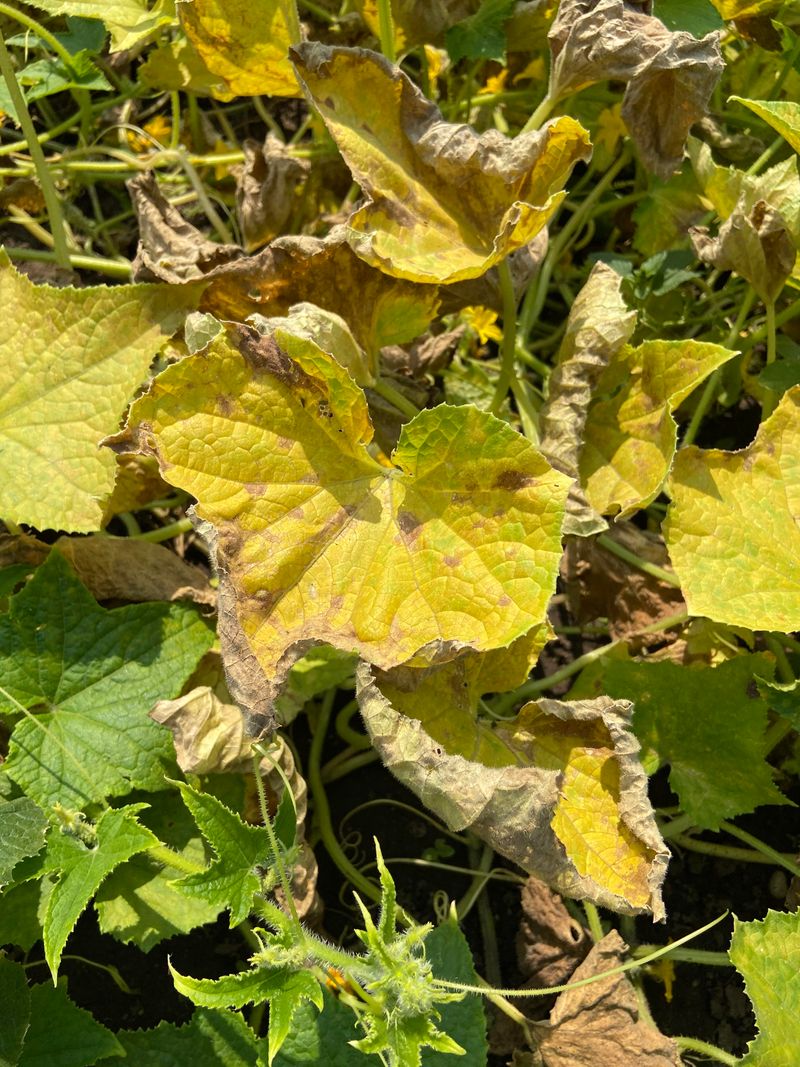
Dry soil is one of the fastest ways to stress out a cucumber plant. When the roots cannot find enough moisture, the plant starts pulling water from its own leaves.
That is when you start noticing that pale, washed-out yellow color spreading across the foliage.
Cucumbers are thirsty plants. They need about one to two inches of water every week, especially once they start flowering and setting fruit.
Oregon summer months can get surprisingly dry, particularly in the Willamette Valley and eastern parts of the region.
If you are relying only on rainfall during those dry stretches, your plants are probably not getting enough to drink.
The best way to check is simple. Stick your finger about two inches into the soil near the base of the plant.
If it feels dry at that depth, it is time to water. Try to water deeply and slowly so moisture reaches the roots instead of just wetting the surface.
Early morning watering is ideal because it gives the leaves time to dry before nightfall. Adding a layer of mulch around the base of the plant also helps lock in moisture between watering sessions.
Straw, wood chips, or shredded leaves all work great. Consistent watering is the single easiest thing you can do to keep cucumber leaves looking healthy and green all season long.
2. The Soil Is Staying Too Wet
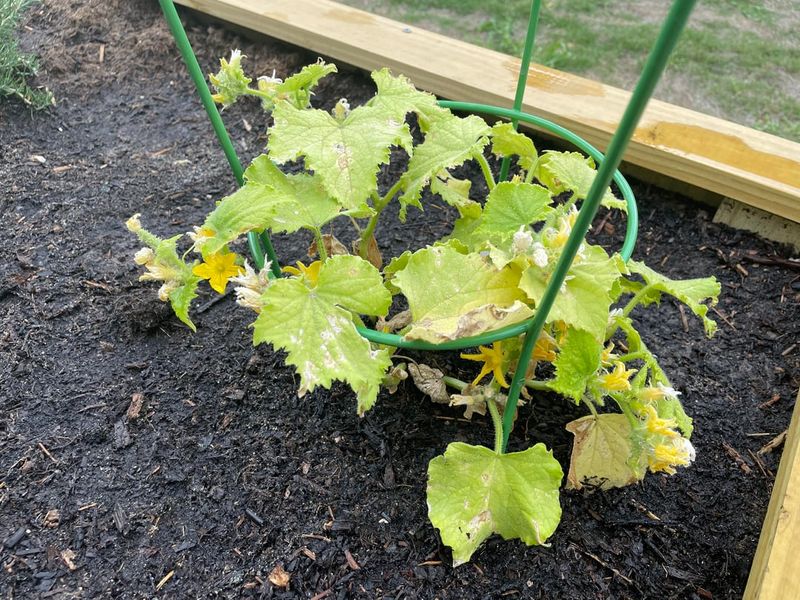
Too much water can be just as harmful as too little. When soil stays wet for too long, the roots of a cucumber plant cannot breathe properly.
Roots need oxygen to function, and soggy soil cuts off that supply quickly.
Root rot is the most common result of overwatering. Once the roots start to break down, the plant cannot absorb nutrients or water efficiently, even though the soil is soaking wet.
The leaves begin to turn yellow and may even look a little wilted, which can be confusing because you would expect wilting from dry conditions, not wet ones.
Oregon is known for its rainy seasons, especially in the spring and fall. If your garden beds do not drain well, water can pool around the roots for days at a time.
Your Oregon Garden Changes Every Week. Your Plan Should Too.
Gardening in Oregon changes quickly throughout the season. Every Friday you’ll receive a simple weekly plan showing exactly what to plant, prune, fertilize, harvest, and protect so you never miss the right timing.
Raised beds and well-amended soil with compost can make a big difference in drainage. If your garden is in a low spot that collects water, consider adding perlite or coarse sand to improve soil structure.
Check how long it takes for standing water to drain after a heavy rain. Good drainage should clear within a few hours.
Avoid planting cucumbers in areas where water tends to sit. Letting the top inch of soil dry out between waterings is a smart habit that protects roots and keeps your plants producing all season.
3. Cool Nights Are Slowing Growth
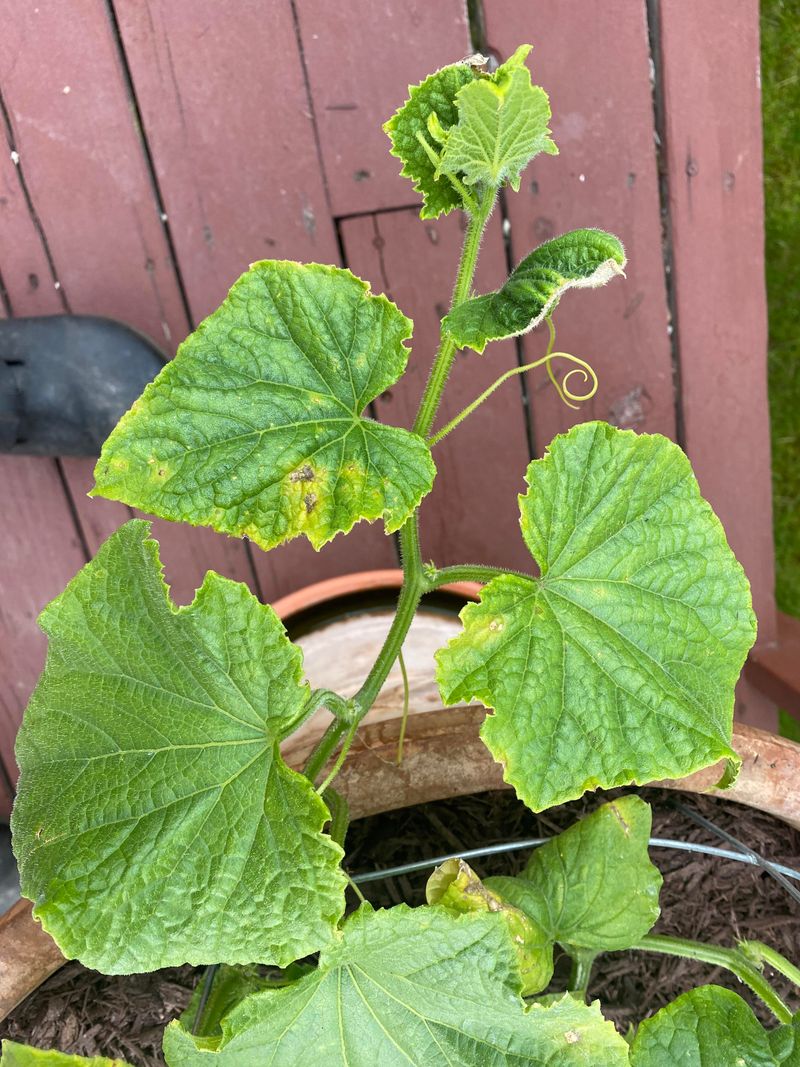
Cucumbers love warmth. They thrive when temperatures stay consistently above 60 degrees Fahrenheit, both day and night.
When nights dip below that range, the plant starts to struggle in ways that show up quickly on the leaves.
Cool temperatures slow down the plant’s ability to absorb nutrients from the soil, even when those nutrients are present in good amounts.
Magnesium and iron are two nutrients that become harder to take up when the ground is cold.
Without them, leaves start turning yellow, often beginning between the leaf veins in a pattern called interveinal chlorosis.
In our state, cool nights are common well into late spring and can return early in the fall. If you are growing cucumbers in a region near the coast or at higher elevations, night temperatures can stay cool even during midsummer.
Starting your cucumbers a bit later in the season can help you avoid the coldest nights. Using row covers or plastic tunnels at night traps heat around the plants and keeps soil temperatures warmer.
Black plastic mulch on the soil surface also absorbs heat during the day and releases it slowly at night.
These simple tools can make a real difference for cucumber plants that are struggling in cooler parts of Oregon.
Giving your plants a warmer environment helps them wake up, grow faster, and stay much greener throughout the season.
4. Fertilizer Is Doing More Harm Than Good
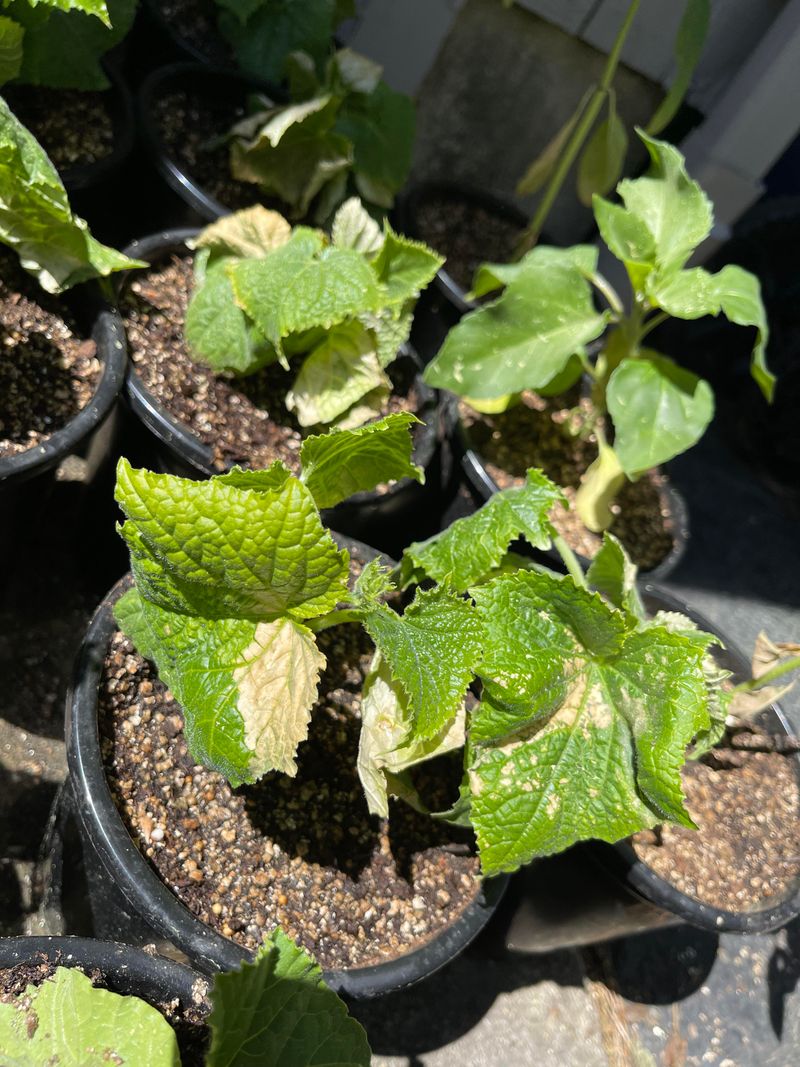
More fertilizer does not always mean better plants. In fact, adding too much can cause a condition called fertilizer burn, which leaves cucumber leaves looking yellow, brown at the edges, or crispy.
It sounds counterintuitive, but overfeeding is a real and common problem in home gardens.
When too much fertilizer sits in the soil, it raises the salt concentration around the roots. High salt levels pull moisture out of the roots instead of letting the plant absorb it.
The plant ends up stressed and dehydrated even when the soil has plenty of water. Nitrogen is the biggest culprit when it comes to over-fertilizing cucumbers, especially early in the growing season.
Signs of fertilizer burn often appear as yellow or brown leaf tips that look scorched. The damage usually shows up within a few days of applying too much product.
If you suspect this is the problem, water the soil deeply several times to help flush out the excess salts. Going forward, always follow the label directions on any fertilizer product.
A soil test from your local extension office can also tell you exactly what your garden needs before you add anything. Oregon has several extension programs that offer affordable soil testing for home gardeners.
Starting with a balanced, slow-release fertilizer at the beginning of the season is usually the safest approach for healthy cucumber growth without the risk of overdoing it.
5. The Plant Is Running Low On Nitrogen
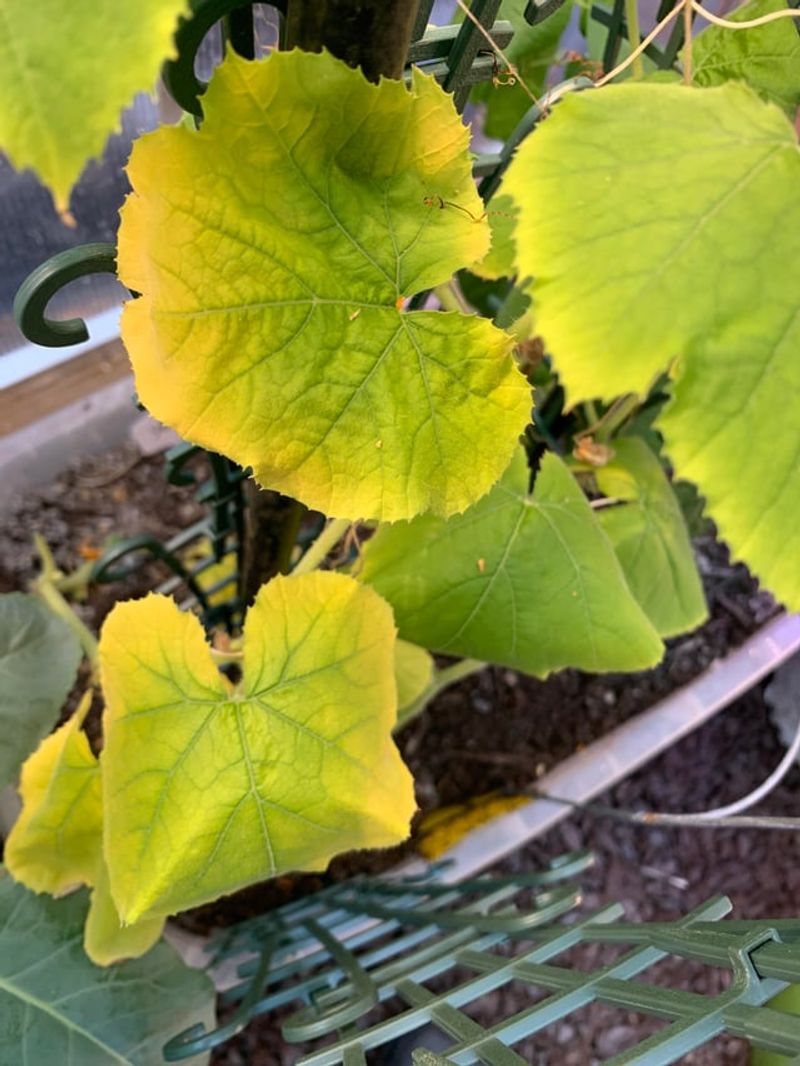
Nitrogen is the nutrient that keeps plants green. It plays a central role in producing chlorophyll, which is the green pigment that allows plants to turn sunlight into energy.
When a cucumber plant does not have enough nitrogen, it starts to show that deficiency through yellowing leaves pretty quickly.
The yellowing from nitrogen deficiency usually starts on the older, lower leaves first. That is because the plant moves nitrogen from older tissue to newer growth when supplies are limited.
So the bottom leaves go yellow while the top of the plant may still look fairly green. Over time, the yellowing works its way up the plant if the problem is not addressed.
Several things can cause low nitrogen levels in the soil. Heavy rains can wash nitrogen out of the soil fast, which is a common issue during Oregon’s wet seasons.
Sandy soils also hold onto nitrogen poorly compared to loamy or clay-rich soils. If you have not added compost or fertilizer in a while, your soil may simply be running low.
A quick fix is to apply a water-soluble nitrogen fertilizer, like fish emulsion or a balanced liquid feed, directly to the soil around the plant. Results often show up within one to two weeks.
Adding compost regularly is the best long-term solution for keeping nitrogen levels steady throughout the growing season without the risk of overdoing it.
6. Spider Mites Are Draining The Leaves
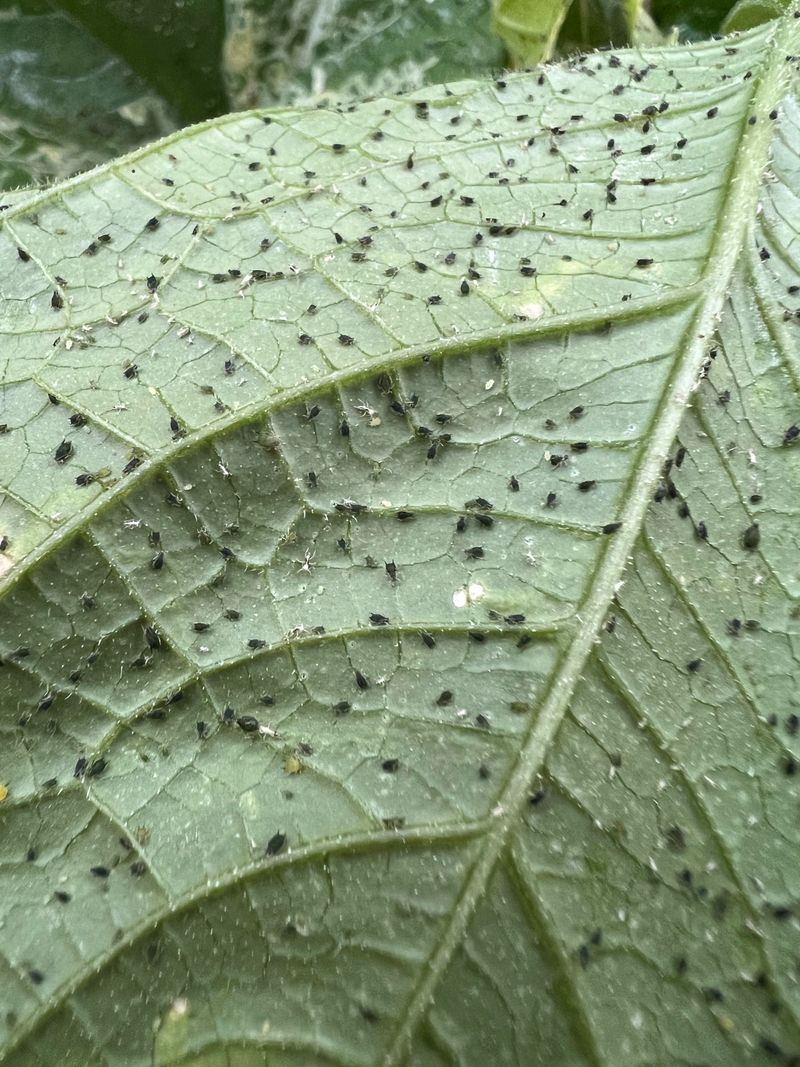
Spider mites are sneaky little pests that can do serious damage before you even notice they are there.
These tiny creatures, barely visible to the naked eye, attach themselves to the undersides of leaves and feed on plant cells.
As they feed, they drain the leaf of its color and moisture, leaving behind a speckled, yellowing surface.
One of the first signs of a spider mite problem is a dusty or stippled look on the leaves, almost like someone sprinkled fine yellow or white dots across the surface.
If you look closely at the underside of a damaged leaf, you might spot the tiny mites moving around or see fine, silky webbing stretched between the leaf and the stem. A magnifying glass helps a lot with spotting them early.
Hot, dry weather encourages spider mite populations to explode rapidly. During the warmest weeks of summer in Oregon, especially in drier inland areas, conditions can become perfect for these pests.
The good news is that they are manageable with the right approach. Spraying the undersides of leaves with a strong stream of water knocks many mites off the plant.
Neem oil spray is an effective and organic option that disrupts their life cycle without harming beneficial insects. Insecticidal soap also works well.
Check your plants every few days during hot spells and act quickly at the first sign of an infestation before the population grows too large to control easily.
7. Powdery Mildew Is Starting To Spread
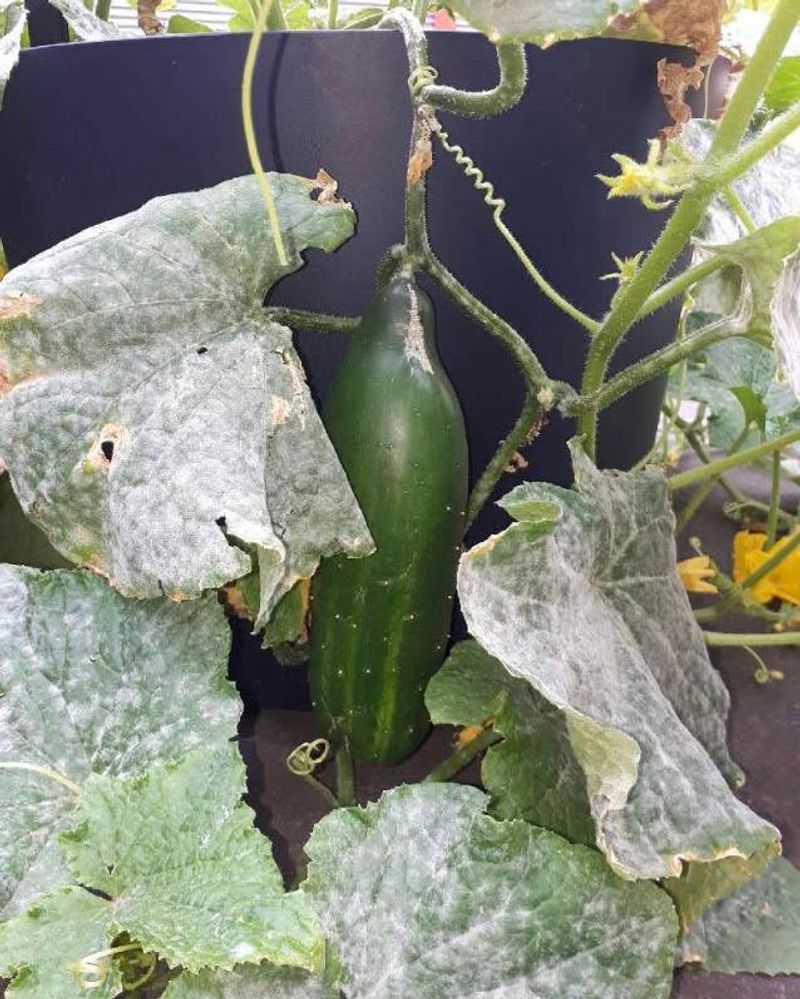
Powdery mildew is one of the most recognizable plant diseases in the garden. It shows up as a white or grayish powdery coating on the surface of leaves, and it spreads fast once conditions are right.
As the fungus takes hold, the affected leaves often start to turn yellow underneath that white coating before eventually browning and curling.
This fungal disease thrives in conditions where days are warm and nights are cool, with high humidity but little rain directly on the leaves. Sound familiar?
That description matches Oregon’s climate almost perfectly during late summer and early fall. Cucumbers are especially vulnerable because of their large, flat leaves that hold moisture well.
Crowded plantings make the problem worse by reducing airflow between plants. Good spacing is one of the best preventive measures you can take.
If you already see signs of powdery mildew, remove the worst-affected leaves right away and dispose of them away from the garden. Do not compost them, as the spores can survive and spread.
A homemade spray made from one tablespoon of baking soda mixed with a gallon of water and a few drops of dish soap can slow the spread when applied weekly. Neem oil is another solid option.
Resistant cucumber varieties are also available and worth considering if powdery mildew is a recurring issue in your garden each season.
8. Crowded Vines Are Trapping Moisture
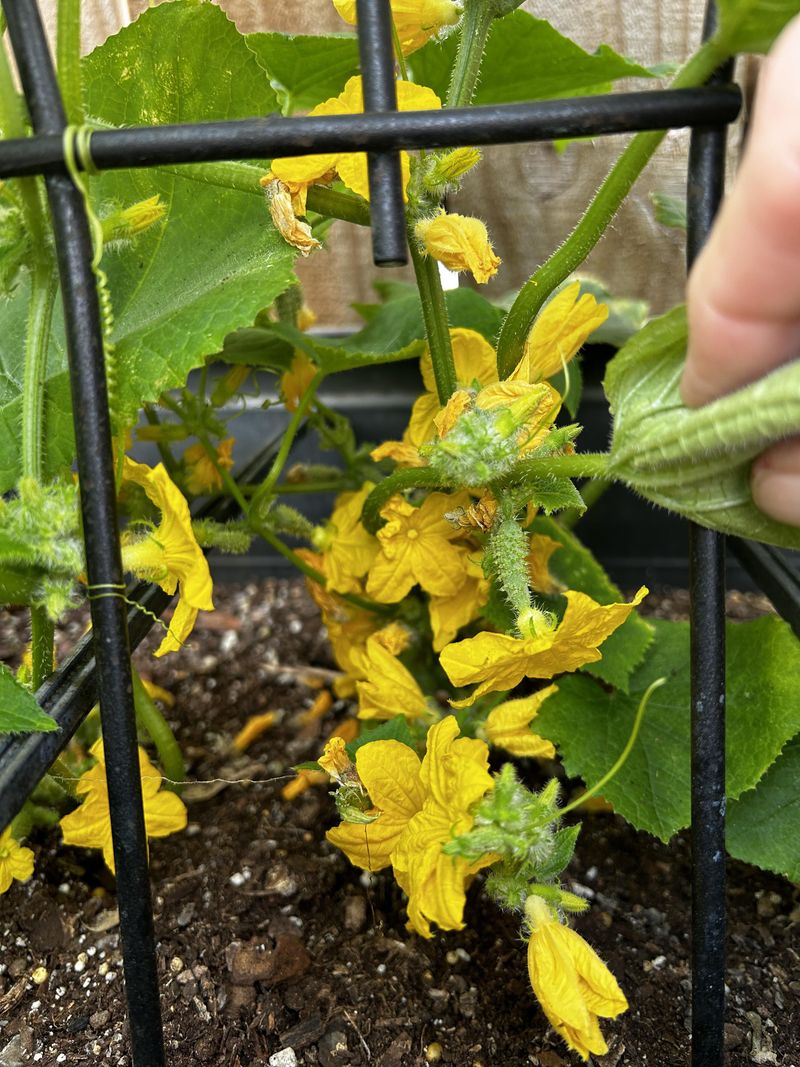
Cucumbers are vigorous growers. Left unchecked, their vines can sprawl and tangle into a dense mat that traps heat and moisture close to the leaves.
That kind of environment is exactly what fungal diseases and pests need to get started, and yellowing leaves are often the first visible result.
When vines overlap and leaves press against each other, air cannot circulate properly through the plant.
Moisture from rain, dew, or irrigation gets trapped and stays on the leaf surfaces much longer than it should.
Wet leaves for extended periods create ideal conditions for mold, mildew, and rot to take hold and spread through the planting quickly.
Training your cucumber vines onto a trellis or fence is one of the most effective ways to improve airflow and reduce disease pressure.
Vertical growing also makes it much easier to spot problems early and harvest fruit before it gets hidden under dense foliage.
Pruning is another helpful habit. Removing some of the older or lower leaves allows light and air to reach the inner parts of the plant.
In our state, where cool, moist air is common for much of the growing season, good airflow is not just helpful, it is essential for keeping cucumber plants healthy.
Plan your garden spacing carefully before planting and give each vine at least 18 to 24 inches of space to grow without competing with its neighbors.
9. The Oldest Leaves Are Simply Aging Out
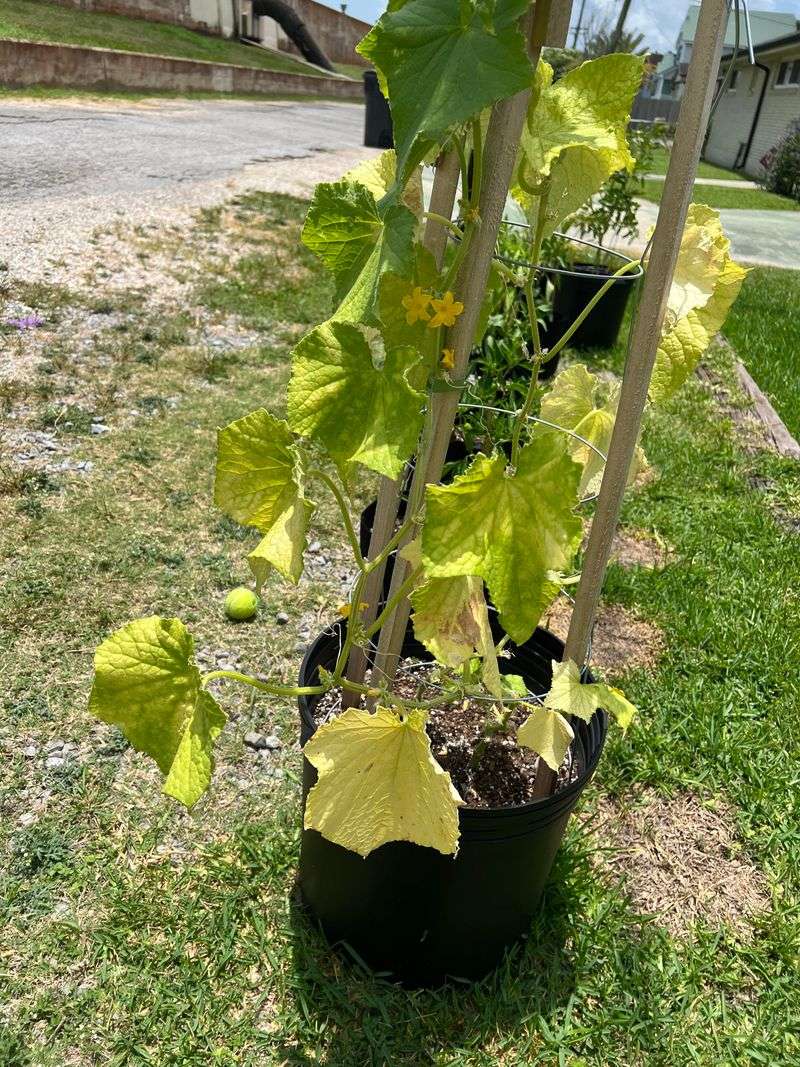
Not every yellow leaf means something is wrong with your plant. Sometimes, yellowing is simply a natural part of how cucumbers grow and age.
As the plant puts more energy into producing flowers and fruit, the older lower leaves at the base of the vine begin to fade and yellow on their own.
This kind of yellowing is perfectly normal and happens to even the healthiest cucumber plants. The lower leaves were the first to emerge, and they have been working hard since the beginning of the season.
Over time, the plant stops sending as many resources to those older leaves and redirects energy toward new growth and fruit production. The result is a gradual yellowing that works its way up from the bottom of the plant.
You can tell natural aging from a disease or nutrient problem by looking at the pattern. If only the lowest, oldest leaves are yellowing while the rest of the plant looks green and healthy, aging is most likely the cause.
There is nothing you need to fix in that case. Simply remove the yellow leaves by pinching or cutting them off at the stem. This keeps the garden tidy and improves airflow around the base of the plant.
Oregon’s humid growing conditions, removing spent foliage also reduces the chance of fungal problems developing near the soil line, giving your plants a cleaner and healthier environment to finish out the season strong.