Oregon’s Top 10 Fir Trees For Beautiful Home Landscapes
Fir trees are a classic choice for Oregon landscapes, bringing year-round greenery, structure, and a sense of calm to any yard. With so many varieties available, it can be tricky to know which ones will look their best and thrive in your space.
Choosing the right fir can make a big difference in the overall beauty and feel of your home landscape.
Oregon’s climate is ideal for many types of firs, from tall and stately to compact and ornamental. Some are perfect for creating privacy, while others make striking focal points or complement existing garden features.
They’re relatively low-maintenance, provide shade, and can even help frame your home beautifully.
Even if you’re new to planting trees, firs are forgiving and adaptable, making them a great choice for gardeners of all experience levels. By picking the right species for your soil, sun exposure, and space, you can enjoy a landscape that looks lush and vibrant year after year.
Let’s explore the top ten fir trees for Oregon landscapes and highlight the ones that bring the most beauty, versatility, and charm to your home.
With the right selections, your yard can feel more inviting, elegant, and naturally green in every season.
1. Douglas-Fir
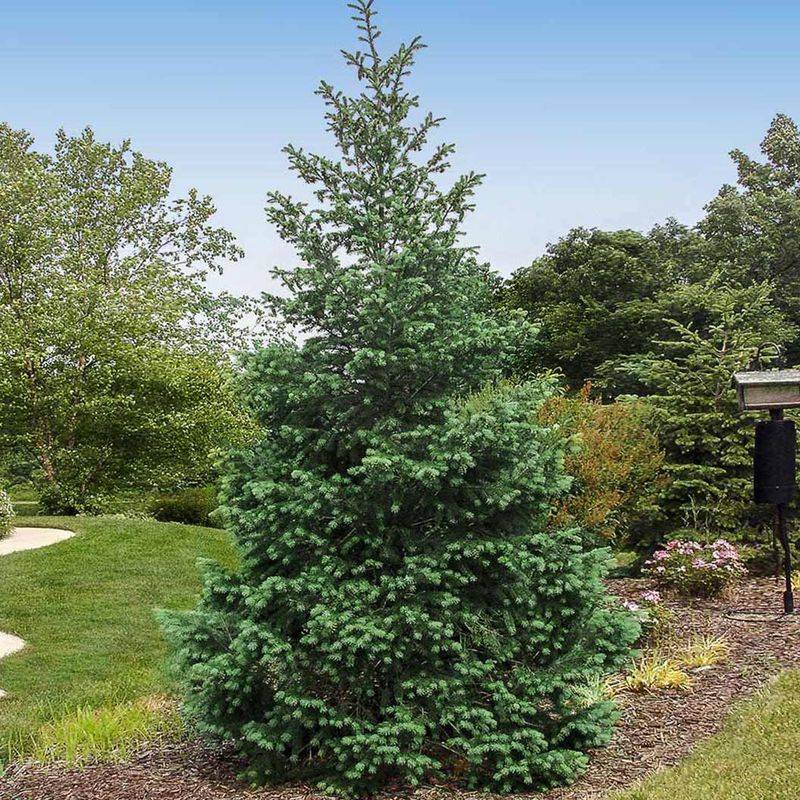
Walk through any Oregon neighborhood, and you’ll spot Douglas-fir towering above rooftops, framing driveways, and anchoring corner lots with their strong, pyramidal shape. This native tree is Oregon’s signature evergreen, and for good reason.
Its soft, fragrant needles and deeply furrowed bark give your property that authentic Pacific Northwest character that buyers and neighbors alike appreciate.
Douglas-fir grows fast when young, adding two feet or more each year in good conditions. Mature trees can reach 60 to 80 feet in residential settings, though they grow much taller in the wild.
You’ll want to plant this one at least 20 feet from your home and any underground utilities, giving it room to spread its lower branches and develop that classic Christmas-tree silhouette.
This fir thrives across Oregon, from coastal valleys to mid-elevation foothills. It tolerates clay soils, summer drought once established, and even urban pollution better than many evergreens.
Homeowners love Douglas-fir for windbreaks, privacy screens, and year-round greenery that requires almost no maintenance once it’s settled in.
Plan for long-term growth. This tree will outlive your mortgage and become a landscape anchor for generations.
Its deep roots stabilize slopes, and its dense canopy provides habitat for songbirds and shade for understory plantings like ferns and Oregon grape.
2. Grand Fir
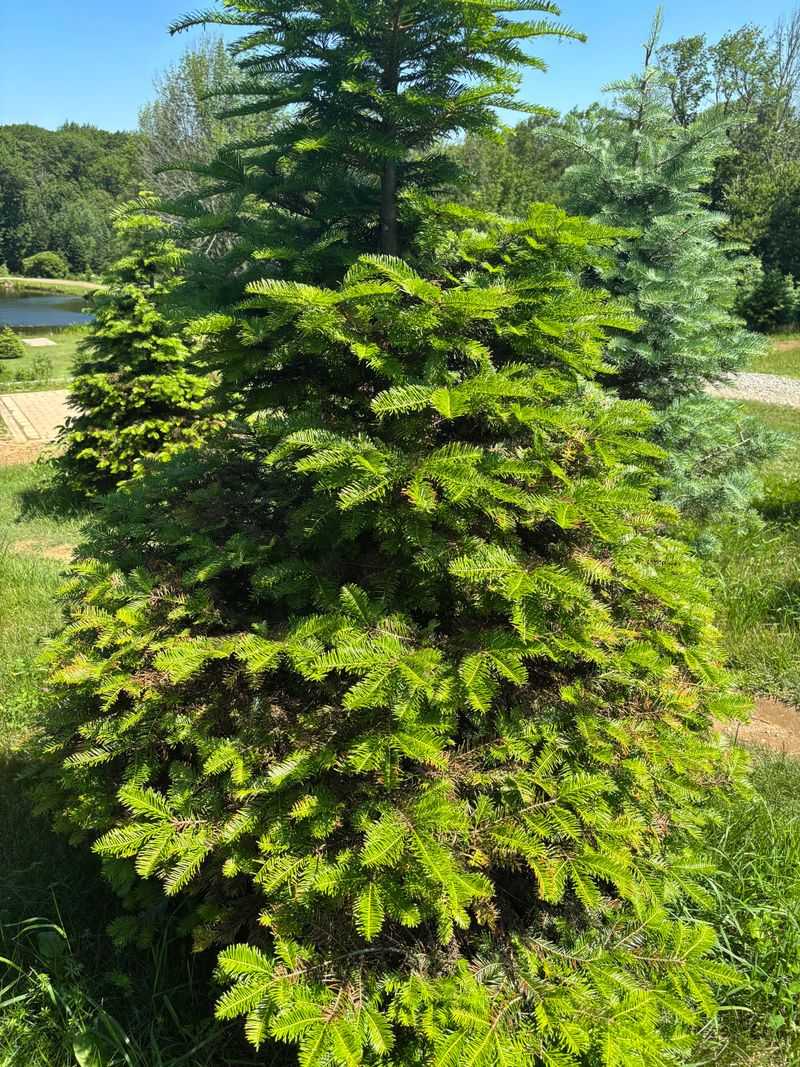
Grand fir is the evergreen you plant when you want fast shade, lush foliage, and that soft, citrusy scent every time you brush past its branches.
Native to Oregon’s moist valleys and lower mountain slopes, this fir grows quickly and fills in beautifully, making it a go-to choice for homeowners who want instant impact without waiting decades.
Its flat, glossy needles give it a fuller, more refined look than Douglas-fir.
Expect grand fir to reach 50 to 70 feet in your yard, with a broad, symmetrical crown that provides excellent shade and privacy.
It prefers well-drained soil and consistent moisture, so it performs best in the Willamette Valley, along the coast, and in western Oregon foothills.
This tree doesn’t love extreme heat or prolonged drought, so avoid planting it in exposed, dry sites.
Homeowners appreciate grand fir for its low-maintenance nature and year-round beauty. It rarely needs pruning, resists most pests, and develops a stately presence that boosts curb appeal and property value.
Plant it as a specimen tree near a patio or use several to create a living privacy fence along your property line.
Space grand fir at least 15 to 20 feet from structures and sidewalks. Its roots are less aggressive than some evergreens, but it still needs room to spread and establish a strong foundation for decades of growth.
3. Noble Fir
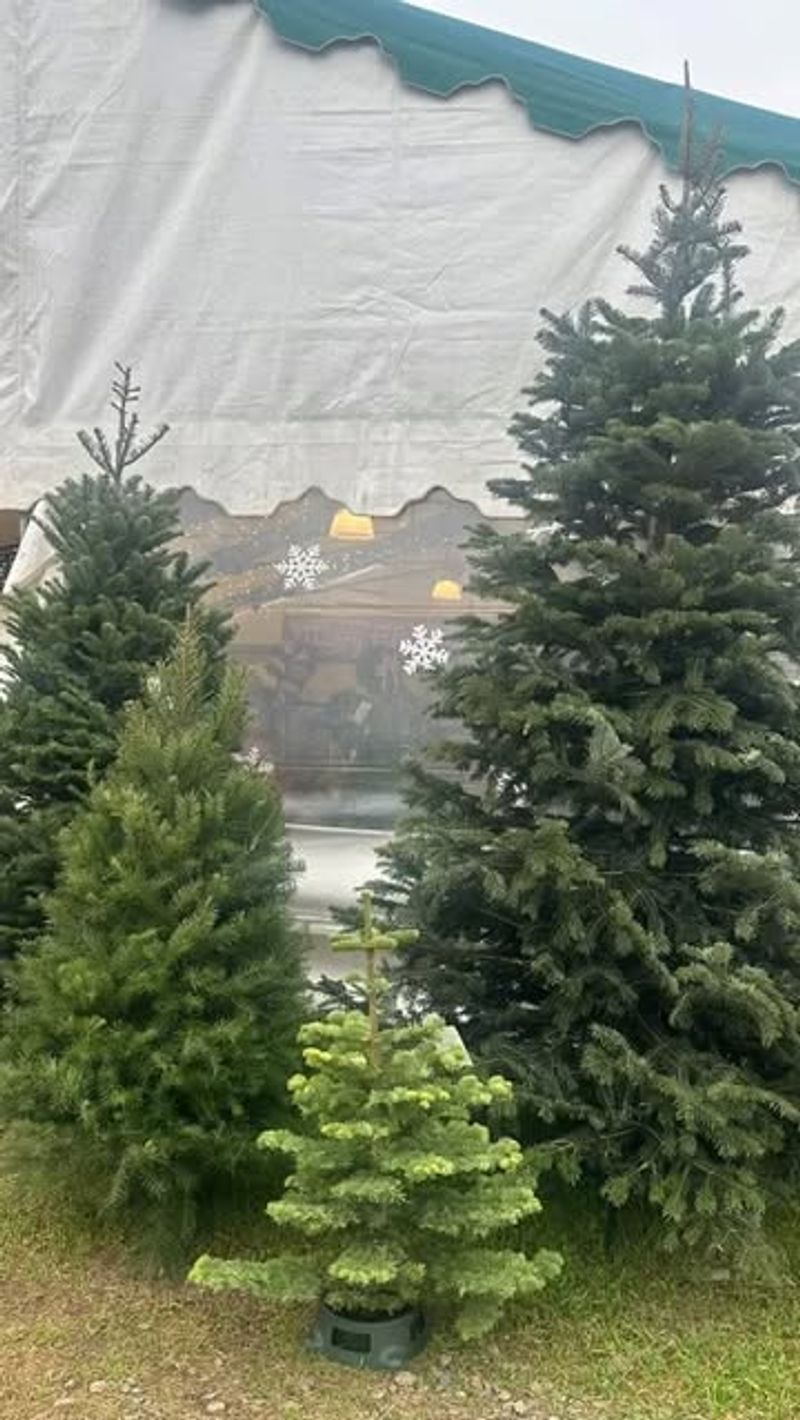
This tree will make your neighbors stop and ask, “What is that?” Its silvery-blue needles curve upward around the branches, creating a sculptural, elegant look that stands out in any Oregon landscape.
Native to higher elevations in the Cascades, noble fir brings mountain beauty to your yard and performs surprisingly well in cooler valley locations.
It’s slower-growing than Douglas-fir, which makes it easier to manage in smaller yards.
Mature noble fir reaches 40 to 60 feet in home landscapes, with a narrow, upright crown that works well in tight spaces or along driveways. Its stiff branches support heavy snow loads, and its dense foliage provides excellent wind protection and privacy.
This tree prefers cool, moist conditions and well-drained soil, so it thrives in western Oregon but struggles in hot, dry sites.
Homeowners choose noble fir for its striking color, formal shape, and low-maintenance personality. It rarely needs pruning, resists most diseases, and adds instant sophistication to any property.
Plant it as a focal point near your front entry or use it to frame views and define garden spaces.
Give noble fir space to breathe. Plant it at least 12 to 15 feet from buildings and hardscapes, and avoid compacted or poorly drained soils.
Once established, this tree will reward you with decades of beauty and structure.
4. Pacific Silver Fir
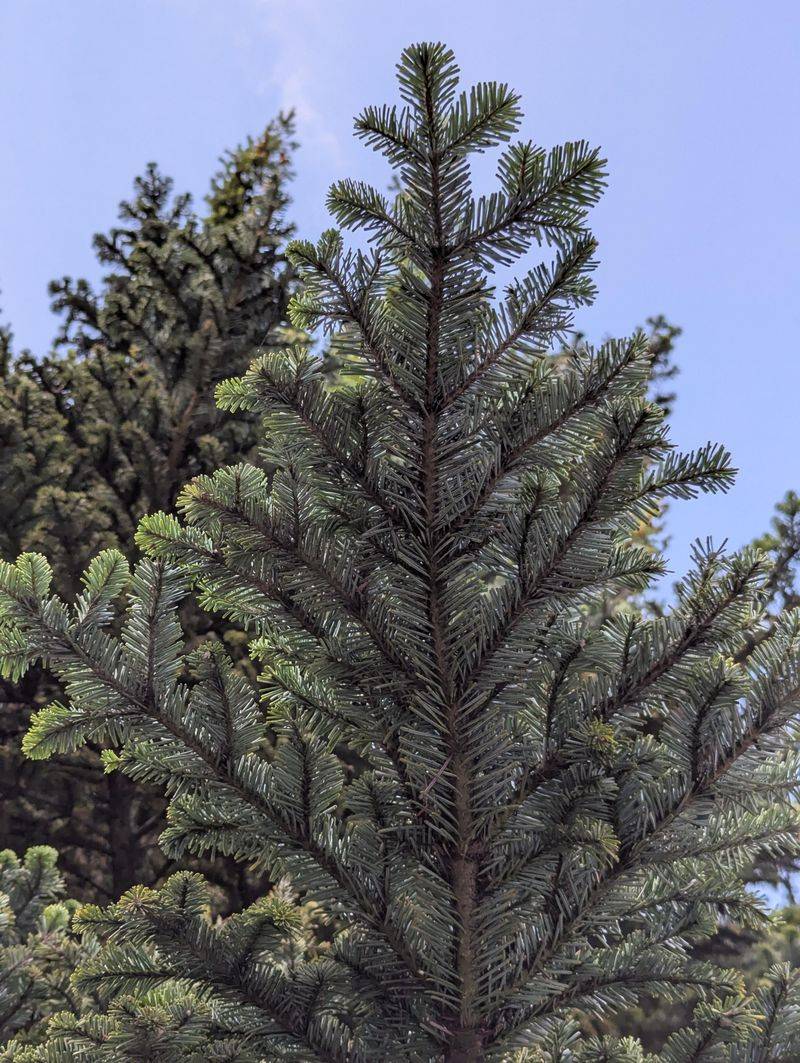
Pacific silver fir is the shade-loving beauty that thrives where other evergreens struggle.
Native to Oregon’s cool, moist mountain forests, this fir brings a touch of alpine elegance to your property with its silvery-white bark and dark green needles that flash silver underneath.
It’s the perfect choice for homeowners with wooded lots or shaded areas where you want a tall, graceful evergreen that feels right at home.
Mature Pacific silver fir reaches 50 to 70 feet in residential settings, with a narrow, spire-like crown that fits well in smaller yards or tight planting areas.
This tree prefers cool temperatures, high humidity, and well-drained soil, making it ideal for western Oregon valleys and foothill locations.
It doesn’t tolerate heat, drought, or urban pollution as well as Douglas-fir, so choose your planting site carefully.
Homeowners love Pacific silver fir for its refined appearance and ability to thrive in partial shade. It’s a great choice for understory plantings, woodland gardens, or naturalized landscapes where you want a native tree that supports local wildlife.
Its dense foliage provides excellent privacy and wind protection, and its slow growth makes it manageable in home landscapes.
Plant Pacific silver fir at least 15 feet from structures, and avoid hot, exposed sites. This tree performs best in cool, moist environments where it can develop its full beauty and live for generations.
5. White Fir (Concolor Fir)
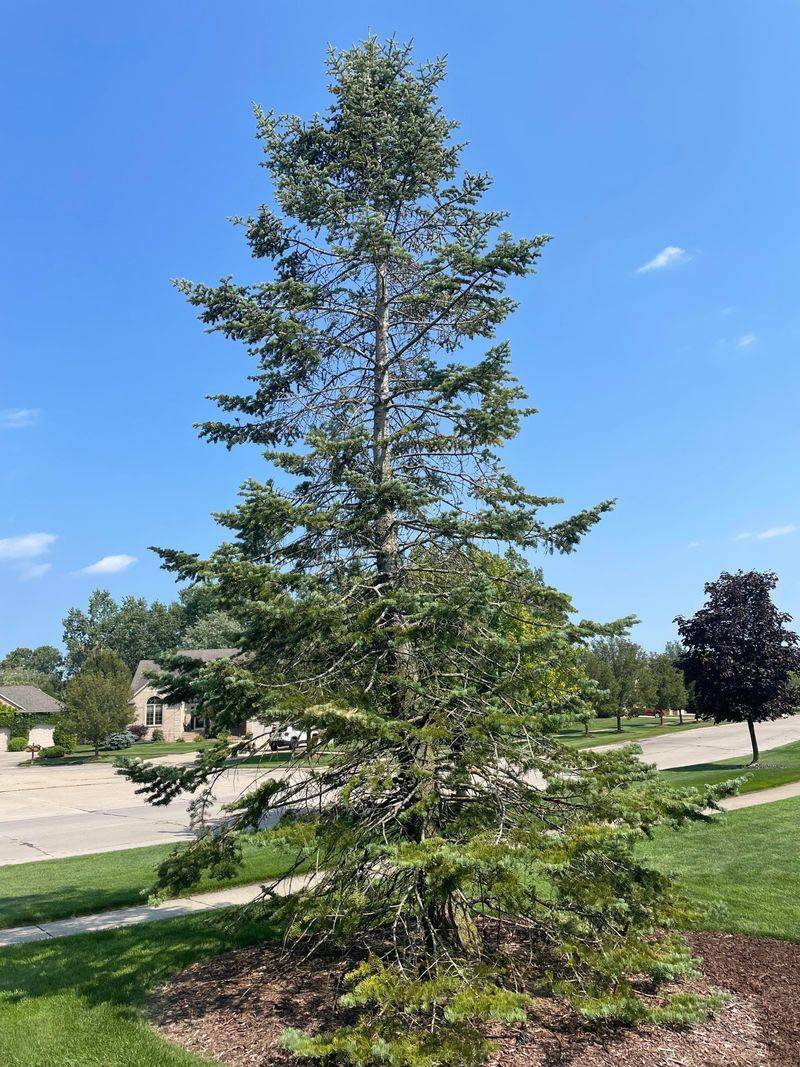
Also called concolor fir, the White Fir is the drought-tolerant evergreen that brings mountain beauty to Oregon yards without the high water demands.
Its long, soft, blue-green needles and symmetrical shape make it a popular choice for homeowners who want a refined ornamental tree that handles summer heat and dry spells better than most native firs.
Though not native to Oregon, white fir adapts well to valley and urban conditions where other firs struggle.
Expect white fir to reach 40 to 60 feet in your landscape, with a broad, pyramidal crown that provides excellent shade and privacy.
It tolerates a wide range of soils, including clay and alkaline conditions, and once established, it handles Oregon’s dry summers with minimal supplemental watering.
This tree performs well in the Willamette Valley, southern Oregon, and even warmer urban sites where native firs decline.
Homeowners appreciate white fir for its low-maintenance nature, striking color, and ability to thrive in challenging conditions. It rarely needs pruning, resists most pests, and adds instant curb appeal with its formal, holiday-tree shape.
Plant it as a specimen tree in your front yard or use it to anchor a mixed evergreen screen.
Space white fir at least 15 to 20 feet from buildings and hardscapes. Its roots are relatively non-invasive, but it still needs room to develop a strong, stable foundation for long-term growth and beauty.
6. Subalpine Fir
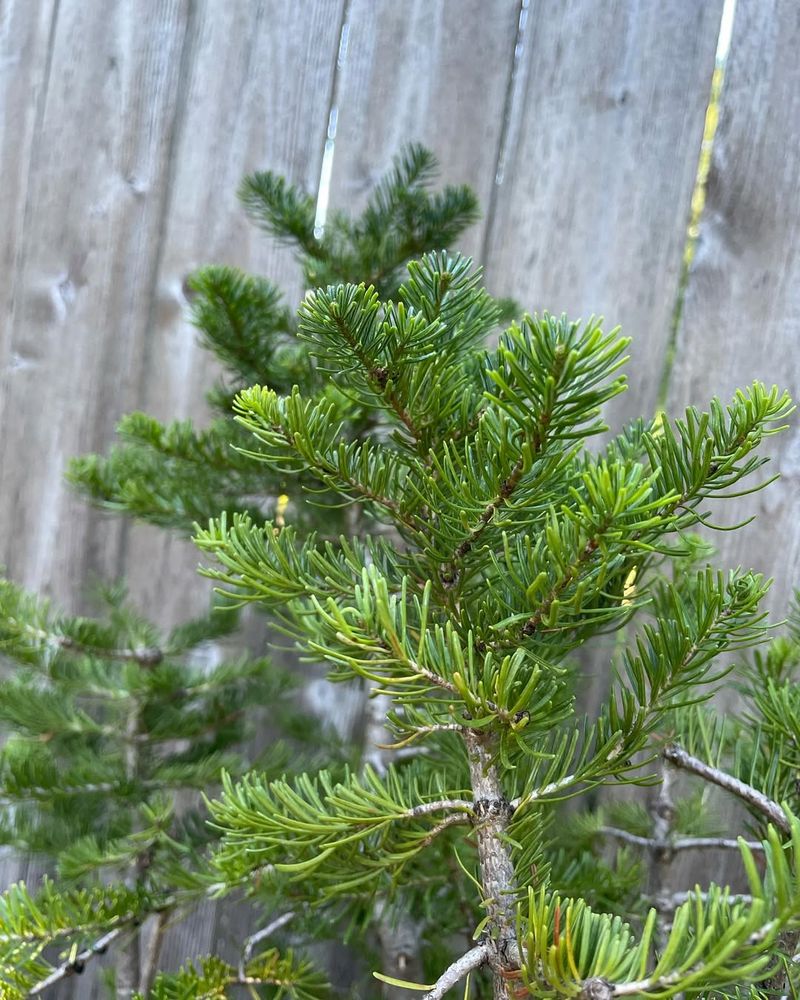
Native to Oregon’s mountain peaks and subalpine zones, this narrow, spire-shaped fir grows slowly and stays relatively small, making it perfect for smaller yards or tight planting spaces where you want a vertical accent.
Its dense, dark green foliage and silvery bark give it a refined, alpine look that stands out in any landscape.
Mature subalpine fir typically reaches 30 to 50 feet in home settings, with a narrow, columnar crown that takes up minimal space. This tree thrives in cool, moist conditions and well-drained soil, performing best in western Oregon valleys and foothill locations.
It struggles in hot, dry sites and doesn’t adapt well to urban pollution, so choose your planting site carefully.
Homeowners love subalpine fir for its slow growth, elegant shape, and ability to fit in smaller landscapes without overwhelming the space. It’s a great choice for courtyard gardens, narrow side yards, or as a vertical accent near entryways.
Its dense foliage provides excellent privacy and wind protection, and its low-maintenance nature makes it ideal for busy homeowners.
Plant subalpine fir at least 10 to 12 feet from structures, and avoid hot, exposed locations. This tree performs best in cool, sheltered sites where it can develop its full beauty and provide decades of landscape interest.
7. Shasta Red Fir
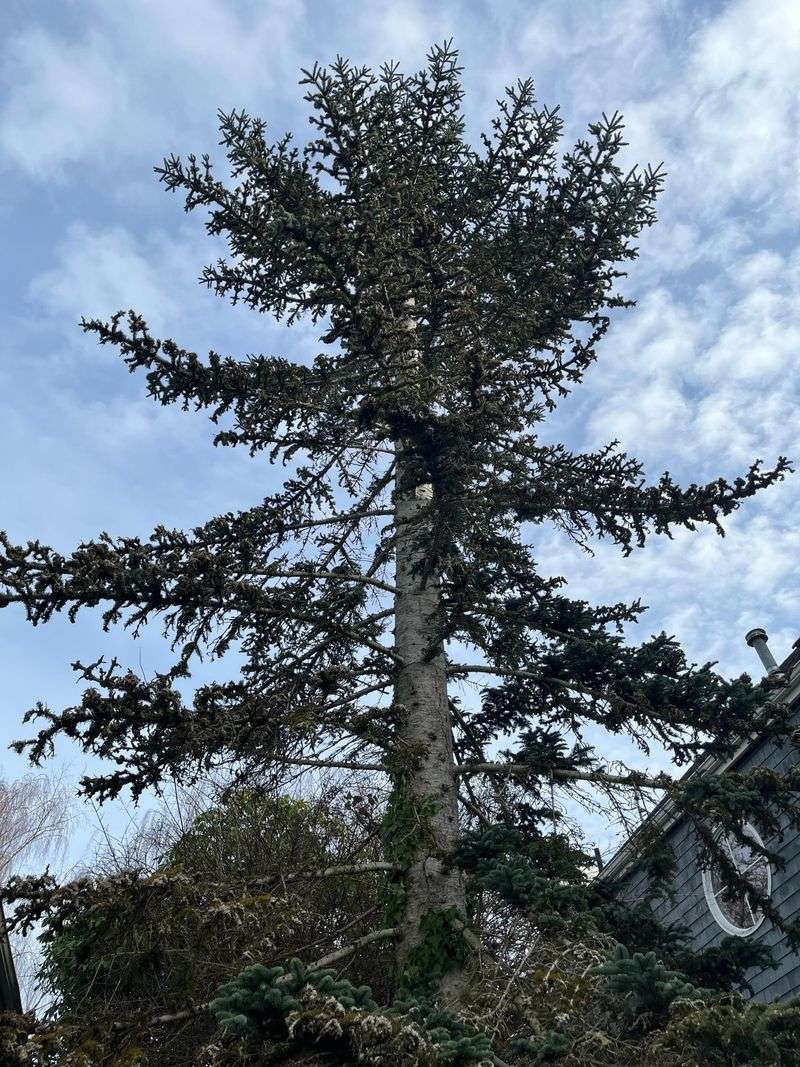
Shasta red fir is the rugged, high-elevation beauty that brings dramatic mountain character to Oregon landscapes.
Native to the Cascade and Siskiyou Mountains, this fir features thick, corky bark and stiff, upward-curving needles that give it a bold, architectural presence.
It’s not as commonly planted as Douglas-fir or grand fir, but for homeowners with cooler, higher-elevation properties, Shasta red fir offers unique beauty and excellent cold tolerance.
Mature Shasta red fir reaches 50 to 70 feet in residential settings, with a narrow, spire-like crown that works well in tight spaces or along property lines.
This tree prefers cool temperatures, well-drained soil, and consistent moisture, making it ideal for foothill and mountain properties in southern and central Oregon.
It doesn’t tolerate heat, drought, or urban conditions well, so it’s best suited for rural or naturalized landscapes.
Homeowners choose Shasta red fir for its distinctive appearance, cold hardiness, and ability to thrive in challenging mountain conditions. It provides excellent wind protection, privacy, and year-round greenery, and its slow growth makes it manageable in home landscapes.
Plant it as a specimen tree or use several to create a living windbreak.
Space Shasta red fir at least 15 to 20 feet from buildings, and avoid hot, dry sites. This tree performs best in cool, moist environments where it can develop its full mountain beauty and live for generations.
8. California Red Fir
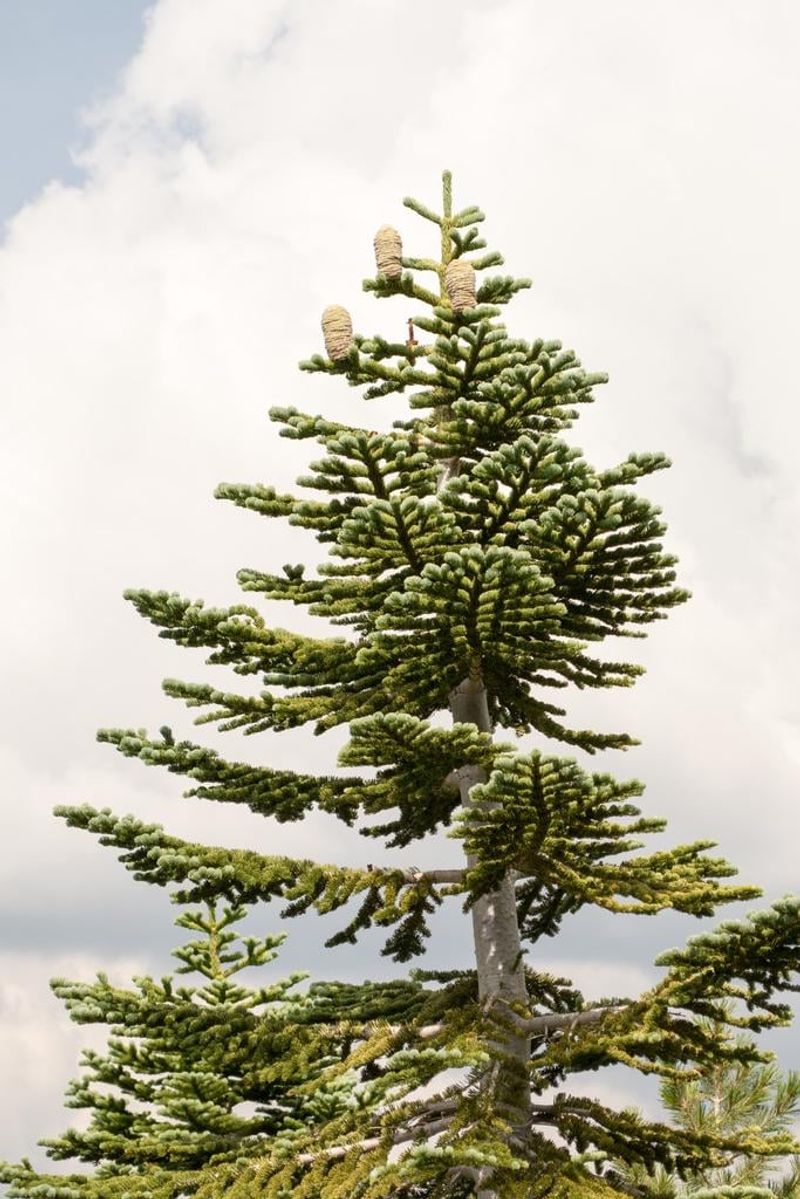
California red fir is the stately, silver-blue evergreen that brings high-mountain elegance to Oregon landscapes.
Native to the southern Cascades and northern California mountains, this fir features striking blue-gray needles and reddish bark that create a stunning visual contrast.
Though not native to most of Oregon, California red fir adapts well to cooler valley and foothill locations where homeowners want a distinctive ornamental tree with exceptional cold tolerance.
Mature California red fir reaches 50 to 80 feet in residential settings, with a narrow, pyramidal crown that provides excellent vertical interest.
This tree prefers cool temperatures, well-drained soil, and consistent moisture, performing best in western Oregon valleys and higher-elevation properties.
It struggles in hot, dry sites and doesn’t adapt well to urban pollution, so choose your planting site carefully.
Homeowners appreciate California red fir for its unique color, formal shape, and ability to create a dramatic focal point in any landscape.
It’s a great choice for large properties, estate plantings, or naturalized landscapes where you want a tall, elegant evergreen that stands out.
Its dense foliage provides excellent privacy and wind protection, and its slow growth makes it manageable over time.
Plant California red fir at least 20 feet from structures, and avoid hot, exposed locations. This tree performs best in cool, sheltered sites where it can develop its full beauty and provide decades of landscape impact.
9. Korean Fir
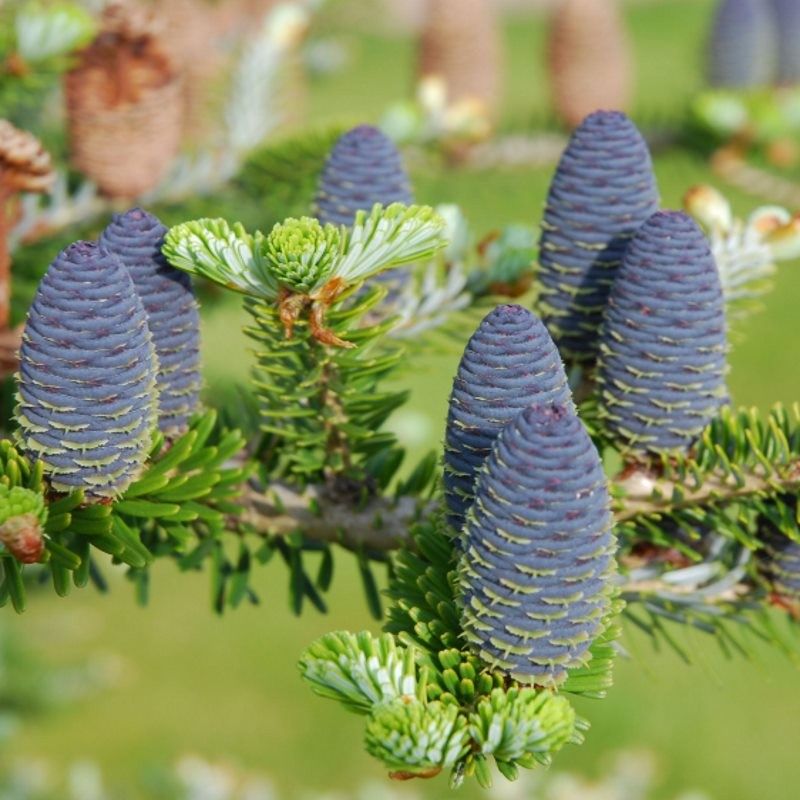
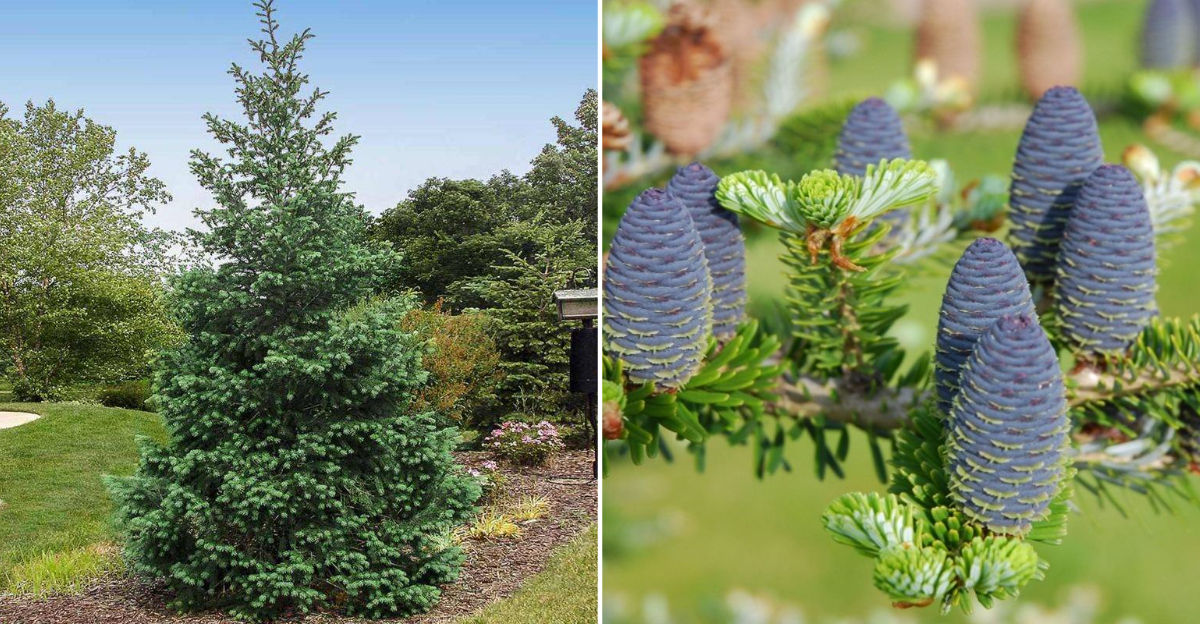
Native to Korea, this non-native fir has become a favorite among homeowners who want a manageable, slow-growing tree with striking purple-blue cones and dark green needles.
It’s perfect for urban lots, courtyard gardens, or anywhere you need a small evergreen that won’t outgrow its space or overwhelm your landscape.
Mature Korean fir typically reaches 20 to 30 feet in home landscapes, with a dense, pyramidal crown that stays relatively narrow. This tree adapts well to Oregon’s climate, tolerating both wet winters and dry summers once established.
It prefers well-drained soil and performs best in the Willamette Valley and western Oregon, though it can handle colder temperatures than many ornamental evergreens.
Homeowners love Korean fir for its manageable size, stunning cones, and low-maintenance personality. It’s a great choice for small yards, foundation plantings, or as a focal point near patios and entryways.
Its dense foliage provides excellent privacy and wind protection, and its slow growth means you won’t spend weekends pruning or worrying about overgrowth.
Space Korean fir at least 10 to 12 feet from buildings and hardscapes. This tree thrives in well-drained soil and benefits from occasional deep watering during dry summers.
With minimal care, it will reward you with decades of beauty and structure.
10. Nordmann Fir
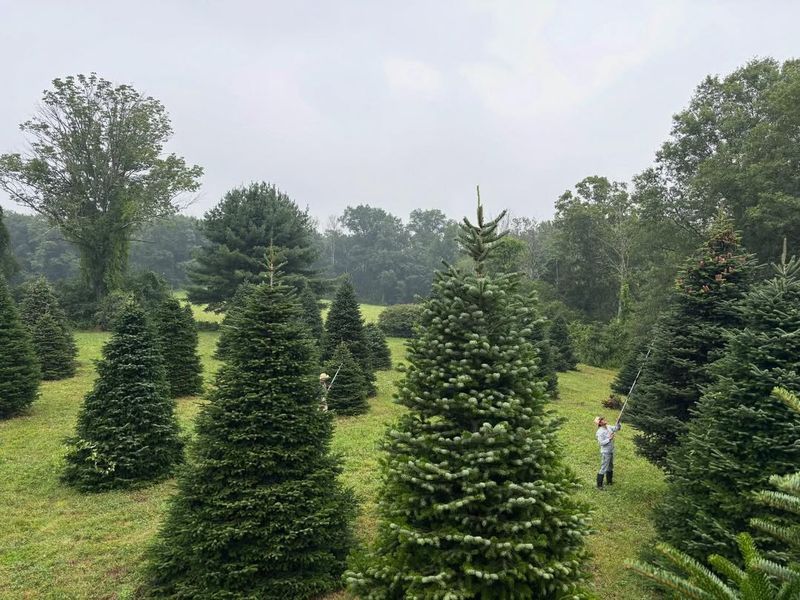
Native to the Caucasus Mountains, this non-native fir has become a popular choice for homeowners who want a dense, symmetrical tree with glossy, dark green needles that don’t drop easily.
It’s the same tree many families choose for their living Christmas tree, and it transitions beautifully into a permanent landscape specimen after the holidays.
Mature Nordmann fir reaches 40 to 60 feet in residential settings, with a broad, pyramidal crown that provides excellent shade and privacy. This tree adapts well to Oregon’s climate, tolerating wet winters and moderate summer heat.
It prefers well-drained soil and performs best in the Willamette Valley and western Oregon, where it develops its signature full, layered appearance.
Homeowners appreciate Nordmann fir for its dense foliage, formal shape, and ability to thrive in a variety of landscape settings. It’s a great choice for specimen plantings, mixed evergreen screens, or as a living holiday tree that becomes a permanent part of your landscape.
Its soft needles and low-maintenance nature make it ideal for families with children and pets.
Space Nordmann fir at least 15 to 20 feet from structures, and avoid poorly drained or compacted soils. This tree benefits from occasional deep watering during dry summers and will reward you with decades of beauty, structure, and holiday memories.