Overlooked Native Plants That Make Pennsylvania Lawns Easier To Maintain
Lawn maintenance in Pennsylvania is a commitment that most homeowners underestimate when they first move in and fully understand after their first complete growing season.
The mowing schedule alone is enough to consume a significant chunk of every weekend from April through October, and that’s before factoring in the watering, fertilizing, overseeding, and weed management that a traditional grass lawn demands just to stay looking acceptable.
Native plants are changing the way a growing number of Pennsylvania homeowners think about their outdoor space, and the shift makes a lot of practical sense. Plants that evolved in Pennsylvania’s specific climate don’t need the intervention that turf grass requires.
They handle temperature swings, and seasonal transitions without the constant input that keeps a conventional lawn running.
The overlooked part is that many of these native plants can work within or alongside an existing lawn rather than requiring a complete overhaul, making the transition more accessible than most people assume.
1. Pennsylvania Sedge
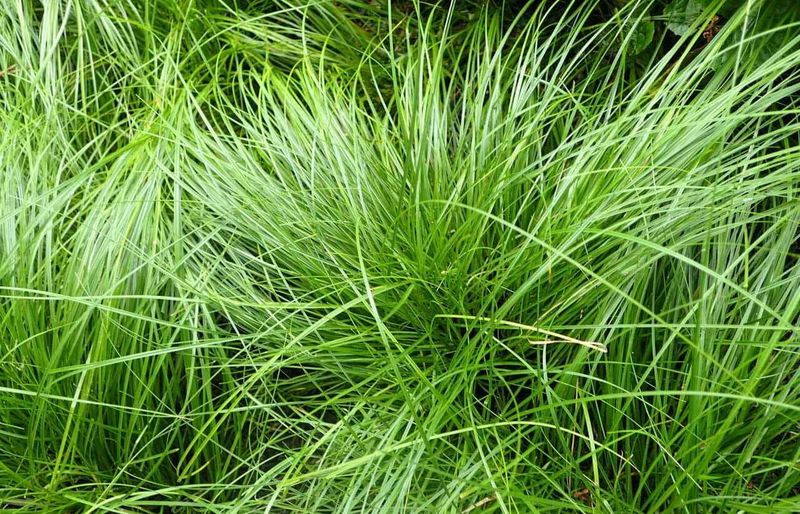
Forget spending every weekend pushing a mower across your yard. Pennsylvania sedge, known by its scientific name Carex pensylvanica, is a fine-textured native grass-like plant that naturally stays low to the ground, usually reaching only six to twelve inches tall without any trimming at all.
That alone makes it one of the most practical plants for Pennsylvania homeowners who want a tidy lawn without the constant upkeep.
What makes this plant stand out is how well it handles shade. Most traditional turf grasses struggle under trees or in areas with limited sunlight, leaving bare patches that weeds quickly take over.
Pennsylvania sedge thrives in those exact conditions, spreading slowly through underground rhizomes to form a soft, meadow-like carpet that looks surprisingly lush.
It grows naturally across woodland edges throughout the state, so it is already perfectly suited to Pennsylvania’s climate and soil types.
Once established, this sedge needs very little water, no fertilizer, and minimal mowing. Some homeowners choose to mow it once a year in early spring to keep it looking fresh, but many skip that step entirely.
It handles light foot traffic reasonably well, making it a solid choice for low-use lawn areas or shaded borders around trees. The plant also provides shelter for small insects and ground-nesting birds, adding ecological value beyond its good looks.
Getting started is easy. You can plant Pennsylvania sedge from plugs or divisions in spring or fall.
It spreads on its own over time, filling in gaps without much encouragement. For Pennsylvania residents tired of battling their shady lawn areas, this quiet little plant is a genuine game changer.
2. Frogfruit
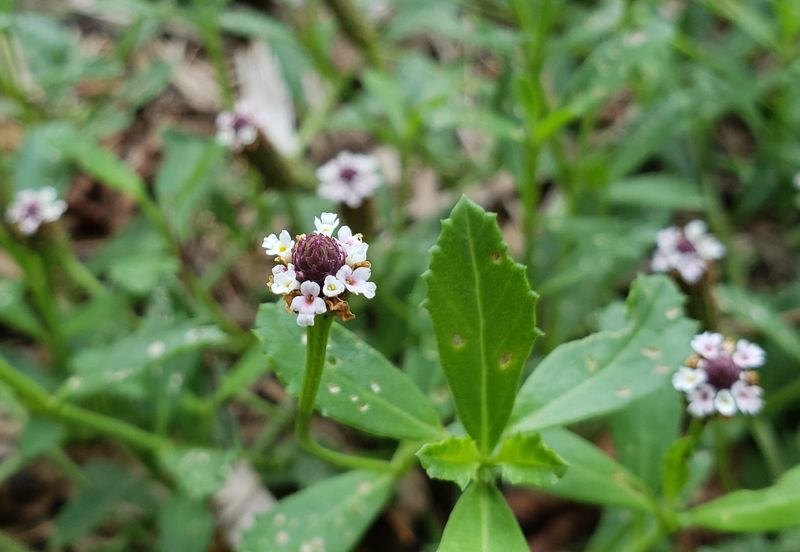
It has one of the most memorable names in the plant world, and frogfruit backs it up with some seriously impressive qualities.
This low-growing native plant, also called Phyla nodiflora, spreads quickly across sunny areas, forming a dense mat that hugs the ground and crowds out weeds before they even get a chance to take hold.
For Pennsylvania homeowners dealing with patchy, hard-to-manage lawn sections, frogfruit is worth a serious look.
Your Pennsylvania Garden Changes Every Week. Your Plan Should Too.
Gardening in Pennsylvania changes quickly throughout the season. Every Friday you’ll receive a simple weekly plan showing exactly what to plant, prune, fertilize, harvest, and protect so you never miss the right timing.
One of the biggest selling points is its tolerance for foot traffic. Unlike many ground covers that bruise or thin out when people walk across them, frogfruit handles regular use without much complaint.
It works especially well along pathways, around play areas, or in front yards where activity is common. The plant stays flat and tight to the ground, so it rarely needs mowing and blends naturally into the surrounding landscape.
Frogfruit also pulls double duty as a pollinator magnet. Tiny white and lavender flowers bloom from late spring through fall, drawing in bees, butterflies, and other beneficial insects.
In Pennsylvania, where pollinator populations have been under pressure, planting frogfruit is a small but meaningful way to support local ecosystems right from your own yard.
It grows best in full sun and tolerates both dry and occasionally wet soil, which makes it versatile for a range of lawn conditions across the state. Planting from plugs in spring gives it the best head start.
Within a season or two, it spreads to fill in gaps on its own. Frogfruit proves that a plant can be hardworking, wildlife-friendly, and genuinely easy to live with all at once.
3. Wild Strawberry
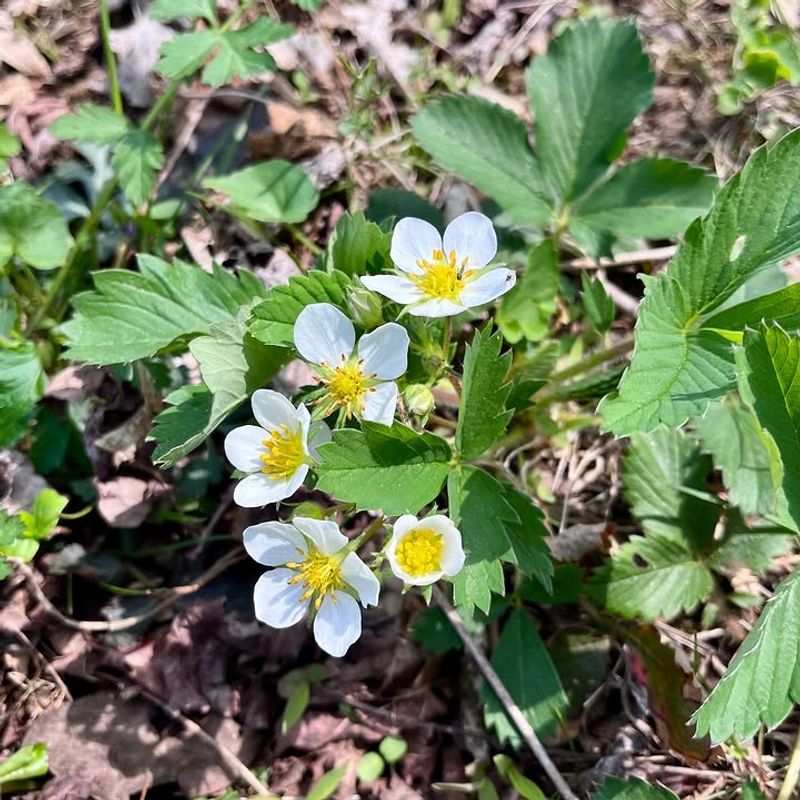
There is something almost magical about a ground cover that fights weeds and rewards you with fruit at the same time. Wild strawberry, or Fragaria virginiana, does exactly that.
This native Pennsylvania plant spreads through runners to form thick, low mats that shade out weeds and protect bare soil from erosion. It is a practical choice for homeowners who want their lawns to do more than just look green.
The dense growth habit of wild strawberry is what makes it such an effective weed suppressor. When the plant fills in properly, it leaves little room for unwanted plants to sprout.
The leaves stay close to the ground, usually only a few inches tall, and the plant does not require mowing to maintain a neat appearance.
It handles partial shade fairly well, though it produces the most berries and the thickest coverage in spots with at least a few hours of direct sunlight each day.
Those small red berries that appear in late spring and early summer are a genuine bonus. They are edible, sweet, and smaller than grocery store strawberries but packed with flavor.
Birds and small mammals love them too, so planting wild strawberry also invites more wildlife into your Pennsylvania yard in a completely natural way.
Establishing wild strawberry is straightforward. Plant it in fall or early spring, and it will spread on its own from there.
It handles a light amount of foot traffic and recovers well after being walked on occasionally. For Pennsylvania homeowners looking for a ground cover that earns its place, wild strawberry brings beauty, practicality, and a little bit of sweetness to any lawn space.
4. Creeping Phlox
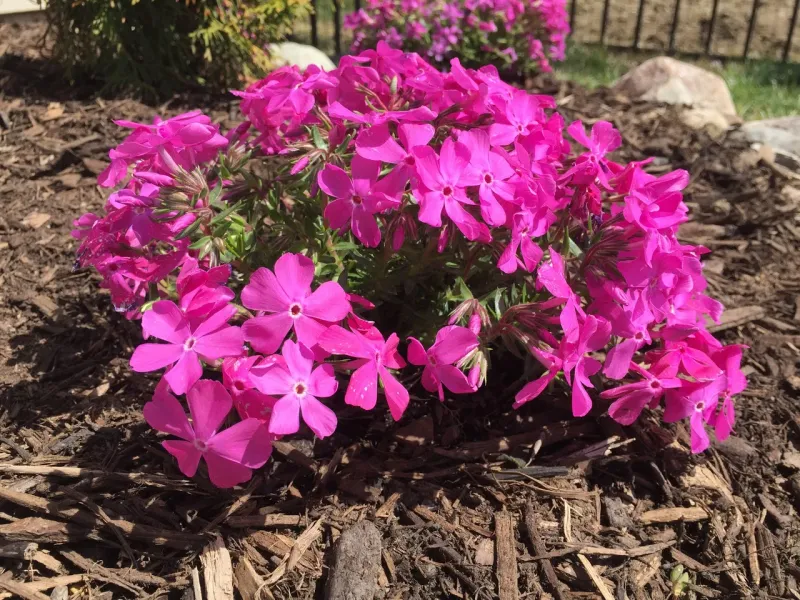
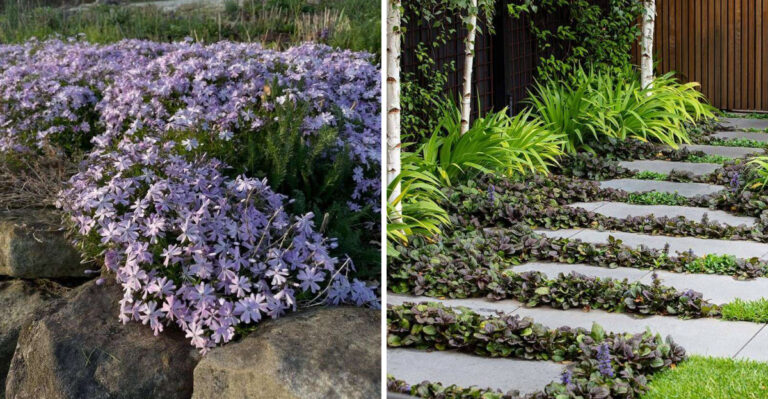
Few native plants put on a show quite like creeping phlox in full bloom. Every spring, this low-growing plant explodes into a carpet of pink, purple, or white flowers that can stop neighbors in their tracks.
But beyond the eye-catching display, creeping phlox, or Phlox subulata, is quietly doing something very useful: covering bare ground where weeds would otherwise move in and take over.
For Pennsylvania homeowners with open patches, slopes, or rocky edges, this plant is a colorful solution to a frustrating problem.
Bare soil is basically an open invitation for weeds. Creeping phlox closes that invitation fast.
It spreads outward from the center, forming a tight mat of needle-like evergreen foliage that stays in place year-round.
Even after the spring flowers fade, the foliage continues to suppress weeds and hold soil in place, which is especially helpful on slopes or uneven terrain that is difficult to mow safely.
Creeping phlox thrives in full sun and well-drained soil, making it a great fit for sunny Pennsylvania lawns, rock gardens, and front yard borders. It is drought-tolerant once established and rarely needs supplemental watering after its first season.
The plant is also deer-resistant, which is a meaningful advantage in many parts of Pennsylvania where deer pressure on gardens is a real challenge.
Planting is best done in early spring or fall. After the blooms fade each year, a light trim helps the plant stay compact and encourages denser growth the following season.
Creeping phlox rewards minimal effort with maximum visual impact, making it one of the most satisfying native plants a Pennsylvania homeowner can add to their property.
5. Green-And-Gold
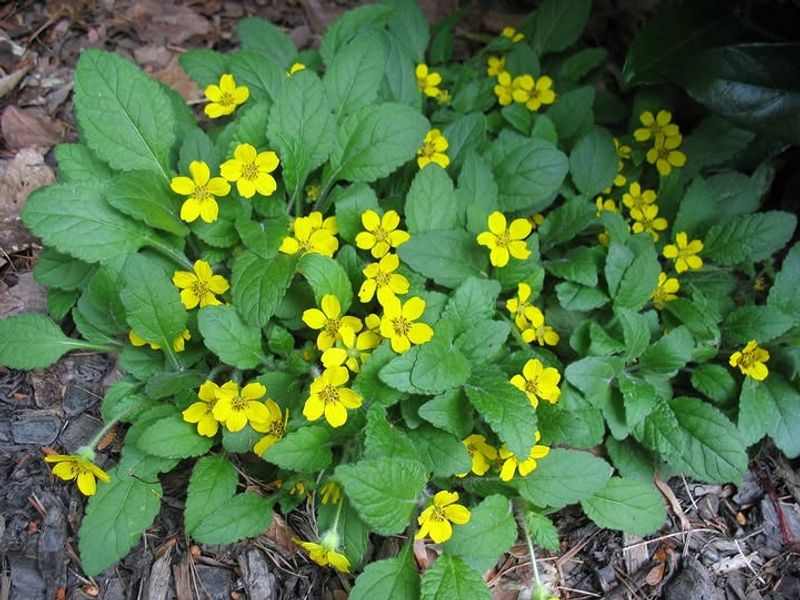
Shaded lawns are often the hardest spots to manage. Grass grows thin, bare patches appear, and weeds creep in before you know it.
Green-and-gold, or Chrysogonum virginianum, was practically made for those tricky situations.
This tough, low-growing native plant thrives in partial to full shade, making it one of the best options for Pennsylvania homeowners dealing with lawn areas under trees or along north-facing walls where sunlight is limited.
The name says it all. Bright yellow, star-shaped flowers sit cheerfully above deep green, textured leaves for much of the growing season.
Blooms often start in early spring and can continue on and off through fall, giving your yard long-lasting color without any extra effort on your part. The plant stays low, typically under one foot tall, and spreads gradually to fill in gaps in shaded borders and lawn edges.
Green-and-gold is remarkably low maintenance. Once established in Pennsylvania’s soil, it handles drought reasonably well, needs no fertilizer, and rarely attracts serious pest problems.
It is semi-evergreen in many parts of the state, meaning the foliage stays green and attractive through much of winter, which helps keep shaded areas looking tidy even in the colder months.
Planting in groups of three or more helps speed up coverage and creates a more natural, layered look. It pairs beautifully with Pennsylvania sedge, ferns, or wild ginger for a fully native shade garden that practically takes care of itself.
For homeowners who have given up on growing anything under their big oak or maple trees, green-and-gold is the fresh start that shaded lawn spot has been waiting for.
6. Partridgeberry
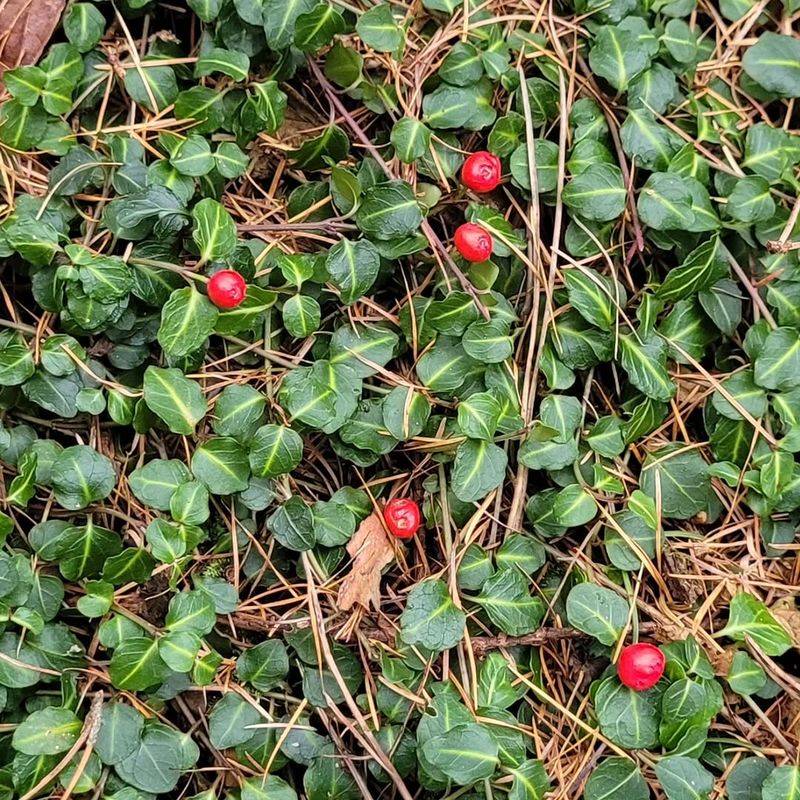
Some plants are quiet overachievers, and partridgeberry is absolutely one of them. This delicate-looking but surprisingly tough woodland native, known scientifically as Mitchella repens, spreads slowly across the forest floor in a creeping evergreen mat that stays green and attractive through all four seasons.
For Pennsylvania homeowners with shaded, wooded areas that are hard to mow or maintain, partridgeberry offers a naturally beautiful solution that practically manages itself once it gets going.
The plant stays very low, usually no more than two or three inches tall, and spreads outward through trailing stems that root as they go.
Over time, it builds a thick, carpet-like mat of small, glossy, dark green leaves that effectively suppresses weeds and holds moisture in the soil below.
In late spring, tiny white tubular flowers appear in pairs, and by fall those flowers develop into the plant’s signature bright red berries, which persist well into winter and provide food for birds and small wildlife throughout Pennsylvania’s colder months.
Partridgeberry is naturally found in moist, shaded woodlands across the eastern United States, which means Pennsylvania’s climate is perfectly suited to it.
It prefers acidic, well-drained soil rich in organic matter, making it a natural companion for areas under pine or oak trees where other plants often struggle.
It does not handle heavy foot traffic well, so it works best in low-activity zones like woodland borders, naturalized areas, or decorative lawn edges.
Planting partridgeberry from nursery-grown plugs in spring or fall gives it the best chance to establish. Patience pays off here because the plant spreads slowly but steadily, building into something genuinely beautiful over two or three growing seasons.