Pennsylvania Native Flowers That Naturalize Without Taking Over
There’s something special about native flowers in Pennsylvania. Not only do they brighten up your garden with stunning colors, but they also support local wildlife in a way non-native plants can’t quite match.
The best part? Some of these native flowers will naturalize, meaning they’ll grow and spread year after year without you having to replant them. But, unlike aggressive species, they won’t take over your entire garden.
When you choose native flowers that naturalize, you get a beautiful, low-maintenance garden that works with nature instead of against it. These plants are perfectly suited to Pennsylvania’s soil and climate, so once established, they require very little attention.
The flowers spread organically, creating a thriving garden that’s full of color and life, yet stays balanced and easy to manage.
If you’re looking for an effortless way to enhance your garden while supporting local ecosystems, these flowers are a perfect ch
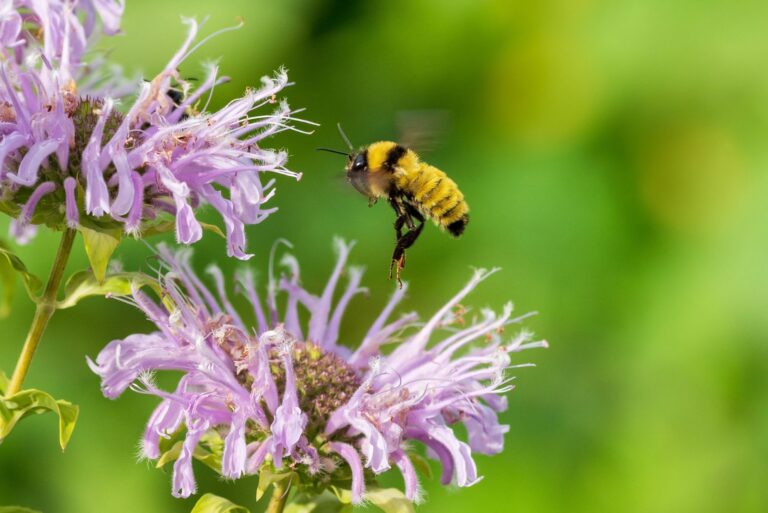
1. Wild Bergamot (Monarda Fistulosa)
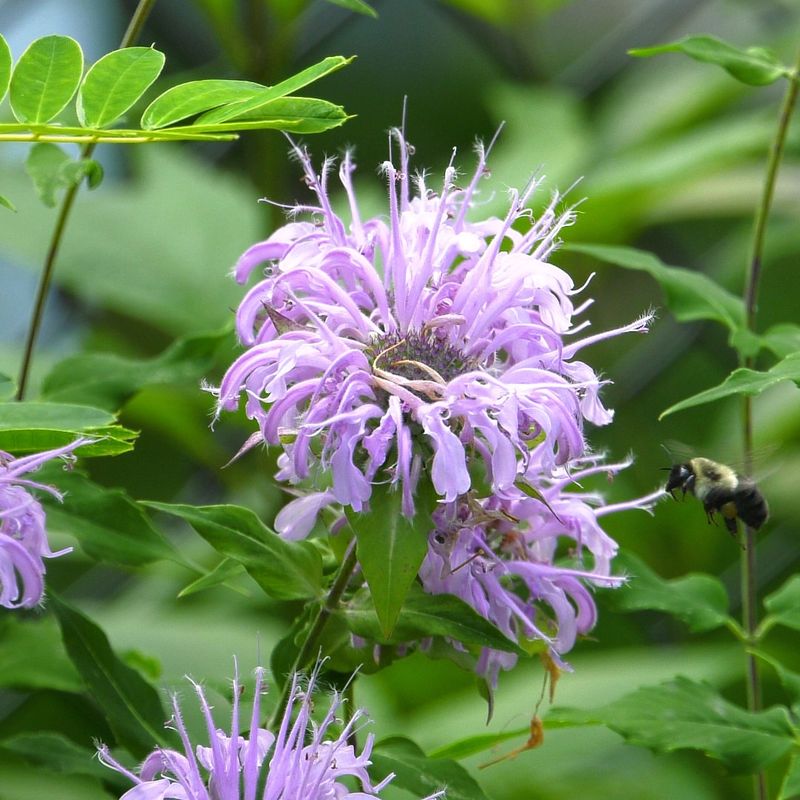
Few flowers bring a garden to life quite like Wild Bergamot. Its soft pink-purple blooms appear in summer and create a buzzing, fluttering scene that feels straight out of a nature documentary.
Bees, butterflies, and even hummingbirds cannot resist stopping by for a visit.
Wild Bergamot is native to Pennsylvania and fits right into meadow-style gardens, borders, and even open woodland edges. It grows best in full sun to part shade and handles a range of soil types with ease.
Once established, it spreads slowly through both seeds and underground roots, filling in space without rushing or crowding out neighbors.
One fun fact about this plant is that it belongs to the mint family, and if you crush a leaf, you will notice a pleasant, herby fragrance. Native Americans historically used it for medicinal purposes, and its essential oils are still valued today.
That long history makes growing it feel like connecting with something bigger than just a backyard garden.
To keep Wild Bergamot looking its best in your Pennsylvania garden, plant it in groups of three or five for a natural, full look. Deadheading spent blooms encourages more flowers.
If it starts spreading more than you like, simply pull up extra seedlings in spring. It is truly one of the easiest native plants to manage while still delivering incredible beauty and real wildlife value all season long.
2. Black-Eyed Susan (Rudbeckia Hirta)
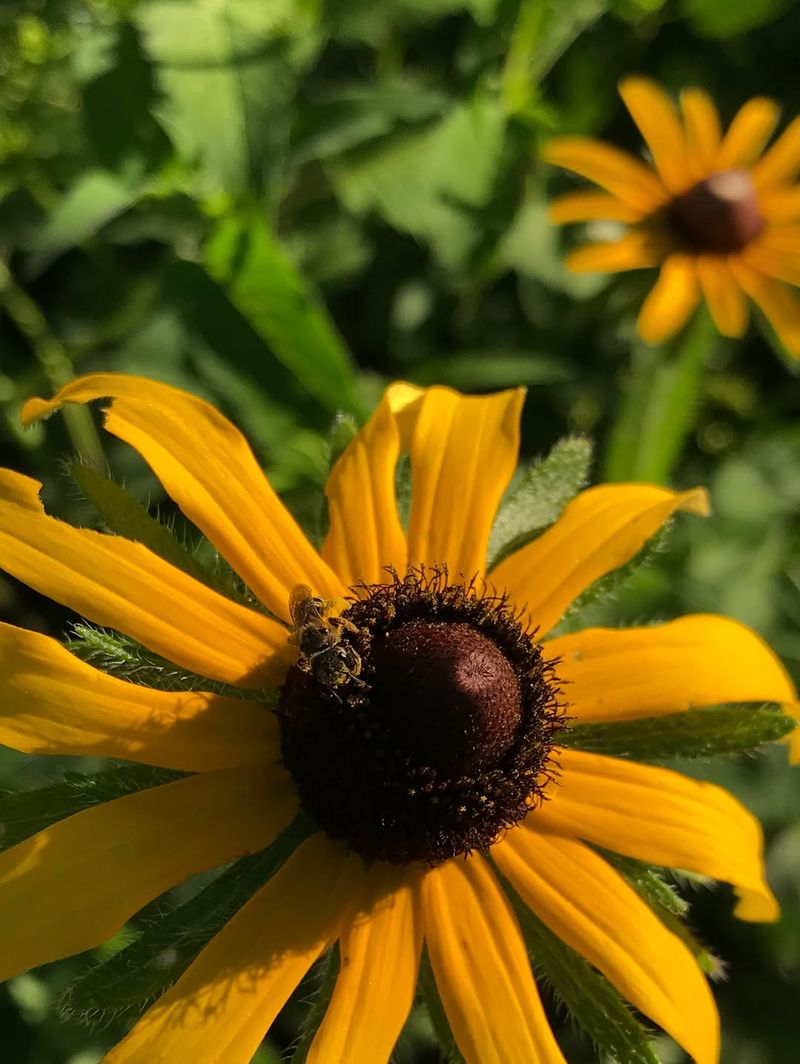
There is something undeniably cheerful about a patch of Black-Eyed Susans. Their bold yellow petals surrounding a dark, almost chocolatey center make them one of the most recognized wildflowers in Pennsylvania.
Gardeners love them because they bloom from mid-summer all the way into fall, long after many other flowers have finished for the season.
Black-Eyed Susan self-seeds in a relaxed, easygoing way. It fills in gaps over time without turning into a takeover situation.
You might find a few new plants popping up nearby each year, which is actually a welcome surprise rather than a headache. If you ever want fewer plants, removing seedheads before they scatter is a simple fix.
This plant is incredibly adaptable. It tolerates poor soil, clay, sandy ground, and everything in between.
Pennsylvania gardeners appreciate that it handles summer heat and dry spells without much fuss. It also works well in rain gardens and along roadsides where conditions can be tough.
Pollinators are huge fans of Black-Eyed Susan. Bees, butterflies, and goldfinches all visit regularly.
Goldfinches especially love snacking on the seeds in late fall, so leaving a few seedheads standing through winter adds a nice bonus for local wildlife.
Plant it in full sun for the strongest performance, and pair it with native grasses or coneflowers for a stunning, low-care Pennsylvania native garden that practically takes care of itself.
3. Woodland Phlox (Phlox Divaricata)
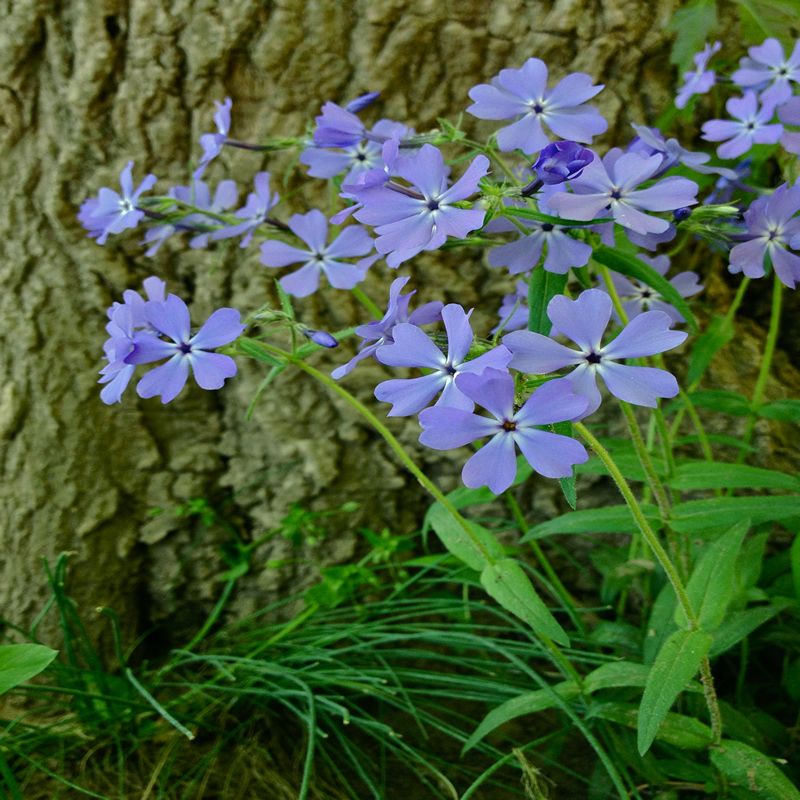
Spring in Pennsylvania feels a little more magical when Woodland Phlox starts to bloom. Its soft lavender-blue flowers appear in April and May, often before most other plants have even woken up for the season.
That early show makes it one of the most valuable native flowers for supporting pollinators when food sources are still scarce.
Woodland Phlox is a natural fit for shaded and partially shaded spots in Pennsylvania gardens. It thrives under trees, along woodland edges, and in areas where many other plants struggle.
It spreads slowly by forming low, creeping mats and produces runners that take root nearby. The spread is gradual and easy to manage, making it a reliable ground cover that never feels out of control.
One thing gardeners quickly notice is how pleasant the fragrance is. The flowers carry a light, sweet scent that drifts through the garden on warm spring days.
That scent also attracts native bees and butterflies that are just emerging from their winter rest, giving them an important early meal.
Planting Woodland Phlox under deciduous trees works especially well because the plants get full sun in early spring before the tree canopy fills in, and then enjoy cool shade through summer.
In Pennsylvania, this flower pairs beautifully with Wild Ginger and ferns for a layered woodland look.
After blooming, the foliage stays low and green, acting as a tidy ground cover right through the growing season.
4. Wild Columbine (Aquilegia Canadensis)
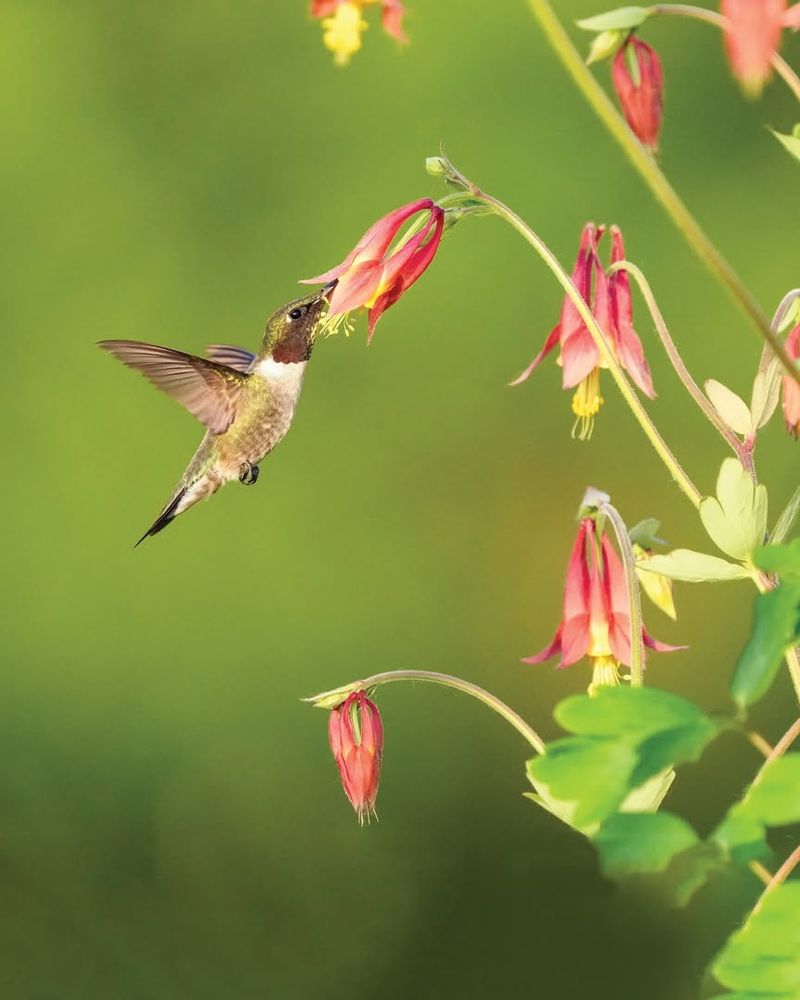
Spotting a hummingbird darting toward a Wild Columbine is one of those moments that reminds you exactly why native plants matter.
The red and yellow nodding flowers of Aquilegia canadensis are practically designed for hummingbirds, with long spurs filled with nectar that perfectly match the bird’s long beak. Bees and butterflies also visit, making this plant a full-service pollinator stop.
Wild Columbine blooms in late spring, bridging the gap between early spring wildflowers and summer bloomers. It grows best in partial shade with well-drained soil, which makes it an excellent choice for Pennsylvania gardens with rocky or wooded areas.
It naturalizes gently, self-seeding in a relaxed way that adds new plants without overwhelming the space.
What makes this plant especially charming is how the flowers dangle and nod in the breeze. They have a delicate, almost fairy-tale look that stands out in any garden bed.
Despite that delicate appearance, Wild Columbine is surprisingly tough and handles dry conditions once established.
In Pennsylvania, it pairs well with Wild Ginger, Woodland Phlox, and native ferns for a layered shade garden. If you notice seedlings appearing in unexpected spots, they are easy to relocate while still small.
The plant tends to shift locations slightly from year to year as seeds fall and sprout, giving the garden a natural, ever-changing look.
That spontaneous quality is part of what makes Wild Columbine so lovable for Pennsylvania gardeners who enjoy a little surprise each season.
5. Blue False Indigo (Baptisia Australis)
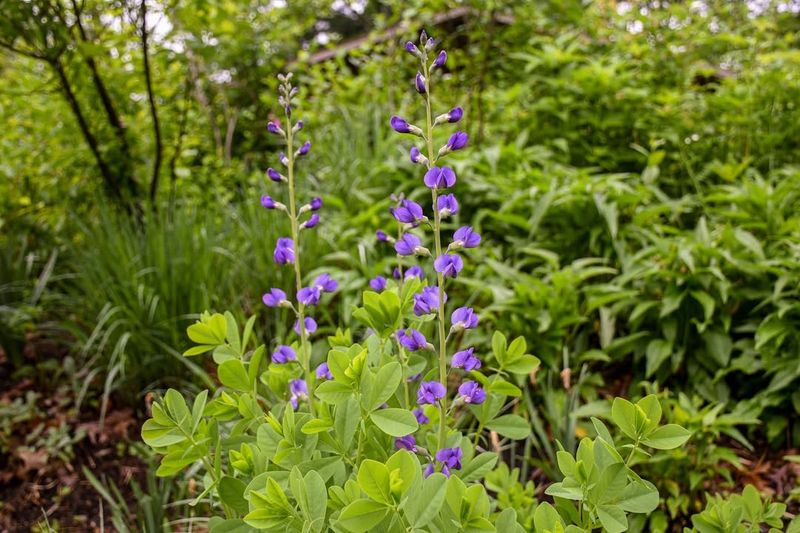
Blue False Indigo is the kind of plant that makes experienced gardeners stop and stare. Its tall spikes of blue-purple flowers shoot up in late spring and create a dramatic, eye-catching display that looks almost tropical, even though it is completely at home in Pennsylvania.
The blooms last for several weeks, and after they fade, interesting dark seed pods take their place and add texture through fall and winter.
One of the best things about Baptisia australis is how little attention it needs. Once established, which takes about two to three years, it becomes a powerhouse of low-maintenance beauty.
It spreads slowly through underground roots, gradually expanding into a large, rounded clump that can live in the same spot for decades. It never rushes, and it never takes over.
Blue False Indigo also has a deep taproot that makes it extremely drought-tolerant and resistant to deer browsing. That combination is a real bonus for Pennsylvania gardeners dealing with dry summers or frequent deer visits.
It fixes nitrogen in the soil too, quietly improving the ground around it for neighboring plants.
For best results, plant it in full sun in a border or prairie-style garden where it has room to grow into its full size over time. Pairing it with Black-Eyed Susan or Wild Bergamot creates a stunning native planting that blooms in sequence through the growing season.
Blue False Indigo rewards patience, and Pennsylvania gardeners who give it time are always glad they did.
6. Butterfly Weed (Asclepias Tuberosa)
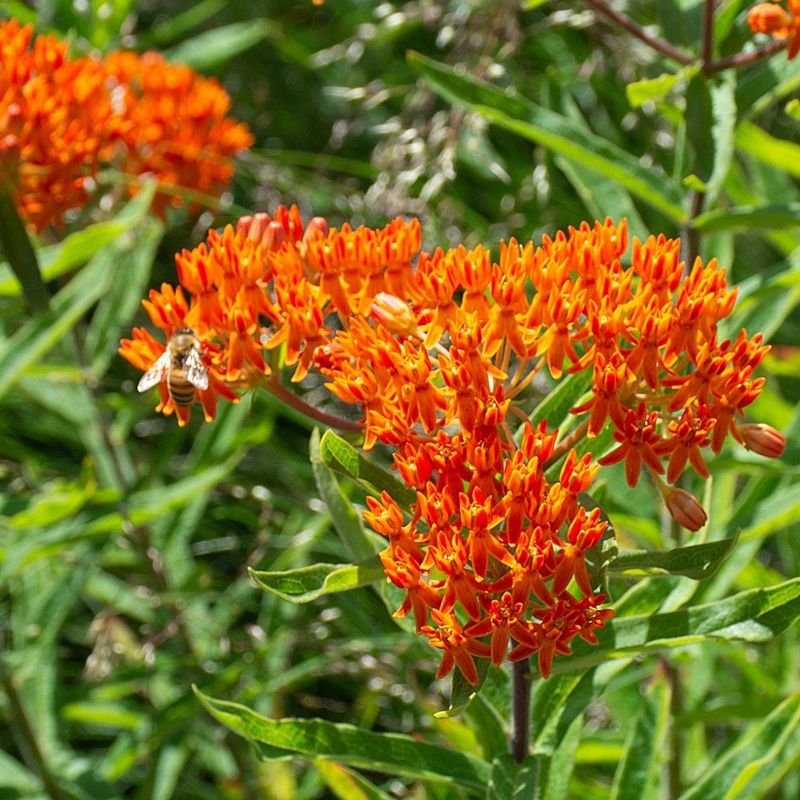
If there is one plant that monarch butterfly enthusiasts in Pennsylvania need in their garden, it is Butterfly Weed. The vivid orange flower clusters are impossible to miss, and monarchs treat them like a favorite diner on their long migration route.
Beyond monarchs, dozens of other butterfly species, native bees, and beetles visit the blooms throughout summer.
Butterfly Weed is a milkweed, which means monarch caterpillars can use it as a host plant for laying eggs and feeding. Supporting that life cycle is one of the most meaningful things a Pennsylvania gardener can do for local wildlife.
The plant self-seeds in moderation, producing new plants nearby without becoming aggressive or unruly in the garden bed.
Unlike some other milkweeds, Asclepias tuberosa stays relatively compact and tidy. It thrives in full sun and dry or well-drained soil, making it a perfect choice for slopes, rocky areas, or spots where other plants struggle.
It is also deer-resistant and drought-tolerant once established, which means less worry during Pennsylvania’s dry summer stretches.
One quirky detail worth knowing is that Butterfly Weed has a deep taproot, so it does not like to be moved once planted. Choose its location carefully and give it a permanent home.
It is slow to emerge in spring, so marking its spot prevents accidental disturbance. The wait is absolutely worth it when those brilliant orange blooms finally appear and the butterflies start arriving.
Few garden moments in Pennsylvania beat that sight on a warm summer afternoon.
7. Wild Senna (Senna Hebecarpa)
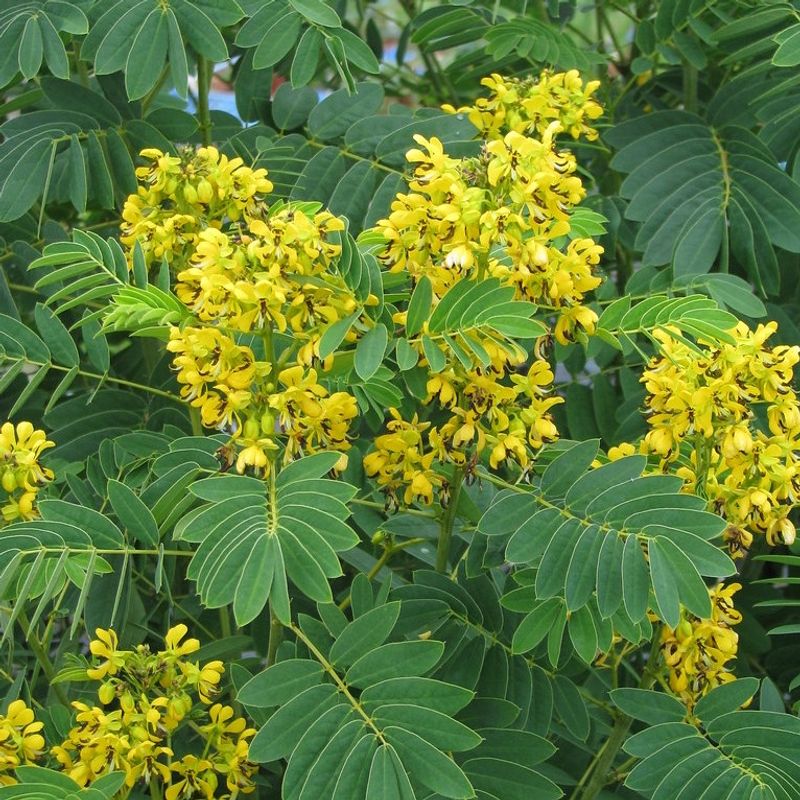
Wild Senna does not get nearly enough credit in Pennsylvania gardens. Its cheerful yellow flowers bloom in mid-to-late summer, right when many other plants are starting to wind down.
That late-season timing makes it a valuable resource for pollinators, especially bumblebees, which are strong enough to “buzz pollinate” the flowers and extract pollen that other insects cannot reach.
Senna hebecarpa grows into an impressive, shrub-like clump that can reach four to six feet tall. It spreads slowly by forming expanding clumps and producing seeds that sprout nearby at a manageable pace.
In Pennsylvania gardens, it works beautifully as a back-of-border plant or as a natural screen along fences and property edges. The bold foliage adds texture even when the plant is not in bloom.
After the flowers fade, long, slender seed pods form and hang on the plant through fall and winter. Birds occasionally visit to pick at the seeds, and the pods add visual interest to the late-season garden.
The whole plant has a strong, upright structure that holds up well even in windy Pennsylvania weather.
Wild Senna prefers sunny, well-drained spots but tolerates occasional wet conditions better than many native plants. It pairs well with tall native grasses and other late-summer bloomers like Black-Eyed Susan.
Because it grows tall, placing it behind shorter plants creates a layered, professional-looking garden design.
For Pennsylvania gardeners who want bold structure, reliable pollinator support, and very little maintenance, Wild Senna is a standout choice worth planting this season.