Pennsylvania Trees That Can Get Homeowners In Trouble If They Are Not Removed
Some trees add beauty, shade, and character to a property for years, but others can quietly turn into a serious problem if they are left alone too long. In Pennsylvania, a tree does not have to look completely dry to be dangerous.
It might be leaning a little more than usual, dropping large limbs, cracking near the base, or growing far too close to a house, driveway, or power line.
What starts as something easy to ignore can become a major headache after one strong storm, one heavy snowfall, or one windy afternoon.
That is what makes this topic so important for homeowners. A risky tree can damage roofs, crush fences, block roads, and in some cases create liability issues that cost far more than expected.
Some species are more brittle, some are more likely to split, and some become unsafe once disease or decay gets into the trunk. The hard part is that trouble does not always look dramatic at first.
A tree can still have leaves and seem mostly fine while hiding serious structural problems. Knowing which Pennsylvania trees can cause issues and when removal becomes the smarter choice can save money, stress, and a whole lot of regret later.
1. Tree-Of-Heaven
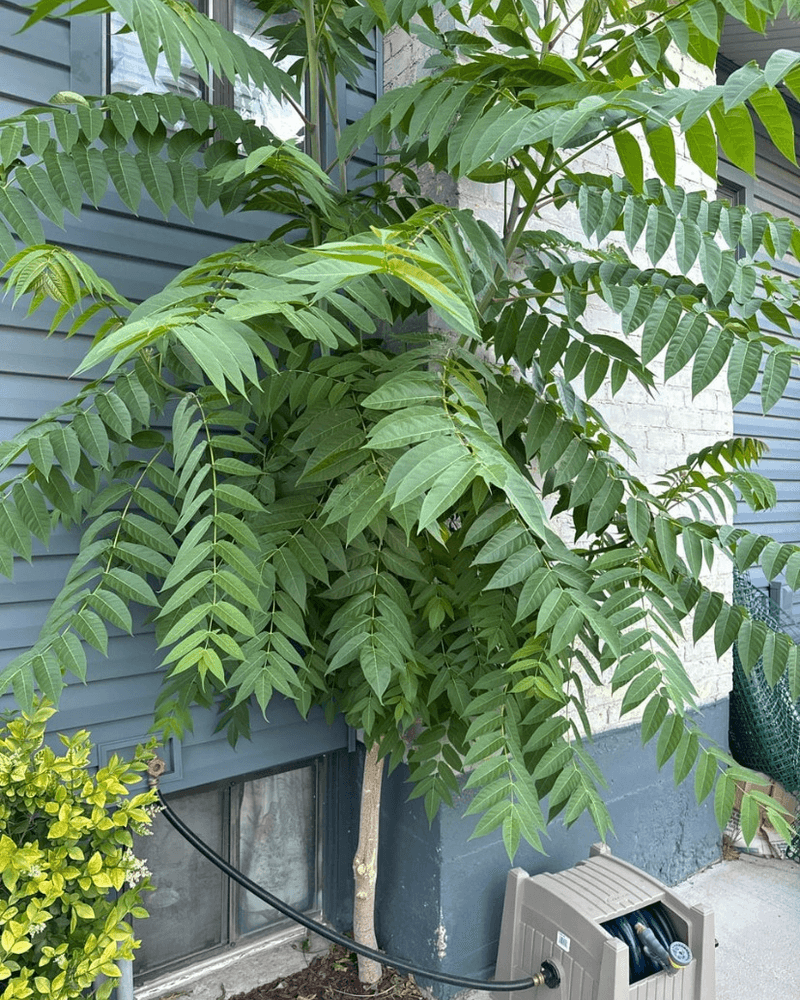
You might have seen it growing in sidewalk cracks, along roadsides, or shooting up against your fence without any warning. Tree-of-Heaven, known scientifically as Ailanthus altissima, is one of the most aggressive invasive trees in Pennsylvania.
It grows fast, spreads everywhere, and causes real problems for homeowners who ignore it.
Pennsylvania officially lists Tree-of-Heaven as a noxious weed, which means the state takes its removal seriously. It also plays a direct role in the spotted lanternfly crisis.
This invasive insect loves Tree-of-Heaven and uses it as a primary host plant. If you have this tree on your property, you could be helping spotted lanternflies multiply and spread to neighboring yards and farms.
The roots of this tree are no joke either. They can work their way into foundations, drainage pipes, and driveways, causing costly damage over time.
The tree also releases chemicals into the soil that prevent other plants from growing nearby. Basically, it poisons the ground around it to keep competition away.
Removing Tree-of-Heaven is not always simple because it can regrow from its roots if not handled correctly. Cutting it down without treating the stump can actually cause it to sprout back even harder.
Many Pennsylvania homeowners find it helpful to consult a certified arborist who understands how to fully remove it without triggering regrowth.
Replacing it with a native Pennsylvania tree like a serviceberry or redbud is a great way to restore balance to your yard.
Pennsylvania’s Invasive Replace-ive Program even offers free native plants to homeowners who remove invasive species. Taking action now saves you bigger headaches down the road.
2. Callery Pear
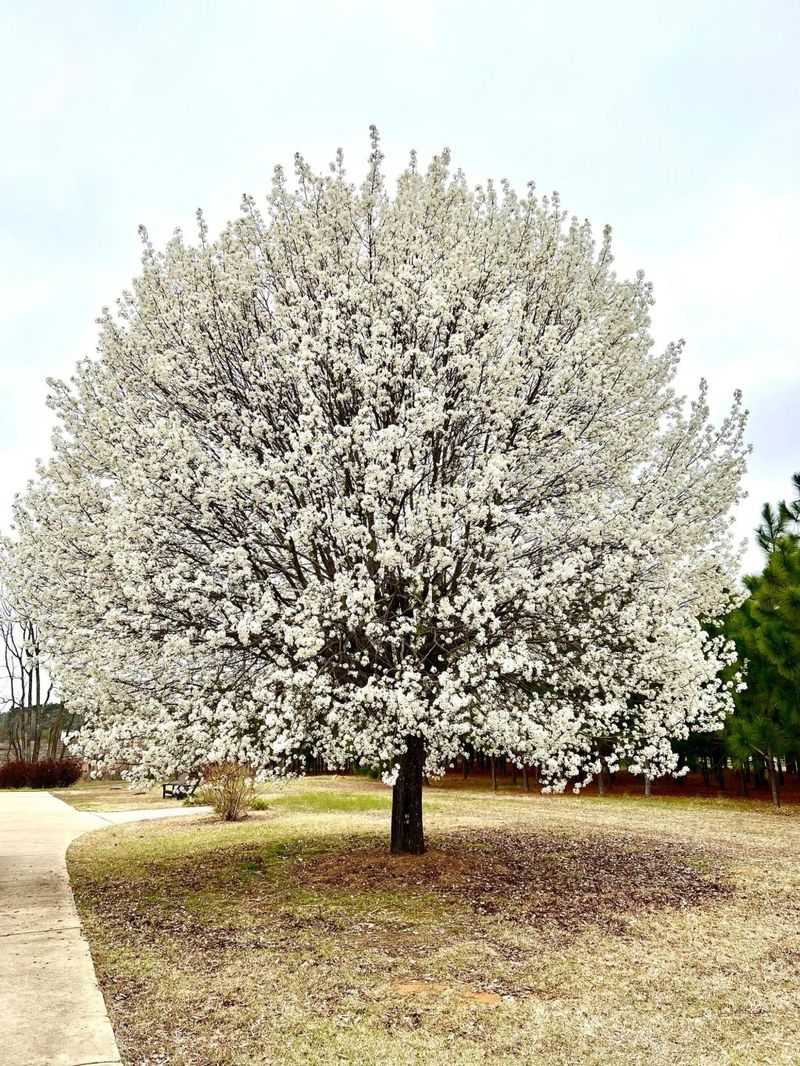
Every spring, neighborhoods across Pennsylvania light up with the white blossoms of the Callery pear, often sold under the name Bradford pear. It looks beautiful for about two weeks, and then the trouble begins.
What most homeowners do not realize is that this popular ornamental tree is one of the most problematic invasive species in the entire state.
The branching structure of the Callery pear is notoriously weak. The branches grow at sharp angles from the trunk, which makes them highly prone to splitting during storms.
A single ice storm or strong wind event can send large limbs crashing down onto cars, rooftops, or fences. Insurance claims linked to Bradford pear damage are more common than most people think.
Beyond the structural risks, this tree spreads aggressively into natural areas. Birds eat the small fruits and scatter seeds across fields and forest edges throughout Pennsylvania.
Once established in the wild, Callery pear forms dense thickets that crowd out native wildflowers, shrubs, and young trees. It has become a serious threat to Pennsylvania’s natural landscapes.
The roots can also lift sidewalks and crack driveways, adding unexpected repair costs for homeowners. Unlike some ornamental trees, Callery pear does not offer much wildlife value either.
Native birds and insects prefer native trees, so replacing it is actually better for your entire yard ecosystem.
Pennsylvania strongly encourages homeowners to remove Callery pear and replace it with native alternatives like wild plum or native hawthorn. The state’s Invasive Replace-ive Program makes it easier by offering free native plants.
Getting rid of this tree now protects both your property and Pennsylvania’s natural areas for years to come.
3. Norway Maple
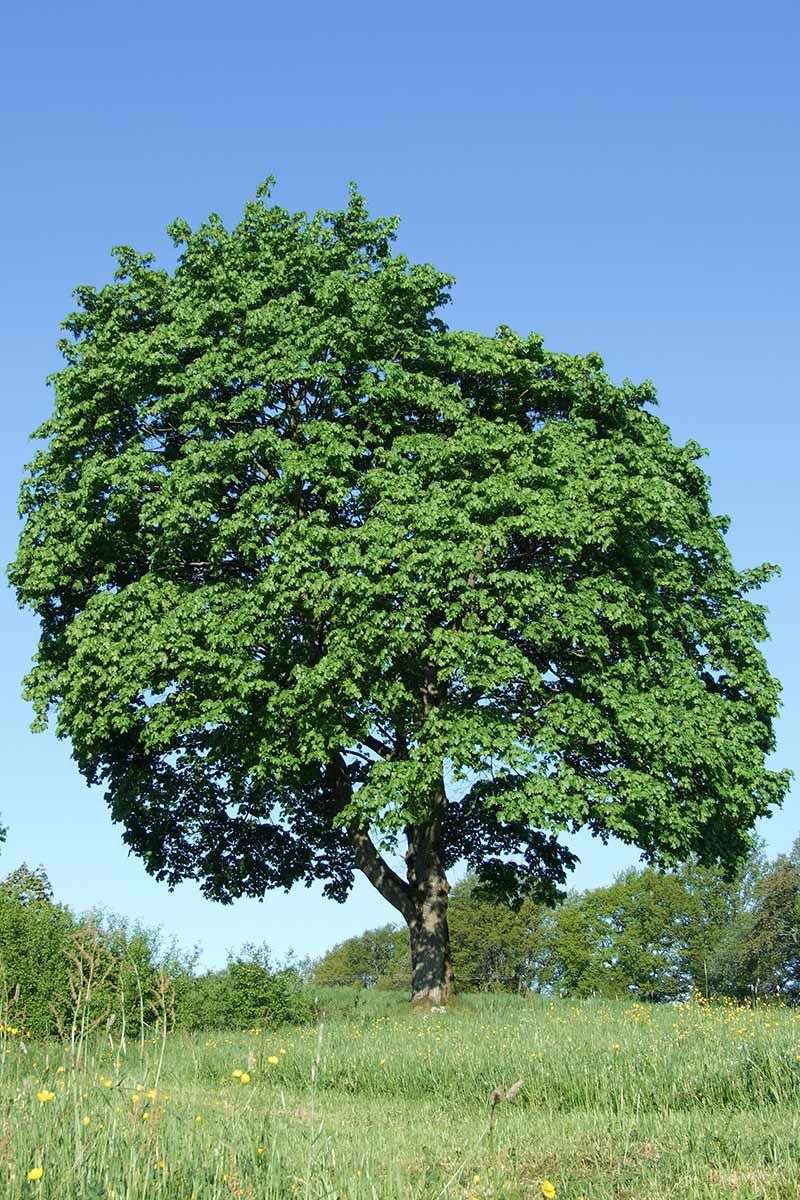
Walk through any older Pennsylvania neighborhood and you will almost certainly spot a Norway maple. For decades, this tree was planted everywhere because it grows quickly, tolerates city conditions, and looks tidy.
But beneath that pleasant appearance is a tree that quietly causes problems for both homeowners and the surrounding environment.
Norway maple is officially classified as an invasive species in Pennsylvania. It produces enormous numbers of winged seeds that float into natural areas and take hold fast.
Once it gets into forests and parks, it outcompetes native trees like sugar maple and red oak, which are critical parts of Pennsylvania’s ecosystem. Over time, it changes the entire character of a woodland.
For homeowners, the shallow root system is a constant headache. Norway maple roots spread wide and close to the surface, lifting sidewalks, cracking driveways, and making it nearly impossible to grow grass or garden plants underneath the tree.
If your lawn has a large bare patch under a maple, there is a good chance it is a Norway maple blocking sunlight and stealing nutrients from the soil.
The dense shade this tree creates is another issue. Very little can survive underneath it, which leaves your yard looking sparse and worn.
Some homeowners spend years trying to fix their lawn without realizing the tree itself is the problem.
Removing Norway maple and replacing it with a native sugar maple or red maple is one of the best investments a Pennsylvania homeowner can make.
Native maples support local wildlife, look stunning in fall, and work with the soil rather than against it. The switch is well worth the effort.
4. Mimosa Tree
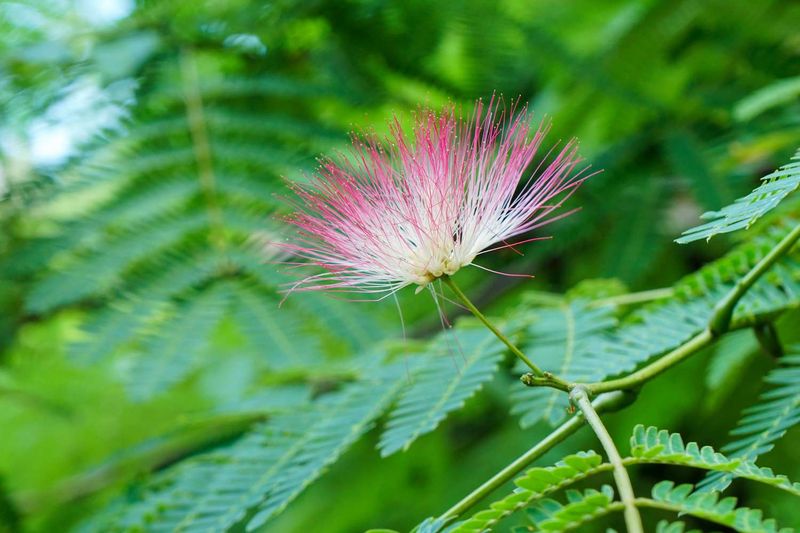
Few trees turn heads quite like a mimosa in full bloom. Those fluffy pink flowers and feathery leaves give it an almost tropical look, which is why so many Pennsylvania homeowners planted it in their yards over the years.
But what looks like a showstopper in July can turn into a genuine nuisance for the other eleven months of the year.
Mimosa is officially listed as an invasive tree in Pennsylvania, and for good reason. It produces large quantities of seeds that spread easily along roadsides, stream banks, and forest edges.
Once it takes root in a natural area, it grows fast and crowds out native plants that local wildlife depends on. It is not just a yard problem.
It is a statewide ecological problem.
For homeowners, mimosa brings its own set of frustrations. The seed pods are messy and drop constantly throughout summer and fall.
The tree is also short-lived and prone to a fungal wilt disease that causes branches to brown and drop unexpectedly. That means you often end up dealing with a tree that looks unhealthy, drops litter, and still manages to spread seeds everywhere before it finally gives out.
The roots are aggressive too, and young mimosa sprouts can pop up all over your yard and garden beds. Pulling them out becomes a regular chore if the parent tree is left in place. Each little sprout that takes hold just adds to the problem.
Pennsylvania homeowners who remove mimosa and replace it with a native flowering tree like eastern redbud get a beautiful yard tree that supports local pollinators, stays healthier longer, and does not threaten the surrounding natural areas. That is a trade worth making.
5. Empress Tree
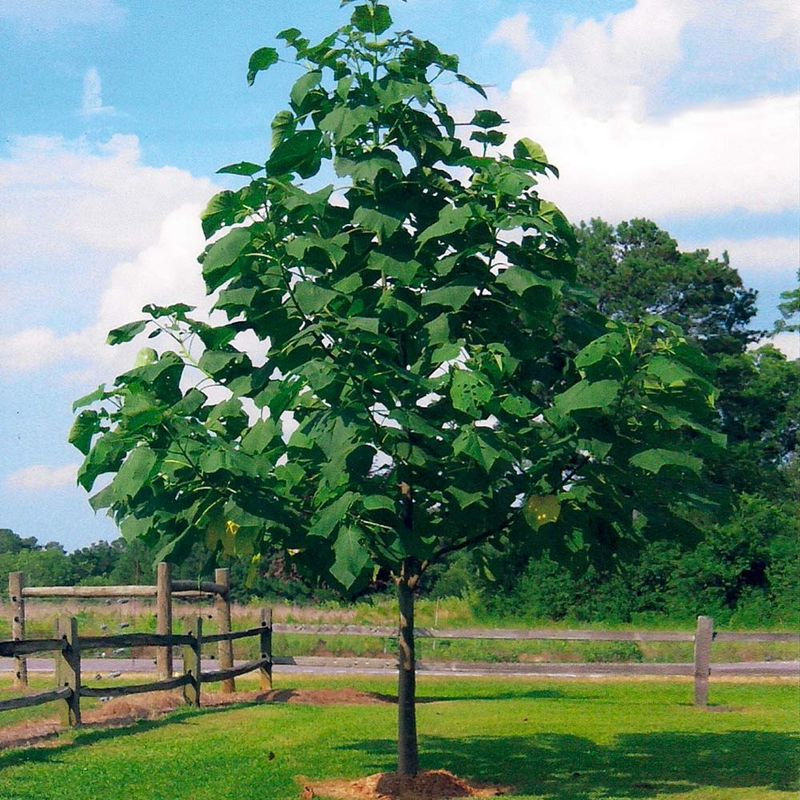
When people first see an Empress tree, they are usually impressed. It grows incredibly fast, sometimes shooting up ten feet in a single year.
Its large purple flowers bloom in spring before the leaves even open, making it look like something out of a botanical garden. But speed and good looks do not make up for the serious problems this tree brings to Pennsylvania properties.
Also called princess tree, Paulownia tomentosa is classified as an invasive species in Pennsylvania. It spreads aggressively through lightweight seeds that travel far on the wind.
A single mature tree can release millions of seeds in one season. Those seeds land in forests, along rivers, and in open fields, where they sprout and grow faster than most native plants can compete with.
For homeowners, the rapid growth that seems like a benefit quickly becomes a liability. Branches grow fast but are not always structurally strong, making the tree prone to storm damage.
Large limbs can break and fall with little warning, especially during the heavy snow and ice storms that hit Pennsylvania every winter. That is a real safety concern for anyone with the tree near their home, driveway, or power lines.
Empress tree stumps also resprout aggressively after cutting, which means removal requires careful follow-through to prevent the tree from coming right back. Leaving the stump untreated almost guarantees multiple new shoots within the same growing season.
Swapping an Empress tree for a native Pennsylvania species like tulip poplar gives you a fast-growing, impressive tree without the invasive baggage.
Tulip poplar is a native giant that supports wildlife and stays in its lane. That is the kind of tree Pennsylvania yards actually need.
6. Siberian Elm
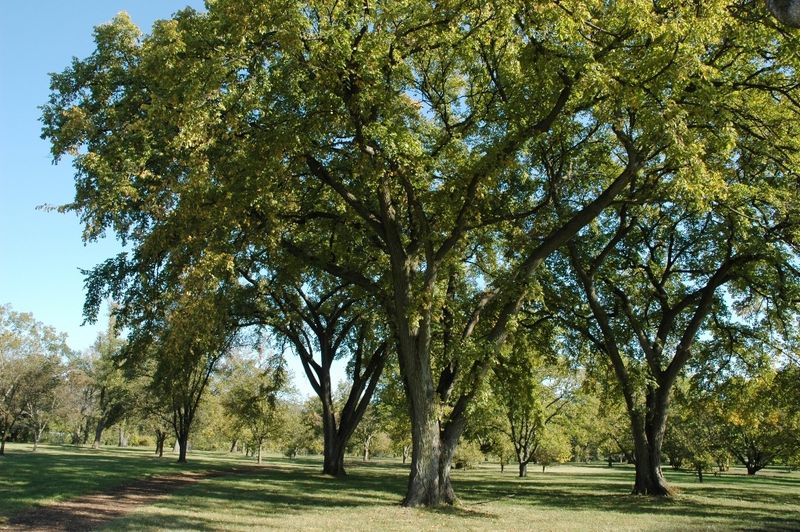
Siberian elm has a reputation that most Pennsylvania homeowners discover the hard way. It was introduced to North America as a fast-growing windbreak tree, and it certainly lives up to that fast-growing part.
But decades of experience have shown that this tree causes far more problems than it solves, especially for homeowners who have it growing near structures.
Classified as an invasive tree in Pennsylvania, Siberian elm spreads prolifically through small winged seeds that float easily on the wind. It sprouts in gutters, garden beds, fence lines, and cracks in pavement.
Before long, you have dozens of seedlings popping up all over your yard and into neighboring properties. Keeping up with them becomes a constant battle.
The wood is notoriously weak and brittle. Branches break easily under the weight of snow, ice, or strong winds, which are all very common in Pennsylvania winters.
Falling branches are a serious concern when the tree grows near homes, garages, or parked cars. Homeowners with Siberian elm close to structures often face repair bills after every major storm.
Extension programs across Pennsylvania widely regard Siberian elm as an undesirable yard tree for exactly these reasons. The combination of invasive spreading habits and structural weakness makes it one of the stronger candidates for removal on any residential property.
Unlike some ornamental trees that at least offer seasonal beauty, Siberian elm does not bring much to the table aesthetically either.
Replacing Siberian elm with a sturdy native tree like American elm or hackberry gives Pennsylvania homeowners a tree with deep roots in the local ecosystem.
Native elms have made a strong comeback and provide real wildlife value. That is the kind of upgrade your yard deserves.