7 Perennials Arizona Gardeners Should Keep Out Of Containers
Not every perennial is happy living in a pot, especially in Arizona where heat builds quickly and roots have little protection from rising temperatures.
Some plants that perform beautifully in the ground struggle in containers because their roots overheat, dry out too fast, or outgrow the limited space far sooner than expected.
What looks manageable at planting time can become stressed and uneven by mid season. Understanding which perennials prefer deeper soil and more stable moisture helps prevent disappointment later.
Giving the right plants room to spread in the ground instead of confining them to a container often leads to stronger growth, better flowering, and far less maintenance through Arizona’s long, hot months.
1. Texas Mountain Laurel Needs Deep Soil To Thrive
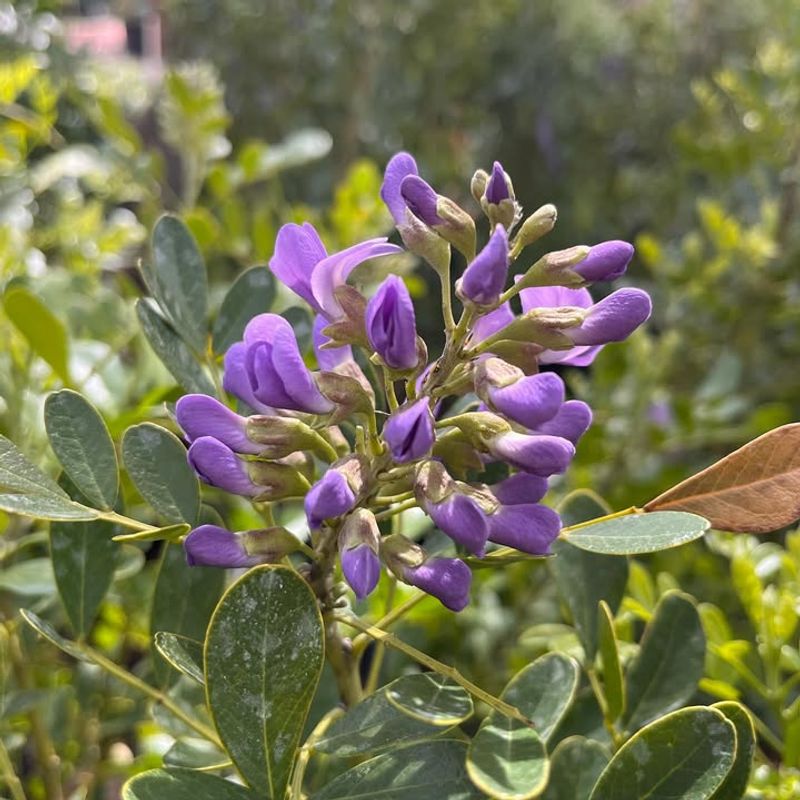
Root depth matters more than most people realize with Texas Mountain Laurel. This slow-growing beauty develops a taproot that drives straight down, searching for moisture and stability deep in the ground.
Containers block that natural downward growth, forcing roots to circle and spiral instead of reaching their full potential.
Arizona summers push container temperatures past 120 degrees on exposed surfaces. That concentrated heat radiates through pot walls and cooks the soil inside, creating conditions that stress even heat-tolerant plants.
Texas Mountain Laurel tolerates ground heat just fine, but potted specimens face root temperatures that climb much higher than natural soil.
Watering becomes a constant battle when this plant sits in a container. The limited soil volume dries out rapidly in Arizona’s low humidity, yet the plant despises soggy conditions.
Balancing moisture needs in a pot proves nearly impossible, especially during monsoon season when rain can waterlog containers overnight.
Growth patterns change dramatically when roots hit container walls. Instead of developing the strong framework that supports those gorgeous purple flower clusters, potted specimens stay stunted and rarely bloom well.
The plant puts energy into fighting confinement rather than producing the fragrant springtime display Arizona gardeners expect.
Transplanting from containers into the ground rarely succeeds after the first year. Circling roots refuse to grow outward, continuing their spiral pattern even after restrictions disappear.
That root-bound condition weakens the entire plant, making it vulnerable to stress and reducing its lifespan significantly in Arizona landscapes.
2. Desert Spoon Quickly Becomes Too Large For Pots
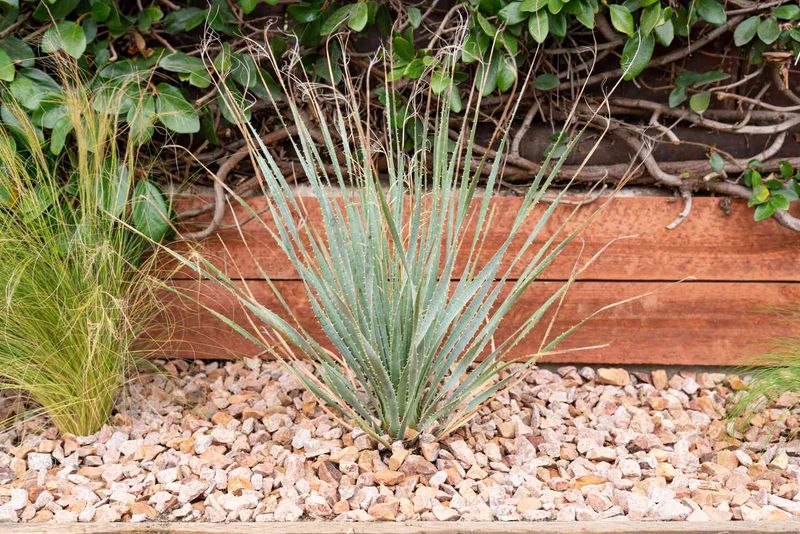
Size projections from nurseries rarely account for Arizona’s growing conditions. Desert Spoon starts compact enough for a large container, but within two growing seasons, the plant spreads beyond any practical pot dimensions.
Those silvery-green leaves radiate outward aggressively, creating a rosette that eventually spans four to five feet across.
Weight becomes a serious problem before you even notice the root situation. A mature Desert Spoon in adequate soil weighs several hundred pounds, making container movement impossible without equipment.
Arizona winds compound this issue, toppling heavy pots and damaging both the plant and surrounding hardscapes.
Root mass develops faster than foliage in many succulents. Desert Spoon produces thick, fibrous roots that fill containers completely, pushing against walls with enough force to crack ceramic and split plastic pots.
The plant essentially destroys its own container while simultaneously becoming root-bound and stressed.
Flowering stalks shoot up ten to fifteen feet when conditions suit this plant. Container specimens rarely have the root stability to support these towering spikes, which can snap off in monsoon storms or tip the entire pot over.
Ground-planted Desert Spoons anchor these stalks properly, but potted versions struggle with structural stability.
Dividing or repotting mature specimens requires tools and effort most gardeners underestimate. Those stiff, spine-edged leaves make handling difficult, and the root mass resists separation.
Arizona gardeners who start Desert Spoon in containers usually face an unpleasant removal project within three years, often resorting to breaking the pot completely to free the plant.
Even if the container survives, restricted root space limits access to moisture in Arizona’s fast-draining soils, forcing you to water more often than this drought-adapted plant naturally prefers.
What begins as a striking architectural accent in a pot often turns into a maintenance headache that could have been avoided by planting it in open ground from the start.
3. Arizona Cypress Struggles In Containers In Desert Heat
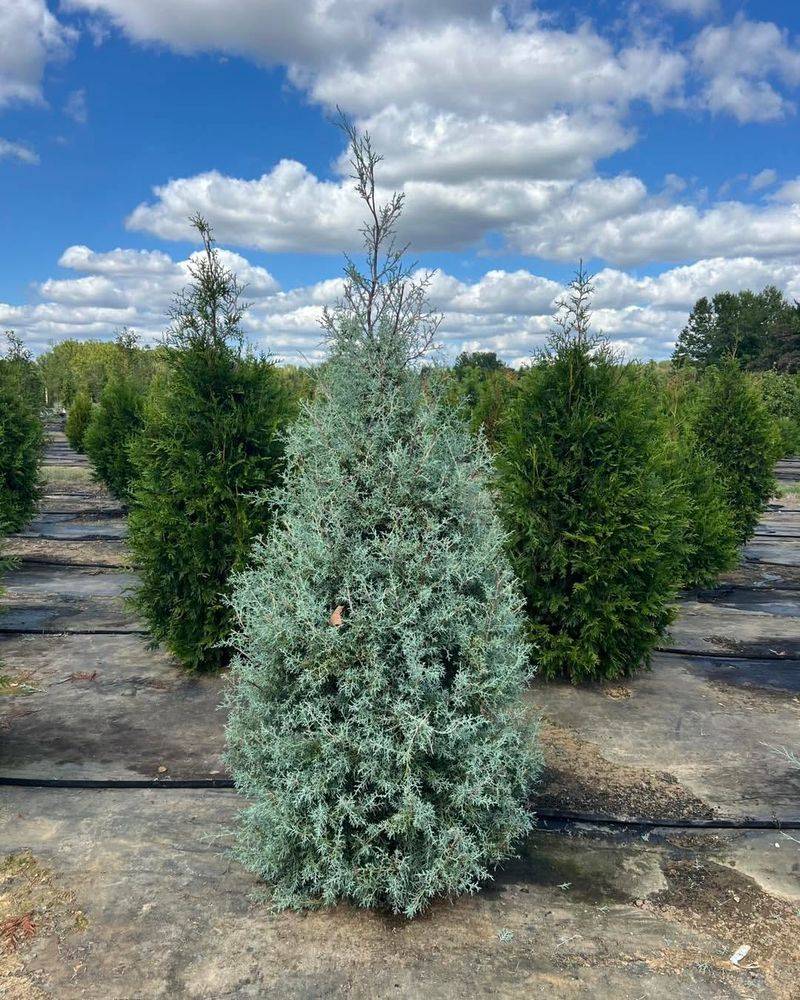
Arizona Cypress may look manageable when young, but it quickly outgrows any realistic container setup in Arizona’s climate.
This evergreen tree is naturally adapted to spread its roots wide and deep in open soil, where it can anchor itself against wind and access stable moisture levels below the surface.
Containers severely restrict that natural growth pattern.
In the ground, Arizona Cypress can reach thirty to forty feet tall with a broad canopy. Even dwarf varieties eventually become too large for long-term container culture.
As roots hit the walls of a pot, they begin circling tightly, creating a dense mass that limits water absorption and weakens overall stability. Once root-bound, the tree struggles to support healthy top growth.
Heat makes the problem worse. In Arizona’s low desert, container soil temperatures rise far higher than ground soil, especially in dark pots exposed to full sun.
Roots that would normally stay insulated underground become stressed and overheated. This stress leads to browning foliage, slowed growth, and increased susceptibility to pests.
Wind is another major concern. Arizona Cypress develops height quickly, and container-grown specimens become top-heavy.
During monsoon season, strong winds can easily tip or damage potted trees, even when containers are large.
Transplanting later is rarely simple. Circling roots often continue their pattern after being moved into the ground, preventing proper establishment.
For long-term health, structural stability, and proper growth, Arizona Cypress belongs in open soil rather than confined to a container.
4. Mexican Bird Of Paradise Outgrows Containers Fast
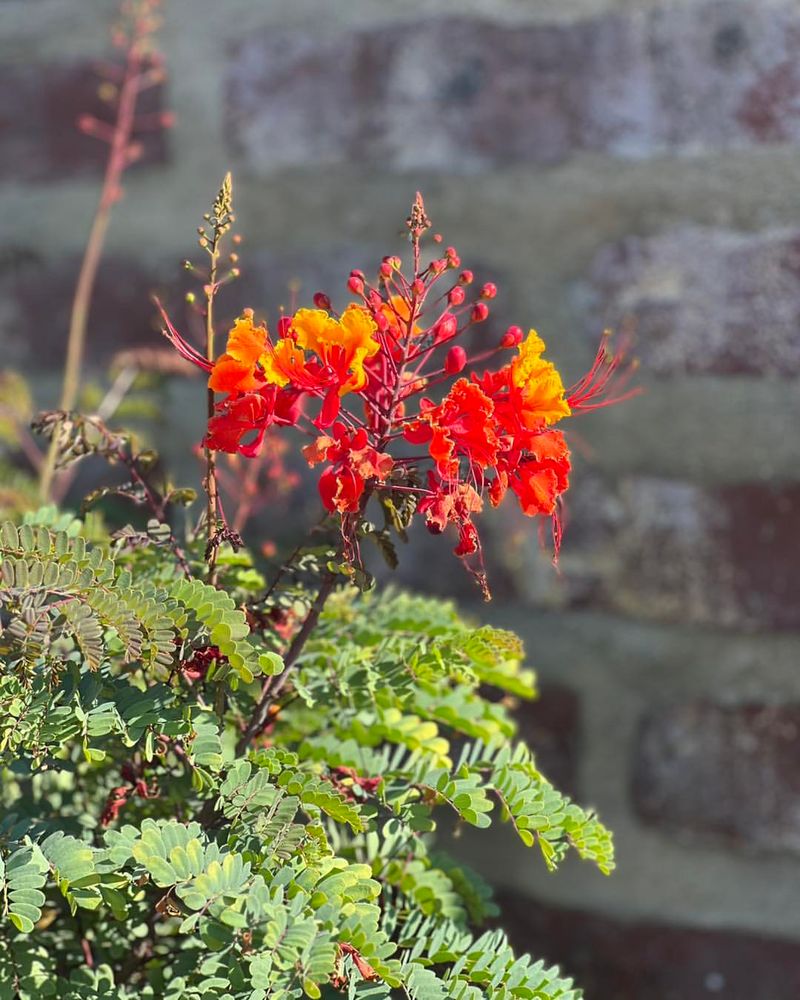
Growth rate surprises even experienced Arizona gardeners with this vigorous perennial. Mexican Bird of Paradise can add three feet of height and width in a single growing season when conditions favor it.
Containers that seem adequately sized in spring become laughably small by fall, with roots bursting through drainage holes and foliage overwhelming the pot.
Pruning becomes a weekly chore rather than a seasonal task with potted specimens. The plant responds to root restriction by pushing more top growth, creating an imbalanced ratio between roots and foliage.
Arizona’s long growing season means this plant never truly goes dormant, continuing to expand even during mild winters and requiring constant cutting back.
Nutrient depletion happens rapidly in the limited soil volume containers provide. Mexican Bird of Paradise feeds heavily during active growth, stripping available nutrients within weeks.
Container gardeners face endless fertilizing schedules that still fail to match the natural nutrient cycling that occurs in ground soil, resulting in yellowing foliage and reduced flowering.
Structural stability deteriorates as the plant becomes top-heavy. Those showy yellow and orange blooms cluster at branch ends, creating weight that potted roots cannot adequately anchor.
Arizona monsoon winds easily topple containers or snap branches on unbalanced specimens, leaving gardeners with damaged plants and broken pots.
Root-bound conditions develop within a single season for young plants. The aggressive root system fills every available space, circling the container bottom and sides in dense mats.
Once this happens, water runs straight through without penetrating the root ball, and the plant shows stress symptoms despite frequent irrigation. Repotting provides only temporary relief before the cycle repeats.
5. Blue Palo Verde Struggles With Restricted Root Space
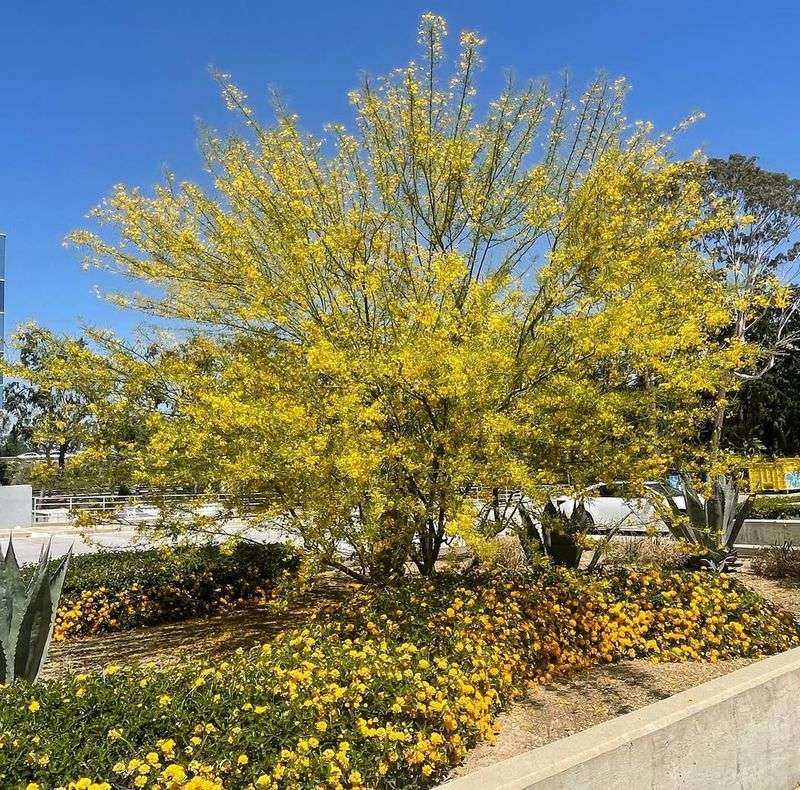
Blue Palo Verde (Parkinsonia florida) is naturally adapted to Arizona’s open desert landscapes, where its roots spread widely and deeply to anchor the tree and access moisture far below the surface.
That natural growth pattern simply cannot happen inside a container.
In the ground, this tree develops an extensive lateral root system that stabilizes it against strong monsoon winds. Containers restrict that spread immediately.
As roots hit the pot walls, they begin circling tightly, forming a dense mass that limits water absorption and weakens overall structural support. Once the canopy begins expanding, a container-grown tree becomes top-heavy and unstable.
Heat adds another serious layer of stress. In Arizona’s low desert, soil inside pots can reach far higher temperatures than surrounding ground soil, especially in dark or ceramic containers exposed to full sun.
Roots that would normally stay insulated underground become overheated, reducing vigor and slowing healthy growth.
Watering also becomes complicated. Blue Palo Verde is adapted to deep, infrequent irrigation once established.
Containers dry out quickly in Arizona’s dry air, forcing more frequent watering that disrupts the tree’s natural drought-adapted rhythm and encourages shallow root development.
Even young trees quickly outgrow realistic container sizes. Long-term success in pots is rare, and transplanting later often fails because circling roots continue their pattern after planting.
For stability, heat protection, and proper development, Blue Palo Verde belongs in open soil rather than confined space.
Over time, restricted roots also reduce flowering intensity and significantly shorten the overall lifespan of the tree.
Chronic stress from confinement increases susceptibility to pests, branch breakage, and trunk instability. Instead of becoming a resilient desert specimen, it remains undersized, weak, and structurally compromised.
6. Yellow Bells Becomes Root Bound In Summer Heat
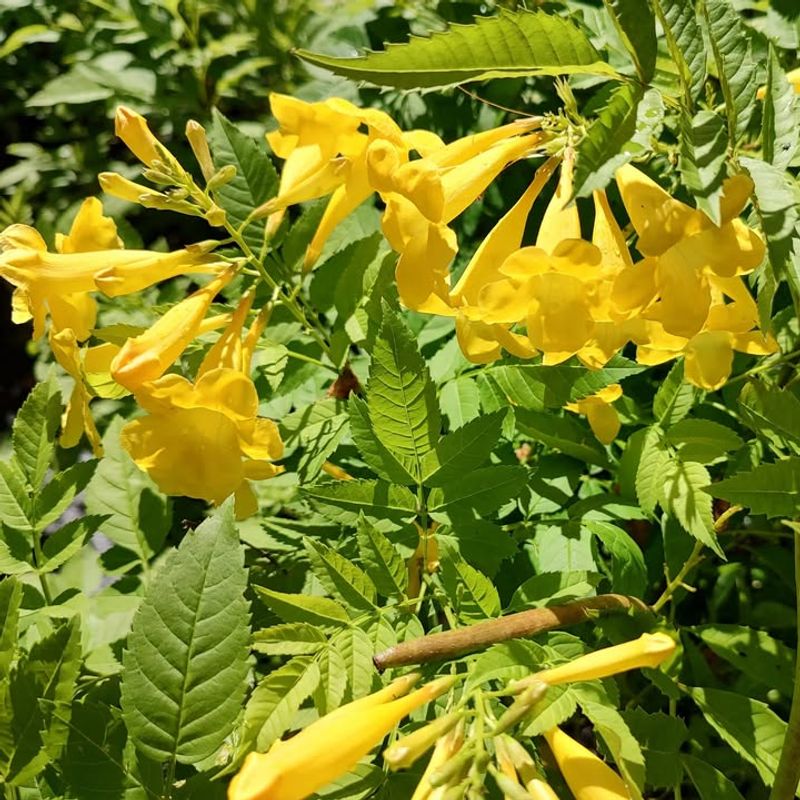
Explosive summer growth overwhelms containers before you realize what’s happening. Yellow Bells responds to Arizona’s heat and monsoon moisture with rapid expansion, sending out new shoots and filling every inch of available space.
That vigorous growth creates a root system that quickly exhausts container capacity, leaving the plant stressed despite appearing healthy above ground.
Water management becomes impossible once roots pack the container tightly. A root-bound Yellow Bells cannot absorb water effectively, causing runoff even when the root ball remains dry inside.
Arizona gardeners find themselves watering multiple times daily, watching water pour from drainage holes while the plant wilts from dehydration.
Bloom production suffers dramatically in confined conditions despite this plant’s reputation for prolific flowering. Those cheerful yellow trumpet flowers require substantial resources, which a root-bound plant cannot provide.
Container specimens produce scattered blooms instead of the generous floral display that makes Yellow Bells popular in Arizona landscapes.
Heat stress compounds root restriction problems during Arizona’s brutal summers. Container soil temperatures spike during afternoon heat, while root-bound conditions prevent adequate moisture uptake.
The combination creates a crisis where the plant cannot cool itself through transpiration, leading to leaf drop and branch decline that weakens the entire plant.
Repotting provides only brief relief before the cycle repeats. Yellow Bells grows so vigorously that even moving to a substantially larger container buys just one season before root-bound conditions return.
Arizona’s extended growing season means this plant never stops expanding, making container culture a losing battle that ends with a stressed, underperforming perennial that never reaches its landscape potential.
7. Hop Bush Develops A Root System Pots Cannot Handle
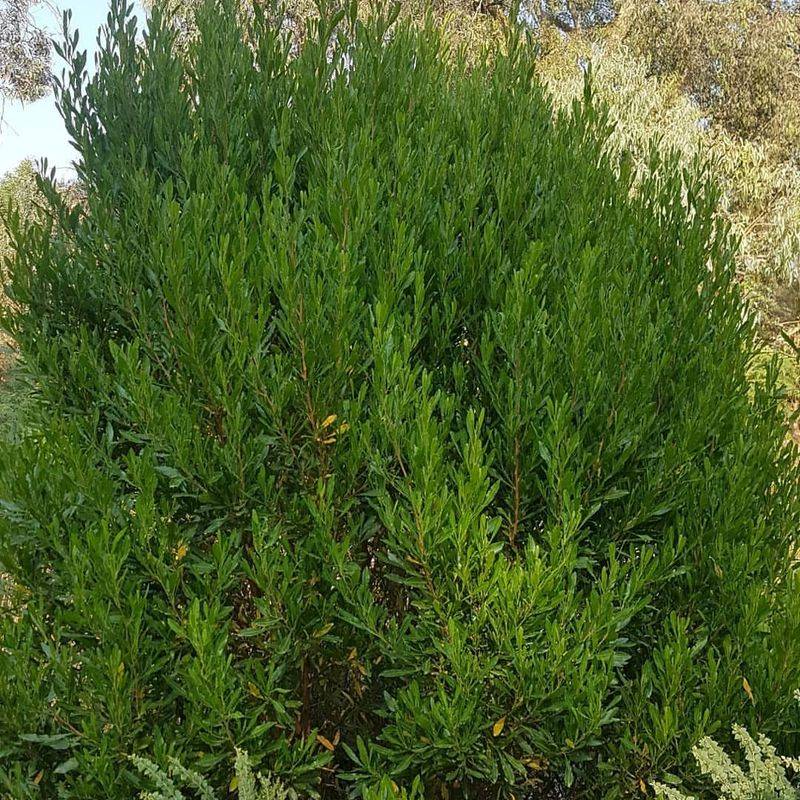
Root architecture determines success with this Arizona native, and containers fundamentally conflict with how Hop Bush grows.
The plant develops both deep taproots and extensive lateral roots that spread widely, creating a network that stabilizes the plant and accesses moisture across a broad area.
Pots force all that growth into a compact space, resulting in twisted, circling roots that never function properly.
Structural integrity depends on proper root development that containers prevent. Hop Bush naturally grows into a large shrub or small tree, with branches that spread eight to ten feet across.
Supporting that canopy requires the anchoring strength of an unrestricted root system. Container specimens become top-heavy and unstable, prone to tipping during Arizona’s monsoon storms.
Moisture stress appears even with diligent watering because container volume cannot support this plant’s needs. Hop Bush develops drought tolerance through extensive roots that tap into deep soil moisture, but potted specimens lack that resource.
Arizona’s dry air and intense sun create water demands that exceed what limited container soil can provide, leaving the plant in constant deficit.
Growth rate slows dramatically when roots hit container walls, but the plant never adapts to restricted conditions. Instead of adjusting to available space, Hop Bush continues attempting normal growth patterns, creating an increasingly stressed specimen.
Foliage density decreases, branch development becomes sparse, and the plant takes on a scraggly appearance completely unlike the full, attractive shrub it becomes in the ground.
Long-term survival rates drop significantly for container-grown Hop Bush in Arizona. While ground-planted specimens thrive for decades with minimal care, potted versions struggle through each season and rarely survive more than a few years.
The cumulative stress of heat, restricted roots, and inadequate moisture eventually overwhelms the plant despite its native toughness.