11 Perennials Michigan Gardeners Should Avoid Growing In Their Yards
Michigan gardeners face unique challenges when selecting plants for their outdoor spaces.
The state’s cold winters, humid summers, and variable soil conditions create an environment where not every perennial thrives.
Some plants that flourish in other regions become problematic here, spreading aggressively or requiring constant maintenance.
Certain perennials marketed as low-maintenance options actually become invasive nightmares in Michigan’s climate.
They crowd out native species, damage property foundations, and create dense thickets that choke other plants.
Others attract unwanted pests or trigger allergic reactions in sensitive individuals.
Making informed choices about what not to plant is just as important as knowing what to grow.
Each plant on this list presents specific challenges that outweigh its ornamental benefits.
From aggressive spreaders to high-maintenance divas, these perennials can turn your garden dream into a management headache.
1. Purple Loosestrife
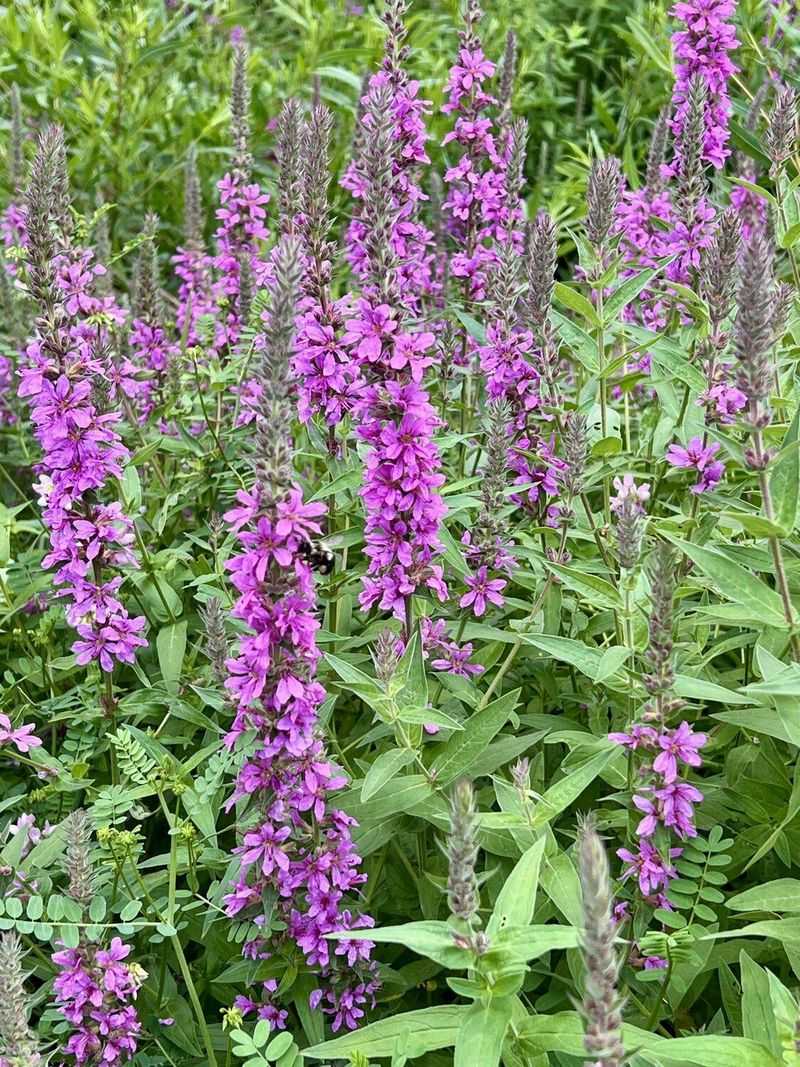
Purple loosestrife arrived in North America during the early 1800s, likely as seeds in ship ballast.
What seemed like an attractive addition to gardens quickly became an ecological disaster across the Great Lakes region.
This aggressive perennial dominates wetlands, marshes, and stream banks throughout Michigan.
Each mature plant produces over two million seeds annually, which remain viable in soil for years.
The dense root systems form impenetrable mats that exclude native vegetation.
Cattails, bulrushes, and other important wetland plants cannot compete with its rapid growth rate.
Wildlife suffers tremendously when purple loosestrife takes over habitat areas.
Native waterfowl, amphibians, and insects lose crucial food sources and nesting sites.
The plant offers little nutritional value to Michigan’s fauna compared to native alternatives.
Michigan law actually prohibits planting, selling, or transporting purple loosestrife due to its destructive nature.
Gardeners caught growing this species face potential fines and mandatory removal requirements.
Sterile cultivars marketed as safe alternatives still pose risks through cross-pollination with wild populations.
Choose native alternatives like blazing star or Joe-Pye weed for similar purple blooms without the ecological damage.
2. Bishop’s Weed (Goutweed)
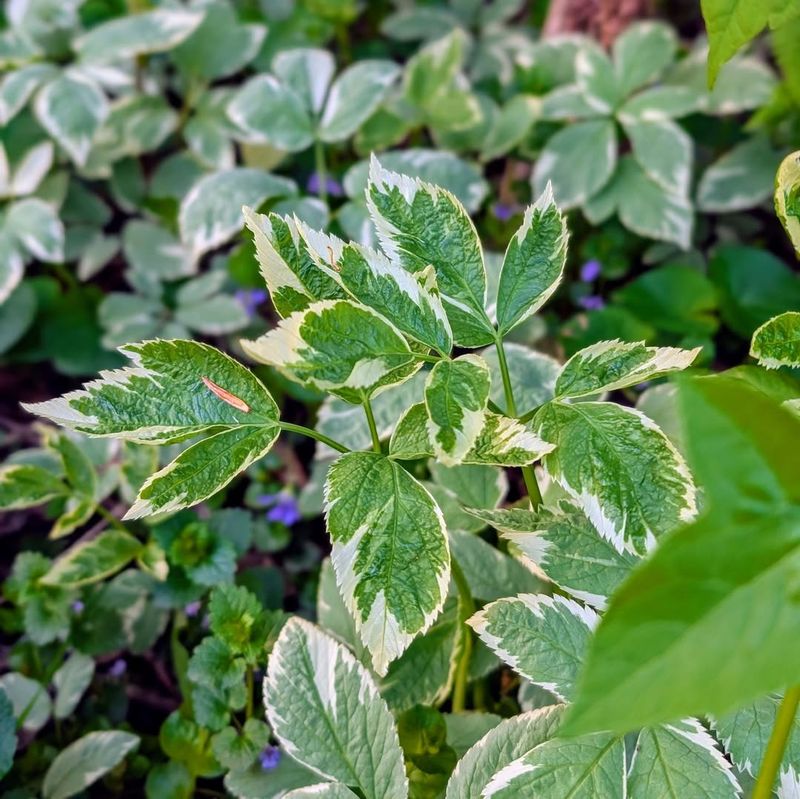
Nurseries often market bishop’s weed as an attractive solution for shady problem areas.
The variegated foliage looks appealing in containers and garden catalogs.
Unfortunately, this seemingly innocent ground cover becomes a homeowner’s worst nightmare once established in Michigan soil.
Underground rhizomes spread with alarming speed, traveling several feet per season.
The plant invades neighboring flower beds, lawns, and even cracks in sidewalks.
Removing bishop’s weed requires excavating every tiny root fragment, as each piece regenerates into a new plant.
Chemical control proves difficult because the waxy leaves resist herbicide absorption.
The extensive root system stores energy reserves that allow regrowth even after repeated treatment attempts.
Many Michigan gardeners spend years battling this perennial after a single planting decision.
Your neighbors will not appreciate bishop’s weed creeping under fences into their carefully maintained landscapes.
Property disputes and damaged relationships often result from this aggressive spreader.
Native alternatives like wild ginger or foam flower provide beautiful ground cover without the invasive behavior.
Save yourself decades of frustration by choosing less aggressive options from the start.
3. Yellow Flag Iris
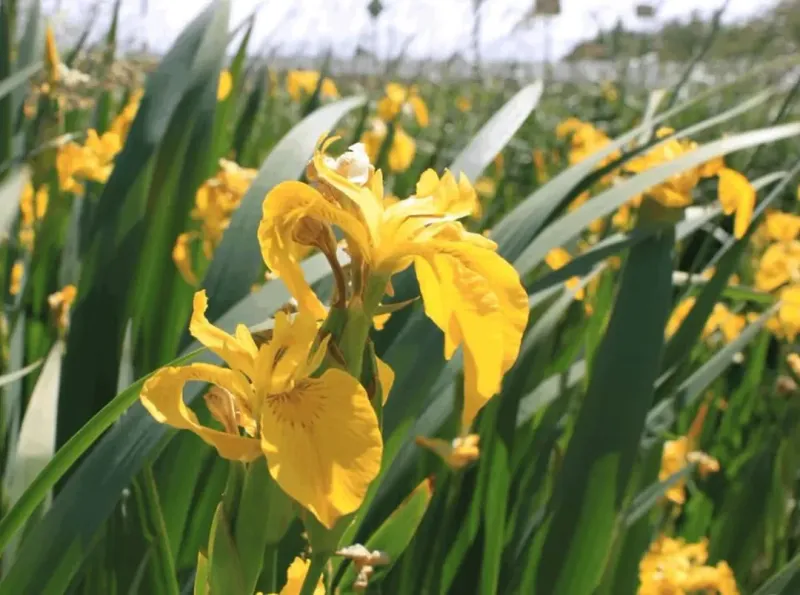
Bright yellow blooms make this iris species tempting for water gardens and pond edges.
European gardeners have cultivated yellow flag iris for centuries without major problems.
Michigan’s wetland ecosystems, however, lack the natural controls that keep this plant in check overseas.
The thick rhizomes form dense colonies that alter water flow patterns in streams and drainage ditches.
Native sedges, rushes, and other wetland plants cannot penetrate the impenetrable stands.
Flooding risks increase when yellow flag iris clogs culverts and narrows waterways.
All parts of the plant contain toxic compounds that irritate skin and mucous membranes.
Children and pets who come in contact with the sap may experience painful reactions.
Wildlife generally avoids consuming the plant, giving it further competitive advantage over palatable native species.
Michigan includes yellow flag iris on its invasive species watch list due to expanding populations.
Removal requires careful excavation of the entire root system, which can extend several feet deep.
Native blue flag iris offers similar beauty with appropriate growth habits for local ecosystems.
Water gardeners should always choose Michigan-native alternatives that support rather than harm local wildlife.
4. Japanese Knotweed
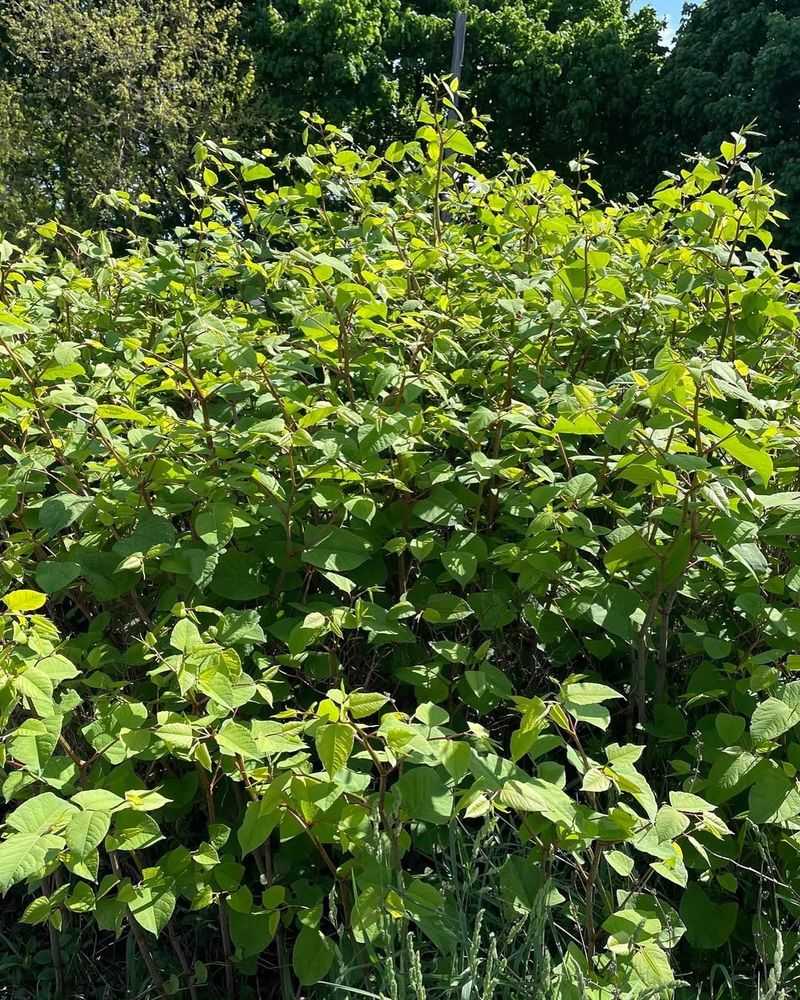
Real estate agents cringe when they spot Japanese knotweed on properties for sale.
This perennial’s reputation for structural damage has crashed home values across North America.
The bamboo-like stems grow up to ten feet tall, creating impressive but problematic screens.
Rhizomes penetrate concrete foundations, driveways, and underground utility lines with surprising force.
The aggressive root system can travel twenty feet horizontally from the original planting site.
Repair costs for knotweed damage often reach thousands of dollars for Michigan homeowners.
Tiny root fragments left in soil after removal attempts regenerate into full-sized plants.
Professional eradication typically requires three to five years of persistent treatment.
Some mortgage lenders refuse to finance properties with active knotweed infestations.
Michigan’s climate provides perfect conditions for this Asian import to thrive and spread.
Seeds travel via water, and rhizome pieces hitchhike on contaminated soil and equipment.
Once established in a neighborhood, Japanese knotweed becomes nearly impossible to eliminate completely.
Native alternatives like New England aster or tall coreopsis provide height and screening without catastrophic consequences.
The momentary appeal of fast growth never justifies the long-term problems this plant creates.
5. Lily Of The Valley
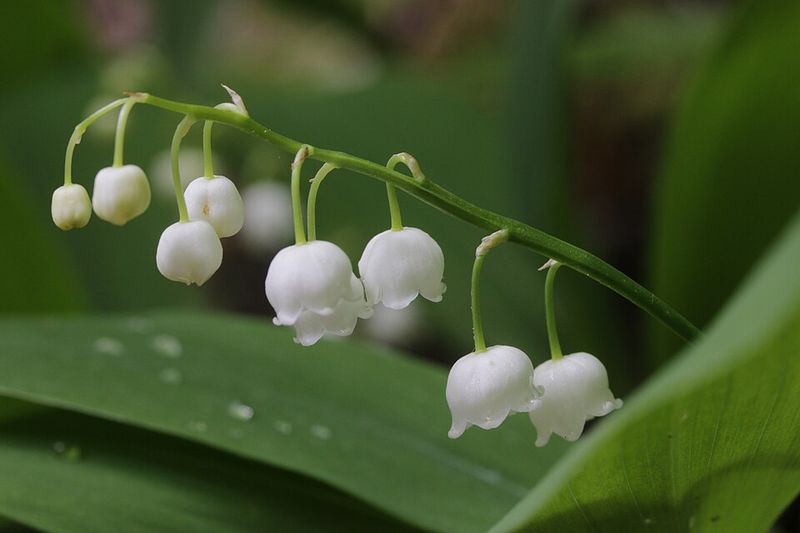
Grandmothers cherish memories of lily of the valley’s sweet fragrance and dainty white bells.
Nostalgia often drives planting decisions, but sentiment cannot overcome this plant’s aggressive nature.
Michigan’s cool, moist conditions create an ideal environment for unchecked expansion.
The spreading rhizomes quickly dominate shaded areas, forming dense mats that exclude other plants
What starts as a small patch beneath trees soon engulfs entire garden beds.
Removing lily of the valley requires digging out every interconnected root piece, an exhausting task.
Every part of the plant contains cardiac glycosides, compounds toxic to humans and pets.
Children attracted to the bright red berries that follow spring blooms face serious poisoning risks.
Even water from vases holding cut stems becomes toxic enough to cause illness.
The plant’s allelopathic properties inhibit growth of nearby species through chemical secretions.
Companion plants struggle or fail completely when lily of the valley dominates an area.
Michigan gardeners inherit lily of the valley infestations from previous homeowners and spend years fighting regrowth.
Native alternatives like wild geranium or Solomon’s seal provide spring beauty without aggressive behavior or toxicity concerns.
Sentimental value cannot justify the practical problems this old-fashioned favorite creates.
6. Chameleon Plant
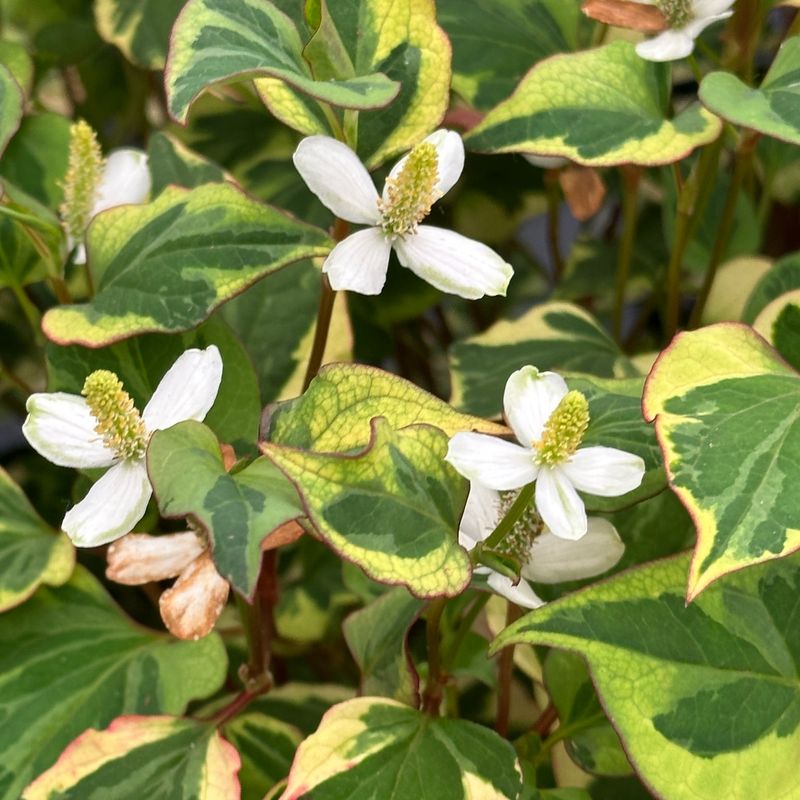
Garden centers promote chameleon plant for its stunning multicolored foliage and moisture tolerance.
The red, green, and yellow variegated leaves catch eyes immediately.
Sales staff rarely mention the aggressive spreading habit that makes this plant a landscaping disaster.
Underground runners travel rapidly through soil, popping up dozens of feet from the original planting.
The plant thrives in Michigan’s clay soils and tolerates both wet and dry conditions once established.
Each node along the stems and roots can generate new plants, making eradication extremely difficult.
Chameleon plant produces a distinctive fishy odor when leaves or stems are crushed or damaged.
The unpleasant smell becomes noticeable during weeding, mowing, or any garden maintenance activities.
Many Michigan gardeners regret their purchase after experiencing the persistent aroma.
Herbicides often prove ineffective against the waxy foliage and extensive root system.
The plant quickly rebounds from cutting, pulling, or digging attempts.
Some homeowners resort to replacing contaminated soil entirely, an expensive and labor-intensive solution.
Native alternatives like wild ginger or foamflower offer attractive ground cover without the spreading nightmare or unpleasant odor.
Pretty foliage never compensates for years of constant battle against an unkillable invader.
7. Crown Vetch
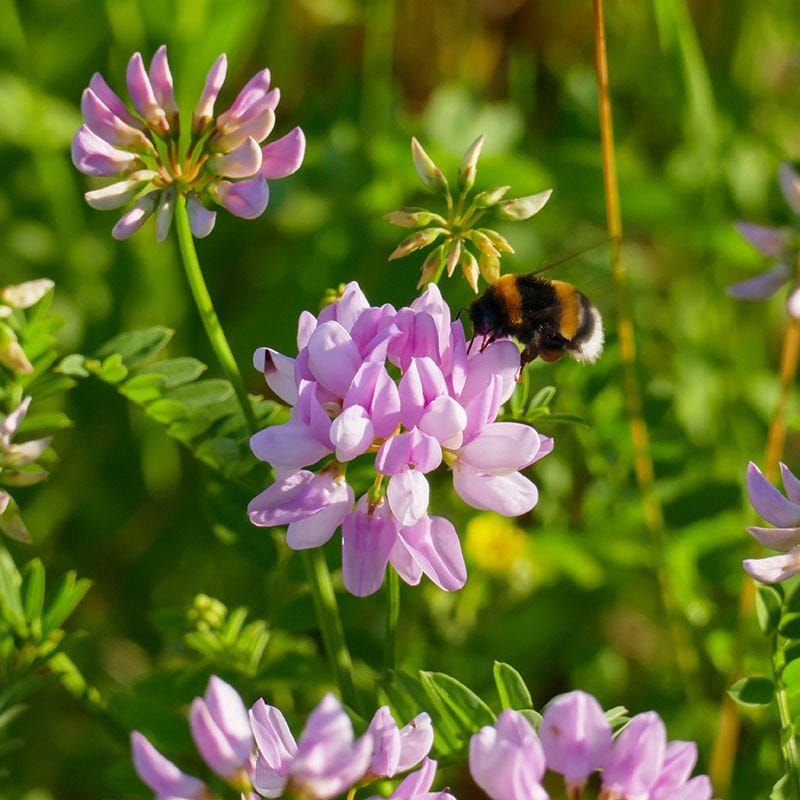
Highway departments once planted crown vetch extensively along Michigan roadsides for erosion control
The sprawling growth and nitrogen-fixing abilities seemed perfect for stabilizing slopes.
Decades later, we understand the severe ecological consequences of this well-intentioned decision.
Crown vetch escapes cultivation easily, invading prairies, meadows, and woodland edges throughout the state.
The aggressive vines smother native wildflowers and grasses, creating monoculture stands.
Michigan’s rare and threatened plant species face increased pressure from crown vetch expansion.
The plant’s allelopathic properties inhibit germination and growth of neighboring species.
Even after crown vetch removal, affected soil may remain unsuitable for native plants for several years.
Restoration projects must often replace contaminated topsoil to reestablish diverse plant communities.
Dense growth provides poor habitat value for Michigan wildlife compared to native alternatives.
Insects, birds, and small mammals find little food or shelter in crown vetch thickets.
The plant’s toxicity deters most herbivores, eliminating its usefulness in the food web.
Modern erosion control methods favor native grasses and forbs that stabilize soil while supporting biodiversity.
What worked for highways creates serious problems in residential and natural landscapes.
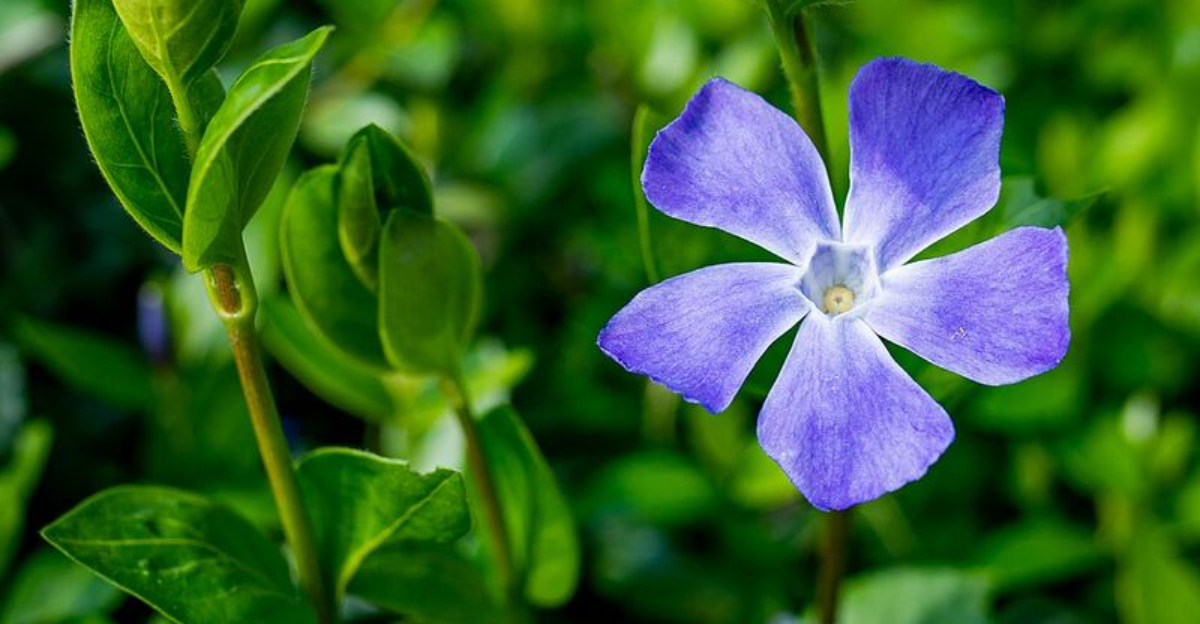
8. Periwinkle (Vinca)
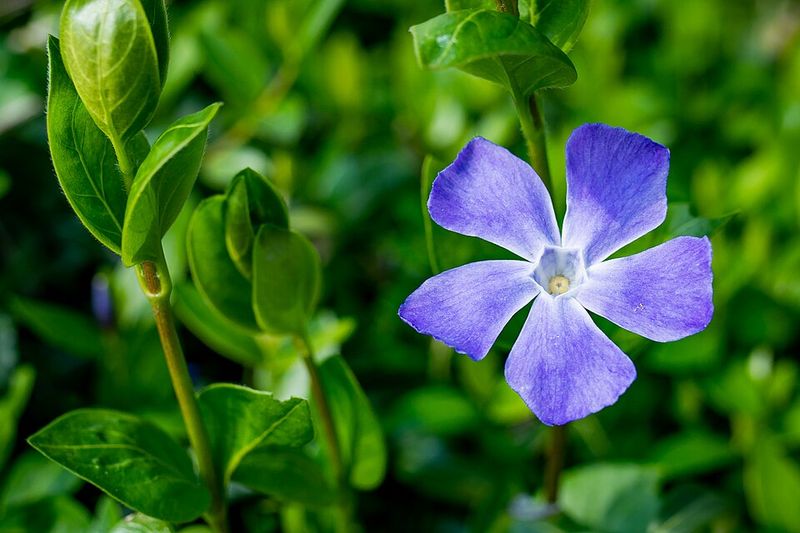
Periwinkle’s glossy evergreen leaves and cheerful blue flowers make it a popular ground cover choice.
Landscapers recommend it for difficult shady areas where grass struggles to grow.
This seemingly perfect solution becomes a persistent problem in Michigan’s woodland gardens.
The trailing stems root at every node, creating an ever-expanding mat of vegetation.
Periwinkle escapes garden boundaries, invading natural areas and forest floors.
Native spring wildflowers like trillium and bloodroot cannot compete with the dense evergreen cover.
Michigan’s native plant communities evolved without this European import, leaving them vulnerable to displacement.
The plant’s year-round foliage blocks sunlight needed for native species’ germination and growth.
Woodland ecosystems lose diversity and ecological function when periwinkle takes over.
Removal requires extracting the interconnected network of stems and roots completely.
Fragments left behind quickly regenerate, requiring repeated efforts over multiple seasons.
The evergreen nature means periwinkle continues growing and spreading even during Michigan’s mild winters.
Native alternatives like wild ginger, woodland phlox, or Canadian wild ginger provide attractive ground cover without invasive tendencies.
These options support local insects and wildlife while maintaining ecological balance.
Choosing native plants protects Michigan’s natural heritage for future generations.
9. Obedient Plant
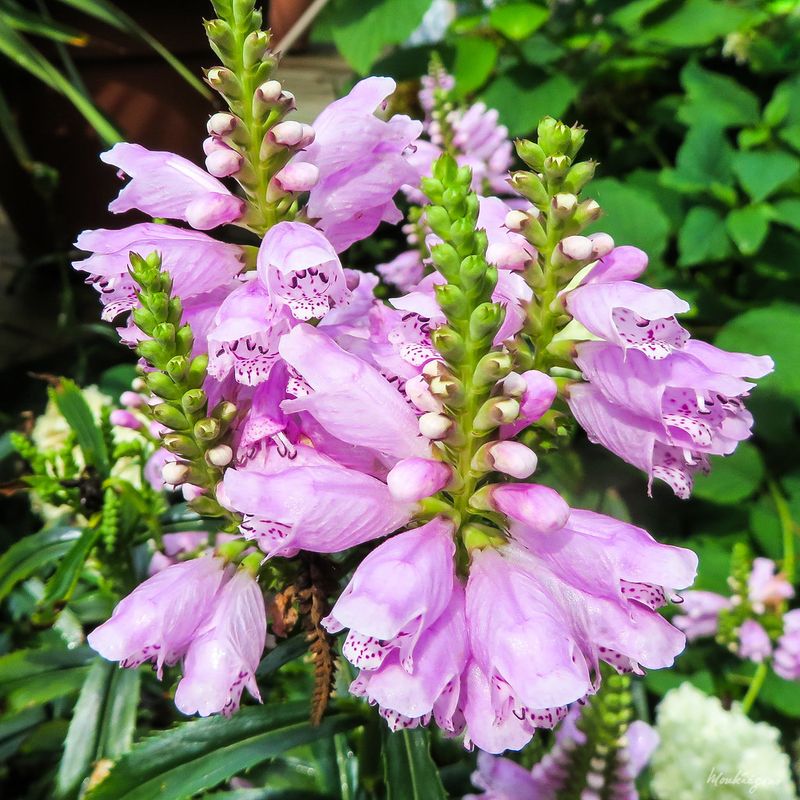
The name obedient plant creates false expectations about this perennial’s garden behavior.
While individual flowers stay in position when bent, the plant itself shows no obedience whatsoever.
Michigan gardeners quickly discover the ironic misnomer after a single growing season.
Aggressive rhizomes spread rapidly through garden beds, popping up in unexpected locations.
The plant travels under walkways, through lawn areas, and into neighboring properties.
What begins as a controlled clump becomes a garden-wide management challenge within two years.
Obedient plant thrives in Michigan’s clay soils and tolerates varying moisture conditions.
This adaptability means few areas of your yard remain safe from colonization.
The plant outcompetes less vigorous perennials, gradually reducing garden diversity.
Digging up obedient plant reveals an extensive network of white rhizomes that break easily
Each fragment left in the soil regenerates into a new plant, making complete removal nearly impossible.
Gardeners must choose between constant vigilance or accepting the plant’s dominance.
Native alternatives like wild bergamot or anise hyssop offer similar late-season blooms without aggressive spreading.
These options attract pollinators while respecting garden boundaries.
True obedience in the garden comes from choosing well-behaved plants from the start.
10. Dame’s Rocket
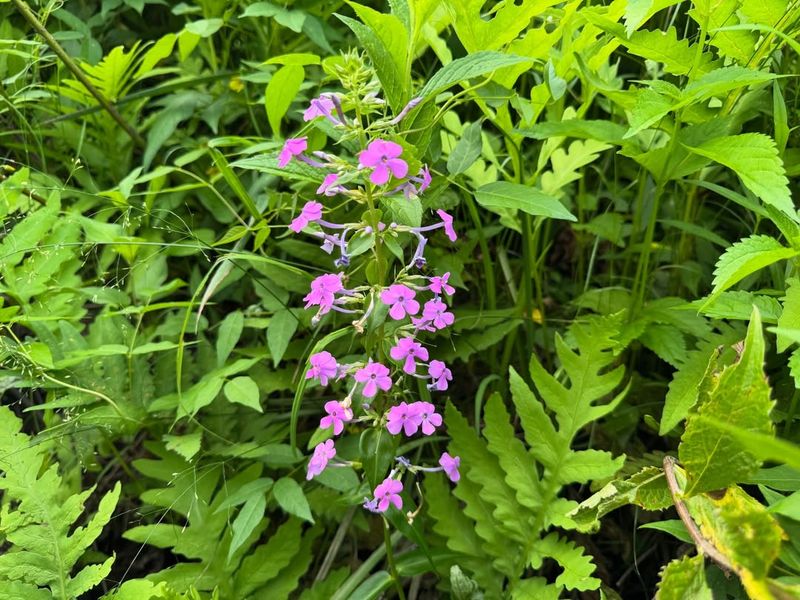
Many Michigan gardeners mistake dame’s rocket for native phlox due to similar appearance.
Wildflower seed mixes often contain this European import, marketed as a cottage garden classic.
The fragrant purple and white blooms seem harmless enough at first glance.
Dame’s rocket produces thousands of seeds per plant, which disperse through wind and water.
The seeds remain viable in soil for many years, creating a persistent seed bank.
Within a few seasons, the plant dominates meadows, roadsides, and woodland edges.
Michigan’s native plant communities suffer when dame’s rocket establishes dense populations.
The biennial lifecycle allows rapid population expansion under favorable conditions.
First-year rosettes often go unnoticed until second-year flowering reveals the extent of infestation.
The plant’s allelopathic properties inhibit germination of competing species.
Native wildflowers struggle to establish in areas colonized by dame’s rocket.
Biodiversity declines as monoculture stands replace diverse plant communities.
Removal requires pulling plants before seed set and monitoring for several years afterward.
The persistent seed bank means new plants emerge even after parent plants are removed.
Native phlox species provide similar beauty without the invasive behavior or ecological damage.
Always verify seed mix contents to avoid accidentally introducing this problematic perennial.
11. Ribbon Grass (Reed Canary Grass)

Garden centers sell variegated ribbon grass as an attractive ornamental for wet areas.
The white-striped leaves create a striking accent in water gardens and rain gardens.
This cultivated variety shares genetics with one of North America’s most problematic invasive species.
Variegated forms frequently revert to solid green, producing the aggressive wild type.
Once reversion occurs, the plant spreads with alarming speed through rhizomes and seeds.
Michigan wetlands face serious degradation when reed canary grass establishes populations.
The dense growth excludes all other vegetation, creating biological deserts in affected areas.
Native sedges, rushes, and wildflowers cannot compete with the aggressive growth rate.
Wildlife habitat quality plummets as diverse wetland communities become grass monocultures.
Reed canary grass tolerates a wide range of soil and moisture conditions once established.
The plant survives flooding, drought, and poor soil quality that eliminate other species.
This adaptability makes control extremely difficult once populations establish.
Removing ribbon grass requires excavating all rhizomes and monitoring for regrowth over several years.
Even small root fragments left behind can regenerate into full infestations.
Native alternatives like blue flag iris or soft rush provide similar vertical interest without the catastrophic spreading behavior.