9 Perennials Ohio Gardeners Should Never Prune In Spring
Spring sunshine sparks the urge to grab pruners and clean everything back to the ground. Ohio gardens wake up fast, and cutting old stems feels like the right way to give plants a fresh start.
Yet for several popular perennials, that early trim does more harm than good. Flower buds may already hide along last year’s growth, beneficial insects may shelter inside hollow stems, and fresh shoots can suffer from sudden cold snaps after an eager cut.
Many gardeners reduce blooms or weaken plants without realizing it, simply from trimming too soon. Timing shapes strength, flowering, and long term health far more than most expect.
Before you begin spring cleanup, pause and take a closer look at the plants that actually benefit from patience. A little restraint now can mean fuller growth, stronger roots, and far better color once the growing season hits its stride.
1. Bearded Iris Needs Spring Stalks To Stay Intact
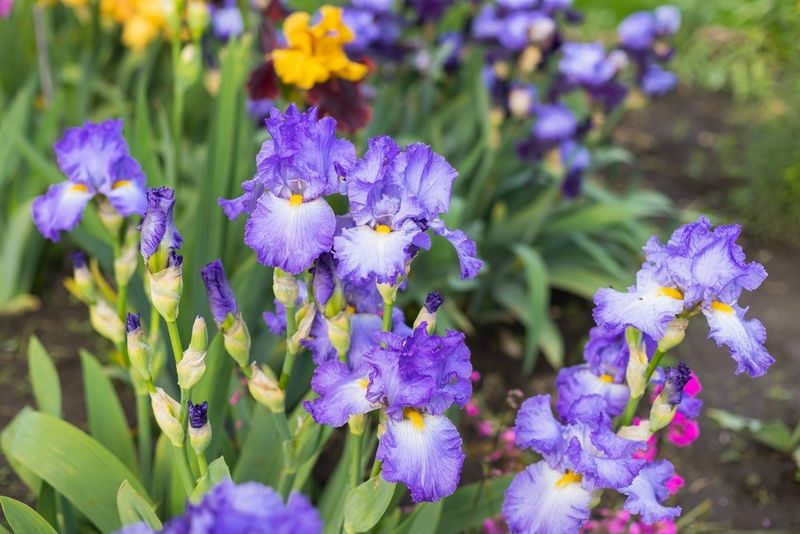
Walk past a bearded iris bed in early spring and you might be tempted to trim those stiff, strappy leaves down to tidy things up. Resist that urge.
Those upright green fans are not just leftover foliage from last year. They are actively photosynthesizing and sending energy straight into the rhizomes to fuel this season’s blooms.
Cutting iris leaves too early in spring reduces the plant’s ability to store energy, which directly lowers bloom count. Ohio State University Extension recommends waiting until after bloom to remove any damaged or brown leaf tips, and doing a fuller cleanup in late summer or fall.
Spring is simply the wrong window for significant iris pruning.
The only spring task that makes sense is removing any leaves that are fully brown, mushy, or showing signs of rot from winter moisture. Healthy green leaves, even partially browned ones, should stay put.
Bearded iris in Ohio typically bloom between May and June, so patience pays off. After the flowers fade and summer heat settles in, that is your cue to fan-trim the leaves and tidy the bed properly.
2. Peony Buds Are Already Forming Below The Surface
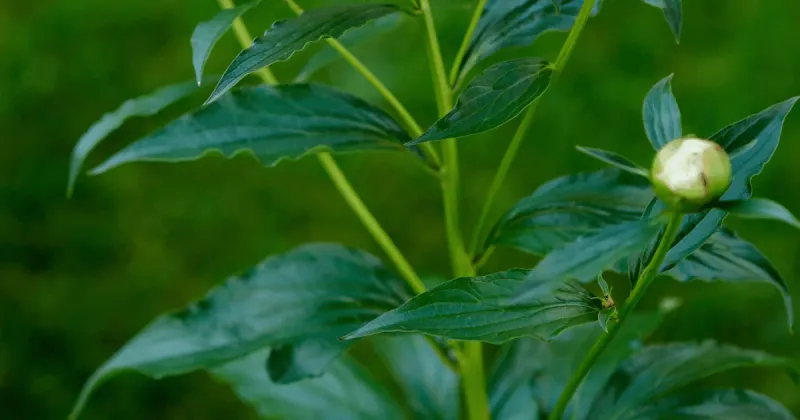
Peonies fool a lot of gardeners. The garden looks bare, the soil looks undisturbed, and it seems like nothing is happening.
But just beneath the surface, those famous red or pink shoots are already pushing upward, sometimes as early as late February or early March in southern Ohio. Disturbing the soil or cutting around the crown at this stage can snap off emerging shoots and wipe out your entire bloom season.
Spring cleanup around peonies should be limited to gently removing old mulch that was added for winter protection. Pull it back carefully by hand rather than raking aggressively near the crown.
The eyes of a peony sit very close to the soil surface and are surprisingly fragile when they first emerge.
Old stems from last year can be left in place until you can clearly see the new growth coming up around them. At that point, snip the old stems at the base carefully.
Peonies are long-lived plants that can thrive in Ohio gardens for decades, but only if the crown is consistently protected during that vulnerable early spring window. Rushing the cleanup is one of the most common mistakes Ohio gardeners make with this beloved perennial.
3. Bleeding Heart Sets Blooms Earlier Than You Think
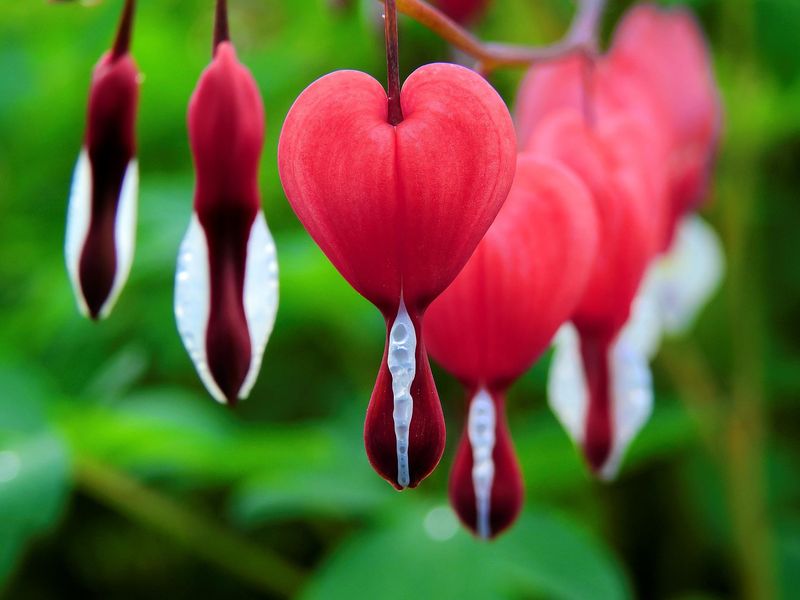
Bleeding heart has a quiet urgency about it. While most of the garden is still waking up, this shade-loving perennial is already pushing up ferny foliage and arching stems in early spring.
Ohio gardeners who are not watching closely can accidentally step on emerging shoots or cut them back while clearing away winter debris from nearby plants.
The stems of bleeding heart are hollow and surprisingly tender when young. Any damage to them at this stage interrupts the plant’s momentum and can reduce or eliminate blooming entirely.
Since bleeding heart blooms in April and May in most parts of Ohio, there is almost no window between emergence and bloom time. Pruning simply does not belong in that window.
The correct approach is to clear away only withered leaves and debris from around the base, moving carefully so the emerging stems are not disturbed. Once the plant finishes blooming and the foliage begins to yellow and fade naturally in early summer, that is when you can cut it back.
Many Ohio gardeners plant hostas or ferns nearby to fill in the gap left when bleeding heart goes dormant. That gap is normal and expected, so plan around it rather than fighting it.
4. Lavender Suffers When Cut Into Old Woody Growth
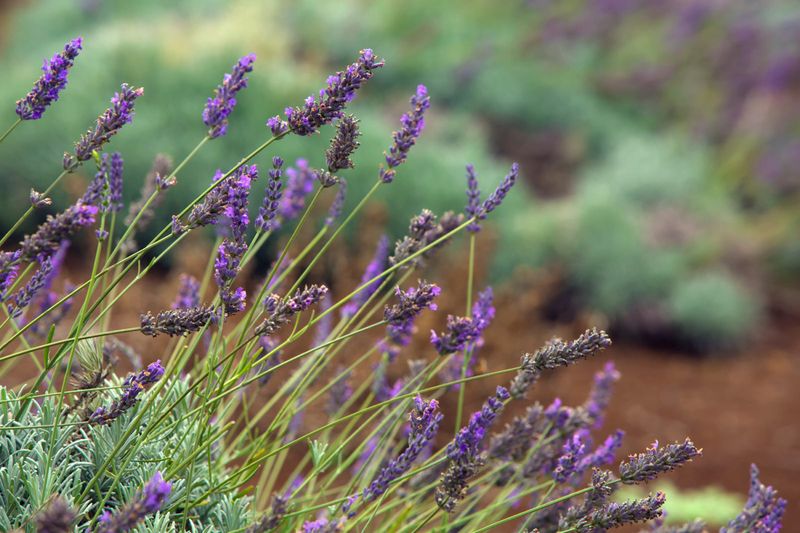
Lavender is one of the most misunderstood perennials when it comes to spring pruning. It looks rough after an Ohio winter.
The stems are gray, woody, and stiff, and the whole plant can appear lifeless. But cutting hard into that old woody growth in spring is one of the fastest ways to stress or permanently damage lavender in a cold-climate garden.
Woody lavender stems do not regenerate from bare wood the way some shrubs do. If you cut below the green growth zone, you may be left with a stub that never leafs out again.
Extension horticulturists recommend waiting until you can clearly see green buds swelling along the stems before doing any shaping. In Ohio, that is usually mid to late April depending on the region and the year.
When you do prune, trim only into the green growth, removing about one-third of the stem length at most. Shape the plant lightly rather than cutting it back hard.
Lavender also benefits from excellent drainage, which is worth revisiting in spring since Ohio’s wet springs can stress roots that sit in soggy soil. A light trim after the first flush of bloom in early summer is often more beneficial than any aggressive spring cutback.
5. Russian Sage Needs Visible New Growth Before Cutting
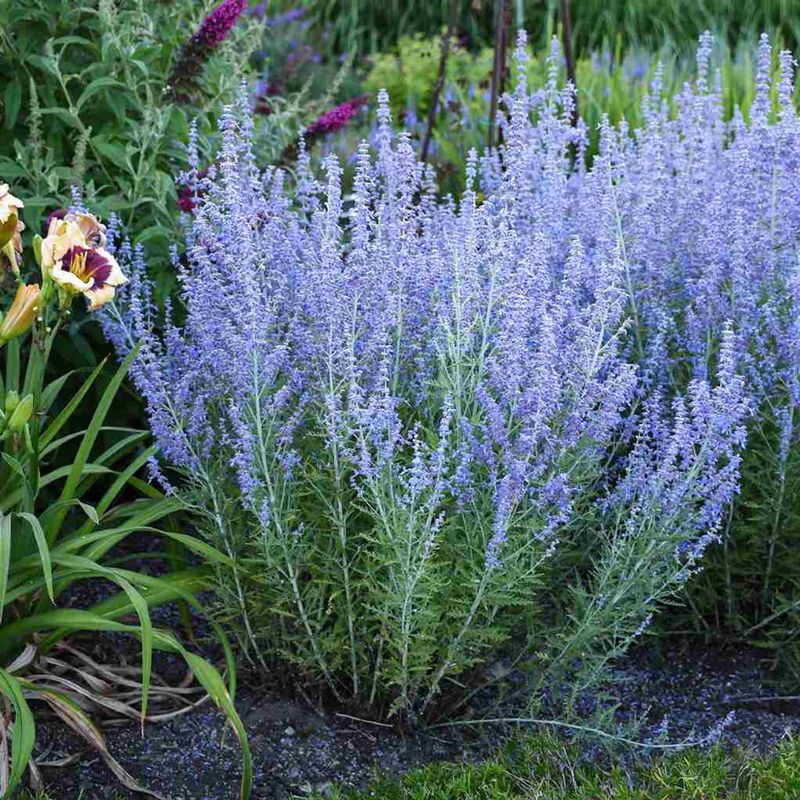
Russian sage is a tough, drought-tolerant perennial that earns its keep in Ohio gardens with billowy silver-blue blooms from midsummer into fall. But in early spring, it looks completely lifeless.
The stems are silver-gray and brittle, and there is often no visible sign of life for weeks after other plants have started growing. That appearance convinces many gardeners to cut it all the way back to the ground, which is often the wrong call.
The key with Russian sage is to wait. New growth emerges from the base and along the lower portions of existing stems, but it takes time.
In Ohio, you may not see clear green buds until late April or even early May in colder years. Cutting before those growth points are visible can remove viable stem sections that would have leafed out and contributed to a fuller plant.
Once you see clear green growth appearing, prune back to just above the lowest set of new leaves on each stem. You can cut more aggressively at this point if you want a more compact plant, but always cut to a visible growth node.
Russian sage that is pruned at the right time fills in beautifully and blooms reliably all summer long across Ohio landscapes.
6. Hardy Hibiscus Sleeps Late Do Not Disturb Too Soon
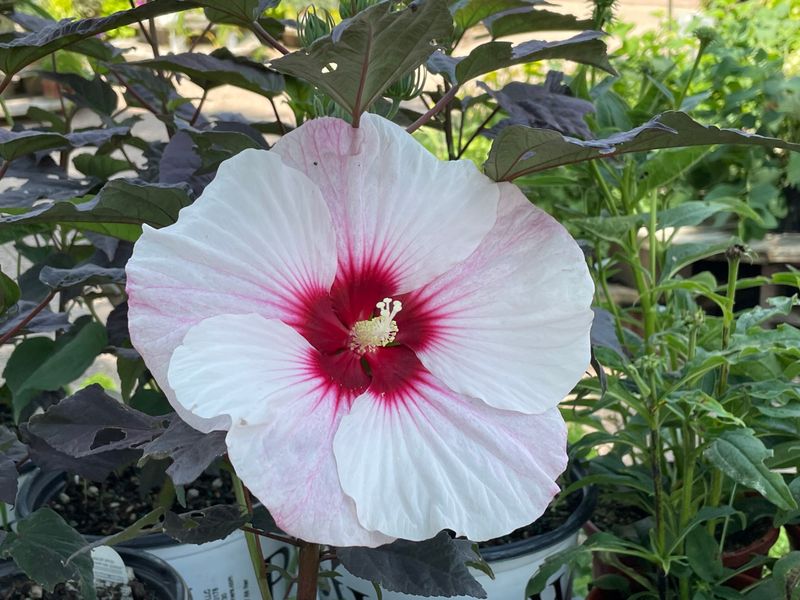
Hardy hibiscus is the last perennial to wake up in most Ohio gardens, and that late schedule worries a lot of people. By the time May rolls around and everything else is lush and growing, the hibiscus crown still looks completely bare.
It is completely normal. This plant runs on its own schedule, and it is worth waiting for.
The problem comes when gardeners assume something went wrong and start poking around the crown, cutting away old stems, or digging to check the roots. Hardy hibiscus has a thick, fleshy root crown that can be damaged by unnecessary disturbance.
Even well-meaning cleanup work done too aggressively in spring can set the plant back significantly.
Old woody stems from last year actually serve a useful purpose here. They act as markers showing you where the plant is so you do not accidentally step on the crown or plant something else too close.
Leave those old stems in place until you see new red or green shoots emerging from the base, which in Ohio often happens in mid to late May. Once growth is visible, cut the old stems back to a few inches above the new shoots and let the plant take off.
Hardy hibiscus grows quickly once it gets going and will reward your patience with dinner-plate-sized blooms by midsummer.
7. Heuchera Uses Old Leaves To Protect The Crown
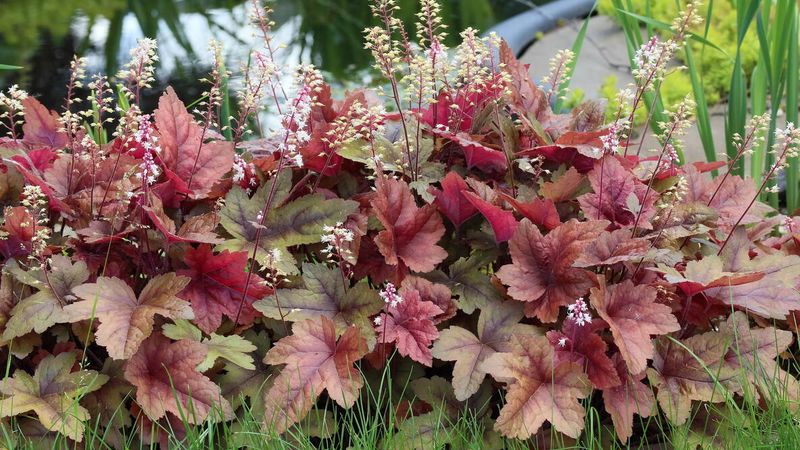
Coral bells, known botanically as heuchera, is a semi-evergreen perennial that keeps its leaves through most of Ohio’s winter. By spring, those leaves look worn out, tattered, and faded.
The temptation is to strip them all off right away for a fresh start. But those weathered leaves are doing something important for the crown beneath them.
Heuchera crowns sit right at or just above the soil surface and are vulnerable to late freezes. The old foliage acts as a natural insulating layer that buffers the crown against temperature swings in early spring.
Removing all of it at once in March or early April leaves the crown exposed during a time when Ohio can still experience hard frosts.
The smarter approach is to wait until nighttime temperatures are consistently staying above freezing, then carefully pull away the old leaves by hand. New growth will already be visible near the center of the plant at that point, making it easy to see what to remove and what to leave.
Avoid cutting heuchera with shears in spring since it is easy to accidentally clip new growth that is tucked tightly against the crown. Finger-pulling old leaves is gentler and more precise for this particular perennial.
8. Hellebore Buds Hide Beneath Winter Foliage
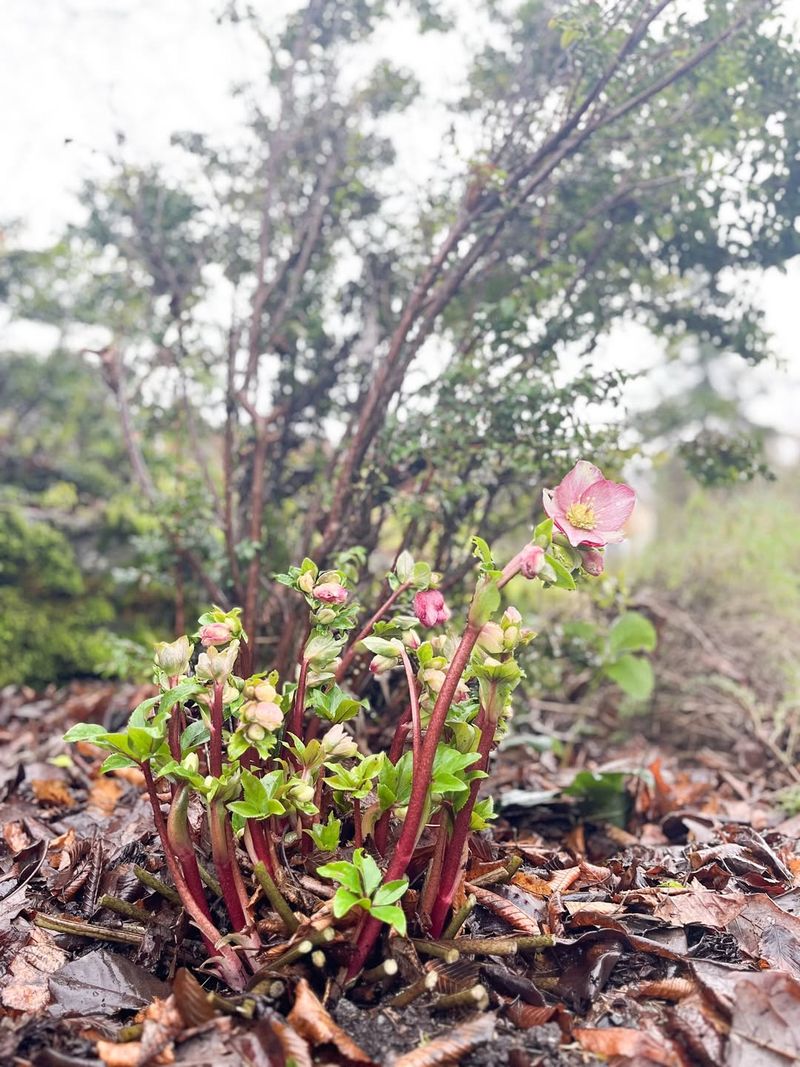
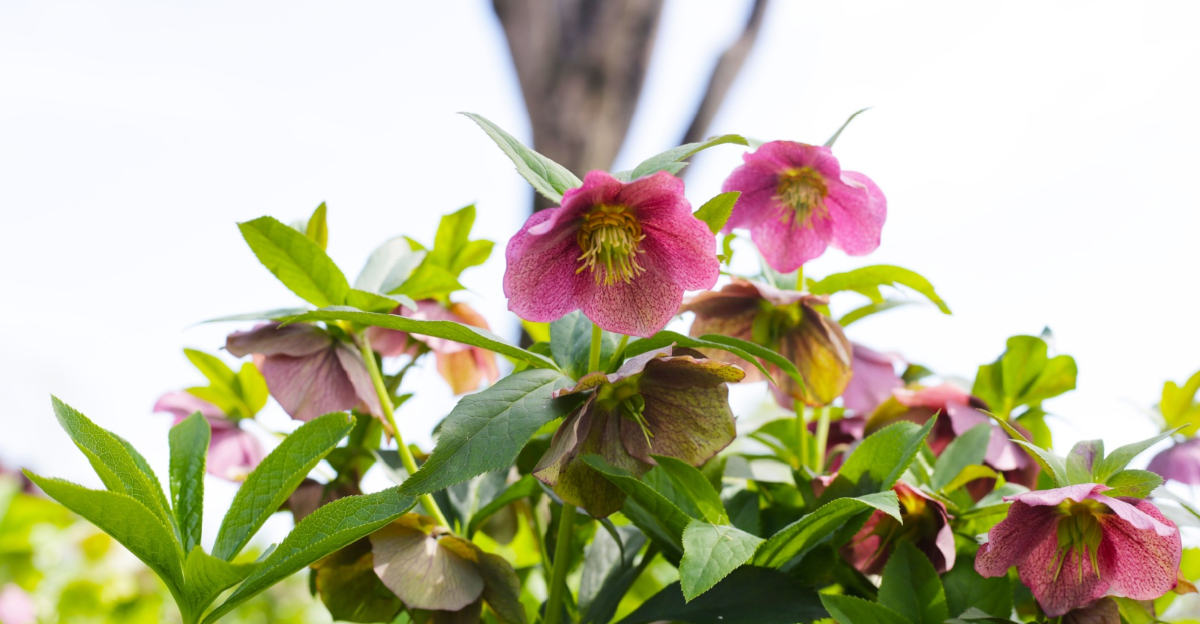
Hellebores are among the earliest bloomers in the Ohio garden, and that is exactly why spring pruning timing matters so much with this plant. The flower buds develop and push upward while last year’s leathery leaves are still in place, often blooming in February or March.
Cut those old leaves off too early and you might actually be cutting off developing flower stalks along with them.
The correct timing for removing hellebore’s old foliage is just as the new buds become clearly visible and are pushing up through the crown. At that point, the old leaves have done their job of sheltering the buds through winter and can be removed at the base.
This is typically late February to early March in southern Ohio and a few weeks later in the northern part of the state.
Use clean, sharp hand pruners and cut the old leaves off at the base of each leaf stem, working carefully around the emerging flower stalks. Do not rush this process.
Hellebores are slow-growing plants that take years to establish and bloom consistently, so protecting each season’s flowers matters. Once the old foliage is cleared, the blooms become fully visible and the plant looks stunning in early spring shade gardens across Ohio.
9. Butterfly Weed Resents Spring Disturbance And Root Damage
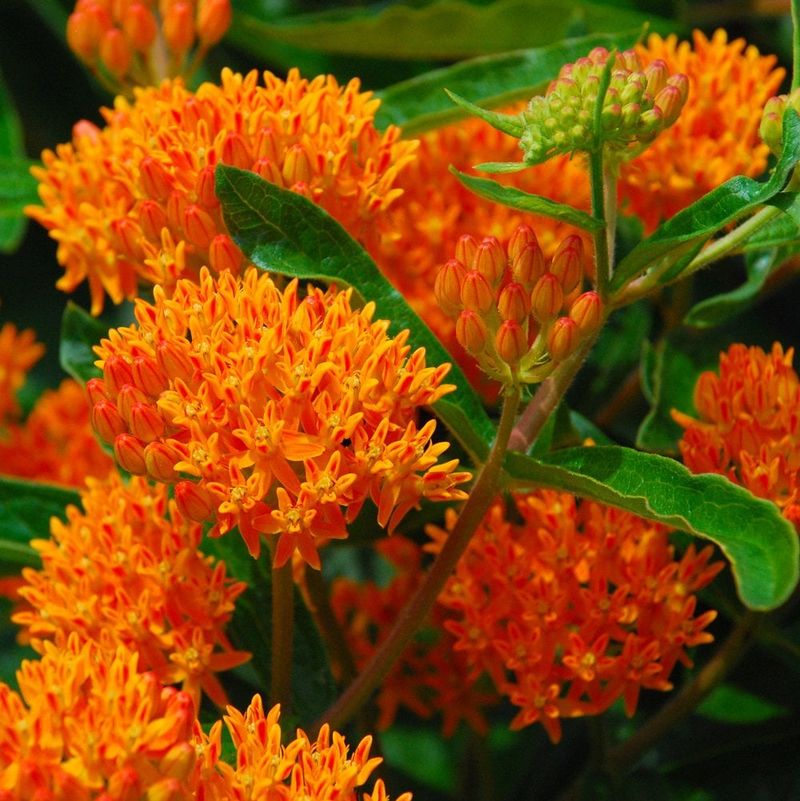
Butterfly weed, a native milkweed species that supports monarch butterflies, is one of the slowest perennials to emerge in Ohio each spring. The ground around it looks completely bare well into May, and that bare patch causes real anxiety for gardeners who are not sure if the plant survived winter.
Most of the time it did. It is just taking its time.
The taproot of butterfly weed goes deep, and that is actually why the plant is so drought-tolerant once established. But that same deep taproot is sensitive to disturbance.
Digging around it in spring to check for signs of life, or accidentally cutting through emerging shoots while weeding nearby, can seriously set the plant back. Marking the location of butterfly weed with a small stake in fall is a smart habit that prevents accidental damage the following spring.
There is essentially no pruning needed for butterfly weed in spring. Old stems from the previous season can be cut back to a few inches above the soil once you see new growth emerging, but that is the extent of it.
In Ohio, that new growth often does not appear until late April or May. Leaving the area undisturbed and being patient is genuinely the best strategy for this valuable native perennial.