Plant These California Native Gems To Make Your Garden Burst With Color
California gardeners have something many others don’t: plants that are perfectly at home in the local climate.
Instead of struggling with thirsty varieties that fade in the heat, California natives are built for warm, dry summers and mild winters.
That means you can enjoy bold color, strong texture, and seasonal interest without constant watering or extra care.
From coastal yards to inland hillsides, these plants bring beauty that feels natural and effortless.
If you want a garden that looks vibrant, supports pollinators, and fits seamlessly into the California landscape, these nine native gems are a great place to start.
1. Coyote Mint Brings Soft Color And Fragrance
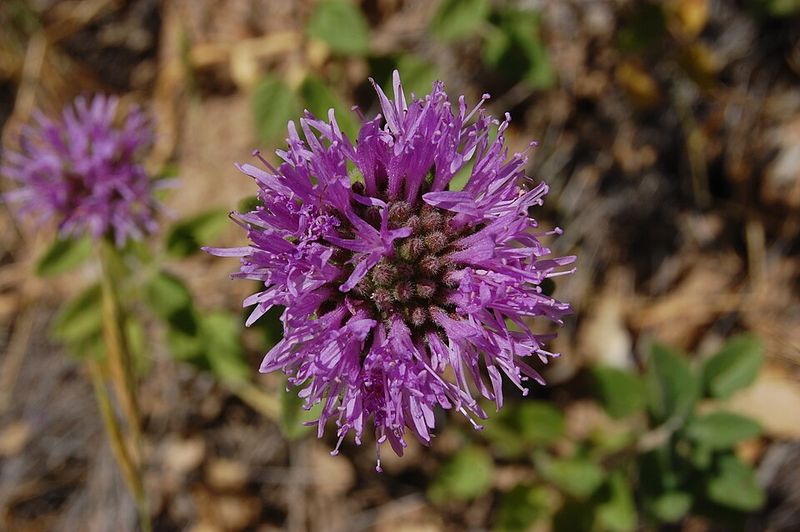
Few plants can match the cheerful combination of soft lavender blooms and refreshing minty fragrance that coyote mint brings to a dry California garden.
Known botanically as Monardella villosa, this low-growing perennial forms tidy mounds of aromatic gray-green foliage topped with rounded clusters of tubular purple-pink flowers from late spring through summer.
Bumblebees, native bees, and butterflies flock to it, making it one of the most pollinator-friendly plants you can add to a California landscape.
Coyote mint thrives in full sun and prefers well-draining, rocky or sandy soil with little to no summer water once established.
It handles the dry heat of California summers with ease, making it a reliable choice for water-wise gardens, hillside plantings, and sunny borders.
Plants typically reach about one to two feet tall and wide, so they work well at the front of a border or tucked between boulders in a naturalistic design.
Try pairing coyote mint with red buckwheat or blue-eyed grass for a layered, textural planting that blooms across multiple seasons. It also looks striking alongside silvery-leafed natives that help highlight its soft flower color.
Crushing a leaf releases a pleasant minty scent, which makes it a fun plant to position near a garden path where passersby can enjoy the fragrance.
For California gardeners seeking low-maintenance color with genuine ecological value, coyote mint is a standout choice that rewards minimal effort with maximum charm.
2. Lilac Verbena Adds Airy Purple Blooms
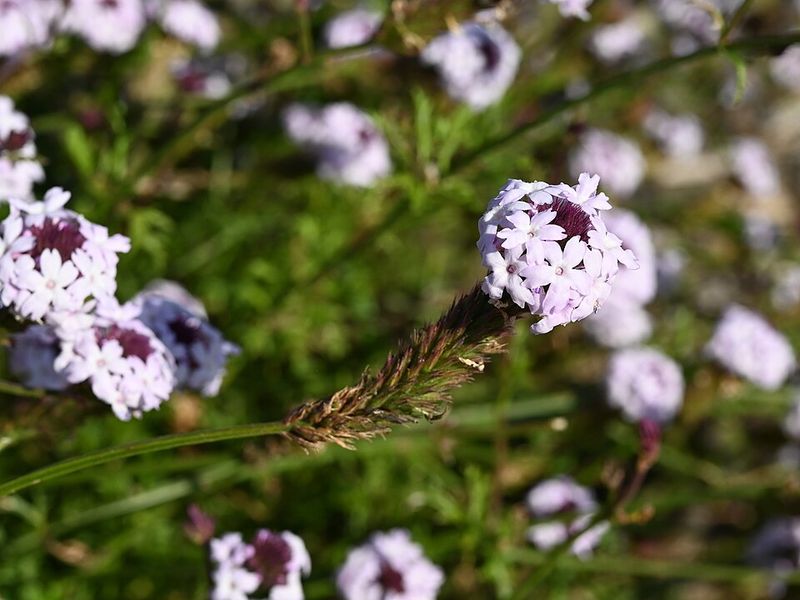
There is something undeniably cheerful about the way lilac verbena floats its clusters of tiny violet-purple flowers above slender, ferny stems, catching the light like a soft lavender haze.
Verbena lilacina is native to Cedros Island off the coast of Baja California, and it has become a beloved choice for California gardeners who want reliable color without heavy water use.
It blooms for an impressively long season, often producing flowers from late winter well into summer, and in mild coastal areas it may flower nearly year-round.
This shrubby perennial reaches about two to four feet tall and wide, making it a versatile mid-border plant or a graceful addition to a pollinator garden.
It thrives in full sun to light shade and tolerates a range of well-draining soils, including sandy and rocky types common in California landscapes.
Once established, it needs only occasional deep watering during the dry season, making it a smart fit for water-conscious gardeners throughout the state.
Butterflies and native bees visit the blooms regularly, which adds lively movement to the garden during warm months.
Lilac verbena pairs beautifully with California fuchsia for a warm-to-cool color contrast, or with coyote mint for a harmonious purple-toned planting.
Light pruning after the main bloom flush encourages fresh growth and additional flowering. Its airy texture and generous bloom season make it one of the most rewarding natives you can grow for sustained visual interest.
3. Desert Willow Fills The Garden With Bright Flowers
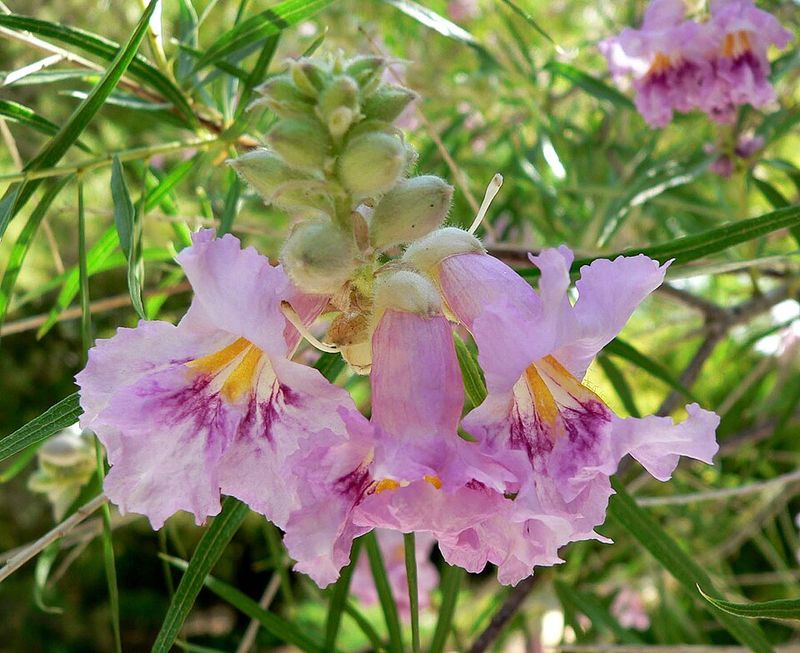
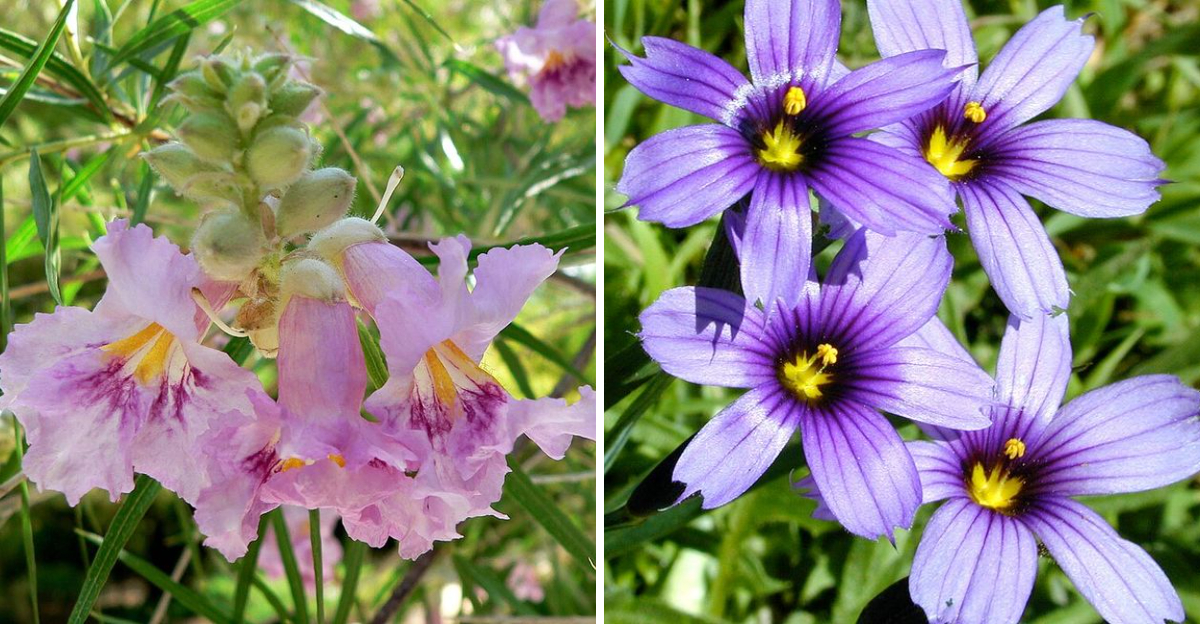
Despite its name, desert willow is not a true willow at all, and that pleasant surprise extends to nearly everything about this striking California-friendly tree.
Chilopsis linearis is a fast-growing small tree or large shrub native to desert washes and dry streambeds across Southern California and the Southwest, and it produces some of the most eye-catching flowers of any native woody plant in the region.
The blooms are large, trumpet-shaped, and come in shades ranging from pale lavender and pink to deep rose and burgundy, often with contrasting streaks inside the flower throat.
Desert willow blooms from late spring through summer and into fall, giving it one of the longest flowering seasons among California natives.
It thrives in full sun and well-draining soil, and it handles heat and drought with remarkable composure once established.
Mature plants typically reach ten to twenty feet tall, making them useful as a focal point, a shade tree for a small patio, or a colorful screen along a fence or property line.
Hummingbirds are particularly drawn to the flowers, which makes desert willow an excellent anchor plant for a wildlife-friendly garden.
The long, narrow leaves give it a graceful, willow-like appearance that adds fine texture to the landscape even when the plant is not in bloom.
It pairs well with agaves, desert mallow, or California fuchsia in a dry garden composition. For gardeners in warmer, inland parts of California, this is one of the most rewarding flowering trees available.
4. California Fuchsia Brings Bold Late Color
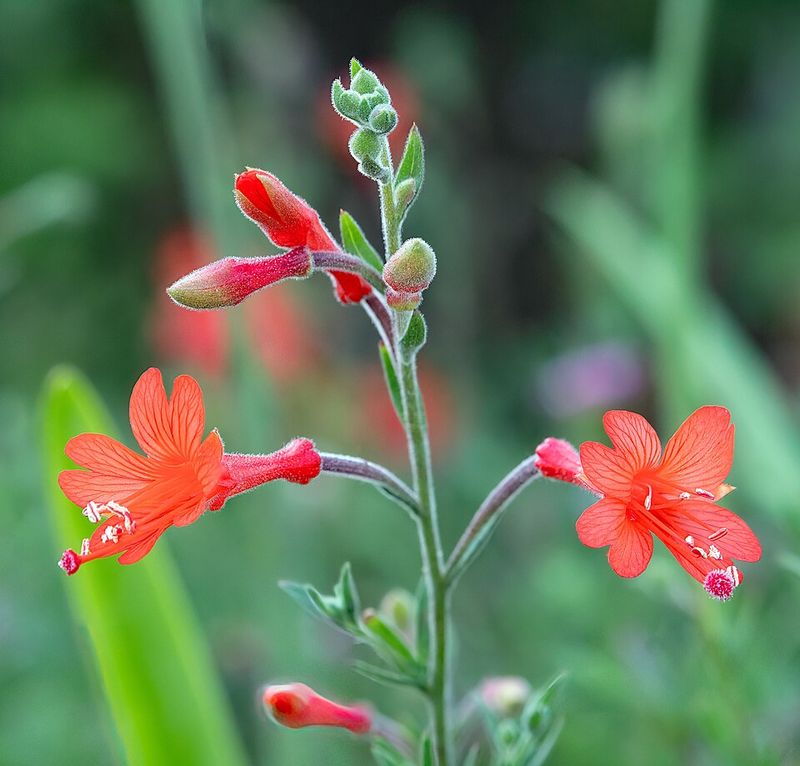
When most summer flowers have faded and the garden starts to look a little tired, California fuchsia steps in with a burst of fiery color that feels like a second wind for the whole landscape.
Epilobium canum, formerly known as Zauschneria californica, produces an abundance of narrow, tubular scarlet flowers from late summer through fall, exactly when hummingbirds are fueling up for migration.
Watching a rufous or Anna’s hummingbird hover at the blooms is one of the genuinely delightful seasonal rituals this plant offers.
California fuchsia is a low-growing, spreading perennial that typically reaches one to two feet tall and spreads several feet wide, making it a natural choice for slopes, dry banks, and the front edges of borders.
It thrives in full sun and lean, well-draining soil, and it handles drought conditions with ease once established.
In fact, too much summer water or rich soil can cause it to spread aggressively and produce more foliage than flowers.
The gray-green to silvery foliage provides a soft, attractive backdrop for the vivid red blooms and looks presentable even before and after the flowering season.
For a dramatic late-season display, try planting California fuchsia alongside toyon or blue-eyed grass.
It also works well cascading over retaining walls or spilling down rocky slopes where foot traffic is low. Few California natives can rival its ability to inject intense color into the garden precisely when the landscape needs it most.
5. Toyon Adds Colorful Berries And Evergreen Beauty
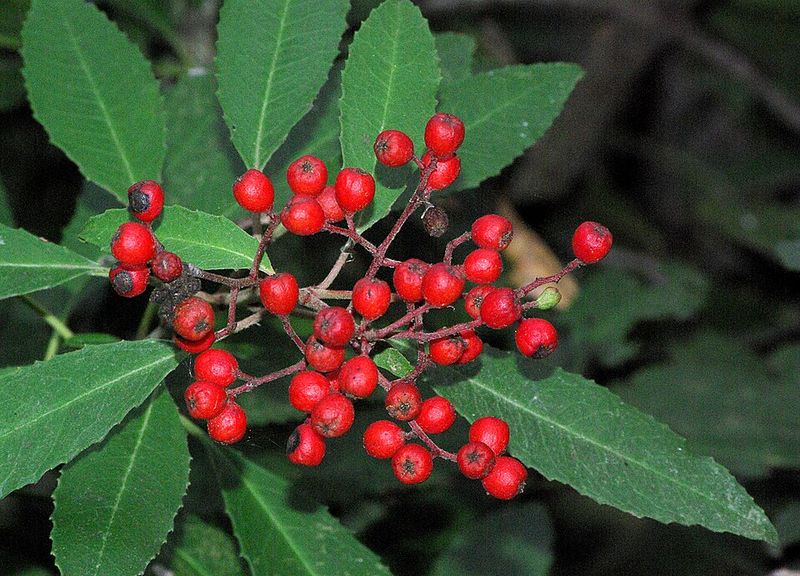
Hollywood’s famous name is said to have been inspired by this very plant, and once you see toyon covered in bright red berries against its glossy dark green leaves, the connection makes perfect sense.
Heteromeles arbutifolia is a large native shrub or small tree that earns its place in the California garden through every season of the year.
Clusters of small white flowers appear in summer, attracting bees and other pollinators, and by late fall and winter those flowers give way to dense bunches of vivid red berries that birds absolutely love.
Toyon is a tough, adaptable plant that grows in full sun to partial shade and tolerates a wide range of California soils, including heavy clay and rocky hillside conditions.
Once established, it needs little to no supplemental water during the dry season, making it an outstanding choice for low-water landscapes throughout the state.
Mature plants can reach ten to fifteen feet tall and equally wide, though regular pruning keeps them more compact if space is limited.
As an evergreen, toyon provides year-round structure and a rich, dark backdrop that makes neighboring plants with lighter foliage or bright flowers pop visually.
It works beautifully as a screening plant, a wildlife hedge, or a backdrop for smaller flowering natives like coyote mint and red buckwheat.
Cedar waxwings, robins, and mockingbirds flock to the berries in winter, turning the garden into a lively wildlife scene during the quieter months of the year.
6. Red Buckwheat Brings Rosy Blooms And Texture
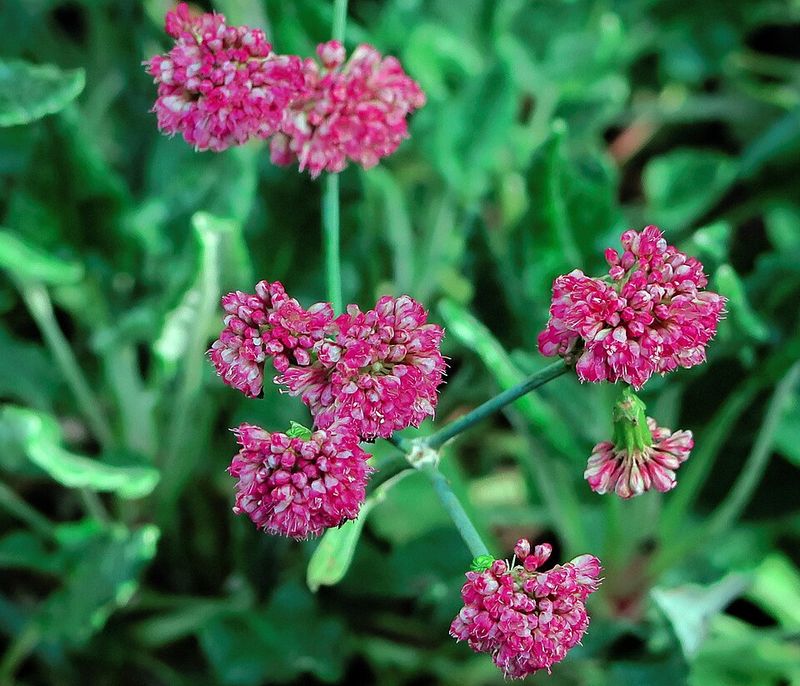
Red buckwheat is one of those plants that earns admiration from the moment it blooms and then somehow gets even more interesting as the season progresses.
Eriogonum grande var. rubescens is a compact, mat-forming perennial native to the Channel Islands, and it produces cheerful clusters of rosy pink to deep rose flowers on slender, wiry stems from late spring through summer.
The blooms age to a warm rust-red as they dry, giving the plant a two-toned effect that adds depth and texture to the garden long after the peak flowering period.
This buckwheat thrives in full sun and well-draining soil, and it handles dry conditions with minimal fuss once established.
It typically grows about one to two feet tall and spreads two to three feet wide, making it an excellent choice for the front of a border, a rock garden, a coastal bluff planting, or a sunny dry slope.
It performs particularly well in coastal and inland gardens throughout California and tolerates both sandy soils and rocky terrain.
Pollinators are strongly attracted to the flowers, and the seed heads that follow provide food for small birds through fall and winter.
Red buckwheat pairs naturally with coyote mint, blue-eyed grass, and California fuchsia for a layered native planting with multi-season appeal.
Leaving the dried flower clusters in place rather than cutting them back adds winter texture and supports wildlife.
For gardeners who want a low-maintenance plant with genuine ornamental staying power, red buckwheat consistently delivers.
7. Blue-Eyed Grass Adds Cheerful Spring Color
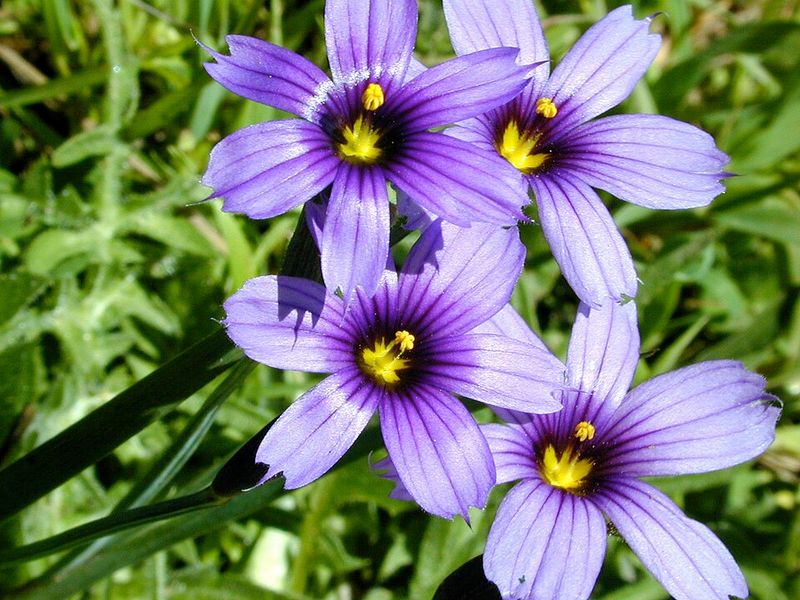
Despite its modest size, blue-eyed grass has a way of stopping people in their tracks when it blooms.
Sisyrinchium bellum is a California native perennial that belongs to the iris family, and its small, star-shaped flowers in violet-blue with a bright yellow center appear in cheerful abundance from late winter through spring.
The flowers sit atop slender, flat stems that rise from tufts of grass-like foliage, giving the plant a delicate, meadow-like quality that feels effortlessly natural in a garden setting.
Blue-eyed grass grows best in full sun to light shade and prefers well-draining soil with moderate moisture during the growing season.
It is more tolerant of seasonal moisture than many California natives, making it a good fit for garden areas that receive some winter rainfall and dry out gradually through spring.
Plants typically reach about six to twelve inches tall and form small clumps that spread slowly over time, eventually creating a lovely low groundcover effect.
This plant works well along pathways, at the edges of lawn areas, in meadow-style plantings, or tucked between stepping stones where its fine texture adds visual interest without overwhelming neighboring plants.
It pairs especially well with red buckwheat, coyote mint, and California poppies for a vibrant spring display.
Native bees visit the flowers regularly during the blooming season. After flowering, the foliage remains tidy and green, providing a neat, grassy texture that bridges the gap between bloom cycles in a mixed native border.
8. Bladderpod Brightens Dry Spots With Yellow Blooms
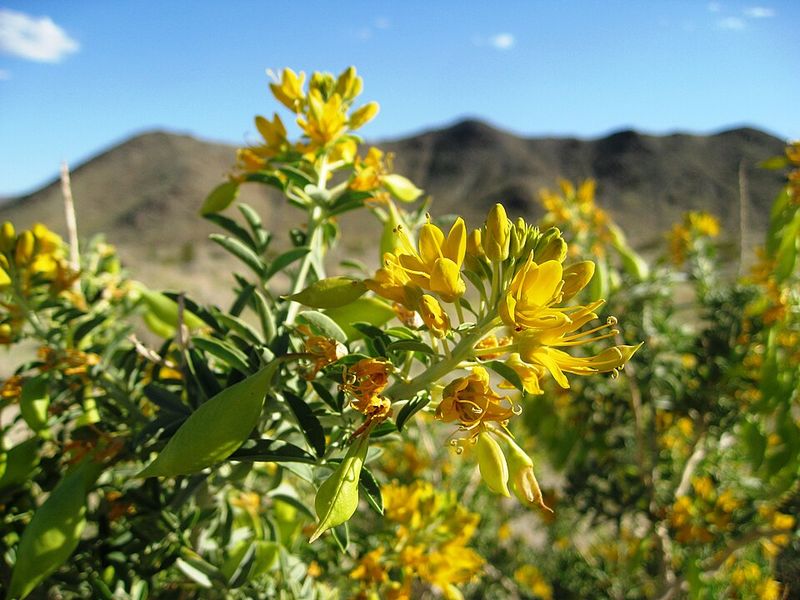
If you have a hot, dry corner of the garden that seems to challenge every plant you put in it, bladderpod might be exactly the solution you have been looking for.
Peritoma arborea, also known as Isomeris arborea, is a California native shrub that thrives in some of the most difficult conditions the state can offer, including desert heat, salty coastal air, and compacted or rocky soils with almost no supplemental water.
Despite those tough circumstances, it produces clusters of bright yellow flowers nearly year-round, with the heaviest bloom occurring from late winter through spring.
Bladderpod grows as a rounded shrub reaching four to eight feet tall and wide, making it a useful screening plant, a wildlife habitat shrub, or a bold focal point in a dry garden composition.
The flowers are followed by inflated, bladder-like seed pods that give the plant its common name and add a playful, structural element to the landscape.
Both the flowers and pods are present on the plant simultaneously during peak season, creating an interesting two-texture effect.
Monarch butterflies and native bees visit the flowers with regularity, and birds use the dense branching structure for shelter and nesting.
Bladderpod performs best in full sun and is most commonly used in Southern California and inland valley gardens where summer temperatures run high.
Pairing it with desert willow or California fuchsia creates a warm-toned, wildlife-rich planting that holds visual interest across multiple seasons without requiring much from the gardener.
9. Fairy Duster Adds Soft Pink Blooms
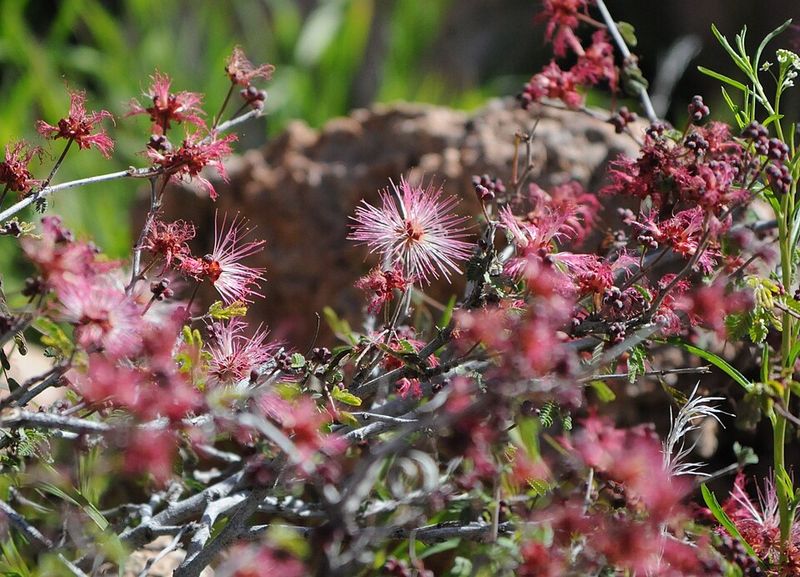
There is something almost whimsical about fairy duster, a shrub whose common name perfectly captures the way its flowers look: like tiny, feathery puffs of soft pink that seem to float above the fine, ferny foliage.
Calliandra eriophylla is native to the desert foothills and dry washes of Southern California, Arizona, and northern Mexico, and it has earned a devoted following among California native plant enthusiasts for its delicate beauty and remarkable toughness.
The flowers, which consist almost entirely of long, silky stamens, appear in late winter and spring and sometimes again in fall following summer rains.
Fairy duster grows as a low, spreading shrub typically reaching two to four feet tall and three to five feet wide.
It thrives in full sun and well-draining, rocky or sandy soil, and once established it needs little to no supplemental irrigation in most Southern California gardens.
The fine-textured foliage gives it an airy, graceful appearance even when the plant is between bloom cycles, and it maintains a tidy, rounded form with minimal pruning.
Hummingbirds and native bees are frequent visitors to the flowers, making fairy duster a valuable addition to any pollinator-focused planting. It pairs well with bladderpod, desert willow, and California fuchsia in a warm, dry garden design.
The soft pink blooms contrast beautifully with the silvery or gray-green foliage of neighboring natives.
For gardeners in Southern California’s inland and desert-edge communities, fairy duster brings reliable seasonal color to spots where few other flowering shrubs can manage.