Plant These 7 California Wildflowers Now For Gorgeous Spring Blooms
Spring in California starts with what you plant right now. Wildflowers bring bold color, natural beauty, and effortless charm to any yard or garden bed.
They grow quickly in favorable conditions and reward you with vibrant blooms that appear rapidly once spring temperatures arrive. Bees and butterflies rush in.
Birds follow close behind. Even small spaces can turn into vibrant displays with the right flower choices.
Planting now gives seeds time to settle, sprout strong roots, and prepare for their big spring show. This is one of the easiest ways to create a landscape that feels alive and full of movement.
If you want low effort planting with high impact results, these California wildflowers are the perfect place to start. Get ready for color, texture, and nonstop garden energy.
1. California Poppy (Eschscholzia californica)
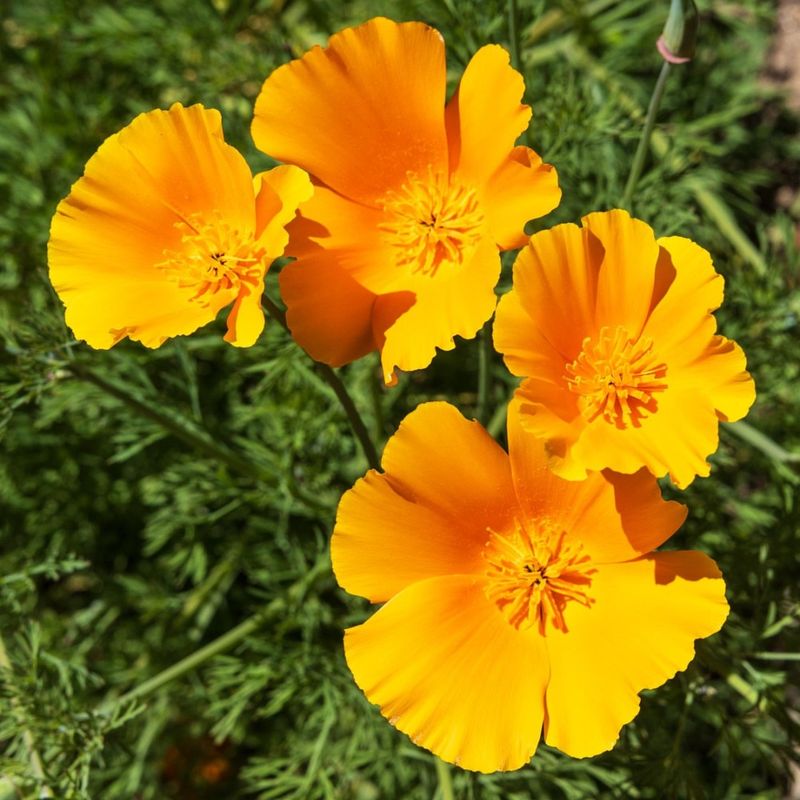
Bare patches in full sun become problem areas once spring arrives, baking under intense light while looking sparse and uninviting. California poppy seeds scattered now will catch the first good rain and start their growth cycle exactly when they need to.
This state flower thrives in neglect, making it perfect for gardeners who want maximum color with minimum fuss. Plant seeds directly where you want them to bloom, pressing them lightly into soil without burying them deep.
They need light to germinate properly.
Full sun and well-drained soil are essential for best poppy performance. They’ll tolerate clay if it drains reasonably well, and they actually prefer lean soil over rich amendments.
Sandy slopes, parking strips, and hell strips are ideal locations.
Water lightly after sowing to settle seeds, then let winter rains do the work. Once established, poppies usually need very little supplemental water.
They’ll self-sow year after year if you let some seedheads mature.
Come spring, you’ll have waves of golden-orange blooms that open with morning sun and close at dusk. Bees and native pollinators visit constantly, and the ferny foliage stays attractive even when flowers fade.
Coastal gardens see blooms from February through May, while inland areas peak in March and April.
2. Lupine (Lupinus spp.)
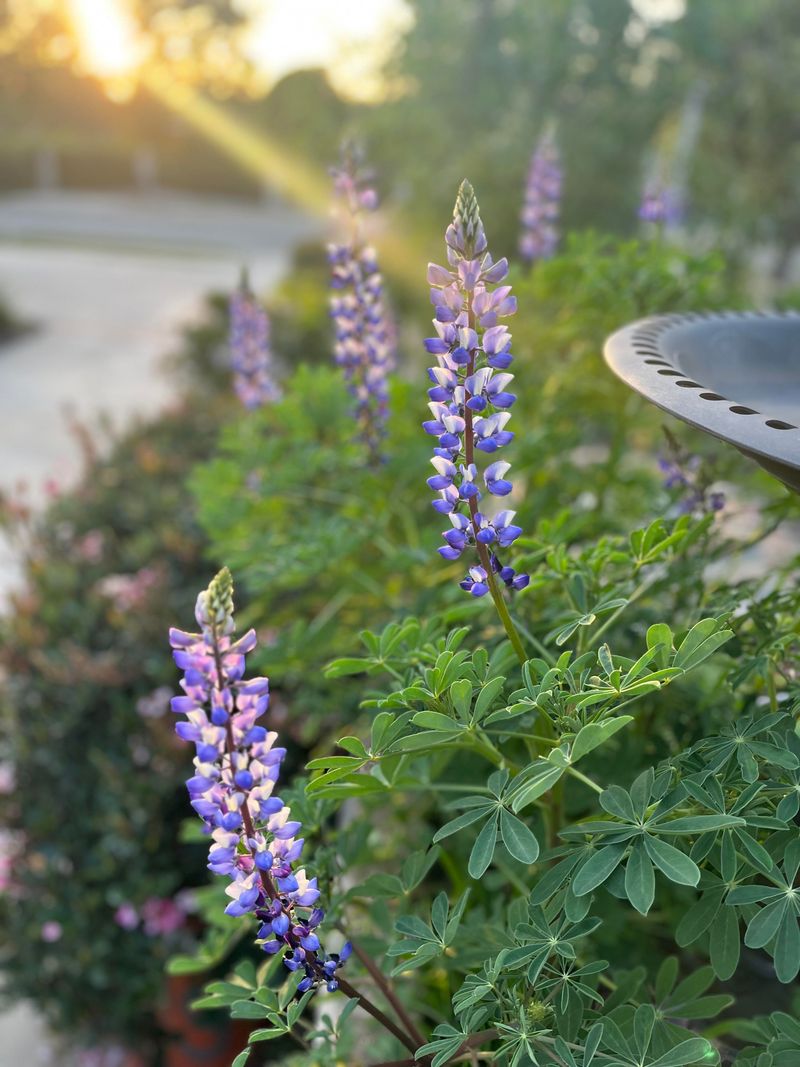
Slopes that erode during winter storms need deep-rooted plants that can hold soil while adding spring beauty. Lupines develop extensive root systems that stabilize hillsides and improve soil quality through nitrogen fixation.
Several lupine species work well in California gardens, including arroyo lupine for coastal areas and miniature lupine for smaller spaces. All prefer full sun to light shade and well-drained soil.
They often struggle in heavy clay unless planted on a slope or mound.
Scarify seeds by rubbing them gently with sandpaper before planting. This breaks their hard coating and dramatically improves germination rates.
Sow seeds about a quarter-inch deep in fall, spacing them several inches apart.
Water moderately during establishment, then reduce frequency as plants mature. Lupines tolerate dry conditions once their roots reach deep soil moisture.
Overwatering increases the risk of root rot, especially in heavy soils.
Spring brings tall spikes of purple, blue, pink, or white flowers that hummingbirds and bumblebees adore. The distinctive palm-shaped leaves create attractive texture even before blooms appear.
Lupines bloom from March through June depending on location and species.
Let some seedheads mature for next year’s display. Lupines self-sow readily in favorable conditions, creating naturalized drifts over time.
They’re particularly stunning when planted with poppies and other warm-toned wildflowers for color contrast.
3. Baby Blue Eyes (Nemophila menziesii)
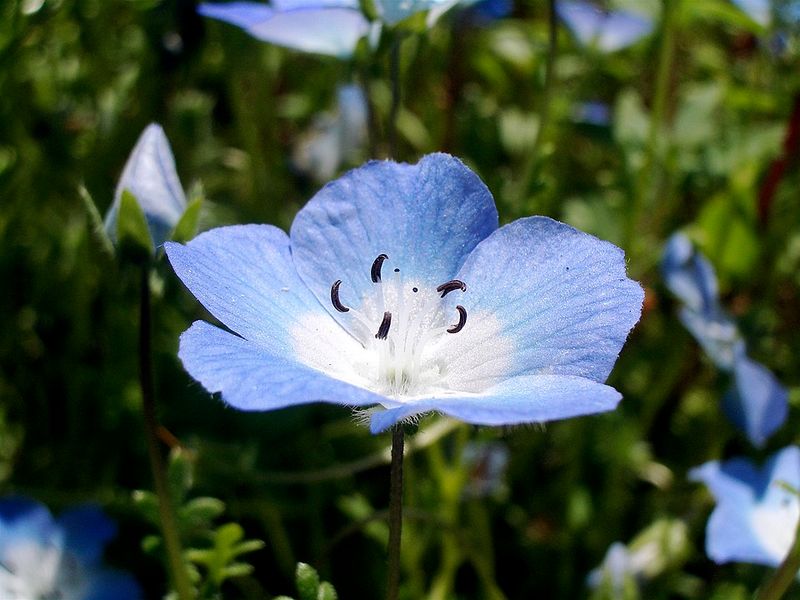
Shaded areas under oak trees or along north-facing walls often lack spring color because few plants tolerate both shade and California’s dry summers.
Baby blue eyes perform especially well in this niche, thriving in partial shade while creating carpets of sky-blue blooms.
This low-growing annual reaches only six inches tall but spreads readily, making it ideal for understory plantings or edging shadier beds. The delicate flowers belie the plant’s toughness once established from fall sowing.
Scatter seeds in areas with morning sun and afternoon shade, or under deciduous trees where winter light reaches the ground. Press seeds gently into soil surface without covering them completely.
They need some light exposure to germinate properly.
Keep soil lightly moist after sowing until winter rains begin. Baby blue eyes appreciate more moisture than poppies but still don’t want soggy conditions.
Well-drained soil with some organic matter works best.
Blooms appear as early as February in mild coastal areas, continuing through April or May. The sky-blue flowers with white centers create a peaceful, cooling effect in the garden.
Native bees and small pollinators visit frequently.
This wildflower pairs beautifully with ferns, woodland strawberry, and other shade-tolerant natives. It also works well in containers on shaded patios.
Plants complete their lifecycle by early summer, going dormant as heat arrives.
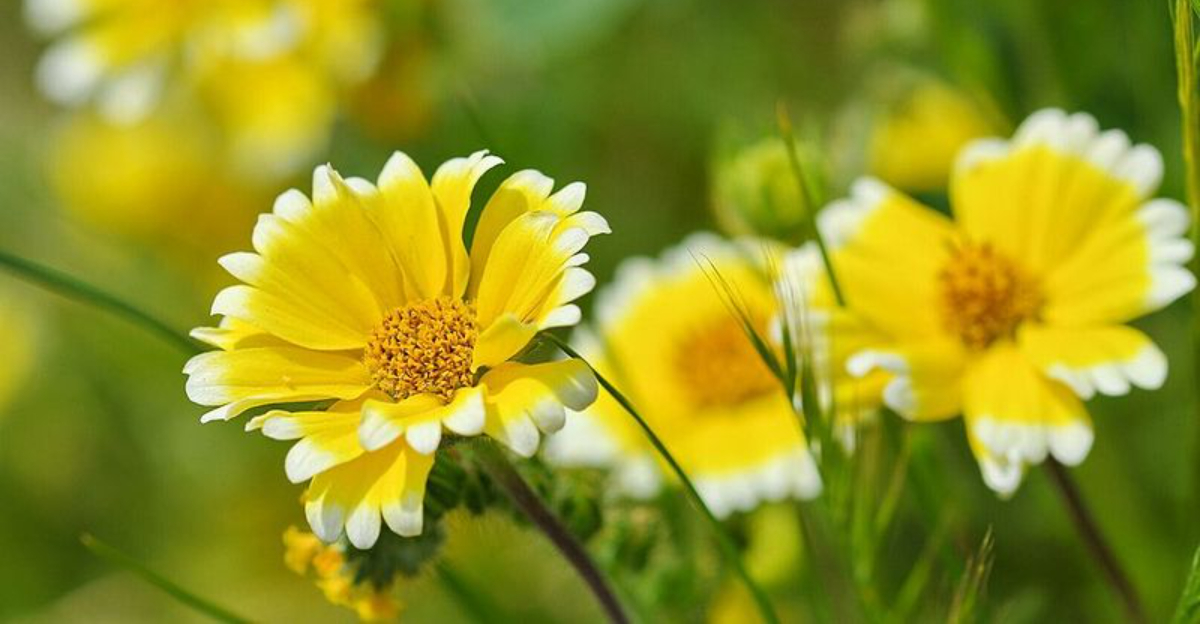
4. Tidy Tips (Layia platyglossa)
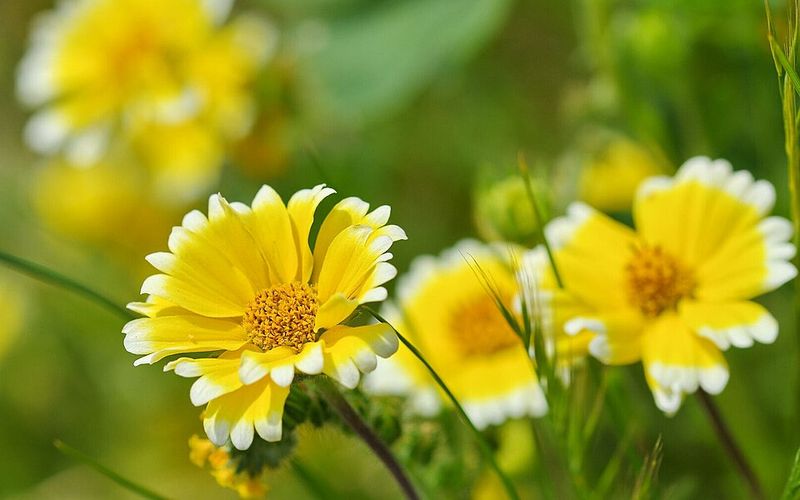
Sunny meadow areas that look weedy and unkempt benefit from wildflowers that create intentional, naturalized beauty instead of accidental chaos. Tidy tips bring exactly that kind of cheerful, organized charm to informal plantings.
These sunny daisies feature bright yellow petals neatly tipped with white, giving them their descriptive common name. Plants grow twelve to eighteen inches tall with a naturally tidy, branching habit that needs no staking or fussing.
Full sun and average to lean soil suit tidy tips perfectly. They often bloom better in soil that hasn’t been heavily amended with compost or fertilizer.
Meadow areas, parking strips, or naturalized borders are ideal locations.
Broadcast seeds over prepared soil in fall, raking them in lightly. Water gently to settle seeds, then rely on seasonal rainfall for germination and growth.
Tidy tips establish easily with minimal intervention.
Spring brings masses of cheerful blooms that brighten the garden from March through May. The flowers attract beneficial insects, native bees, and butterflies while providing long-lasting cut flowers for indoor arrangements.
Tidy tips combine beautifully with poppies, lupines, and other grassland wildflowers for a classic California meadow look. They self-sow reliably if you leave some flowers to set seed.
Plants tolerate light foot traffic in meadow settings, making them practical for larger naturalized areas.
5. Clarkia (Clarkia unguiculata)
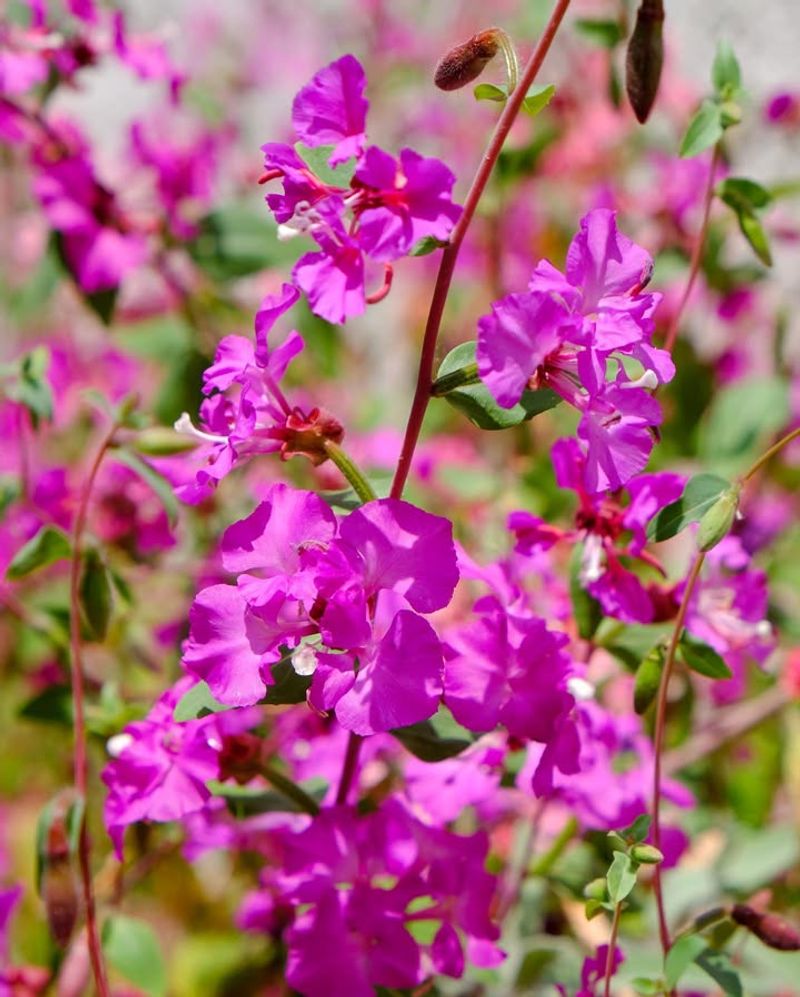
Gardens that need vertical interest in spring without the bulk of shrubs or perennials can rely on annual wildflowers that grow tall and bloom prolifically. Clarkia provides exactly this kind of airy, upright presence with minimal space requirements.
Also called elegant clarkia, this native wildflower produces stems two to three feet tall topped with clusters of papery, ruffled flowers in shades of pink, magenta, and lavender. The delicate appearance masks a surprisingly tough constitution.
Plant seeds in full sun to light shade, choosing areas with good drainage. Clarkia tolerates heavier soil better than poppies but still struggles in waterlogged conditions.
Beds, borders, or naturalized areas all work well.
Sow seeds directly in fall, barely covering them with soil. Water lightly after planting, then let nature take over.
Winter rains usually provide enough moisture for germination and early growth, though dry years may require supplemental watering.
Blooms arrive in April and May, creating vertical accents that draw the eye upward. The flowers attract hummingbirds, butterflies, and various native bees.
Cut flowers last well in arrangements, and the more you cut, the more side shoots develop.
Clarkia works beautifully in mixed wildflower plantings, adding height variation among lower-growing species. It also performs well in large containers if given adequate depth for root development.
Plants self-sow moderately, returning in favorable locations without becoming weedy or invasive.
6. Farewell-to-Spring (Clarkia amoena)
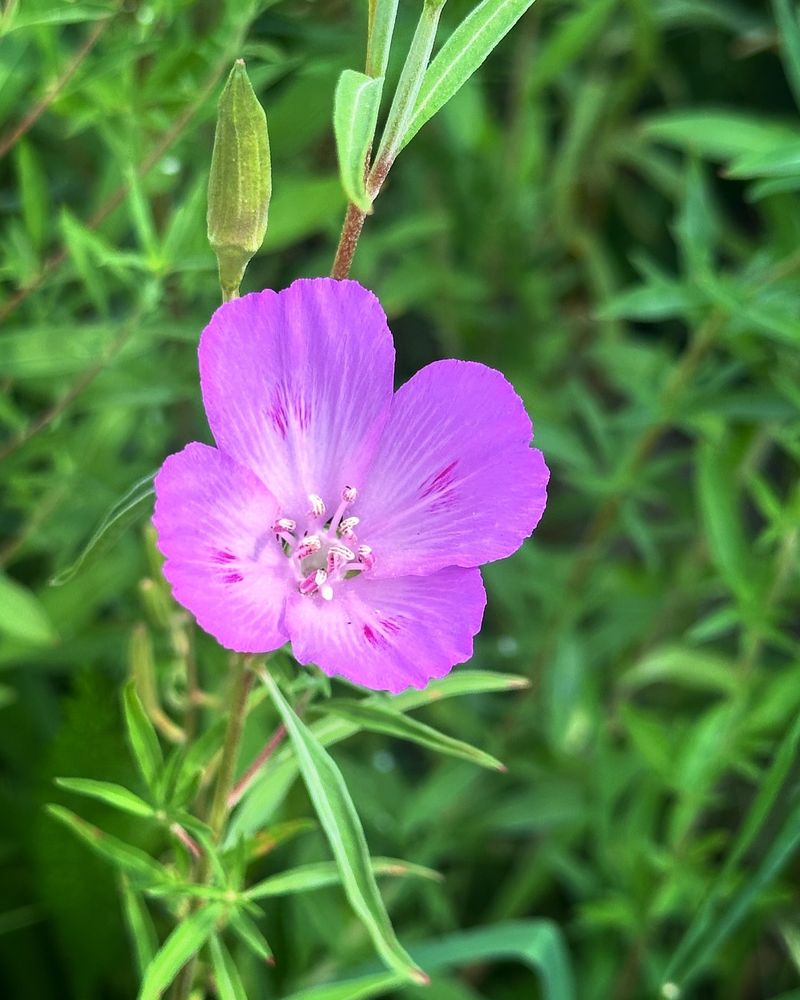
Late spring often sees gardens transitioning awkwardly between cool-season color and summer dormancy, creating a gap in bloom that leaves beds looking tired. Farewell-to-spring bridges this gap perfectly, blooming just as other wildflowers finish their show.
This clarkia relative produces gorgeous cup-shaped flowers in shades of pink, salmon, and lavender, often with darker markings at the petal base. Plants reach eighteen to thirty inches tall with a graceful, slightly sprawling habit.
Full sun and well-drained soil are essential. Farewell-to-spring tolerates coastal conditions beautifully, appreciating the cooler temperatures and natural moisture.
Inland gardens should provide afternoon shade in hotter areas.
Scatter seeds in fall where you want plants to grow, pressing them lightly into soil without deep burial. Water gently after sowing, then allow winter precipitation to handle germination.
Established plants typically need minimal supplemental water.
Blooms appear from May through July, giving this wildflower its poignant common name. The flowers literally say goodbye to spring as summer heat arrives.
Pollinators appreciate this late-season nectar source when other wildflowers have faded.
Farewell-to-spring combines beautifully with California fuchsia and other plants that bridge spring and summer. It also works well in cutting gardens, providing elegant stems for arrangements.
The extended bloom period makes it valuable for gardeners wanting color that lasts beyond typical wildflower season.
7. Chinese Houses (Collinsia heterophylla)
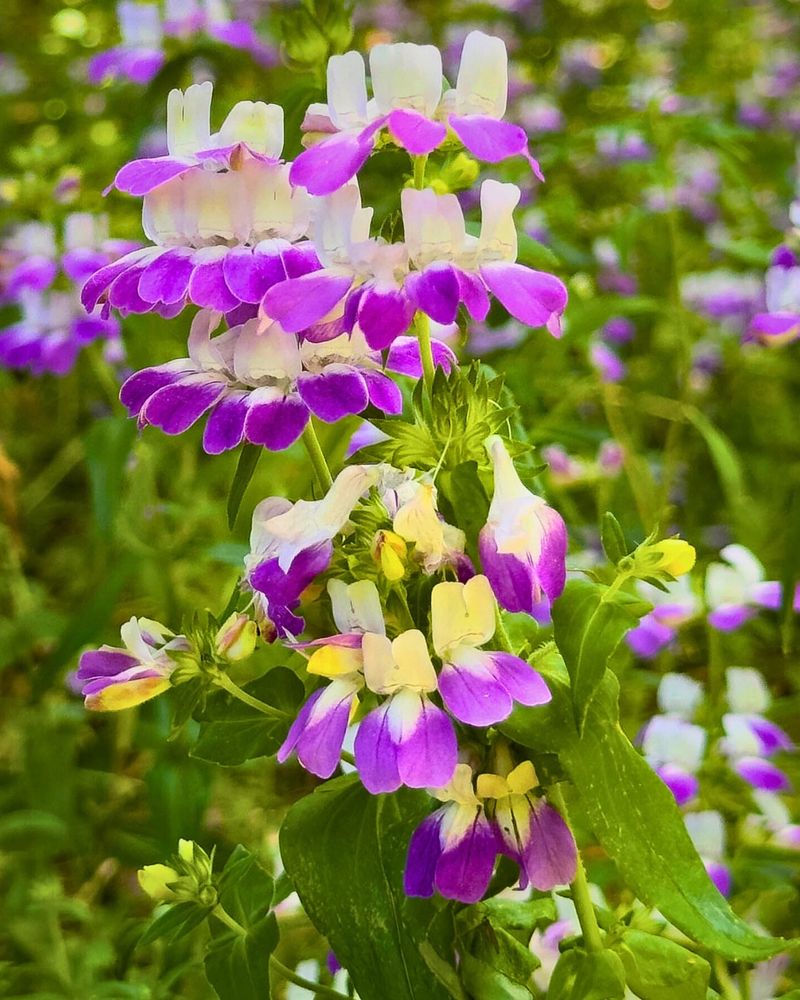
Partially shaded borders that need something unusual and architectural benefit from wildflowers with distinctive forms rather than typical daisy shapes. Chinese houses deliver exactly this kind of structural interest with their quirky, tiered blooms.
The common name describes the flowers perfectly, they stack in whorls up the stem like miniature pagodas, each tier featuring bicolored purple and white blooms.
Plants grow twelve to twenty inches tall with an upright, somewhat formal appearance despite their wildflower status.
Light to partial shade suits Chinese houses best, making them ideal for woodland edges, under deciduous trees, or on north-facing slopes. They appreciate more moisture than sun-loving wildflowers but still need good drainage.
Sow seeds in fall where they’ll receive filtered light and protection from intense afternoon sun. Press seeds into soil surface lightly, maintaining contact without deep coverage.
Water gently after planting, then let seasonal rains take over.
Blooms emerge from March through May, attracting hummingbirds and native bees with their tubular flowers. The architectural form adds sophisticated structure to wildflower mixes that might otherwise feel too casual or meadow-like.
Chinese houses pair wonderfully with baby blue eyes, woodland strawberry, and ferns for shaded native gardens. They also work well in containers on shaded patios where their unique form can be appreciated up close.
Plants can self-sow moderately in favorable conditions, returning year after year without becoming invasive.