Plant These Red Perennials In Georgia Once And Enjoy Them For Years
There is something about red flowers that instantly stands out in a Georgia yard. Even a small patch can shift the whole feel of a space, making everything look more alive and intentional without much effort.
But not every plant keeps that impact going past the first season.
Some fade out, some struggle with the heat, and some never come back the way they should. That is usually where frustration starts, especially after putting in the time to get things planted and established.
It can feel like starting over again and again.
The right perennials change that completely. Once they settle in, they return reliably and build on what was already there, season after season.
Instead of replanting and guessing each year, the yard starts to feel more consistent, with color that shows up without needing to chase it.
1. Cardinal Flower Fills Garden Beds With Intense Color Year After Year
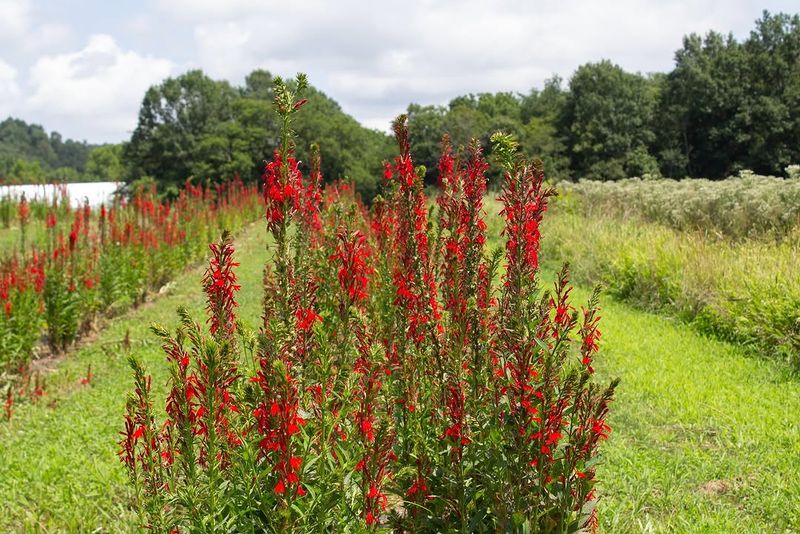
Few plants in the Southeast put on a red show quite like the Cardinal Flower. Lobelia cardinalis shoots up tall spikes covered in vivid scarlet blooms that practically glow against green summer foliage.
Hummingbirds find it irresistible, and you will too once you see it in full bloom.
In Georgia, it performs best in spots with partial shade and consistently moist soil. Planting it near a rain garden, a pond edge, or a low-lying bed that stays damp gives it exactly what it wants.
It reaches three to four feet tall, so placing it toward the back of a border lets shorter plants shine up front.
Deadhead spent stalks to encourage continued flowering through late summer and into fall. Cardinal Flower self-seeds freely, meaning new plants will pop up nearby each year without any effort on your part.
Over time, a single plant can fill an entire section of a bed with minimal intervention.
Across Georgia, gardeners who plant it once often find themselves with a growing colony within two or three seasons. Divide clumps every few years to keep plants healthy and to share starts with neighbors.
A little attention in the first season pays off with years of reliable, vivid red color that never gets old.
It also holds up best where the soil stays evenly moist, since Cardinal Flower naturally performs well in moist sites rather than dry beds.
2. Hardy Hibiscus Brings Massive Show-Stopping Blooms Each Season
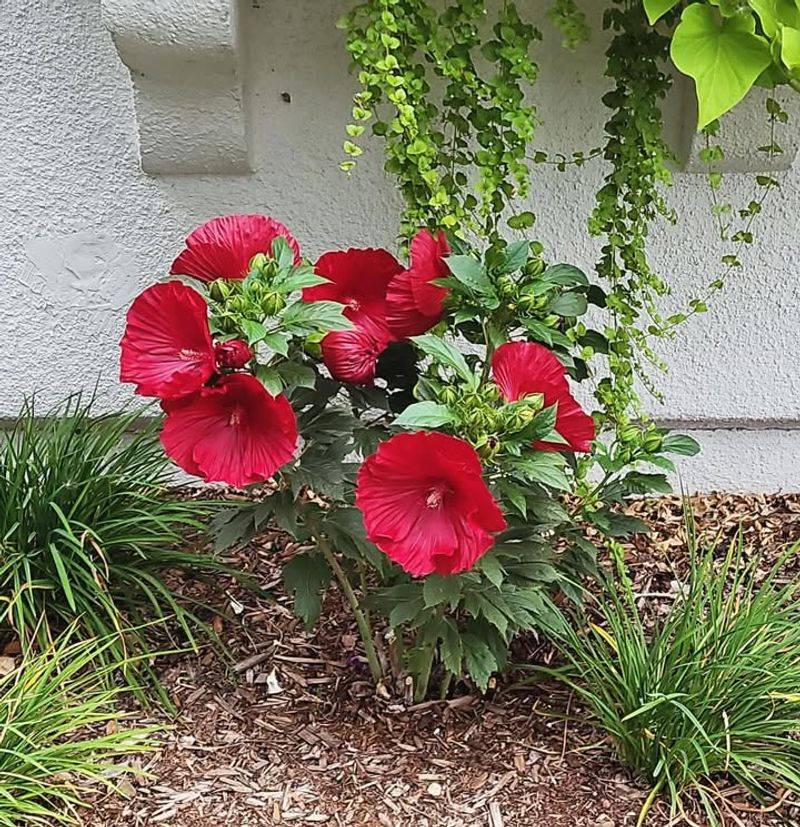
Plate-sized red flowers on a perennial shrub sounds almost too good to be true, but Hardy Hibiscus delivers exactly that every single summer in Georgia.
Hibiscus moscheutos varieties with red blooms can produce flowers up to twelve inches across, making them one of the most visually dramatic plants you can grow in a home garden.
Plant it in full sun and give it rich, well-drained soil with regular watering during dry spells. Hardy Hibiscus is late to emerge in spring, so do not panic when neighboring plants are already leafing out and yours looks bare.
Once the soil warms up, it takes off fast and puts on tremendous growth.
Georgia summers suit it perfectly. Humid heat, long sunny days, and warm nights push Hardy Hibiscus into peak performance from July right through September.
Each individual flower only lasts a day or two, but the plant produces so many buds that the display feels continuous.
Cut stalks back to about six inches above the ground in late fall after the first frost knocks the foliage back. New growth will emerge from the base each spring.
Hardy Hibiscus planted in Georgia can live for decades, growing larger and more floriferous with every passing year. Mark the spot clearly so you do not accidentally dig it up before it emerges.
Mulching around the base also helps Hardy Hibiscus hold soil moisture through Georgia heat, which supports stronger growth and better flowering.
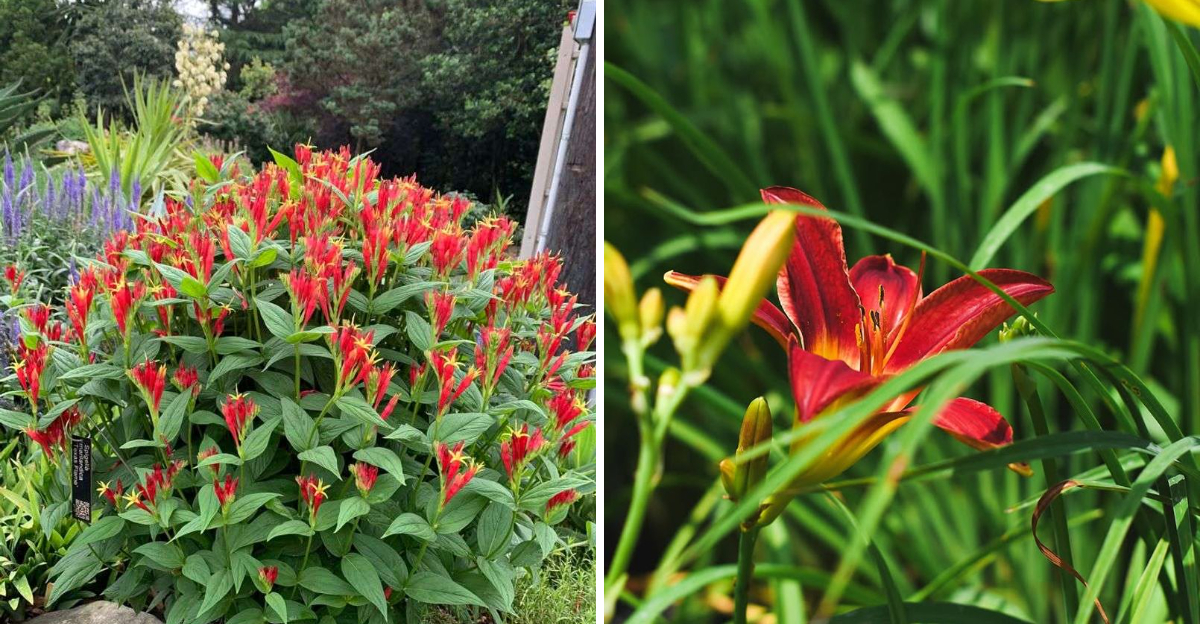
3. Indian Pink Stands Out With Bright Tubular Flowers And Reliable Growth
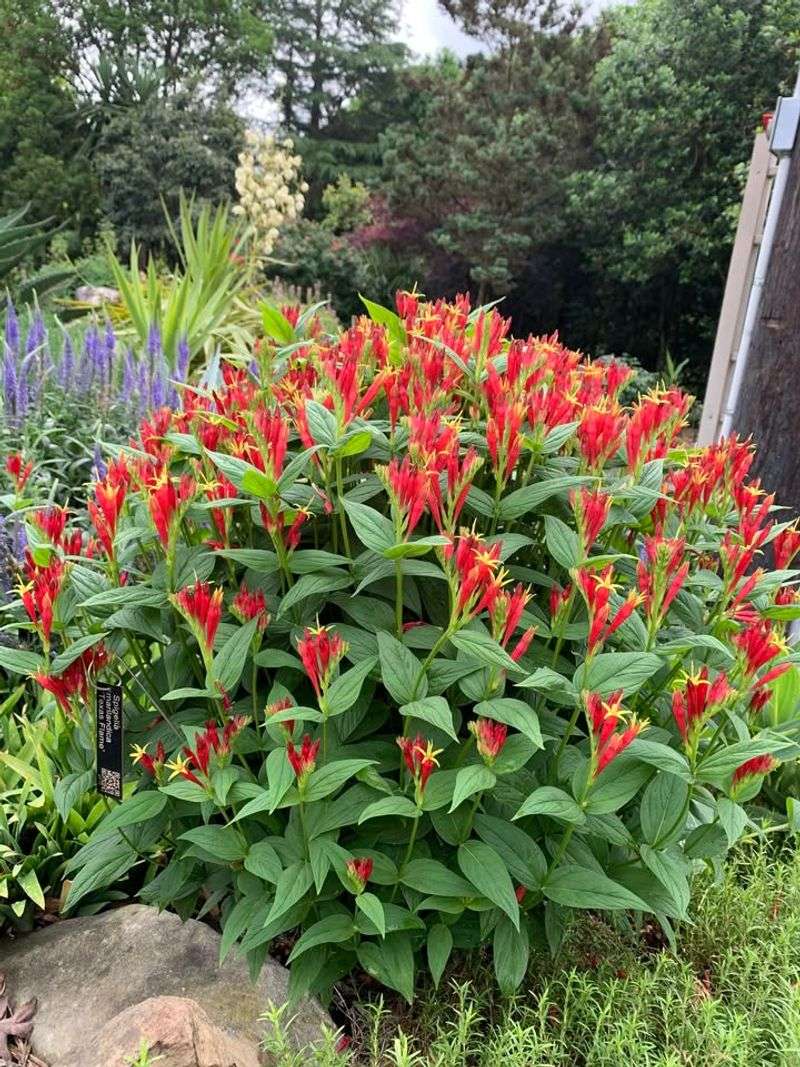
Spigelia marilandica, known as Indian Pink, is one of those plants that makes experienced Georgia gardeners smile knowingly when beginners spot it for the first time.
Red tubular flowers with bright yellow interiors face upward along arching stems, creating a look that feels exotic but comes from a plant that is completely at home in Southern soil.
It thrives in partial to full shade, which makes it a valuable option for spots under mature trees where red color can be hard to achieve.
Well-drained, humus-rich soil gives it the best start, and once it settles in, it spreads slowly into a tidy clump that gets fuller each year.
Blooming peaks in late spring through early summer, and hummingbirds are drawn to those tubular flowers from the moment they open. After flowering, the foliage stays attractive and clean through the rest of the season, giving the bed a polished look without extra work.
Across shaded Georgia gardens, Indian Pink fits beautifully under oaks, along wooded property lines, and in naturalized areas where it can slowly expand on its own terms. Watering during dry stretches in the first season helps roots establish firmly.
After that, it handles Georgia summers with little complaint, returning reliably each spring with more stems and more flowers than the year before.
A layer of mulch around the base can also help keep the roots cooler and the soil more evenly moist through Georgia’s hotter stretches.
4. Bee Balm Creates Bold Clusters That Spread And Keep Coming Back
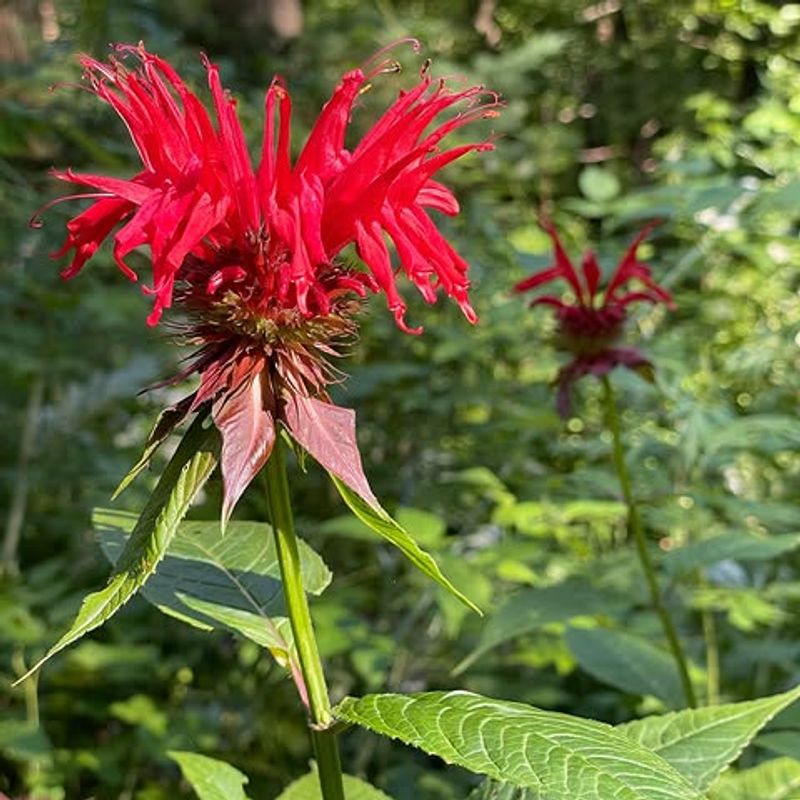
Scarlet Bee Balm is the kind of plant that earns its space in a Georgia garden ten times over.
Monarda didyma produces shaggy, spiky clusters of brilliant red flowers that hummingbirds and pollinators cannot resist, and it spreads steadily each year to fill more of your bed with minimal input from you.
Full sun to partial shade suits it well, and it prefers moist soil with decent drainage. In Georgia, planting it where it gets morning sun and some afternoon shade can help prevent the powdery mildew that occasionally shows up during humid summers.
Good air circulation between plants also keeps foliage looking clean.
Blooms appear in summer, typically from June through August depending on your location in the state. The fragrant foliage smells strongly of oregano and mint, which adds a sensory layer to the garden beyond just visual appeal.
Crushing a leaf releases that sharp, herby scent instantly.
Dividing clumps every two to three years keeps Bee Balm vigorous and prevents the center from getting sparse. Pull out older woody sections and replant fresh outer growth for the best performance.
Gardeners in North Georgia especially appreciate how well it handles cooler springs and returns strong after cold winters. Cut stems back to the ground in late fall and expect fresh growth to push up reliably every spring.
5. Red Daylily Delivers Strong Blooms That Return Without Fuss
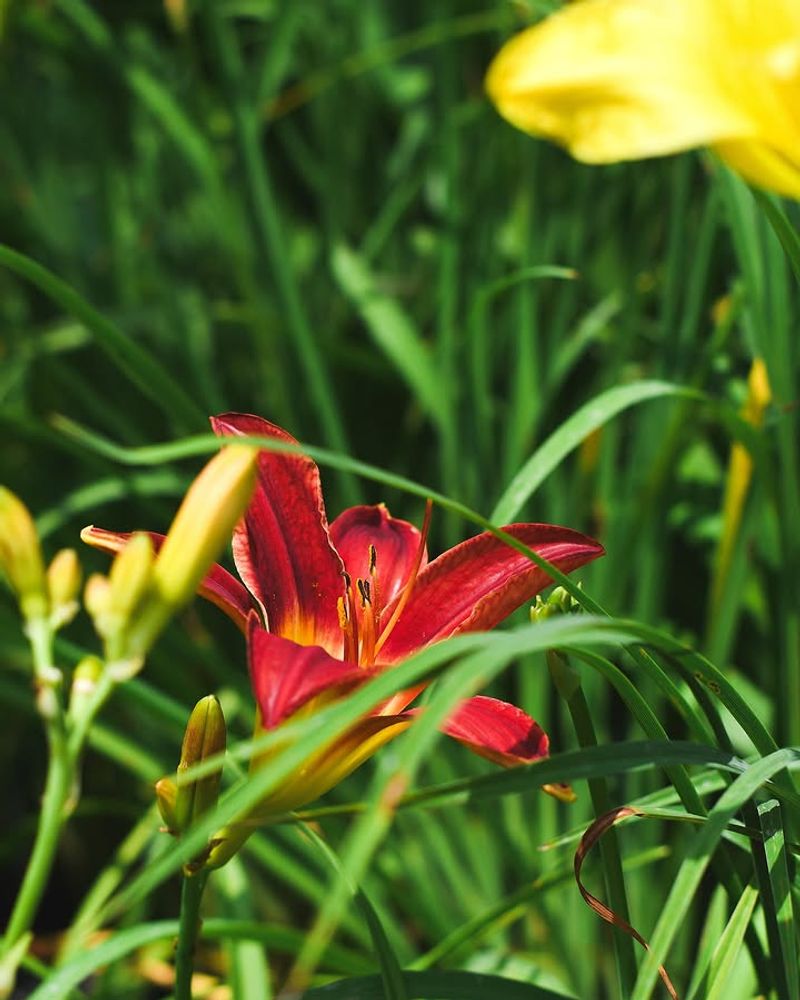
Red daylilies have been growing in Georgia gardens for generations, and there is a good reason they keep showing up in old farmsteads and along country roads.
Hemerocallis varieties in deep red and scarlet shades are incredibly resilient, pushing through clay soil, summer heat, and occasional drought without skipping a season.
Plant them in full sun for the strongest bloom production, though they tolerate partial shade reasonably well. Space clumps about eighteen inches apart and work some compost into the planting hole to get roots off to a strong start.
After that, they are largely self-sufficient through Georgia summers.
Each individual flower lasts only one day, but a single clump produces dozens of buds on multiple stalks, so the display stretches over several weeks in early to midsummer.
Reblooming varieties extend the color even further into late summer and fall, which is worth seeking out at local Georgia nurseries.
Clumps expand steadily over the years and can get crowded after four or five seasons. Dividing them in early fall or early spring refreshes their vigor and gives you extra plants to spread around the yard or share with friends.
Red daylilies pair beautifully with ornamental grasses and purple salvia, creating color combinations that look intentional and polished with very little planning effort on your part.
6. Garden Phlox Covers Plants In Full Blooms Through The Season
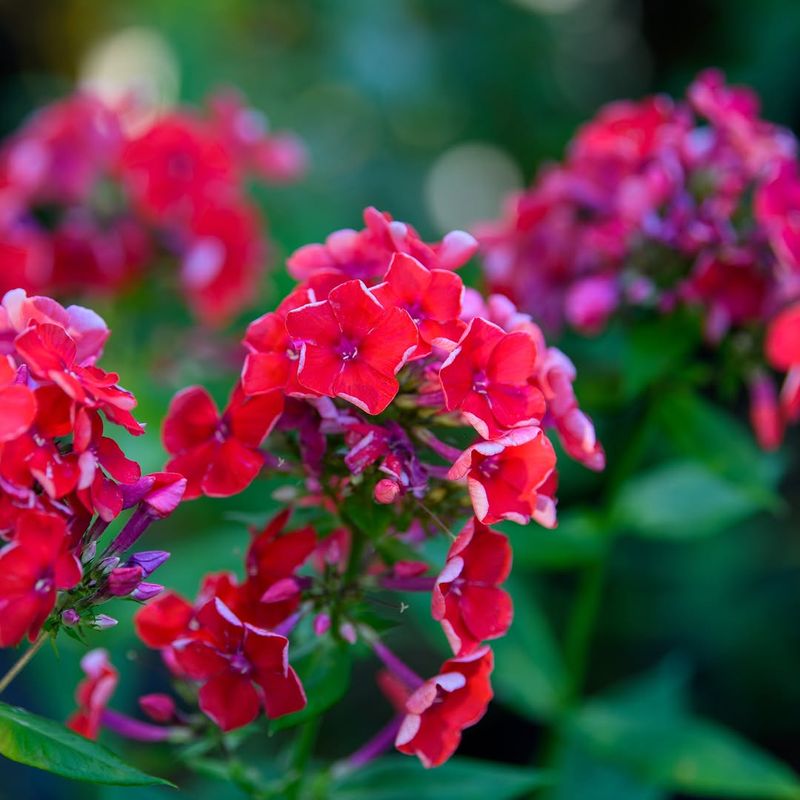
Garden Phlox in red is a summer workhorse that Georgia gardeners rarely regret planting.
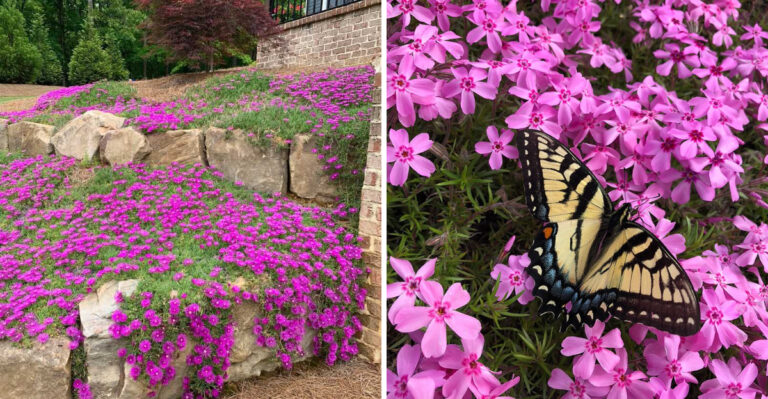
Phlox paniculata varieties with red or deep pink-red blooms produce large, dome-shaped flower clusters on upright stems that can reach four feet tall, creating a strong vertical presence in any border.
Full sun brings out the best bloom production, and soil that drains well keeps roots healthy through Georgia’s wet springs.
Spacing plants at least eighteen to twenty-four inches apart improves airflow, which is the single most effective way to reduce the powdery mildew that can affect phlox in humid conditions.
Choosing mildew-resistant cultivars available at Georgia nurseries is also a smart move.
Blooms open in midsummer and can continue for six weeks or more if you remove spent flower heads regularly. Butterflies visit constantly while the flowers are open, adding movement and life to the garden beyond the color alone.
The fragrance is sweet and noticeable in the evening, making it a great choice near patios or walkways.
Cut stalks back hard in late fall and top-dress the root zone with a thin layer of compost. Garden Phlox returns each spring with more stems than the previous year, gradually building into a fuller, more impressive clump.
Divide every three to four years to maintain strong flowering and prevent clumps from getting overcrowded at the base.
7. Autumn Sage Keeps Blooming Strong Even As Temperatures Rise
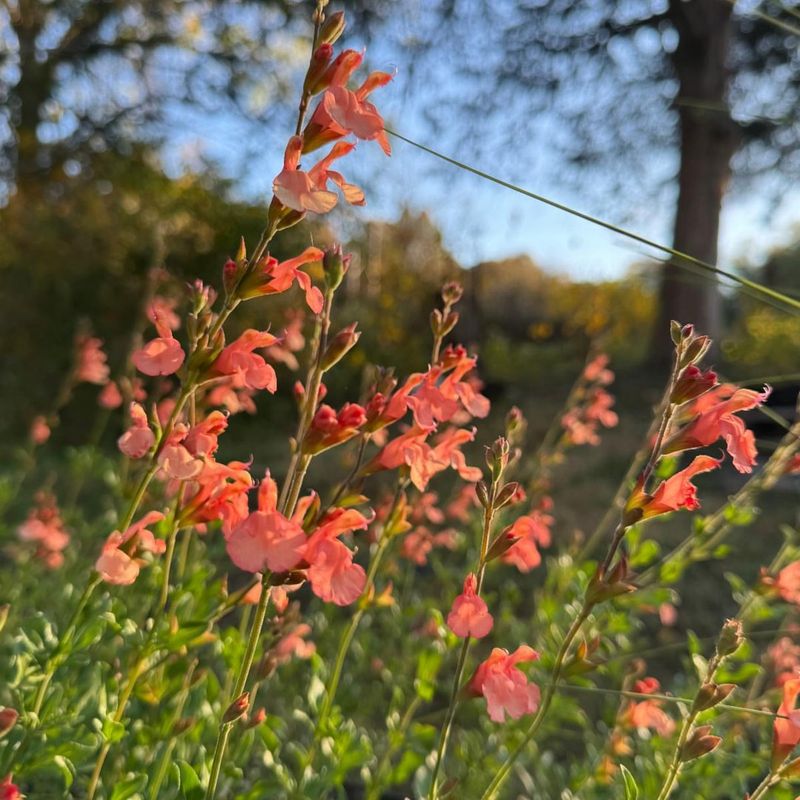
Most plants wave a white flag when Georgia summers hit their peak, but Autumn Sage keeps right on blooming.
Salvia greggii is a compact, shrubby perennial that produces clusters of small red tubular flowers from spring all the way through fall, pausing only briefly during the absolute hottest weeks before picking right back up.
Full sun and well-drained soil are non-negotiable for this plant. Sandy or rocky soil that would stress other perennials suits Autumn Sage just fine.
It handles drought far better than it handles soggy roots, so avoid planting it in low spots that collect water after heavy Georgia rains.
Hummingbirds track it down reliably, especially during fall migration when other nectar sources are winding down.
Plants stay fairly compact, usually reaching about two feet tall and wide, which makes them easy to fit into tight spots along walkways, in rock gardens, or at the front of a sunny mixed border.
Shear plants back by about one-third in midsummer if they start to look leggy, and they will flush out with fresh growth and new blooms within a few weeks. In South Georgia and coastal areas, Autumn Sage may stay semi-evergreen through mild winters.
Across the state, it reliably returns each spring and gets woodier and more established with every passing season, blooming longer and more heavily as it matures.
8. Red Columbine Adds Unique Nodding Flowers That Return Each Year
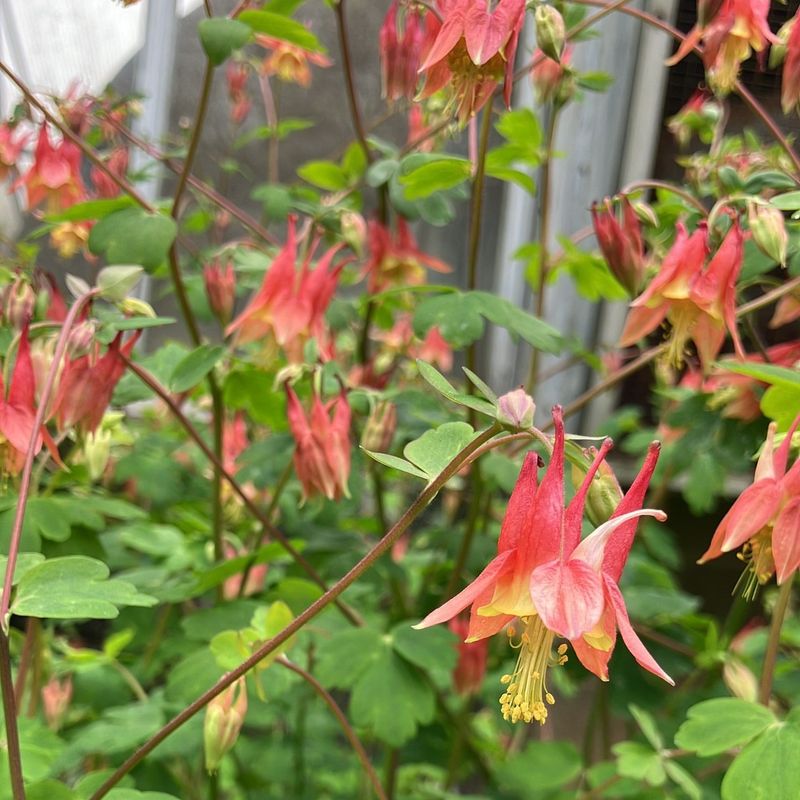
Red Columbine has a personality all its own. Aquilegia canadensis produces nodding red and yellow flowers on slender, wiry stems that sway in the breeze, giving the garden a light and airy feel that heavier perennials simply cannot replicate.
It blooms in spring, often before many other perennials have even fully leafed out.
Partial shade is its sweet spot in Georgia, particularly in spots that get morning light and protection from the harsh afternoon sun. Well-drained soil that stays on the drier side suits it better than heavy clay.
Amending planting areas with compost and coarse sand improves drainage in Georgia’s clay-heavy soils and sets plants up for long-term success.
Hummingbirds arrive almost immediately when Red Columbine opens, since those long spurred flowers are perfectly shaped for their feeding style.
After blooms finish, the ferny, blue-green foliage remains attractive through summer, holding its place in the garden even after flowering ends.
Self-seeding is one of Red Columbine’s best traits. Seedlings pop up nearby each year, slowly naturalizing an area without becoming invasive or aggressive.
Allowing seed heads to mature and drop before removing them encourages this natural spread.
North Georgia gardens with woodland edges are especially well-suited for Red Columbine, where it can drift through shaded beds and return reliably for many years with almost no intervention required from you.