Plant This California Shrub Now For Spring Blooms And Wildlife
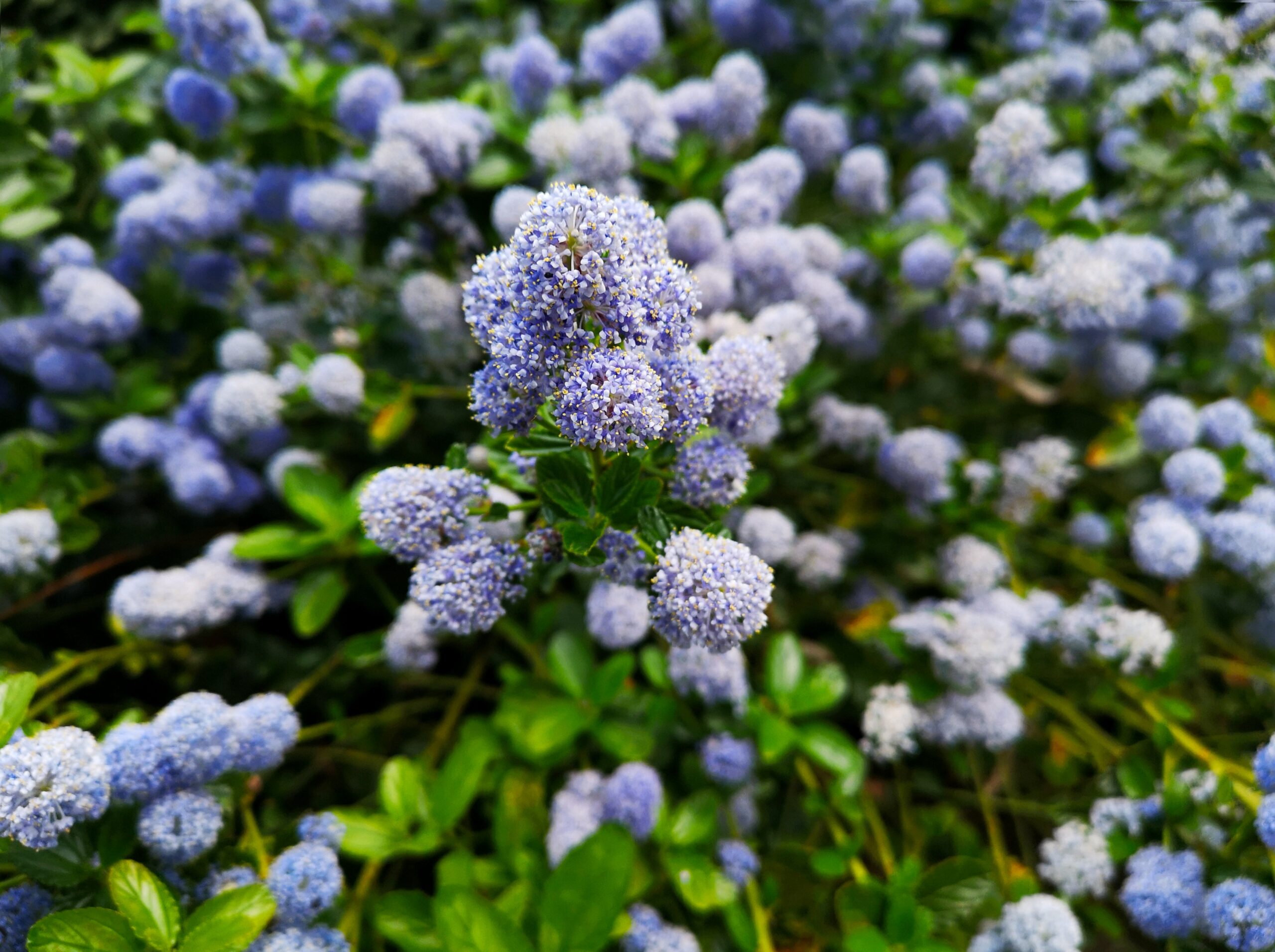
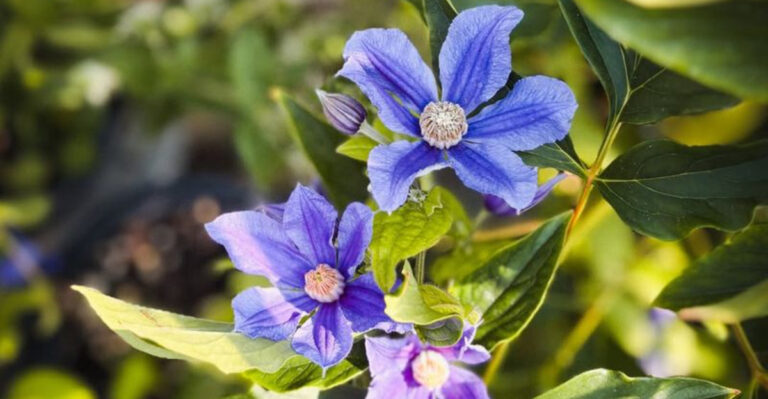
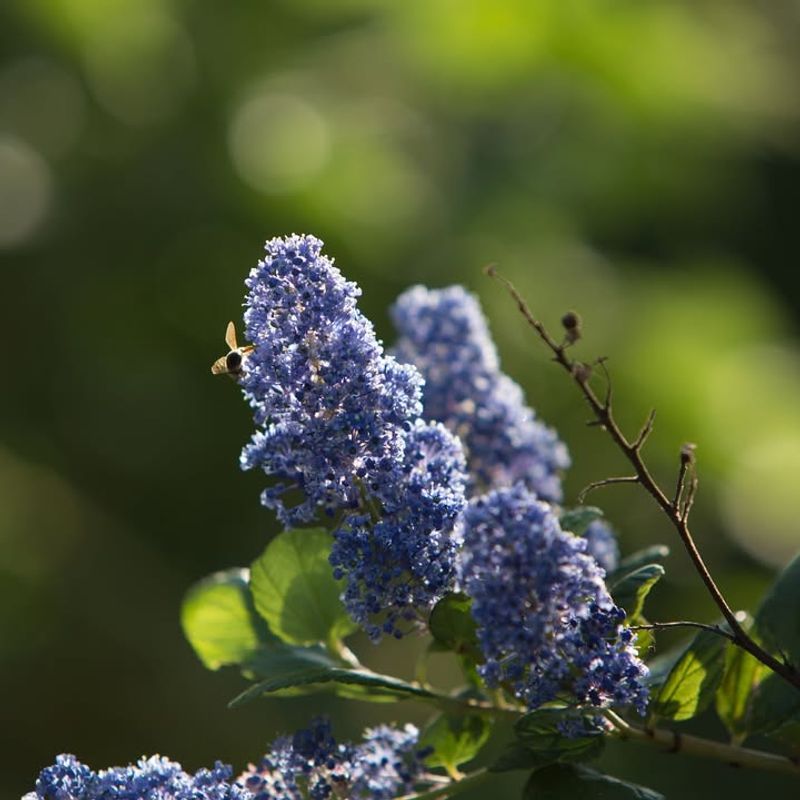
Spring color starts with smart planting, and few shrubs deliver like California lilac. This native beauty bursts into bloom with clouds of blue, purple, and white flowers that stop people in their tracks.
It also brings your garden to life. Bees swarm the blossoms. Butterflies linger. Birds find shelter in its dense branches.
Best of all, California lilac thrives in dry conditions once established, making it a perfect match for water-wise landscapes. Plant it now and give the roots time to settle before warmer days arrive.
You’ll be rewarded with bold spring color and a garden that hums with activity. This shrub isn’t just pretty.
It’s practical, resilient, and built for California gardens. If you want easy care, stunning blooms, and more wildlife at your doorstep, California lilac deserves a spot in your yard.
1. Why California Lilac Loves This Planting Season
Most homeowners assume spring marks the best time to plant everything, but California’s Mediterranean climate flips that logic completely.
Our winter rains do the heavy lifting when you plant now, naturally watering your new shrubs while they focus energy on root development instead of flowers and foliage.
Roots establish deeply during cool, moist months without the stress of summer heat. By the time temperatures climb and rainfall stops, your California lilac has already built an extensive underground network capable of accessing moisture other plants miss.
This timing advantage means better drought tolerance and more vigorous spring blooming in the first year.
Fall through early winter planting also reduces your workload significantly. You’ll water less frequently during establishment since rain handles most irrigation needs.
The shrub experiences less transplant shock in moderate temperatures, and you avoid the common mistake of planting right before summer’s punishing heat arrives.
Regional timing varies slightly, coastal gardeners can plant through February, while inland valley and foothill gardeners usually have best success planting from fall through early winter.
This seasonal approach aligns with how California lilac evolved, taking advantage of our natural wet-dry cycles rather than fighting against them.
2. Select The Best Ceanothus For Your Area
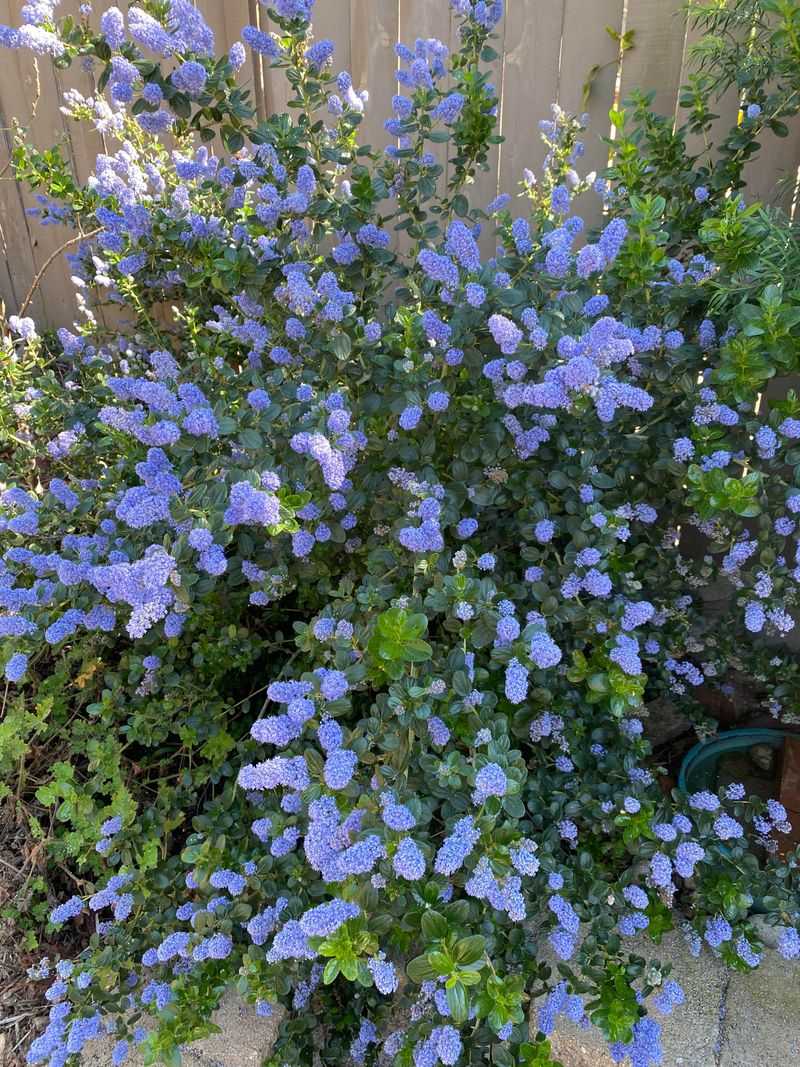
Walking into a native plant nursery presents dozens of California lilac options, and picking the wrong variety for your specific location leads to disappointing performance or plant failure.
Coastal, inland valley, and foothill regions each favor different species based on heat tolerance, chill requirements, and mature size.
Coastal gardeners succeed with moisture-tolerant varieties like ‘Ray Hartman’ (growing 12-20 feet) or ‘Joyce Coulter’ (compact at 5 feet). These handle summer fog, slightly heavier soils, and cooler temperatures beautifully.
Inland valley gardeners need heat-tough selections like Ceanothus ‘Concha’ or ‘Dark Star,’ both handling triple-digit summers while staying under 8 feet tall.
Foothill properties with excellent drainage support Sierra or chaparral species including Ceanothus integerrimus or C. cuneatus, which tolerate rocky soils and temperature extremes.
Groundcover types like ‘Yankee Point’ work wonderfully on slopes regardless of region, controlling erosion while blooming heavily.
Consider mature size carefully before purchasing, many varieties easily reach 10-15 feet wide, overwhelming small yards. Dwarf cultivars stay under 4 feet but still deliver abundant spring flowers.
Always verify your USDA zone and ask nursery staff about regional performance rather than choosing solely by flower color or catalog photos.
3. Where To Plant For Blooming Brilliance
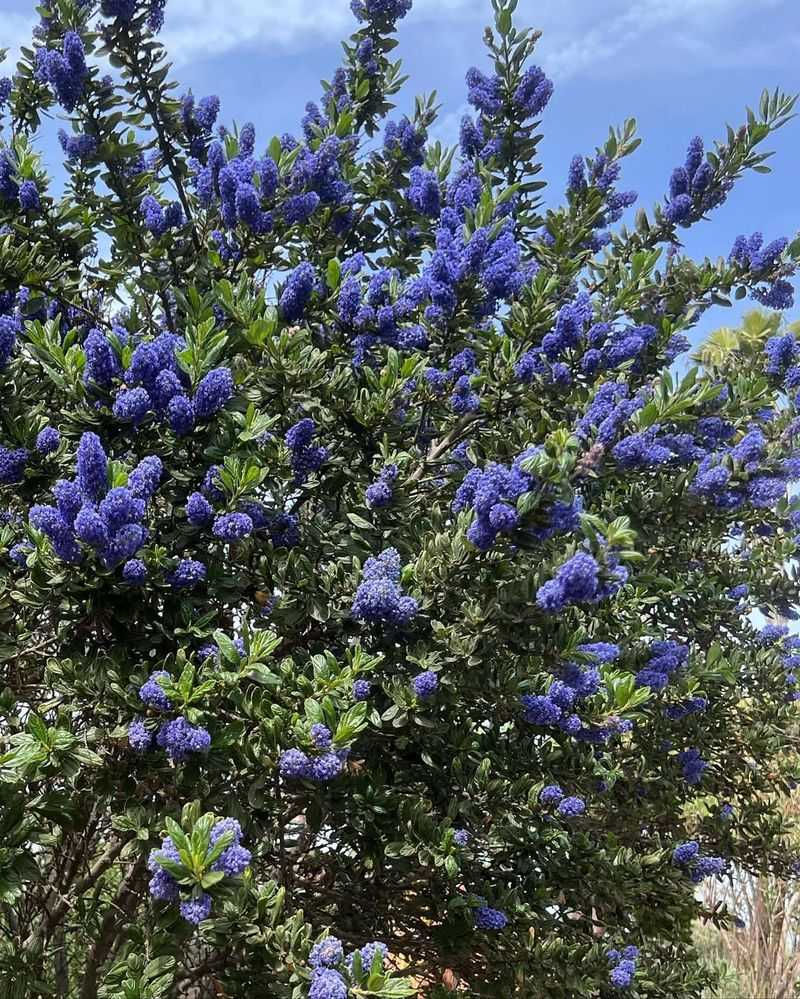
Site selection determines whether your California lilac produces clouds of spring flowers or struggles through disappointing sparse blooms.
Full sun exposure, at least six hours daily, ranks as the single most important factor for heavy flowering, though coastal gardeners can get away with slightly less.
Southern and western exposures work best in most regions, providing intense light without excessive afternoon heat in inland valleys.
Avoid planting near lawns or regularly irrigated garden beds, since summer water applied to surrounding plants can reach California lilac roots and increase the risk of root rot and decline.
Slopes and raised areas offer natural advantages because excellent drainage prevents root rot while showcasing the shrub’s cascading growth habit. Planting on berms or mounds works well in flatter yards, creating the drainage California lilac absolutely requires.
Position plants where you’ll enjoy the spring flower show from windows, patios, or frequently used pathways.
Wind exposure matters less than you’d think, California lilac evolved in chaparral and coastal scrub habitats with significant wind. However, avoid tight spaces between buildings where reflected heat concentrates, especially in inland areas.
Leave adequate space from structures, fences, and other plants based on the variety’s mature width, typically 6-15 feet depending on selection.
4. Soil And Drainage Requirements
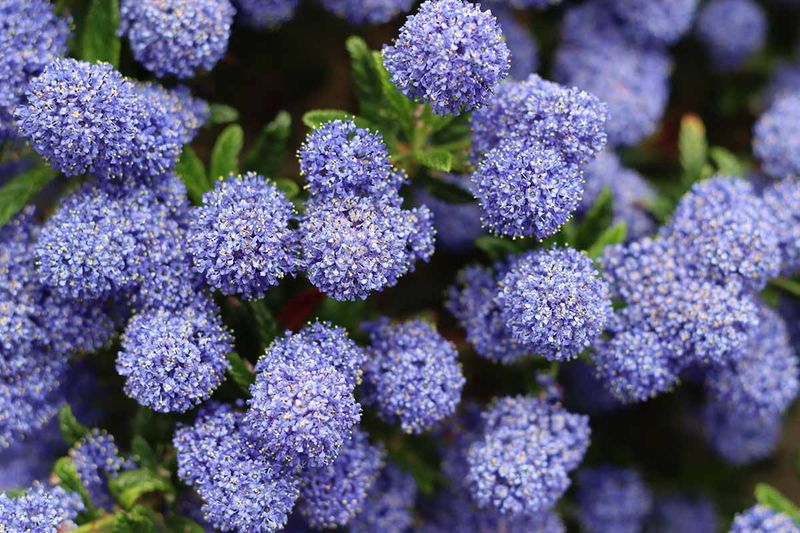
Ignoring drainage requirements causes more California lilac deaths than any other factor, yet many homeowners plant directly into heavy clay without amendments or consideration.
These shrubs evolved in fast-draining soils where water percolates quickly, never leaving roots sitting in moisture.
Test your drainage before planting by digging a hole, filling it with water, and observing how quickly it drains. Water should drain within several hours, if it remains after 12 hours, you have a problem requiring correction.
Clay-heavy soils need aggressive amendment with decomposed granite, pumice, or coarse sand mixed generously with existing soil to improve drainage.
Alternatively, build raised beds or mounds 12-18 inches high filled with fast-draining soil mix. This approach works better than trying to fix severely compacted clay.
California lilac tolerates poor, rocky, or sandy soils beautifully but fails quickly in dense, water-retentive earth.
Soil pH between 6.5-7.5 works well, though California lilac adapts to slightly alkaline conditions common in many regions.
Skip fertilizer entirely at planting, these shrubs evolved in nutrient-poor soils and excessive fertility promotes weak, disease-prone growth.
Adding organic matter improves clay texture but avoid rich compost that holds too much moisture around roots.
5. Water You Lilac Correctly
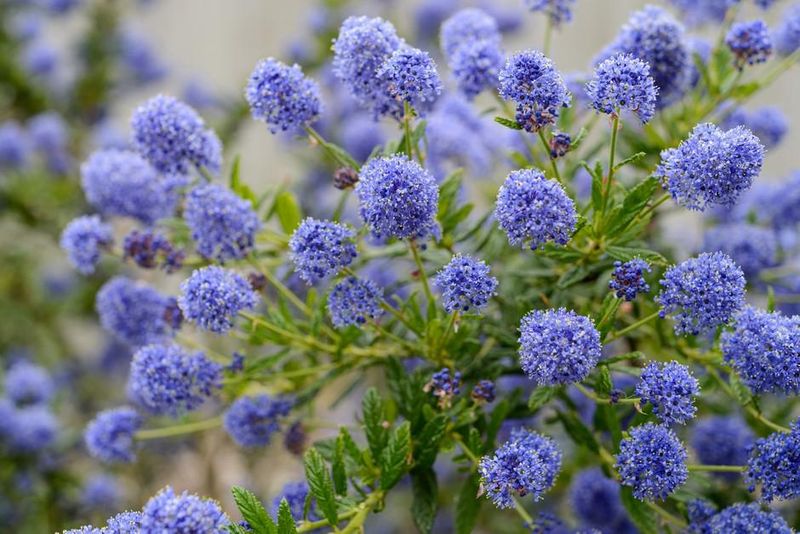
Newly planted California lilac needs careful watering during its first year, balancing adequate moisture for root growth against the plant’s intolerance of wet conditions.
This paradox confuses many gardeners who either underwater and lose plants or overwater and cause root rot.
Water deeply but infrequently right after planting, saturating the root ball and surrounding soil. For the first month, water every few days as needed, allowing soil to dry between waterings.
Gradually extend intervals to weekly watering through winter if rain doesn’t provide at least an inch of moisture.
Spring and early summer require continued attention during the first year, water every 7-10 days as temperatures rise. By the second summer, most varieties survive on monthly deep watering or less, depending on your region and soil type.
Coastal gardens often eliminate supplemental irrigation entirely after establishment.
Always water in the morning, allowing foliage to dry quickly and reducing disease risk. Apply water at the soil surface using drip irrigation or a hose rather than overhead sprinklers.
Create a watering basin around young plants to direct moisture to roots, but remove it after the first year to prevent water accumulation. Watch for wilting as a sign of underwatering, but never let soil remain continuously damp.
6. Why California Lilac Is A Wildlife Favorite
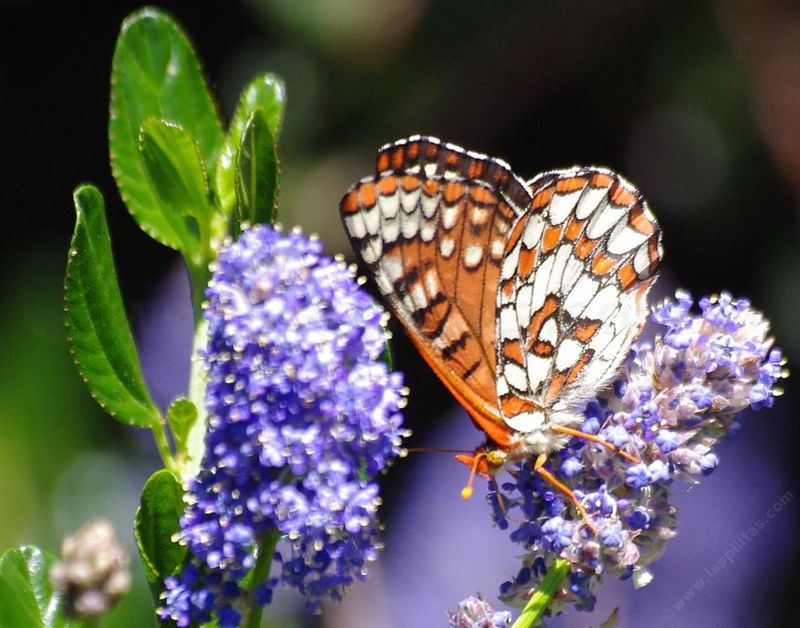
Beyond spectacular spring flowers, California lilac functions as a critical wildlife habitat plant, supporting species that evolved alongside these native shrubs for thousands of years.
The ecological benefits extend far beyond simple beauty, creating healthier yard ecosystems that need less maintenance.
Spring blooms attract massive numbers of native bees, including mason bees, sweat bees, and bumblebees that depend on early-season nectar sources.
Butterflies, particularly California tortoiseshells and echo blues, feed heavily on California lilac flowers, while some butterfly species use the foliage as larval host plants.
This pollinator activity improves fruit set in nearby vegetable gardens and orchards.
Birds benefit year-round from California lilac’s dense branching structure, which provides excellent nesting sites and protective cover from predators.
Hummingbirds visit flowers alongside bees, while seed-eating birds consume the small seed capsules that develop after blooming.
The shrub’s evergreen foliage offers winter shelter when deciduous plants stand bare.
Dense root systems prevent erosion on slopes while the shrub’s nitrogen-fixing root bacteria can gradually improve soil fertility nearby. Unlike non-native ornamentals, California lilac requires no pesticides that harm beneficial insects.
Creating habitat corridors by planting multiple native shrubs amplifies these ecological benefits, supporting biodiversity that makes your entire landscape more resilient and balanced.
7. Save Time And Water
California lilac rewards lazy gardeners beautifully, requiring almost no maintenance once established while outperforming fussy ornamentals that demand constant attention.
This low-input characteristic makes it perfect for busy homeowners seeking attractive landscapes without weekend-consuming yard work.
Skip fertilizer completely, California lilac thrives in poor soils and added nutrients cause excessive foliage growth with fewer flowers and increased disease susceptibility. Avoid routine pruning except to remove dead wood or shape young plants lightly after flowering.
Heavy pruning often damages these shrubs permanently since many species don’t resprout vigorously from old wood.
Mulch application helps but keep it 6 inches away from the trunk to prevent crown rot. A 2-3 inch layer of wood chips or decomposed granite suppresses weeds and moderates soil temperature without holding excessive moisture.
Never use landscape fabric underneath, which prevents natural leaf litter incorporation.
Pest problems rarely occur with California lilac, native plants evolved natural defenses against local insects and diseases. Occasional aphids wash off with water, and ceanothus stem gall doesn’t harm plant health despite unsightly appearance.
Summer dormancy causes some leaf drop, which is normal and not a sign of problems requiring intervention.
The shrub’s drought tolerance eliminates summer watering in most regions after establishment, dramatically reducing water bills compared to thirsty exotic landscaping.
8. Common Blooming Blunders
Even experienced gardeners make critical errors with California lilac that result in poor flowering, disease, or plant death. Understanding these common pitfalls helps you avoid frustration and ensures the spectacular spring display you’re expecting.
Summer watering ranks as the number one problem, applying irrigation after the shrub establishes promotes root rot fungi that can lead to root rot and serious decline.
Many homeowners instinctively water struggling California lilac during summer heat, actually hastening its demise.
Remember these shrubs evolved to stay dry during hot months.
Planting too deep suffocates roots and causes crown rot. Position the root ball slightly higher than surrounding grade, never burying the trunk base.
Amending soil with rich compost or planting in heavy clay without drainage correction guarantees failure within two years despite an initially healthy appearance.
Choosing varieties inappropriate for your climate zone leads to disappointing performance, heat-sensitive coastal species languish in inland valleys while cold-hardy mountain types struggle in mild coastal gardens.
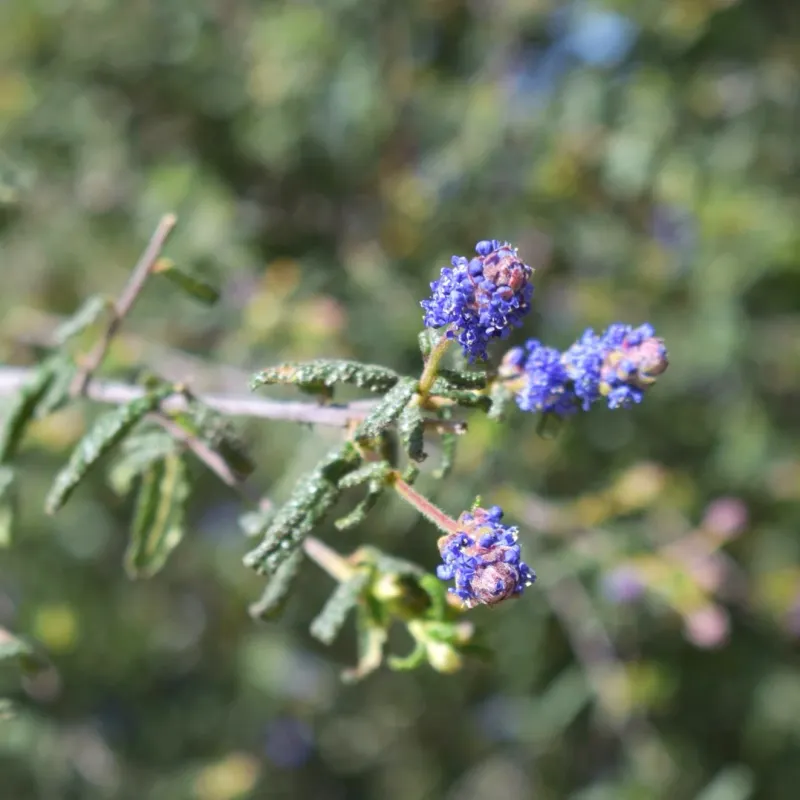
Pruning at the wrong time removes flower buds, since California lilac blooms on previous year’s growth.
Prune only immediately after flowering finishes if shaping is necessary.
Expecting instant maturity causes impatience, most varieties take 2-3 years to reach full flowering potential. Finally, planting in shade produces sparse blooms and weak, leggy growth regardless of other care factors.